
Maintaining safety standards is essential when managing equipment or property. Issuing a formal Notice of Unauthorized Alterations or Repairs ensures that unapproved modifications are documented and rectified to meet compliance regulations. This process protects warranties and prevents potential hazards caused by substandard workmanship. To assist you in drafting professional correspondence, below are some ready to use template options.
Image cover: Formal Notice of Unauthorized Property Alterations and Repairs: Samples and Templates
Letter Samples List
- First Warning Notice Letter for Unauthorized Alterations
- Second Request Letter to Revert Unauthorized Property Repairs
- Final Demand Letter for Removal of Unauthorized Fixtures
- Lease Violation Letter Regarding Unauthorized Cosmetic Changes
- Notice Letter to Cease Unauthorized Plumbing Repairs
- Property Inspection Letter Following Unauthorized Modifications
- Penalty Assessment Letter for Unapproved Property Alterations
- Notice Letter of Unauthorized Electrical Repairs
- Demand Letter to Restore Original Landscaping Alterations
- Lease Termination Letter Due to Major Unauthorized Construction
- Notice Letter Regarding Unapproved Painting and Wall Modifications
- Immediate Cease and Desist Letter for Unauthorized Structural Changes
First Warning Notice Letter for Unauthorized Alterations
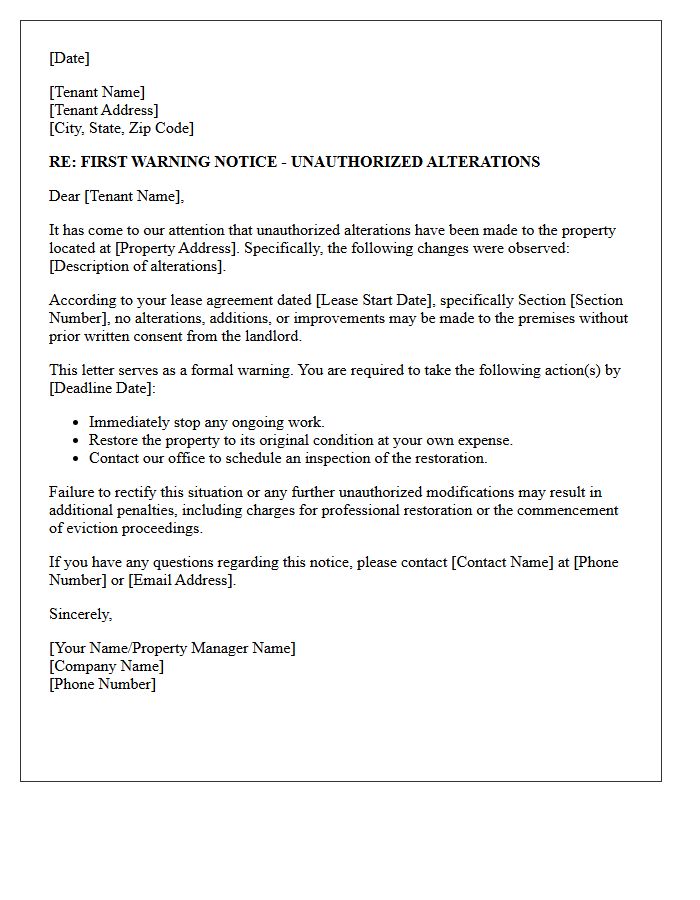
A First Warning Notice Letter serves as a formal notification from a landlord or homeowners' association regarding unauthorized alterations made to a property. This document identifies specific violations of the lease or deed restrictions, such as structural changes or aesthetic modifications performed without prior approval. It acts as a legal precursor to further enforcement actions, requesting the resident to either restore the premises to its original condition or seek retroactive authorization. Timely communication is essential to resolve the dispute and avoid legal penalties, fines, or potential eviction proceedings for breach of contract.
Second Request Letter to Revert Unauthorized Property Repairs
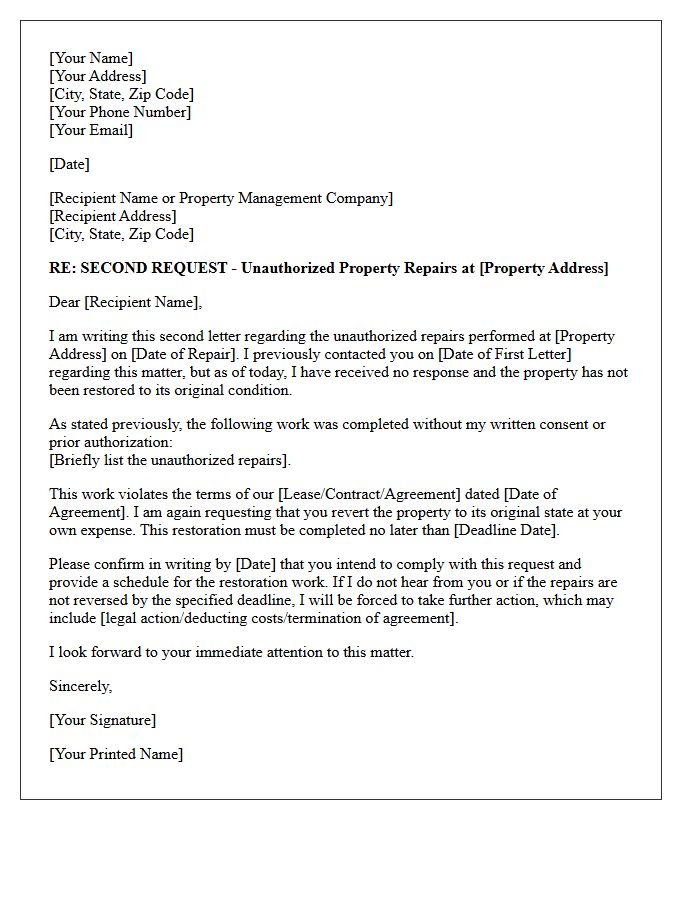
A second request letter to revert unauthorized property repairs serves as a formal notice to restore a site to its original condition. It is essential to include written evidence of the initial demand and clear deadlines for compliance. This document strengthens your legal position by demonstrating a persistent effort to resolve the breach of contract or lease terms. Clearly state that failure to rectify the unapproved alterations will result in legal action or professional restoration at the responsible party's expense to protect the property's value and structural integrity.
Final Demand Letter for Removal of Unauthorized Fixtures
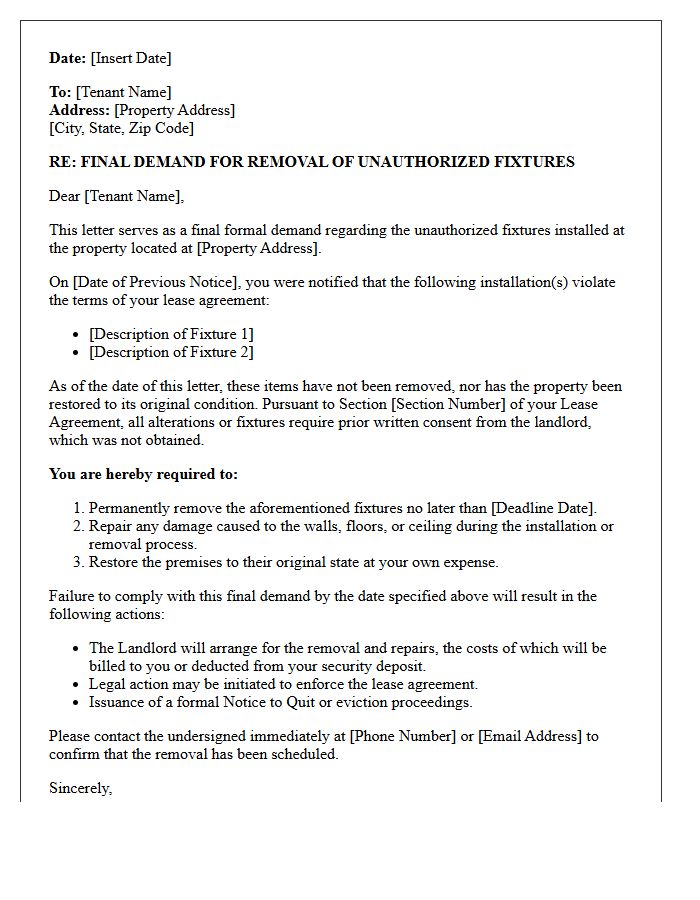
A Final Demand Letter serves as the ultimate legal notice before initiating litigation or eviction proceedings. It formally requires a tenant or occupant to extract unauthorized fixtures that violate lease terms or property rights. This document must clearly specify the breach, provide a strict deadline for remediation, and outline impending legal consequences. It acts as essential evidence of a good-faith effort to resolve the dispute out of court, ensuring the landlord's right to restore the premises to its original condition is professionally documented for potential judicial review.
Lease Violation Letter Regarding Unauthorized Cosmetic Changes
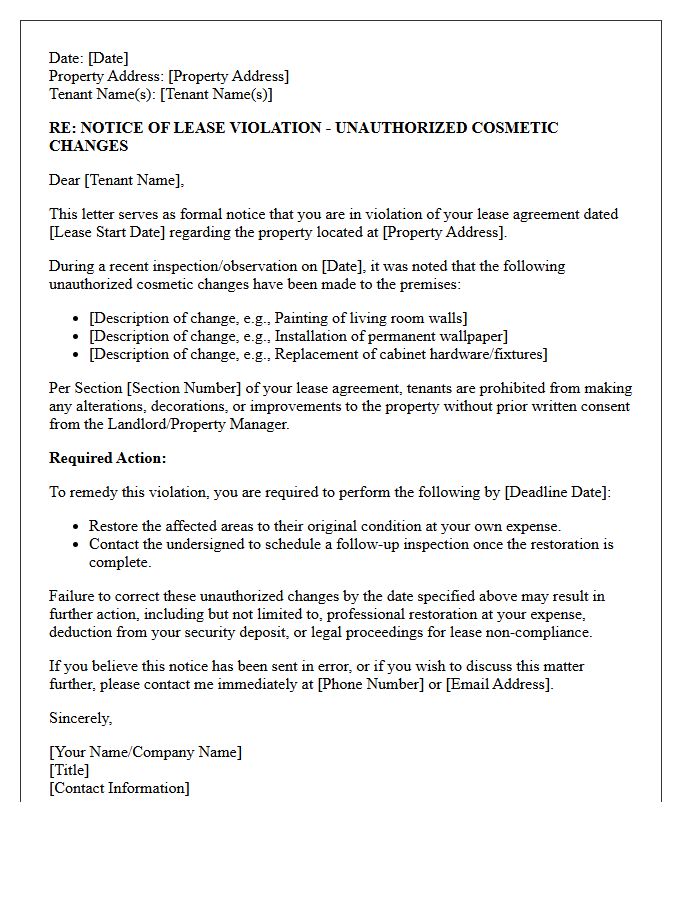
A lease violation letter regarding unauthorized cosmetic changes serves as a formal notice when a tenant modifies a property without landlord consent. Common breaches include painting walls, replacing fixtures, or installing permanent wallpaper. This document must clearly identify the specific unauthorized alteration and reference the original lease clause violated. It typically provides a remedy period for the tenant to restore the unit to its original condition at their own expense. Failure to comply can lead to security deposit deductions or potential eviction proceedings to protect the property's long-term value.
Notice Letter to Cease Unauthorized Plumbing Repairs
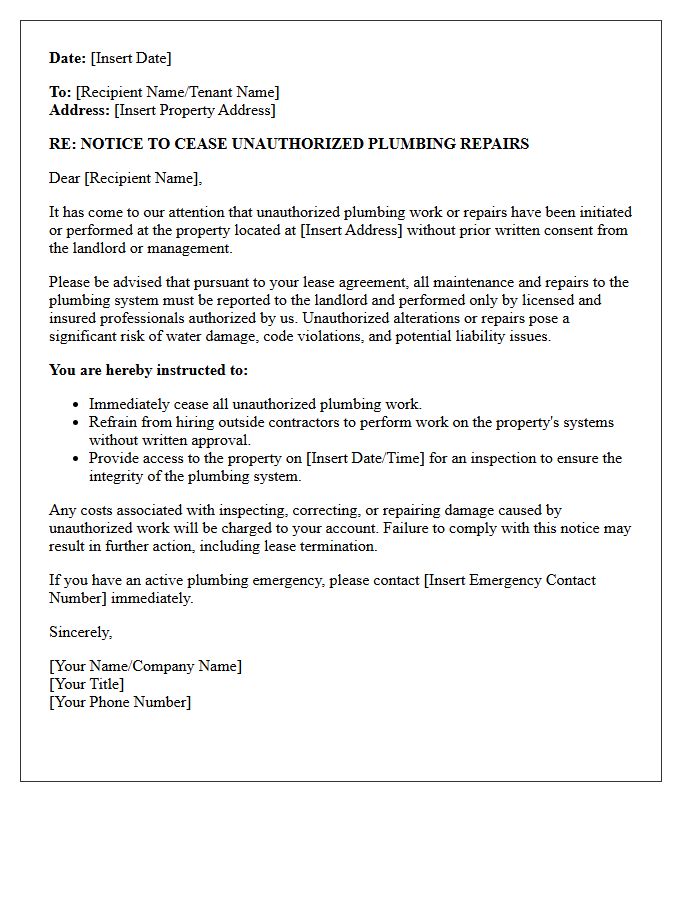
A Notice Letter to Cease Unauthorized Plumbing Repairs is a legal formal demand used to stop unlicensed or unapproved contracting work. It serves as a cease and desist order to prevent potential property damage, safety violations, and liability issues. Property owners or managers use this document to enforce building codes and ensure only certified professionals perform maintenance. Providing this written warning establishes a clear legal record, which is essential if further litigation or insurance claims arise due to faulty workmanship or breach of contract terms.
Property Inspection Letter Following Unauthorized Modifications
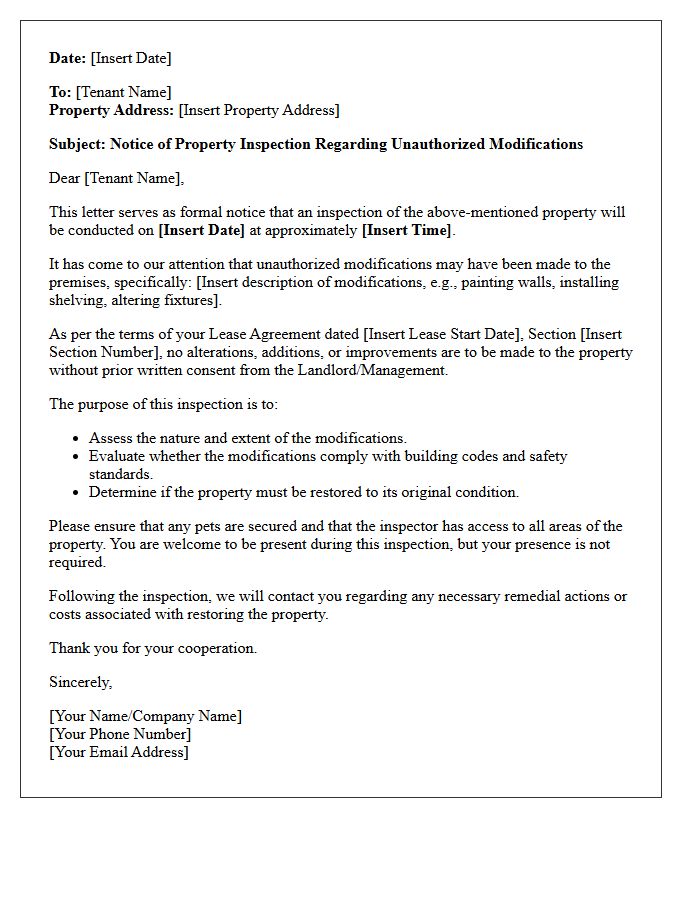
Receiving a Property Inspection Letter Following Unauthorized Modifications indicates that a landlord or HOA discovered structural or aesthetic changes made without prior consent. This formal notice asserts their right to evaluate the safety and compliance of the alterations. Property owners or tenants must provide access for the inspection to ensure modifications meet building codes and lease agreements. Failure to resolve these unauthorized changes can lead to legal penalties, fines, or a mandatory requirement to restore the premises to its original condition at the occupant's expense.
Penalty Assessment Letter for Unapproved Property Alterations
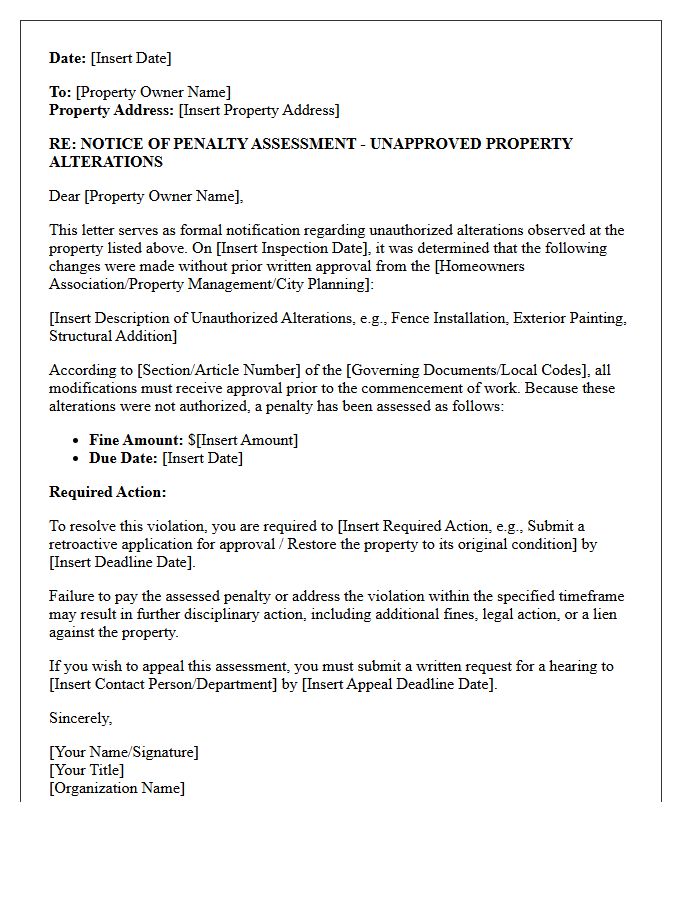
Receiving a Penalty Assessment Letter signifies a formal notification regarding unapproved property alterations. Local authorities or homeowners' associations issue these when structural changes violate building codes or zoning regulations. To avoid escalating fines or mandatory restoration orders, you must prioritize a compliance review. Immediate action involves checking the specific violation details and filing for retrospective planning permission. Resolving these discrepancies quickly is essential to maintain property value and ensure legal safety standards are met, preventing potential litigation or difficulty during future real estate transactions.
Notice Letter of Unauthorized Electrical Repairs
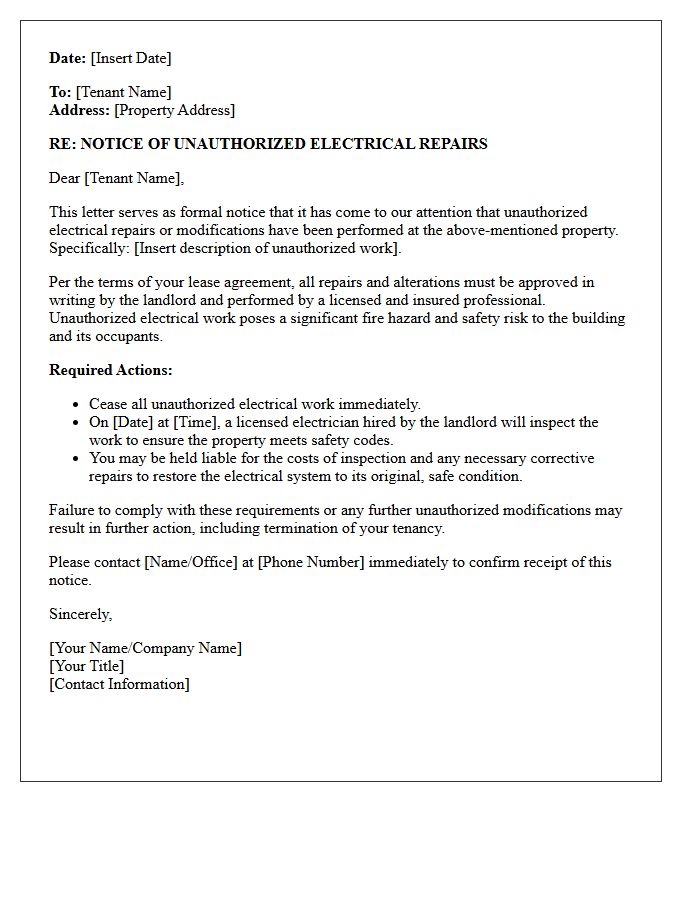
A Notice Letter of Unauthorized Electrical Repairs is a formal legal document issued when unapproved electrical work is detected on a property. Receiving this notice indicates that modifications violate safety codes or lease agreements, posing significant fire hazards. To ensure compliance, the recipient must typically cease work immediately and hire a licensed electrician to inspect or rectify the system. Ignoring this warning can lead to fines, insurance invalidation, or eviction. Prioritizing authorized repairs ensures structural safety and meets mandatory regulatory standards to protect occupants and investments.
Demand Letter to Restore Original Landscaping Alterations
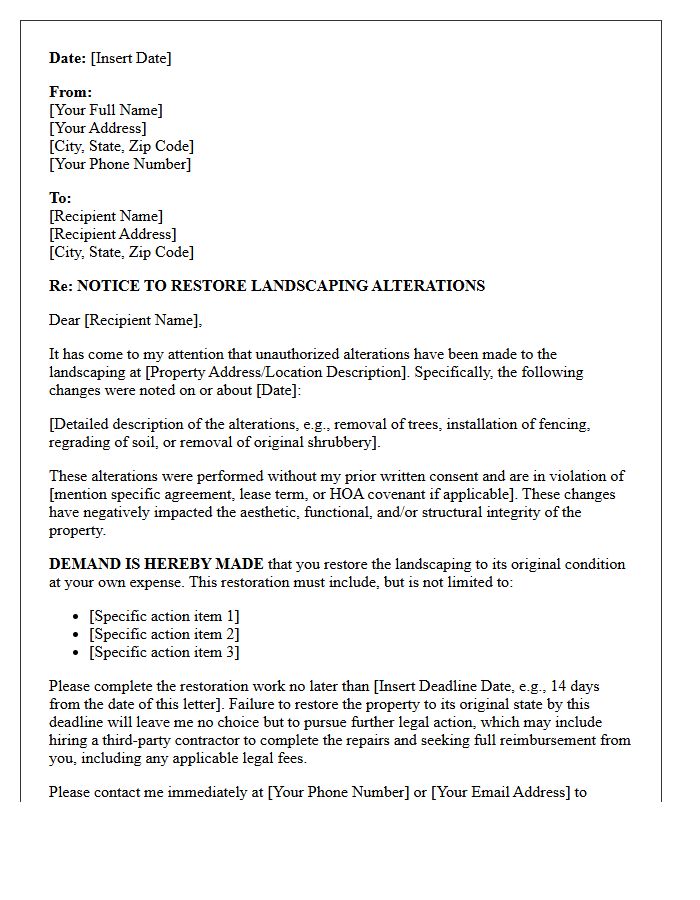
A demand letter for restoring original landscaping serves as a formal legal notice to a neighbor or tenant who made unauthorized changes. It is essential to clearly identify the property boundary violations or lease breaches involved. You must provide a specific remediation deadline for the recipient to revert the terrain, plants, or structures to their prior state. Documenting the original site condition with photos and citing local land use regulations strengthens your claim. This document acts as a critical prerequisite for potential litigation or homeowners association enforcement actions regarding land restoration.
Lease Termination Letter Due to Major Unauthorized Construction
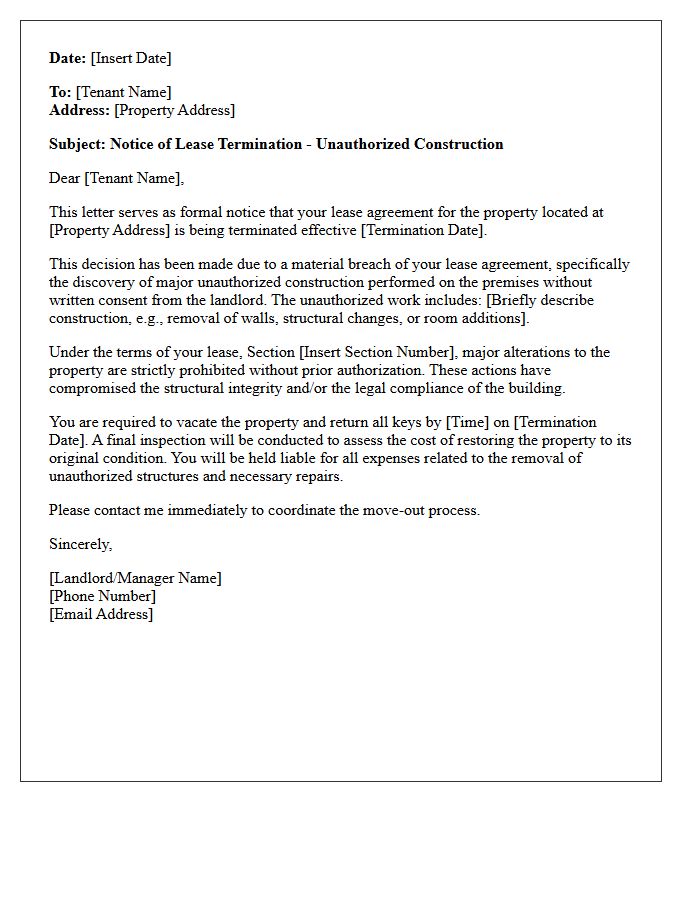
A lease termination letter for unauthorized construction serves as a formal legal notice that a tenant has breached their agreement by making significant structural changes without permission. This material violation typically triggers an immediate demand to cease work and vacate the premises. It is essential to clearly document the specific lease clauses violated and provide evidence of the modifications. Proper delivery ensures the landlord preserves their right to evict while protecting the property's integrity. Clear communication regarding the termination date and potential restoration costs is vital for legal compliance.
Notice Letter Regarding Unapproved Painting and Wall Modifications
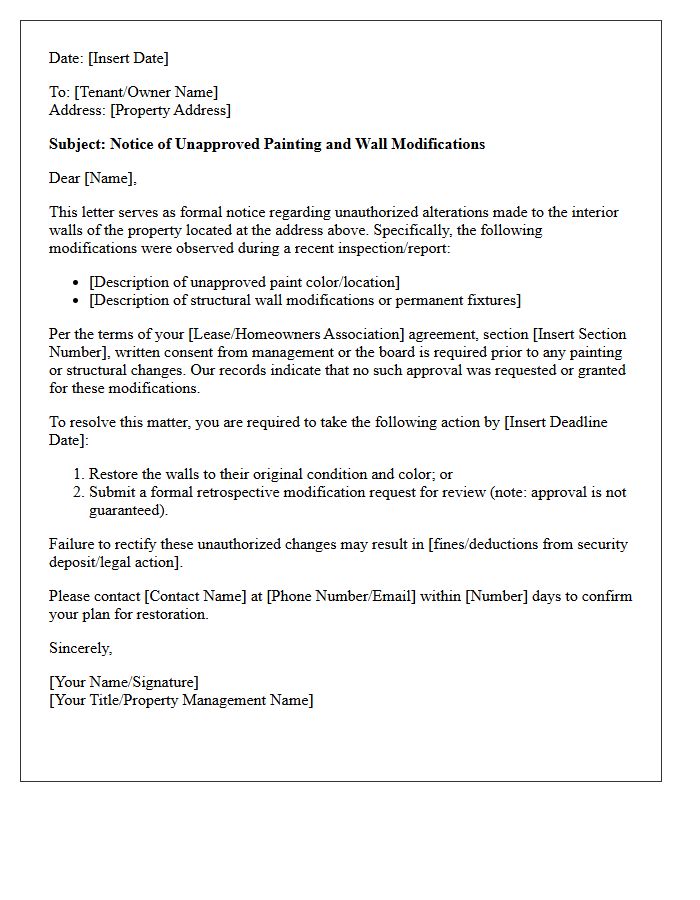
Receiving a notice regarding unapproved painting or wall modifications indicates a breach of your lease or HOA guidelines. It is imperative to address this promptly to avoid fines or restoration costs. Property standards ensure aesthetic consistency and structural integrity. Review your agreement immediately to understand specific restrictions on colors, textures, or permanent alterations. You may be required to return the surface to its original state or submit a formal request for retroactive approval. Timely communication with management can often mitigate penalties and resolve the compliance issue effectively.
Immediate Cease and Desist Letter for Unauthorized Structural Changes
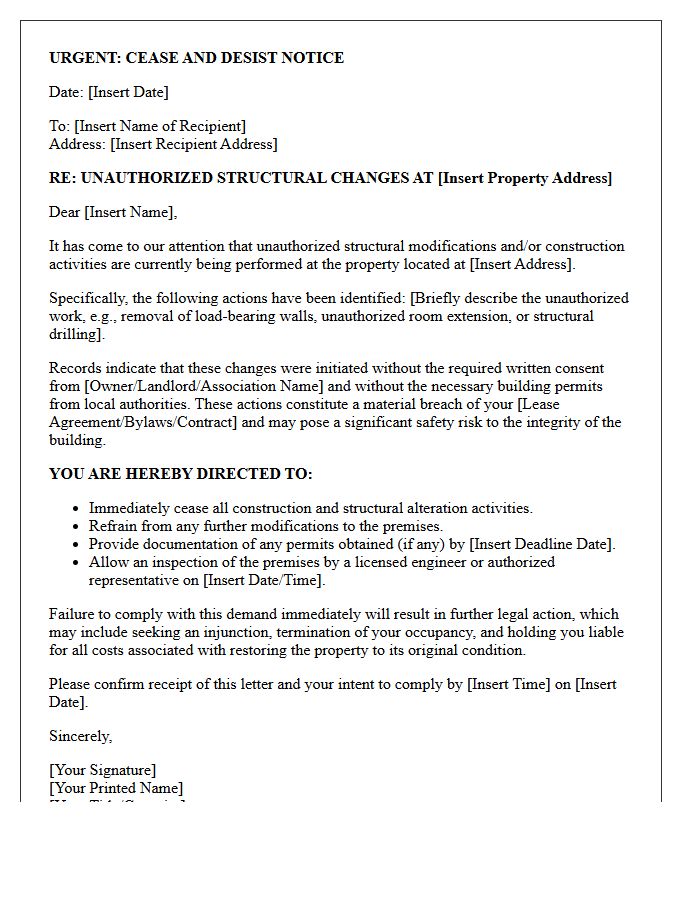
An Immediate Cease and Desist Letter for unauthorized structural changes is a critical legal notice used to halt unpermitted construction. It serves as a formal demand to stop modifications that violate lease agreements, local building codes, or property rights. Sending this document immediately protects the property's integrity and mitigates potential safety hazards. It establishes a necessary paper trail for future litigation or eviction proceedings. Property owners must ensure the letter clearly identifies the prohibited activity to enforce compliance and prevent further unauthorized alterations to the physical structure.
What is a Notice of Unauthorized Alterations or Repairs?
A Notice of Unauthorized Alterations or Repairs is a formal legal document issued by a landlord or property manager to a tenant who has made structural changes, renovations, or repairs to a rental property without obtaining prior written consent.
What should I do if I receive a notice for unauthorized property changes?
If you receive this notice, you should immediately stop all work, review your lease agreement regarding alteration clauses, and contact your landlord to discuss whether the changes can be retroactively approved or if the property must be restored to its original condition.
Can a landlord evict a tenant for making unauthorized repairs?
Yes, making unauthorized alterations is often considered a breach of the lease agreement. If the tenant fails to remedy the violation or restore the property after receiving a formal notice, the landlord may have legal grounds to initiate eviction proceedings.
Who is responsible for the costs of restoring unauthorized alterations?
The tenant is typically responsible for all costs associated with restoring the property to its original state. If the tenant refuses to do so, the landlord may perform the restoration and deduct the expenses from the security deposit or sue for damages.
Are minor cosmetic changes considered unauthorized alterations?
Whether minor changes like painting or hanging shelves are considered unauthorized depends on the specific language in the lease. Most standard leases require written permission for any permanent or semi-permanent change that alters the appearance or structure of the unit.


Comments