
Terminating a long-term rental agreement requires strict legal compliance to protect both parties. In many jurisdictions, a Ninety-Day Notice to Vacate is mandatory when a tenant has occupied a property for over one year. This formal document ensures sufficient transition time and adheres to local housing regulations. To simplify your legal requirements, below are some ready to use template.
Image cover: Long-Term Tenancy Termination: 90-Day Notice to Vacate Templates and Legal Samples
Letter Samples List
- Standard Ninety-Day Notice to Vacate Letter for Long-Term Tenancy
- Ninety-Day Notice to Vacate Letter for Major Property Renovation
- Owner Move-In Ninety-Day Notice to Vacate Letter
- Ninety-Day Notice to Vacate Letter for Sale of Property
- No-Fault Ninety-Day Notice to Vacate Letter for Month-to-Month Tenancy
- Ninety-Day Lease Termination Letter for Long-Term Tenants
- Standard Non-Renewal Ninety-Day Notice to Vacate Letter
- Ninety-Day Notice to Vacate Letter for Property Demolition
- Family Member Move-In Ninety-Day Notice to Vacate Letter
- Ninety-Day Notice to Vacate Letter for Removal from Rental Market
- Fixed-Term Expiration Ninety-Day Notice to Vacate Letter
- Ninety-Day Notice to Vacate Letter for Permanent Property Retirement
Standard Ninety-Day Notice to Vacate Letter for Long-Term Tenancy
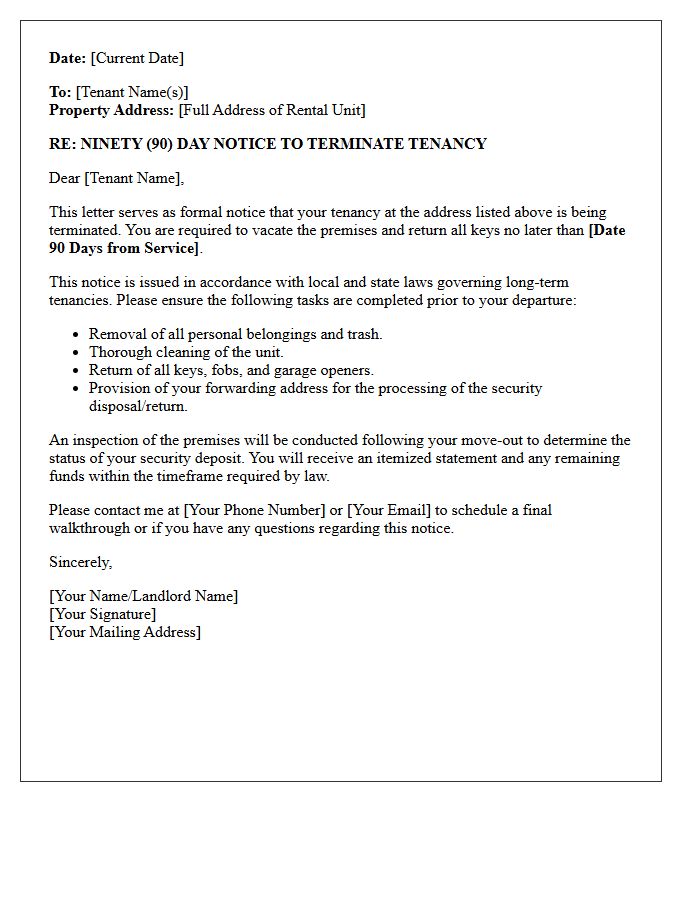
A Standard Ninety-Day Notice to Vacate is a legal requirement used by landlords to terminate a long-term tenancy, typically involving renters who have occupied a property for over one year. This formal document must clearly state the termination date and provide the tenant with the mandatory three-month window to relocate. Failure to serve this notice correctly can invalidate an eviction process. It ensures procedural fairness by allowing residents sufficient time to find new housing while protecting the property rights of the owner under local housing regulations and landlord-tenant laws.
Ninety-Day Notice to Vacate Letter for Major Property Renovation
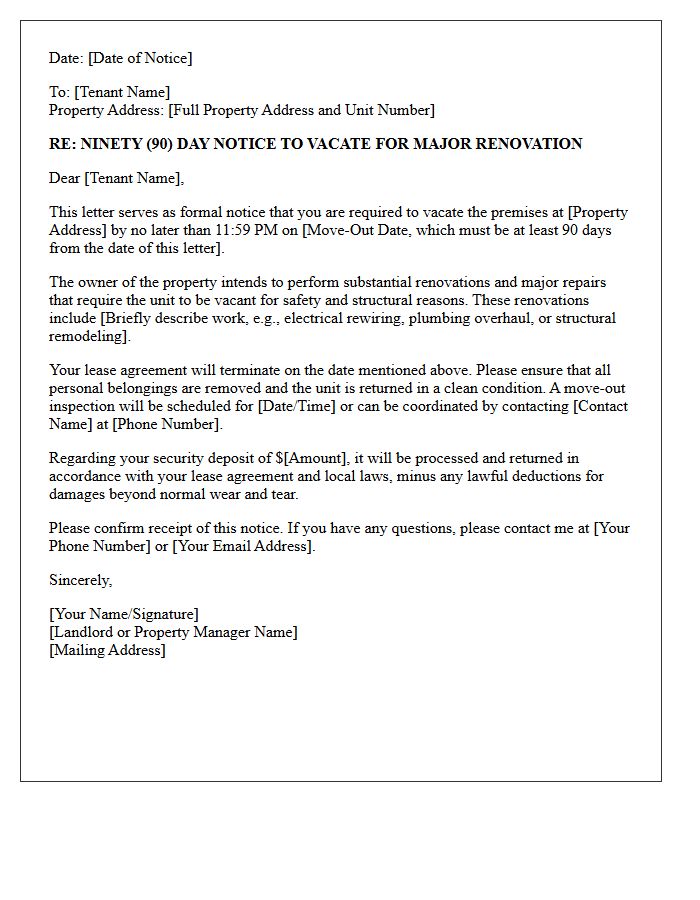
A Ninety-Day Notice to Vacate is a formal legal document issued by landlords when major property renovations require a unit to be empty. This notice period is essential for compliance with local housing laws and provides tenants sufficient time to relocate. The renovation must be substantial enough that it cannot safely be performed while the unit is occupied. To ensure validity, the letter should clearly state the move-out date, the specific reason for the termination of tenancy, and any applicable relocation assistance required by municipal regulations.
Owner Move-In Ninety-Day Notice to Vacate Letter
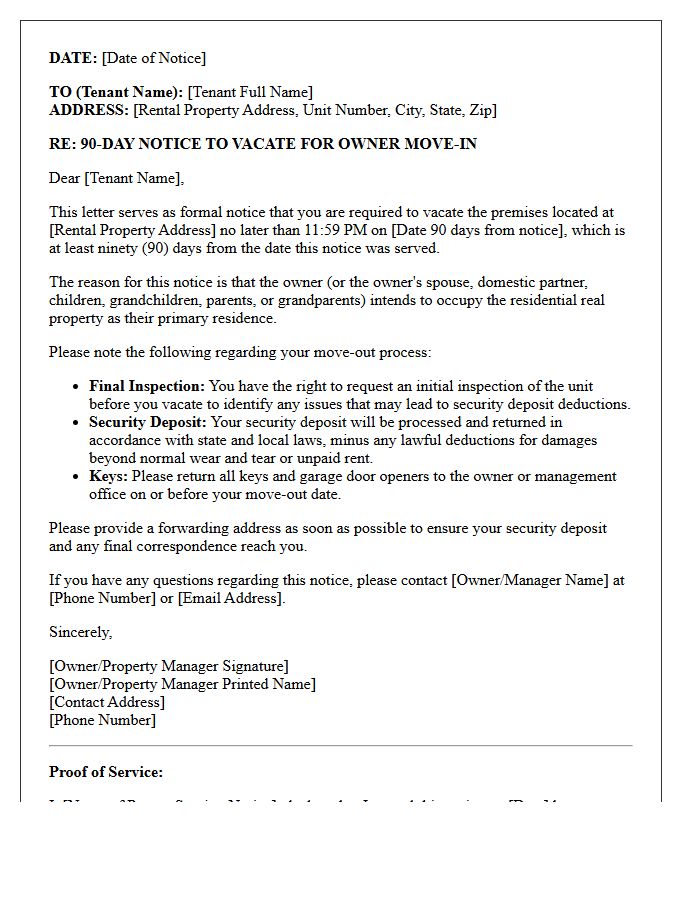
An Owner Move-In Ninety-Day Notice to Vacate Letter is a formal legal document used by landlords to regain possession of a rental unit for personal use. To be valid, the owner or a qualifying relative must intend to occupy the property as their primary residence. Many jurisdictions require specific language, relocation assistance payments, and proof of good faith. Failure to provide the full ninety-day warning or strictly follow local rent control ordinances can result in legal penalties or the dismissal of the eviction process.
Ninety-Day Notice to Vacate Letter for Sale of Property
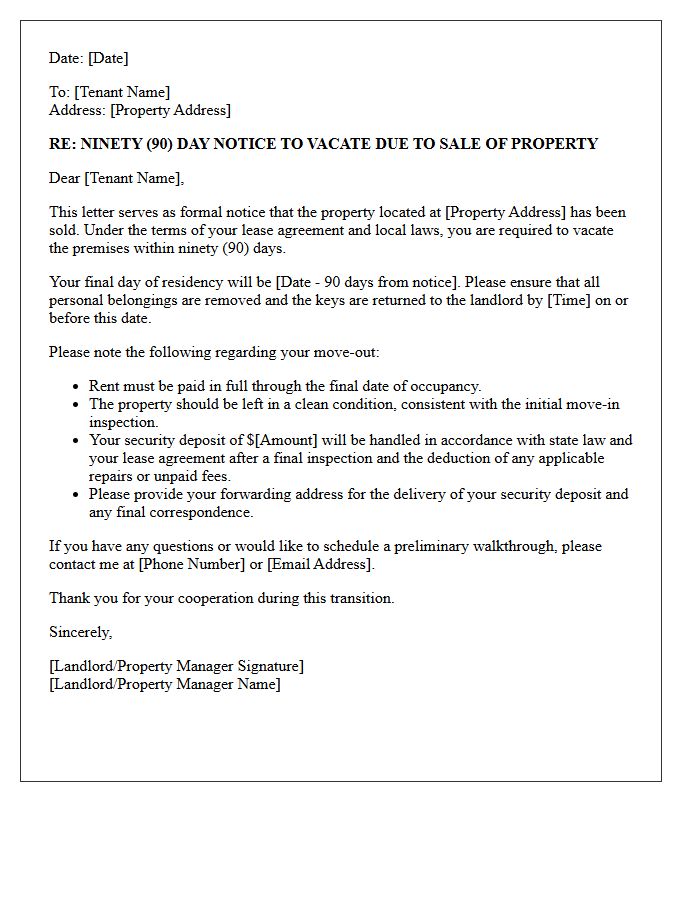
A Ninety-Day Notice to Vacate is a formal legal document issued when a landlord sells a tenanted property. This notice provides residents three months to relocate, ensuring compliance with local housing laws. It is essential to include the final move-out date, the reason for termination, and specific details regarding the transfer of ownership. Both parties must adhere to the lease agreement terms during this transition. Serving this notice correctly protects the landlord's legal rights and allows the new buyer to take possession of a vacant home upon closing.
No-Fault Ninety-Day Notice to Vacate Letter for Month-to-Month Tenancy
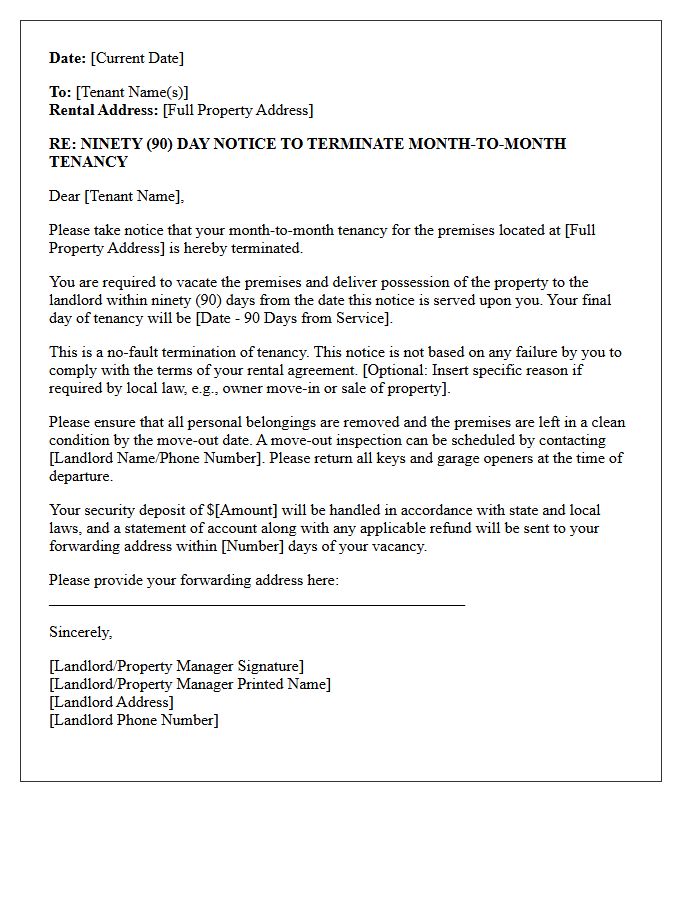
A No-Fault Ninety-Day Notice to Vacate is a formal legal document used by landlords to terminate a month-to-month tenancy without alleging tenant misconduct. Under specific state laws, such as the California Tenant Protection Act, landlords must provide a ninety-day window if the tenant has resided in the unit for over one year. This notice must specify a just cause for removal, such as owner move-in or substantial remodeling. Failure to serve this notice correctly or provide required relocation assistance can render the eviction effort legally void.
Ninety-Day Lease Termination Letter for Long-Term Tenants
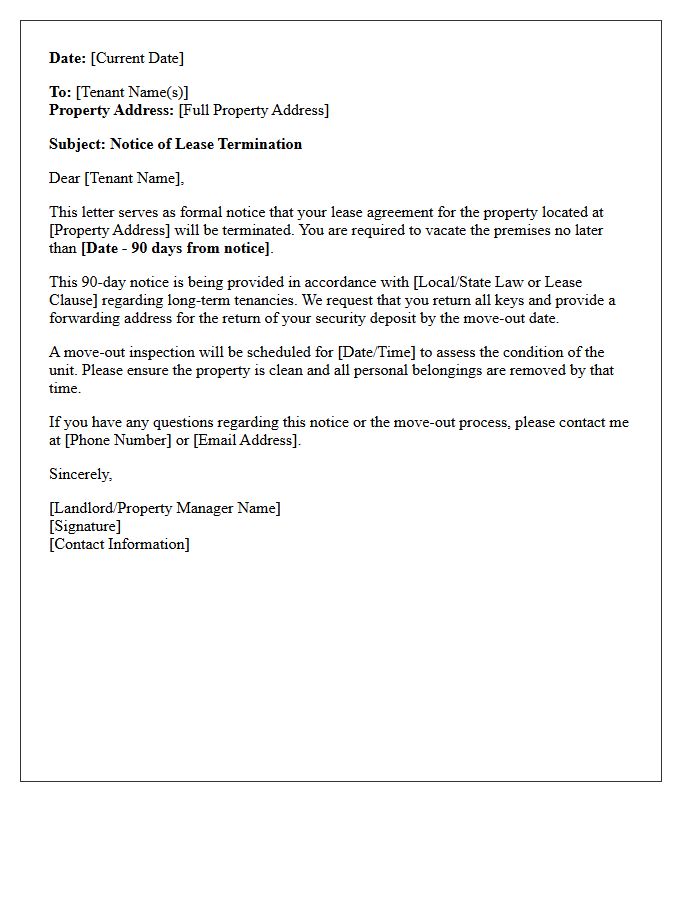
A Ninety-Day Lease Termination Letter is a formal legal notice used to end a rental agreement with long-term tenants, typically those residing in a property for over one year. In many jurisdictions, providing a full ninety days ensures compliance with tenant protection laws, allowing residents ample time to secure new housing. This document must clearly state the move-out date and the reason for termination if required by local statutes. Serving this notice correctly is essential to avoid legal delays or complications during the eviction or transition process.
Standard Non-Renewal Ninety-Day Notice to Vacate Letter
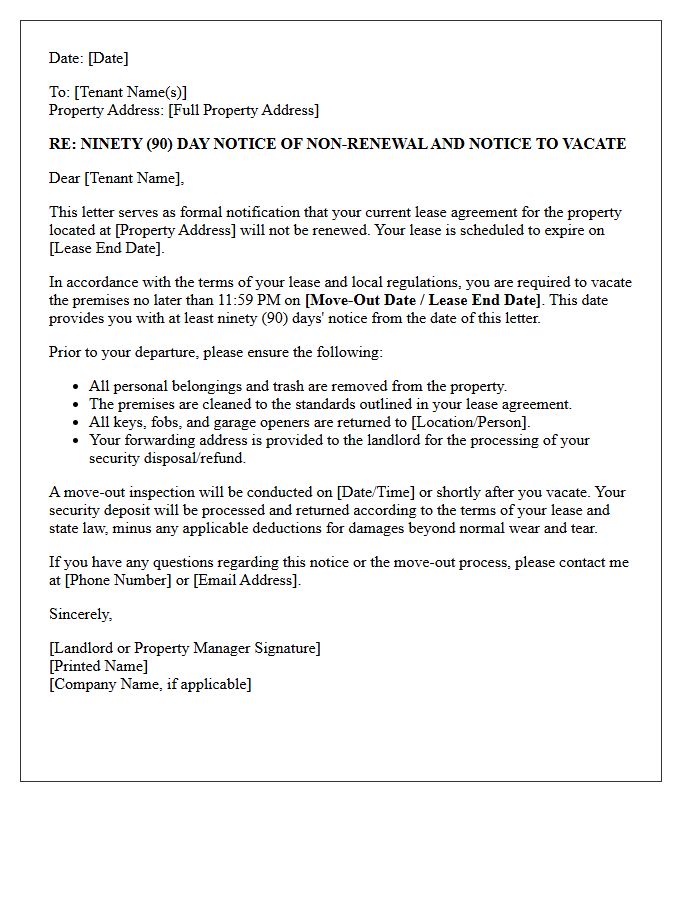
A Standard Non-Renewal Ninety-Day Notice to Vacate Letter is a formal legal document used by landlords to terminate a tenancy-at-will or fixed-term lease. This notice must be delivered at least ninety days before the move-out date, providing tenants ample time to secure new housing. It clearly states that the current rental agreement will not be extended. Compliance with local housing laws is essential during this process to ensure the notice is legally binding and to avoid potential eviction complications or disputes regarding the security deposit or property possession.
Ninety-Day Notice to Vacate Letter for Property Demolition
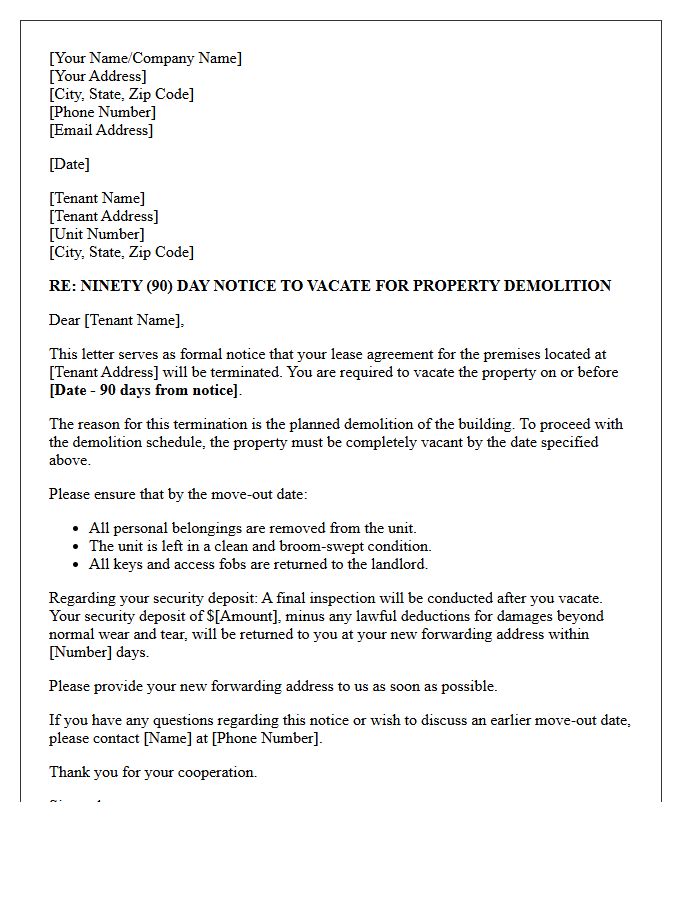
A Ninety-Day Notice to Vacate is a formal legal document issued by landlords when a property is slated for demolition. This written notification informs tenants they must relocate within three months to facilitate structural removal. It is crucial to verify local tenant rights and state laws, as specific relocation assistance or compensation may be required. The notice must clearly state the final move-out date and the reason for termination. Ensuring the document is served correctly protects the owner's legal right to proceed with redevelopment plans while providing residents adequate time to find new housing.
Family Member Move-In Ninety-Day Notice to Vacate Letter
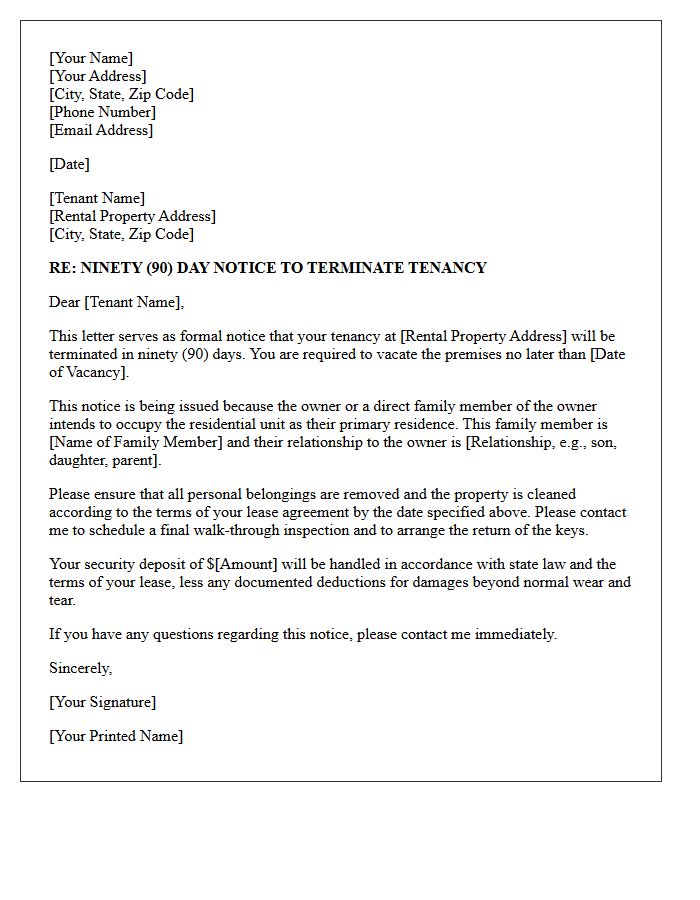
A Family Member Move-In Ninety-Day Notice to Vacate is a formal legal document used by landlords to regain possession of a rental unit for personal or immediate family use. Under specific rent control regulations, owners must provide a ninety-day notice period before the tenant is required to leave. This notice must clearly state the owner's intent, identify the relative moving in, and comply with local relocation assistance requirements. Ensuring the letter follows strict statutory guidelines is essential to avoid potential legal challenges or wrongful eviction claims during the transition process.
Ninety-Day Notice to Vacate Letter for Removal from Rental Market
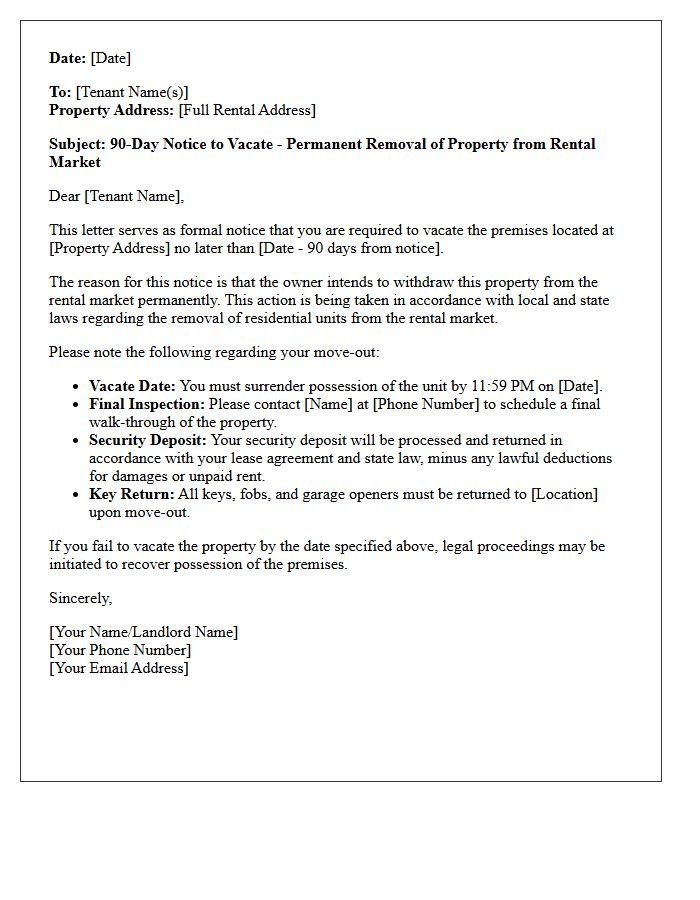
A Ninety-Day Notice to Vacate is a formal legal document used by landlords to terminate a tenancy specifically for permanent removal from the rental market. Under laws like the Ellis Act, owners must provide proper written notice to tenants before withdrawing a property from residential use. This process requires strict adherence to local regulations and often involves filing specific government documentation. Tenants receiving this notice should verify their rights regarding relocation assistance and ensure the landlord is following statutory timelines to avoid unlawful eviction proceedings during the transition period.
Fixed-Term Expiration Ninety-Day Notice to Vacate Letter
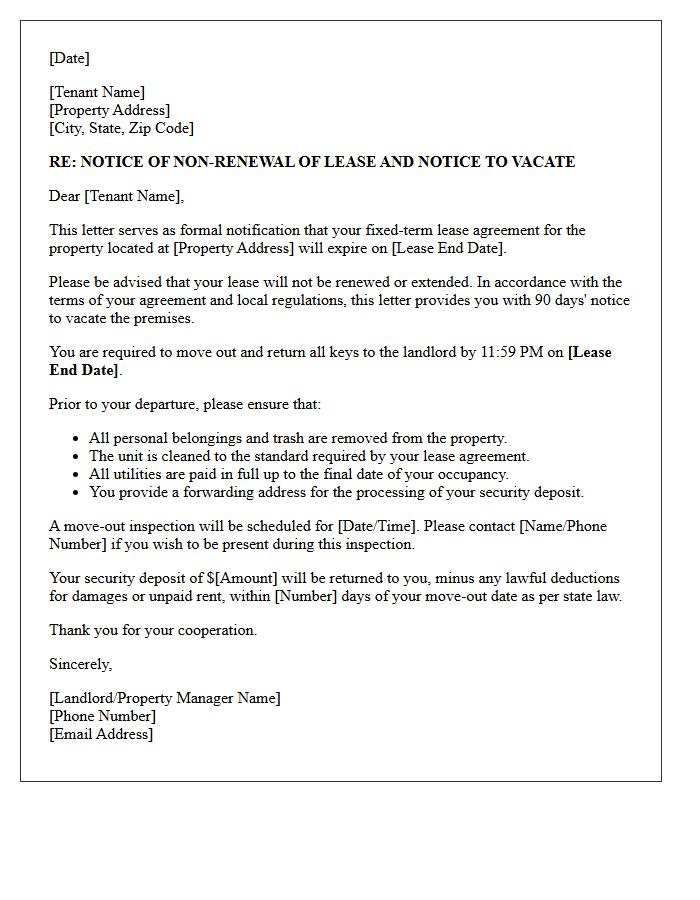
A Fixed-Term Expiration Ninety-Day Notice to Vacate Letter is a formal legal document issued by a landlord to inform a tenant that their lease agreement will not be renewed. To ensure compliance with local housing regulations, this notice must be delivered at least ninety days before the contract ends. It clearly specifies the required move-out date and provides instructions for the property handover. Providing this advance notice helps prevent automatic month-to-month conversions and ensures a transparent transition process for both parties involved in the rental arrangement.
Ninety-Day Notice to Vacate Letter for Permanent Property Retirement
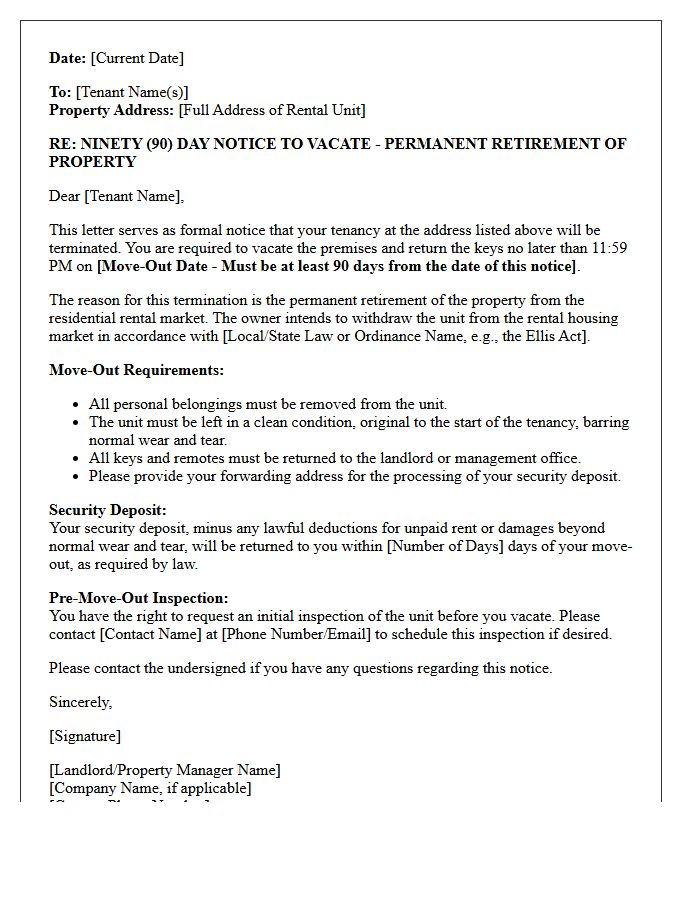
A Ninety-Day Notice to Vacate for permanent property retirement is a formal legal document used by landlords to terminate a tenancy because the unit is being withdrawn from the rental market. This process often falls under the Ellis Act or local rent control regulations. Owners must provide tenants at least ninety days' notice, though some jurisdictions require longer periods for elderly or disabled residents. It is crucial to strictly follow statutory requirements and filing deadlines to ensure the notice is valid and to avoid potential wrongful eviction lawsuits.
What is a ninety-day notice to vacate for long-term tenancy?
A ninety-day notice to vacate is a legal document issued by a landlord to inform a tenant that they must move out of a rental property within 90 days. This extended notice period is typically required by law for long-term tenancies, often defined as residents who have occupied the unit for one year or more.
When is a landlord required to provide a 90-day notice instead of 30 or 60 days?
In many jurisdictions, the length of the notice period is determined by the duration of the tenancy. While 30 or 60 days may suffice for shorter stays, a 90-day notice is often mandated for tenants who have lived in a property for over a year or in specific cases involving subsidized housing (such as Section 8) and certain "just cause" eviction protections.
What information must be included in a valid 90-day notice to vacate?
A legally compliant 90-day notice must be in writing and include the full address of the rental unit, the date the notice was served, the final date the tenant must vacate, and a clear statement of the reason for termination if "just cause" is required by local law.
Can a tenant be evicted before the 90-day notice period ends?
A tenant cannot be forced out before the 90 days expire simply for the termination of the lease. However, if the tenant violates other terms of the rental agreement-such as failing to pay rent or damaging the property-the landlord may initiate a separate, shorter eviction process for cause.
Do tenants still have to pay rent during the 90-day notice period?
Yes, tenants are legally obligated to continue paying their agreed-upon rent for the entire duration of the 90-day notice period. Failure to pay rent during this time can result in an earlier eviction filing and potential legal action to recover the unpaid balance.

Comments