
A Notice to Vacate for Owner Move-In is a formal legal document used by landlords to regain possession of a rental unit for personal use. This process requires strict adherence to local housing laws and specific notification periods to ensure a valid tenancy termination. Understanding your rights and obligations is essential for a smooth transition. Below are some ready to use templates.
Image cover: Owner Move-In Eviction Notices: Formal Templates and Compliance Guide
Letter Samples List
- Notice to Vacate for Owner Move-In Intent Letter
- Sixty-Day Notice to Vacate Owner Move-In Letter
- Property Owner Primary Residence Move-In Notice Letter
- Immediate Family Member Move-In Intent Eviction Letter
- Lease Termination and Owner Move-In Declaration Letter
- Thirty-Day Notice to Vacate for Owner Occupancy Letter
- Owner Intent to Occupy and Notice to Vacate Letter
- End of Lease Term Owner Move-In Notification Letter
- Month-to-Month Tenancy Termination Owner Move-In Letter
- Landlord Move-In Eviction Notice and Relocation Letter
- Just Cause Eviction for Owner Intent to Occupy Letter
- Property Management Notice of Owner Move-In Intent Letter
Notice to Vacate for Owner Move-In Intent Letter
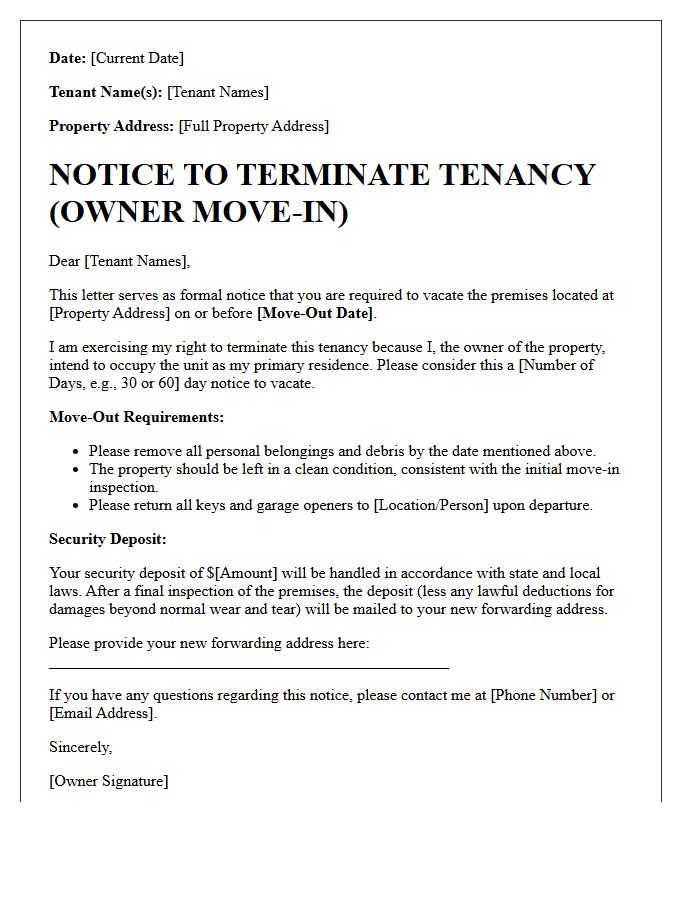
A Notice to Vacate for Owner Move-In is a formal legal document used by landlords to regain possession of a rental unit for personal use. It is essential to ensure the notice complies with local just cause eviction ordinances, which often require specific relocation payments or minimum residency terms. Landlords must act in good faith, intending to occupy the property as their primary residence for a set duration. Failure to follow strict procedural requirements or providing false intent can lead to significant legal penalties and wrongful eviction lawsuits.
Sixty-Day Notice to Vacate Owner Move-In Letter
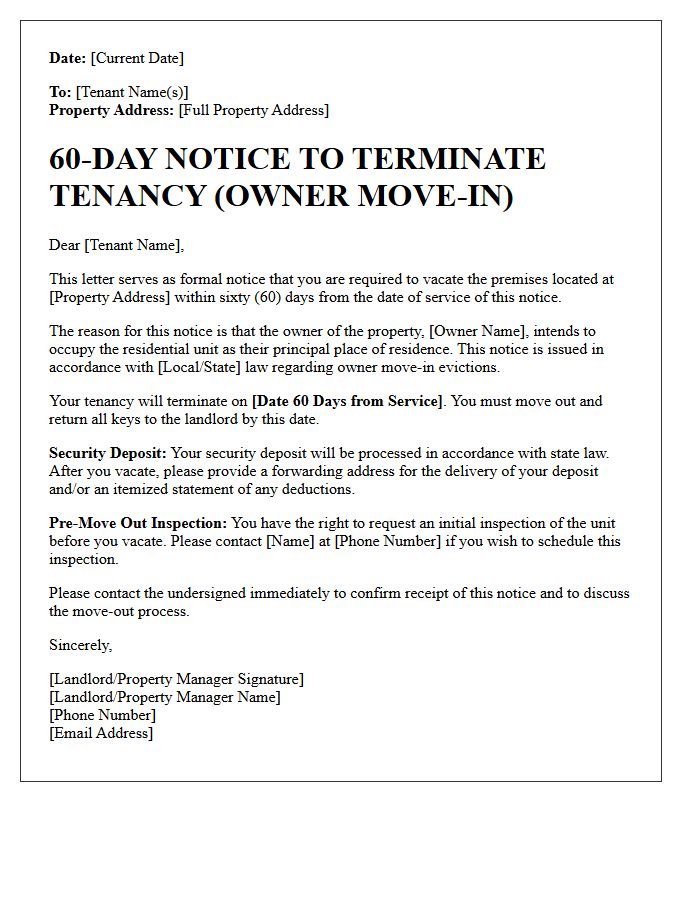
A Sixty-Day Notice to Vacate for an owner move-in is a formal legal document used by landlords to regain possession of a rental unit for personal occupancy. This notice is typically required for tenants who have lived in a property for over one year. To be valid, it must adhere to local rent control laws and include specific just-cause language. Providing the correct notice period and meeting statutory requirements regarding relocation assistance are essential to ensure the eviction process is legally enforceable and avoids potential litigation.
Property Owner Primary Residence Move-In Notice Letter
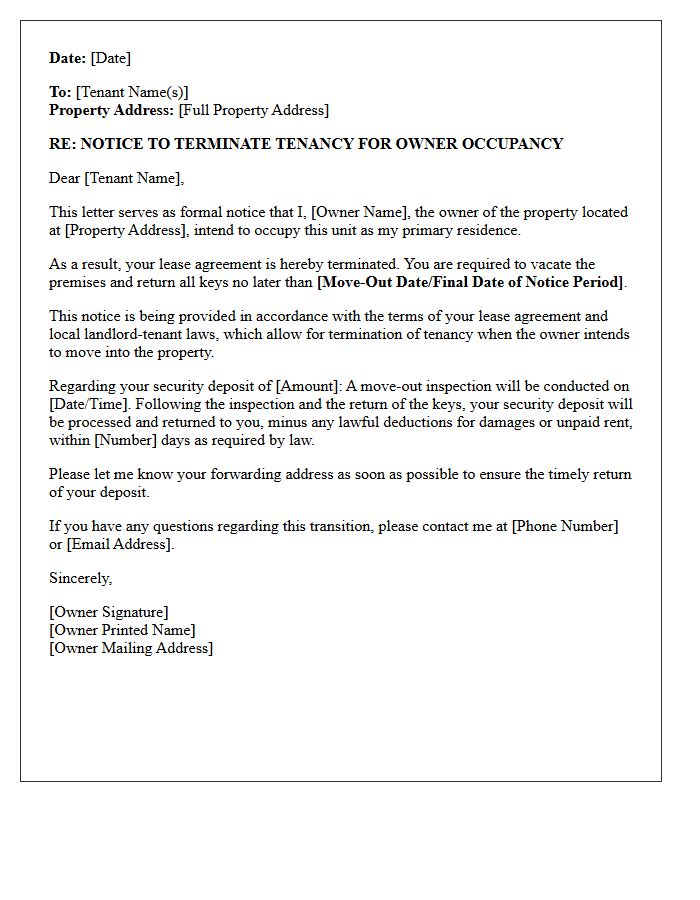
A Property Owner Primary Residence Move-In Notice Letter is a legal document used to terminate a tenancy when a landlord intends to occupy the unit. To ensure validity, owners must provide a written notice within specific statutory timeframes, often sixty days. It is crucial to check local rent control ordinances, as some jurisdictions require relocation assistance payments or proof of good faith. Failure to follow formal procedures or providing false intentions can lead to wrongful eviction lawsuits. Always include the move-out date and the specific legal grounds for the recovery of possession.
Immediate Family Member Move-In Intent Eviction Letter
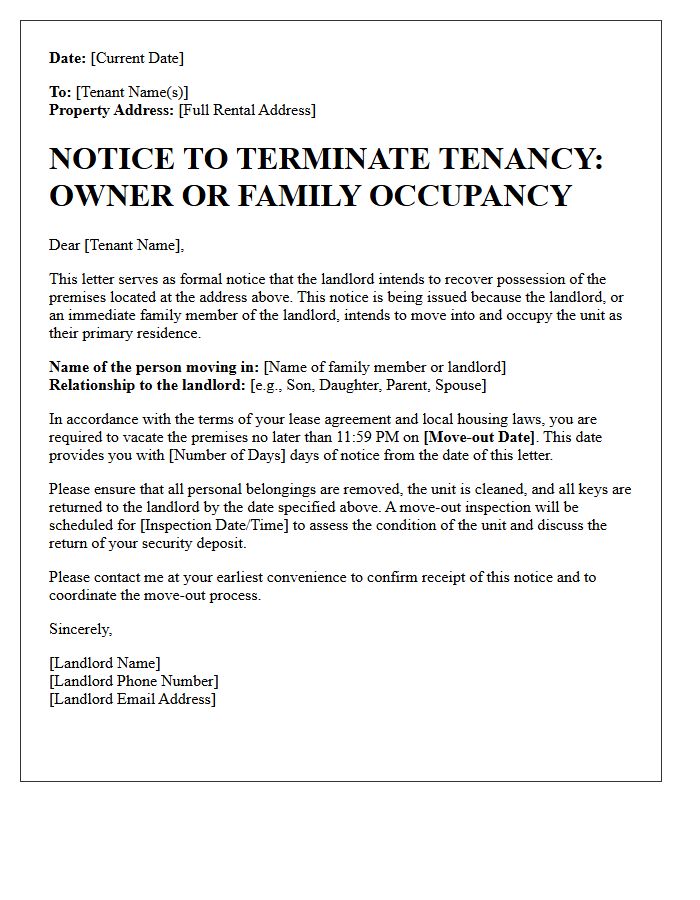
An Immediate Family Member Move-In Intent Eviction Letter is a formal legal notice issued by a landlord to regain possession of a rental unit for personal use. To be valid, the landlord or their qualified relative must intend to occupy the premises as their primary residence for a specific duration. This process requires strict compliance with local rent control regulations and notice periods. Landlords must act in good faith, as any evidence of a retaliatory or fraudulent motive can lead to severe legal penalties and wrongful eviction lawsuits.
Lease Termination and Owner Move-In Declaration Letter
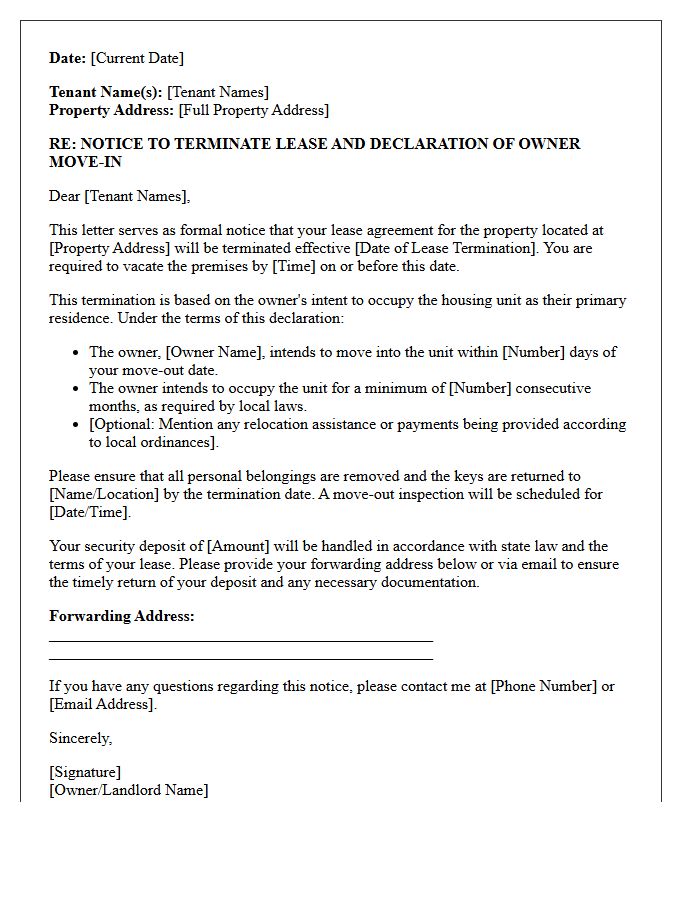
A Lease Termination and Owner Move-In Declaration Letter is a formal legal notice used by landlords to regain possession of a rental unit for personal use. This document must clearly state the owner's intent to occupy the premises as their primary residence. To ensure validity, it must comply with local rent control laws, specify the required notice period, and often include a formal declaration under penalty of perjury. Providing relocation assistance and following strict procedural requirements is essential to avoid potential wrongful eviction lawsuits and ensure a smooth legal transition.
Thirty-Day Notice to Vacate for Owner Occupancy Letter
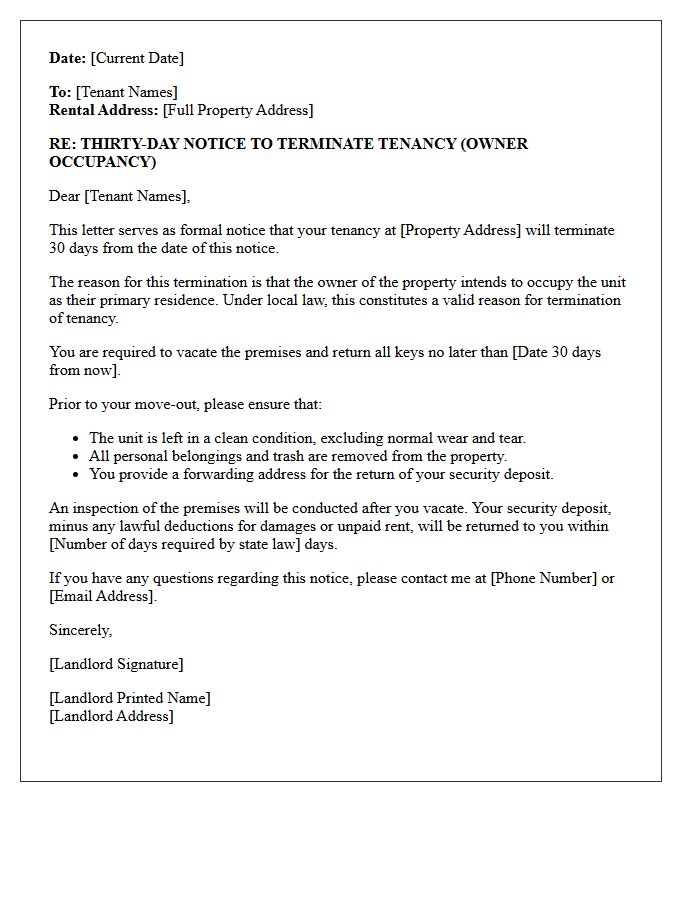
A Thirty-Day Notice to Vacate for Owner Occupancy is a formal legal document used by landlords to regain possession of a rental unit for personal use. It is essential to ensure your local jurisdiction permits "no-fault" evictions for this purpose. The letter must clearly state the move-out deadline and comply with specific state notice periods. Failure to provide written notice or follow strict procedural requirements can lead to legal delays. Always check if relocation assistance is required by law to ensure the transition remains legally valid and enforceable.
Owner Intent to Occupy and Notice to Vacate Letter
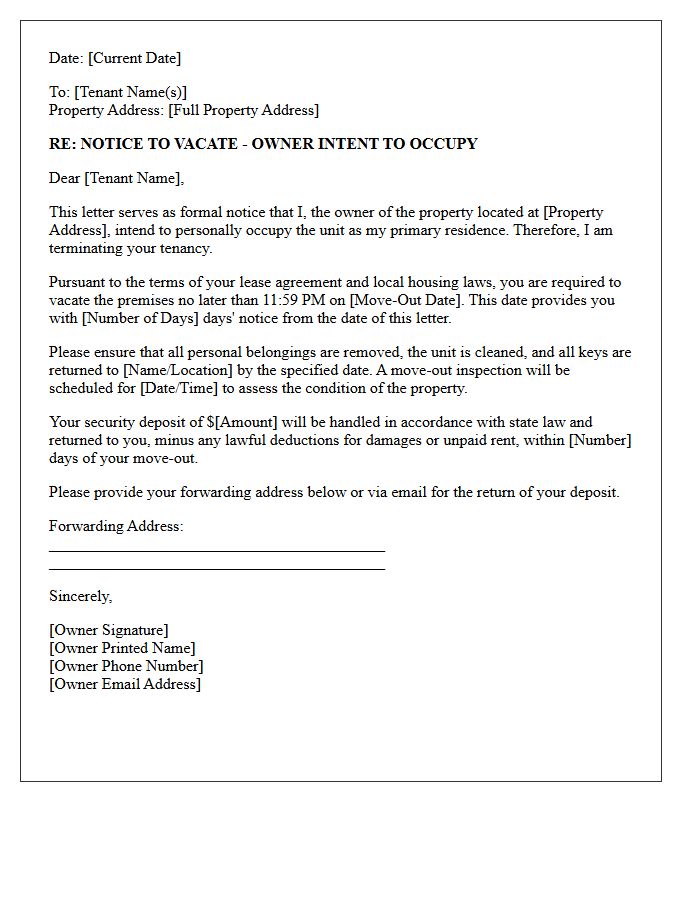
An Owner Intent to Occupy is a legal justification for a landlord to regain possession of a rental unit for personal use. To initiate this process, the landlord must serve a formal Notice to Vacate Letter, adhering to specific state and local notice periods. This document serves as an official communication informing the tenant they must move out by a set date. Ensuring the notice includes the required legal language and good faith intent is essential to prevent wrongful eviction claims and ensure a valid property transition.
End of Lease Term Owner Move-In Notification Letter
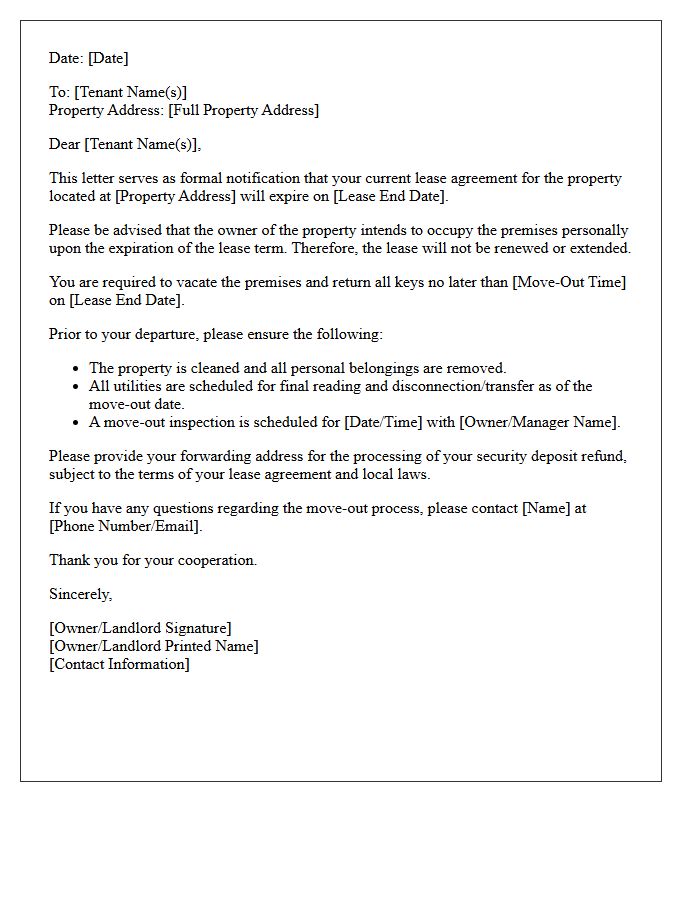
An End of Lease Term Owner Move-In Notification Letter is a formal legal document used by landlords to regain possession of a rental property for personal use. It must strictly comply with local rent control laws and state regulations to be valid. The notice typically requires a specific notice period, often 30 to 90 days, before the lease expires. Landlords must act in good faith, intending to occupy the unit as their primary residence. Providing clear move-out instructions and deadlines helps ensure a smooth legal transition and avoids potential wrongful eviction claims.
Month-to-Month Tenancy Termination Owner Move-In Letter
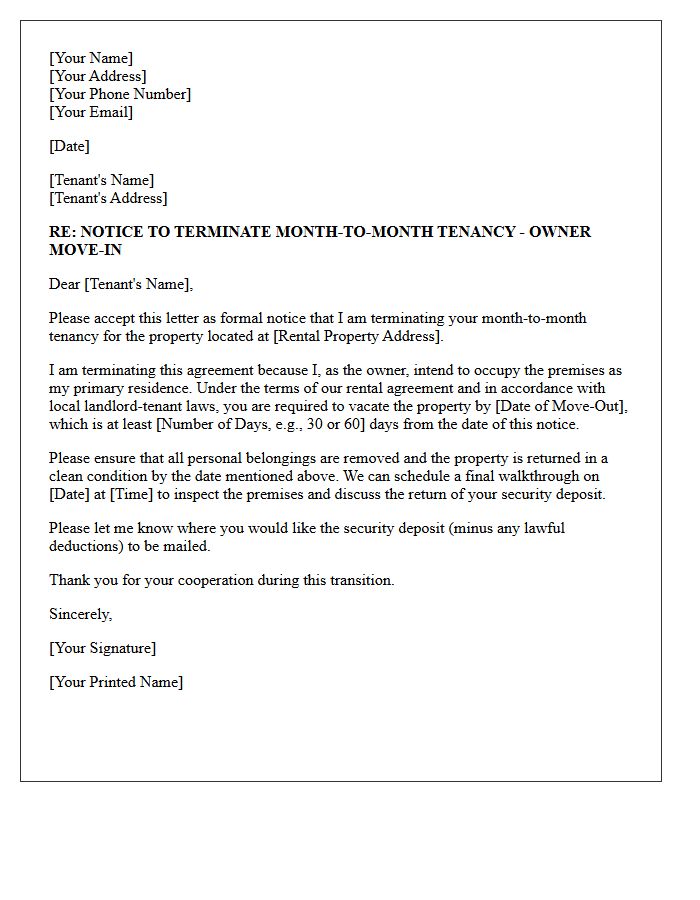
A Month-to-Month Tenancy Termination Owner Move-In Letter is a formal legal notice used by landlords to regain possession of a rental unit for personal use. To ensure validity, the document must strictly comply with local rent control laws and state notice periods, typically requiring 30 or 60 days. The letter must clearly state the intent to occupy the property as a primary residence and include the specific move-out date. Providing relocation assistance or a just cause explanation is often legally mandatory to prevent wrongful eviction claims during this transition.
Landlord Move-In Eviction Notice and Relocation Letter
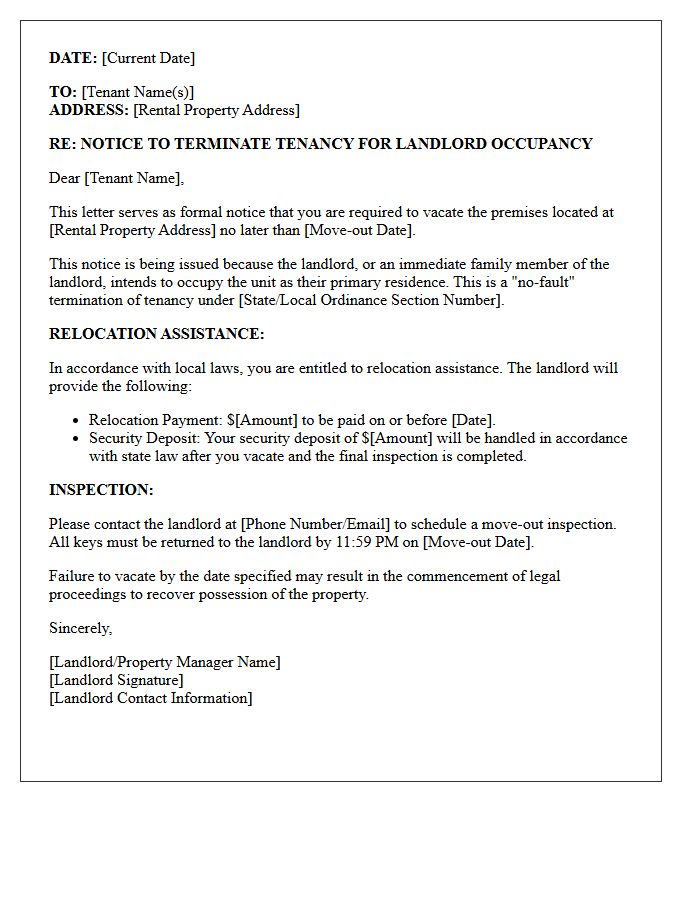
A Landlord Move-In Eviction, often called an Owner Move-In (OMI), allows owners to recover possession of a rental unit for their personal residence. To be legally valid, the landlord must provide a formal written notice and typically pay relocation assistance to help the tenant cover moving costs. Strict rules regarding good faith occupancy and minimum residency periods apply to prevent wrongful evictions. Tenants should verify local ordinances, as many jurisdictions require specific disclosure forms and financial compensation based on household size or tenant vulnerability to ensure a lawful transition.
Just Cause Eviction for Owner Intent to Occupy Letter
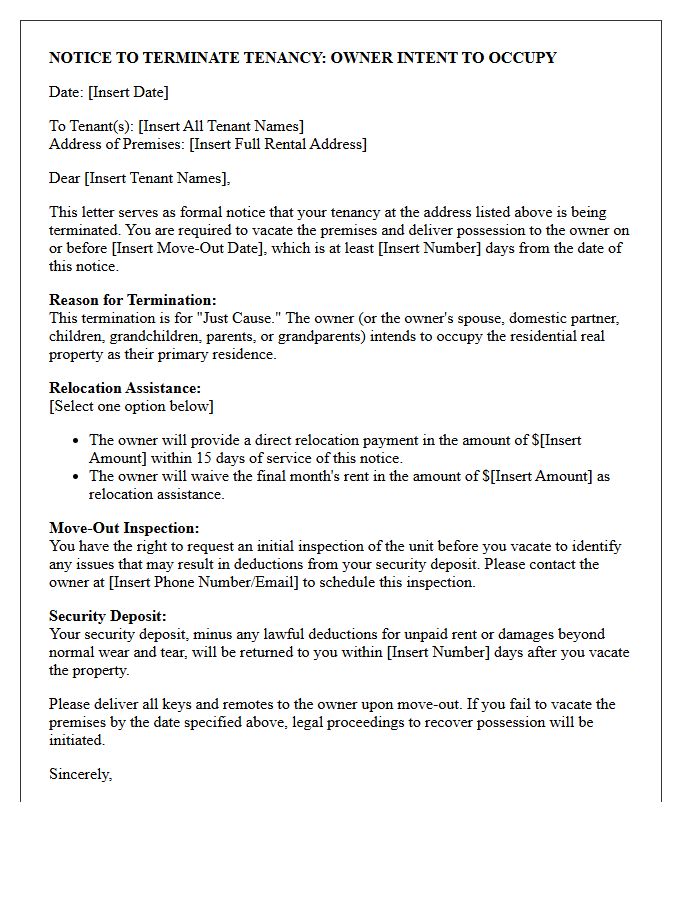
A Just Cause Eviction for owner move-in occurs when a landlord terminates a tenancy to occupy the unit as their primary residence. To be legally valid, the landlord must provide a formal written notice specifying the family member moving in and the intended duration of stay. Most jurisdictions require good faith intent and may mandate relocation assistance payments to the tenant. Failure to follow local stabilization laws or filing a fraudulent notice can lead to severe legal penalties and wrongful eviction lawsuits. Always verify specific municipal requirements before serving the letter.
Property Management Notice of Owner Move-In Intent Letter
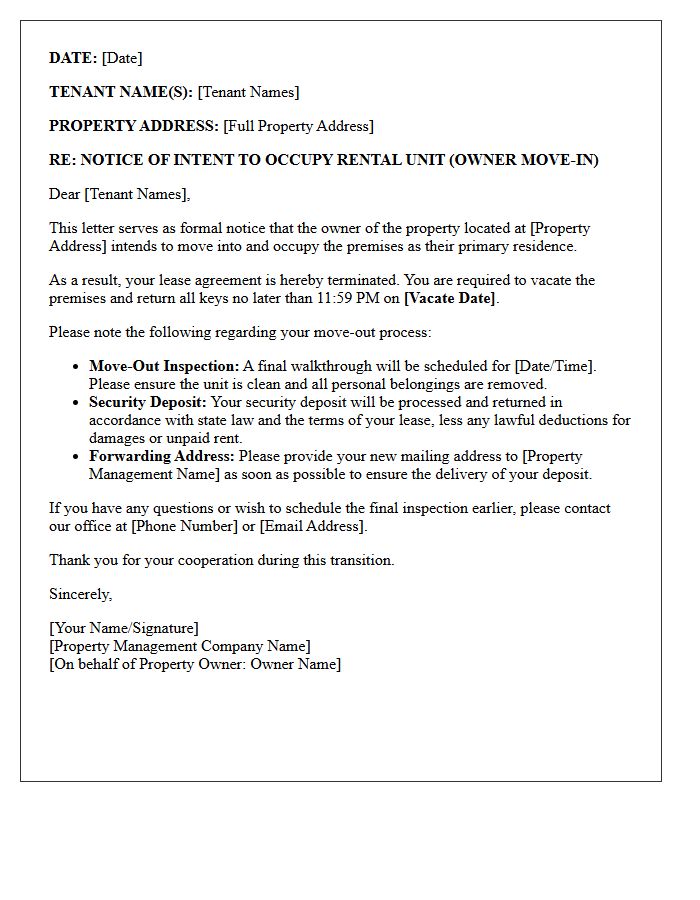
A Notice of Owner Move-In Intent is a formal legal document used by landlords to regain possession of a rental unit for personal use. To ensure compliance, the letter must clearly state the intended move-in date and identify the specific family member who will occupy the residence. Landlords must strictly follow local rent control regulations and notice periods to avoid wrongful eviction claims. Providing this written notice professionally maintains transparency and protects the legal rights of both the property owner and the current tenant during the transition.
What is a Notice to Vacate for Owner Move-In?
A Notice to Vacate for Owner Move-In is a legal document issued by a landlord to a tenant terminating a lease agreement because the owner or an immediate family member intends to occupy the rental unit as their primary residence.
How much notice must a landlord provide for an owner move-in eviction?
Notice periods vary by jurisdiction, but landlords are typically required to provide between 30 to 90 days' notice. Local rent control ordinances often mandate specific timelines and formal documentation to ensure the notice is legally valid.
Can a tenant contest a Notice to Vacate for Owner Move-In?
Yes, a tenant can contest the notice if they believe the landlord is acting in bad faith, if the landlord owns a comparable vacant unit, or if the tenant belongs to a protected class (such as seniors or the disabled) who may have additional protections under local laws.
Is a landlord required to pay relocation assistance for owner move-in evictions?
In many rent-controlled jurisdictions, landlords are legally required to provide a relocation payment to help the tenant cover the costs of moving. The amount often depends on the length of the tenancy and the number of occupants.
What happens if the owner does not move in after the tenant vacates?
If the landlord fails to occupy the unit within a specific timeframe or re-lists it for rent shortly after the eviction, the former tenant may be entitled to sue for wrongful eviction, seeking damages, moving costs, and potentially the right to re-occupy the unit.


Comments