
Handling a lease violation requires a formal Notice to Vacate for Unauthorized Pets to protect your property rights. This legal document informs tenants of the policy breach, outlining required corrective actions or move-out deadlines to ensure compliance with rental agreements. Effectively managing unapproved animals maintains property standards and safety. Below are some ready to use templates.
Image cover: Official Notice to Vacate for Unauthorized Pet Lease Violations
Letter Samples List
- Notice To Vacate Letter For Unauthorized Pets On Premises
- Property Management Eviction Letter For Unapproved Animals
- Lease Termination Letter Due To Prohibited Pets
- Notice To Quit Letter For Unauthorized Pet Violations
- Final Demand To Vacate Letter For Illegal Pets
- Official Property Management Letter For Pet Policy Breach
- Landlord Notice Letter To Vacate For Unauthorized Pets
- Notice Of Lease Cancellation Letter For Unpermitted Animals
- Formal Eviction Letter For Keeping Pets On Premises
- Property Manager Letter For Unauthorized Animal Eviction
- Standard Notice To Vacate Letter For Pet Rule Violations
- Immediate Surrender Of Premises Letter For Prohibited Pets
Notice To Vacate Letter For Unauthorized Pets On Premises
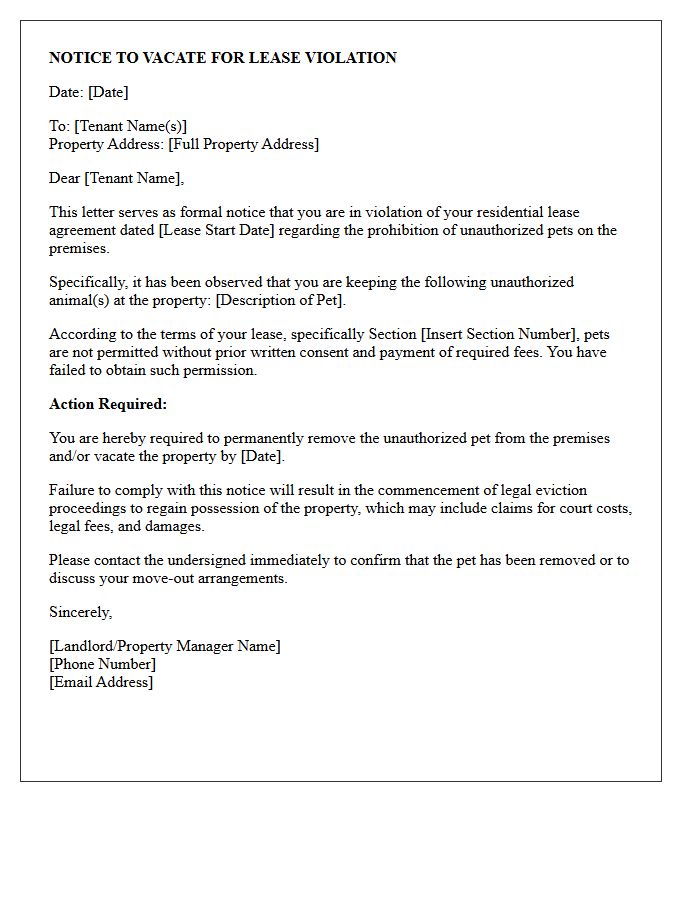
A Notice to Vacate for unauthorized pets is a formal legal document issued when a tenant violates a lease agreement by keeping an unapproved animal. This notice serves as a final warning, typically providing a specific timeframe to either remove the pet or vacate the premises. It is essential to include the violation details and the required remedy to comply with local housing laws. Failing to act on this notice can lead to formal eviction proceedings, making it a critical step in enforcing property rules and maintaining lease compliance.
Property Management Eviction Letter For Unapproved Animals
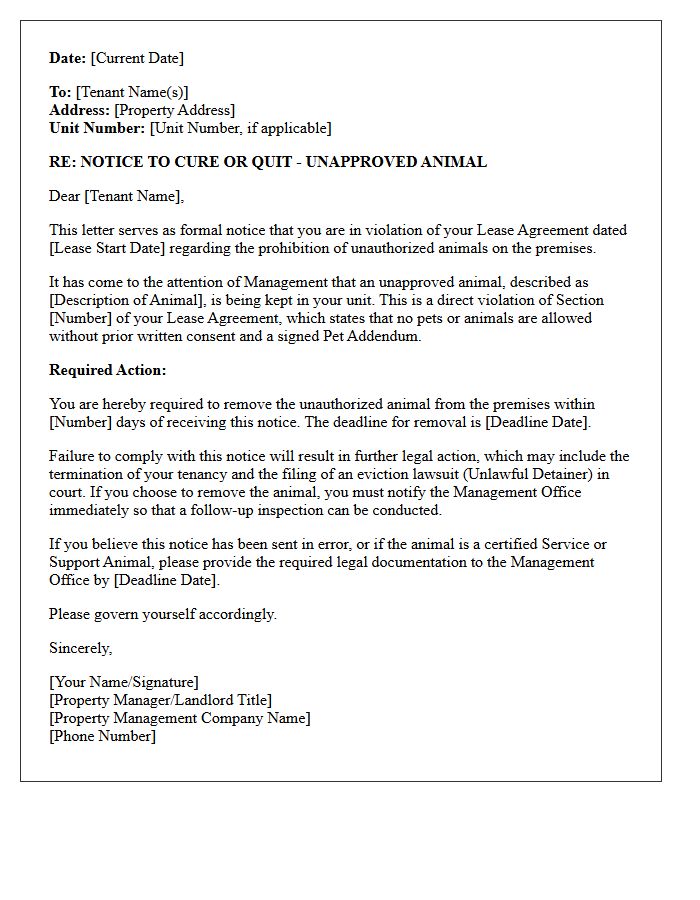
When issuing a property management notice for unapproved animals, the document must clearly cite the specific lease provision being violated. This formal eviction warning provides the tenant a set timeframe to either remove the unauthorized pet or vacate the premises. Accuracy is vital; ensure the letter includes the date, property address, and clear instructions for compliance to maintain legal standing. Proper documentation of the breach is essential for lease enforcement and protects the landlord's rights should the situation escalate to formal court proceedings or permanent removal of the resident.
Lease Termination Letter Due To Prohibited Pets
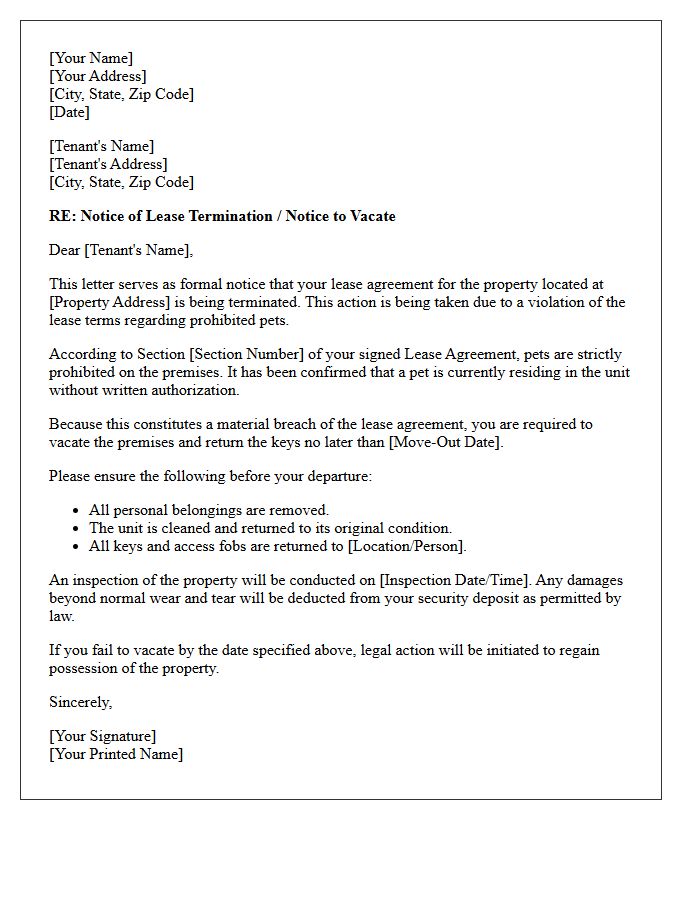
A lease termination letter due to prohibited pets is a formal legal notice issued by a landlord to a tenant for violating a "no-pets" policy. It serves as an eviction warning or a definitive notice to vacate the premises. The document must clearly state the specific lease clause breached and provide a deadline to either remove the animal or move out. Landlords should include evidence of the violation to ensure legal compliance. Tenants receiving this letter should review local tenant rights regarding service animals or cure periods before responding.
Notice To Quit Letter For Unauthorized Pet Violations
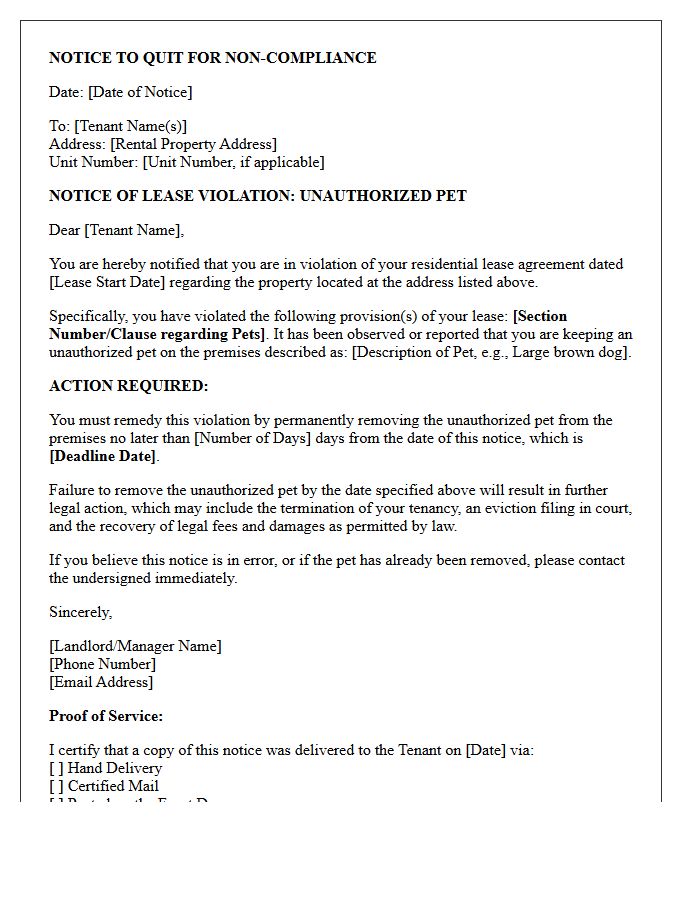
A Notice to Quit for unauthorized pet violations is a formal legal document notifying a tenant they have breached their lease agreement. It serves as an official warning to either remove the animal immediately or vacate the premises within a specified timeframe. Landlords must clearly detail the lease violation and provide a "cure" period as required by local laws. Failure to comply with the notice can lead to formal eviction proceedings. It is essential to serve this letter correctly to ensure it remains legally binding in court.
Final Demand To Vacate Letter For Illegal Pets
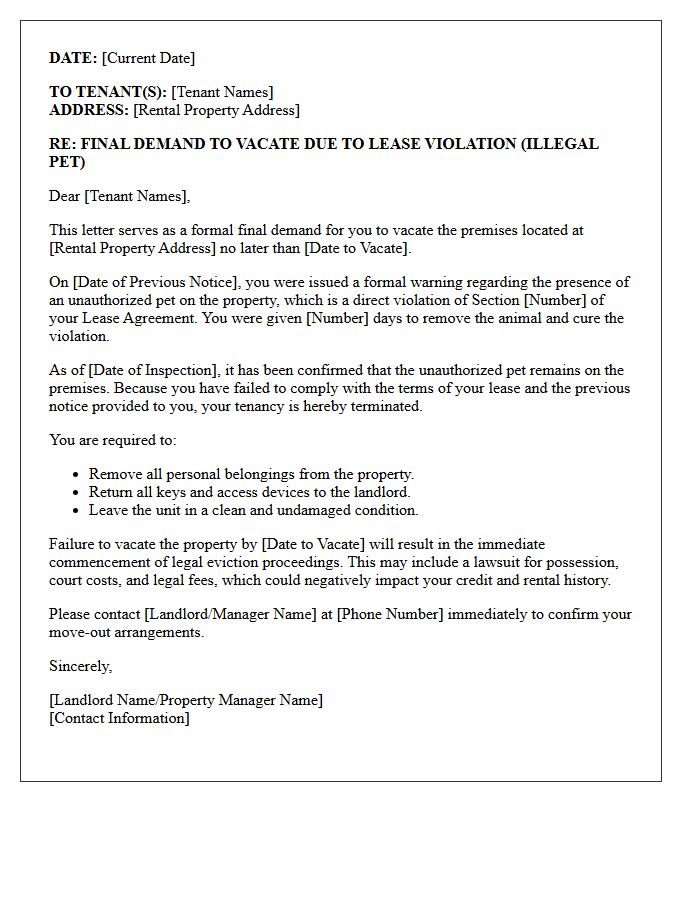
A final demand to vacate for unauthorized animals serves as a formal legal notice that a tenant has breached their lease agreement. This document explicitly states that the illegal pets must be permanently removed or the occupants must surrender the premises by a specific deadline. It acts as a critical precursor to eviction proceedings, providing essential evidence of the landlord's attempt to resolve the violation. To ensure validity, the notice should reference the specific lease clause violated and outline the consequences of non-compliance to protect the property owner's rights.
Official Property Management Letter For Pet Policy Breach
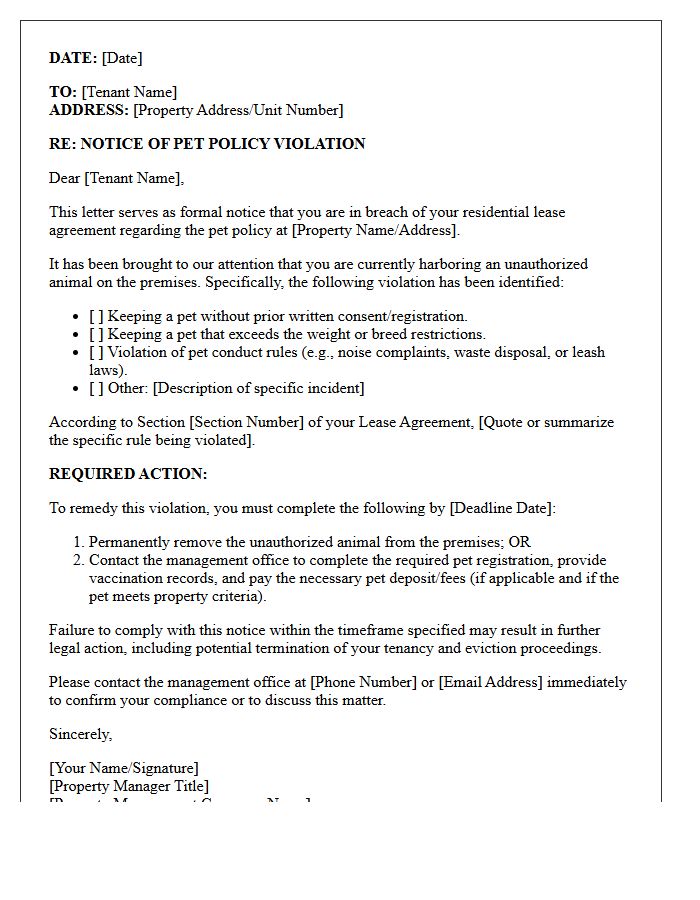
Receiving an official property management letter for a pet policy breach is a formal notice that your animal's presence violates your lease agreement. This document typically outlines the specific violation, such as unauthorized breeds, noise complaints, or sanitation issues. It serves as a legal warning that requires immediate corrective action or the removal of the pet to avoid eviction proceedings. Always review your original contract and provide the necessary compliance documentation or fees within the specified timeframe to resolve the dispute and maintain your residency status.
Landlord Notice Letter To Vacate For Unauthorized Pets
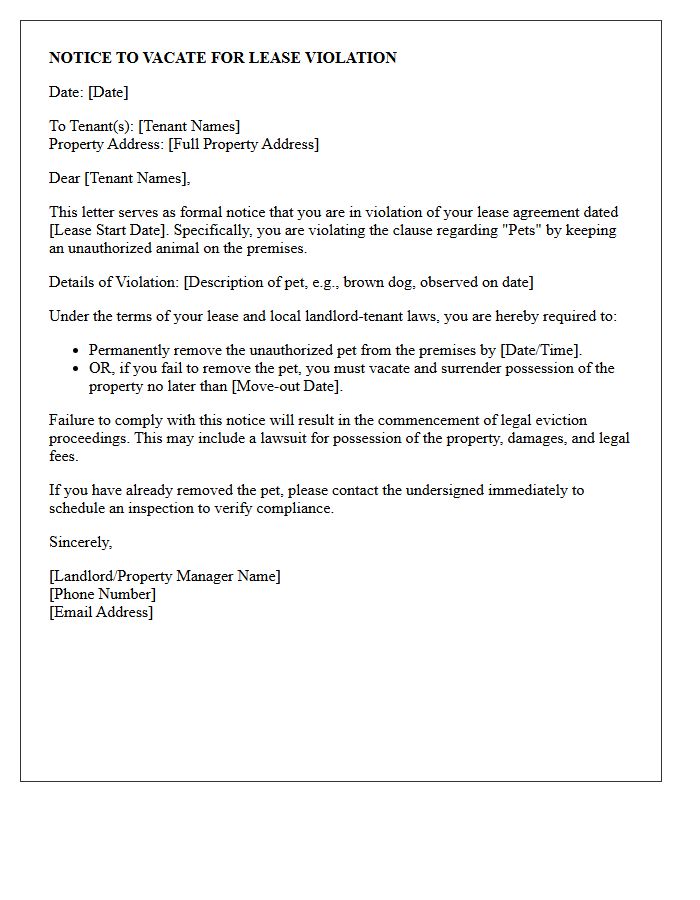
A landlord notice letter to vacate for unauthorized pets is a formal legal document issued when a tenant violates the lease agreement by keeping an unapproved animal. This notice to cure or quit typically provides a specific deadline for the tenant to either remove the pet or move out. It serves as essential evidence for eviction proceedings if the breach continues. Landlords must ensure the notice complies with local housing laws and clearly identifies the specific lease provision being violated to remain legally enforceable.
Notice Of Lease Cancellation Letter For Unpermitted Animals
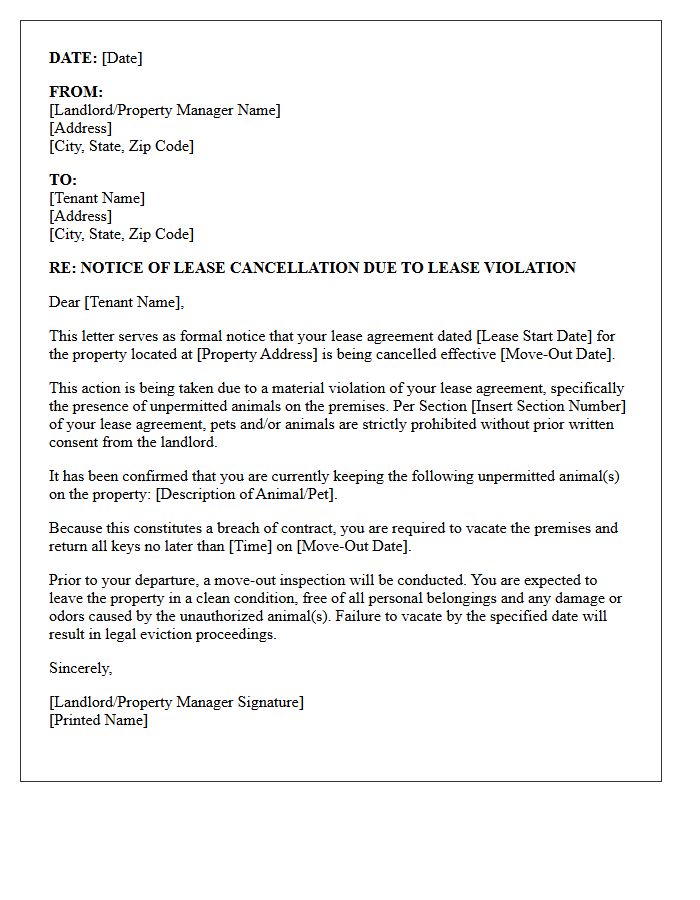
A Notice of Lease Cancellation for unpermitted animals is a formal legal document issued when a tenant violates a pet policy. It serves as a breach of contract notification, specifying that an unauthorized animal was found on the premises. The letter typically provides a deadline to remedy the violation by removing the animal or vacating the property. Landlords must ensure the notice complies with local housing laws and clearly references the specific lease clause being enforced to remain legally valid during potential eviction proceedings.
Formal Eviction Letter For Keeping Pets On Premises
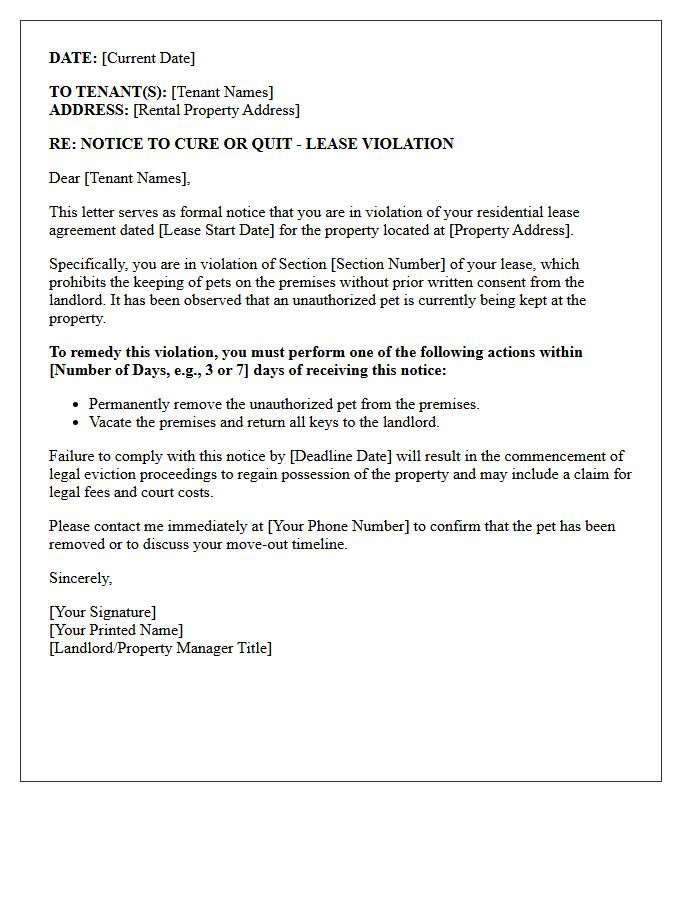
A formal eviction letter for unauthorized pets is a legal notice informing tenants they have breached their lease agreement. It serves as a Cure or Quit demand, requiring the occupant to either remove the animal or vacate the property within a specified timeframe. To be valid, the document must clearly reference the lease violation and provide the deadline for compliance. Landlords must follow local housing laws and serve the notice properly to ensure it remains enforceable in court during future eviction proceedings if the tenant fails to comply.
Property Manager Letter For Unauthorized Animal Eviction
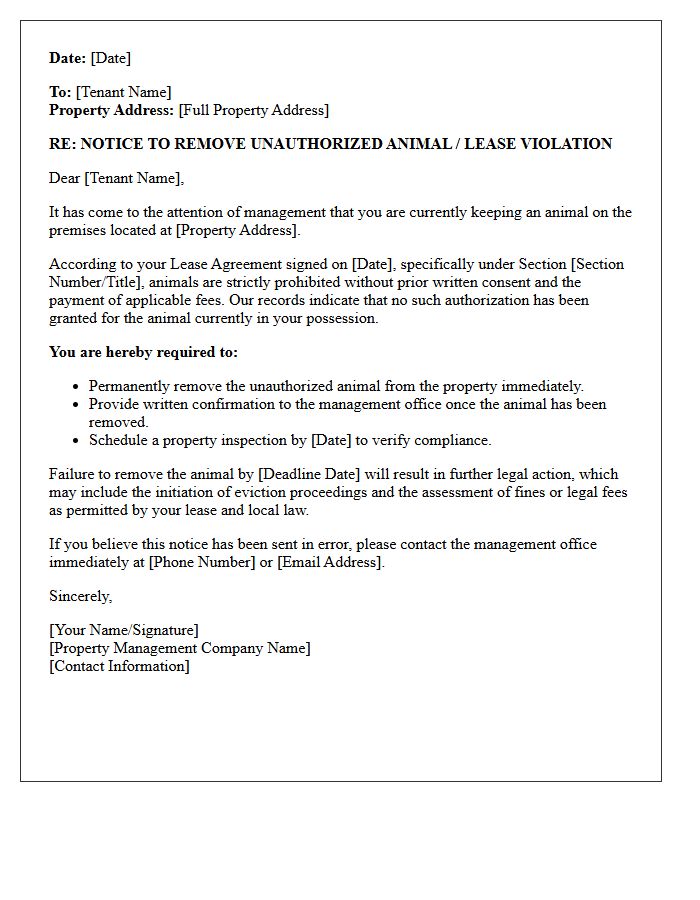
A property manager letter for unauthorized animal eviction serves as a formal legal notice informing tenants of a lease violation. It must clearly identify the non-compliant pet and specify the required timeframe for its permanent removal to avoid further action. Providing evidence of the breach ensures legal compliance and protects the landlord's rights. If the tenant fails to address the lease violation, this documentation becomes critical for initiating formal eviction proceedings. Professional communication helps maintain property standards while offering the resident a final opportunity to rectify the situation immediately.
Standard Notice To Vacate Letter For Pet Rule Violations
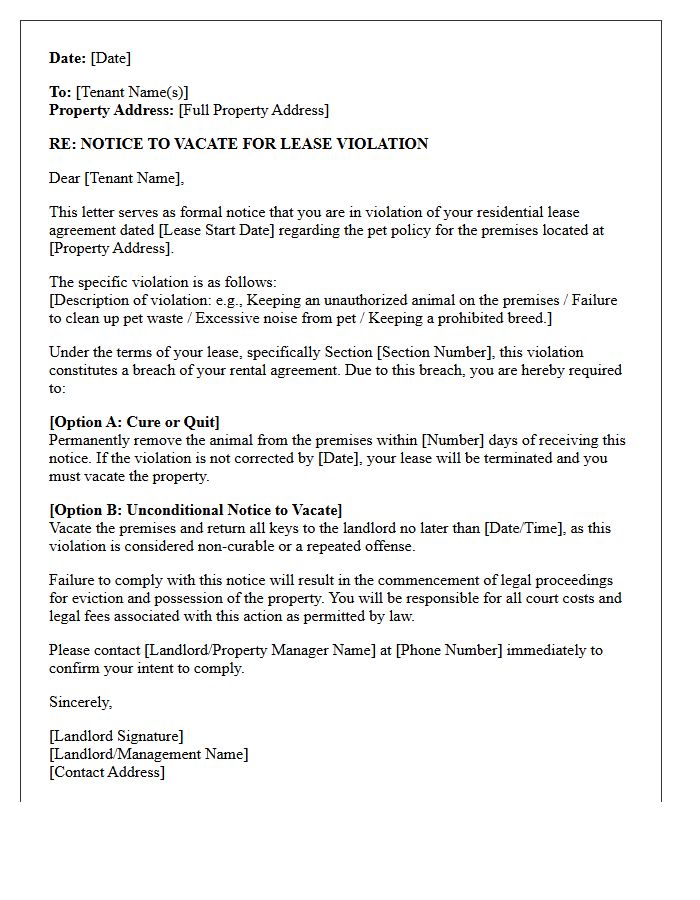
A standard notice to vacate for pet rule violations is a formal legal document issued by a landlord when a tenant breaches lease agreements regarding animals. This notice typically serves as a curative warning, granting the tenant a specific timeframe to remove the unauthorized pet or face eviction. It must clearly outline the specific violation, the date by which compliance is required, and the consequences of inaction. Ensuring legal compliance with local housing laws is essential for the notice to be enforceable during formal eviction proceedings if the violation persists.
Immediate Surrender Of Premises Letter For Prohibited Pets
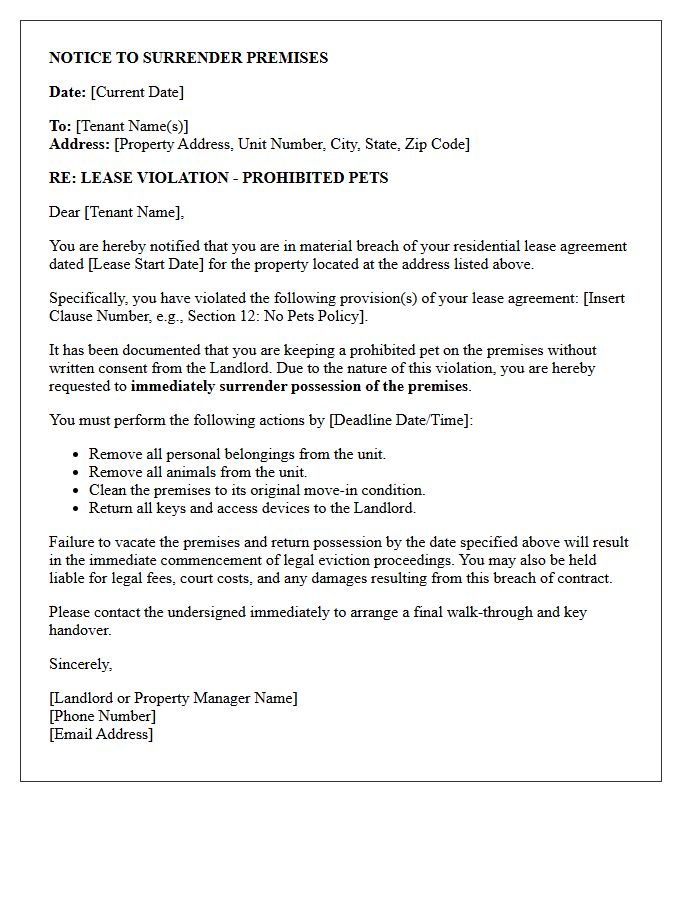
An immediate surrender of premises letter for prohibited pets is a formal legal notice issued by a landlord demanding a tenant vacate due to a lease violation. This document typically asserts that keeping an unauthorized animal constitutes a material breach of the rental agreement. To avoid eviction proceedings, tenants must either remove the pet immediately or surrender the property within the specified timeframe. It is crucial to review local housing laws, as some jurisdictions require a notice to cure before a landlord can demand an absolute forfeiture of the residency.
What is a Notice to Vacate for unauthorized pets?
A Notice to Vacate for unauthorized pets is a formal legal document issued by a landlord to a tenant who is keeping an animal on the premises in violation of the lease agreement. It serves as a demand for the tenant to either remove the pet or vacate the property within a specified timeframe.
Can I be evicted immediately for having an unauthorized pet?
Typically, no. In most jurisdictions, a landlord must first provide a "Cure or Quit" notice, which gives the tenant a set number of days (usually 3 to 14) to remove the pet or resolve the lease violation before formal eviction proceedings can begin in court.
What happens if I refuse to remove an unauthorized pet after receiving a notice?
If you fail to remove the pet or move out by the deadline stated in the notice, the landlord may file an unlawful detainer lawsuit to legally evict you. This can result in a court order for removal, financial penalties, and a negative impact on your credit and rental history.
Are service animals and emotional support animals considered unauthorized pets?
No. Under the Fair Housing Act (FHA), verified service animals and emotional support animals (ESAs) are generally not considered pets. Landlords cannot issue a Notice to Vacate for these animals, even if the lease has a "no-pet" policy, provided the tenant has followed the proper request procedures and provided necessary documentation.
What should I do if I receive a Notice to Vacate for a pet I don't have?
If you receive an erroneous notice, you should immediately provide a written response to your landlord denying the presence of an animal. Request a property inspection to verify the claim and keep copies of all correspondence to protect your rights in case of further legal action.

Comments