
A Notice of Electronic Payment Failure is an essential communication sent when an automated transaction is declined. It informs customers of billing issues, such as expired cards or insufficient funds, ensuring service continuity and secure debt recovery. Handling these notifications professionally maintains trust while resolving financial discrepancies quickly. To help you draft these messages, below are some ready to use templates.
Image cover: Failed Electronic Payment: Official Notice Templates and Samples
Letter Samples List
- Initial Notice of Electronic Rent Payment Failure Letter
- First Reminder Letter for Declined Online Rent Transaction
- Urgent Letter Regarding Insufficient Funds for ACH Transfer
- Auto-Pay Credit Card Decline Notification Letter
- Returned E-Check Penalty and Payment Failure Letter
- Notice of ACH Rejection and Tenant Account Hold Letter
- Second Attempt Electronic Payment Processing Failure Letter
- Final Warning Letter for Unresolved Electronic Payment Decline
- Lease Violation Letter for Repeated Online Payment Failures
- Alternative Payment Method Request Letter Following E-Payment Failure
- Electronic Tenant Ledger Update and Payment Failure Letter
- Late Fee Assessment Letter for Failed Digital Rent Transaction
Initial Notice of Electronic Rent Payment Failure Letter
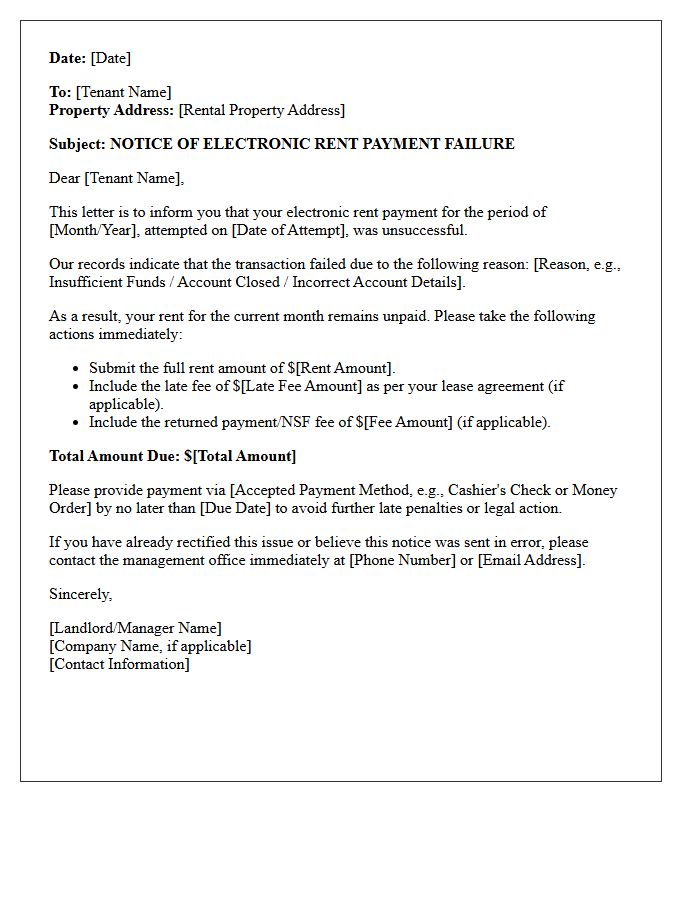
An Initial Notice of Electronic Rent Payment Failure Letter is a formal document sent by landlords when a digital transaction is declined. It serves as an immediate written notification that funds were not successfully transferred due to technical errors or insufficient balances. This notice is vital for maintaining clear communication and avoiding legal disputes. It typically outlines the failed amount, any applicable late fees, and the required deadline for an alternative payment method. Issuing this letter promptly ensures compliance with local rental laws while providing tenants an opportunity to rectify the issue immediately.
First Reminder Letter for Declined Online Rent Transaction
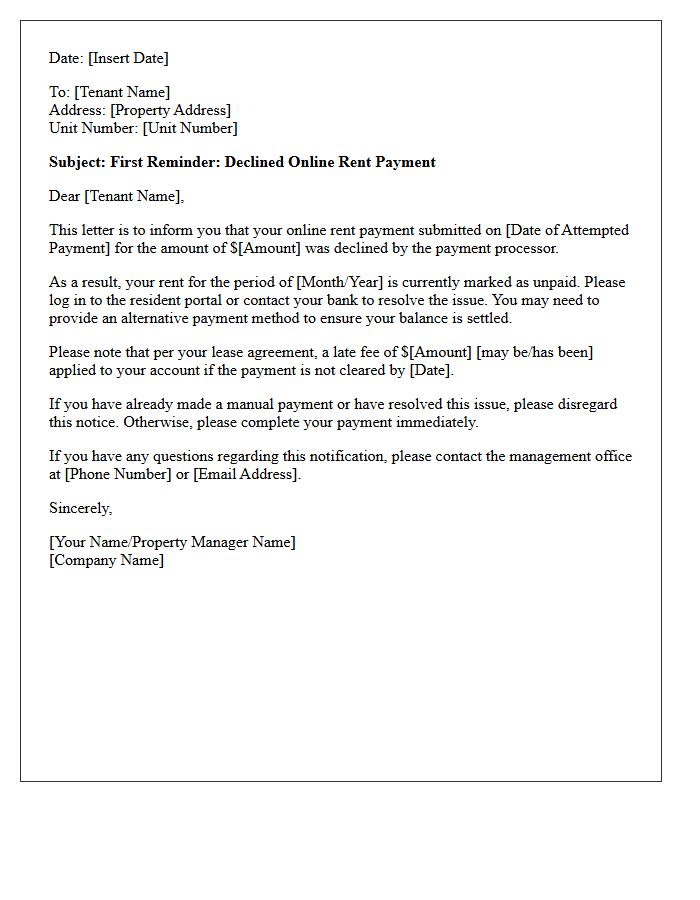
Receiving a First Reminder Letter for a declined online rent transaction indicates that your recent payment attempt failed. It is crucial to verify your bank balance or update your stored payment details immediately to avoid late fees or potential eviction proceedings. Contact your property manager promptly to provide an alternative payment method, as technical glitches or insufficient funds often trigger these notices. Timely resolution ensures your tenancy remains in good standing and prevents negative impacts on your credit score or rental history.
Urgent Letter Regarding Insufficient Funds for ACH Transfer
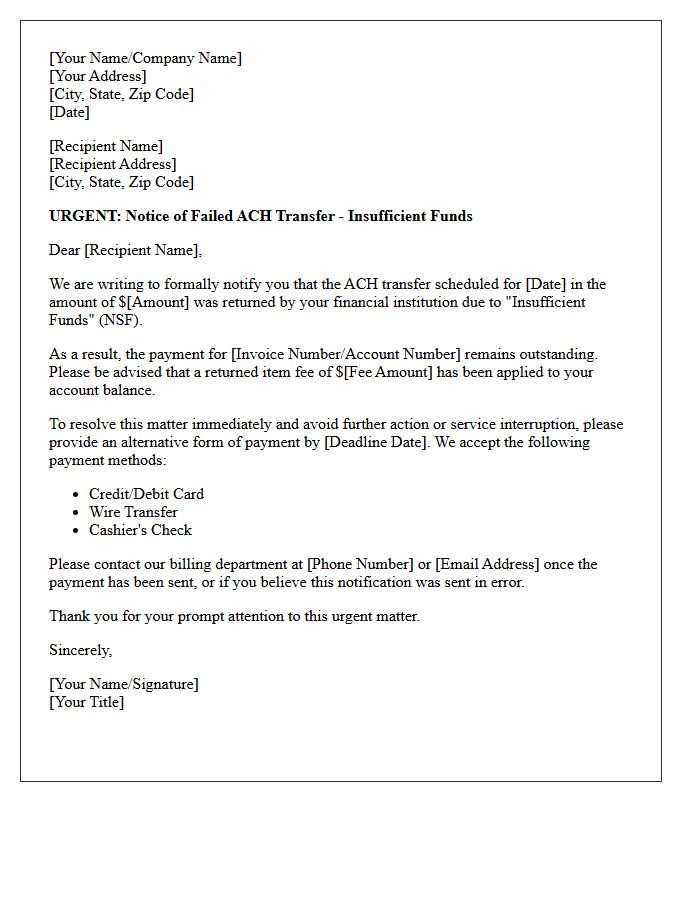
Receiving an Urgent Letter Regarding Insufficient Funds indicates that a scheduled ACH transfer failed because your bank account balance was too low. To avoid returned item fees, potential service interruptions, or legal collection actions, you must deposit funds immediately and contact the merchant to reschedule the payment. Acting quickly prevents negative impacts on your credit score and ensures your financial obligations are met. Always verify your account balance before authorizing automated electronic withdrawals to maintain a positive standing with your financial institution and service providers.
Auto-Pay Credit Card Decline Notification Letter
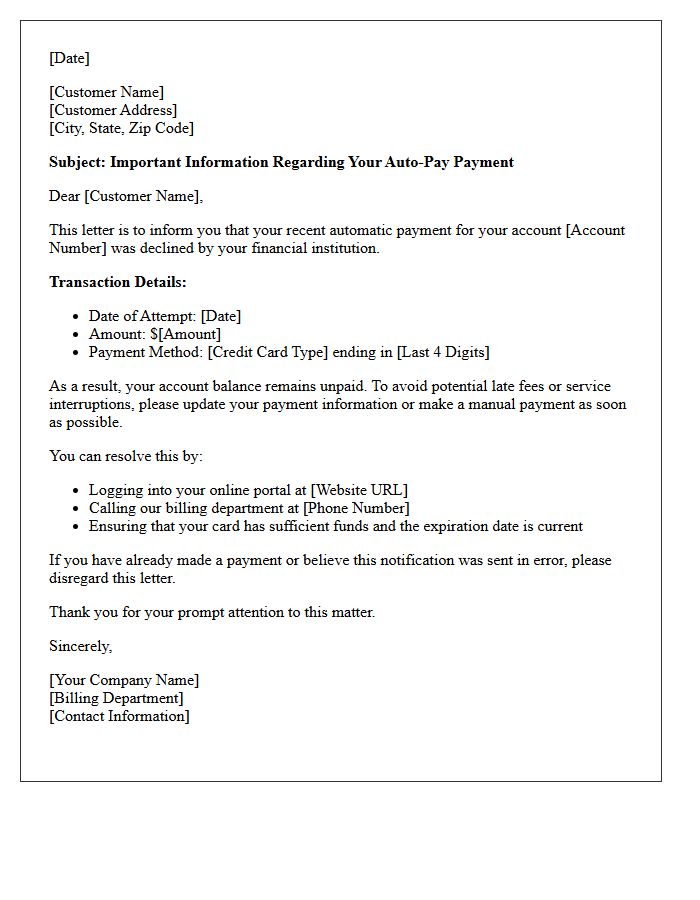
An Auto-Pay Credit Card Decline Notification Letter is a formal alert sent to customers when a recurring payment fails. It is crucial to rectify payment issues immediately to prevent service interruptions or late fees. The notice typically specifies the reason for the decline, such as an expired card or insufficient funds, and provides a secure link to update billing information. Promptly addressing this notification ensures continuous account standing and protects your credit score from negative reporting due to missed installments or involuntary plan cancellations.
Returned E-Check Penalty and Payment Failure Letter
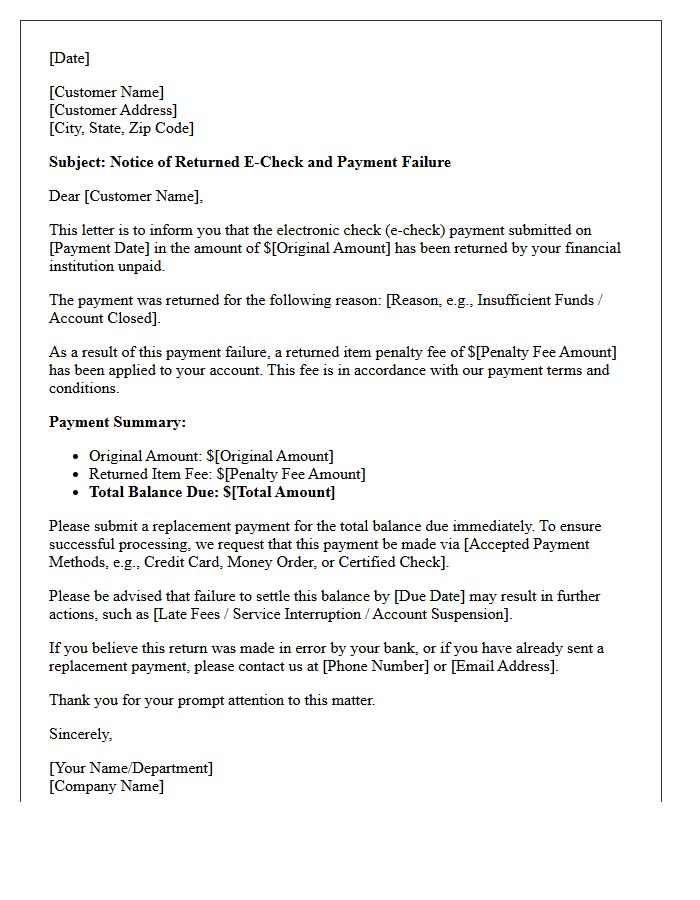
Receiving a Returned E-Check Penalty and Payment Failure Letter indicates that your electronic payment was rejected by the bank, often due to insufficient funds or incorrect account details. This notice serves as a formal demand for the original balance plus additional administrative fees. To avoid further legal action or credit damage, you must provide a guaranteed form of payment immediately. Timely resolution is critical to prevent service interruptions and the loss of future electronic payment privileges. Always verify your routing number and balance before resubmitting to ensure successful processing.
Notice of ACH Rejection and Tenant Account Hold Letter
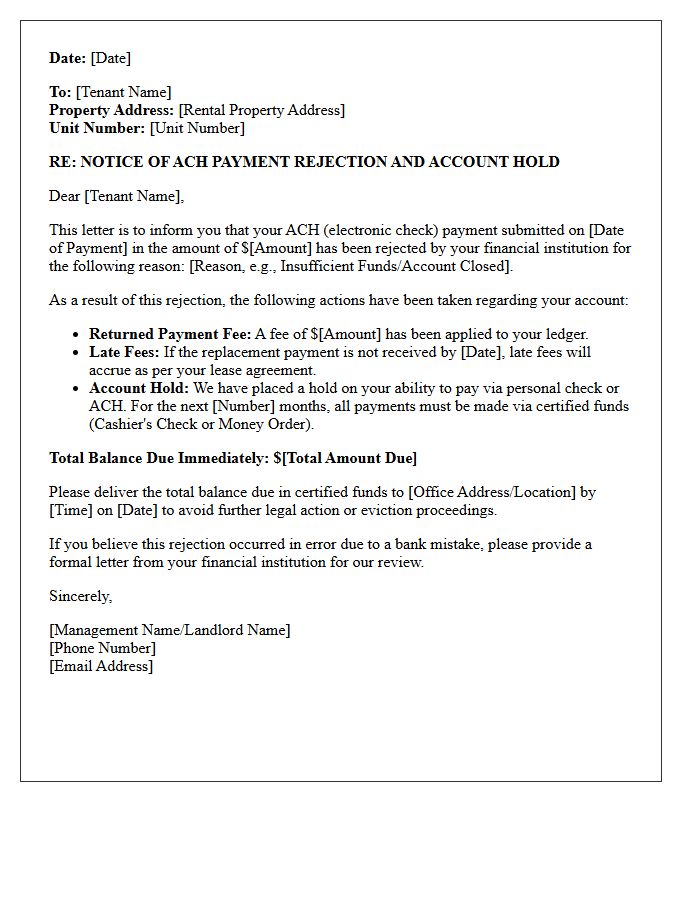
A Notice of ACH Rejection informs a tenant that their electronic rent payment failed due to insufficient funds or incorrect banking details. This notification typically triggers an immediate Tenant Account Hold, preventing further online transactions until the balance is settled. It is crucial to address this promptly to avoid late fees or potential eviction proceedings. Tenants should provide an alternative payment method, such as a money order or certified check, to clear the outstanding debt and restore their payment eligibility within the property management system.
Second Attempt Electronic Payment Processing Failure Letter
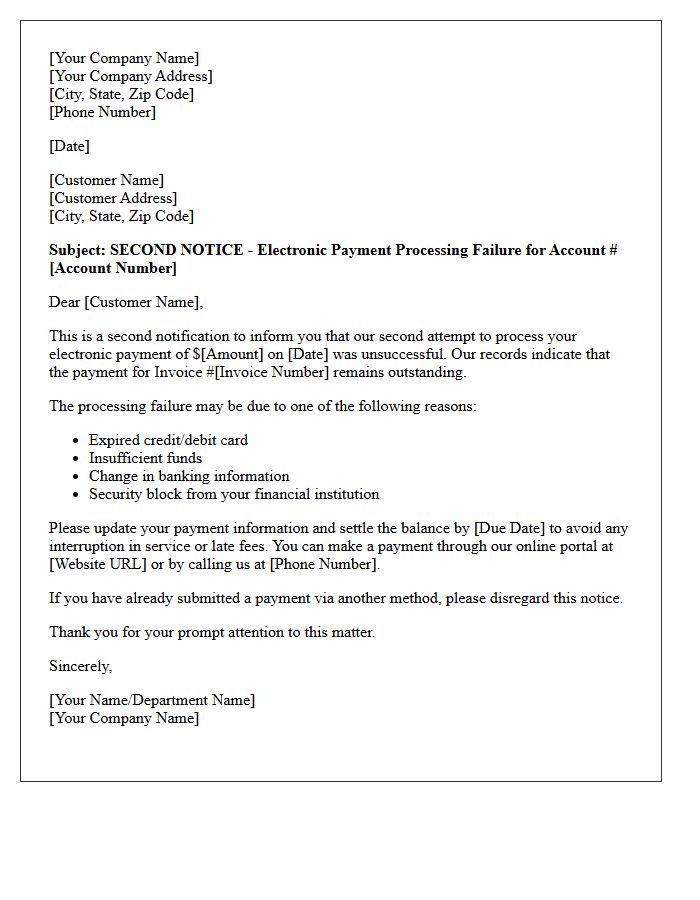
A second attempt electronic payment processing failure letter notifies a customer that a recurring payment has failed again. This formal notice is critical for maintaining cash flow and preventing service interruptions. It must clearly state the failed amount, the transaction date, and the specific reason for decline, such as insufficient funds or expired details. To resolve the issue, provide a secure link to update billing information immediately. Prompt communication helps avoid account suspension and reduces involuntary churn, ensuring a professional resolution to persistent payment issues while protecting your business revenue.
Final Warning Letter for Unresolved Electronic Payment Decline
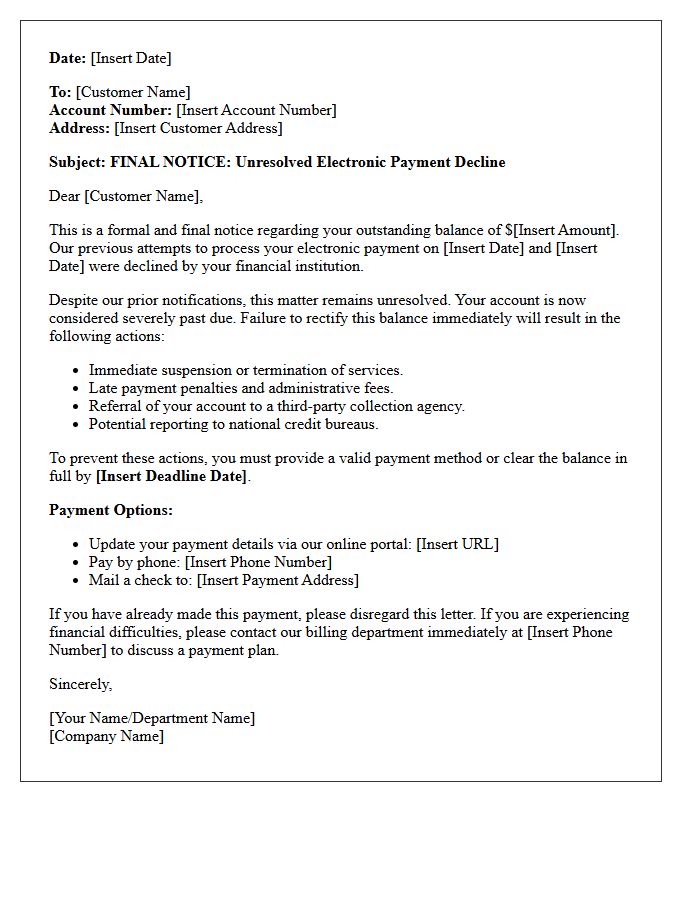
A final warning letter for an unresolved electronic payment decline is a critical notification regarding an overdue balance. This document serves as a formal alert that previous attempts to collect funds via electronic transfer have failed. It outlines the specific amount owed and sets a strict deadline to prevent service termination or legal action. To resolve this, you must update your payment information or provide an alternative method immediately. Ignoring this final notice may lead to your account being sent to a collections agency, negatively impacting your credit score.
Lease Violation Letter for Repeated Online Payment Failures
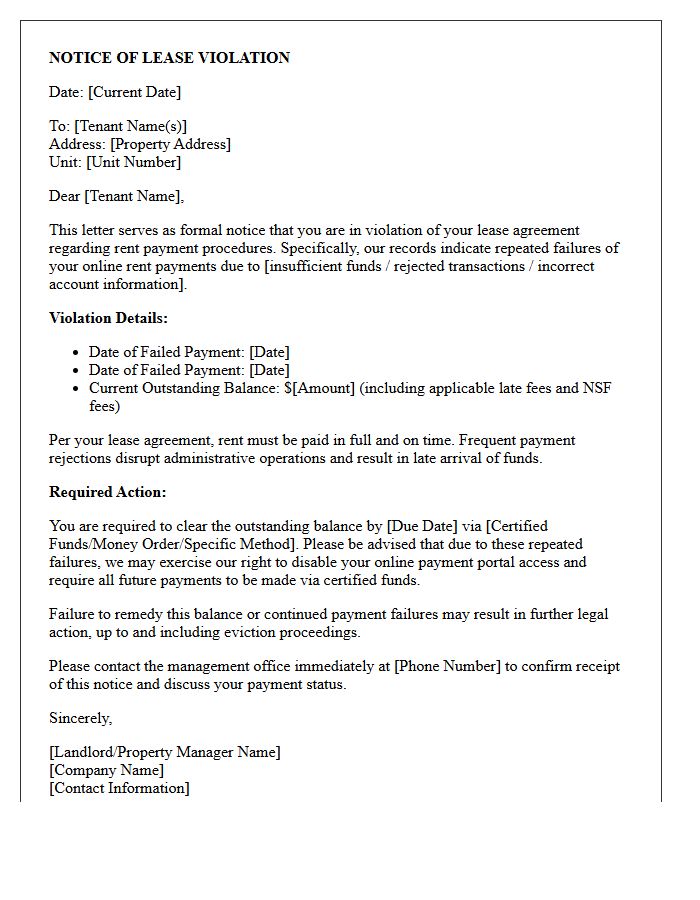
A lease violation letter for repeated online payment failures serves as formal notice that a tenant has breached their rental agreement. It is legally essential to document these occurrences to protect the landlord's rights. The letter should clearly outline the specific dates of failed transactions and any resulting late fees or NSF charges incurred. By issuing this notice, you establish a paper trail that may be necessary for future eviction proceedings if the payment behavior does not improve immediately according to the lease terms.
Alternative Payment Method Request Letter Following E-Payment Failure
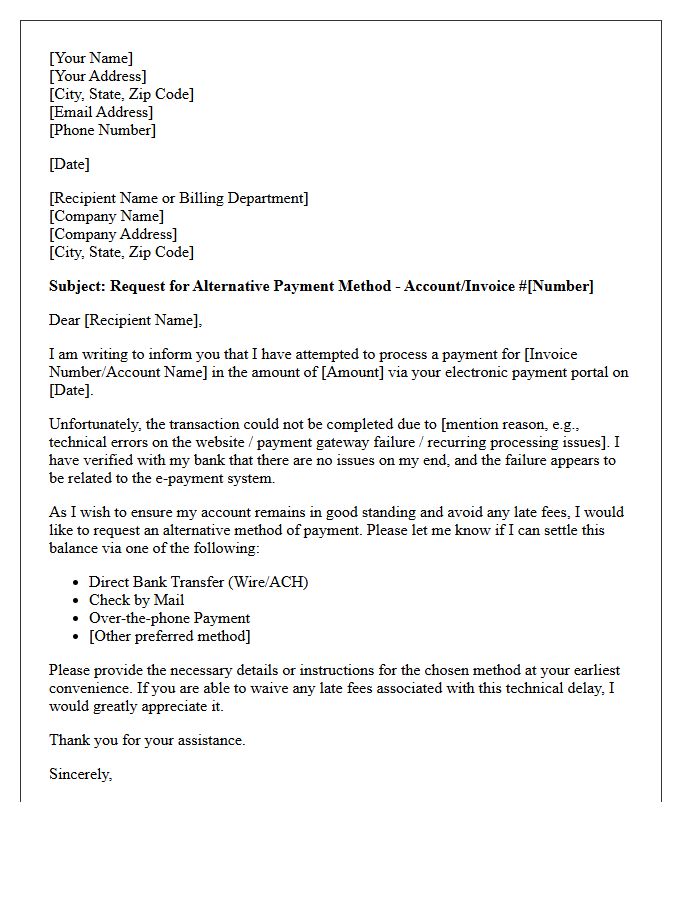
When an electronic transaction fails, sending an Alternative Payment Method Request Letter is critical to maintain service continuity. Clearly state the original transaction details, the reason for the failure, and offer secure backup options like bank transfers or physical checks. This formal communication protects your credit standing and prevents late fees by demonstrating a proactive commitment to settle debts. Ensure you include a specific deadline for payment to ensure the account remains in good standing while resolving technical issues with your primary financial provider.
Electronic Tenant Ledger Update and Payment Failure Letter
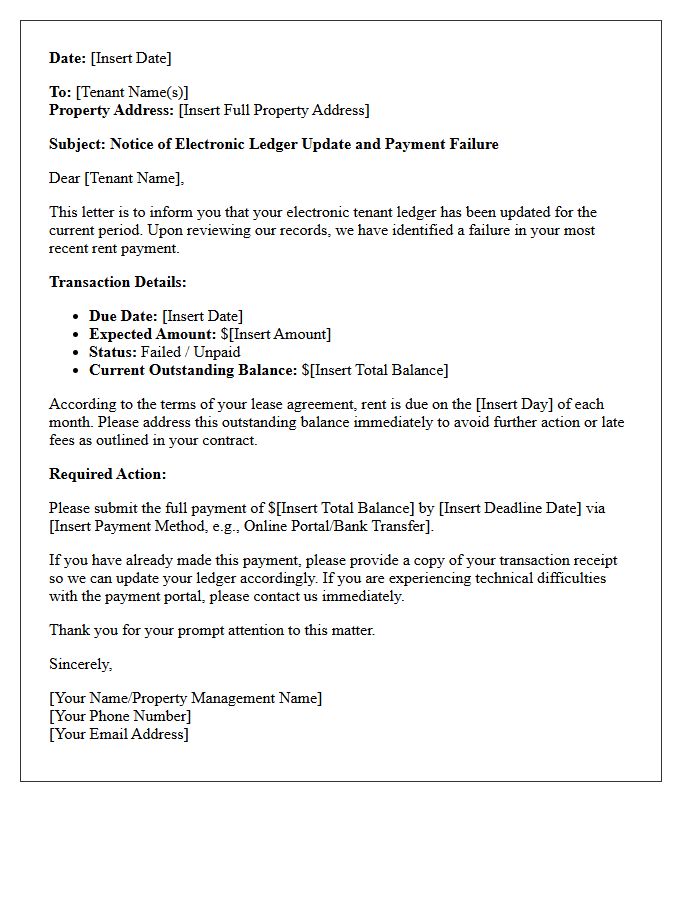
Landlords must maintain an accurate Electronic Tenant Ledger to track all financial transactions chronologically. When a payment failure occurs, issuing a formal notice is essential for legal compliance and clear communication. This document serves as official evidence of rent arrears, detailing the missed amount and required rectification steps. Timely updates ensure ledger integrity, protecting both parties during potential disputes or eviction proceedings. Consistently monitoring these records helps identify delinquent accounts early, allowing for professional resolution and maintaining stable property cash flow.
Late Fee Assessment Letter for Failed Digital Rent Transaction
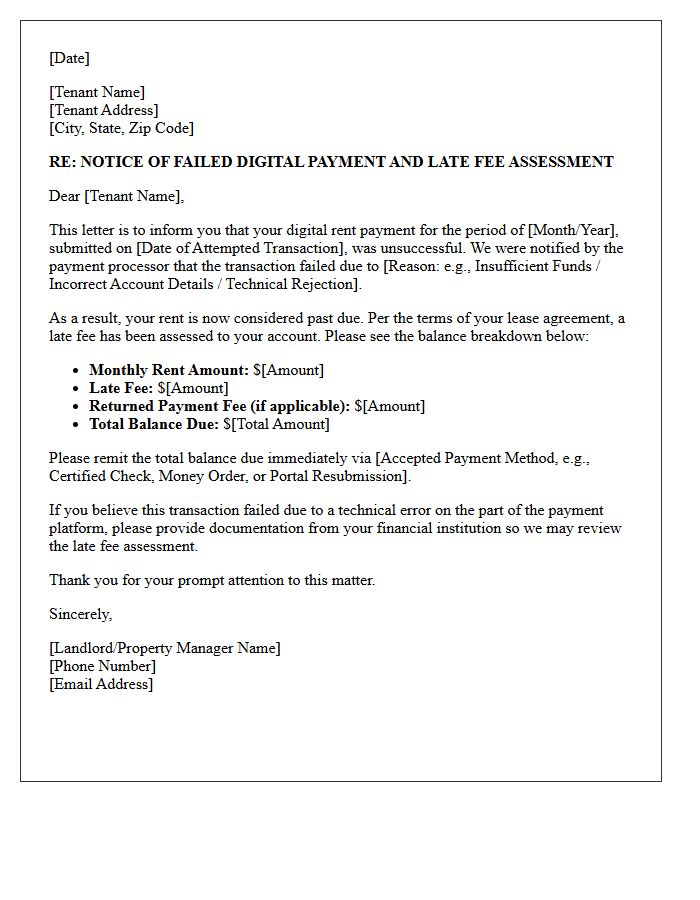
A Late Fee Assessment Letter serves as formal notification when a digital rent payment fails due to technical errors or insufficient funds. It is crucial to verify the transaction status immediately with your bank to resolve discrepancies. This document outlines the specific penalties incurred and provides a revised payment deadline to avoid further legal action. Tenants should keep a copy of the failed transaction receipt to dispute unfair charges if the failure resulted from a portal malfunction rather than personal negligence.
What does a Notice of Electronic Payment Failure mean?
A Notice of Electronic Payment Failure is an official communication informing you that a scheduled or attempted electronic fund transfer (EFT) was unsuccessful and the payment was not processed by your financial institution.
What are the common reasons for an electronic payment failure?
Electronic payments typically fail due to insufficient funds (NSF), incorrect banking details, expired payment cards, bank-side security blocks, or exceeding daily transaction limits.
How do I resolve a failed electronic payment notice?
To resolve a payment failure, verify your billing information, ensure your account has adequate funds, and re-initiate the transaction or contact your bank to authorize the payment.
Are there penalties for a failed electronic payment?
Depending on the service provider and bank, a failed payment may result in late fees, returned item fees (NSF fees), or a temporary suspension of services until the balance is settled.
How can I prevent future electronic payment failures?
You can prevent future failures by keeping your payment information updated, setting up low-balance alerts on your bank account, and ensuring that recurring payment dates align with your deposit schedule.


Comments