
Maintaining a professional environment requires clear boundaries against harassment and misconduct. This guide explores how to issue a formal Warning for Disruptive or Abusive Behavior to ensure workplace safety and compliance. Learn effective communication strategies to address violations while protecting your organizational culture. To assist your documentation process, below are some ready to use templates.
Image cover: Professional Conduct Standards: Warning Notices and Policy Templates
Letter Samples List
- Initial Warning Letter for Disruptive Resident Behavior
- Letter of Warning for Verbal Abuse Toward Property Staff
- Final Warning Letter for Repeated Noise Disturbances
- Official Notice Letter for Disruptive Guest Conduct
- Warning Letter for Harassment of Neighboring Tenants
- Cease and Desist Letter for Abusive Resident Behavior
- Formal Warning Letter for Aggression in Common Areas
- Lease Violation Letter for Disruptive Community Activities
- Warning Letter for Threatening Property Management Personnel
- Second Warning Letter for Unacceptable and Abusive Conduct
- Pre-Eviction Warning Letter for Severe Property Disruption
- Notice of Violation Letter for Intimidating Behavior
- Letter of Reprimand for Disruptive Amenities Usage
Initial Warning Letter for Disruptive Resident Behavior
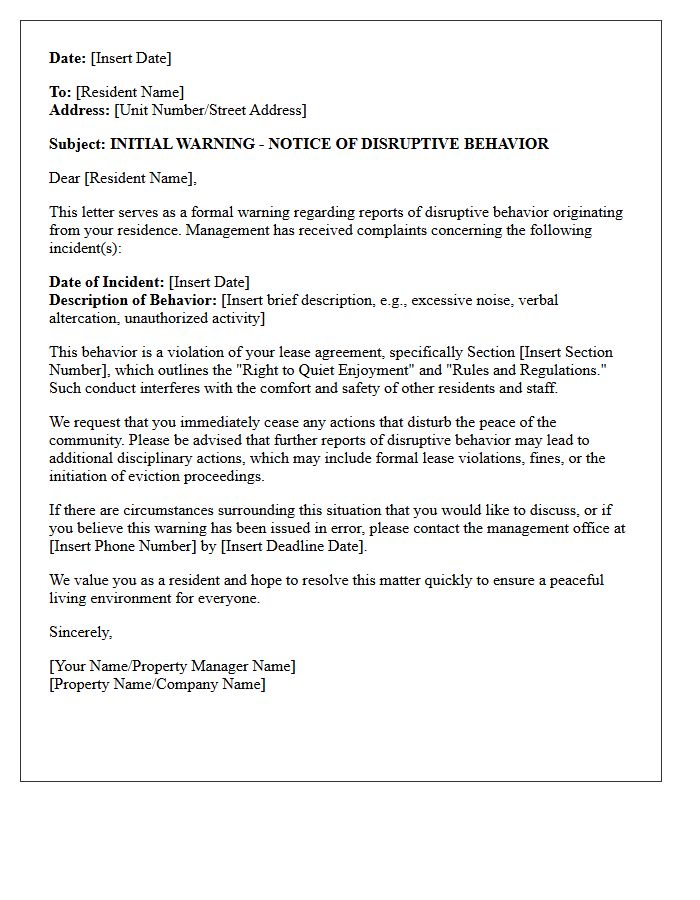
An Initial Warning Letter serves as a formal notification to a tenant regarding disruptive behavior that violates lease agreements or community rules. This document clearly outlines the specific incident, references the breached conduct policies, and states the necessary corrective actions to avoid further escalation. It functions as essential legal documentation should an eviction process become necessary. Providing a clear written notice allows the resident an opportunity to rectify their actions, ensuring a peaceful living environment for all neighbors while protecting the property manager's legal standing.
Letter of Warning for Verbal Abuse Toward Property Staff
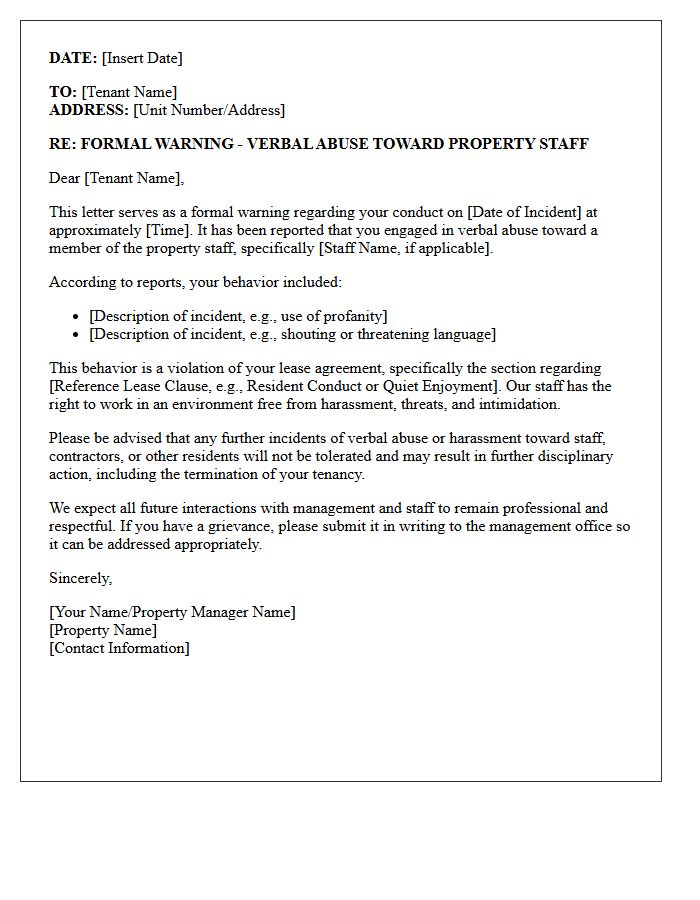
A Letter of Warning serves as a formal notice documenting verbal abuse directed toward property staff. It typically outlines specific instances of aggressive behavior, threats, or harassment that violate lease agreements or community policies. Receiving this warning is a serious matter, as it creates a paper trail that can lead to lease termination or eviction if the conduct persists. Residents should respond professionally and rectify their behavior immediately to maintain their housing status and ensure a respectful environment for all employees and neighbors.
Final Warning Letter for Repeated Noise Disturbances
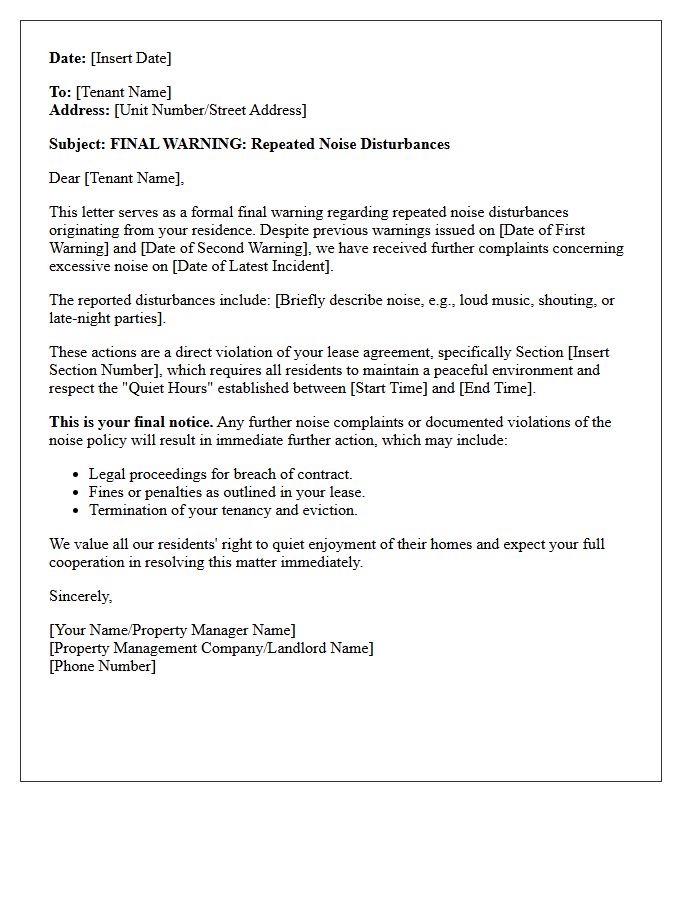
A final warning letter for repeated noise disturbances serves as a formal notice before legal or lease termination actions. It explicitly outlines specific instances of non-compliance with residential policies or local ordinances. This document is crucial because it provides documented evidence that the tenant was given a final opportunity to correct their behavior. To be legally sound, it must detail the consequences of further violations, such as eviction or fines. Receiving this letter indicates that any subsequent disturbance will trigger immediate disciplinary measures without additional warnings.
Official Notice Letter for Disruptive Guest Conduct
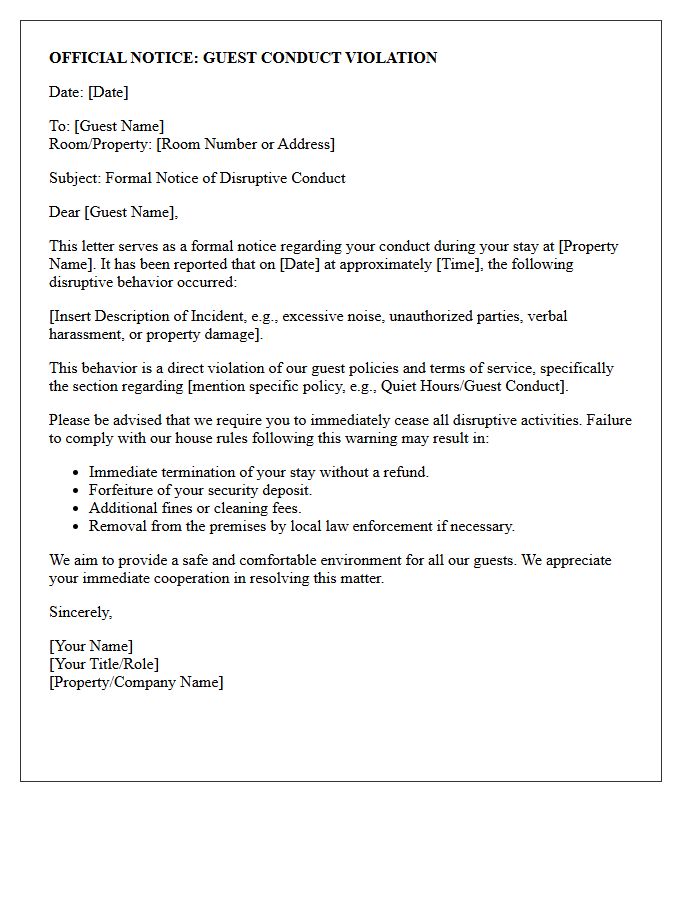
An Official Notice Letter serves as a formal written warning to address disruptive guest conduct within a professional or hospitality setting. It clearly documents specific policy violations, outlines required behavioral corrections, and specifies potential consequences such as eviction or legal action. This document is essential for maintaining safety, protecting property, and establishing a legal paper trail should further escalation occur. Providing this notice ensures transparency and offers the guest a final opportunity to comply with establishment rules before privileges are permanently revoked.
Warning Letter for Harassment of Neighboring Tenants
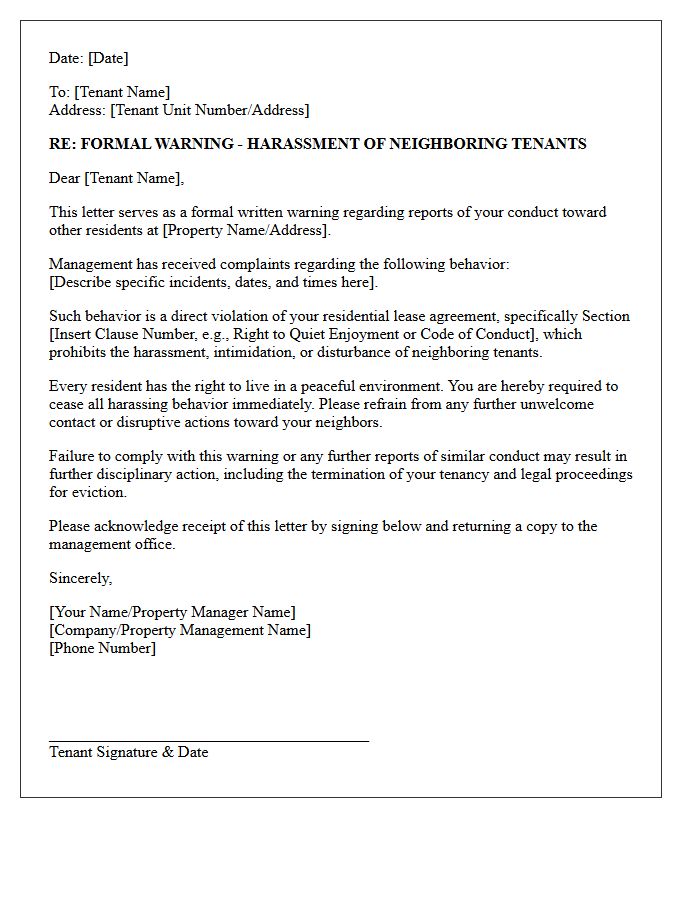
Receiving a Warning Letter for Harassment is a serious legal notice indicating that your behavior violates the right to quiet enjoyment for others. This document serves as a formal demand to cease actions like excessive noise, threats, or intimidation immediately. Property managers use these letters to establish a paper trail for potential eviction proceedings. It is essential to provide a written response and rectify the behavior to avoid lease termination and legal action. Maintaining respectful boundaries with neighboring tenants is a fundamental requirement of any residential tenancy agreement.
Cease and Desist Letter for Abusive Resident Behavior
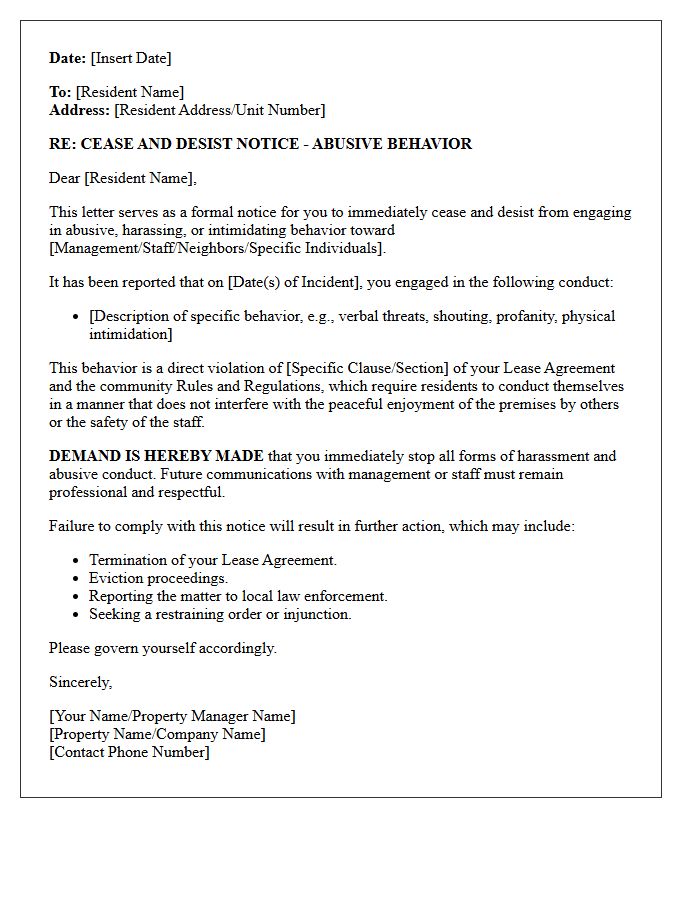
A cease and desist letter for abusive resident behavior serves as a formal legal notice demanding an immediate end to harassment, threats, or disruptive conduct. It establishes a critical paper trail, documenting violations of community rules or lease agreements. This document warns the offender that further aggression will result in legal action or eviction proceedings. By clearly outlining prohibited actions and potential consequences, it protects the safety of neighbors and staff while providing essential evidence for future litigation or administrative hearings within a residential community or housing complex.
Formal Warning Letter for Aggression in Common Areas
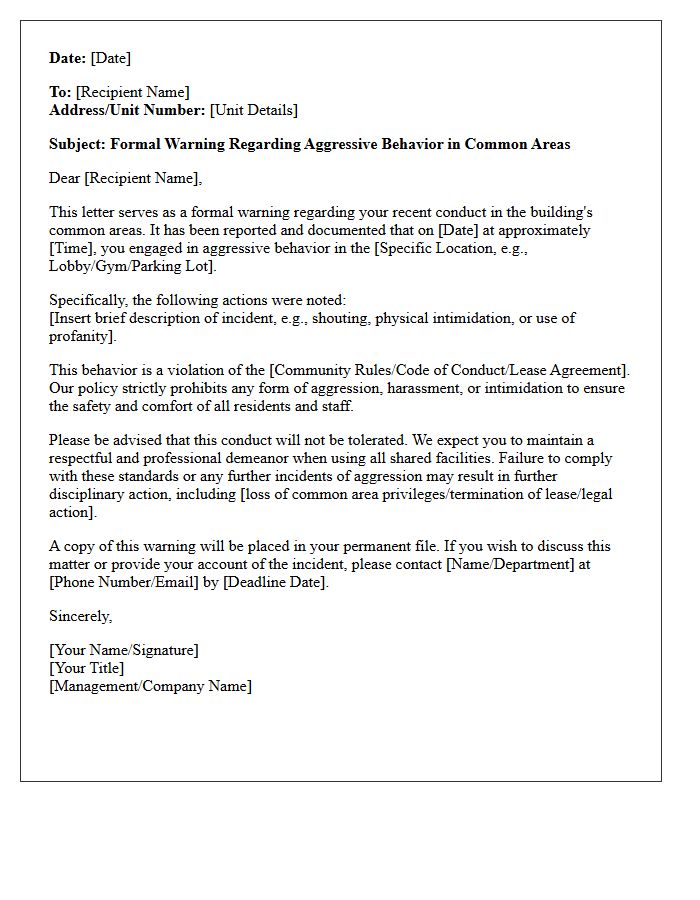
A formal warning letter for aggression in common areas serves as an official notice to address prohibited conduct that disrupts shared environments. This document clearly identifies the aggressive behavior, cites specific policy violations, and outlines the required corrective actions to maintain safety. It acts as a critical disciplinary record, establishing a formal timeline of events. Recipients must understand that failure to improve interpersonal conduct may lead to termination of tenancy or employment. Such letters are essential tools for ensuring a secure, respectful, and peaceful atmosphere for all community members.
Lease Violation Letter for Disruptive Community Activities
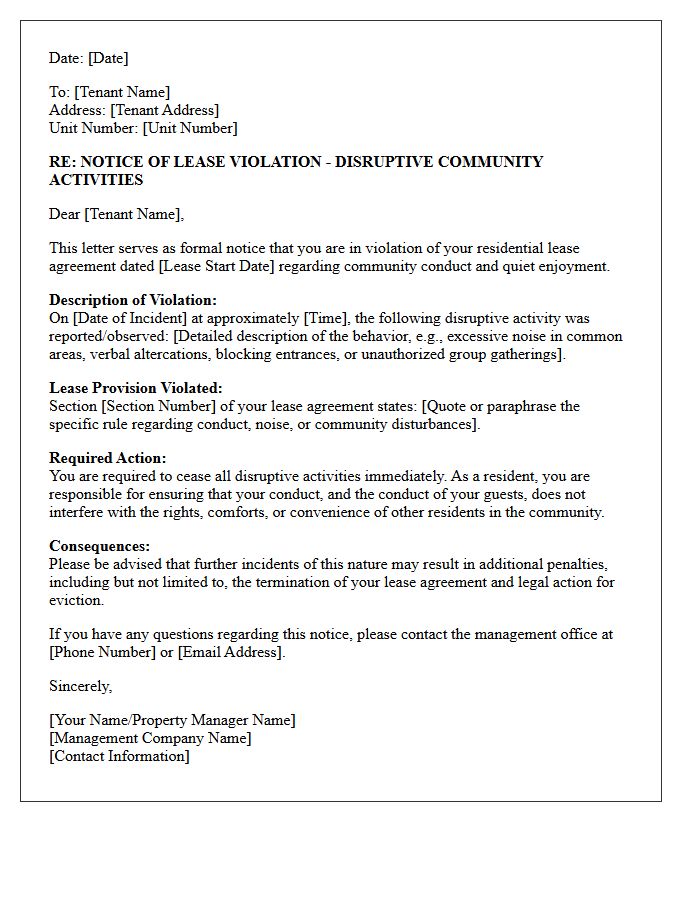
A Lease Violation Letter for disruptive community activities is a formal legal notice issued to tenants who disturb neighbors or breach quiet enjoyment rules. This written warning documents specific incidents, such as excessive noise or illegal behavior, and demands immediate compliance with lease terms. It serves as crucial evidence in potential eviction proceedings. To be effective, the letter must clearly state the violated clause and provide a deadline for correction. Ensuring professional communication helps maintain property standards and protects the rights of other residents within the community.
Warning Letter for Threatening Property Management Personnel
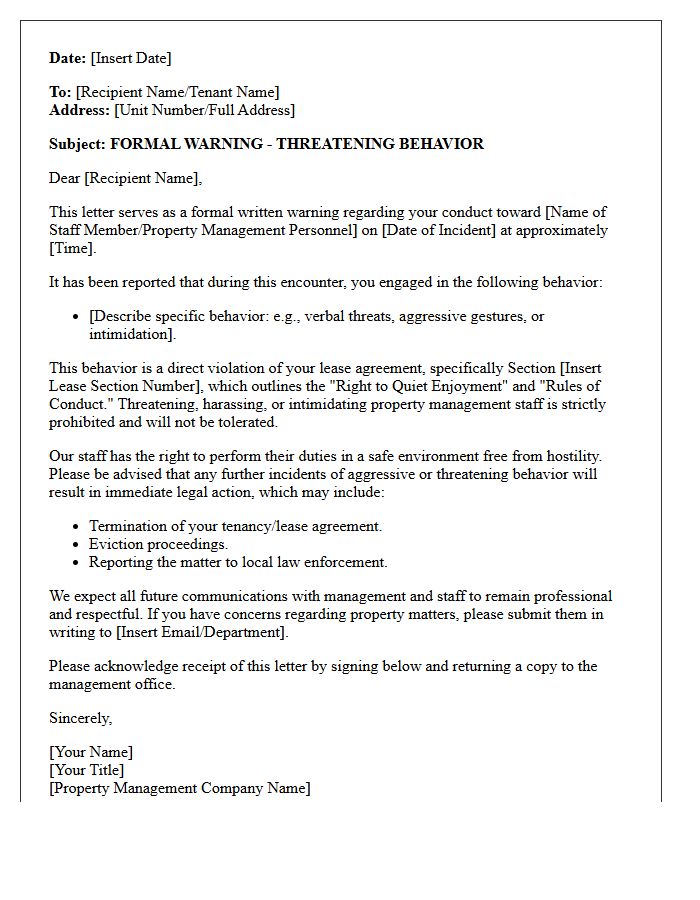
Receiving a Warning Letter for Threatening Property Management Personnel is a serious legal notice addressing intimidating behavior or verbal abuse. Such conduct violates the lease agreement and may lead to immediate eviction or police involvement. It serves as a formal record of the incident, requiring the tenant to cease all hostile actions immediately. Maintaining professional communication is essential to avoid permanent tenancy termination. If you receive this warning, document all interactions and consider seeking legal advice to understand your rights and the potential for lease forfeiture due to safety violations.
Second Warning Letter for Unacceptable and Abusive Conduct
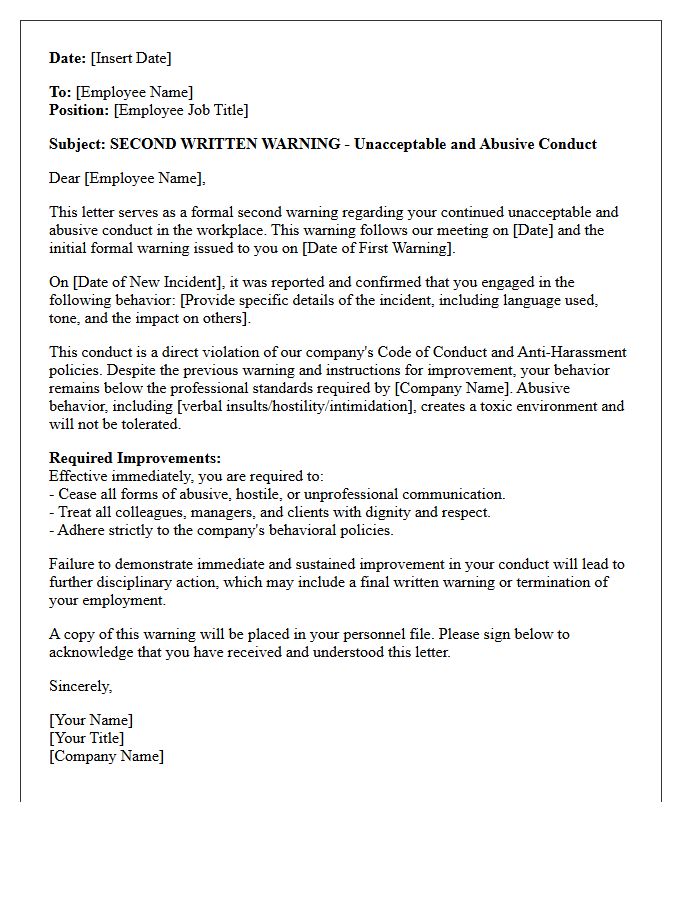
A Second Warning Letter for unacceptable and abusive conduct serves as a final formal notice regarding persistent workplace toxicity or behavioral violations. This document explicitly outlines disciplinary consequences, including potential termination, if the patterns of harassment, verbal abuse, or unprofessionalism continue. It provides a formal record of prior warnings and current infractions, ensuring the employer follows legal protocols for performance management. For employees, this letter is a critical signal that immediate behavioral rectification is mandatory to maintain employment security and foster a safe, respectful environment for all staff members.
Pre-Eviction Warning Letter for Severe Property Disruption
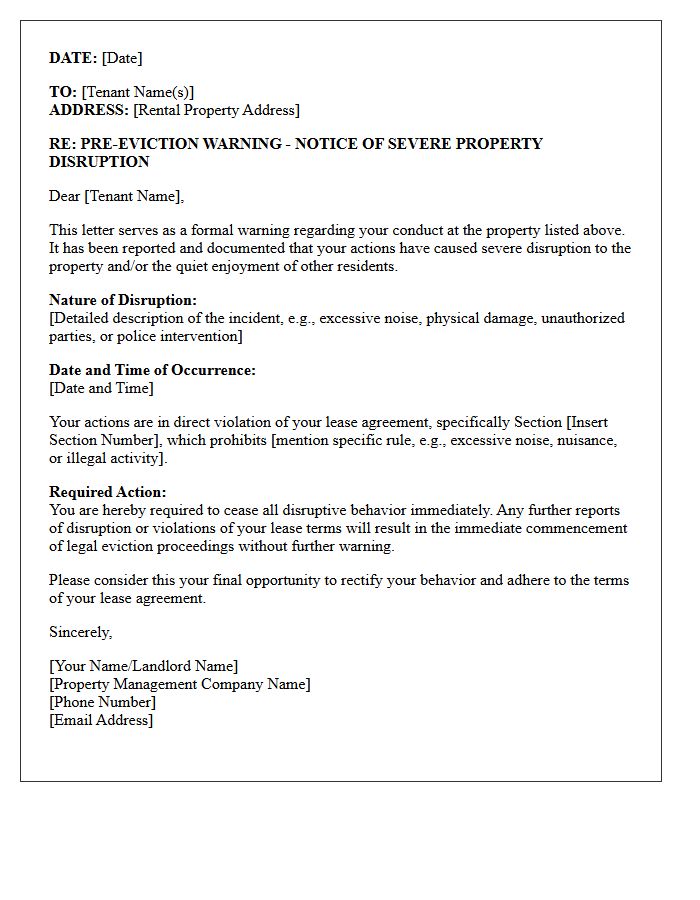
A Pre-Eviction Warning Letter serves as a formal legal notice issued to tenants causing severe property disruption. This document identifies specific lease violations, such as excessive noise, physical damage, or safety threats, granting the occupant a final opportunity to rectify their behavior. It acts as essential evidence in court, demonstrating that the landlord attempted dispute resolution before filing for a formal eviction. Receiving this letter is a critical warning that failing to cease disruptive actions immediately will lead to termination of tenancy and legal proceedings.
Notice of Violation Letter for Intimidating Behavior
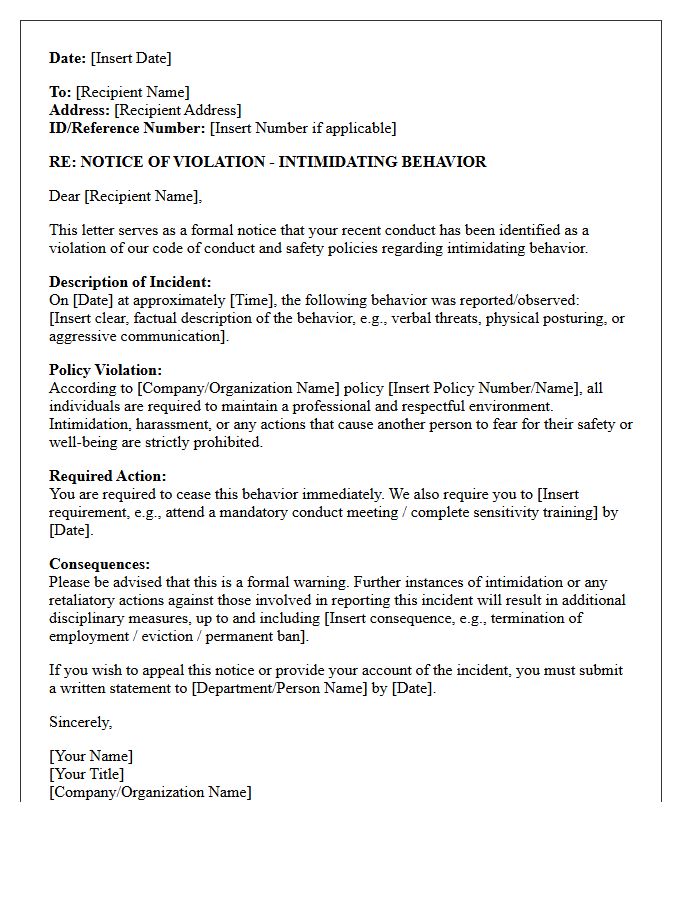
Receiving a Notice of Violation Letter for intimidating behavior is a formal warning indicating that your conduct has breached community standards or contractual agreements. This legal document outlines specific instances of harassment or threats directed at others. It is crucial to provide a written response promptly to avoid further escalations, such as fines, eviction, or legal action. Addressing the underlying conflict and adhering to the stated code of conduct is essential for resolution. Always document your interactions and consider seeking legal advice to protect your rights during the dispute process.
Letter of Reprimand for Disruptive Amenities Usage
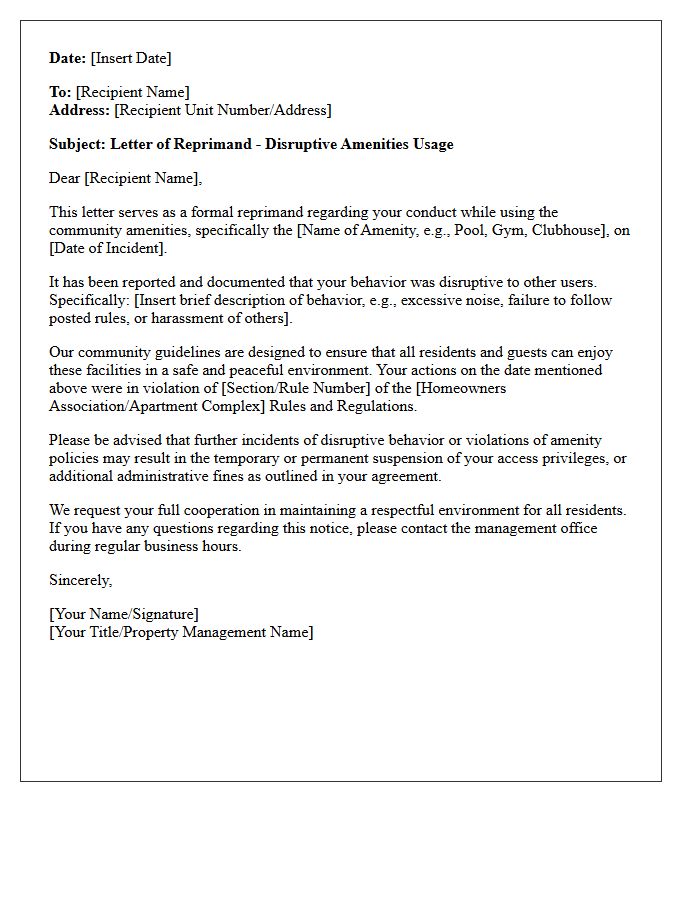
A Letter of Reprimand for disruptive amenities usage serves as a formal disciplinary record regarding the misuse of communal facilities. It outlines specific violations of established policies, such as noise disturbances, equipment damage, or unauthorized access to shared spaces. This document emphasizes the negative impact on other residents and clearly defines the consequences of further infractions, which may include fines or restricted access. Understanding these expectations is essential for maintaining a harmonious living environment and ensuring equitable enjoyment of all property amenities for the entire community.
What constitutes disruptive or abusive behavior?
Disruptive or abusive behavior includes, but is not limited to, harassment, hate speech, personal insults, spamming, intentional interference with community activities, or any conduct that creates a hostile environment for others.
What happens after I receive a formal warning?
A formal warning serves as notice that your conduct has violated community standards. You are expected to review the guidelines and adjust your behavior immediately. Failure to comply may lead to temporary suspension or a permanent ban.
Can I appeal a warning for abusive behavior?
Yes, if you believe a warning was issued in error, you may contact the moderation team through the official support channel. Please provide specific context or evidence to support your request for a review of the decision.
Will a single warning affect my account standing?
While a single warning is intended as a corrective measure, it is documented on your account record. Repeated violations demonstrate a pattern of misconduct, which typically results in more severe disciplinary actions according to our escalation policy.
How can I report another user for being disruptive or abusive?
To report a violation, use the "Report" button located next to the content or profile in question. Provide a brief description of the incident so our safety team can investigate the behavior and take appropriate action.


Comments