
Ensure home safety by understanding the Notice of Routine Gas Line Inspection. Utility companies perform these regular checks to detect leaks, prevent hazards, and maintain infrastructure integrity. Staying informed helps residents prepare for technician visits and ensure uninterrupted service. Learn about compliance requirements, scheduling procedures, and safety protocols. To help you communicate effectively, below are some ready to use template.
Image cover: Upcoming Routine Gas Line Inspection: Notice Templates and Best Practices
Letter Samples List
- Notice of Routine Gas Line Inspection Letter
- Tenant Notification Letter for Gas Line Inspection
- Scheduled Routine Gas Line Maintenance Letter
- Property Management Gas Utility Inspection Letter
- Annual Gas Line Safety Check Notice Letter
- Mandatory Gas System Inspection Advisory Letter
- Upcoming Residential Gas Line Assessment Letter
- Standard Gas Line Routine Access Request Letter
- Commercial Property Gas Inspection Notice Letter
- Utility Gas Line Compliance and Inspection Letter
- Building Gas Infrastructure Routine Check Letter
- Property Gas Line Inspector Visit Informational Letter
Notice of Routine Gas Line Inspection Letter
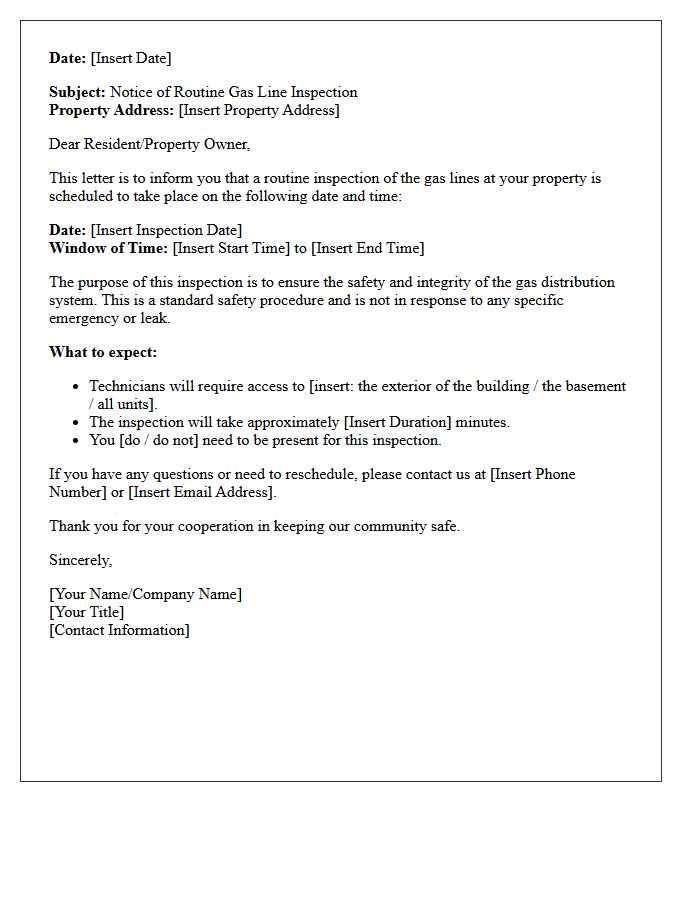
A Notice of Routine Gas Line Inspection is a formal communication from your utility provider regarding mandatory safety checks. These inspections ensure your service lines meet safety standards and help prevent hazardous leaks. Technicians typically require access to your property to examine meters and piping for corrosion or damage. It is a legal requirement for compliance with federal safety regulations. If you receive this letter, you should follow the instructions to schedule or facilitate access, ensuring your home remains safe and your energy service uninterrupted.
Tenant Notification Letter for Gas Line Inspection
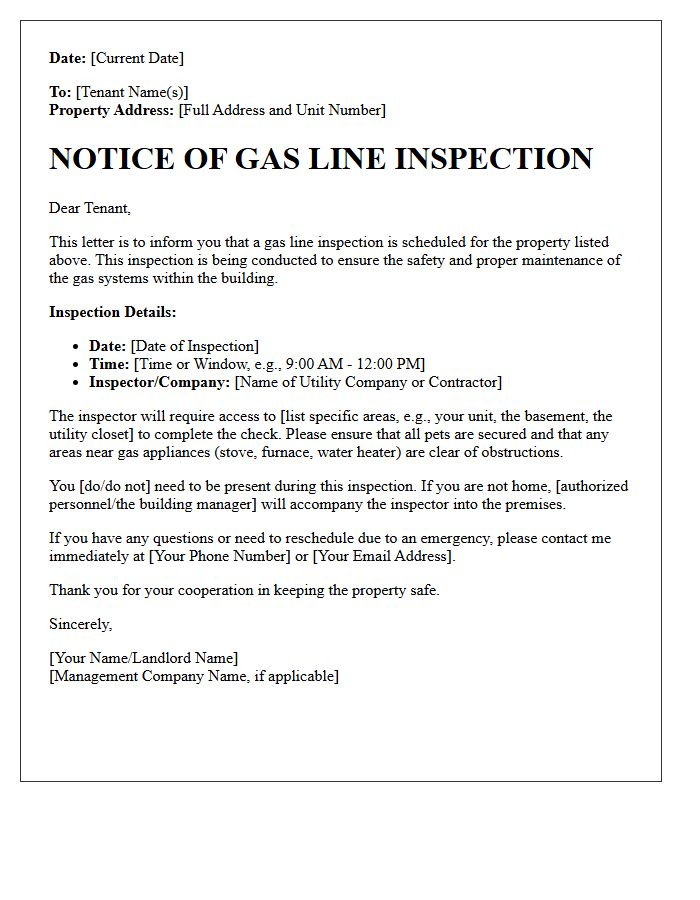
A Tenant Notification Letter is a formal document informing residents of an upcoming gas line inspection to ensure property safety and compliance. Landlords must provide advanced notice, typically 24 to 48 hours, specifying the exact date and time of entry. The letter should explain the inspection's purpose, such as leak detection or safety certification, and outline any necessary preparations. Clear communication helps guarantee legal access to the unit while maintaining positive landlord-tenant relations and verifying that all gas systems meet current regulatory standards.
Scheduled Routine Gas Line Maintenance Letter
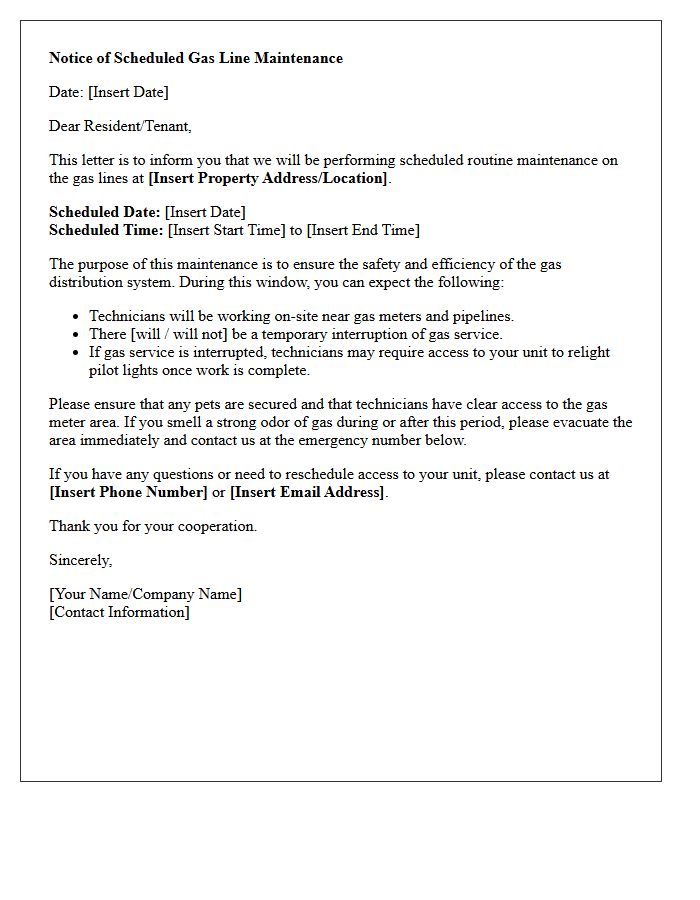
A scheduled routine gas line maintenance letter is an official notice from your utility provider regarding upcoming safety inspections or infrastructure upgrades. It is mandatory to provide technicians access to your meter or property to prevent leaks and ensure system integrity. These notices typically include a specific timeframe and contact details for rescheduling. Ignoring this request may lead to temporary service interruptions for safety compliance. Always verify the technician's identification upon arrival to protect against fraud while ensuring your home remains gas-safe and functionally efficient.
Property Management Gas Utility Inspection Letter
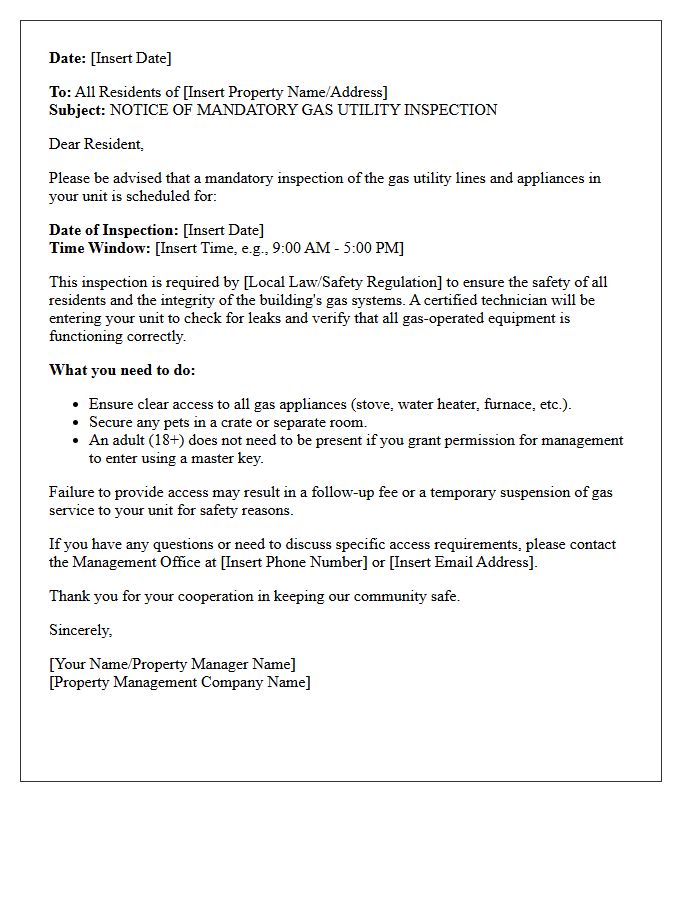
Receiving a property management gas utility inspection letter is a mandatory safety notification regarding an upcoming compliance audit of your gas lines. To ensure public safety and prevent hazardous leaks, certified technicians must gain access to your unit to inspect meters and piping. Failure to provide access may lead to service disconnection or legal fines. Always verify the scheduled date and ensure a qualified professional performs the check. These routine inspections are essential for maintaining building integrity and adhering to local safety regulations and insurance requirements.
Annual Gas Line Safety Check Notice Letter
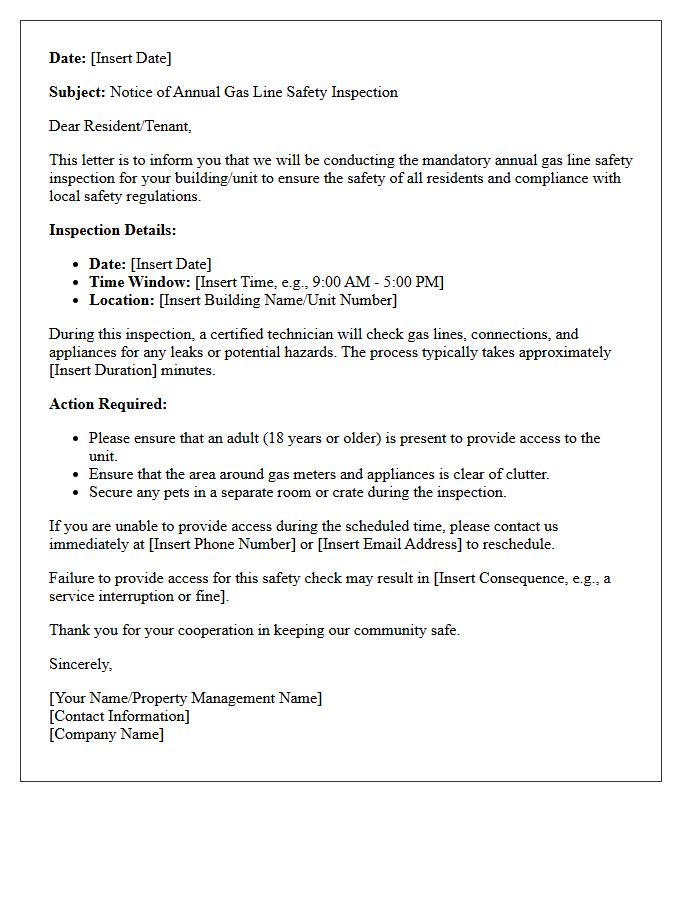
An Annual Gas Line Safety Check Notice is a legal requirement informing residents of mandatory inspections to prevent leaks and ensure infrastructure integrity. Property owners must provide access to qualified technicians to examine exposed piping and connections. Ignoring this notice can lead to service interruptions or fines, as these checks are critical for fire prevention and public safety. Always verify the technician's identification and ensure compliance within the specified timeframe to maintain a safe living environment and adhere to local building codes and safety regulations.
Mandatory Gas System Inspection Advisory Letter
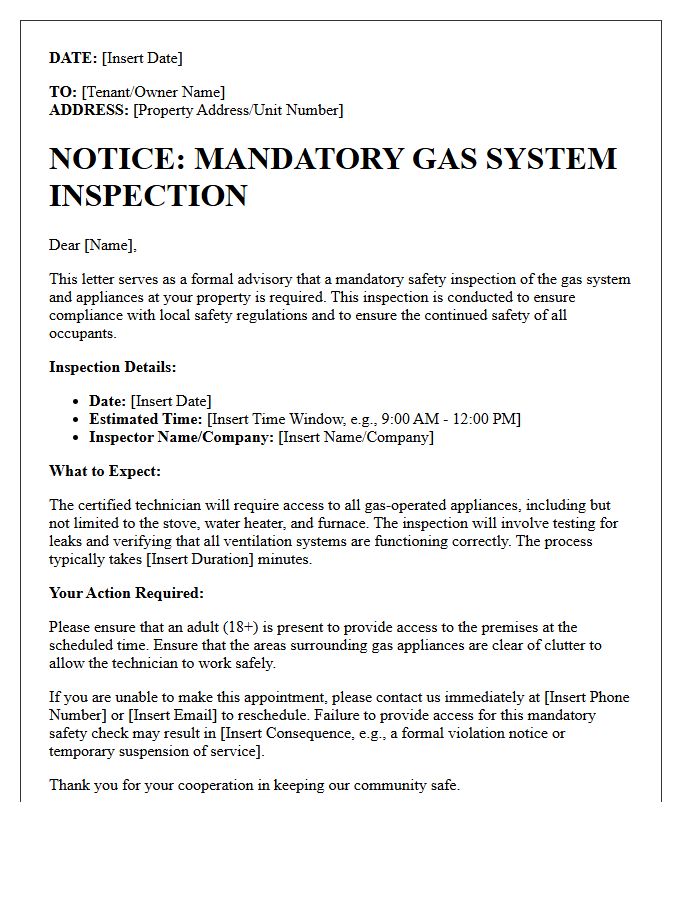
A Mandatory Gas System Inspection Advisory Letter is an official notice requiring building owners to schedule a Local Law 152 safety assessment. This periodic inspection ensures gas piping systems are free from hazardous leaks or corrosion. Failure to comply with these compliance mandates can result in significant municipal fines and potential service interruptions. Property owners must hire a Licensed Master Plumber to perform the inspection and submit the required certification to the Department of Buildings to maintain safety standards and avoid legal penalties.
Upcoming Residential Gas Line Assessment Letter
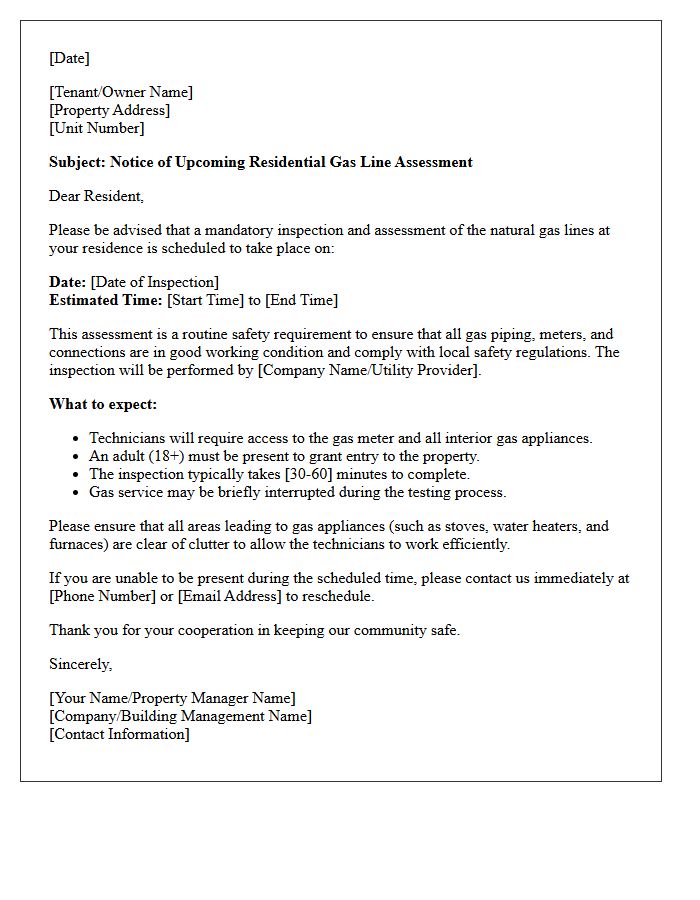
If you receive an Upcoming Residential Gas Line Assessment Letter, it is a formal notification regarding mandatory safety inspections. Local utility providers conduct these evaluations to identify potential leaks or corrosion in service lines and meters. Homeowners must provide access to technicians to ensure compliance with federal safety regulations. This process is essential for maintaining a secure energy infrastructure and preventing hazardous conditions. Failing to schedule the assessment could lead to service interruptions. Always verify the technician's credentials to ensure public safety and system integrity during the scheduled maintenance window.
Standard Gas Line Routine Access Request Letter
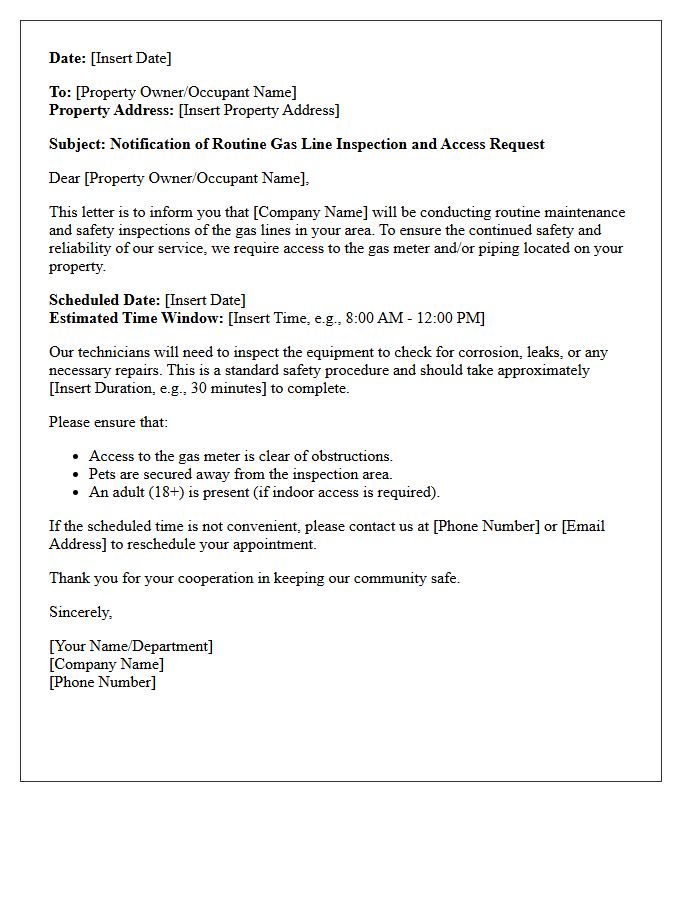
A Standard Gas Line Routine Access Request Letter is a formal notification sent by utility providers to property owners. It serves to schedule safety inspections and essential maintenance on gas infrastructure. This document outlines the scheduled date, time, and specific reason for entry, ensuring compliance with safety regulations. Homeowners should verify the technician's credentials upon arrival for security. Timely cooperation prevents service disruptions and ensures leak detection, protecting both the household and the community from potential hazards while maintaining efficient energy delivery systems.
Commercial Property Gas Inspection Notice Letter
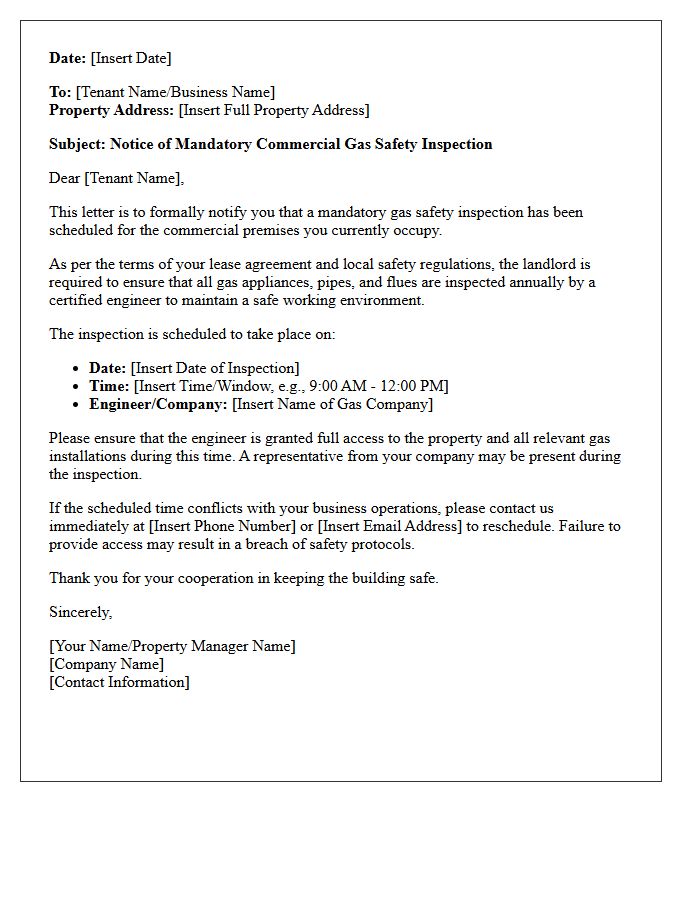
A Commercial Property Gas Inspection Notice Letter is a mandatory legal notification sent by landlords to tenants. It informs occupants of upcoming safety checks required to comply with Gas Safety Regulations. The letter must specify the scheduled date and time of the inspection performed by a registered engineer. Ensuring access is vital for maintaining operational safety and preventing potential legal liabilities. This document serves as formal proof that the owner is fulfilling their duty of care to provide a safe working environment and maintain valid certification for the premises.
Utility Gas Line Compliance and Inspection Letter
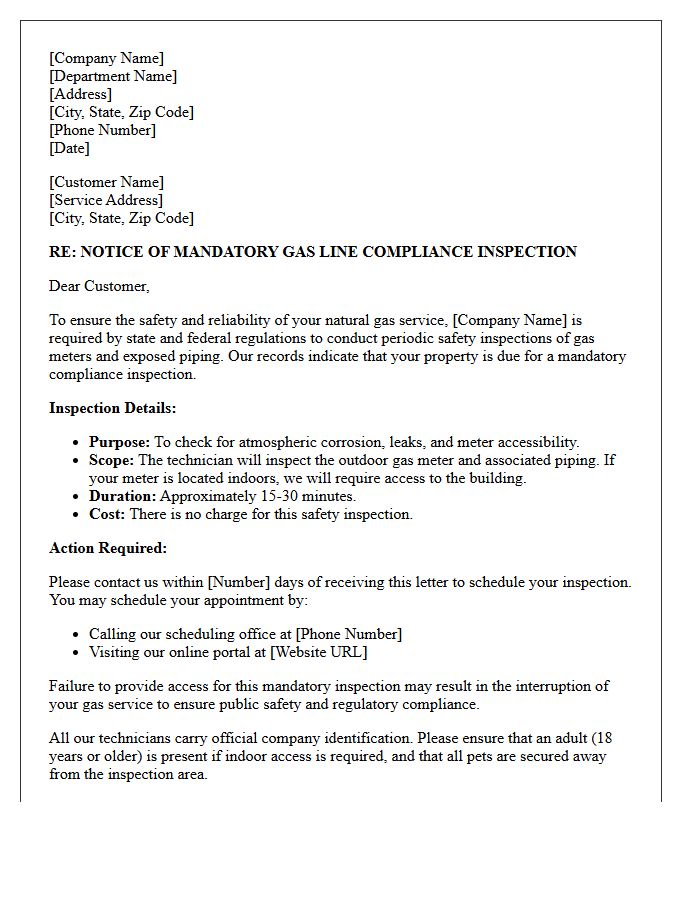
Property owners often receive a Utility Gas Line Compliance and Inspection Letter to ensure safety and regulatory adherence. This mandatory notice requires a certified inspection of exposed piping to detect corrosion or leaks. Failure to comply can lead to hazardous conditions or service interruption. Licensed professionals must verify that your system meets local safety codes. Timely action is essential to maintain public safety and prevent costly penalties. Always keep documentation of the completed survey to prove your building is compliant with current energy regulations and infrastructure standards.
Building Gas Infrastructure Routine Check Letter
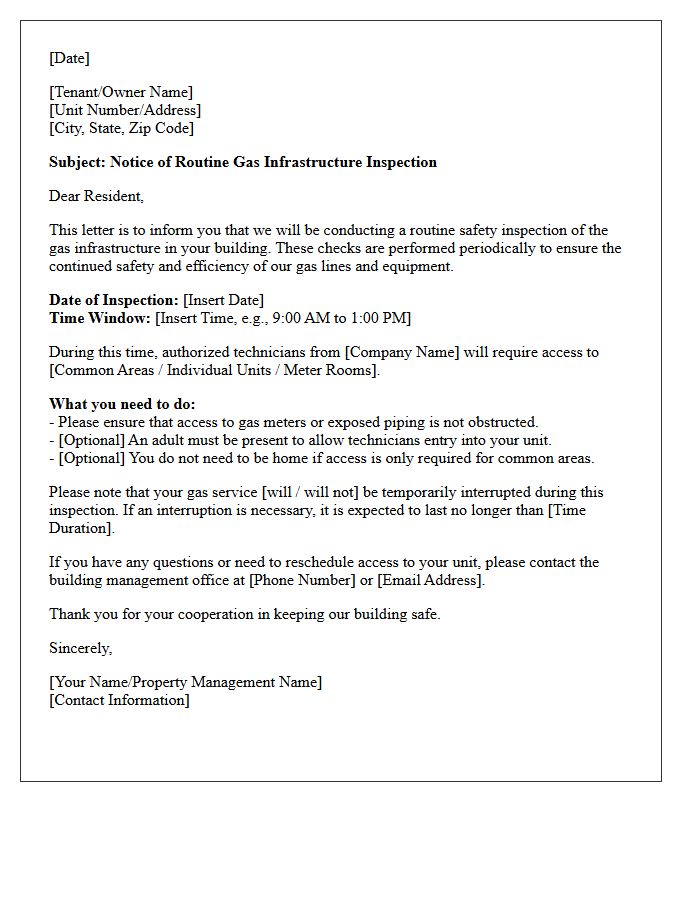
A Building Gas Infrastructure Routine Check Letter is an essential safety notice informing residents of scheduled inspections to ensure system integrity. This document outlines the mandatory access required for certified technicians to examine pipes, meters, and ventilation. Compliance is vital for preventing hazardous leaks and meeting local building codes. Residents should verify the scheduled date and follow specific preparation instructions provided. Timely cooperation ensures the continuous safe delivery of natural gas and protects the structural well-being of the entire property while mitigating potential fire or explosion risks.
Property Gas Line Inspector Visit Informational Letter
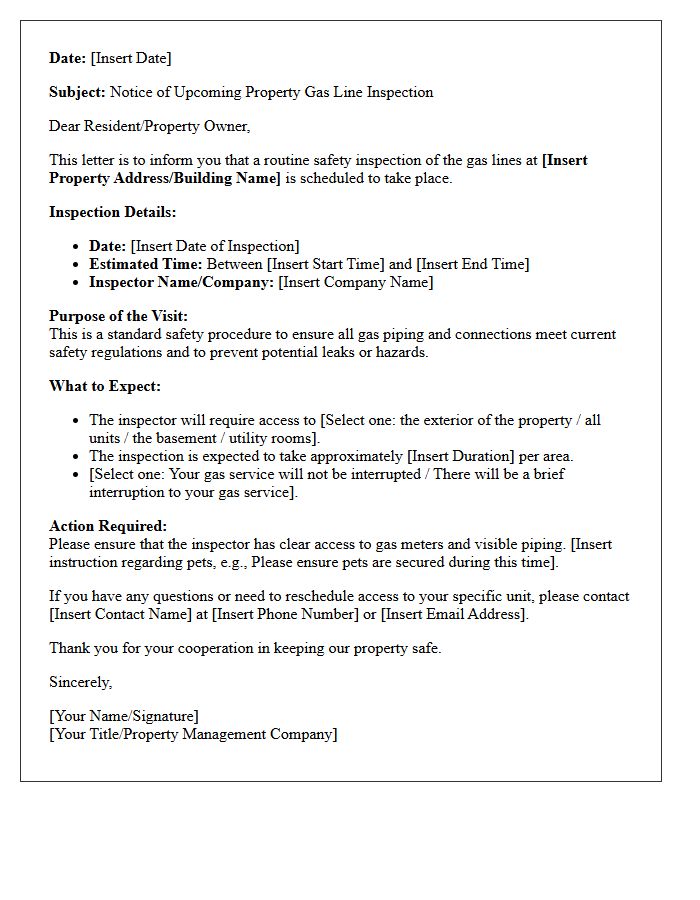
A property gas line inspector visit is a routine safety procedure to identify potential leaks and ensure code compliance. Homeowners should receive an official informational letter outlining the scheduled date and access requirements. It is mandatory to provide the inspector entry to all gas appliances and meters. These inspections prevent hazardous situations and maintain the integrity of the utility infrastructure. Ensure the gas lines are accessible and clear of debris. Confirming the inspector's credentials upon arrival is recommended for security purposes. Timely cooperation ensures continued safe gas service for your household.
Why did I receive a Notice of Routine Gas Line Inspection?
This notice is issued as part of a mandatory safety program to ensure the integrity of the gas distribution system and to comply with federal and state safety regulations requiring periodic inspections of gas meters and piping.
What does the gas line inspection involve?
A qualified technician will perform a visual assessment of the gas meter and exposed exterior piping to check for corrosion, leaks, or any potential safety hazards. In some cases, they may use a handheld device to detect trace amounts of natural gas.
Do I need to be home for the routine gas line inspection?
If your gas meter is located outside and is easily accessible, you do not need to be home for the inspection. However, if your meter is located inside a basement or behind a locked gate, you will need to provide access to the technician.
How long does the gas line safety inspection take?
A typical routine inspection is non-invasive and generally takes between 10 to 20 minutes to complete. There will be no interruption to your gas service during this safety check.
Is there a cost for the routine gas line inspection?
No, there is no direct charge to the customer for a routine safety inspection. These inspections are conducted by the utility provider as part of their standard maintenance and safety commitment to the community.


Comments