
Improving your recruitment process requires understanding the applicant experience. A Feedback Request Letter allows hiring managers to gather valuable insights from candidates after their interview, helping refine internal strategies and boost employer branding. Sending a professional follow-up demonstrates that you value candidate perspectives, regardless of the hiring outcome. To help you get started, below are some ready to use templates.
Image cover: Candidate Feedback Request: Professional Interview Follow-Up Templates and Samples
Letter Samples List
- Standard Post-Interview Candidate Feedback Request Letter
- Client Company Interview Experience Evaluation Letter
- Recruitment Agency Screening Process Satisfaction Letter
- Executive Search Candidate Interview Assessment Letter
- First Round Interview Experience Feedback Request Letter
- Final Stage Client Interview Post-Evaluation Letter
- Unsuccessful Candidate Post-Interview Survey Letter
- Successful Placement Interview Journey Feedback Letter
- Remote Video Interview Candidate Experience Letter
- On-Site Client Interview Feedback Request Letter
- Technical Assessment Process Candidate Evaluation Letter
- Confidential Post-Interview Feedback Collection Letter
Standard Post-Interview Candidate Feedback Request Letter
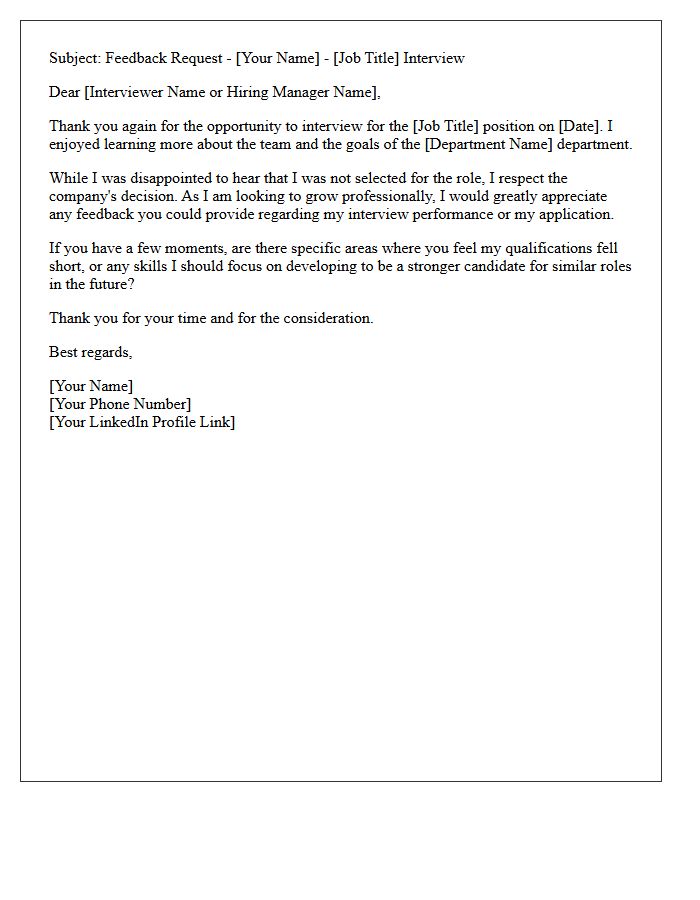
A standard post-interview candidate feedback request letter is a professional inquiry sent by applicants to gain insights into their performance. The constructive feedback provided helps candidates identify specific strengths and areas for improvement. When drafting this message, maintain a polite and appreciative tone while respecting the recruiter's time. Clear communication demonstrates growth-oriented professionalism and helps refine future interview strategies. Remember that while not all employers provide detailed responses due to legal policies, requesting feedback remains a valuable step in your long-term career development and networking efforts.
Client Company Interview Experience Evaluation Letter
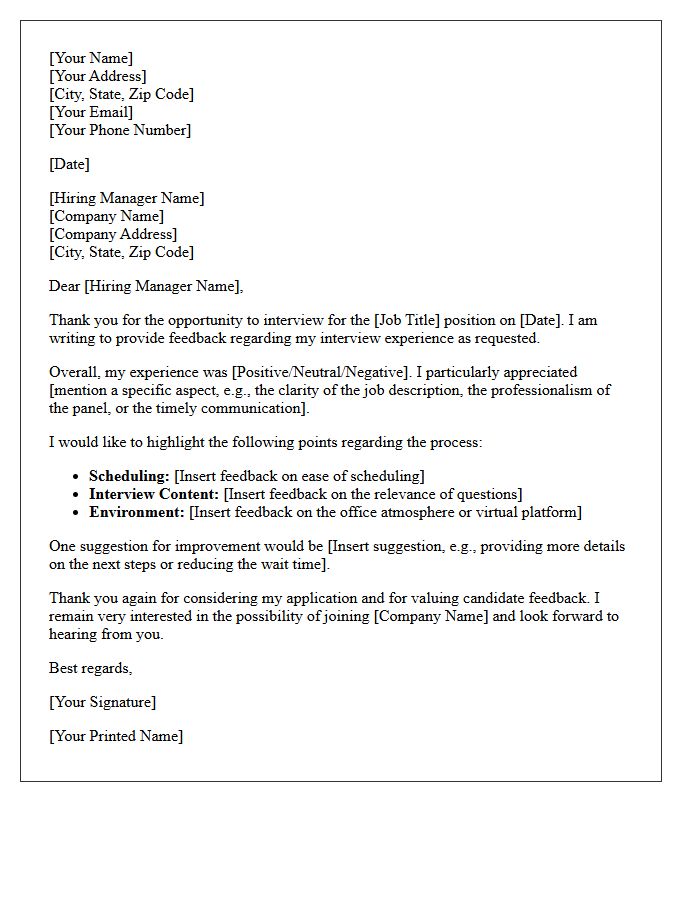
A Client Company Interview Experience Evaluation Letter is a formal document used to assess the recruitment process from a candidate's perspective. It highlights key areas such as professional communication, interviewer conduct, and technical assessment clarity. Providing honest feedback helps organizations refine their hiring strategies and improve their employer brand. These letters are essential for identifying friction points in the candidate journey, ensuring a respectful and efficient experience that attracts top-tier talent while maintaining high industry standards for talent acquisition and corporate reputation.
Recruitment Agency Screening Process Satisfaction Letter
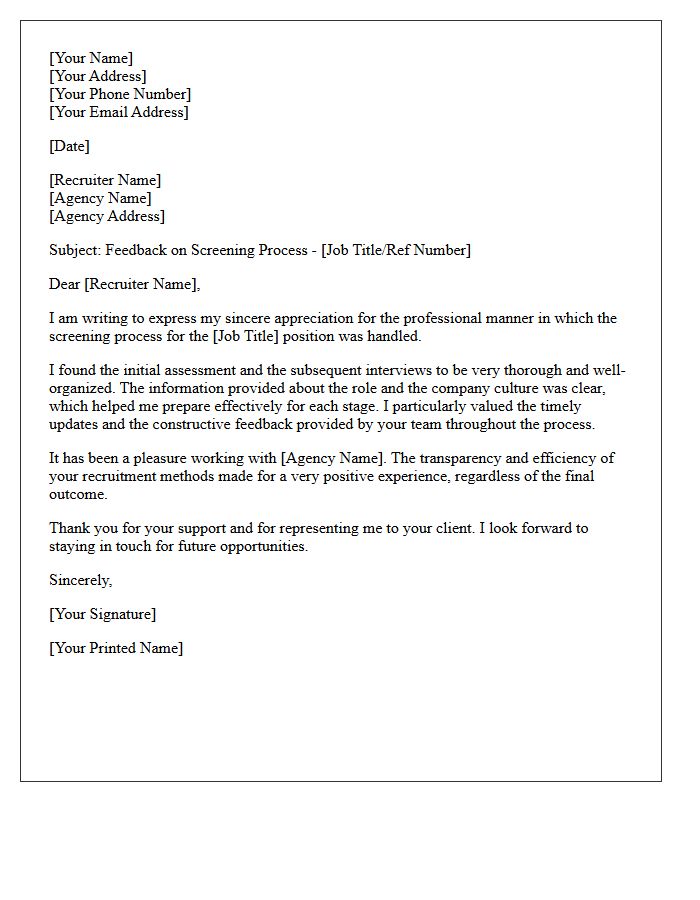
A Recruitment Agency Screening Process Satisfaction Letter serves as formal feedback to evaluate the efficiency of candidate vetting. It is essential to highlight your positive experience regarding communication, speed, and the quality of shortlisted talent. This document reinforces the partnership between the employer and the agency, ensuring alignment on hiring standards. Clearly state how the screening criteria met your expectations and acknowledge the recruiter's expertise in identifying top-tier professionals. Providing this feedback helps refine future searches and maintains a high-quality talent pipeline for your organization's growth.
Executive Search Candidate Interview Assessment Letter
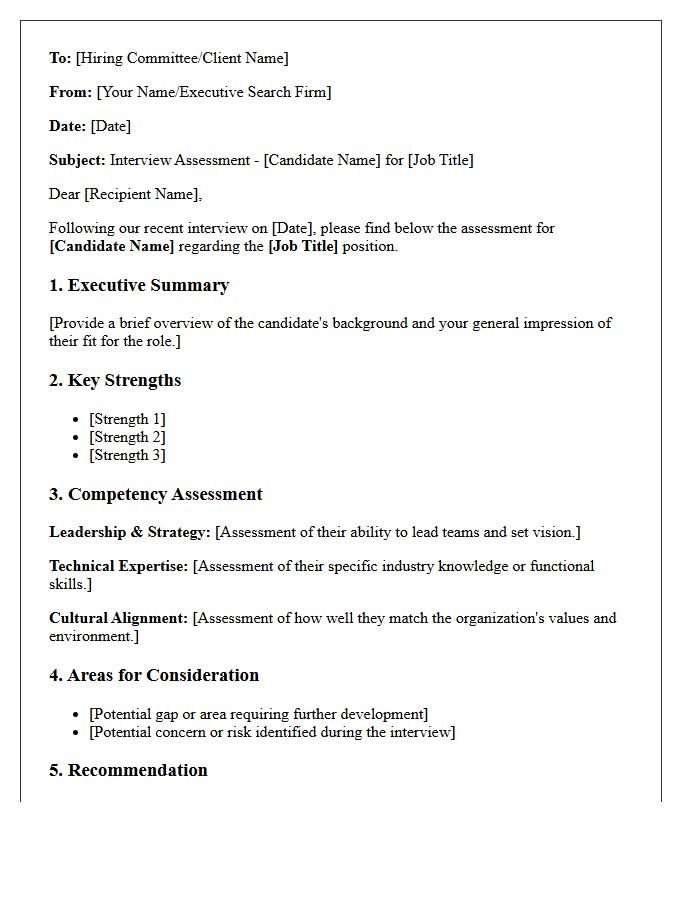
An Executive Search Candidate Interview Assessment Letter provides a critical evaluation of a high-level professional's suitability for a leadership role. It bridges the gap between raw interview data and strategic decision-making. This document typically analyzes core competencies, cultural alignment, and potential risks. For stakeholders, it serves as a formal record justifying selection or rejection. Key elements include behavioral observations, industry expertise, and leadership potential. Ultimately, this assessment ensures that the hiring committee has a comprehensive, objective overview to mitigate executive hiring risks and ensure long-term organizational success.
First Round Interview Experience Feedback Request Letter
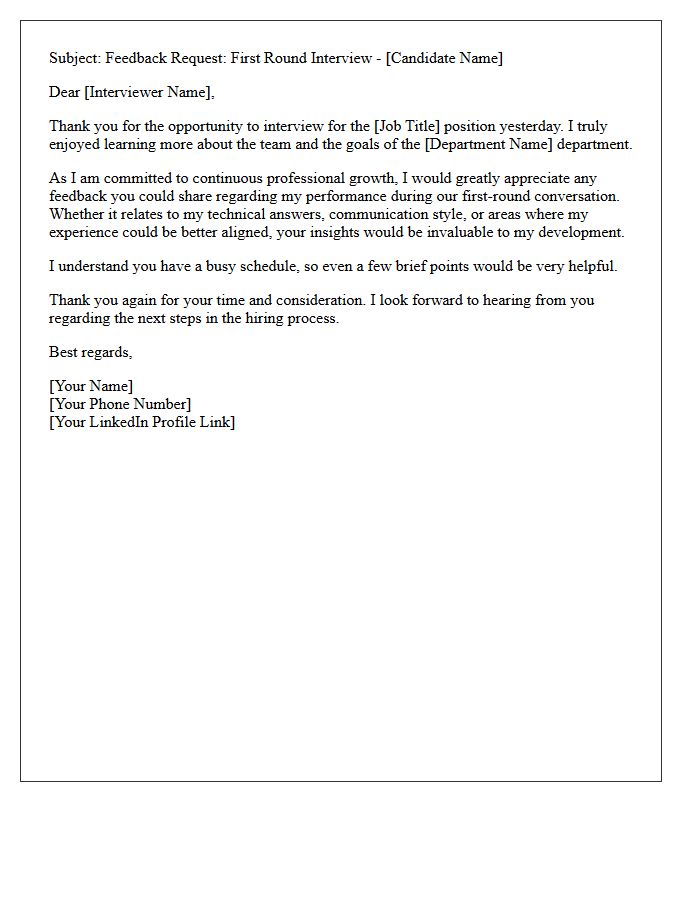
Sending a follow-up letter after a first-round interview is essential for professional growth. This message should express gratitude for the opportunity while politely asking for constructive feedback on your performance. Focus on identifying specific areas for improvement, such as technical skills or communication style. Highlighting your commitment to professional development demonstrates a growth mindset. Keep the tone concise, respectful, and forward-looking to maintain a positive relationship with the recruiter, regardless of the hiring outcome. This strategic step helps refine your interview technique for future career success.
Final Stage Client Interview Post-Evaluation Letter
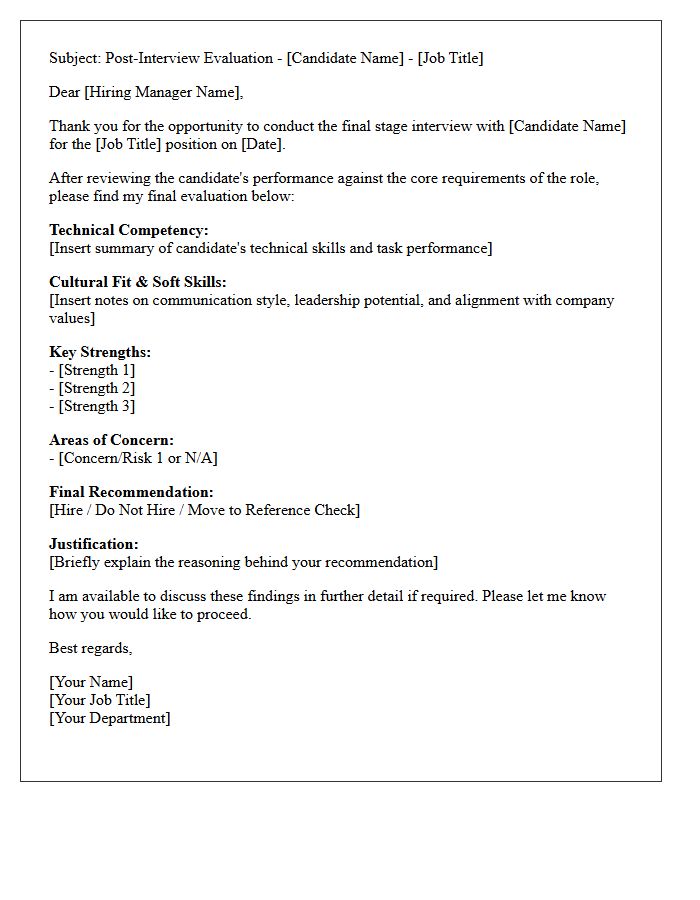
A Final Stage Client Interview Post-Evaluation Letter is a formal document sent to stakeholders summarizing a candidate's performance. Its primary purpose is to justify the final hiring decision by comparing technical skills and cultural alignment against project requirements. It should concisely outline strengths, potential risks, and the overall recommendation. Providing this structured feedback ensures transparency, maintains professional standards, and assists in the final selection process. This document serves as the definitive record for closing the recruitment cycle effectively and securing executive buy-in for the chosen professional.
Unsuccessful Candidate Post-Interview Survey Letter
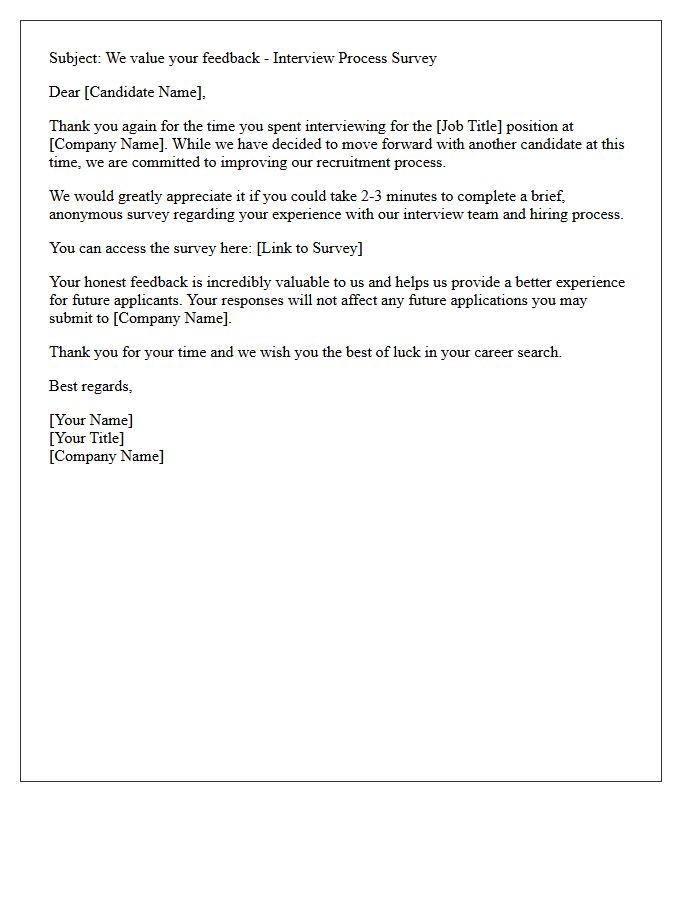
An Unsuccessful Candidate Post-Interview Survey Letter is a strategic tool used to gather feedback on your recruitment process. By asking declined applicants about their experience, you gain actionable insights to improve hiring efficiency and employer branding. This professional outreach demonstrates that your organization values candidate transparency and continuous improvement. Keep the survey brief and anonymous to encourage honest responses. Ultimately, analyzing this data helps refine interview techniques, reduce bias, and ensure a positive reputation in the talent market, even among those not selected for the role.
Successful Placement Interview Journey Feedback Letter
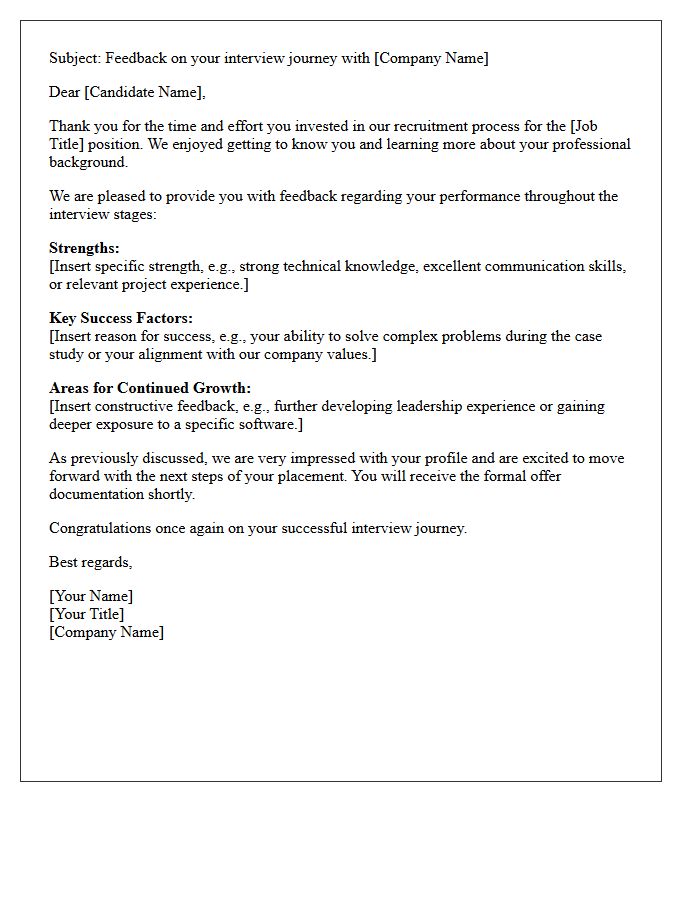
A successful Placement Interview Journey Feedback Letter serves as a professional bridge between candidates and recruiters. It should clearly outline specific interview strengths, areas for technical growth, and cultural alignment. Providing constructive insights enhances the employer brand and supports the candidate's career development. Ensure the tone remains encouraging and transparent to maintain a positive relationship. Timely delivery of this document is crucial for internal hiring transparency and helps refine future recruitment strategies, ensuring that both parties gain value from the evaluation process regardless of the final hiring decision.
Remote Video Interview Candidate Experience Letter
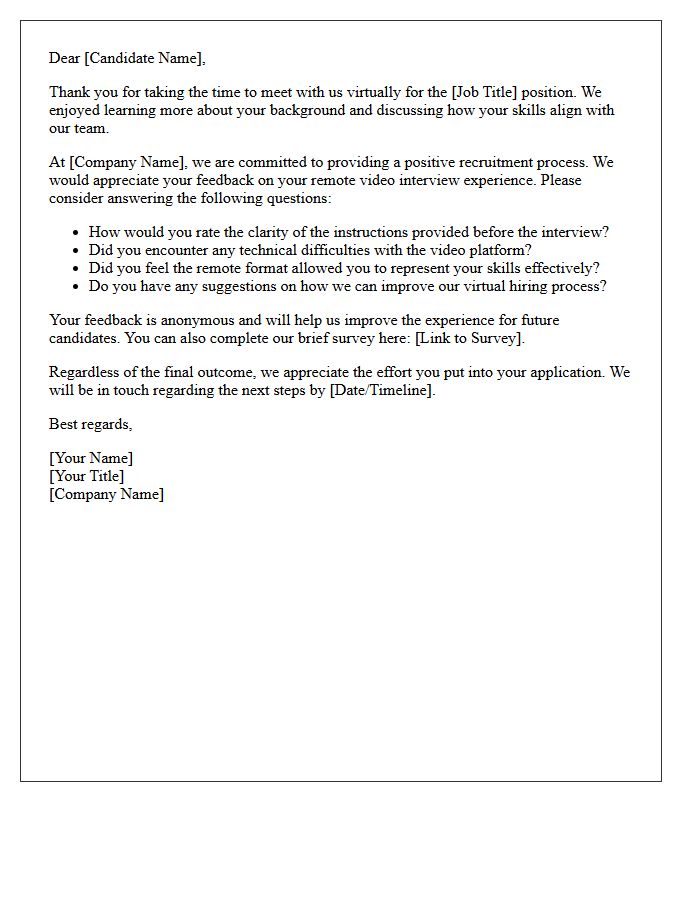
A Remote Video Interview Candidate Experience Letter is a formal document sent to applicants to outline expectations for virtual meetings. It must clearly detail the technical requirements, such as the chosen software platform, camera setup, and stable internet connection. Providing a structured interview agenda and troubleshooting tips reduces candidate anxiety and ensures a professional atmosphere. This communication is essential for maintaining a positive employer brand while ensuring all participants are well-prepared for a seamless digital interaction during the hiring process.
On-Site Client Interview Feedback Request Letter
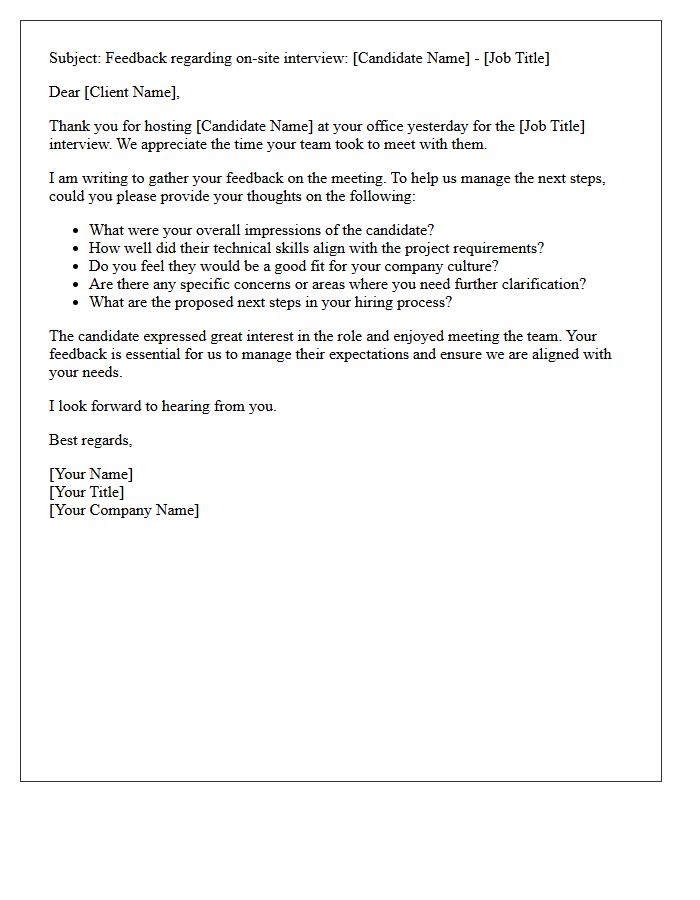
An On-Site Client Interview Feedback Request Letter is a professional document sent to a hiring manager or recruiter immediately after an in-person meeting. Its primary purpose is to express gratitude and gain constructive insights into your performance. By requesting feedback, you demonstrate a commitment to professional growth and maintain active communication. This letter helps clarify your standing in the hiring process while reinforcing your interest in the role. Highlighting specific discussions from the interview ensures the message is personalized, leaving a positive lasting impression on the potential employer.
Technical Assessment Process Candidate Evaluation Letter
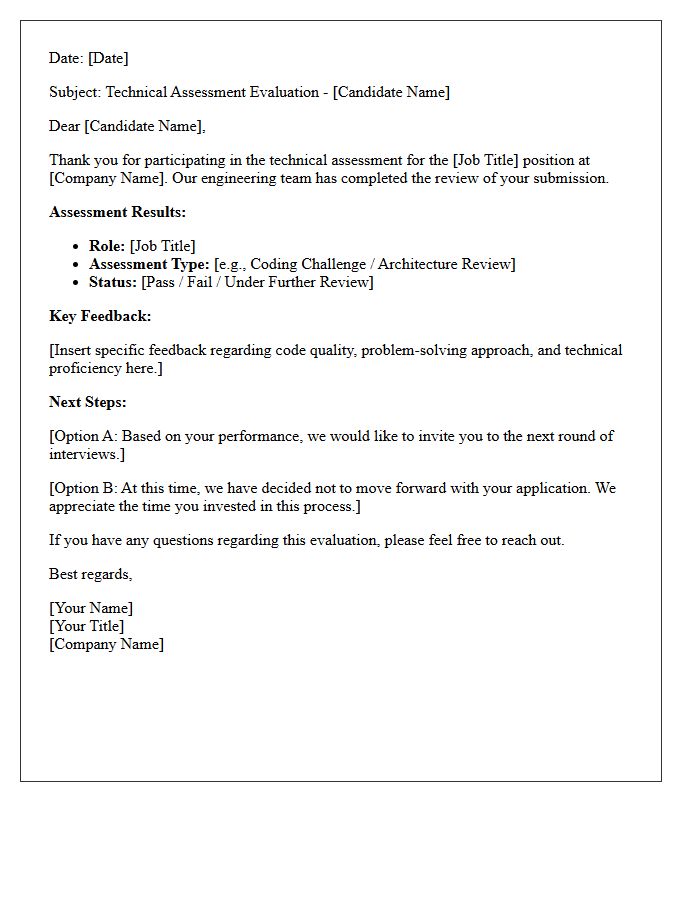
A technical assessment process candidate evaluation letter is a professional document used to standardize recruitment decisions after skills testing. It provides a structured summary of a candidate's technical proficiency, problem-solving abilities, and cultural fit. Clear communication in this letter ensures transparency for stakeholders and helps refine the hiring pipeline. By documenting specific strengths and weaknesses, hiring managers can make data-driven choices, ensuring the most qualified talent is selected for complex engineering roles while maintaining a positive candidate experience through constructive feedback.
Confidential Post-Interview Feedback Collection Letter
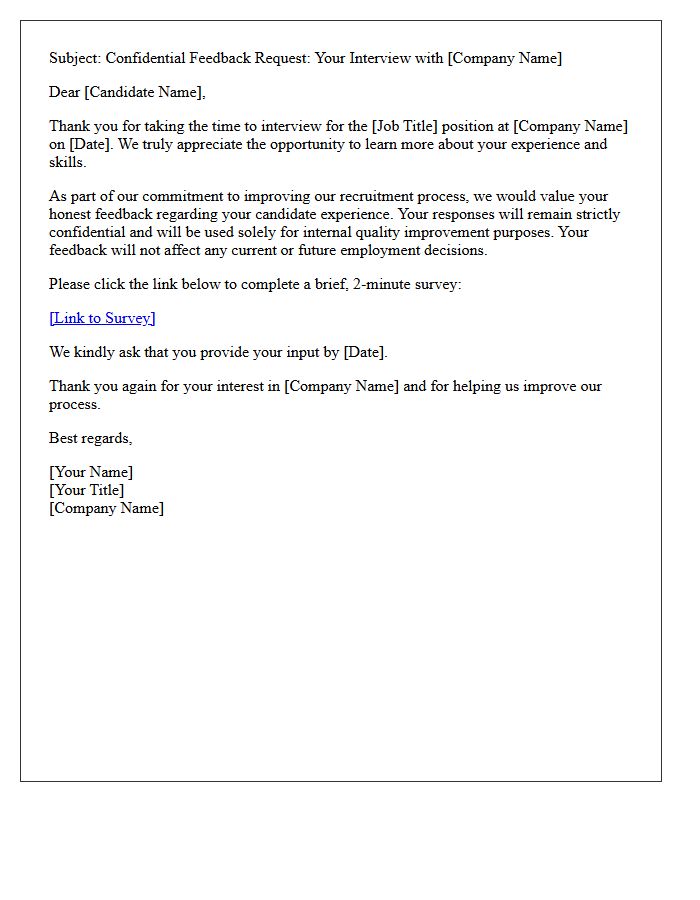
A Confidential Post-Interview Feedback Collection Letter is an essential tool for refining recruitment processes. It guarantees anonymity to candidates, encouraging honest insights into their interview experience. By gathering candid data on interviewer professionalism and task clarity, organizations can identify structural weaknesses. This professional outreach demonstrates a commitment to candidate experience and continuous improvement. Utilizing such letters helps build a positive employer brand while ensuring that future hiring cycles are more efficient, fair, and engaging for potential talent.
What should be included in a candidate feedback request letter?
A post-interview feedback request should include a thank-you note for the candidate's time, a clear statement that you value their candidate experience, and a link to a short survey or a few specific questions regarding the interview process and communication.
When is the best time to send a feedback request to a candidate?
The ideal time to send a feedback request is shortly after the final hiring decision has been communicated. Sending it within 24 to 48 hours ensures the experience is still fresh in the candidate's mind, regardless of whether they were hired or rejected.
How do I ask an unsuccessful candidate for feedback without being insensitive?
To ask unsuccessful candidates for feedback, lead with empathy and emphasize that their insights will help improve the recruitment journey for future applicants. Make it clear that their honest input is a contribution to your company's professional growth.
What specific questions should I ask in a post-interview feedback letter?
Effective questions include: "How would you rate the clarity of the job description?", "Did the interviewers provide enough information about the role?", "Was the communication timely?", and "Would you recommend our company to other job seekers based on your experience?"
Why is it important to request feedback from candidates after an interview?
Requesting candidate feedback is crucial for optimizing your recruitment funnel, reducing "ghosting," and strengthening your employer brand. It shows candidates that you respect their time and are committed to a transparent, candidate-centric hiring process.

Comments