
Drafting a Client Specific Rejection Forwarding Letter is essential for maintaining professional relationships when relaying candidate status updates. This formal communication ensures transparency while upholding your brand reputation during the hiring process. Streamlining this task saves time and provides clarity for all parties involved. To help you get started quickly, below are some ready to use template.

Image cover: Professional Templates for Client-Specific Rejection Forwarding Letters
Letter Samples List
- Standard Client Specific Rejection Forwarding Letter
- Initial Screening Client Rejection Forwarding Letter
- Post Interview Client Specific Rejection Forwarding Letter
- Technical Skill Gap Client Rejection Forwarding Letter
- Experience Shortfall Client Specific Rejection Letter
- Cultural Fit Client Rejection Forwarding Letter
- Internal Hire Client Specific Rejection Forwarding Letter
- Alternative Candidate Selected Client Rejection Letter
- Compensation Mismatch Client Specific Rejection Forwarding Letter
- Overqualified Candidate Client Rejection Forwarding Letter
- Position On Hold Client Specific Rejection Forwarding Letter
- Role Cancellation Client Rejection Forwarding Letter
- Future Opportunities Client Specific Rejection Letter
Standard Client Specific Rejection Forwarding Letter
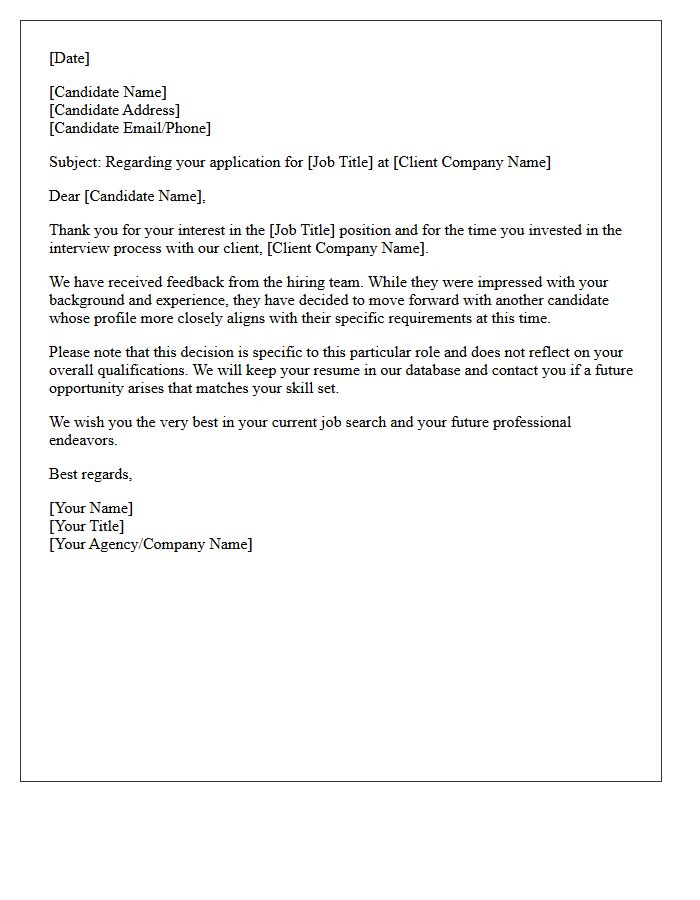
A Standard Client Specific Rejection Forwarding Letter is a formal document used by agencies to notify candidates that a particular employer has declined their application. It effectively communicates the hiring decision while maintaining professional relationships. The letter clearly states the outcome without disclosing sensitive internal feedback, ensuring compliance with privacy standards. By providing a structured template, firms ensure consistency in candidate experience and brand reputation. Key elements include the candidate's name, the specific role, and a polite closing, helping recruiters manage high-volume communications efficiently while keeping applicants informed of their status.
Initial Screening Client Rejection Forwarding Letter
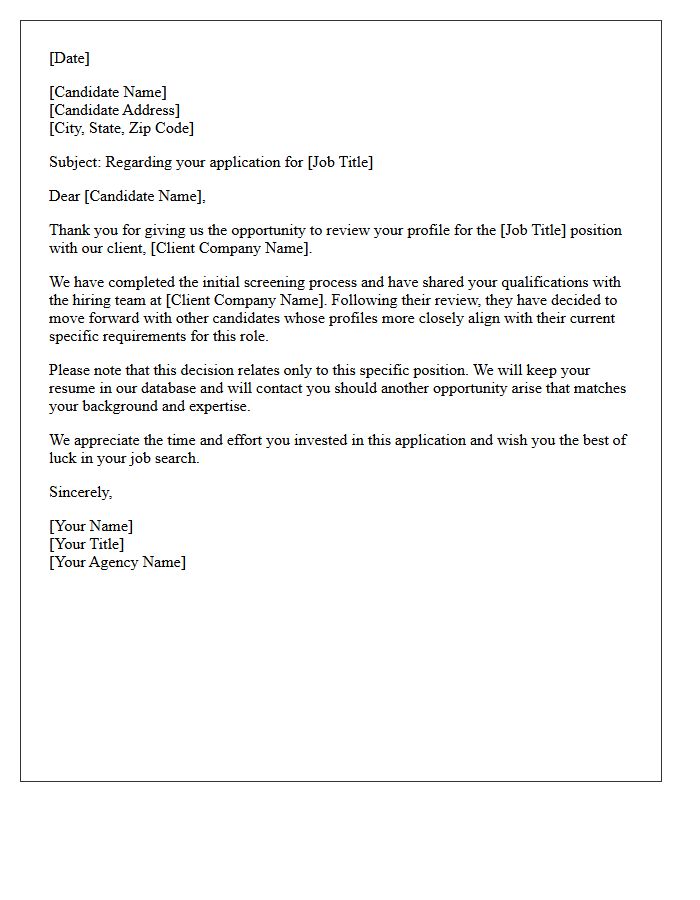
An Initial Screening Client Rejection Forwarding Letter is a professional document sent by a recruiter to a candidate who was declined by the employer after the first review. This letter ensures transparency and maintains a positive employer brand. It should clearly state that the application will not proceed while expressing gratitude for the candidate's interest. Timely delivery of this notification is essential for effective candidate experience management, allowing applicants to focus their search elsewhere without uncertainty. Always maintain a polite, encouraging tone to keep doors open for future potential opportunities.
Post Interview Client Specific Rejection Forwarding Letter
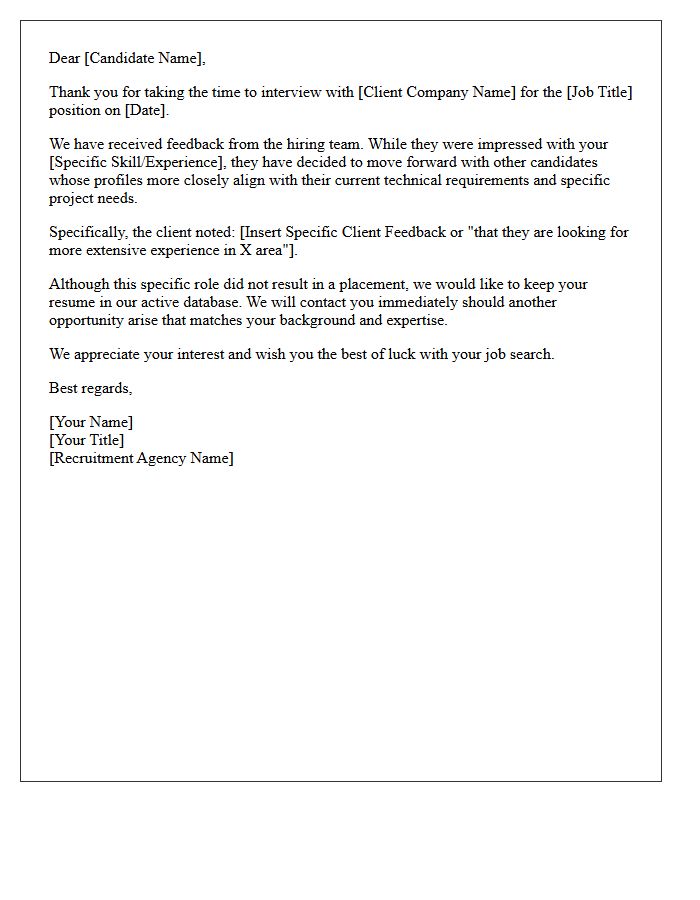
A Post Interview Client Specific Rejection Forwarding Letter is a professional communication sent by a recruiter to a candidate. It formally conveys negative feedback after a client interview. The primary purpose is to maintain a positive employer brand while providing clear closure. To be effective, the letter should remain empathetic, offer specific constructive feedback when possible, and encourage future applications. Using this document ensures legal compliance and preserves the professional relationship between the agency, the client, and the applicant throughout the hiring lifecycle.
Technical Skill Gap Client Rejection Forwarding Letter
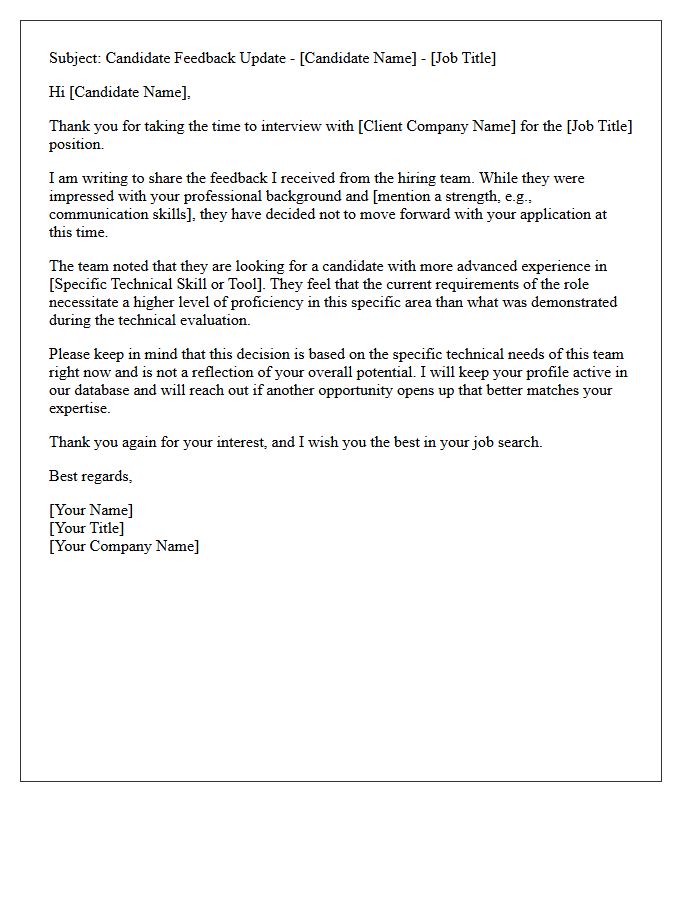
A technical skill gap rejection letter professionally informs candidates that their current expertise does not align with specific role requirements. The strategic feedback provided helps applicants identify areas for improvement while maintaining a positive employer brand. To ensure a constructive experience, companies often use a forwarding approach, recommending the candidate for future openings or alternative positions within the talent pool. This method balances transparency with encouragement, ensuring that a current technical mismatch does not permanently close doors for high-potential talent in the evolving digital landscape.
Experience Shortfall Client Specific Rejection Letter
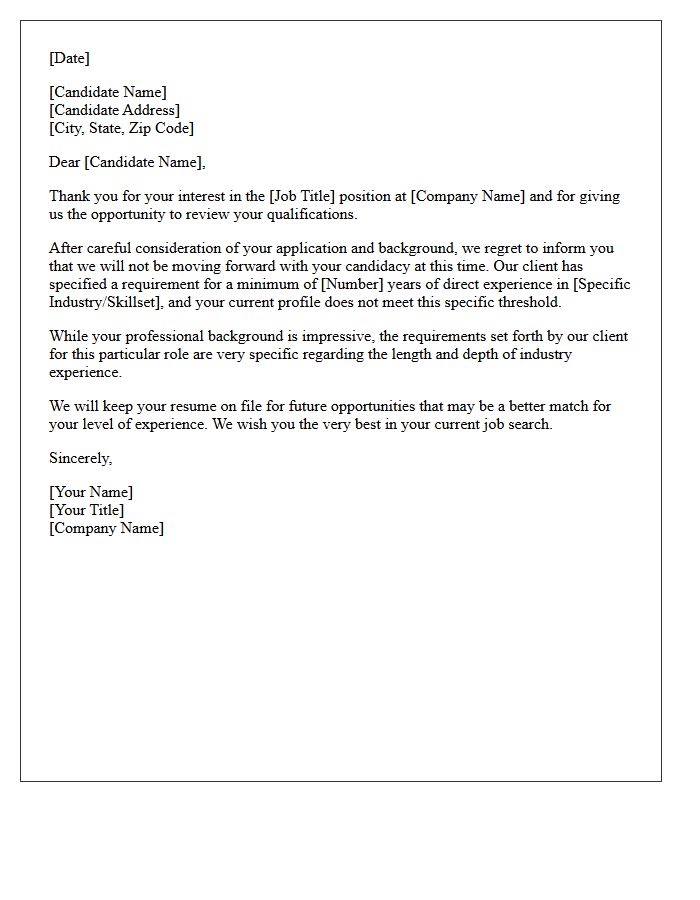
An Experience Shortfall Client Specific Rejection Letter is a professional notification sent to job applicants who possess general skills but lack the specialized expertise required for a particular role. This document must clearly state that while the candidate is qualified, the decision is based on a need for deeper, role-specific experience. Providing constructive feedback maintains your employer brand and prevents future misunderstandings. It is crucial to remain concise and transparent, ensuring the candidate understands the specific gap in their technical or industry-related background during the selection process.
Cultural Fit Client Rejection Forwarding Letter
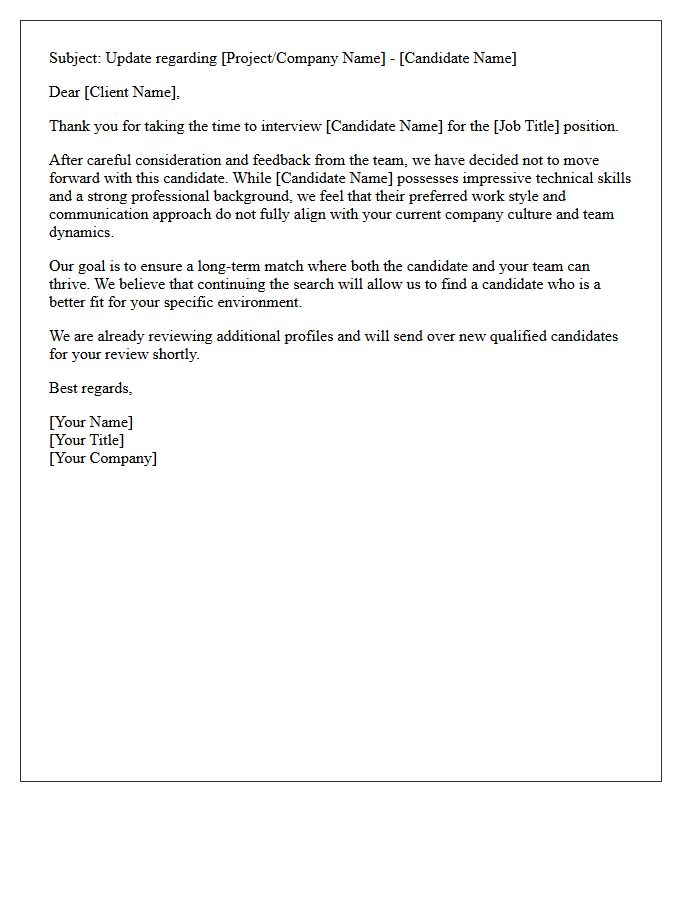
When a candidate is declined due to cultural alignment, a professional rejection forwarding letter must prioritize empathy and clarity. This document informs the recruiter or client that while the applicant possesses the necessary technical skills, their core values do not match the organization's environment. It is essential to maintain brand reputation by providing constructive, high-level feedback without being overly specific. A well-structured letter ensures a positive candidate experience, keeps the door open for future opportunities, and protects the firm's professional image during the hiring process.
Internal Hire Client Specific Rejection Forwarding Letter
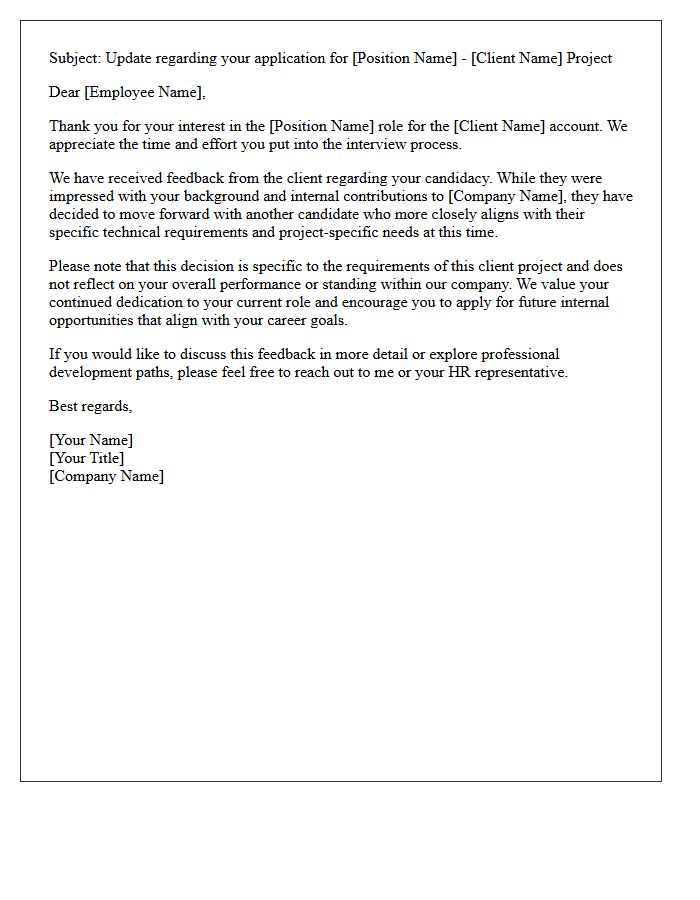
An Internal Hire Client Specific Rejection Forwarding Letter is a formal notification sent to an internal candidate when their application is declined based on specific client feedback. This document ensures transparency while maintaining internal relationships. It must clearly state that the rejection stems from the external stakeholder's requirements rather than a lack of general company fit. Professionalism is vital to ensure employee retention and motivation, providing constructive insights that help the staff member understand the niche criteria or technical skills required for that specific client-facing role.
Alternative Candidate Selected Client Rejection Letter
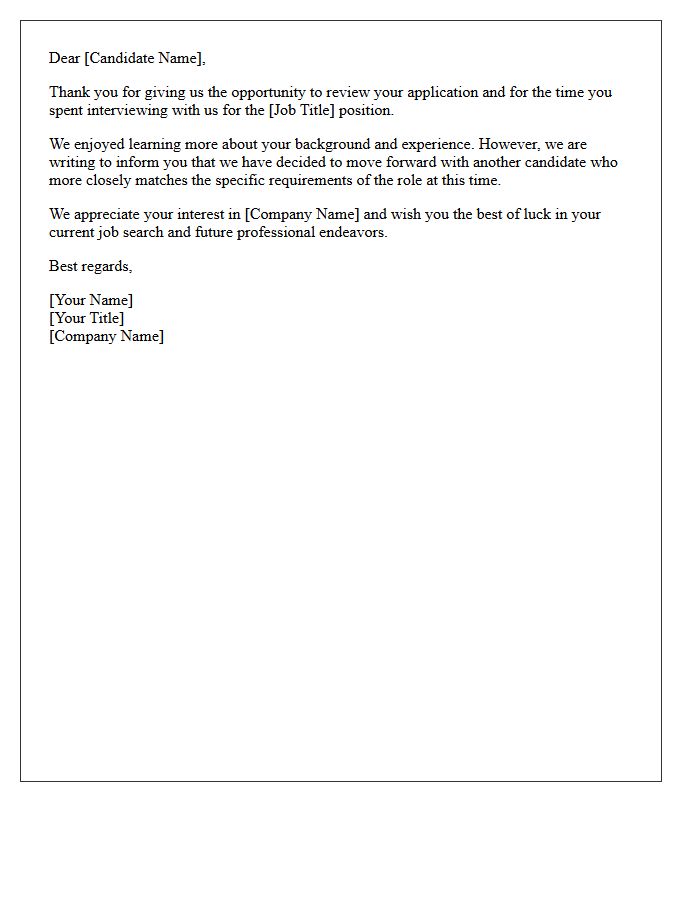
An Alternative Candidate Selected letter is a professional notice informing an applicant that another individual better matched the role's specific requirements. It is crucial to maintain a positive brand reputation by delivering this news promptly and with empathy. Focus on expressing gratitude for their time and interest while avoiding overly detailed comparisons. Providing a clear closure allows the candidate to pursue other opportunities, keeps your talent pipeline healthy, and ensures a respectful candidate experience for everyone involved in the hiring process.
Compensation Mismatch Client Specific Rejection Forwarding Letter
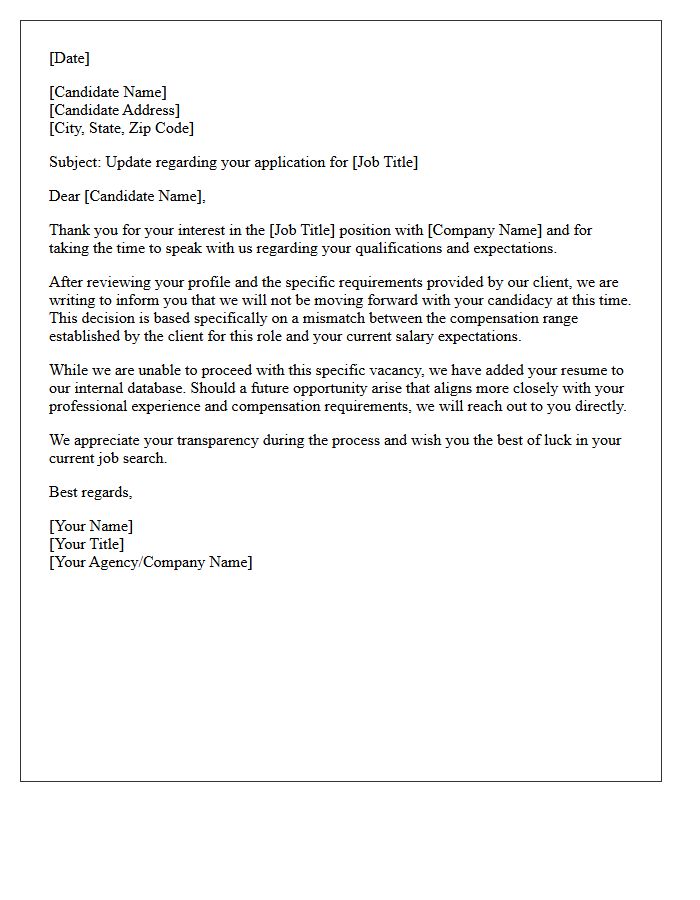
A Compensation Mismatch Client Specific Rejection Forwarding Letter is a formal notice sent to candidates when their salary expectations exceed the specific budget approved by the client. This document serves as an official communication from a recruitment agency or HR department, explaining that the candidacy cannot proceed due to budgetary constraints. It is essential for maintaining professional transparency, ensuring the candidate understands the financial misalignment while keeping doors open for future opportunities that may better fit their compensation requirements and the client's financial parameters.
Overqualified Candidate Client Rejection Forwarding Letter
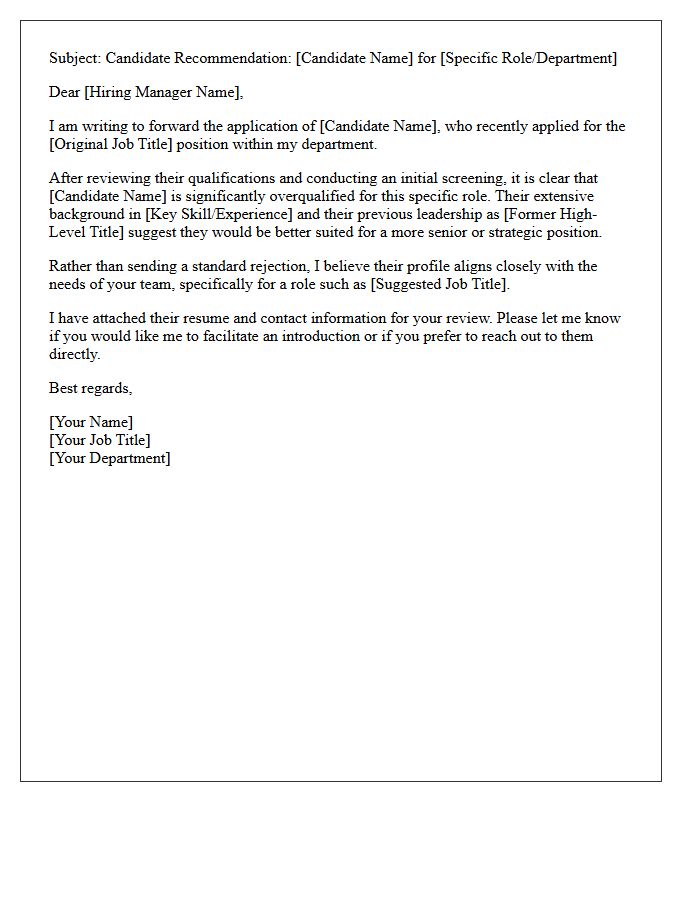
An overqualified candidate rejection letter professionally informs applicants that their extensive experience exceeds the role's requirements. To maintain a positive employer brand, the letter should emphasize that the decision is based on a strategic alignment of skills rather than a lack of competence. Clearly stating that the candidate's seniority may lead to underutilization or future dissatisfaction helps mitigate frustration. Providing constructive feedback and suggesting potential senior-level openings ensures a respectful conclusion, keeping the door open for future high-level recruitment opportunities within the organization.
Position On Hold Client Specific Rejection Forwarding Letter
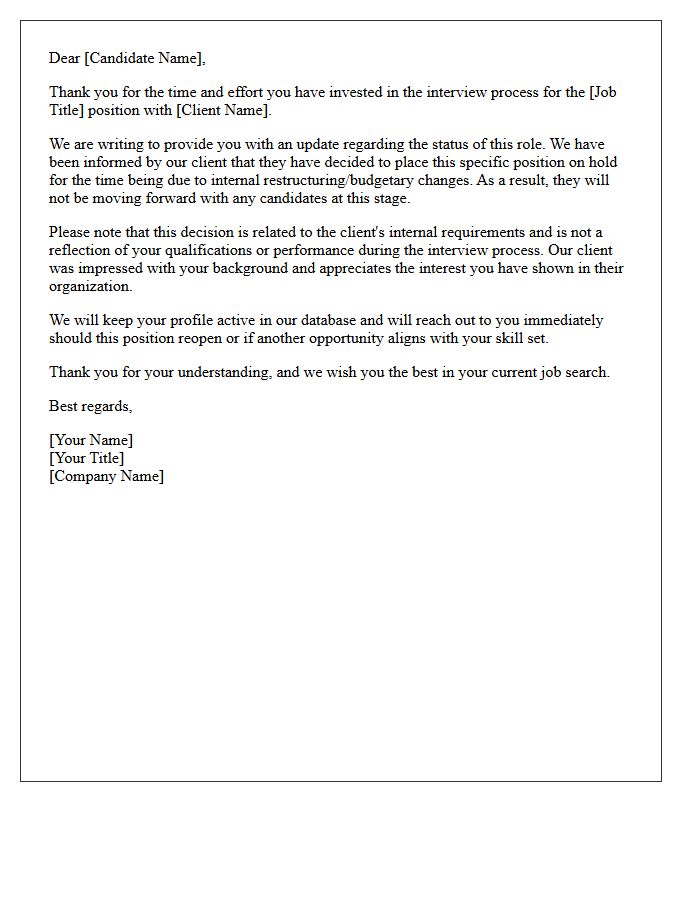
A Position On Hold Client Specific Rejection Forwarding Letter informs candidates that a recruitment process is paused due to strategic client decisions. This formal notice ensures professional transparency by explaining that the delay is specific to the employer's current needs rather than candidate qualifications. It is a vital tool for candidate relationship management, keeping talent engaged while protecting the employer brand. Clearly stating the on-hold status prevents confusion and allows applicants to pursue other opportunities while remaining open to future consideration once the position reactivates.
Role Cancellation Client Rejection Forwarding Letter
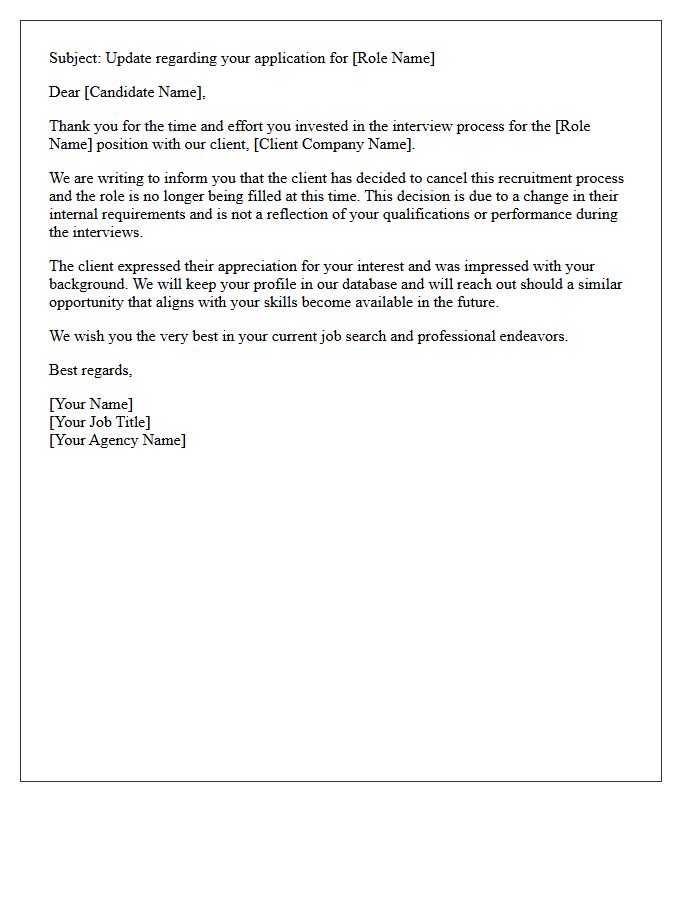
A Role Cancellation Client Rejection Forwarding Letter is a formal notification sent to candidates when a hiring process terminates prematurely. It explains that the vacancy is closed due to internal shifts or client decisions rather than applicant performance. This document maintains professional transparency by clarifying that the role no longer exists. Sending this letter protects employer branding and ensures candidates are not left waiting, allowing them to redirect their focus. It serves as an essential communication tool for recruiters to conclude recruitment cycles with integrity and clarity.
Future Opportunities Client Specific Rejection Letter
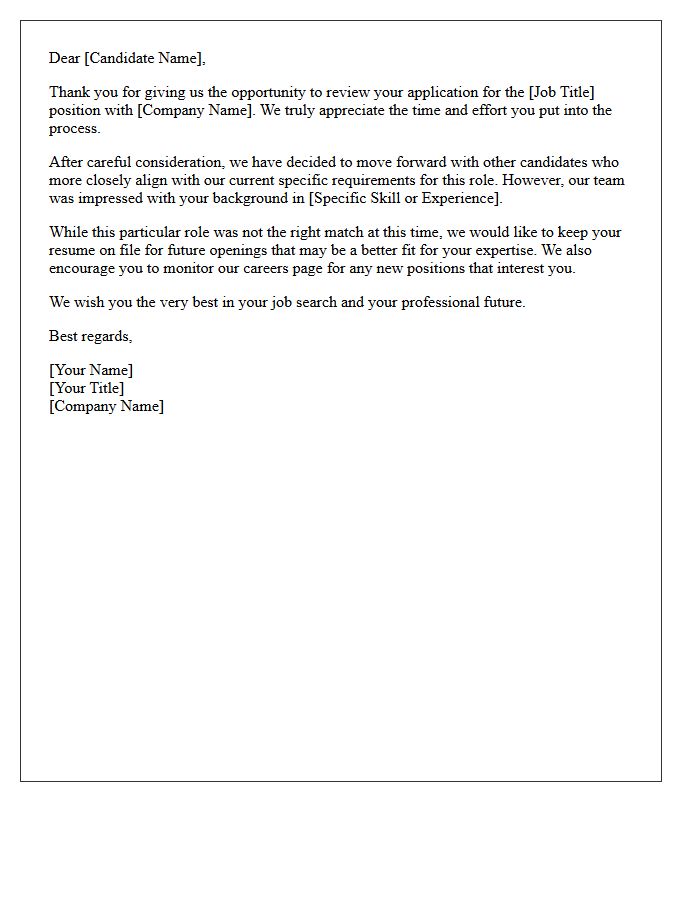
A Future Opportunities Client Specific Rejection Letter is a strategic communication tool used to decline a candidate while maintaining a professional relationship. The most critical element is the positive reinforcement of their skills, signaling that they remain a strong fit for the company's long-term vision. By explicitly mentioning talent pooling, you transform a standard refusal into a networking opportunity. This approach protects your employer brand and ensures a warm pipeline of pre-vetted professionals who are encouraged to reapply when more suitable, niche roles become available within the organization.
What is a Client Specific Rejection Forwarding Letter?
A Client Specific Rejection Forwarding Letter is an official document used by intermediaries or service providers to notify a candidate or vendor that their application or proposal was declined by a particular client, rather than the primary firm.
When should you use a Client Specific Rejection Forwarding Letter?
This letter should be issued when a client makes an independent decision to reject a submission, requiring the agency to communicate this feedback while maintaining a professional relationship between all involved parties.
What key information is included in a Rejection Forwarding Letter?
The letter typically includes the specific project or position title, the client's name, the date of the decision, and, where applicable, constructive feedback or the specific criteria that were not met according to the client's requirements.
Can a Client Specific Rejection Forwarding Letter provide feedback?
Yes, while not always required, providing specific feedback from the client can help the recipient understand the decision and improve their future submissions, ensuring the process remains transparent and professional.
Does a client rejection affect future opportunities with the forwarding agency?
No, a client-specific rejection is isolated to that particular requirement; the forwarding agency may still consider the recipient for other opportunities or different clients that align better with their qualifications.

Comments