
Attracting top-tier leaders requires a sophisticated approach beyond standard recruitment. An Executive Level Passive Talent Introduction Letter is a strategic tool designed to engage high-value candidates who aren't actively searching. By highlighting mutual alignment and discreet opportunities, you can build meaningful connections with elite professionals. To help you start these high-stakes conversations, below are some ready to use template.
Image cover: Connecting with Top-Tier Talent: Executive Outreach Templates and Strategies
Letter Samples List
- Confidential Executive Opportunity Introduction Letter
- Exclusive C-Suite Role Invitation Letter
- Strategic Leadership Position Inquiry Letter
- Retained Search Executive Outreach Letter
- Discreet Vice President Role Proposition Letter
- Executive Market Intelligence Sharing Letter
- Transformational Leadership Opportunity Letter
- Bespoke Executive Career Advancement Letter
- Senior Executive Confidential Partnership Letter
- Top Tier Passive Candidate Engagement Letter
- Niche Market Executive Search Introduction Letter
- Global Board Member Prospecting Letter
Confidential Executive Opportunity Introduction Letter
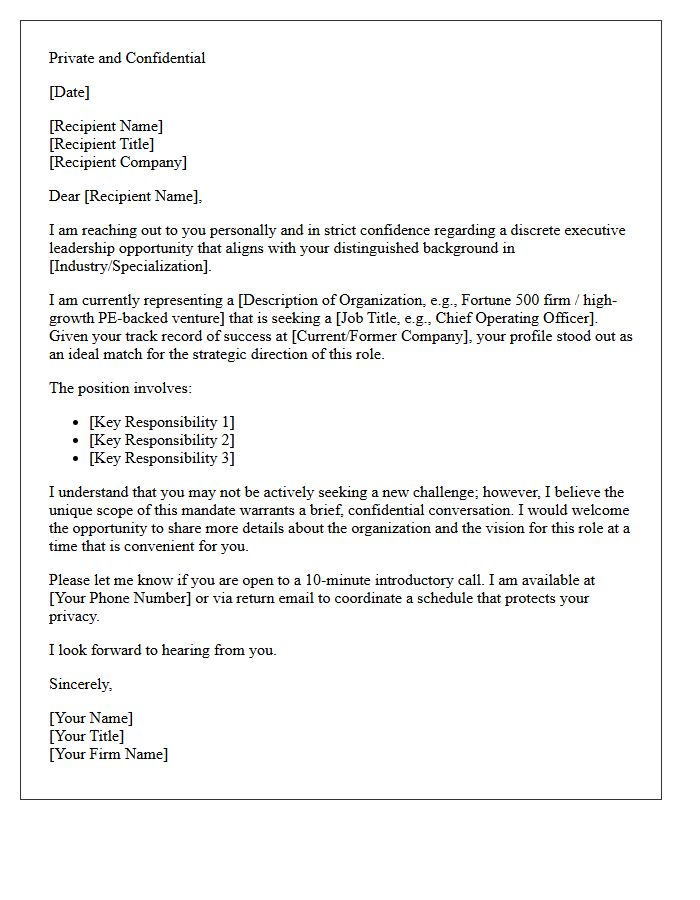
A Confidential Executive Opportunity Introduction Letter is a strategic networking tool used to discreetly engage high-level decision-makers. It bypasses traditional portals by highlighting specific leadership achievements and cultural alignment without publicly disclosing a job search. To be effective, the content must remain concise, emphasizing quantifiable value propositions and professional discretion. This high-impact document serves as a personal pitch, establishing trust and strategic interest while protecting the executive's current professional standing. It is essential for accessing the "hidden job market" through targeted, private outreach to key stakeholders.
Exclusive C-Suite Role Invitation Letter
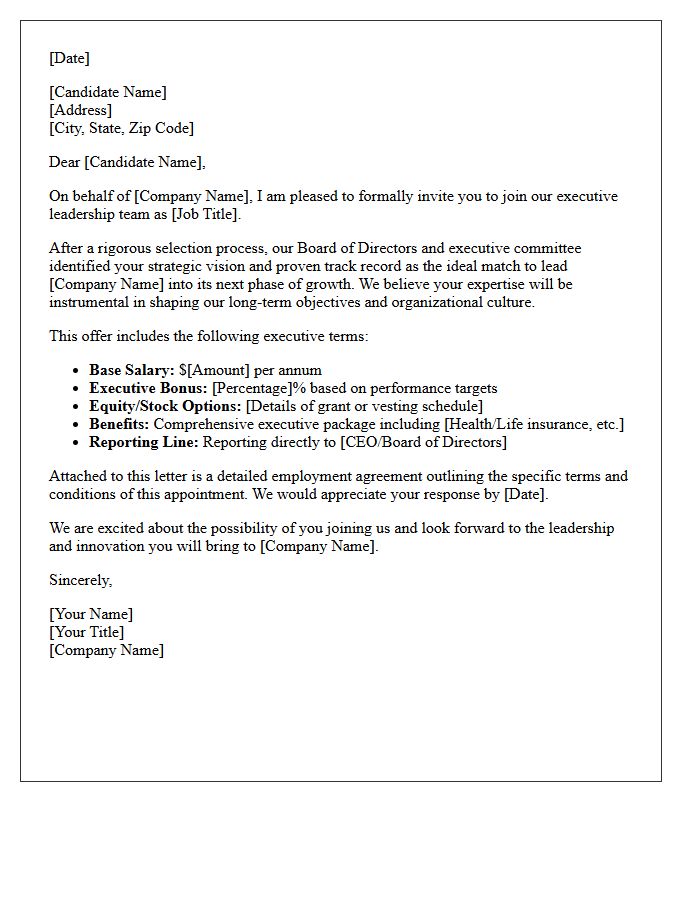
An Exclusive C-Suite Role Invitation Letter is a highly personalized document used to recruit top-tier executives for leadership positions. Unlike standard job offers, these letters emphasize strategic alignment, equity potential, and long-term vision. They are often confidential, bypassing traditional application portals to directly engage proven industry leaders. Receiving such an invitation signifies a firm's commitment to your unique expertise and cultural fit. It serves as a formal gateway to high-level negotiations, outlining the pivotal impact you will have on the organization's future growth and corporate governance.
Strategic Leadership Position Inquiry Letter
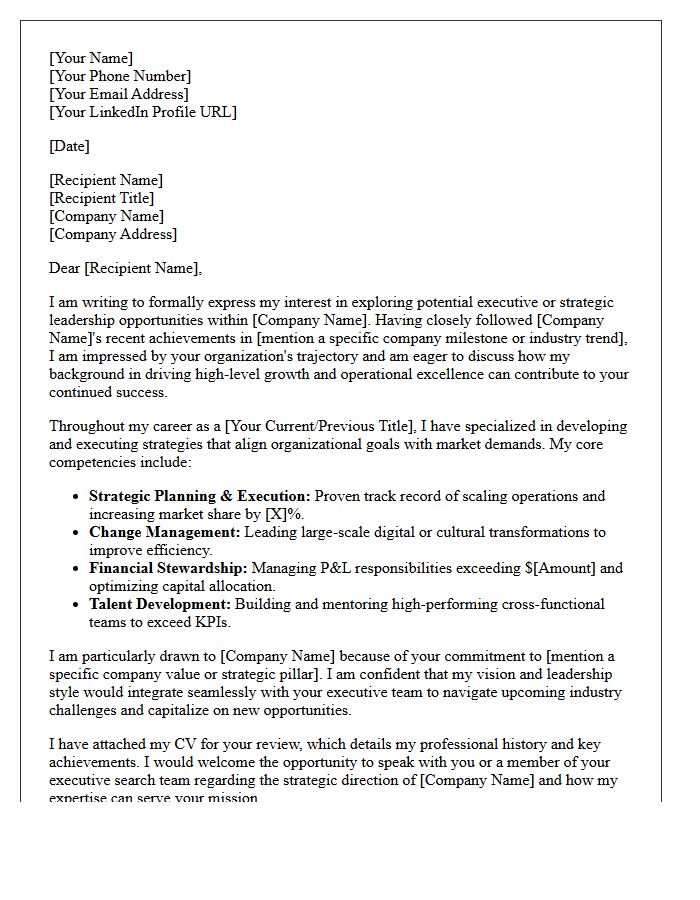
A Strategic Leadership Position Inquiry Letter is a proactive networking tool used to access the hidden job market. Unlike a standard application, this letter targets high-level executives to propose a specific value proposition aligned with their organizational goals. It must demonstrate executive presence and deep industry insight to initiate a confidential dialogue about future leadership needs. By focusing on strategic vision rather than just past tasks, you position yourself as a solution to complex business challenges, effectively bypassing traditional recruitment hurdles to secure a competitive advantage in your career search.
Retained Search Executive Outreach Letter
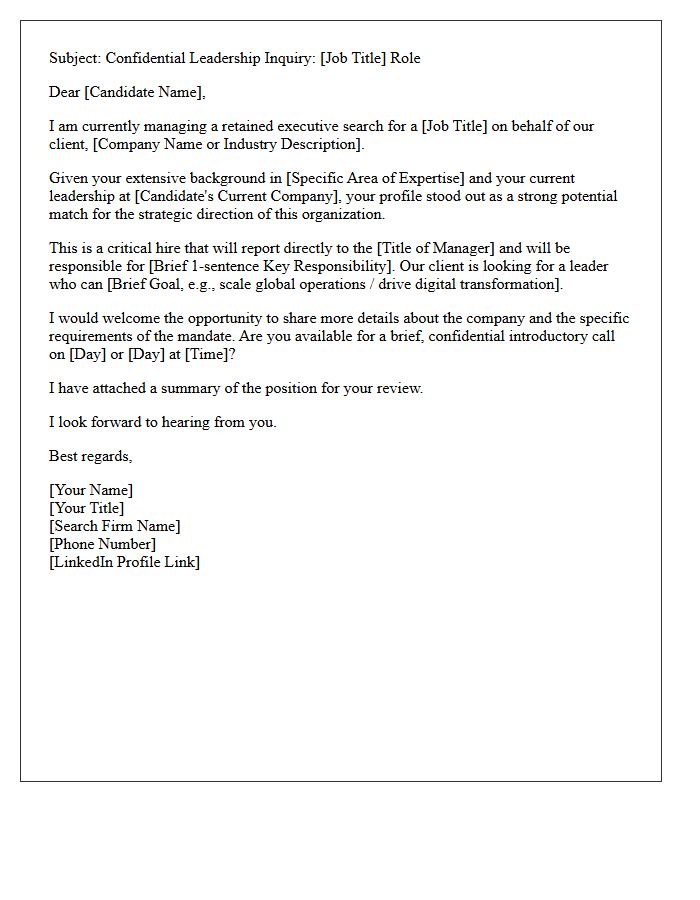
A Retained Search Executive Outreach Letter is a high-level strategic communication designed to engage passive, top-tier talent for exclusive leadership roles. Unlike standard recruitment, this letter must demonstrate discretion and a deep understanding of the candidate's professional trajectory. It should clearly articulate the unique value proposition of the opportunity while maintaining a confidential and personalized tone. To be effective, the message must bypass generic templates, focusing instead on mutual alignment between the executive's proven expertise and the specific mission-critical challenges of the hiring organization to secure a preliminary conversation.
Discreet Vice President Role Proposition Letter
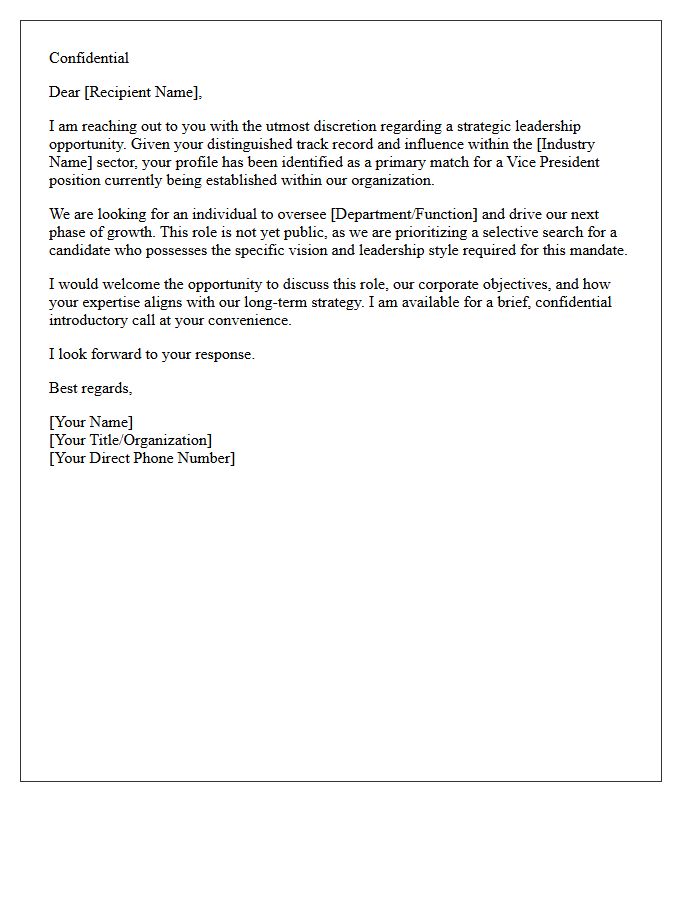
A Discreet Vice President Role Proposition Letter is a strategic document used to propose a high-level position to a target company. Unlike standard applications, this letter emphasizes confidentiality and high-impact value. It must outline specific leadership achievements and how your expertise solves a firm's unique challenges. By maintaining a professional tone and focusing on mutual alignment, you can open doors to non-public executive opportunities. This approach is essential for protecting your current reputation while demonstrating your potential as a transformative leader within a new organizational structure.
Executive Market Intelligence Sharing Letter
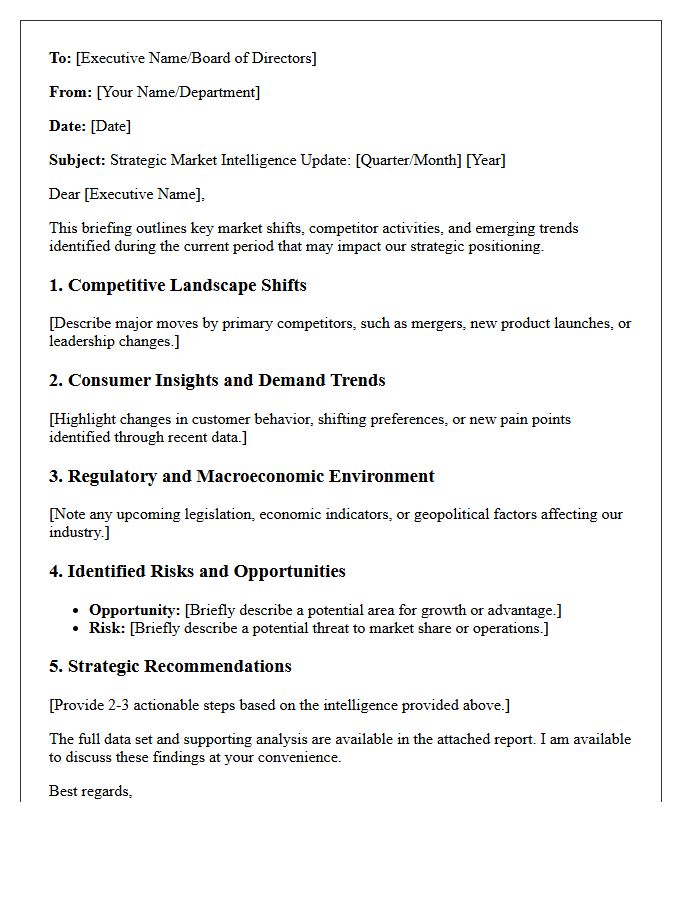
An Executive Market Intelligence Sharing Letter is a strategic document used to disseminate competitive insights and industry trends to key decision-makers. It distills complex data into actionable strategic recommendations, ensuring leadership remains aligned with shifting market dynamics. By highlighting emerging threats and growth opportunities, this brief fosters informed governance and proactive planning. Efficiently structured, it serves as a vital tool for maintaining a competitive advantage and driving organizational agility through shared business intelligence and high-level market analysis.
Transformational Leadership Opportunity Letter
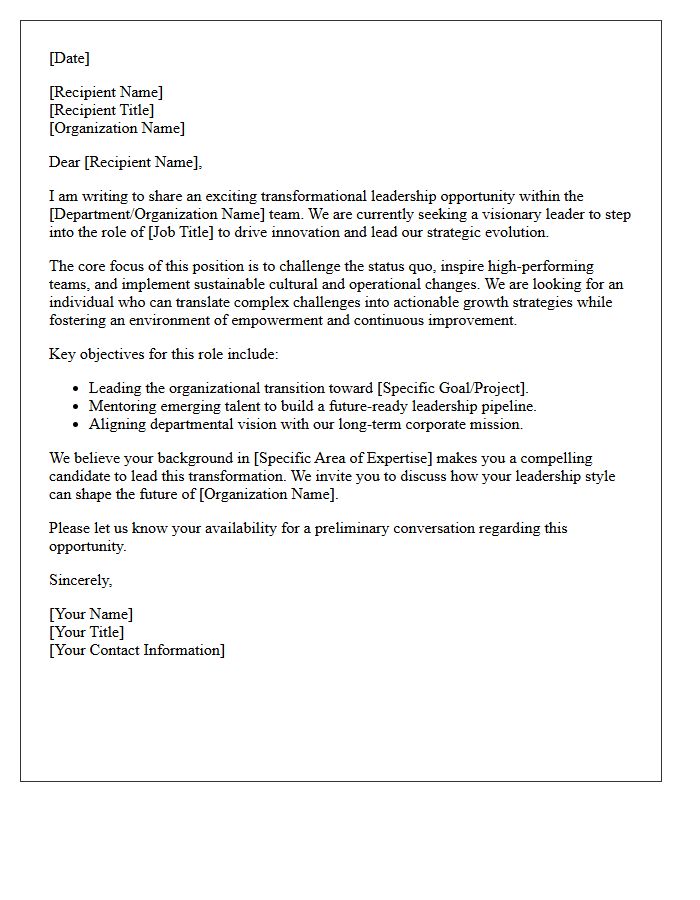
A Transformational Leadership Opportunity Letter is a formal document designed to inspire potential candidates by emphasizing visionary growth and cultural change. Unlike standard job offers, it focuses on the chance to drive innovation and empower teams toward a collective mission. This letter should highlight the strategic impact an individual can have within the organization. By outlining a clear path for professional evolution and organizational reform, it serves as a powerful tool to attract high-caliber leaders who are motivated by purpose, influence, and the opportunity to redefine industry standards.
Bespoke Executive Career Advancement Letter
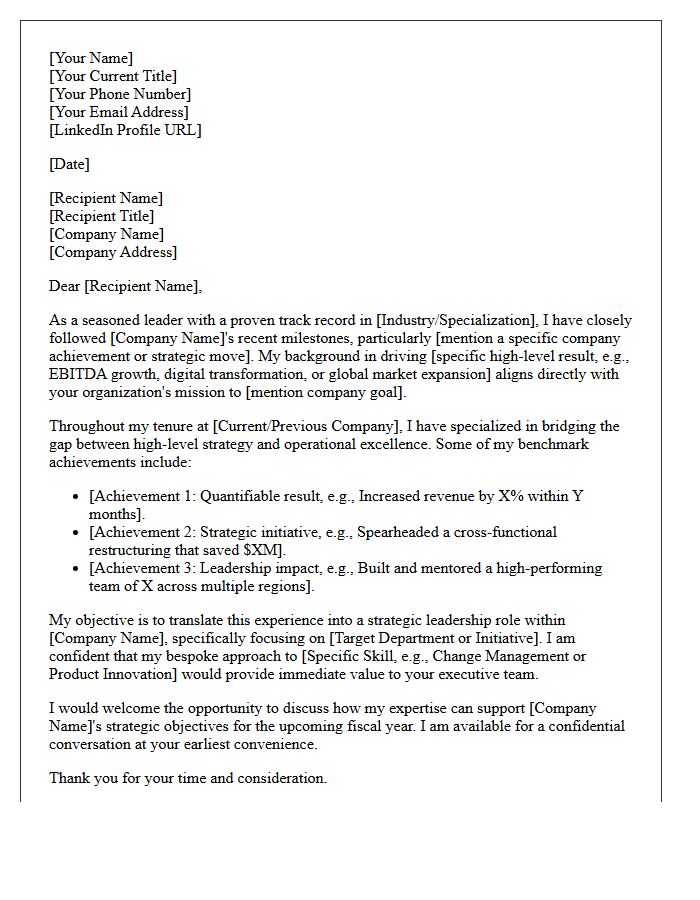
A Bespoke Executive Career Advancement Letter is a highly personalized document designed to secure high-level appointments. Unlike a generic cover letter, it focuses on strategic value alignment and specific leadership achievements. This targeted communication directly addresses a company's pain points, demonstrating how your unique expertise drives organizational growth. By articulating a compelling value proposition tailored to decision-makers, it establishes immediate authority. This professional tool is essential for executives aiming to bypass traditional gatekeepers and navigate the hidden job market with precision and distinct professional branding.
Senior Executive Confidential Partnership Letter
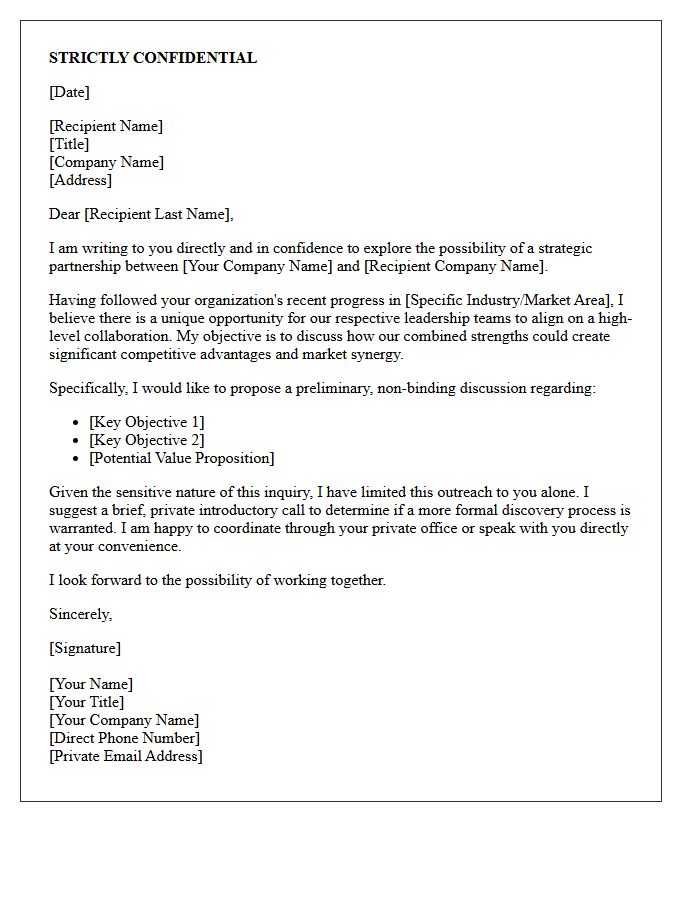
A Senior Executive Confidential Partnership Letter is a critical document used to formalize strategic alignments between high-level leaders and organizations. It outlines specific roles, equity participation, and fiduciary duties while ensuring absolute discretion. This agreement is essential for protecting proprietary information and defining the scope of authority during sensitive transitions or high-stakes ventures. By clarifying expectations and restrictive covenants, it secures the interests of both parties, fostering a stable environment for executive decision-making and long-term value creation within the partnership structure.
Top Tier Passive Candidate Engagement Letter
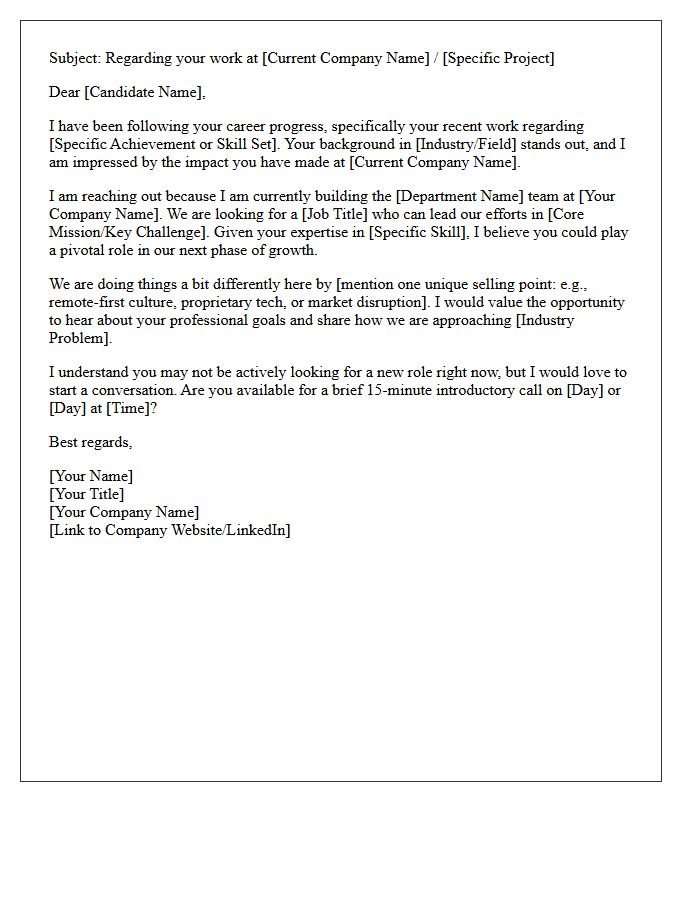
A top-tier passive candidate engagement letter must prioritize personalization to capture high-value talent. Rather than a generic pitch, focus on a unique value proposition that aligns with their specific career trajectory. Keep the communication brief, professional, and centered on how the opportunity solves their potential pain points. By demonstrating genuine research into their accomplishments, you establish immediate credibility. Always include a clear call to action that invites a low-pressure conversation, ensuring the outreach feels like a strategic career opening rather than a standard recruitment transaction.
Niche Market Executive Search Introduction Letter
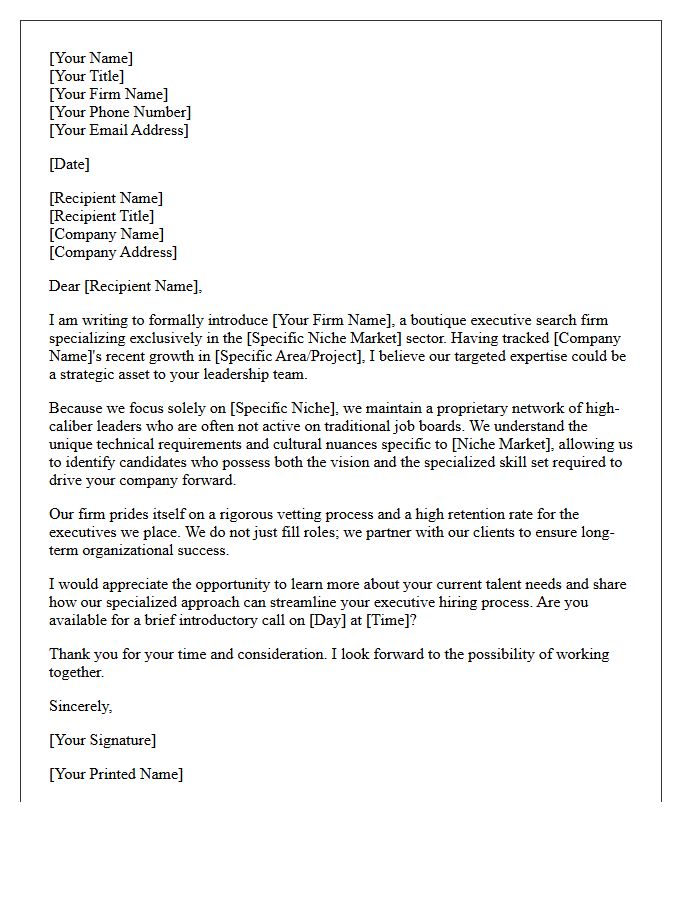
A niche market executive search introduction letter must demonstrate immediate authority within a specific industry. To capture attention, focus on your exclusive talent network and track record of placing high-impact leaders. Personalize the content to address the client's unique challenges, highlighting how your specialized expertise mitigates hiring risks. Keep the messaging concise, professional, and results-oriented to establish credibility quickly. Closing with a clear call to action encourages a strategic partnership, ensuring your firm stands out as the premier solution for securing top-tier executive talent in a competitive landscape.
Global Board Member Prospecting Letter
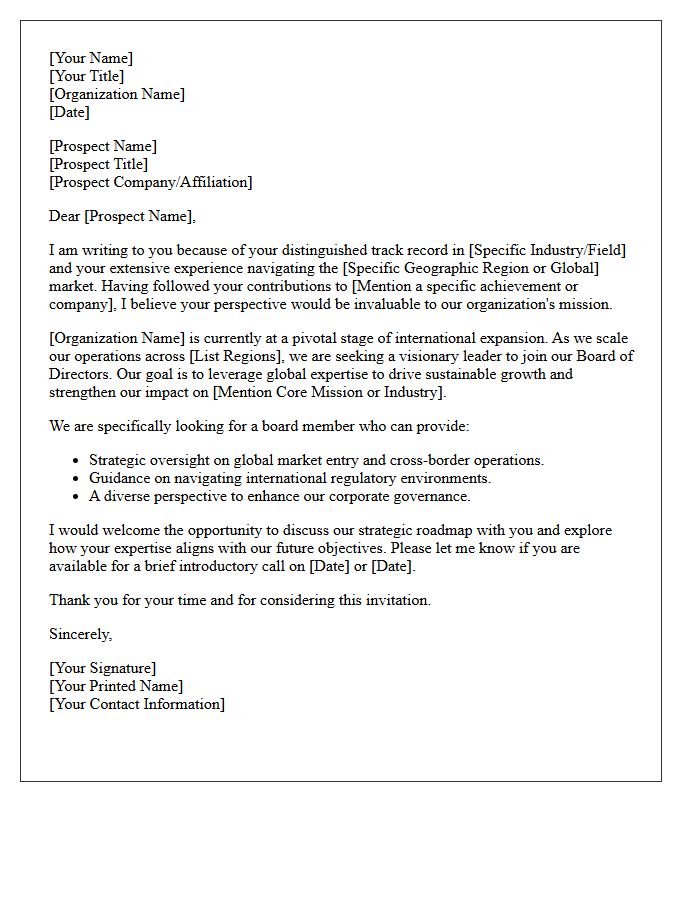
A Global Board Member Prospecting Letter is a strategic outreach tool designed to attract high-level executive talent for international governance roles. This document must clearly articulate the organization's value proposition, mission, and the specific expertise required to navigate complex global markets. It serves as a professional introduction that highlights strategic alignment and the potential for mutual impact. To be effective, the letter should be highly personalized, demonstrating a deep understanding of the prospect's background while maintaining a tone of exclusive opportunity to engage top-tier leadership successfully.
What is an Executive Level Passive Talent Introduction Letter?
It is a strategic, high-level communication sent to accomplished leaders who are not actively seeking new employment, designed to pique their interest in a confidential leadership opportunity through a personalized value proposition.
How does a passive talent letter differ from a standard job posting?
Unlike a job posting that lists requirements, an executive introduction focuses on the organization's vision, the specific impact the candidate can make, and the strategic challenges they would solve, rather than a list of duties.
Why is personalization critical when reaching out to passive executive candidates?
Executive-level talent receives numerous inquiries; personalization demonstrates that you have researched their specific career milestones and explains exactly why their unique expertise aligns with your organization's current growth stage or transformation goals.
What should be the primary call to action in a leadership recruitment letter?
The call to action should be low-pressure and exploratory, such as a brief "off-the-record" introductory call or a confidential peer-to-peer discussion, rather than an immediate request for a formal interview or resume.
How do you maintain confidentiality in executive talent outreach?
Confidentiality is maintained by using secure, personal communication channels and by framing the initial outreach as a sensitive inquiry, often withholding specific organizational details until a Non-Disclosure Agreement (NDA) or a mutual level of trust is established.


Comments