
Protect your financial institution's reputation with a formal Cease and Desist Letter designed to stop coordinated defamatory social media campaigns. False narratives and viral misinformation can trigger bank runs and destabilize retail banking operations. This guide outlines legal strategies to silence malicious actors, preserve brand integrity, and demand immediate content removal. To assist your legal response, below are some ready to use templates.
Image cover: Defending Bank Reputation: Legal Templates for Countering Coordinated Social Media Defamation
Letter Samples List
- Cease and Desist Letter Regarding False Claims of Bank Insolvency on Social Media
- Cease and Desist Letter for Coordinated Social Media Impersonation of Banking Officials
- Cease and Desist Letter Against Defamation of Retail Bank Executives on Social Platforms
- Cease and Desist Letter Concerning Organized Bank Run Rumors Propagated Online
- Cease and Desist Letter for Fabricated Customer Grievance Campaigns Against Banking Institutions
- Cease and Desist Letter Addressing Coordinated Allegations of Institutional Fraud
- Cease and Desist Letter Demanding the Halt of Market Manipulation Defamation Campaigns
- Cease and Desist Letter Regarding Trademark Misuse and Defamatory Social Media Posts
- Cease and Desist Letter Targeting Botnet-Driven Defamation Against Retail Banks
- Cease and Desist Letter Demanding Immediate Cessation of Coordinated Defamatory Social Media Campaigns
- Cease and Desist Letter for Malicious and Libelous Hashtag Campaigns Targeting Banking Operations
- Cease and Desist Letter Regarding Willful Misrepresentation of Retail Bank Policies and Fees
- Cease and Desist Letter Addressing Fraudulent Whistleblower Claims Promoted on Social Media
- Cease and Desist Letter for Coordinated Online Harassment and Defamation of Branch Personnel
Cease and Desist Letter Regarding False Claims of Bank Insolvency on Social Media
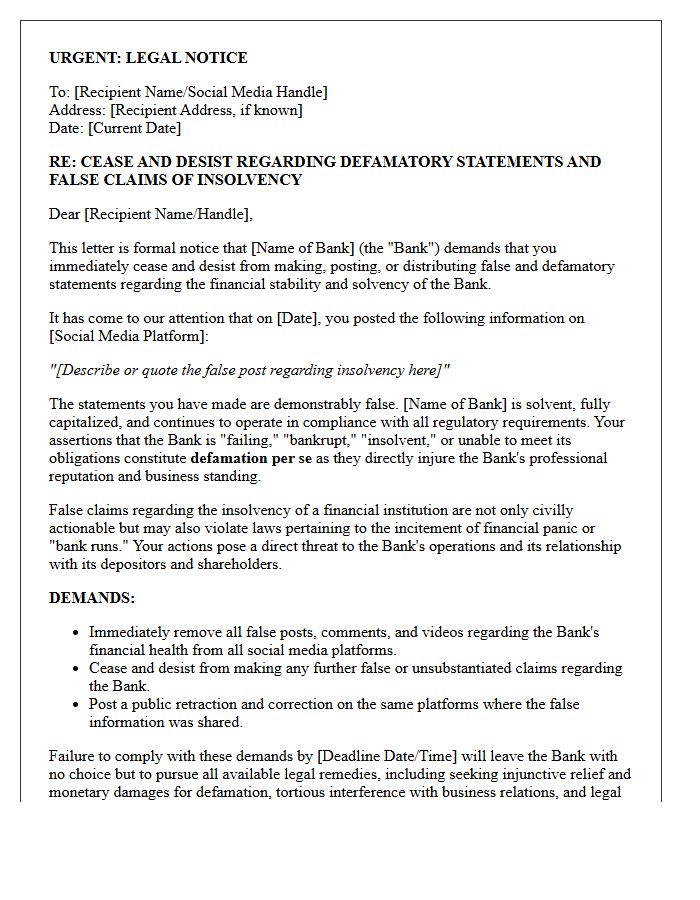
Spreading false information about a financial institution's stability is a serious offense known as bank slander. If you post unfounded rumors regarding bank insolvency on social media, you may receive a formal cease and desist letter. This legal document demands the immediate removal of defamatory content to prevent a potential bank run. Engaging in such behavior can lead to severe civil liability and legal action for damages. Always verify financial data through official regulatory sources before sharing sensitive claims online to avoid strict legal consequences and litigation.
Cease and Desist Letter for Coordinated Social Media Impersonation of Banking Officials
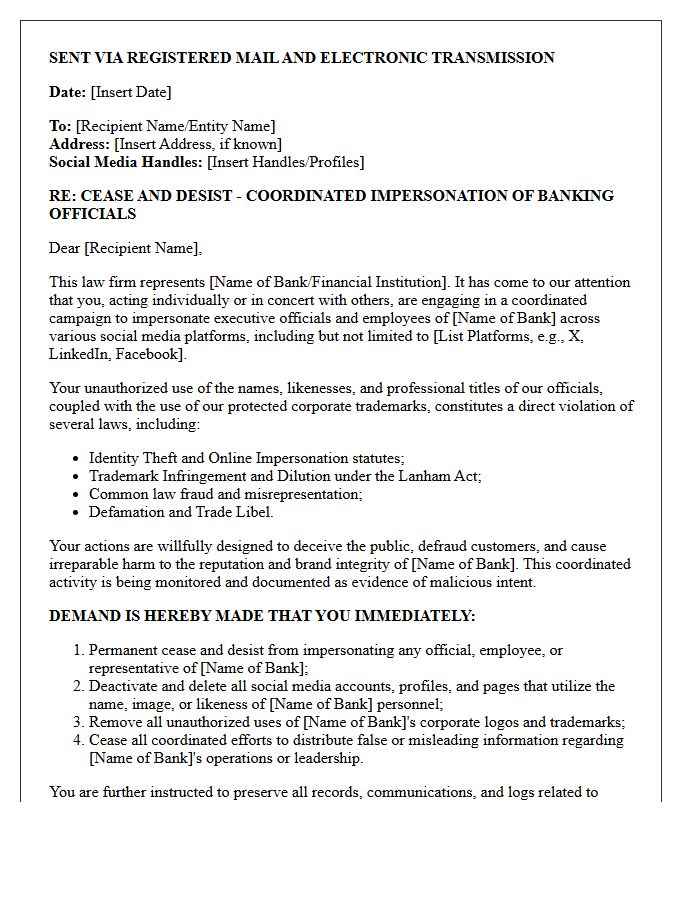
A Cease and Desist Letter is a formal legal notice used to stop coordinated social media impersonation targeting banking officials. These organized campaigns often involve multiple fake profiles designed to commit fraud or damage institutional reputations. Issuing this letter serves as a critical first step to establish a legal paper trail, demanding the immediate removal of deceptive content. It warns perpetrators of potential litigation for trademark infringement, defamation, or financial crimes. Taking swift action protects executive identity and maintains customer trust in digital banking environments.
Cease and Desist Letter Against Defamation of Retail Bank Executives on Social Platforms
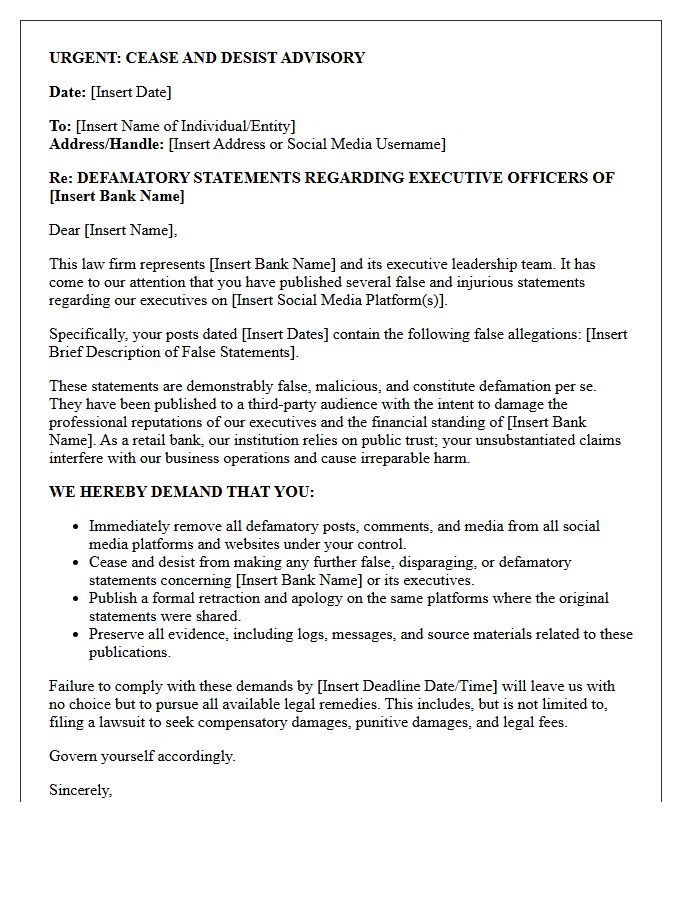
A Cease and Desist Letter serves as a formal legal warning to halt the spread of harmful falsehoods. When retail bank executives face defamation on social platforms, this document demands the immediate removal of libelous content to protect professional reputations. It outlines potential litigation for financial damages caused by malicious claims. Issuing this notice is a critical first step in reputation management, signaling that character assassination and misinformation will face legal consequences. Rapid intervention helps mitigate brand erosion and restores public trust within the sensitive financial services sector.
Cease and Desist Letter Concerning Organized Bank Run Rumors Propagated Online
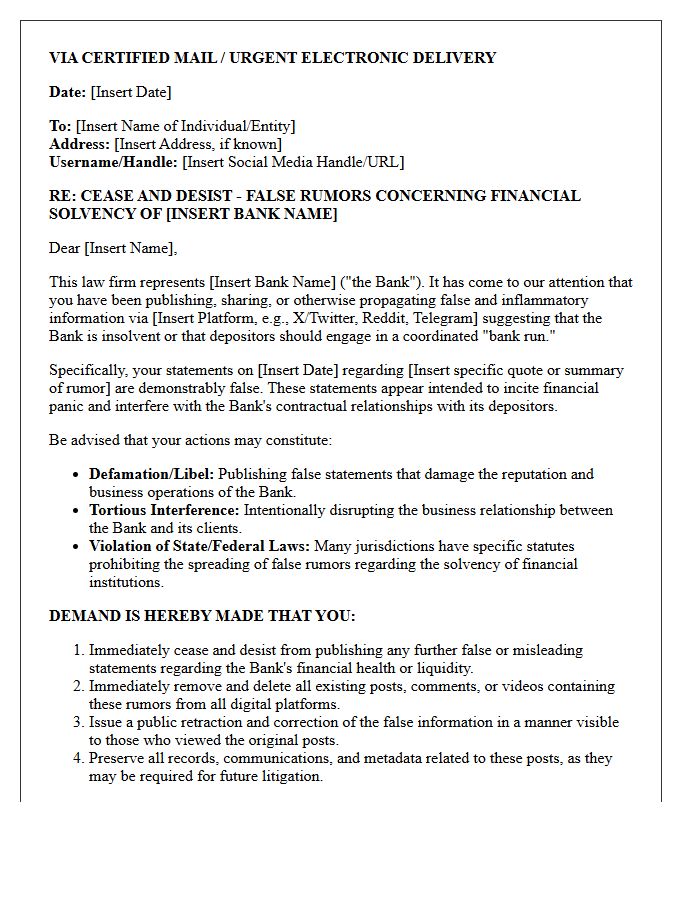
A Cease and Desist Letter regarding online bank run rumors serves as a formal legal warning to stop spreading false information. Propagating unverified claims about a financial institution's insolvency can trigger mass withdrawals, leading to actual instability. Under the Law on Financial Panic Prevention, individuals may face civil liability or criminal charges for inciting organized runs. Recipients must immediately delete defamatory content to avoid litigation. Maintaining public confidence is critical, as coordinated disinformation campaigns threaten the broader economy and the legal safety of those sharing unsubstantiated financial rumors online.
Cease and Desist Letter for Fabricated Customer Grievance Campaigns Against Banking Institutions
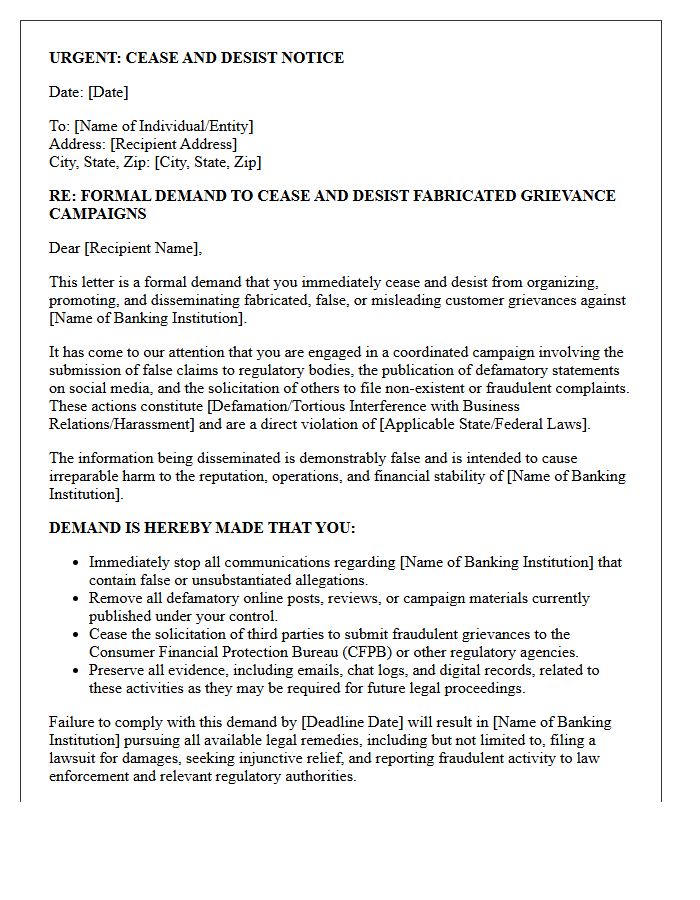
A Cease and Desist Letter is a formal legal tool used by banking institutions to stop fabricated customer grievance campaigns. These organized efforts involve spreading false claims or coordinated bad faith complaints to damage a bank's reputation. The letter serves as a final warning, demanding the immediate cessation of defamatory statements and malicious activities. Proving the intent to deceive is crucial, as these letters often precede litigation for tortious interference or libel. Understanding the legal boundaries of free speech versus harassment is essential for both institutions and individuals involved in such disputes.
Cease and Desist Letter Addressing Coordinated Allegations of Institutional Fraud
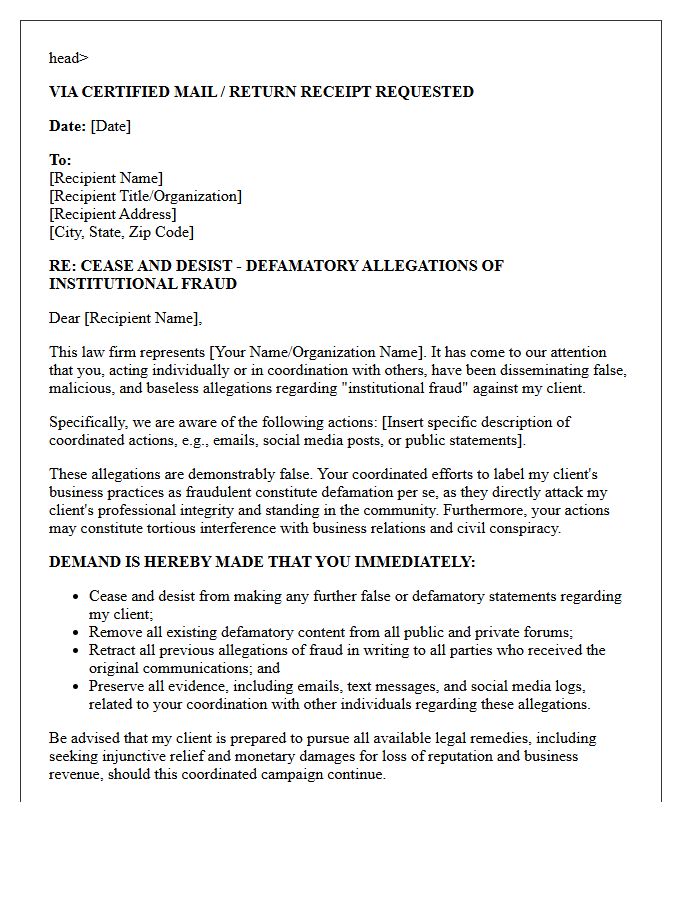
A cease and desist letter addressing institutional fraud allegations serves as a formal legal warning to stop defamatory or coordinated campaigns. It is a critical tool for protecting an organization's reputation against organized, false claims. By demanding an immediate halt to malicious communications, the letter establishes a legal foundation for future litigation if the behavior continues. Recipients must recognize that spreading unsubstantiated charges of systemic misconduct can lead to severe legal consequences, including damages for libel. This strategic document ensures that malicious narratives are professionally challenged and effectively countered.
Cease and Desist Letter Demanding the Halt of Market Manipulation Defamation Campaigns
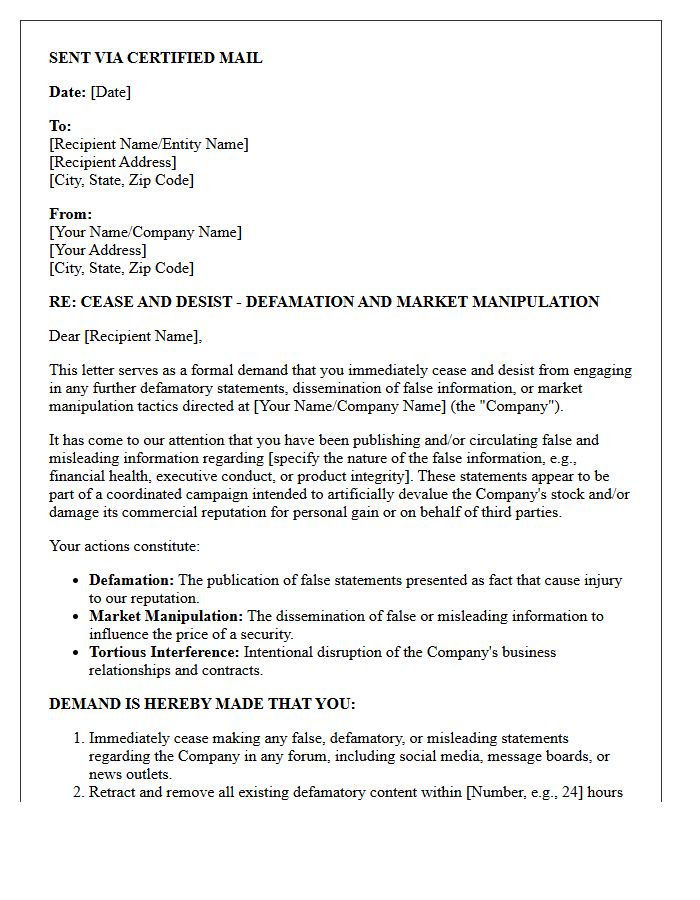
A cease and desist letter is a formal legal tool used to stop market manipulation resulting from coordinated defamation campaigns. These malicious efforts often involve spreading false information to artificially influence stock prices or damage corporate reputations. By issuing this demand, an entity asserts its legal rights to prevent financial loss and reputational harm. It serves as a final warning before pursuing litigation, such as libel or securities fraud claims, ensuring the perpetrators are held accountable for their deceptive practices in the public marketplace.
Cease and Desist Letter Regarding Trademark Misuse and Defamatory Social Media Posts
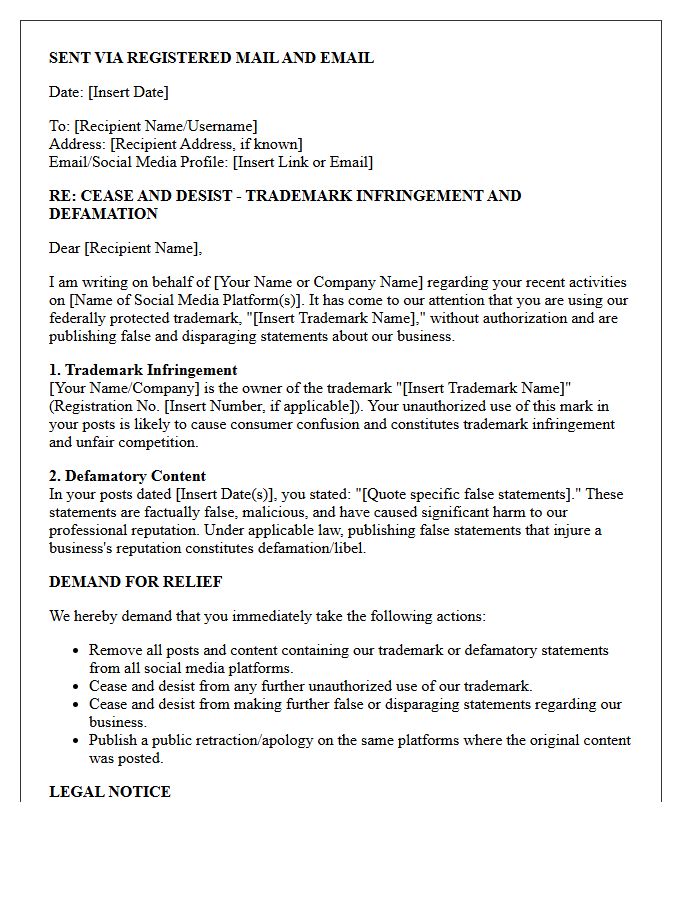
A Cease and Desist Letter is a formal legal notice demanding that an individual or entity stop infringing on intellectual property or spreading harmful falsehoods. Regarding trademark misuse, it protects brand identity by preventing unauthorized commercial use. When addressing defamatory social media posts, the letter targets libelous content that damages a person's reputation. Receiving such a document serves as a final warning to resolve disputes through voluntary compliance before the sender initiates formal litigation to seek damages or injunctive relief in court.
Cease and Desist Letter Targeting Botnet-Driven Defamation Against Retail Banks
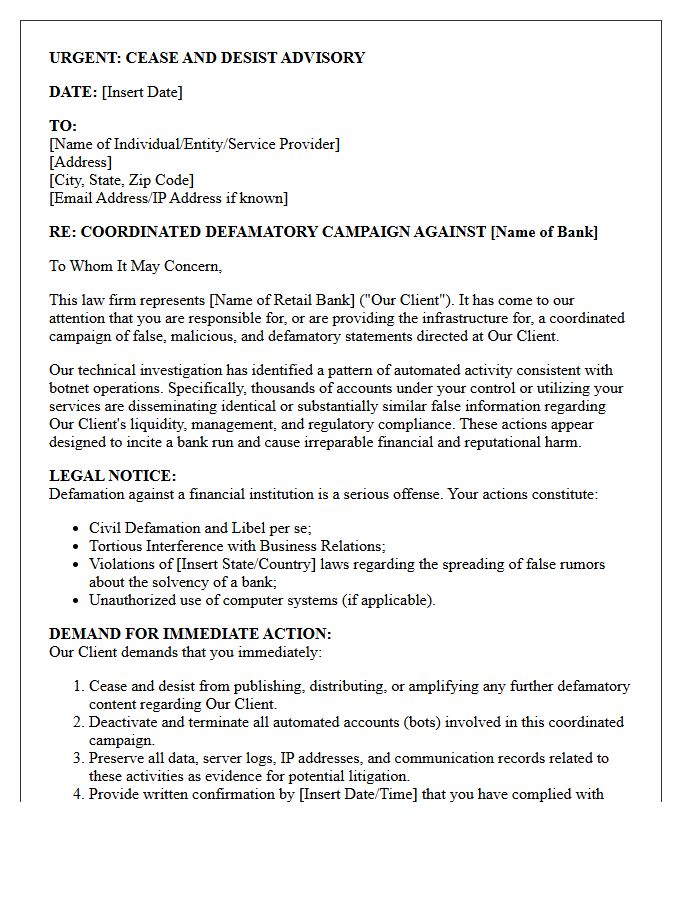
A Cease and Desist Letter is a critical legal instrument used to halt coordinated, botnet-driven defamation campaigns targeting retail banks. These automated attacks use malicious scripts to spread false financial information, threatening institutional stability and consumer trust. By formally demanding the immediate cessation of libelous content dissemination, banks can establish a legal foundation for further litigation. Effective notices target both the primary orchestrators and the service providers hosting the infrastructure, ensuring regulatory compliance and protecting the bank's brand reputation from systemic digital sabotage and artificial market manipulation.
Cease and Desist Letter Demanding Immediate Cessation of Coordinated Defamatory Social Media Campaigns
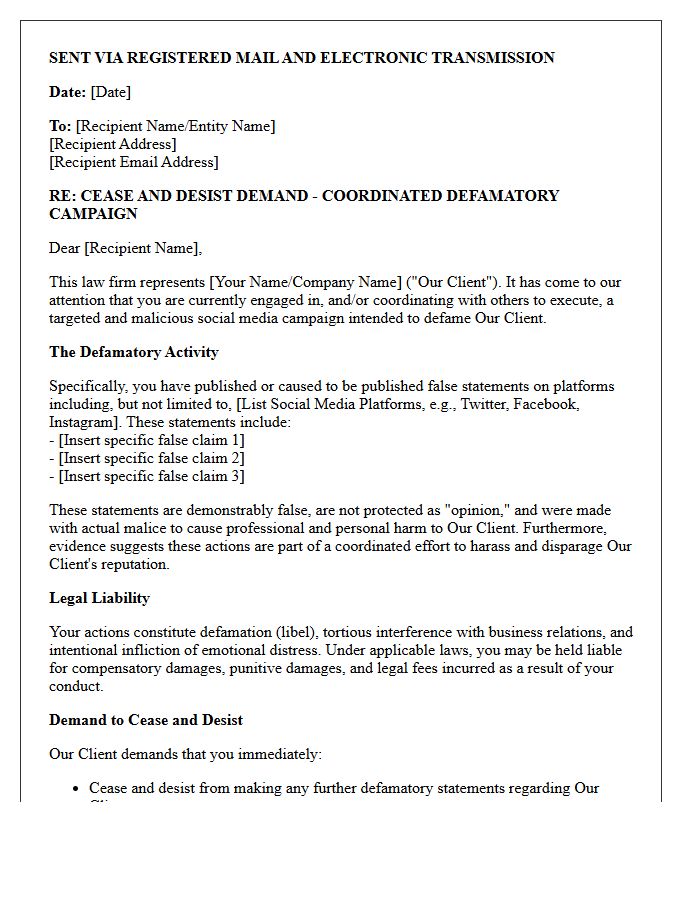
A cease and desist letter is a formal legal notice used to stop coordinated defamatory social media campaigns that intentionally harm your reputation. It serves as a final warning before escalating to litigation. The document must clearly identify the false statements being circulated and demand the immediate removal of harmful content. By documenting the harassment, you establish a legal paper trail. Sending this letter is an essential first step to protect your brand or personal character from organized online character assassination and potential financial damages caused by malicious misinformation.
Cease and Desist Letter for Malicious and Libelous Hashtag Campaigns Targeting Banking Operations
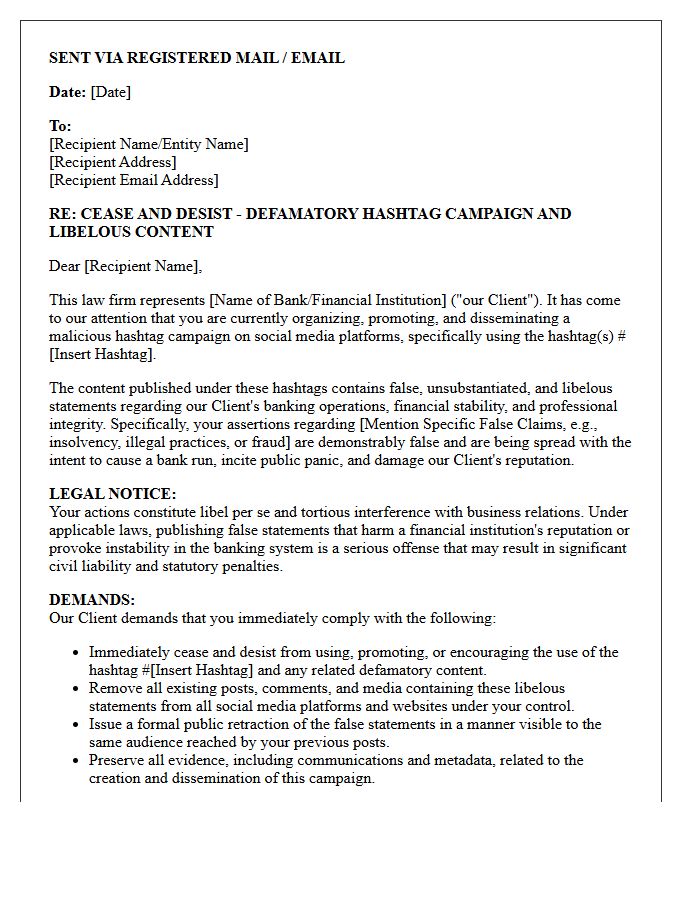
A cease and desist letter is a critical legal instrument used to halt malicious hashtag campaigns that threaten banking operations. These digital attacks often involve libelous statements intended to incite financial panic or damage institutional reputation. By formalizing a demand to stop defamatory social media activity, banks can protect their brand integrity and prevent systemic instability. This document serves as a final warning before pursuing litigation for defamation or tortious interference, ensuring that individuals or groups are held accountable for spreading harmful falsehoods online.
Cease and Desist Letter Regarding Willful Misrepresentation of Retail Bank Policies and Fees
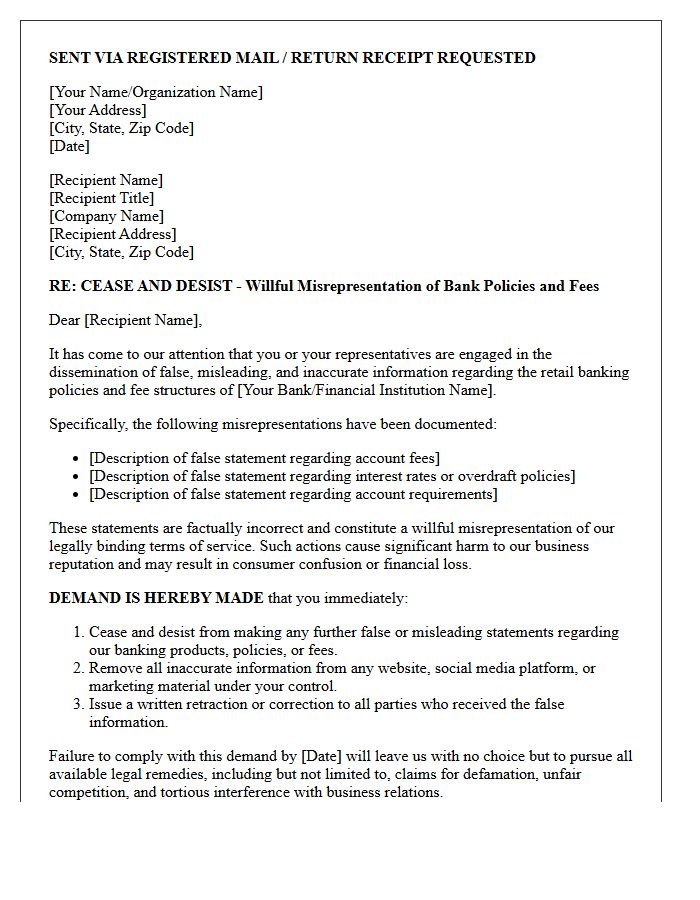
A cease and desist letter addressing willful misrepresentation is a formal legal warning demanding the immediate stop of false statements regarding financial terms. It targets individuals or entities spreading deceptive information about retail bank policies, interest rates, or service fees. This document serves as a critical step to prevent consumer confusion and protect a financial institution's reputation from defamatory claims. Recurrent or intentional inaccuracies can lead to severe legal litigation, regulatory penalties, and significant statutory damages if the misleading behavior persists after the official notice is served.
Cease and Desist Letter Addressing Fraudulent Whistleblower Claims Promoted on Social Media
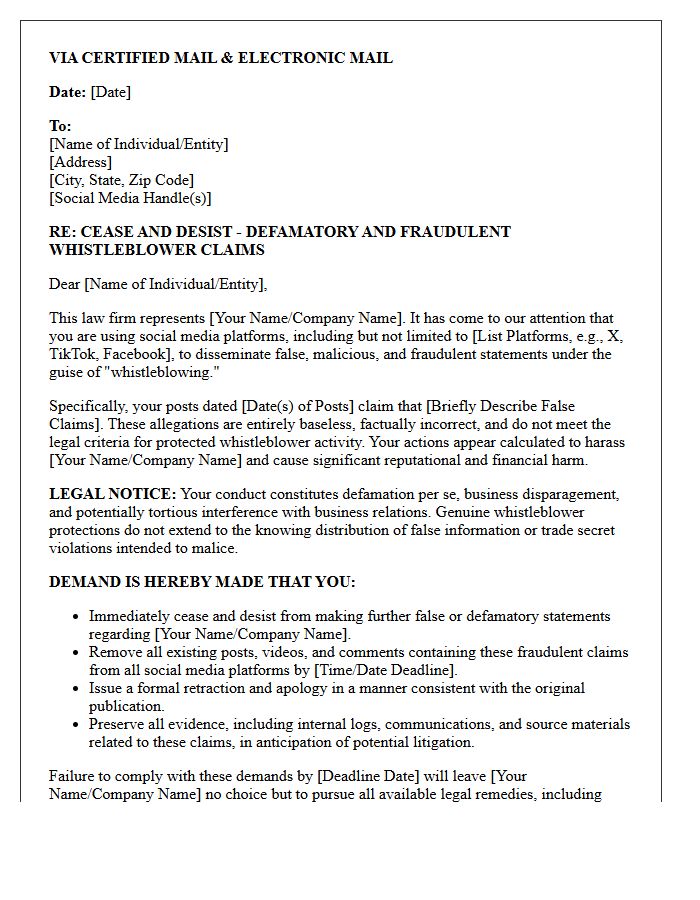
A Cease and Desist Letter is a formal legal tool used to stop the spread of defamatory falsehoods. When individuals promote fraudulent whistleblower claims on social media, they risk severe liability for libel and business disparagement. This letter serves as an official demand to immediately remove harmful content and halt further communication. By documenting the intent to pursue litigation, it protects a company's reputation from unsubstantiated allegations. Taking swift action is essential to mitigate digital reach and preserve corporate integrity against malicious online campaigns and deceptive narratives.
Cease and Desist Letter for Coordinated Online Harassment and Defamation of Branch Personnel
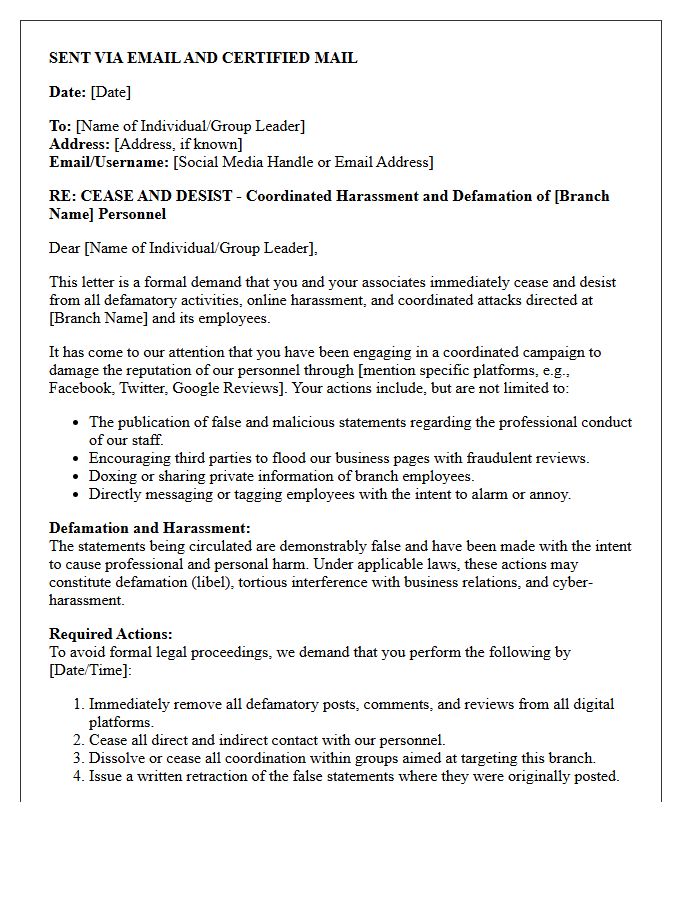
A cease and desist letter is a formal legal demand to stop coordinated online harassment and defamatory actions against staff. It serves as a pre-litigation notice, identifying specific illegal behaviors like doxing, false accusations, or organized cyberbullying. The document outlines potential legal consequences, including civil lawsuits for defamation or tortious interference. By establishing a clear evidentiary trail, it warns perpetrators that their anonymity does not provide immunity. Sending this letter is a critical first step to protect branch personnel, restore professional reputations, and compel the immediate removal of harmful digital content.
What is a cease and desist letter for a coordinated social media defamation campaign?
A cease and desist letter is a formal legal notice sent to individuals or groups participating in organized efforts to spread false information about a retail bank. It demands the immediate removal of defamatory posts, the cessation of further malicious activity, and serves as a prerequisite for pursuing a civil lawsuit for damages.
Can a bank take legal action against coordinated groups spreading false financial rumors?
Yes. When groups coordinate to spread demonstrably false claims-such as rumors of insolvency, "bank runs," or fraudulent internal practices-they can be held liable for defamation, tortious interference with business relationships, and potentially violating securities or banking regulations regarding market manipulation.
How does a cease and desist letter address anonymous social media accounts?
While the letter is sent to known individuals, it often serves as the first step in a "John Doe" lawsuit. This legal process allows banks to use subpoenas to compel social media platforms to release IP addresses and identifying metadata of anonymous accounts involved in the coordinated campaign.
What evidence is required to support a defamation claim for a retail bank?
To succeed, a bank must document the specific false statements, evidence of coordination among users (such as shared scripts or hashtags), and proof of "actual malice" or negligence. Additionally, the bank must demonstrate quantifiable harm, such as a loss of deposits, a drop in stock value, or significant reputational damage requiring corrective marketing.
Will sending a cease and desist letter stop a "viral" negative campaign?
While a letter puts bad actors on notice of impending litigation, its primary purpose is to create a paper trail of the bank's intent to protect its reputation. By identifying key "nodes" or influencers in the coordinated campaign, a bank can often disrupt the momentum of the misinformation and provide grounds for platforms to ban the infringing accounts.

Comments