
Protect your brand's integrity by issuing a Cease and Desist Letter to stop deceptive marketing tactics. This article explores legal strategies to halt unauthorized claims implying an official bank endorsement, ensuring consumer trust remains intact. Learn how to address misleading representations and safeguard your corporate reputation effectively. To help you take immediate action, below are some ready to use templates.
Image cover: Protect Your Brand: Cease and Desist Templates for Unauthorized Bank Endorsement Claims
Letter Samples List
- Cease and Desist Letter for Deceptive Mortgage Refinance Marketing Implying Official Bank Endorsement
- Cease and Desist Letter for Fraudulent Credit Card Offers Claiming Bank Affiliation
- Trademark Infringement Cease and Desist Letter for Mobile Applications Mimicking Official Bank Interfaces
- Cease and Desist Letter for Debt Relief Agencies Implying Official Bank Partnerships
- Deceptive Email Marketing Cease and Desist Letter Regarding False Bank Endorsements
- Cease and Desist Letter for Unauthorized Wealth Management Services Claiming Bank Sponsorship
- Cryptocurrency Platform Cease and Desist Letter for Deceptive Bank Integration Claims
- Cease and Desist Letter for Direct Mail Campaigns Using Counterfeit Bank Letterheads
- Cease and Desist Letter for Loan Modification Companies Falsely Advertising Bank Approval
- Domain Name Cease and Desist Letter for Websites Implying Official Bank Endorsement
- Cease and Desist Letter for Social Media Accounts Fabricating Official Bank Endorsements
- Commercial Lending Cease and Desist Letter for Brokers Implying Exclusive Bank Authorization
Cease and Desist Letter for Deceptive Mortgage Refinance Marketing Implying Official Bank Endorsement
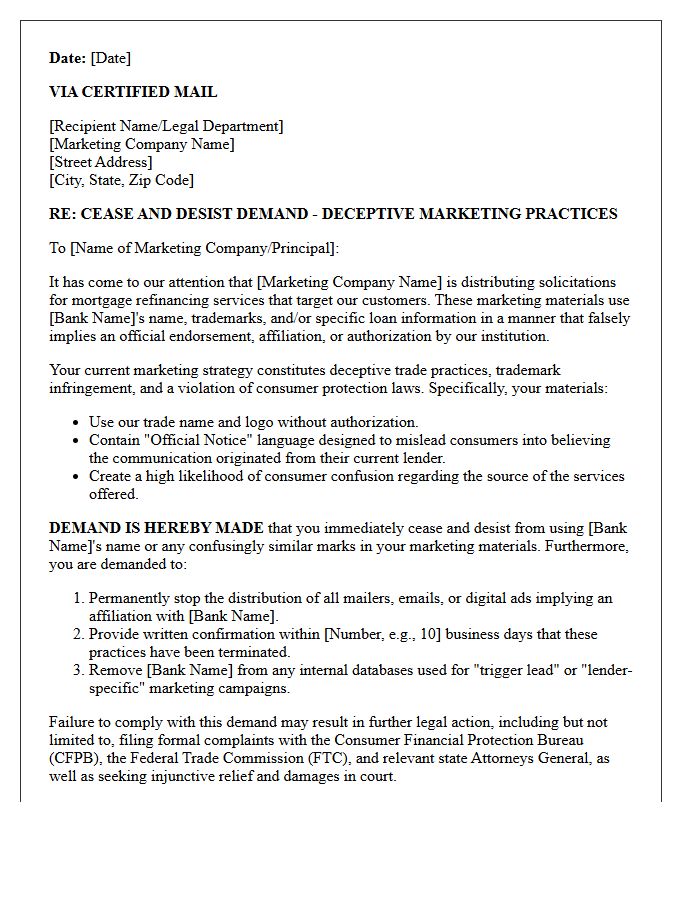
A Cease and Desist Letter is a formal legal demand used to stop predatory lenders from using deceptive mortgage refinance marketing. These letters target companies that falsely imply an official bank endorsement or government affiliation to trick homeowners. Sending this notice establishes a legal record of the violation and demands an immediate end to misleading solicitations. It is a critical tool for protecting consumer rights and preventing intellectual property infringement, as unauthorized use of a bank's name or logo can lead to severe legal penalties under fair marketing regulations.
Cease and Desist Letter for Fraudulent Credit Card Offers Claiming Bank Affiliation
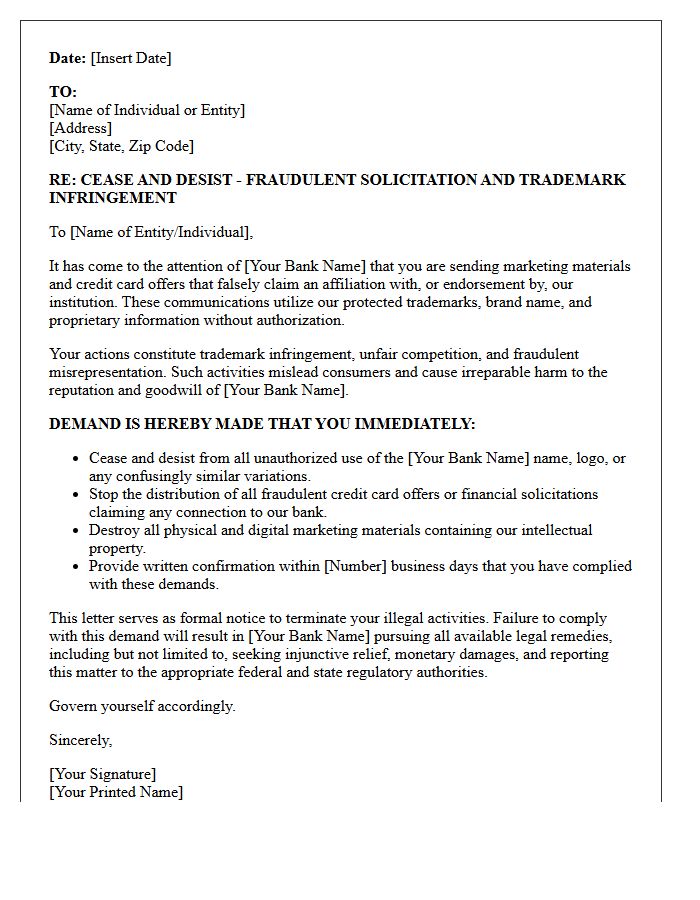
A Cease and Desist Letter is a formal legal notice used to stop scammers from sending fraudulent credit card offers that falsely claim an affiliation with your bank. This document serves as a legal warning, demanding the immediate termination of deceptive marketing and the unauthorized use of your financial institution's brand. It creates a documented paper trail necessary for potential litigation or reporting to the Consumer Financial Protection Bureau. Sending this letter helps protect your personal data and prevents further identity theft attempts by formally asserting your rights against malicious impersonators.
Trademark Infringement Cease and Desist Letter for Mobile Applications Mimicking Official Bank Interfaces
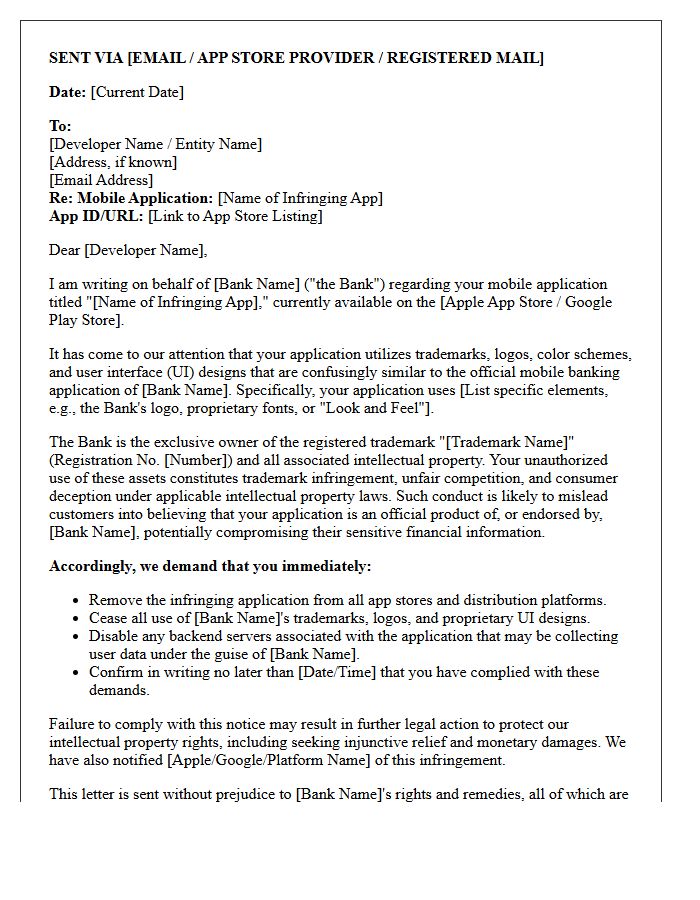
A cease and desist letter for trademark infringement is a critical legal tool used to stop mobile applications from mimicking official bank interfaces. These deceptive apps often exploit brand assets, such as logos and color schemes, to facilitate phishing and financial fraud. Banks must act swiftly to protect their intellectual property and maintain customer trust. Receiving such a notice requires immediate compliance to avoid costly litigation. Proactive brand monitoring ensures that unauthorized developers are held accountable for creating fraudulent digital environments that mislead consumers and compromise data security.
Cease and Desist Letter for Debt Relief Agencies Implying Official Bank Partnerships
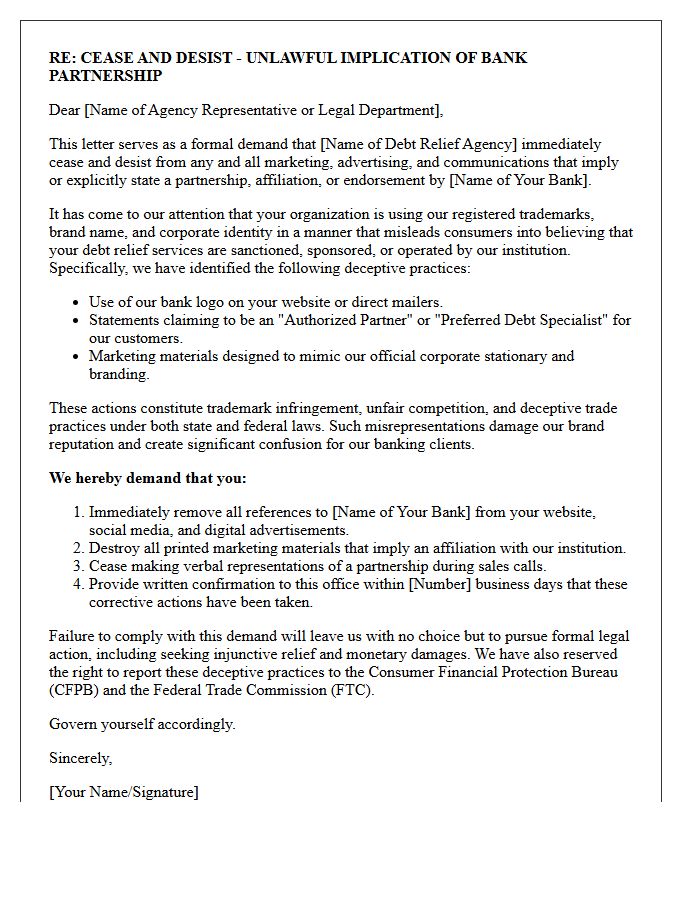
A Cease and Desist Letter is a critical legal tool used to stop debt relief agencies from falsely implying official partnerships with banks. Regulatory bodies issue these notices when agencies use deceptive marketing, logos, or language that suggests a formal affiliation with financial institutions to mislead consumers. It is vital to know that most banks do not partner with third-party settlement firms. Misrepresenting such relationships is a violation of the Consumer Financial Protection Act, and consumers should verify any claims of bank endorsement before sharing sensitive financial information.
Deceptive Email Marketing Cease and Desist Letter Regarding False Bank Endorsements
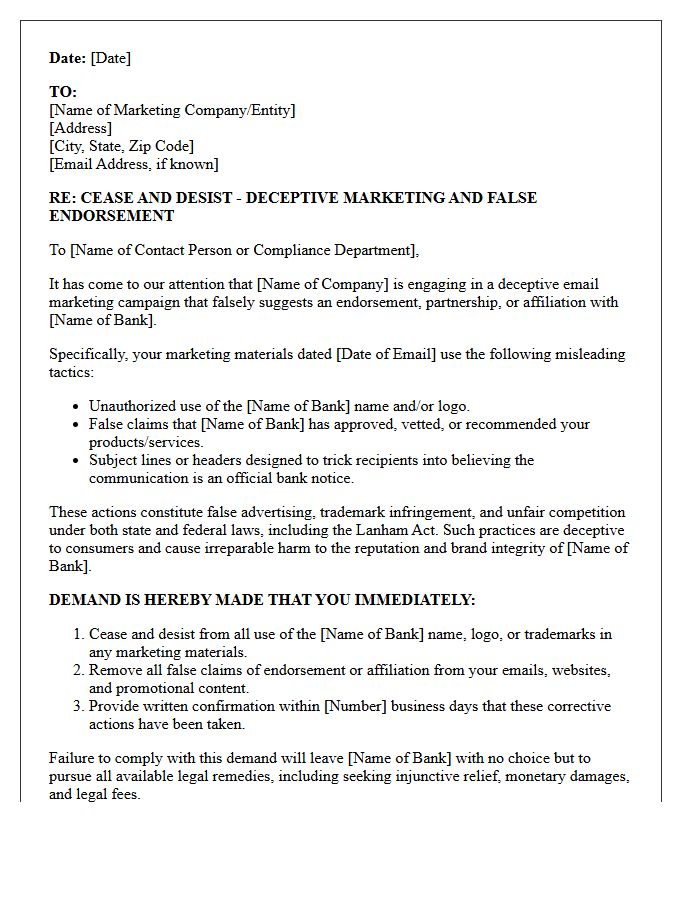
A Cease and Desist Letter is a formal legal notice demanding the immediate termination of deceptive email marketing campaigns. This specific action targets advertisers who use false bank endorsements to mislead consumers into believing a financial institution sponsors or approves their products. Misrepresenting an official affiliation violates consumer protection laws and constitutes trademark infringement. Recipients must halt all unauthorized mentions of banking entities and provide written compliance. Failure to resolve these fraudulent representations promptly can result in significant statutory penalties, permanent injunctions, and civil litigation to protect brand integrity and consumer trust.
Cease and Desist Letter for Unauthorized Wealth Management Services Claiming Bank Sponsorship
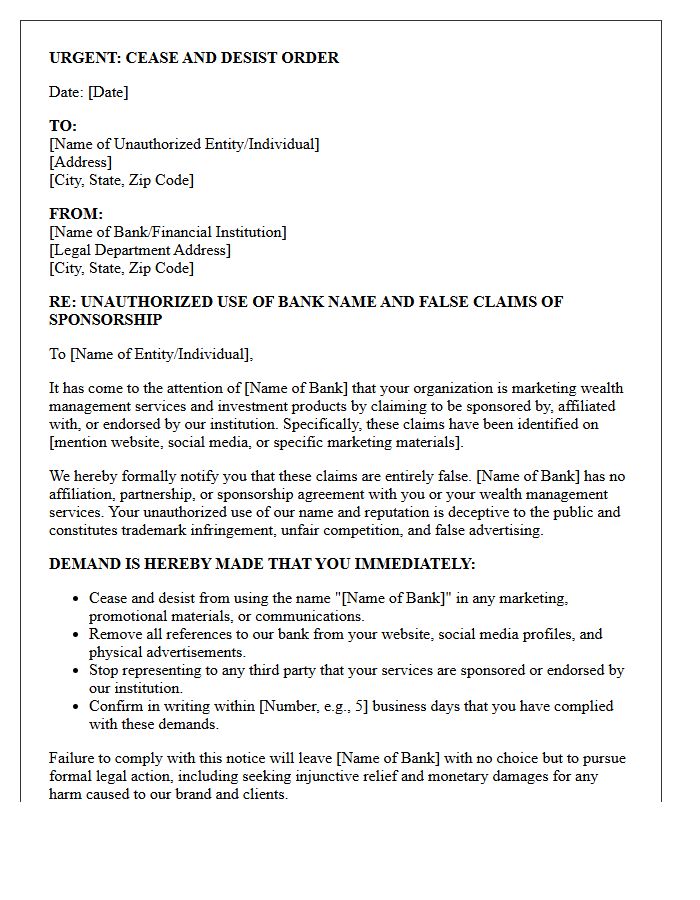
A Cease and Desist Letter is a formal legal demand requiring an entity to stop offering unauthorized wealth management services. This is critical when a firm falsely claims bank sponsorship to gain underserved credibility or bypass regulations. Such misrepresentations constitute trademark infringement and consumer fraud. Issuing this notice establishes a legal paper trail, protects the bank's reputation, and warns the perpetrator of imminent litigation. Swift action is essential to prevent financial loss and maintain regulatory compliance within the financial sector against deceptive marketing practices and fraudulent investment schemes.
Cryptocurrency Platform Cease and Desist Letter for Deceptive Bank Integration Claims
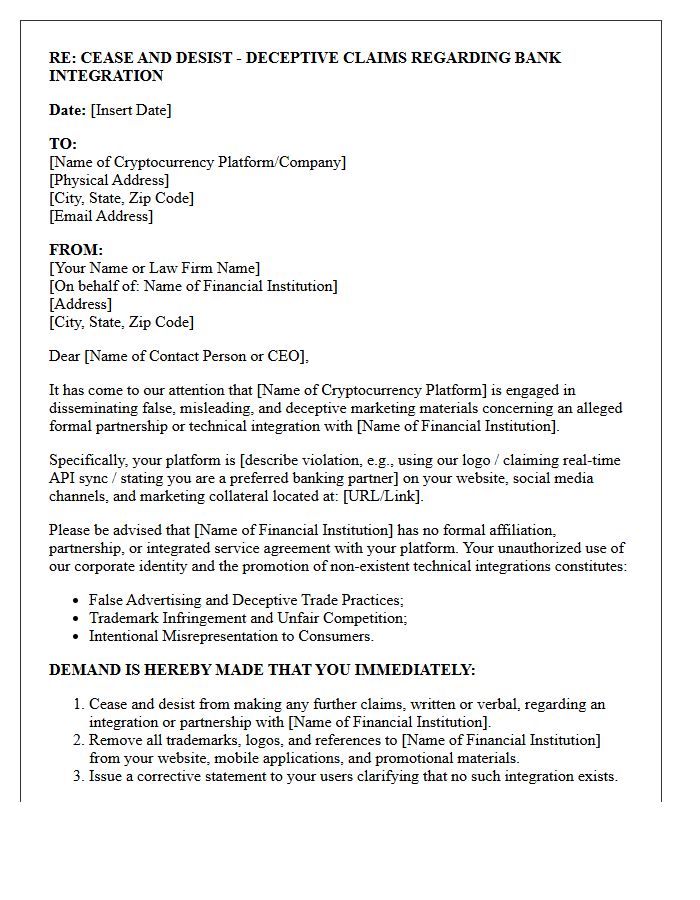
A Cease and Desist Letter is a formal legal warning issued when a cryptocurrency platform makes deceptive bank integration claims. Regulatory bodies like the FDIC or CFPB send these to stop firms from falsely implying that digital assets are government-insured or directly integrated with traditional banking protections. It is crucial to know that such misleading marketing can result in severe legal penalties and freezing of operations. Investors should verify true banking partnerships to avoid financial fraud risks associated with platforms that exaggerate their regulatory status or insurance coverage.
Cease and Desist Letter for Direct Mail Campaigns Using Counterfeit Bank Letterheads
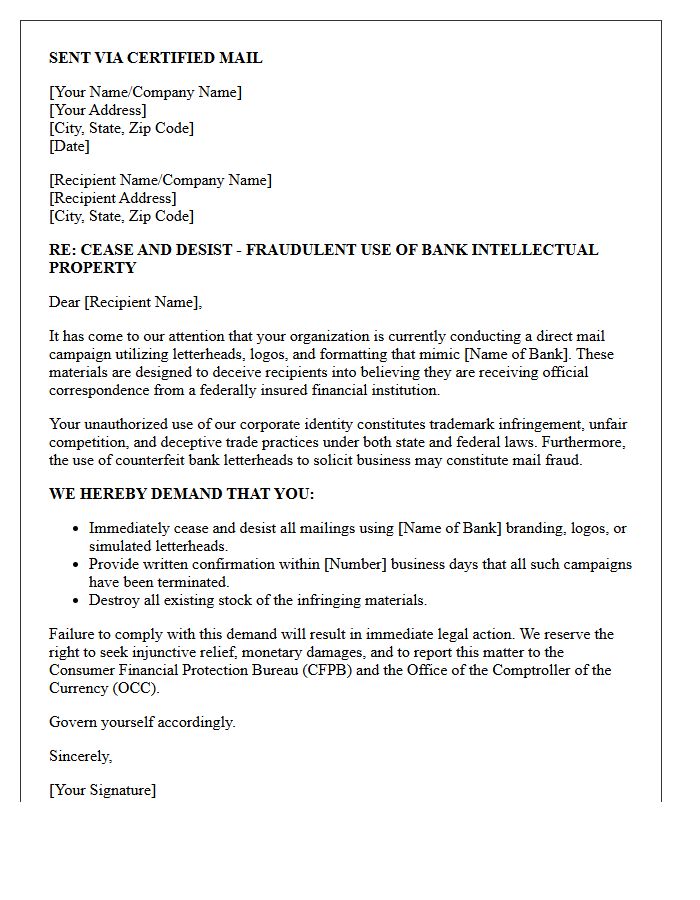
Sending a Cease and Desist Letter is a critical legal action to halt the unauthorized use of counterfeit bank letterheads in direct mail. This deceptive practice often involves trademark infringement and mail fraud, misleading consumers into believing they are receiving official financial correspondence. These letters formally demand that the sender stop using proprietary logos and branding immediately to prevent legal litigation. For businesses, protecting brand integrity is essential, as these fraudulent mailers can cause severe reputational damage and legal liability if left unaddressed by the rightful trademark owner.
Cease and Desist Letter for Loan Modification Companies Falsely Advertising Bank Approval
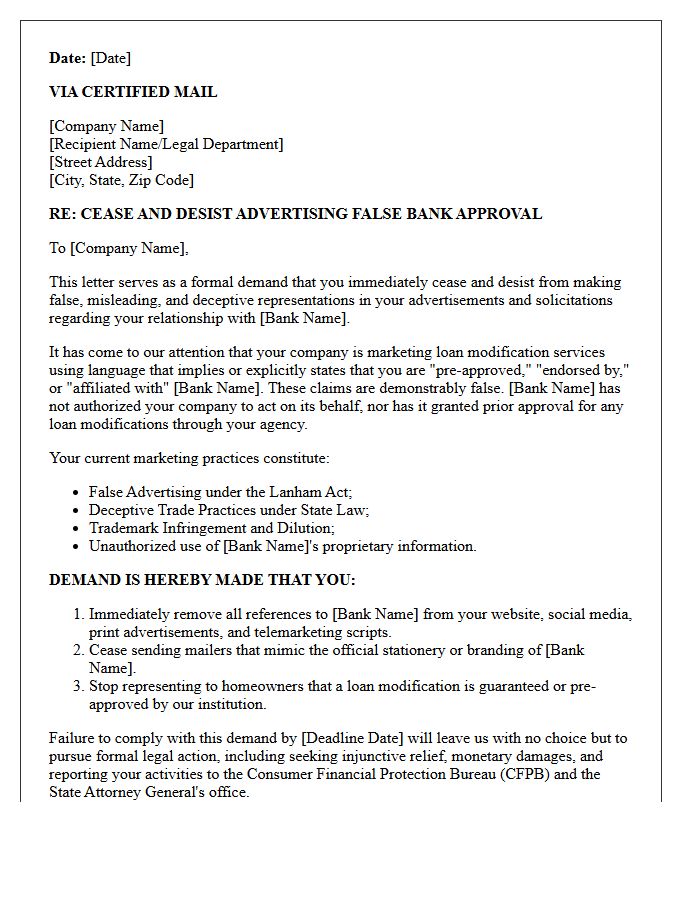
A Cease and Desist Letter is a formal legal demand used to stop loan modification companies from falsely advertising government or bank affiliation. It is crucial to know that private firms cannot legally claim to be "bank-approved" or represent lenders without express authorization. These deceptive practices often violate consumer protection laws and the MARS Rule. Sending this notice establishes a legal paper trail, demanding the immediate removal of misleading marketing materials. If the entity continues its fraudulent claims, this document serves as essential evidence for potential litigation or reporting to the Consumer Financial Protection Bureau.
Domain Name Cease and Desist Letter for Websites Implying Official Bank Endorsement
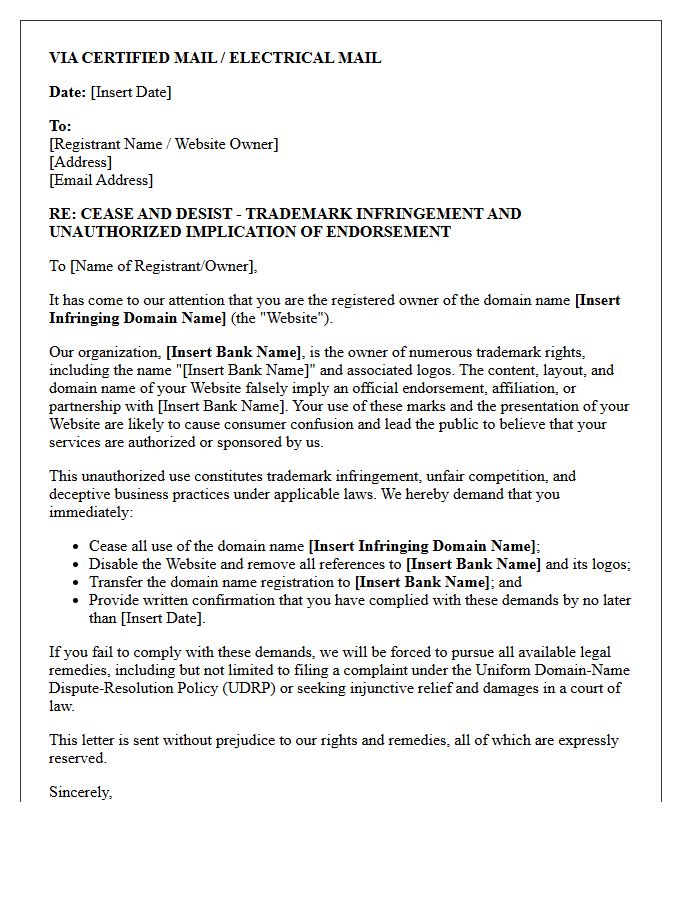
Receiving a Cease and Desist Letter regarding your domain name typically involves allegations of trademark infringement. If your website implies an official bank endorsement without authorization, it creates consumer confusion and violates intellectual property laws. Banks strictly protect their brand identity to prevent fraud. To mitigate legal risks, you must immediately evaluate the claims, consider reprinting disclaimers, or potentially transfer the domain. Ignoring these formal notices can lead to expensive Uniform Domain-Name Dispute-Resolution Policy (UDRP) proceedings or federal lawsuits aimed at seizing the infringing digital asset.
Cease and Desist Letter for Social Media Accounts Fabricating Official Bank Endorsements
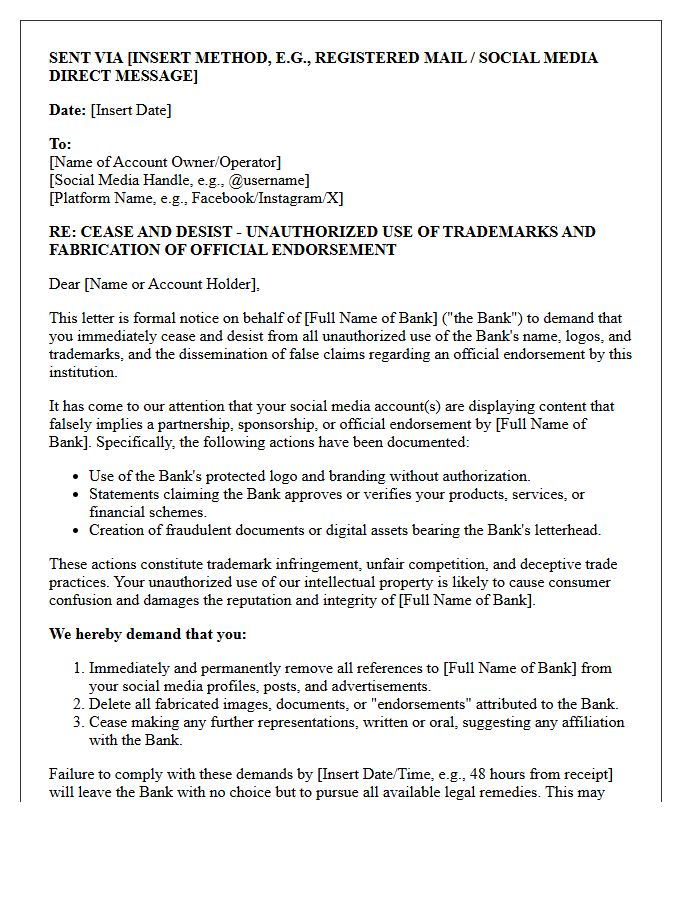
A Cease and Desist Letter is a formal legal notice demanding that an entity stop fabricating official bank endorsements on social media. This document warns unauthorized users that misrepresenting a financial institution's approval constitutes trademark infringement and consumer fraud. It serves as a critical first step to protect a bank's reputation and prevent public misinformation. Failure to comply can lead to aggressive litigation, statutory damages, and account suspension. This notice creates a legal record of the violation, stripping the offender of claims to innocent infringement during future court proceedings.
Commercial Lending Cease and Desist Letter for Brokers Implying Exclusive Bank Authorization
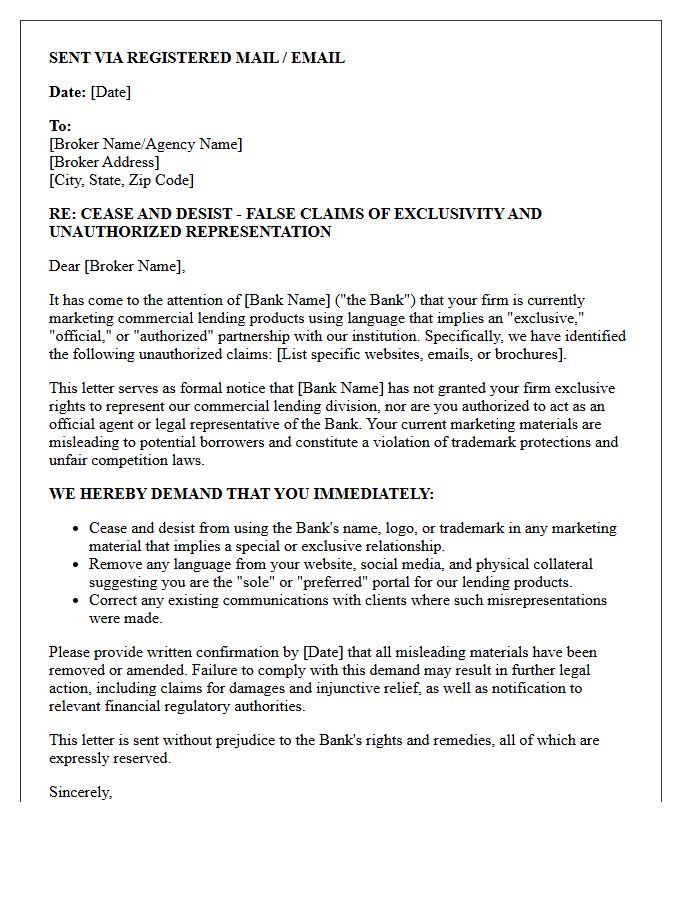
Brokers must avoid misrepresenting their relationship with financial institutions. Issuing a Cease and Desist Letter is a formal legal action taken when a broker falsely implies exclusive bank authorization or official affiliation. Such deceptive marketing violates consumer protection laws and trademark rights. Financial institutions use these notices to protect their reputation and prevent unauthorized entities from misleading borrowers. It is critical for commercial loan brokers to maintain transparency, ensuring all promotional materials accurately reflect their status as independent intermediaries rather than sanctioned bank representatives to avoid litigation and regulatory penalties.
What is a cease and desist letter for deceptive bank marketing?
A cease and desist letter for deceptive bank marketing is a formal legal notice demanding that a company stop using misleading advertisements, logos, or language that falsely implies their products or services are officially endorsed, sponsored, or affiliated with a specific banking institution.
When should a bank issue a cease and desist for implied endorsement?
A bank should issue this notice when a third-party entity uses the bank's trademark, name, or reputation in marketing materials-such as mailers, emails, or websites-to trick consumers into believing the bank has authorized or vetted the offer.
What are the legal grounds for stopping deceptive marketing that implies a bank partnership?
The primary legal grounds include trademark infringement, unfair and deceptive acts or practices (UDAP) under consumer protection laws, and violations of the Lanham Act, which prohibits false advertising and unauthorized suggestions of official affiliation.
Does an implied bank endorsement in marketing violate federal regulations?
Yes, deceptive marketing that falsely implies an official bank endorsement often violates Federal Trade Commission (FTC) guidelines regarding endorsements and testimonials, as well as Consumer Financial Protection Bureau (CFPB) rules against misleading financial representations.
What should be included in a cease and desist letter for false bank affiliation?
The letter should include specific examples of the deceptive marketing, a clear demand to stop all use of the bank's name or likeness, a deadline for compliance, and a statement reserving the bank's right to pursue litigation for damages and brand dilution.


Comments