
Protect your intellectual property with a formal Cease and Desist Letter designed to stop the unauthorized sale of co-branded financial services. This legal notice demands an immediate halt to trademark infringement and unlicensed distribution to safeguard your brand's reputation and regulatory compliance. Ensure your corporate identity remains protected from bad actors. To help you take action, below are some ready to use templates.
Image cover: Protect Your Brand: Cease and Desist Templates for Unauthorized Financial Product Distribution
Letter Samples List
- Cease and Desist Letter for Unauthorized Marketing of Co-Branded Credit Cards
- Warning Letter Regarding Unlicensed Distribution of Co-Branded Wealth Management Products
- Demand Letter for Immediate Halt of Unlicensed Co-Branded Loan Originations
- Notice Letter Demanding Cessation of Unlicensed Co-Branded Banking Services
- Cease and Desist Letter for Unauthorized Issuance of Co-Branded Debit Cards
- Infringement Letter Regarding Unlicensed Sale of Co-Branded Financial Portfolios
- Final Warning Letter for Unauthorized Promotion of Co-Branded Mortgage Products
- Cease and Desist Letter for Unapproved Syndication of Co-Branded Financial Instruments
- Legal Notice Letter Stopping Unlicensed Co-Branded Retail Banking Offers
- Demand Letter for Termination of Unlicensed Co-Branded Insurance Distribution
- Cease and Desist Letter Addressing Unauthorized Brokerage of Co-Branded Bank Accounts
- Compliance Letter Demanding End to Unlicensed Co-Branded Investment Offerings
- Cease and Desist Letter for Unauthorized Distribution of Co-Branded Corporate Credit Lines
Cease and Desist Letter for Unauthorized Marketing of Co-Branded Credit Cards
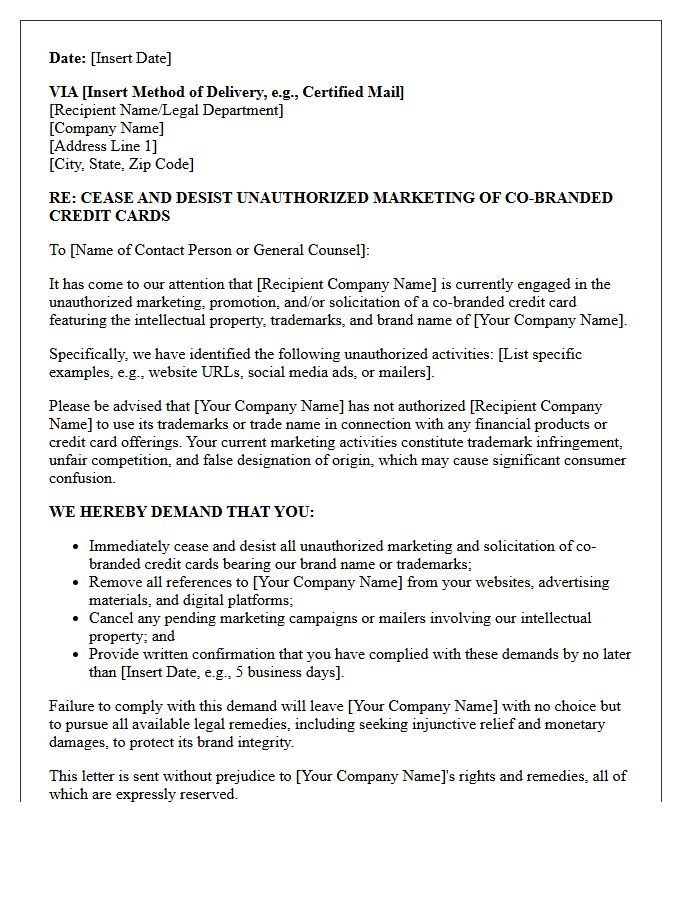
A Cease and Desist Letter for unauthorized marketing is a formal legal demand to stop the unapproved use of proprietary intellectual property and brand assets. In the context of co-branded credit cards, it addresses trademark infringement and deceptive solicitation practices that mislead consumers. Receiving this document signifies a serious breach of partnership agreements or licensing rights. Immediate compliance is essential to prevent litigation, protect brand reputation, and avoid significant financial penalties resulting from consumer confusion or unauthorized association with a financial institution or retail partner.
Warning Letter Regarding Unlicensed Distribution of Co-Branded Wealth Management Products
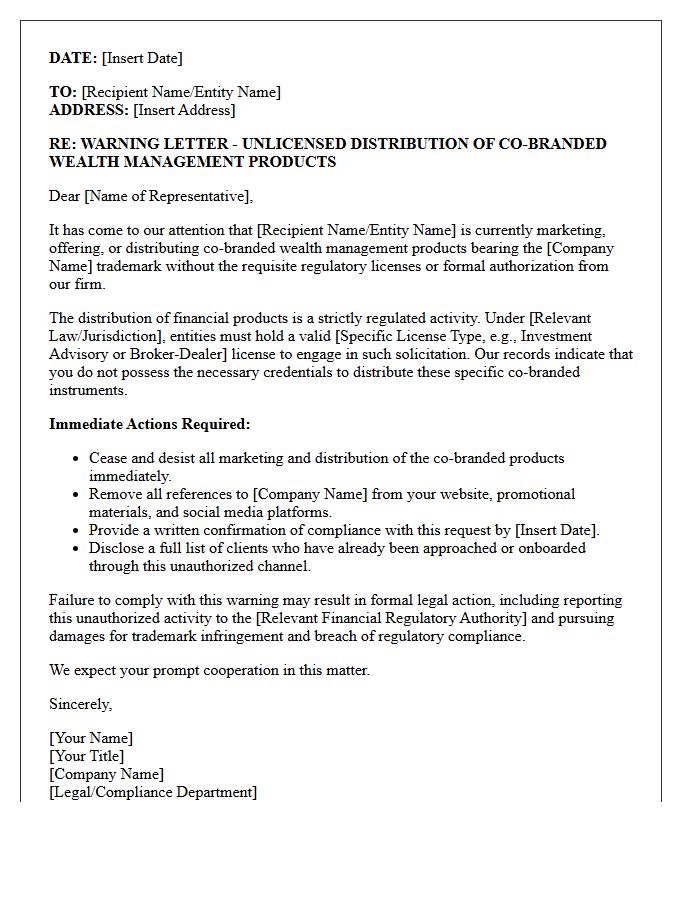
A Warning Letter serves as a formal regulatory notice against the unlicensed distribution of co-branded wealth management products. Financial institutions must ensure that third-party partnerships comply with strict licensing requirements to avoid legal penalties. Investors should verify the regulatory status of both the distributor and the product issuer. Engaging in unauthorized sales activities risks consumer protection violations and severe institutional sanctions. Understanding compliance frameworks is essential for maintaining market integrity and protecting stakeholders from financial misconduct or fraudulent investment schemes.
Demand Letter for Immediate Halt of Unlicensed Co-Branded Loan Originations
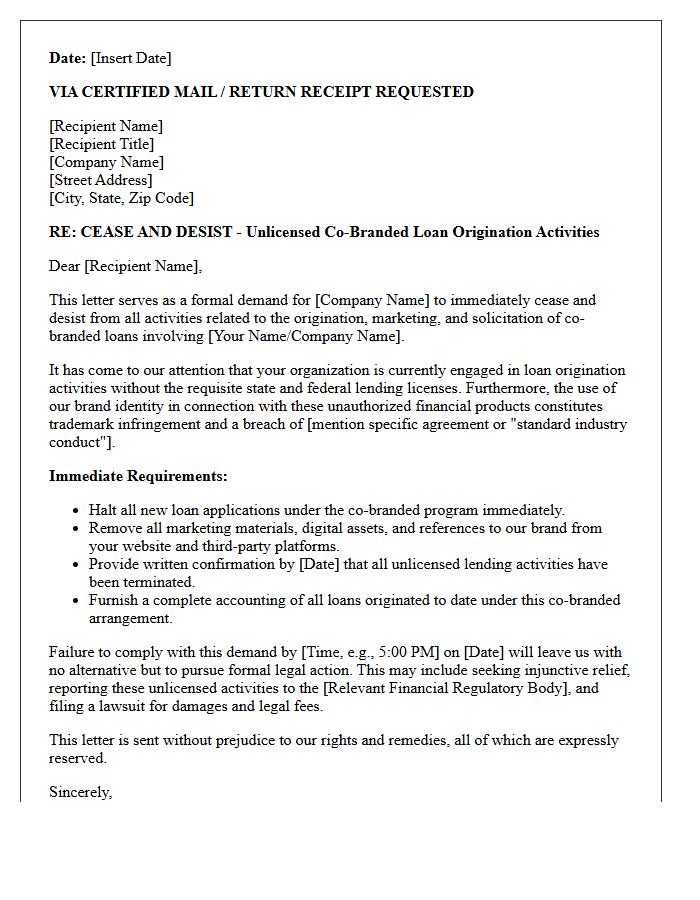
A cease and desist demand letter for unlicensed co-branded loan originations is a formal legal notice requiring the immediate halt of unauthorized lending activities. It targets entities operating without proper regulatory licensing while leveraging a partner's brand. This document serves as a critical enforcement action to mitigate legal risks, protect consumer rights, and ensure compliance with financial statutes. Failure to comply often leads to litigation or severe administrative penalties. It establishes a clear paper trail, proving the violator was notified of their illegal credit practices and non-compliance with state or federal banking laws.
Notice Letter Demanding Cessation of Unlicensed Co-Branded Banking Services
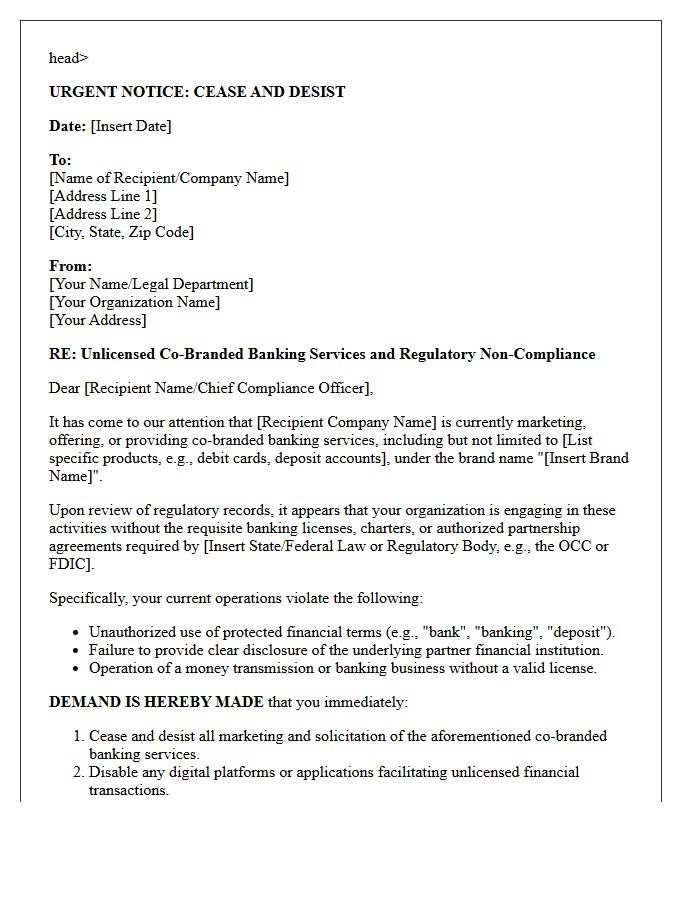
A notice letter demanding the cessation of unlicensed co-branded banking services is a formal cease-and-desist order targeting unauthorized financial activities. Regulators or partner banks issue these notices when a non-bank entity performs banking functions without proper legal charters or compliance oversight. This action protects consumers from potential fraud and ensures all financial intermediaries adhere to strict regulatory standards. Failure to comply can result in severe legal penalties, asset freezes, and permanent closure of the platform to maintain the integrity of the broader financial ecosystem and public trust.
Cease and Desist Letter for Unauthorized Issuance of Co-Branded Debit Cards
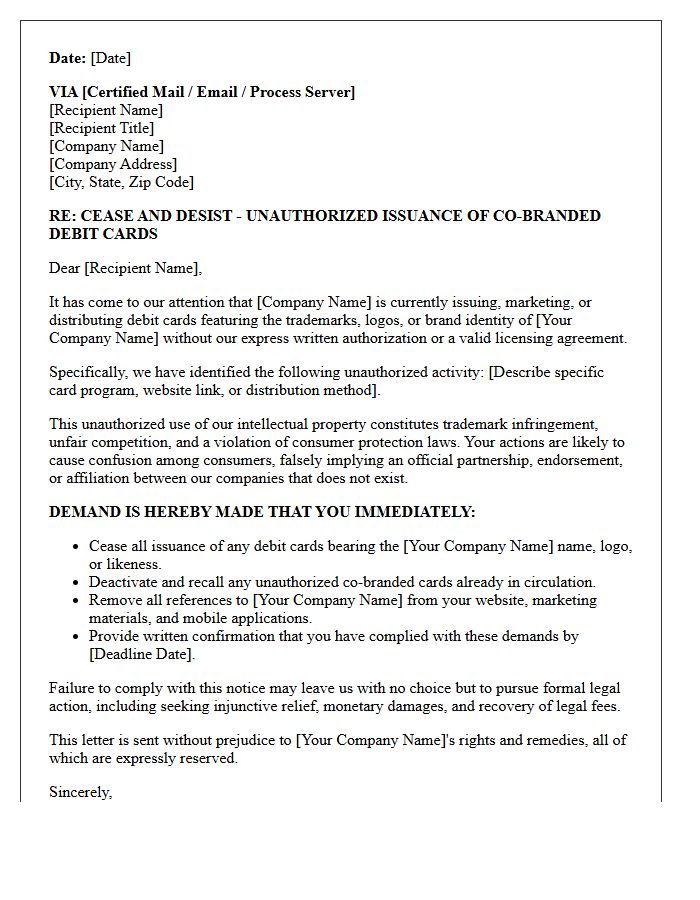
A Cease and Desist Letter for unauthorized co-branded debit cards is a formal legal demand to stop the unlicensed use of trademarks or intellectual property. It serves as a critical notice to financial institutions or partners that they are infringing on exclusive rights by issuing payment cards without a valid agreement. This document establishes a legal record of the violation, demanding an immediate halt to marketing and card distribution to avoid litigation. Protecting your brand identity through this notice ensures that unauthorized entities cannot profit from your reputation or mislead consumers.
Infringement Letter Regarding Unlicensed Sale of Co-Branded Financial Portfolios
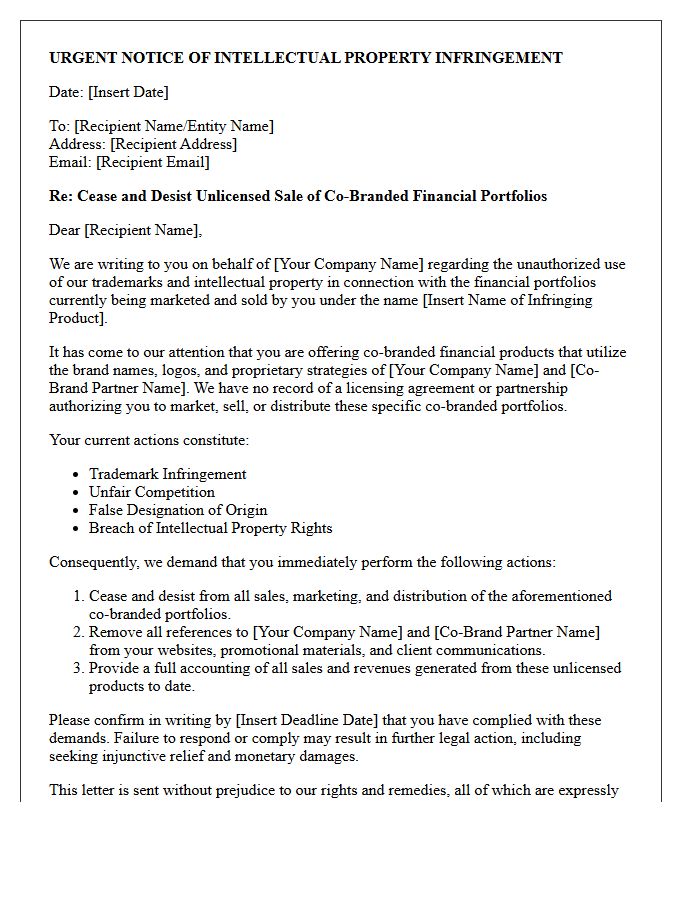
An infringement letter serves as a formal legal notice regarding the unauthorized distribution of co-branded financial portfolios. It signifies that your firm may be violating intellectual property rights or licensing agreements associated with specific investment products. Receiving this document necessitates an immediate internal compliance audit to verify usage rights and partnership terms. Failure to address these allegations promptly can lead to severe litigation risks, regulatory scrutiny, and financial penalties. Consult legal counsel to evaluate the validity of the claims and negotiate a potential settlement or licensing resolution.
Final Warning Letter for Unauthorized Promotion of Co-Branded Mortgage Products
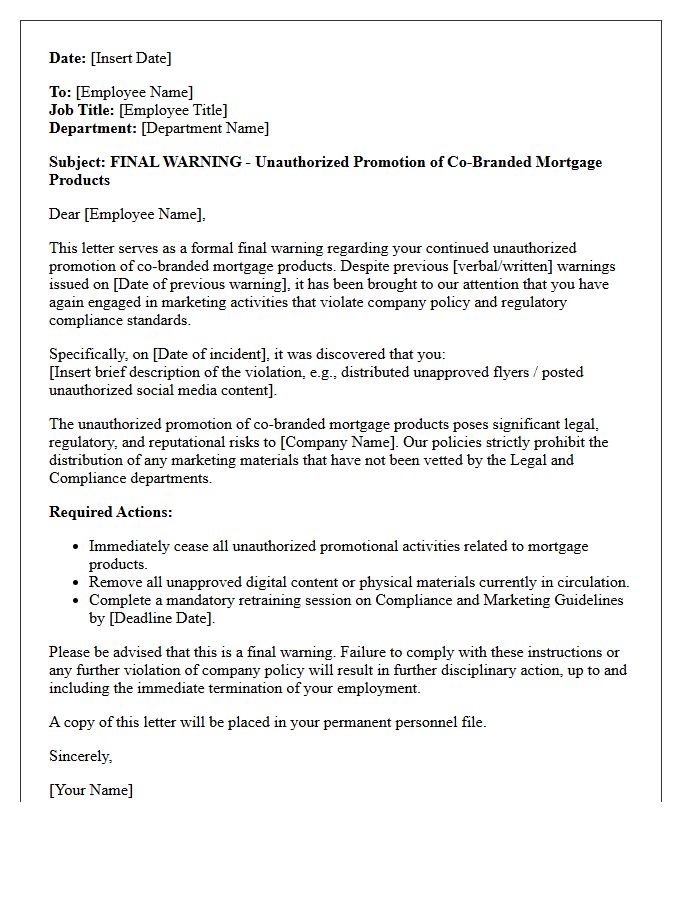
A Final Warning Letter serves as a formal disciplinary notice regarding the unauthorized promotion of co-branded mortgage products. This document indicates that prior instructions or compliance policies were ignored, creating significant legal and regulatory risks for the institution. It outlines the specific violations, such as failing to obtain marketing approval or breaching RESPA compliance. Employees must immediately cease all non-compliant advertising activities to avoid termination of employment. This letter acts as the final step in the corrective action process, emphasizing the mandatory adherence to established financial promotion standards.
Cease and Desist Letter for Unapproved Syndication of Co-Branded Financial Instruments
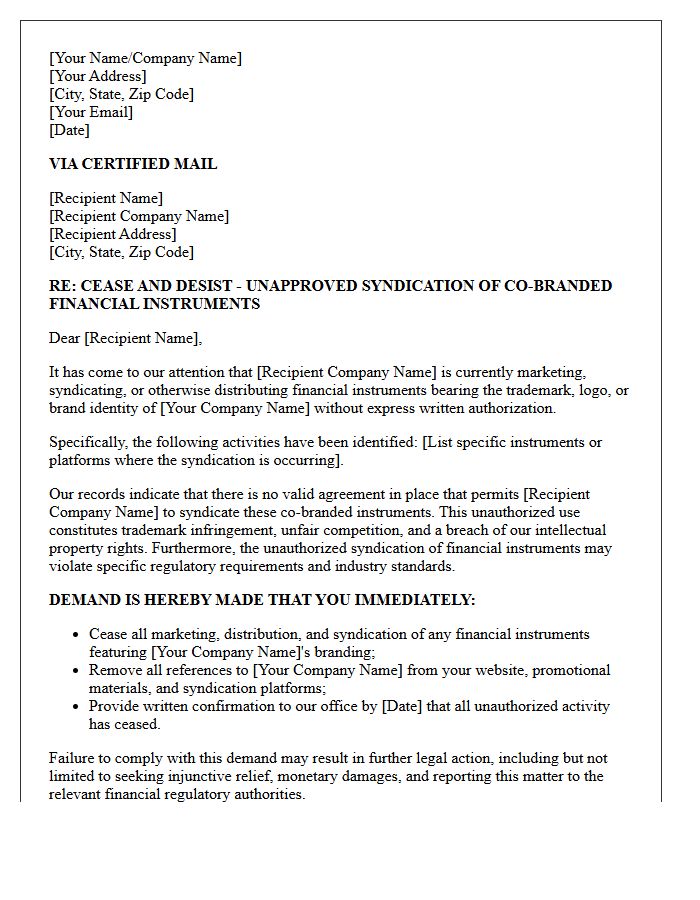
A Cease and Desist Letter for unapproved syndication serves as a formal legal notice to halt the unauthorized distribution of co-branded financial instruments. This document asserts proprietary rights over intellectual property and regulatory compliance standards. It demands the immediate termination of all marketing activities and the withdrawal of non-compliant offerings from the market. Issuing this letter is a critical step in mitigating reputational risk and preventing potential legal liability or regulatory sanctions resulting from the unlicensed association of brands within complex financial markets.
Legal Notice Letter Stopping Unlicensed Co-Branded Retail Banking Offers
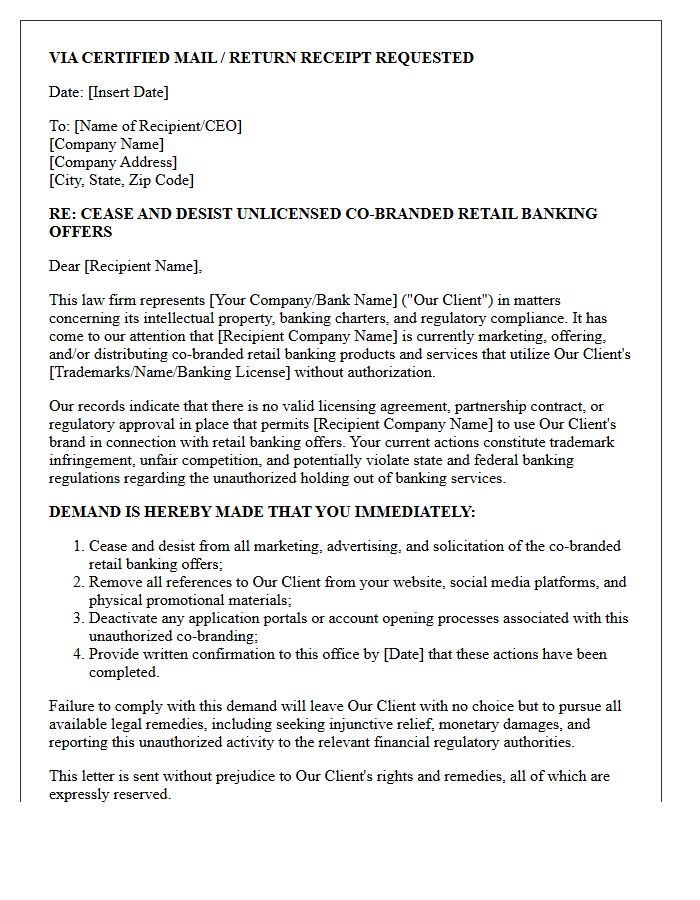
A Cease and Desist Letter is a critical legal instrument used to halt unauthorized co-branded banking activities. It notifies entities that their unlicensed financial offers violate regulatory standards and trademark rights. This formal notice demands an immediate end to misleading marketing to protect consumers and maintain banking compliance. Failure to adhere to this legal warning often results in litigation or regulatory intervention. Financial institutions must issue these letters promptly to safeguard their brand integrity and ensure all retail partnerships operate within legal frameworks and approved licensing agreements.
Demand Letter for Termination of Unlicensed Co-Branded Insurance Distribution
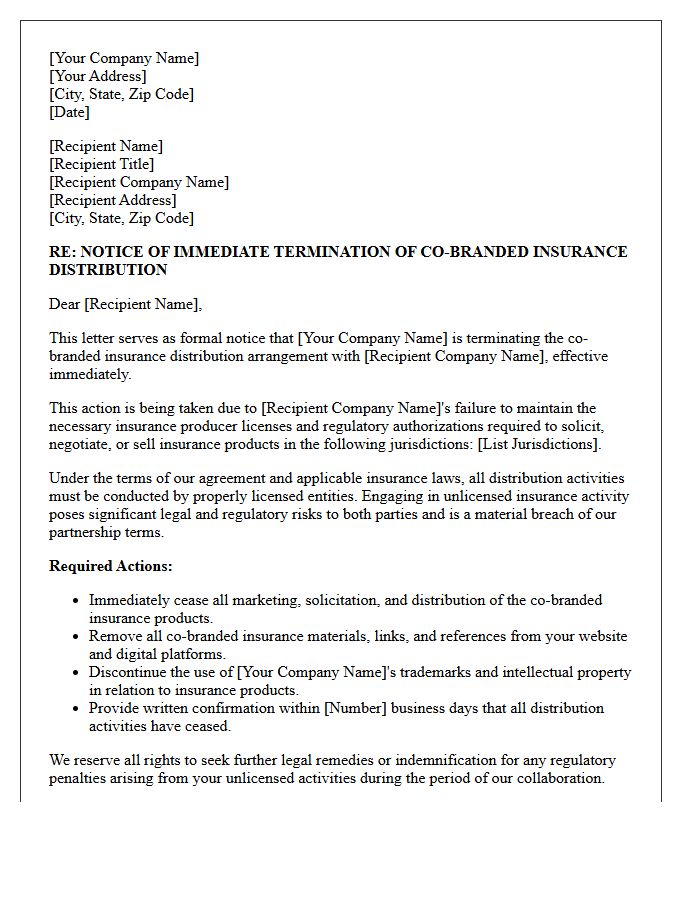
A demand letter for the termination of unlicensed co-branded insurance distribution is a formal legal notice used to stop unauthorized insurance activities. It targets partnerships where insurance products are marketed under a joint brand without proper regulatory licensing. The letter serves as a final warning to cease and desist, demanding an immediate halt to all non-compliant solicitation and sales. Issuing this document is a critical step to mitigate compliance risk, avoid heavy regulatory fines, and protect the lead insurer's reputation from legal liabilities associated with unlicensed third-party intermediaries.
Cease and Desist Letter Addressing Unauthorized Brokerage of Co-Branded Bank Accounts
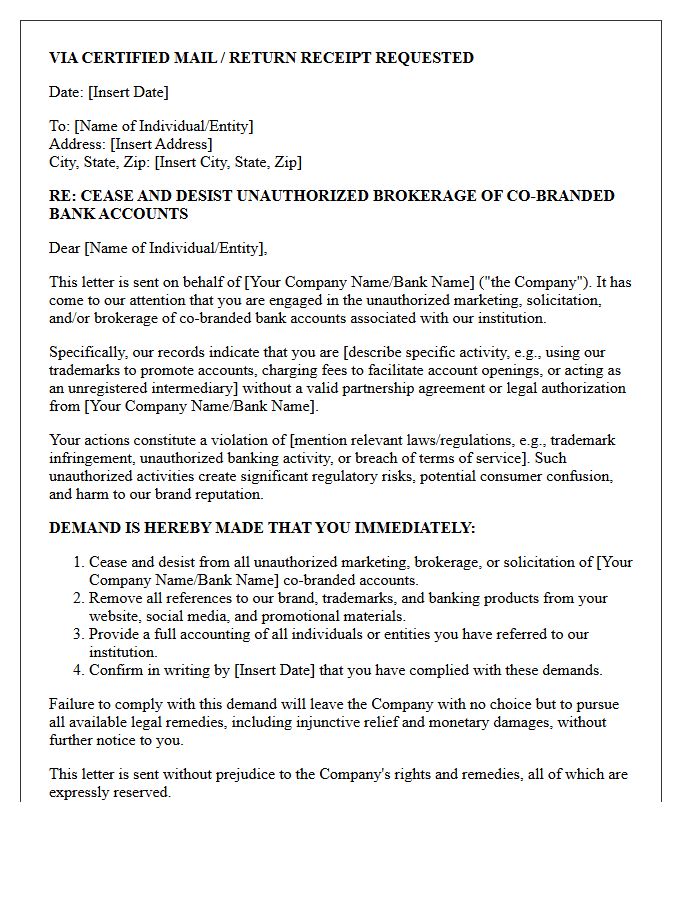
A Cease and Desist Letter is a formal legal notice issued to stop the unauthorized brokerage of co-branded bank accounts. It serves as a critical warning against entities marketing financial products without proper regulatory licensing or partnership agreements. This document protects financial institutions from brand dilution and legal liability while ensuring compliance with banking regulations. Recipients must immediately halt all solicitation activities to avoid litigation. Understanding these letters is vital for maintaining regulatory compliance and protecting the integrity of banking ecosystems from fraudulent or unapproved third-party intermediaries.
Compliance Letter Demanding End to Unlicensed Co-Branded Investment Offerings
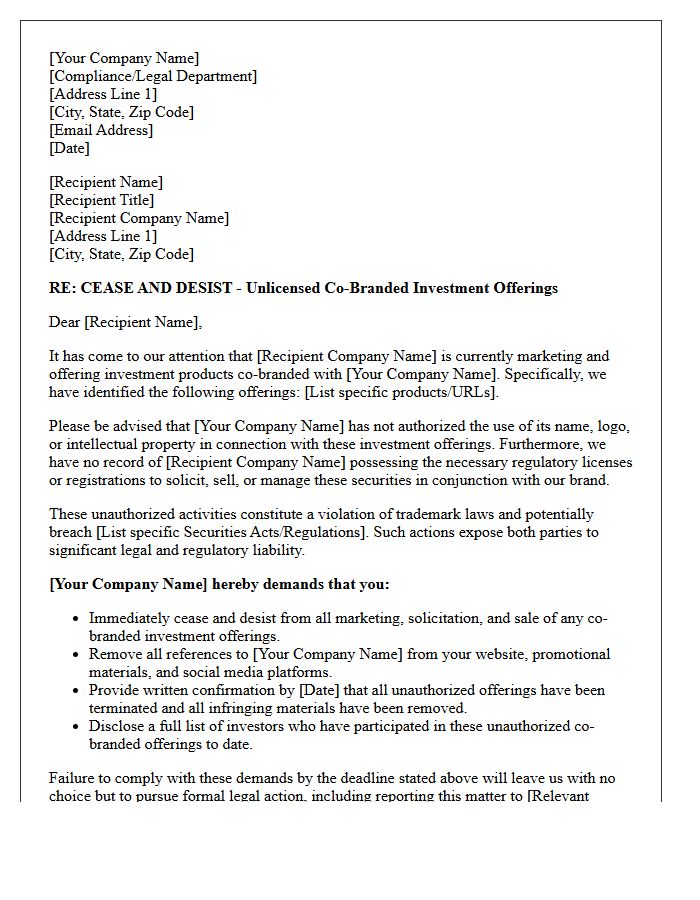
A compliance letter demanding the cessation of unlicensed co-branded investment offerings is a critical legal notice. It targets entities promoting financial products without proper regulatory authorization, highlighting violations of securities laws. Such notices typically mandate an immediate cease and desist of all marketing and sales activities to protect investors from potential fraud. Recipients must prioritize legal counsel to address non-compliance risks, including heavy fines or criminal charges. Understanding these demands is essential for maintaining market integrity and ensuring that all investment partnerships adhere to strict transparency and licensing requirements.
Cease and Desist Letter for Unauthorized Distribution of Co-Branded Corporate Credit Lines
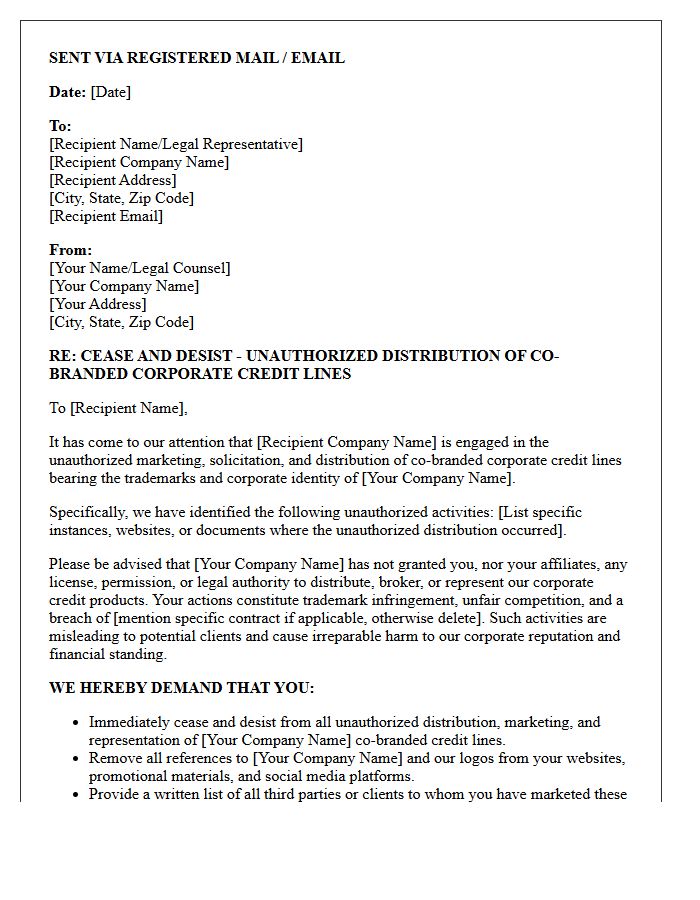
A Cease and Desist Letter for unauthorized distribution of co-branded corporate credit lines is a formal legal notice demanding the immediate termination of illicit marketing or sub-licensing of financial products. This document serves as a critical enforcement mechanism to protect intellectual property rights and maintain regulatory compliance. It warns the infringing party of potential litigation if they continue misrepresenting brand partnerships without explicit authorization. Establishing a clear legal paper trail is essential for safeguarding corporate reputation and ensuring that only approved entities facilitate high-value business credit facilities.
What is a Cease and Desist Letter for unlicensed financial product distribution?
It is a formal legal notice demanding that an individual or entity immediately stop the unauthorized marketing, sale, or distribution of co-branded financial products that lack the necessary regulatory licensing or partnership approvals.
When should a firm issue a Cease and Desist for co-branded products?
A letter should be issued as soon as a firm discovers that its brand, logo, or financial credentials are being used by a third party to sell products-such as credit cards, loans, or investment vehicles-without a valid co-branding agreement or regulatory authorization.
What legal violations are typically cited in an unlicensed distribution notice?
Common legal grounds include trademark infringement, unfair competition, consumer fraud, and violations of financial services regulations such as the Dodd-Frank Act or specific state licensing requirements for lending and investment distribution.
Can a Cease and Desist letter prevent regulatory penalties?
While it does not guarantee immunity, proactively issuing a notice demonstrates to regulators like the CFPB or SEC that the legitimate brand owner is taking active steps to protect consumers and mitigate the impact of unauthorized financial activities.
What are the consequences of ignoring a Cease and Desist regarding financial products?
Failure to comply typically results in escalated legal action, including requests for preliminary injunctions, statutory damages for brand dilution, and formal reporting to financial oversight authorities for criminal investigation into unlicensed securities or banking activity.


Comments