
A Comfort Letter for Foreign Exchange Facilities is a formal document issued by a parent company to support a subsidiary's creditworthiness. It provides banks with assurance regarding financial stability and commitment to debt obligations without being a full legal guarantee. This document facilitates smoother currency hedging and trade financing. Below are some ready to use template.
Image cover: Essential Comfort Letter Templates for Foreign Exchange Facilities
Letter Samples List
- Parent Company Comfort Letter for Foreign Exchange Facilities
- Letter of Keepwell for Corporate Foreign Exchange Hedging
- Sponsor Support Letter for Currency Derivative Facilities
- Letter of Awareness for Cross Border Foreign Exchange Transactions
- Financial Support Letter for Forward Exchange Contract Facilities
- Ultimate Holding Company Comfort Letter for Forex Trading Limits
- Letter of Assurance for Subsidiary Foreign Exchange Exposure
- Guarantor Support Letter for Currency Swap Facilities
- Intercompany Comfort Letter for Foreign Exchange Settlement Lines
- Letter of Comfort for Trade Finance Foreign Exchange Facilities
- Shareholder Sponsorship Letter for Treasury and Forex Facilities
- Letter of Undertaking and Comfort for Foreign Exchange Margin Trading
- Joint Venture Support Letter for Foreign Exchange Hedging Lines
Parent Company Comfort Letter for Foreign Exchange Facilities
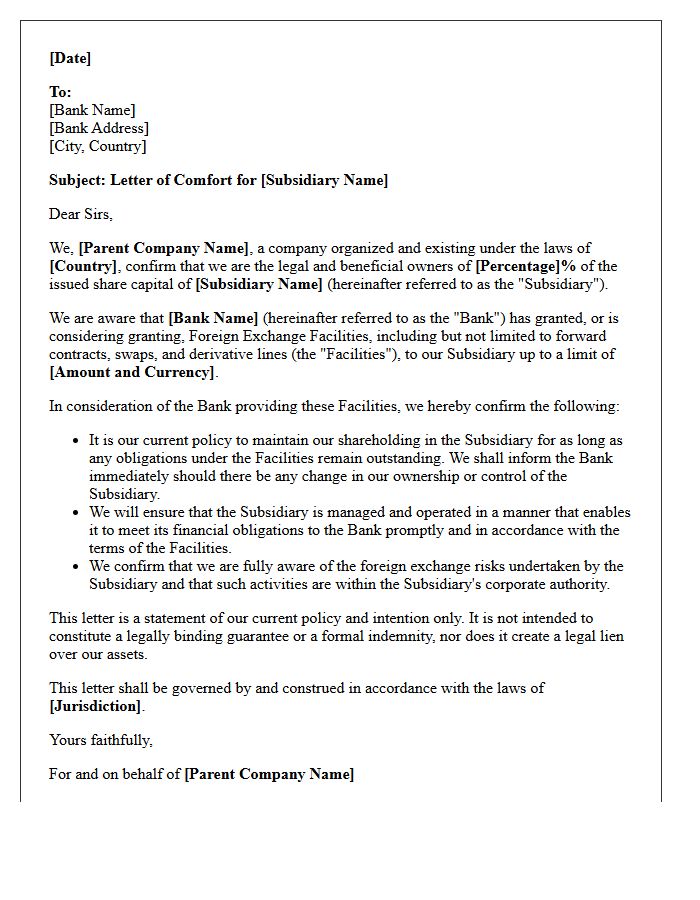
A parent company comfort letter is a guarantee-like document issued to support a subsidiary's creditworthiness. While often not legally binding, it provides moral assurance to lenders providing foreign exchange facilities. It confirms the parent's awareness of the debt and its intention to ensure the subsidiary maintains sufficient liquidity. For businesses, this document is vital for securing competitive FX hedging lines and trade finance in foreign markets without using a formal bank guarantee. It demonstrates group support, helping banks mitigate risk when facilitating international currency transactions and cross-border capital flows.
Letter of Keepwell for Corporate Foreign Exchange Hedging
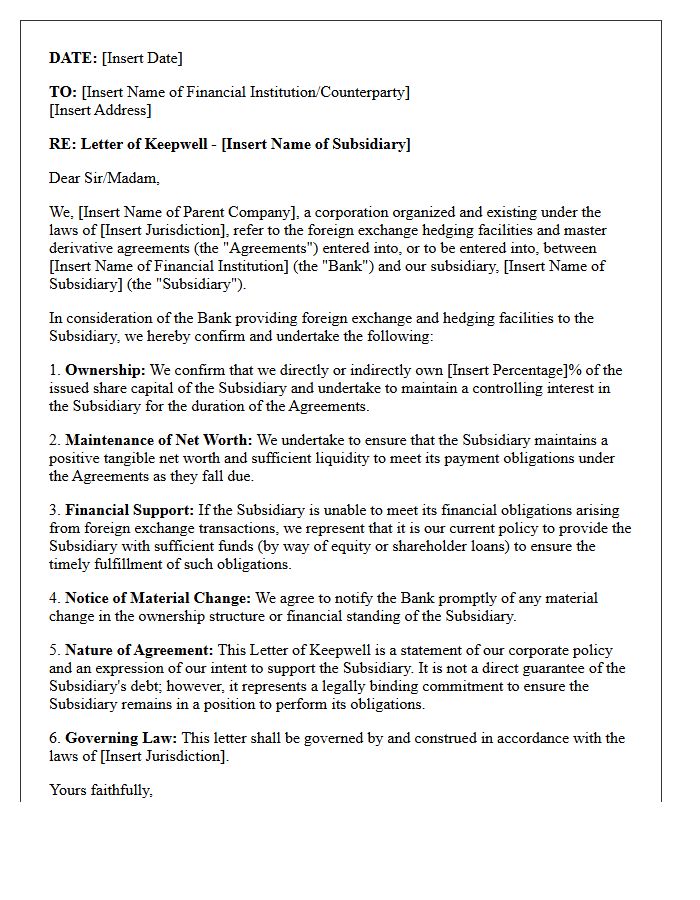
A Keepwell Letter is a support agreement used in corporate foreign exchange hedging to enhance the creditworthiness of a subsidiary. While not a legally binding guarantee, it represents a parent company's commitment to maintain the subsidiary's financial solvency and liquidity. This assurance reduces default risk for lenders and swap counterparties, often resulting in more favorable hedging terms. It signals strong parental support, ensuring the subsidiary remains capable of meeting its contractual obligations under volatile currency fluctuations without an explicit debt assumption by the parent entity.
Sponsor Support Letter for Currency Derivative Facilities
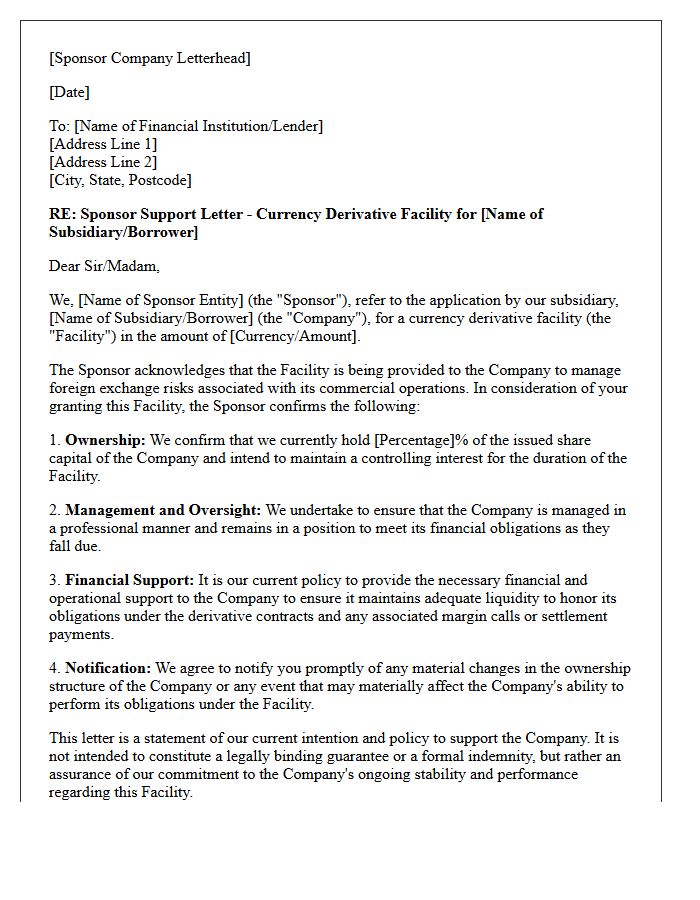
A Sponsor Support Letter is a critical credit enhancement document required by lenders to mitigate risks in currency derivative facilities. It represents a legal commitment where a parent company or sponsor guarantees the financial obligations of a subsidiary. This letter ensures that the hedging provider has recourse if the primary borrower defaults on margin calls or settlement payments. By providing this financial backing, sponsors improve the credit profile of the transaction, facilitating better pricing and higher liquidity limits for managing foreign exchange volatility within complex project finance structures.
Letter of Awareness for Cross Border Foreign Exchange Transactions
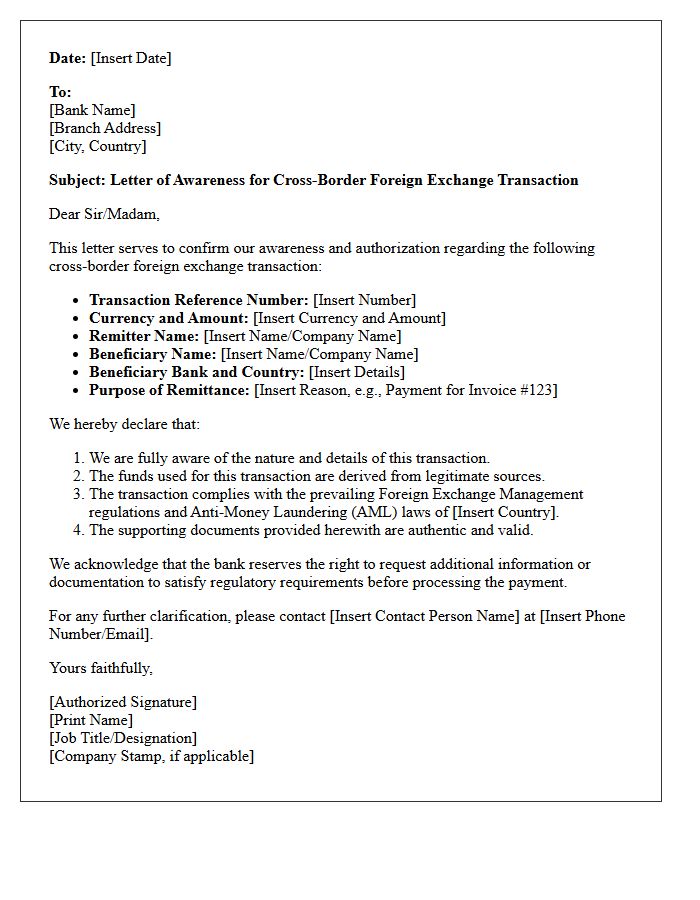
A Letter of Awareness is a vital document used in cross-border foreign exchange transactions to provide comfort to lenders or regulators. It signifies that a parent company is cognizant of its subsidiary's financial obligations without creating a legally binding guarantee. This instrument enhances transparency and supports creditworthiness during international trade. Understanding its legal limitations is essential, as it primarily serves as a moral commitment to ensure the compliance and stability of the entity involved in the foreign currency exchange process.
Financial Support Letter for Forward Exchange Contract Facilities
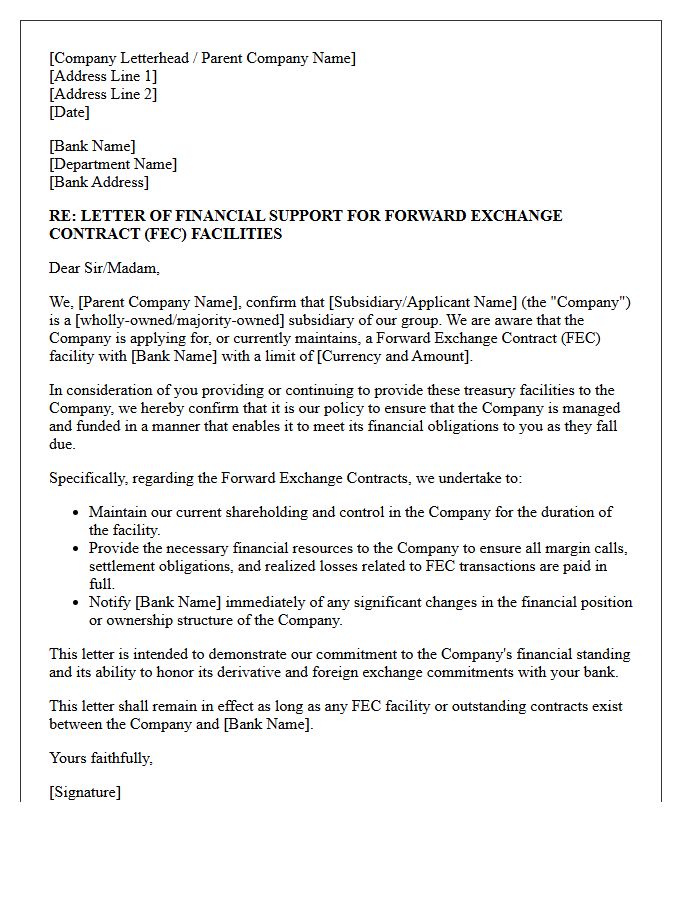
A financial support letter is a critical document used to secure Forward Exchange Contract (FEC) facilities for a subsidiary. It represents a parent company guarantee, ensuring that the beneficiary has the financial backing to settle currency hedging obligations. By providing this assurance, banks mitigate credit risk associated with potential market fluctuations. This commitment enables businesses to lock in exchange rates, protecting against currency volatility while maintaining operational liquidity. Understanding the legal enforceability and the specific credit limits outlined in the letter is essential for effective global treasury management and long-term fiscal stability.
Ultimate Holding Company Comfort Letter for Forex Trading Limits
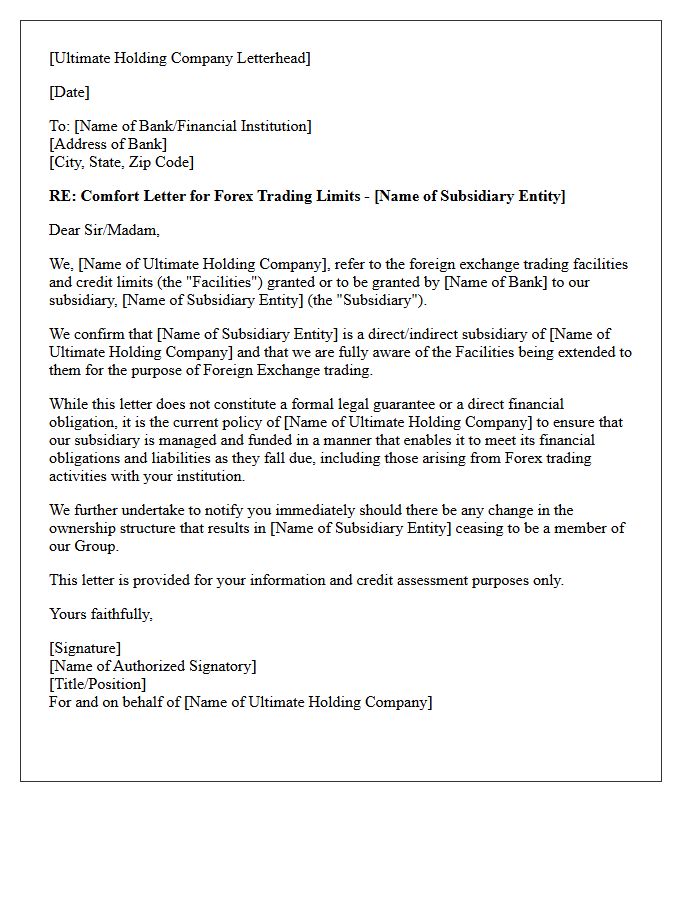
An Ultimate Holding Company Comfort Letter is a legal document used to facilitate Forex Trading Limits by providing financial assurance. It confirms that the parent organization will support its subsidiary's liquidity and obligations, though it is often morally rather than legally binding. Banks require this to mitigate counterparty risk when a subsidiary lacks sufficient independent credit history. By leveraging the parent company's creditworthiness, the subsidiary can access higher trading volumes and better leverage terms. Understanding the specific enforceability clauses is essential for maintaining robust institutional trading relationships and operational stability.
Letter of Assurance for Subsidiary Foreign Exchange Exposure
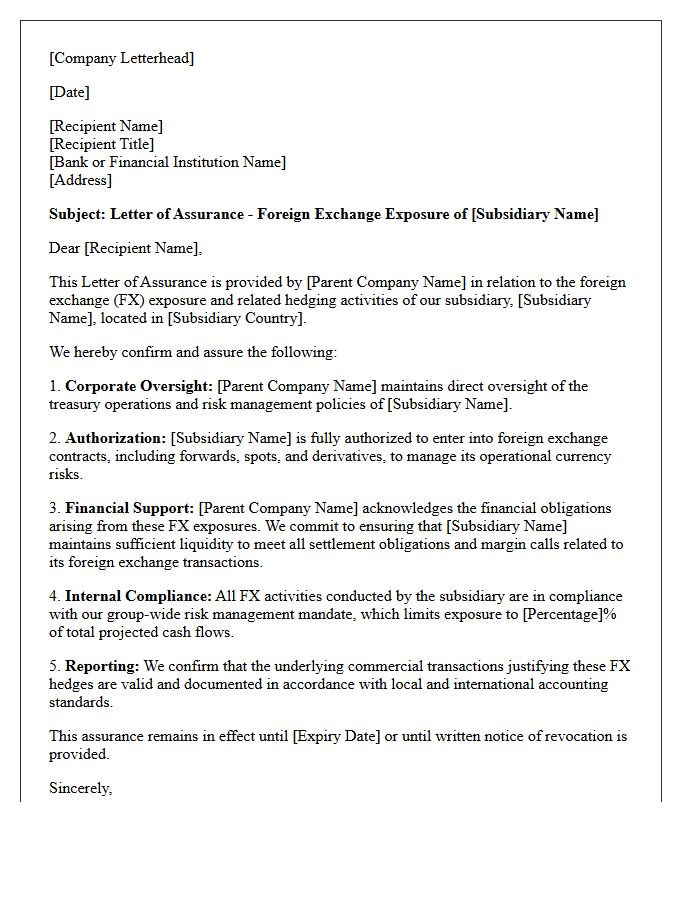
A Letter of Assurance is a critical guarantee issued by a parent company to manage subsidiary foreign exchange exposure. It confirms the parent's commitment to providing financial support if currency fluctuations impact the subsidiary's ability to meet local obligations. This document reduces lending risk for banks and stabilizes international operations by mitigating translation and transaction risks. Understanding these commitments is essential for maintaining corporate liquidity and ensuring accurate consolidated financial reporting across different global markets.
Guarantor Support Letter for Currency Swap Facilities
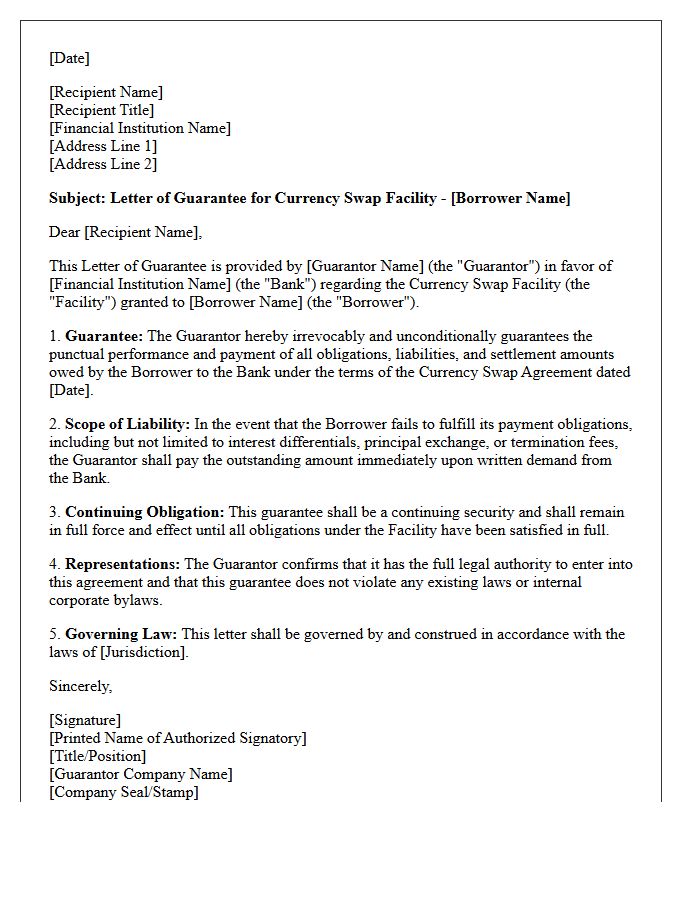
A guarantor support letter is a critical legal document providing credit enhancement for currency swap facilities. It serves as a binding commitment where a parent company or third party acts as a guarantor, ensuring the fulfillment of payment obligations if the primary counterparty defaults. This document mitigates settlement risk and liquidity volatility during cross-currency exchanges. By strengthening the credit profile of the transaction, it allows entities with lower ratings to access favorable swap rates and maintain stability in international financing and hedging strategies.
Intercompany Comfort Letter for Foreign Exchange Settlement Lines
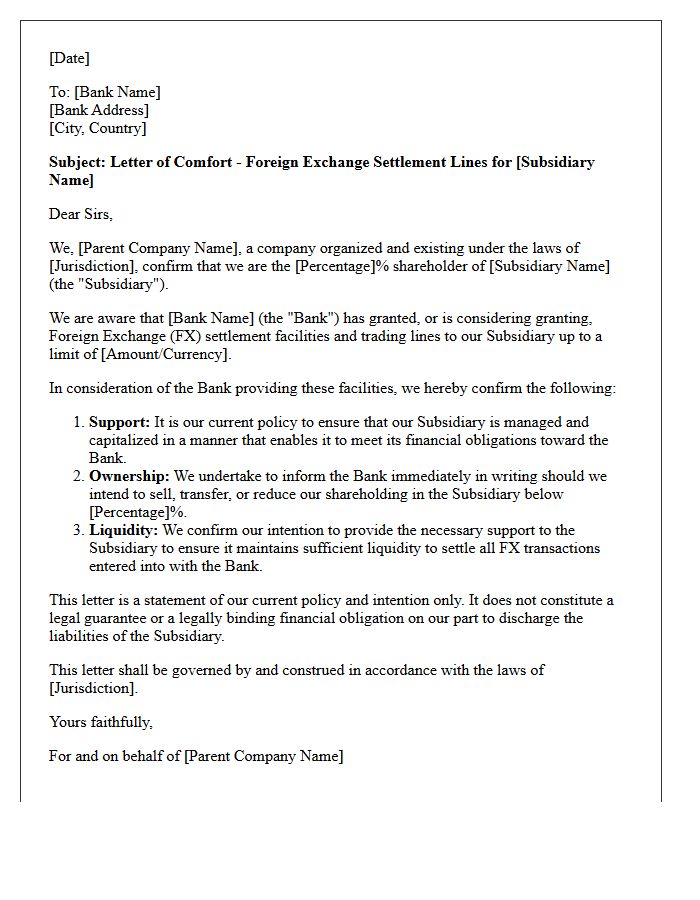
An Intercompany Comfort Letter is a formal document used to facilitate foreign exchange settlement lines between related corporate entities. It serves as a non-binding assurance from a parent company to a financial institution, confirming support for a subsidiary's financial obligations. While not a legal guarantee, it enhances creditworthiness and streamlines liquidity management across borders. This instrument is essential for multinational firms seeking to manage currency risk and operational exposure without the regulatory complexity of formal guarantees, ensuring smoother international trade settlements and intercompany funding efficiency.
Letter of Comfort for Trade Finance Foreign Exchange Facilities
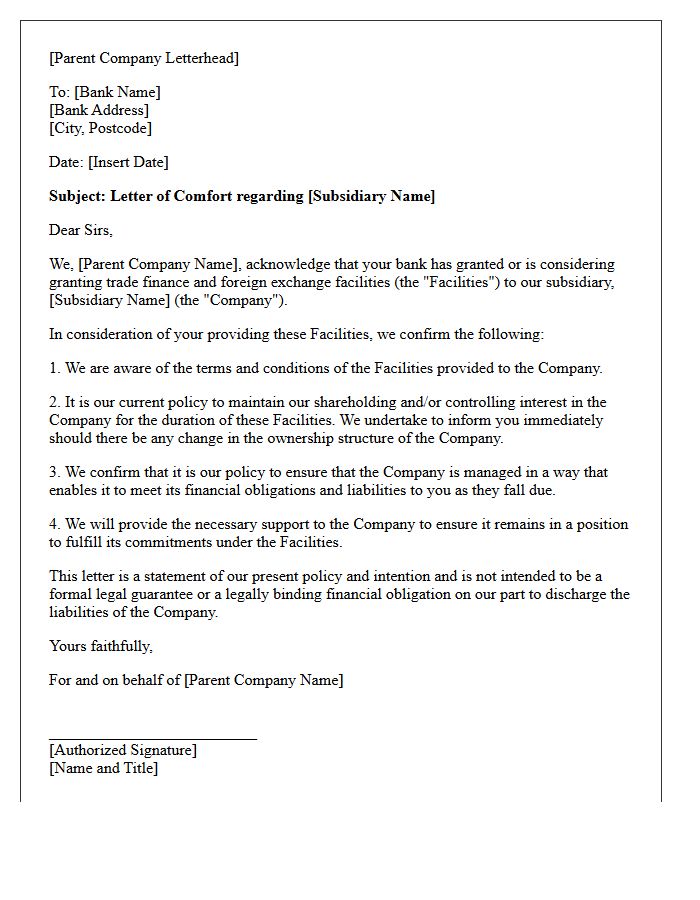
A Letter of Comfort is a support document issued by a parent company to a lender on behalf of a subsidiary. In trade finance and foreign exchange, it provides assurance regarding the subsidiary's ability to meet financial obligations. While it signals a moral commitment to maintain creditworthiness, it is typically not a legally binding guarantee. Banks use it to mitigate risk when extending FX facilities, ensuring the parent remains aware of the subsidiary's exposure. It strengthens the credit profile without appearing as a direct liability on the parent company's balance sheet.
Shareholder Sponsorship Letter for Treasury and Forex Facilities
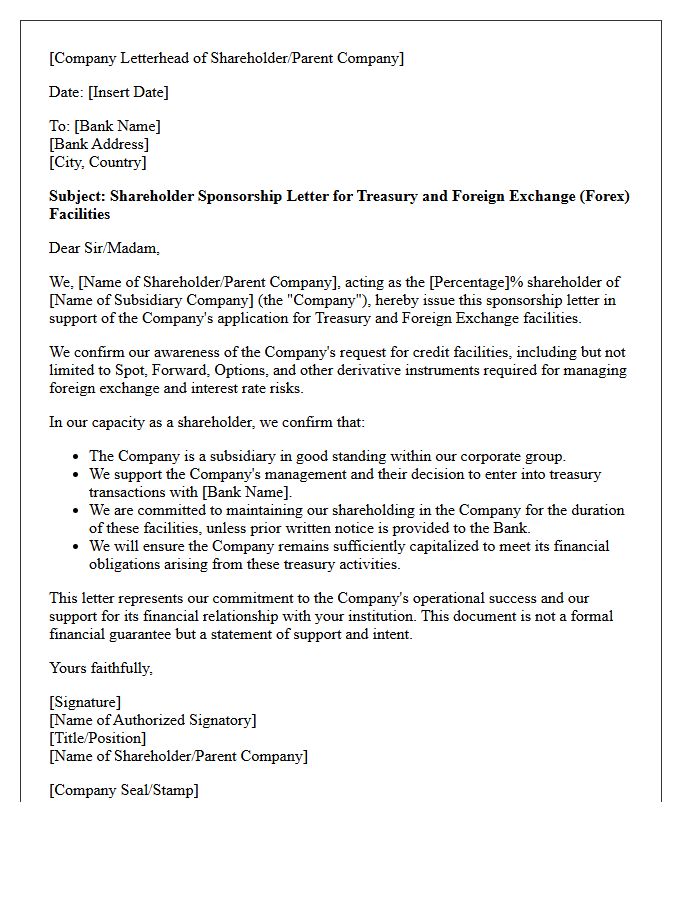
A Shareholder Sponsorship Letter is a vital legal undertaking where a primary stakeholder guarantees a company's obligations to a financial institution. This document is essential for securing Treasury and Forex Facilities, as it mitigates credit risk for the bank. It confirms the shareholder's financial commitment to support the entity's liquidity and settlement duties during currency exchange or hedging transactions. Providing this letter enhances the corporate credit profile, ensuring the business maintains access to necessary capital markets and risk management tools required for international trade and stable financial operations.
Letter of Undertaking and Comfort for Foreign Exchange Margin Trading
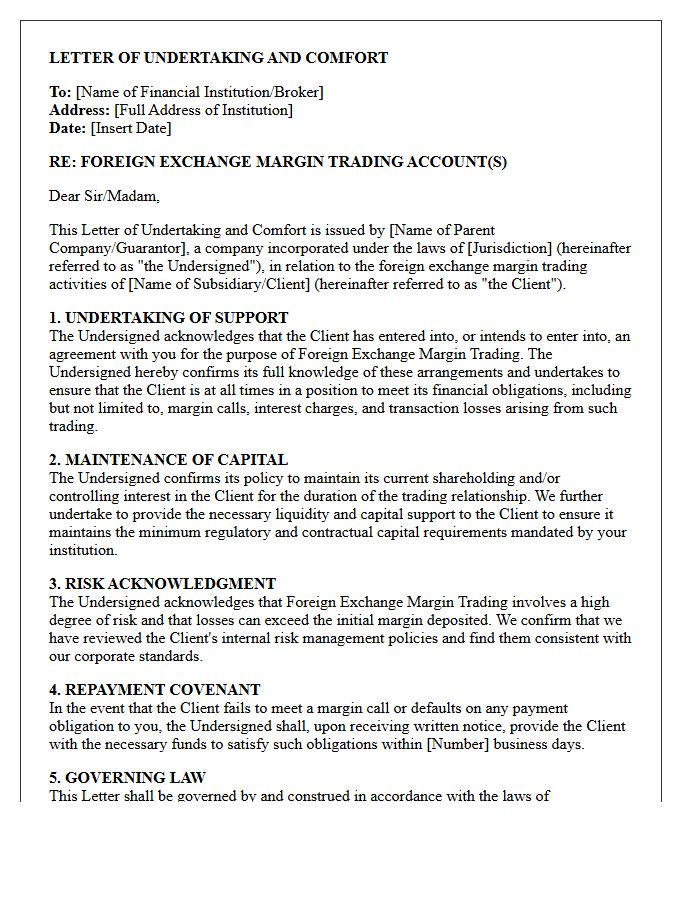
A Letter of Undertaking and Comfort in foreign exchange margin trading serves as a non-binding assurance or a formal guarantee provided by a parent company. It aims to bolster the creditworthiness of a subsidiary engaging in leveraged transactions. While it outlines financial support and operational commitments, the legal enforceability often depends on specific jurisdictional regulations. Traders must understand that these documents manage counterparty risk by ensuring the entity maintains sufficient liquidity to cover potential losses and margin calls within the volatile currency market.
Joint Venture Support Letter for Foreign Exchange Hedging Lines
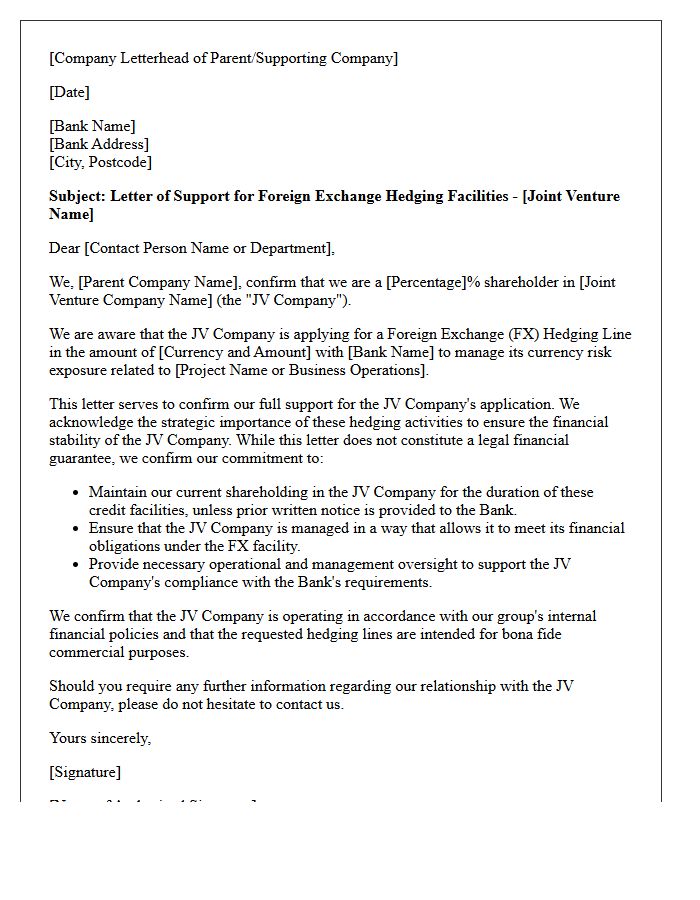
A Joint Venture Support Letter is a critical document used to secure foreign exchange hedging lines for a shared enterprise. It serves as a formal commitment where parent companies provide credit enhancement to banks, mitigating risks associated with currency volatility. This letter ensures the JV can access essential derivative facilities to protect profit margins. By outlining financial backing and operational guarantees, it bridges the gap between the venture's limited balance sheet and the bank's security requirements, facilitating smoother international trade and stable cash flow management for the partnership.
What is a Comfort Letter for Foreign Exchange (FX) facilities?
A Comfort Letter is a formal document issued by a parent company or a third party to a financial institution, providing assurance regarding the financial obligations and creditworthiness of a subsidiary or affiliate seeking foreign exchange facilities. While typically not a legally binding guarantee, it demonstrates moral and financial support to mitigate the bank's risk.
Why do banks require a Comfort Letter for FX hedging lines?
Banks require a Comfort Letter to assess the overall risk profile of a corporate group. It ensures that the parent company is aware of the subsidiary's foreign exchange activities and indicates a commitment to maintain the subsidiary's solvency, which is crucial for high-volume currency trading and forward contracts.
What are the key components of a Comfort Letter for currency facilities?
A standard Comfort Letter includes an acknowledgement of the specific FX facility, a statement of awareness regarding the subsidiary's exposure, a commitment to maintain ownership levels, and an assurance that the subsidiary will be managed in a way that allows it to meet its financial obligations.
Is a Comfort Letter legally binding in foreign exchange transactions?
In most jurisdictions, a Comfort Letter is considered a moral obligation rather than a legally enforceable contract or guarantee. However, the specific wording is critical; depending on the terminology used, courts may occasionally interpret certain clauses as creating legal liabilities for the issuer.
How does a Comfort Letter impact a company's credit limit for FX trading?
By providing a Comfort Letter, a parent company enhances the perceived creditworthiness of its subsidiary. This often allows the subsidiary to secure higher credit limits for FX facilities, better pricing on currency spreads, and reduced collateral requirements for derivative trading.

Comments