
A Warehouse Line of Credit Commitment Letter is a formal document from a lender outlining the specific terms, borrowing limits, and conditions for financing mortgage originations. This agreement serves as a critical assurance of funding for mortgage bankers and financial institutions. It establishes the legal framework for the credit facility before final execution. Below are some ready to use templates.
Image cover: Securing Your Capital: Warehouse Line of Credit Commitment Letter Guide and Templates
Letter Samples List
- Secured Warehouse Line of Credit Commitment Letter
- Syndicated Warehouse Line of Credit Commitment Letter
- Bilateral Warehouse Line of Credit Commitment Letter
- Revolving Warehouse Line of Credit Commitment Letter
- Amended Warehouse Line of Credit Commitment Letter
- Restated Warehouse Line of Credit Commitment Letter
- Conditional Warehouse Line of Credit Commitment Letter
- Binding Warehouse Line of Credit Commitment Letter
- Non-Binding Warehouse Line of Credit Commitment Letter
- Senior Warehouse Line of Credit Commitment Letter
- Subordinated Warehouse Line of Credit Commitment Letter
- Joint Warehouse Line of Credit Commitment Letter
Secured Warehouse Line of Credit Commitment Letter
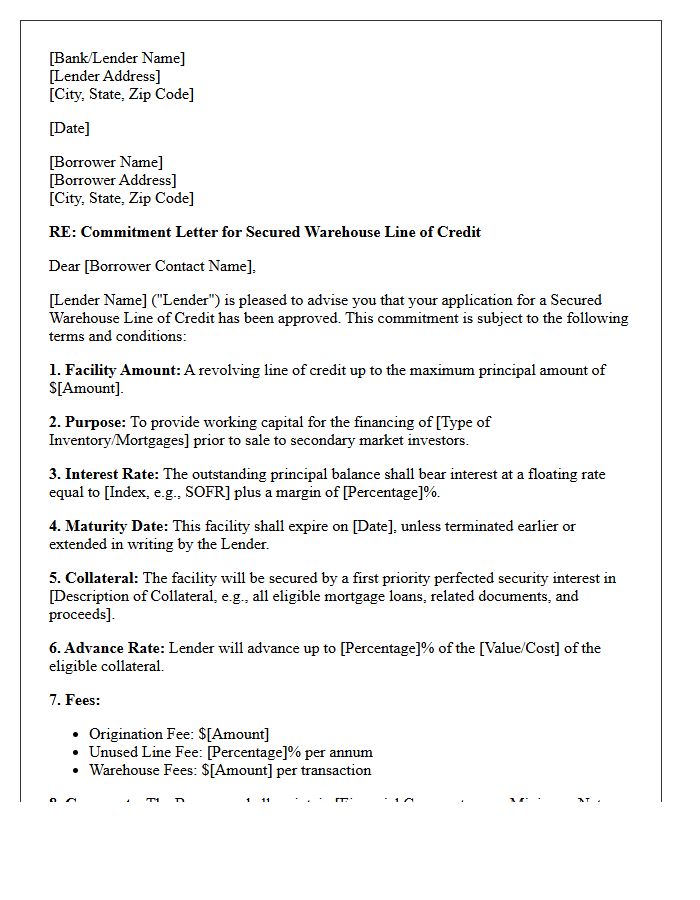
A Secured Warehouse Line of Credit Commitment Letter is a formal document issued by a lender outlining the specific terms for financing mortgage originations. It serves as a binding agreement that specifies the maximum borrowing limit, interest rates, and collateral requirements. This letter is crucial for mortgage bankers to demonstrate liquidity and funding capacity to secondary market investors. Key provisions typically include the commitment fee, expiration date, and operational covenants that the borrower must maintain to ensure continuous access to the credit facility during the loan production cycle.
Syndicated Warehouse Line of Credit Commitment Letter
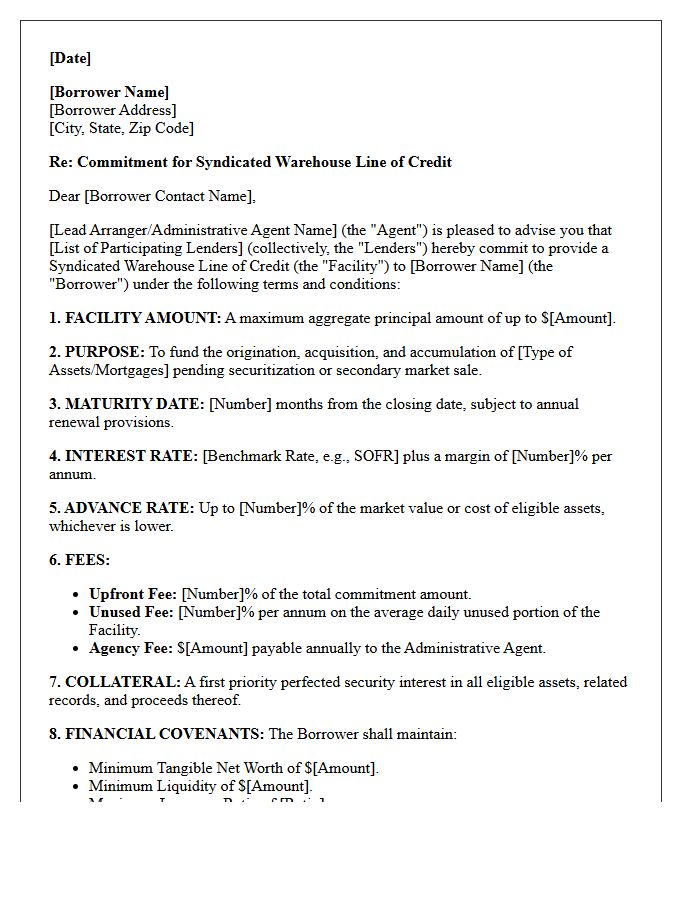
A Syndicated Warehouse Line of Credit Commitment Letter is a binding agreement where a group of lenders pledges to provide short-term financing to a mortgage originator. This document outlines the maximum borrowing capacity, interest rates, and specific eligibility criteria for the underlying collateral. It serves as a critical liquidity facility, allowing the borrower to fund loans before selling them into the secondary market. Understanding the covenants and advance rates detailed within is essential for maintaining operational stability and ensuring continuous funding access for large-scale lending activities.
Bilateral Warehouse Line of Credit Commitment Letter
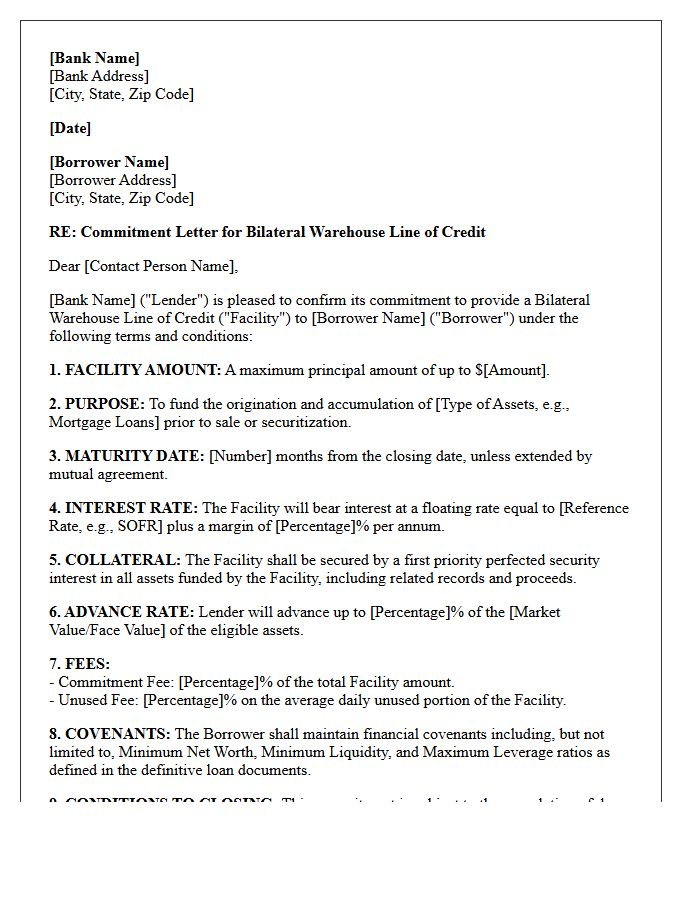
A Bilateral Warehouse Line of Credit Commitment Letter is a binding agreement where a single lender pledges short-term funding to a mortgage originator. This document outlines critical liquidity terms, including the maximum borrowing limit, interest rates, and collateral requirements. It serves as a formal promise to finance loan originations before they are sold to secondary market investors. Understanding the covenants and advance rates within this letter is essential for managing operational cash flow and ensuring the stability of a firm's mortgage pipeline financing.
Revolving Warehouse Line of Credit Commitment Letter
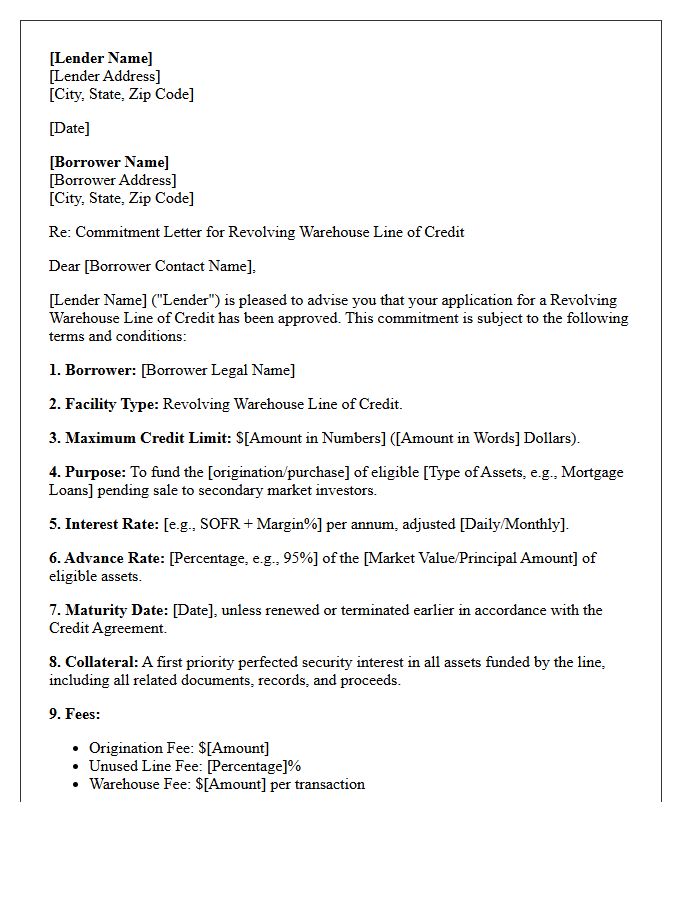
A Revolving Warehouse Line of Credit Commitment Letter is a formal document issued by a lender to a mortgage originator. It outlines the contractual terms for a short-term credit facility used to fund mortgage loans before they are sold to investors. Key provisions include the maximum borrowing capacity, interest rates, and specific eligibility requirements for the underlying collateral. This commitment ensures the borrower has immediate liquidity to manage loan pipelines. Understanding the funding conditions and expiration dates is essential for maintaining a stable operational cash flow during the lending process.
Amended Warehouse Line of Credit Commitment Letter
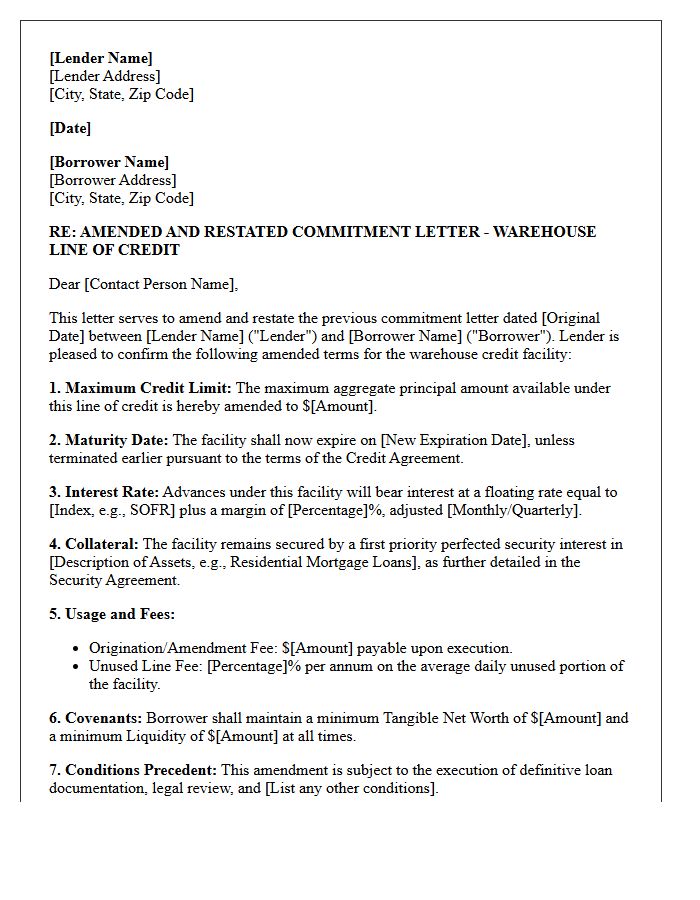
An Amended Warehouse Line of Credit Commitment Letter is a legal document that modifies the existing terms between a mortgage lender and a financial institution. It formally updates key provisions such as borrowing limits, interest rates, or maturity dates. This amendment ensures the liquidity necessary for funding new loans remains available while reflecting current market conditions or changed financial covenants. Understanding these adjustments is crucial for maintaining compliant operations and ensuring continuous access to the capital required to originate and hold mortgage assets before their secondary market sale.
Restated Warehouse Line of Credit Commitment Letter
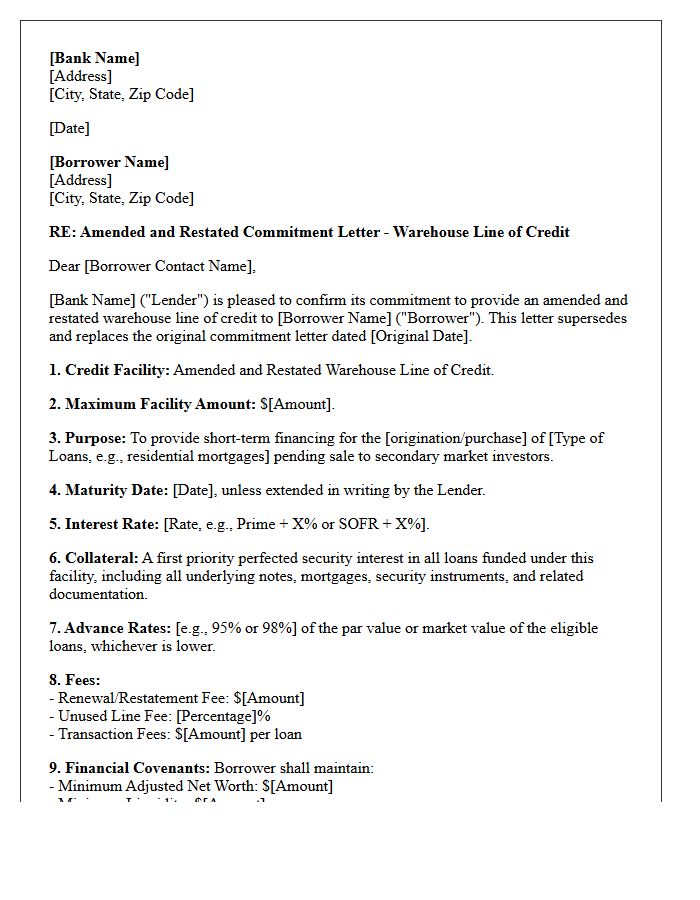
A Restated Warehouse Line of Credit Commitment Letter is a legal document that updates and replaces an existing financing agreement. It outlines the revised borrowing terms, including interest rates, advance rates, and updated financial covenants. This instrument is essential for mortgage lenders to maintain liquidity while incorporating amended credit limits or regulatory changes. By consolidating previous amendments into a single version, it ensures operational clarity and legal compliance between the warehouse lender and the borrower, facilitating a continuous flow of capital for funding new loan originations.
Conditional Warehouse Line of Credit Commitment Letter
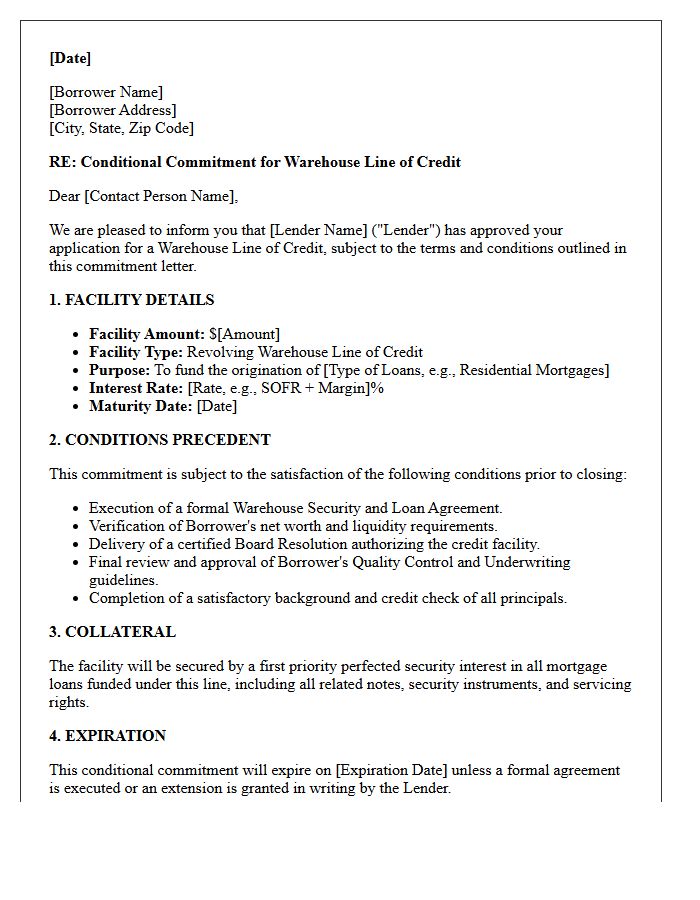
A Conditional Warehouse Line of Credit Commitment Letter is a formal document issued by a lender outlining the specific terms and obligations for a short-term revolving loan. It serves as a preliminary approval for mortgage bankers to fund loan originations before selling them to the secondary market. To activate the credit, the borrower must satisfy various contingencies, such as financial audits, legal reviews, and collateral requirements. This letter is crucial for establishing liquidity, though it remains non-binding until all funding conditions are strictly met by the recipient.
Binding Warehouse Line of Credit Commitment Letter
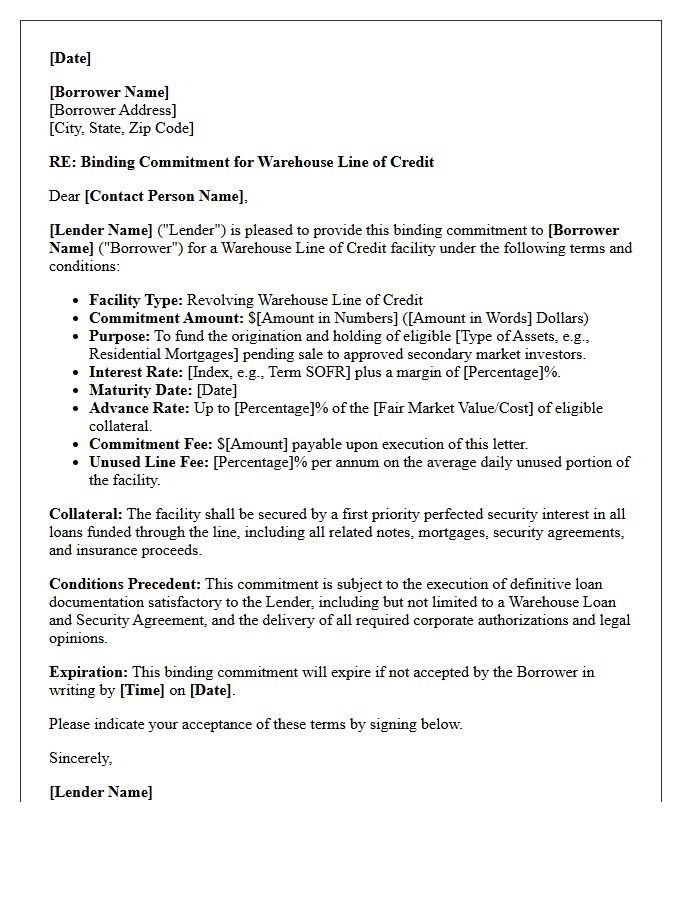
A Binding Warehouse Line of Credit Commitment Letter is a formal agreement where a financial institution pledges to provide capital for mortgage originations. This document outlines critical terms including the maximum credit limit, interest rates, and expiration dates. It serves as a legal assurance that funding is available, provided the borrower meets specific conditions. For mortgage lenders, this letter is essential for maintaining liquidity and demonstrating financial credibility to secondary market investors and regulatory bodies before the final loan documentation is executed.
Non-Binding Warehouse Line of Credit Commitment Letter
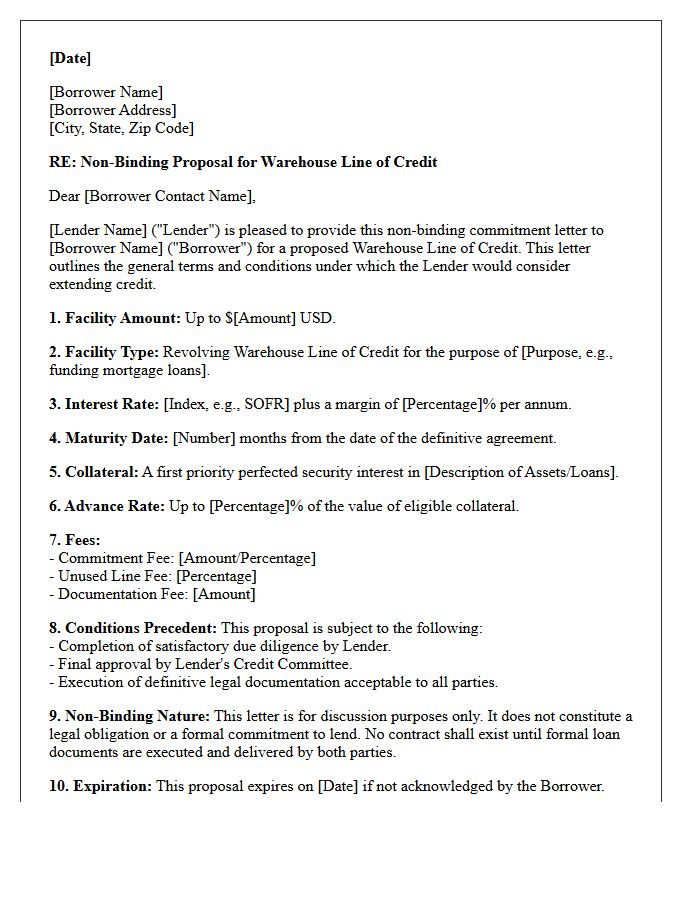
A non-binding warehouse line of credit commitment letter outlines preliminary terms for mortgage inventory financing. It serves as a soft approval, indicating a lender's intent to provide capital without creating a legal obligation to fund. Borrowers must undergo rigorous due diligence and meet specific financial covenants before a definitive agreement is signed. Since the letter is non-binding, the lender may withdraw or modify terms based on market shifts or credit reviews. It is a critical initial step for originators to demonstrate liquidity potential to secondary market partners.
Senior Warehouse Line of Credit Commitment Letter
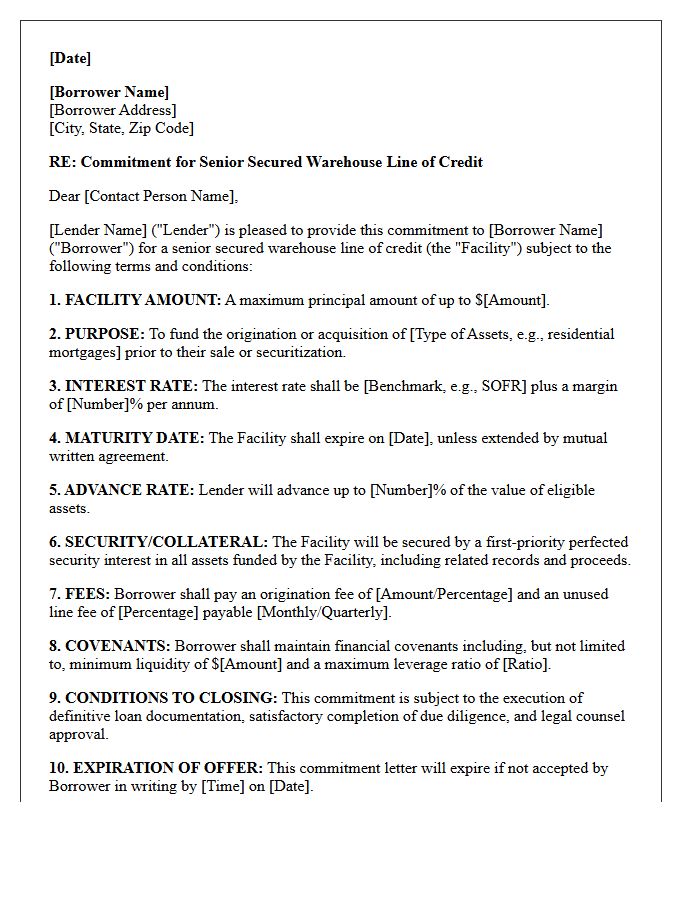
A Senior Warehouse Line of Credit Commitment Letter is a legally binding document outlining the terms under which a financial institution provides a revolving credit facility to a mortgage lender. It specifies key details such as the maximum borrowing capacity, interest rates, and advance rates for funding loan originations. This letter serves as the formal agreement before the final warehouse line is established, ensuring the borrower meets specific financial covenants and operational requirements. It is essential for managing liquidity and cash flow during the mortgage production cycle.
Subordinated Warehouse Line of Credit Commitment Letter
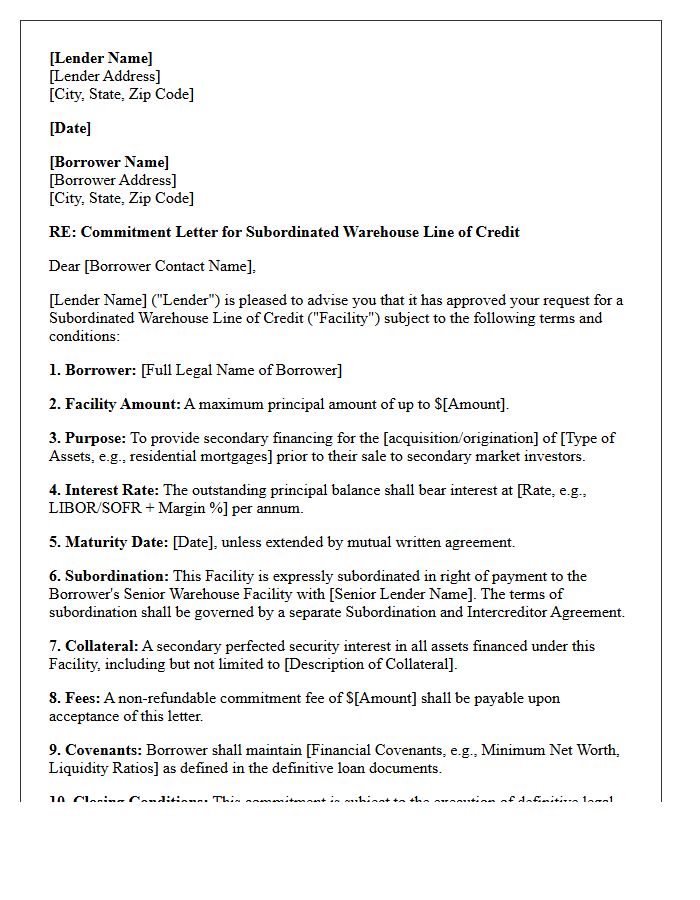
A Subordinated Warehouse Line of Credit Commitment Letter is a formal agreement where a lender pledges secondary funding to a mortgage originator. This document outlines the junior priority status of the debt, meaning it is repaid only after senior warehouse lines. Key elements include borrowing limits, interest rates, and specific covenants. It is essential for managing liquidity and increasing leverage, though it carries higher risk for the lender. This commitment serves as a critical financing bridge, allowing originators to fund loan portfolios before they are sold into the secondary market.
Joint Warehouse Line of Credit Commitment Letter
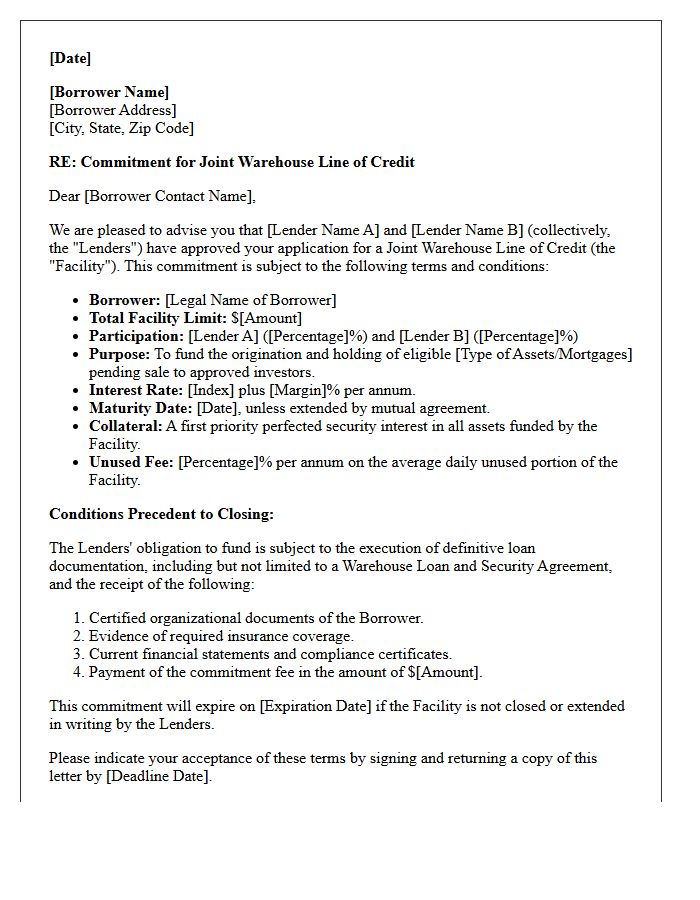
A Joint Warehouse Line of Credit Commitment Letter is a legally binding document outlining the terms under which multiple lenders provide revolving financing to a mortgage originator. This agreement specifies the maximum credit limit, interest rates, and collateral requirements for funding loans before they are sold in the secondary market. It serves as a critical assurance of liquidity, detailing the operational covenants and borrowing base formulas necessary to maintain the credit facility. Understanding the expiration date and funding conditions is essential for managing short-term debt obligations effectively.
What is a Warehouse Line of Credit Commitment Letter?
A Warehouse Line of Credit Commitment Letter is a formal document issued by a financial institution outlining the specific terms, conditions, and credit limits under which they agree to provide short-term financing to a mortgage lender for funding loan originations.
What are the typical key terms included in a warehouse commitment letter?
Common terms include the maximum facility limit, the expiration date of the line, interest rate spreads (typically based on SOFR), advance rates (haircuts), non-usage fees, and specific financial covenants the borrower must maintain.
How does a commitment letter differ from a final warehouse credit agreement?
The commitment letter serves as a binding preliminary agreement or "term sheet" that secures the lender's intent to fund, whereas the final credit agreement is the comprehensive legal contract containing all operational logistics and detailed legal boilerplate.
Why do mortgage lenders need a warehouse line commitment letter?
Lenders require this letter to demonstrate financial capacity to secondary market investors and regulatory bodies, proving they have the immediate liquidity necessary to fund mortgage loans before they are sold to permanent investors.
What financial requirements must a borrower meet to receive a warehouse commitment?
Borrowers are generally required to meet minimum net worth requirements, maintain specific liquidity ratios, provide audited financial statements, and demonstrate a clean regulatory track record and experienced management team.

Comments