
An Overdraft Facility Guarantee Letter is a formal commitment issued by a guarantor to secure a borrower's credit line. This legal document ensures the bank that outstanding debts will be covered if the primary account holder defaults, facilitating easier access to working capital. Below are some ready to use template options to help you draft your request effectively.

Image cover: Professional Overdraft Guarantee Letter: Templates and Writing Guide
Letter Samples List
- Corporate Guarantee Letter for Overdraft Facility
- Personal Guarantee Letter for Overdraft Facility
- Parent Company Guarantee Letter for Overdraft Facility
- Third-Party Guarantee Letter for Overdraft Facility
- Continuing Guarantee Letter for Overdraft Facility
- Specific Guarantee Letter for Overdraft Facility
- Unconditional Guarantee Letter for Overdraft Facility
- Cross Guarantee Letter for Overdraft Facility
- Joint and Several Guarantee Letter for Overdraft Facility
- Syndicated Overdraft Facility Guarantee Letter
- Government Guarantee Letter for Overdraft Facility
- Collateral Backed Overdraft Facility Guarantee Letter
Corporate Guarantee Letter for Overdraft Facility
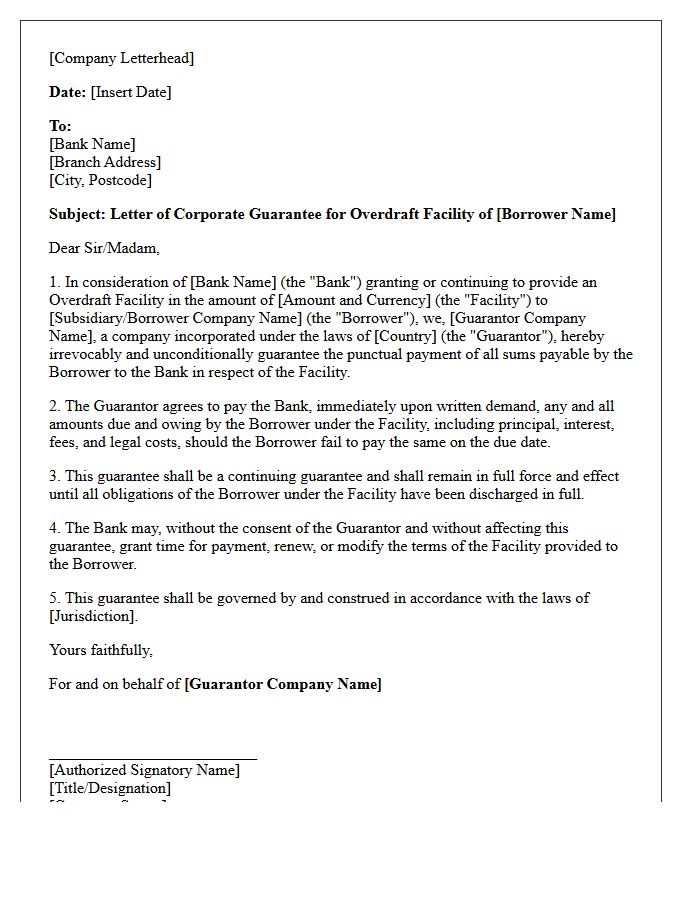
A Corporate Guarantee Letter is a legally binding commitment where a parent company or third party assumes liability for a business's overdraft facility. This document ensures that if the primary borrower defaults, the guarantor will repay the outstanding debt and interest to the bank. It provides credit enhancement, allowing subsidiaries to access liquidity despite limited credit history. Key considerations include the unconditional nature of the guarantee and specific financial covenants that may restrict the guarantor's own borrowing capacity or asset management during the agreement term.
Personal Guarantee Letter for Overdraft Facility
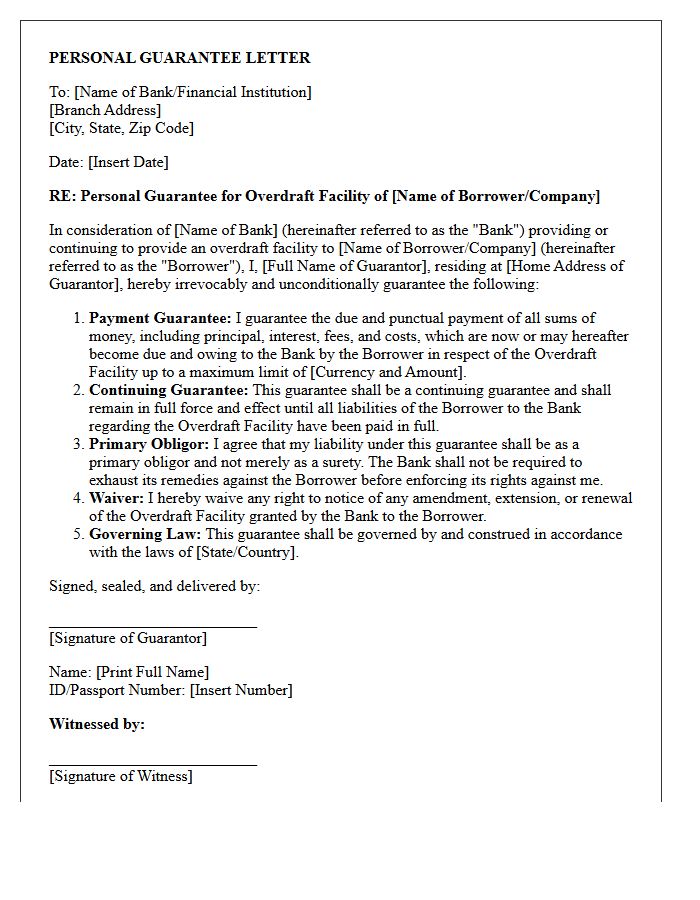
A Personal Guarantee Letter for an overdraft facility is a legally binding commitment where an individual, typically a business director, assumes personal liability for a company's debt. If the business fails to repay the overdraft balance, the guarantor becomes personally responsible for the full amount. This high-risk agreement allows lenders to seize personal assets, such as property or savings, to satisfy the debt. Before signing, it is crucial to understand that your personal credit score and financial future are directly linked to the company's ability to manage its short-term credit line.
Parent Company Guarantee Letter for Overdraft Facility
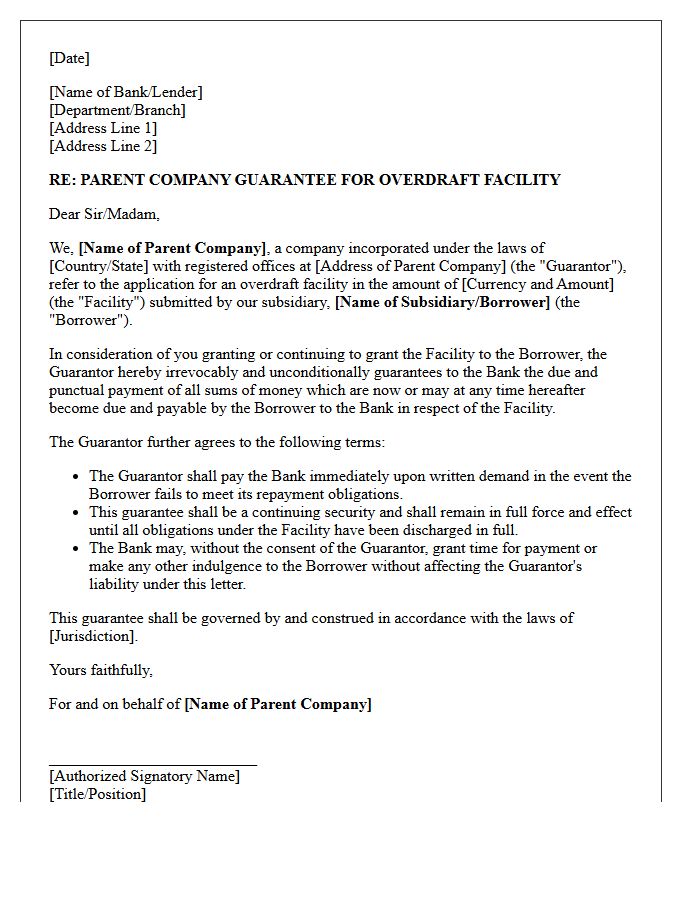
A Parent Company Guarantee is a legally binding commitment where a holding entity secures an overdraft facility for its subsidiary. This document mitigates lender risk by ensuring the parent company assumes full liability if the subsidiary defaults on repayments. It is essential for expanding liquidity and obtaining favorable interest rates. Before signing, businesses must evaluate the impact on the parent's balance sheet and overall credit capacity. This guarantee provides banks with the necessary security to authorize flexible short-term funding for corporate operations and working capital needs.
Third-Party Guarantee Letter for Overdraft Facility
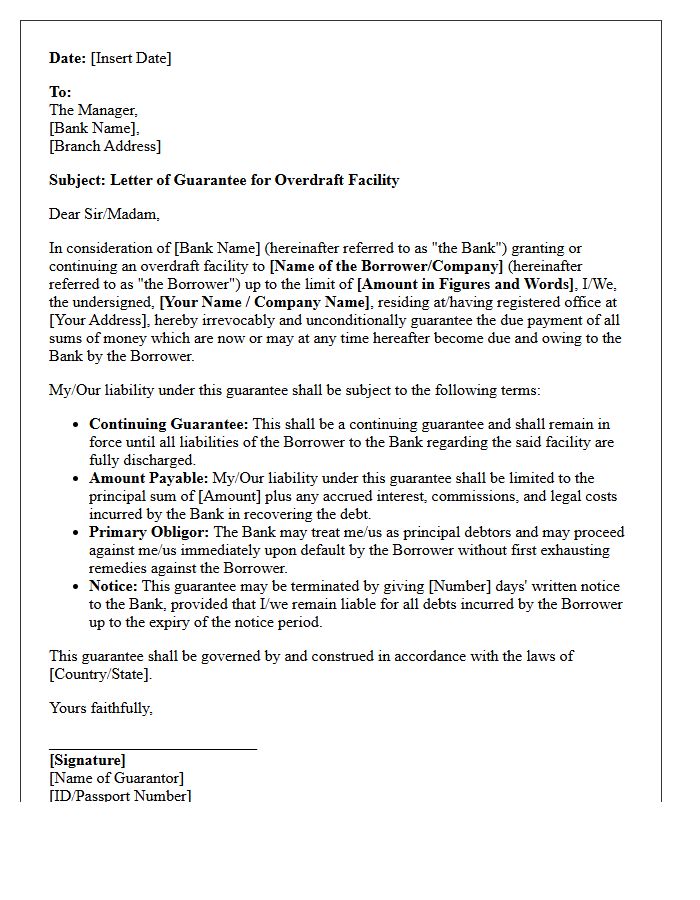
A Third-Party Guarantee Letter for an overdraft facility is a legal commitment where an external individual or entity, the guarantor, promises to repay a borrower's debt if they default. This document provides the bank with collateral security, reducing lending risk and helping businesses access flexible credit lines. It is essential to understand that the guarantor assumes full financial liability for the outstanding balance, including accrued interest and fees. Before signing, parties should review the maximum limit and specific terms to ensure clear legal obligations and protect their financial standing.
Continuing Guarantee Letter for Overdraft Facility
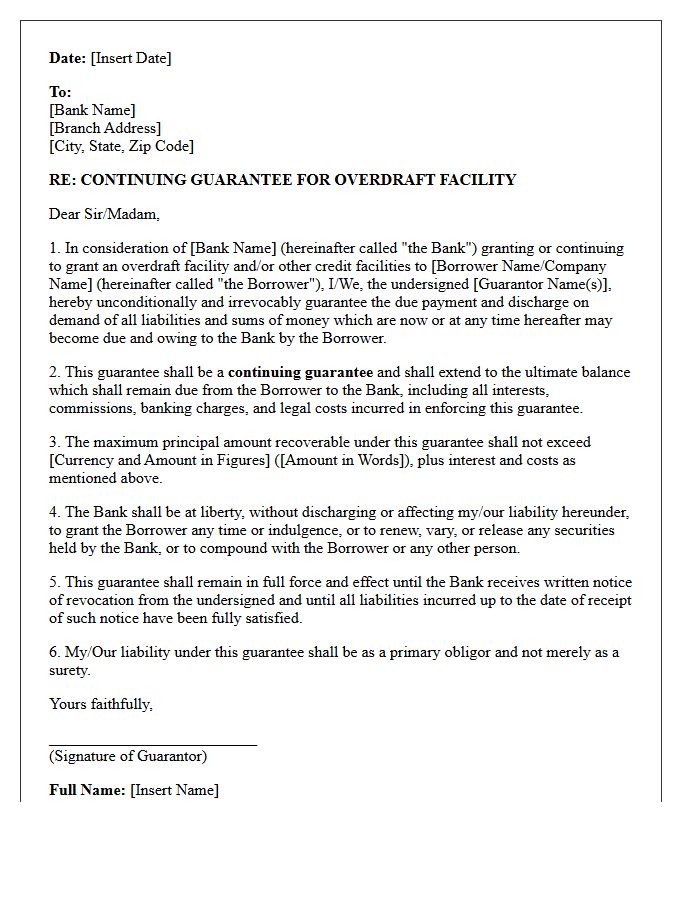
A Continuing Guarantee Letter for an overdraft facility is a legally binding document where a guarantor ensures repayment of a borrower's fluctuating debt. Unlike a specific guarantee, it remains valid for multiple transactions and future advances until formally revoked. This provides banks with ongoing security for revolving credit lines. It is essential for guarantors to understand that their liability extends to the entire outstanding balance, including interest and fees, even if the debt amount changes over time. Always verify the maximum limit and cancellation clauses before signing.
Specific Guarantee Letter for Overdraft Facility
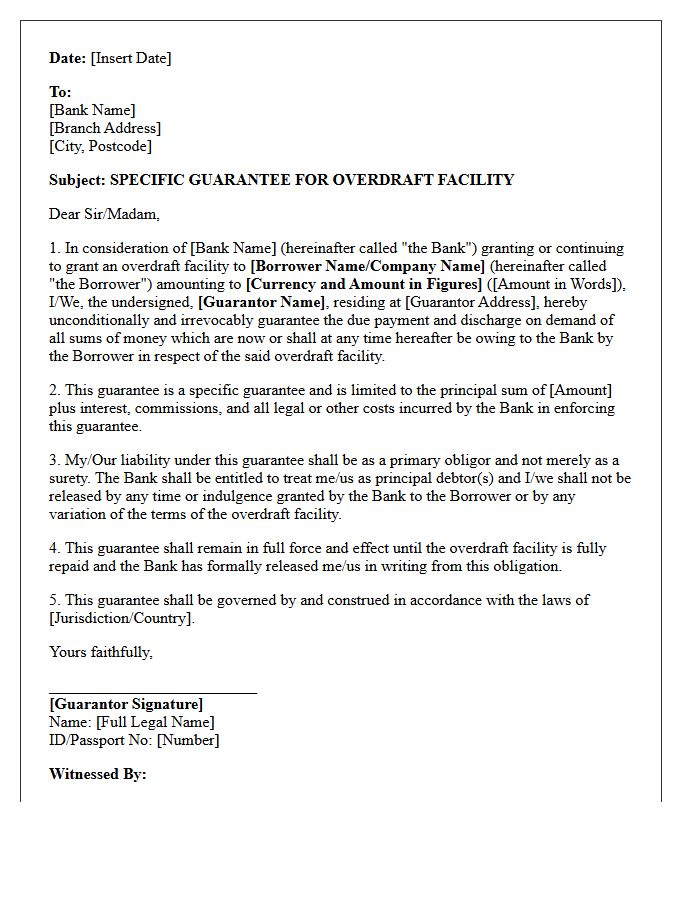
A Specific Guarantee Letter for an Overdraft Facility is a legally binding commitment where a guarantor pledges to cover a borrower's debt up to a predetermined limit. Unlike general guarantees, this document is restricted to a single credit line, ensuring the guarantor is not liable for other liabilities. It provides banks with essential security to approve flexible funding. Understanding the maximum liability amount and the expiry date is crucial, as these terms define the extent of financial risk assumed by the guarantor during the facility's term.
Unconditional Guarantee Letter for Overdraft Facility
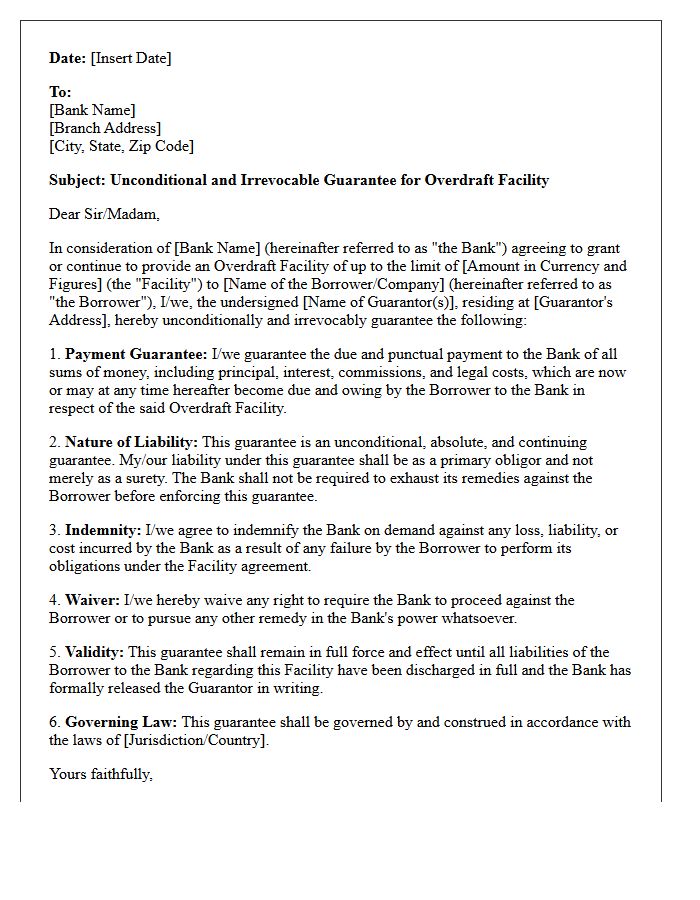
An Unconditional Guarantee Letter for an overdraft facility is a legally binding commitment where a guarantor ensures the bank full repayment of debt. This document serves as primary security, meaning the lender can demand payment directly from the guarantor without first pursuing the borrower. It remains enforceable regardless of underlying contract disputes. Before signing, it is vital to understand that your personal assets may be at risk to cover the credit limit, interest, and legal fees if the business defaults on its financial obligations.
Cross Guarantee Letter for Overdraft Facility
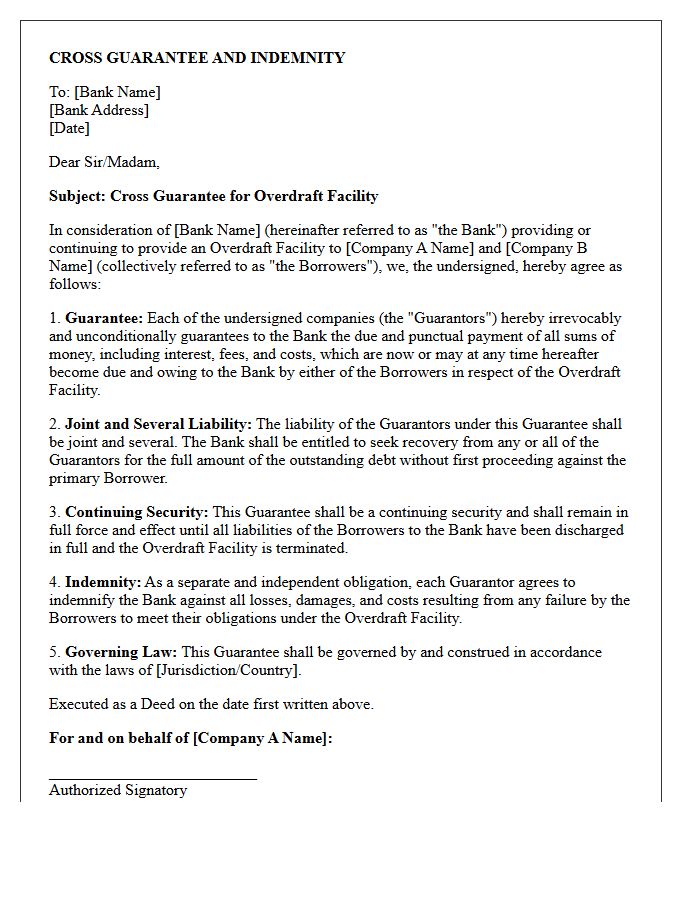
A Cross Guarantee Letter for an overdraft facility is a legally binding agreement where multiple entities, often within a corporate group, accept joint liability for a debt. This document ensures that if one party defaults, the bank can seek repayment from any of the other signatories. The overdraft facility provides essential liquidity, but the cross guarantee serves as critical collateral. It effectively mitigates lender risk by pooling corporate assets to secure the credit line, making it a vital instrument for managing group-wide financing and operational cash flow.
Joint and Several Guarantee Letter for Overdraft Facility
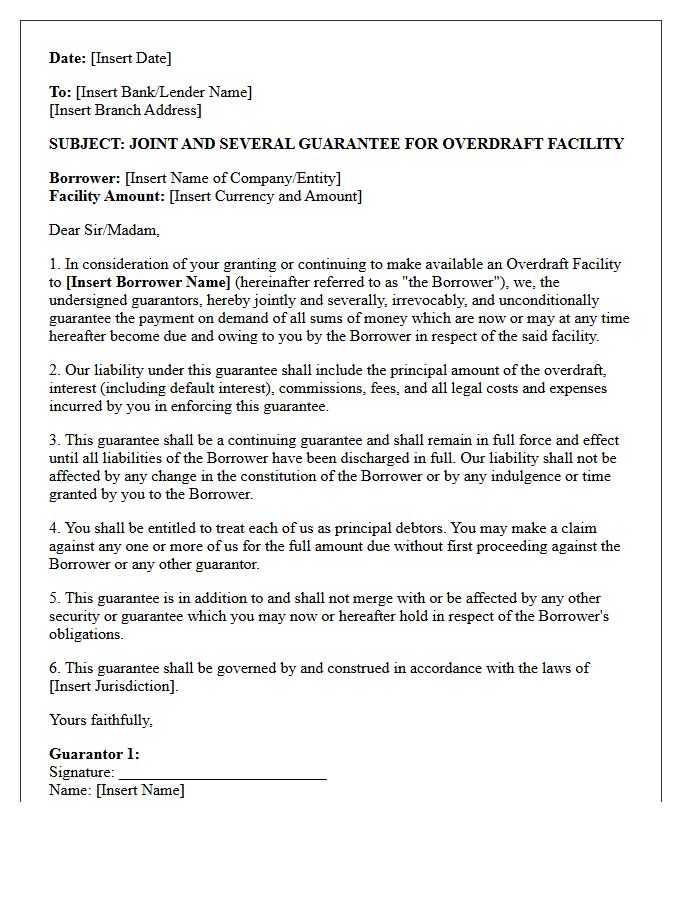
A Joint and Several Guarantee Letter for an overdraft facility is a legally binding commitment where multiple guarantors accept unlimited liability for a business debt. Under this agreement, the lender can pursue a single guarantor or all of them collectively for the full outstanding balance, regardless of individual ownership stakes. This structure minimizes lender risk by ensuring the total debt is recovered even if some parties default. Guarantors must understand that their personal assets are at risk, making independent legal advice essential before signing such high-stakes financial obligations.
Syndicated Overdraft Facility Guarantee Letter
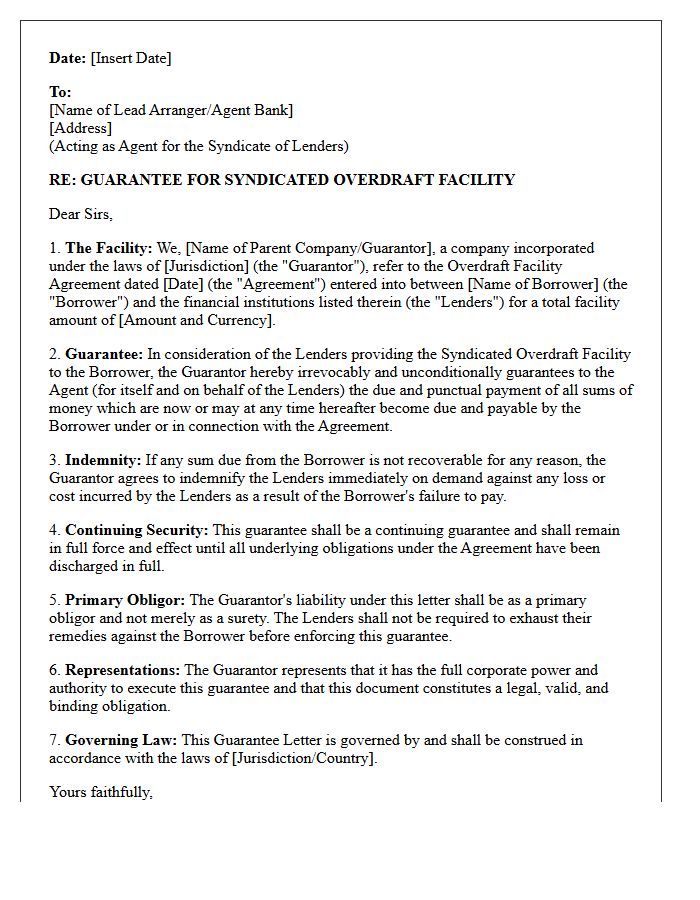
A Syndicated Overdraft Facility Guarantee Letter is a legally binding document where a guarantor ensures repayment of short-term credit extended by a group of lenders. This instrument mitigates default risk in large-scale financing arrangements involving multiple financial institutions. It provides creditors with recourse if the primary borrower fails to meet their obligations. This guarantee is essential for securing flexible liquidity across complex corporate structures, ensuring financial stability and maintaining creditworthiness during fluctuations in working capital requirements. Understanding the specific indemnity clauses and liability limits is crucial for all participating parties.
Government Guarantee Letter for Overdraft Facility
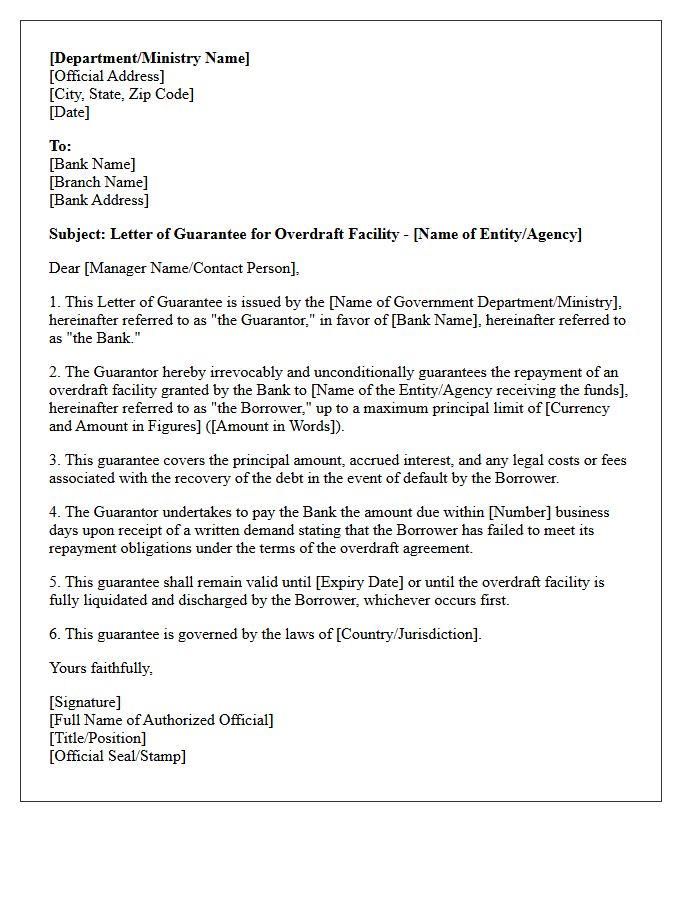
A Government Guarantee Letter for an overdraft facility acts as a sovereign indemnity, where the state assumes the credit risk for a specific borrower. This document provides financial security to commercial lenders, enabling entities-often state-owned enterprises-to access immediate liquidity at lower interest rates. It serves as a binding commitment that the government will cover outstanding debts if the primary debtor defaults. This backing enhances the borrower's creditworthiness, ensuring operational stability during cash flow shortages while strictly adhering to national fiscal regulations and debt management limits.
Collateral Backed Overdraft Facility Guarantee Letter
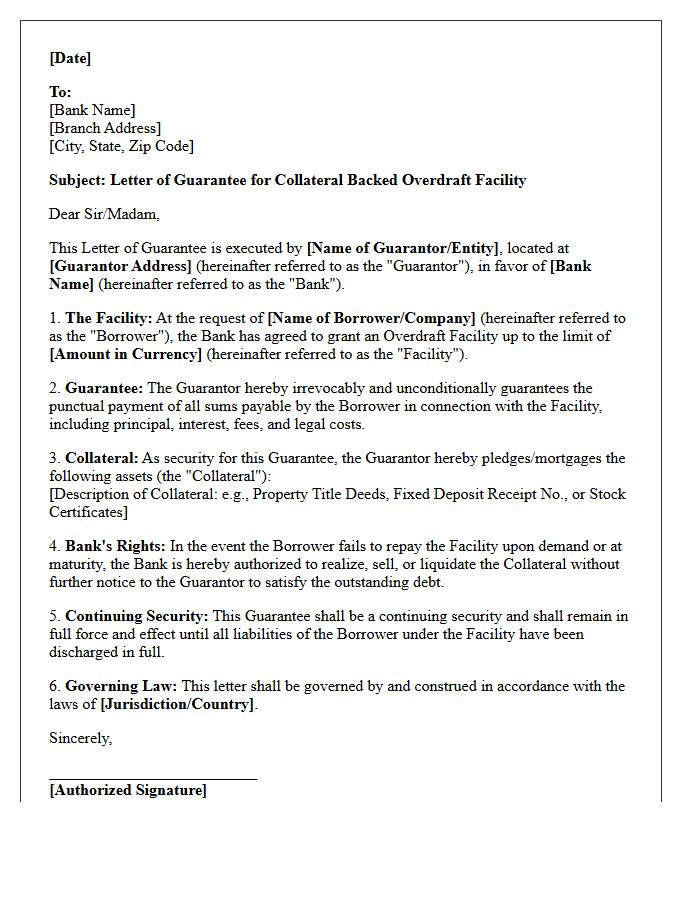
A Collateral Backed Overdraft Facility Guarantee Letter is a legal commitment where a guarantor pledges specific assets to secure a borrower's credit line. This document ensures the bank can recover funds if the account holder exceeds their limit and fails to repay. The collateral acts as a safety net, often allowing for lower interest rates and higher borrowing thresholds. It is essential to understand that any default grants the lender legal authority to liquidate assets mentioned in the letter to settle the outstanding debt obligation effectively.
What is an Overdraft Facility Guarantee Letter?
An Overdraft Facility Guarantee Letter is a formal legal document issued by a third party (guarantor) to a bank, promising to repay the borrowed funds if the primary account holder fails to settle their overdraft balance.
Who can act as a guarantor for an overdraft facility?
A guarantor can be an individual, a parent company, or a director of a business, provided they meet the bank's creditworthiness criteria and possess sufficient assets to cover the maximum overdraft limit plus interest.
What are the key components of an Overdraft Guarantee Letter?
The letter must include the names of all parties involved, the specific overdraft account number, the maximum guaranteed amount, the duration of the guarantee, and a clear statement of unconditional liability by the guarantor.
Is an Overdraft Facility Guarantee Letter legally binding?
Yes, once signed and witnessed, the letter serves as a legally enforceable contract that allows the financial institution to seek legal recourse against the guarantor's assets in the event of a default.
Can a guarantee letter for an overdraft be cancelled?
A guarantee can typically be cancelled by providing written notice to the bank; however, the guarantor remains liable for any debt accrued on the overdraft facility up until the date the cancellation is formally processed.


Comments