
A Notice of Lease Termination for Cause is a formal legal document issued when a tenant violates specific rental agreement terms. It outlines the breach, such as non-payment or property damage, and provides notice to vacate. Understanding the legal requirements ensures a valid eviction process. To help you draft this document correctly, below are some ready to use templates.
Image cover: Formal Notice of Lease Termination for Cause: Templates and Legal Samples
Letter Samples List
- Notice of Lease Termination Letter for Nonpayment of Rent
- Notice of Lease Termination Letter for Unauthorized Pets
- Notice of Lease Termination Letter for Extensive Property Damage
- Notice of Lease Termination Letter for Illegal Activity on Premises
- Notice of Lease Termination Letter for Repeated Noise Violations
- Notice of Lease Termination Letter for Unauthorized Occupants
- Notice of Lease Termination Letter for Health and Safety Violations
- Notice of Lease Termination Letter for Smoking Policy Violation
- Notice of Lease Termination Letter for Illegal Subletting
- Notice of Lease Termination Letter for Repeated Refusal of Landlord Entry
- Notice of Lease Termination Letter for Failure to Maintain Utilities
- Notice of Lease Termination Letter for Homeowners Association Rule Violations
Notice of Lease Termination Letter for Nonpayment of Rent
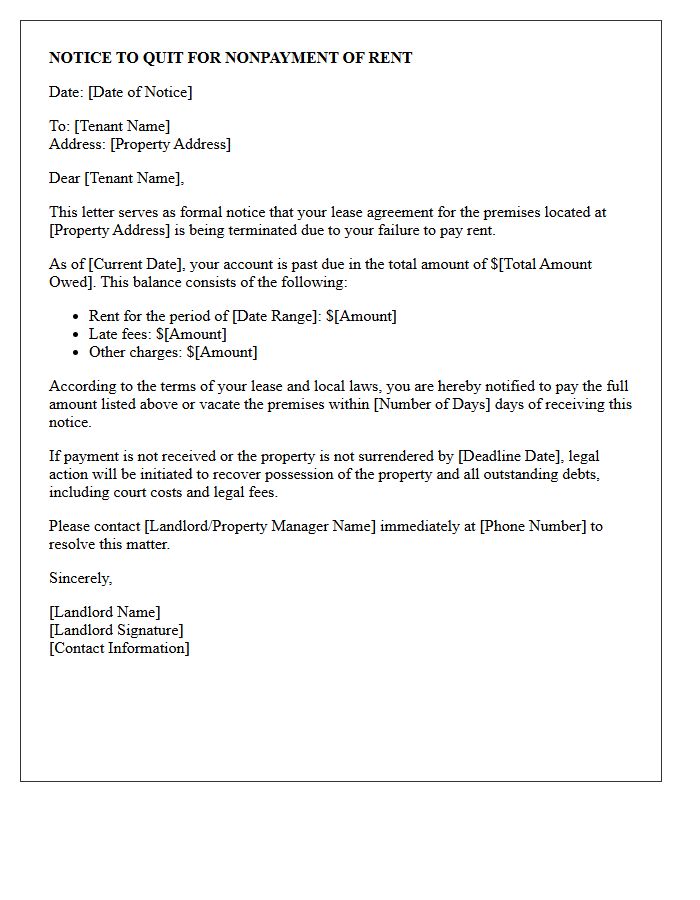
A Notice of Lease Termination Letter for Nonpayment of Rent is a formal legal document used by landlords to notify tenants of an imminent eviction due to overdue balances. This notice to quit serves as a final demand for payment, specifying the exact amount owed and the deadline to comply. If the tenant fails to pay within the state-mandated timeframe, the landlord gains the right to file an eviction lawsuit in court. Clear documentation of this notice is essential for maintaining legal compliance and protecting the property owner's rights during the termination process.
Notice of Lease Termination Letter for Unauthorized Pets
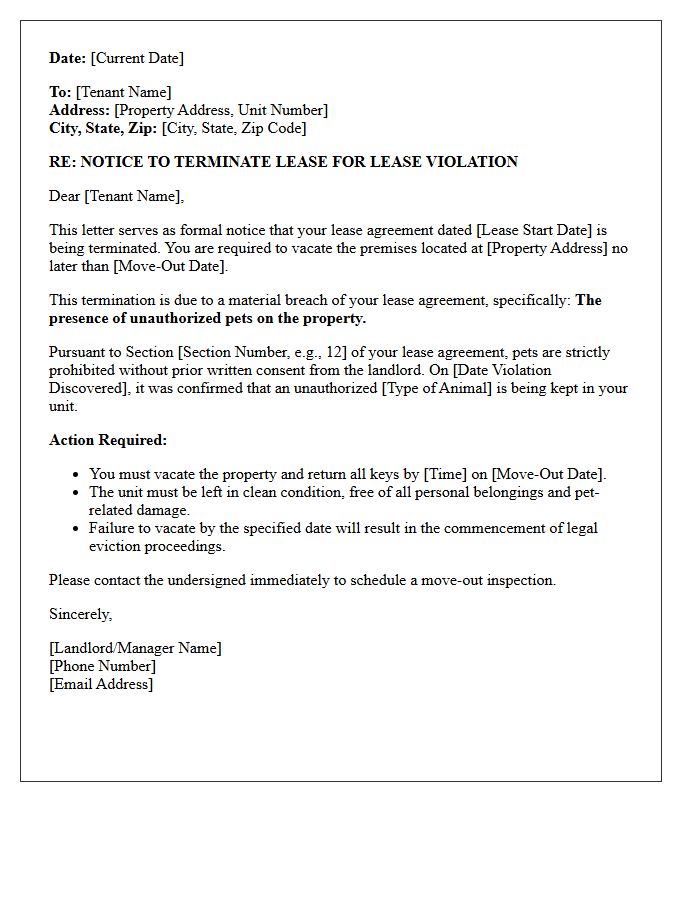
A Notice of Lease Termination for unauthorized pets is a formal legal document issued when a tenant violates a "no-pets" policy or fails to register an animal. This notice to quit informs the occupant that their rental agreement is being cancelled due to a lease breach. To maintain compliance, the letter must clearly specify the violation date and the required move-out deadline. Landlords use this eviction notice to protect property value and enforce community rules, ensuring all residents adhere to the agreed-upon tenancy terms regarding domestic animals.
Notice of Lease Termination Letter for Extensive Property Damage
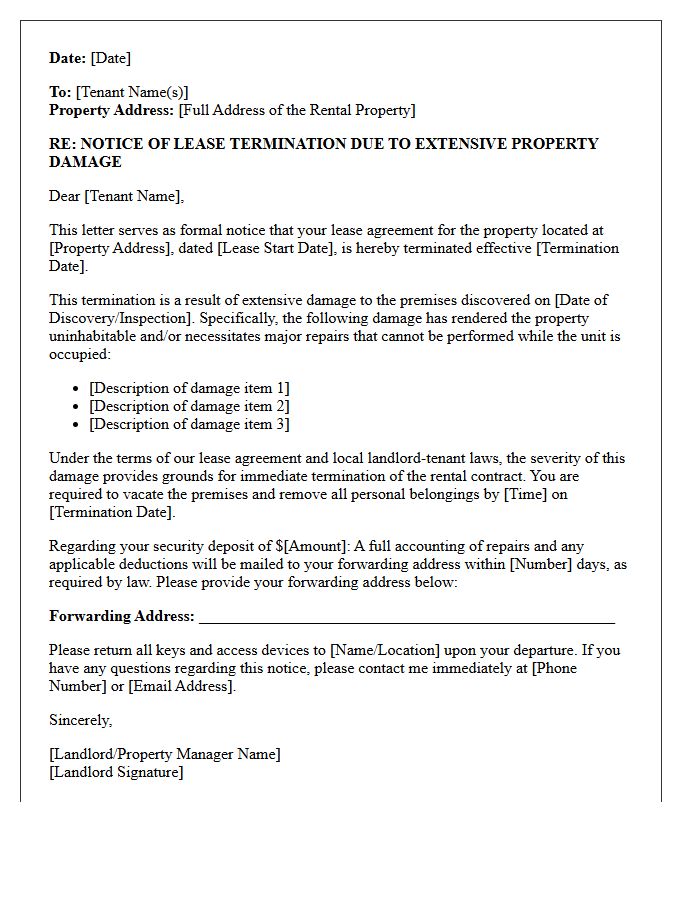
A Notice of Lease Termination Letter for Extensive Property Damage is a critical legal document used when a rental unit becomes uninhabitable due to severe destruction. This formal notice allows either party to end the agreement early if the premises cannot be safely occupied. It must clearly cite the casualty clause within the lease and state the specific termination date. Providing documented evidence of the damage ensures legal compliance and helps facilitate the security deposit return process according to local housing regulations and property laws.
Notice of Lease Termination Letter for Illegal Activity on Premises
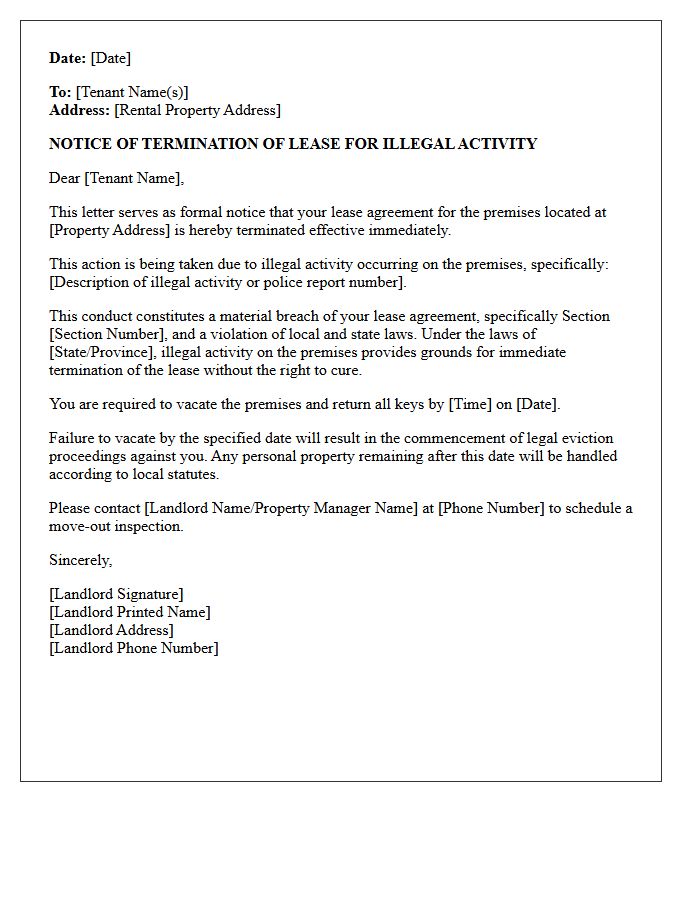
A Notice of Lease Termination for illegal activity is a legal document issued by a landlord to evict a tenant involved in criminal behavior. This notice is often an unconditional quit notice, meaning the tenant must vacate immediately without the option to remedy the violation. It must clearly state the specific illegal acts, such as drug dealing or violence, that breached the lease agreement. Providing documented evidence or police reports is essential to justify the expedited termination and protect the property owner's legal rights during subsequent eviction proceedings.
Notice of Lease Termination Letter for Repeated Noise Violations
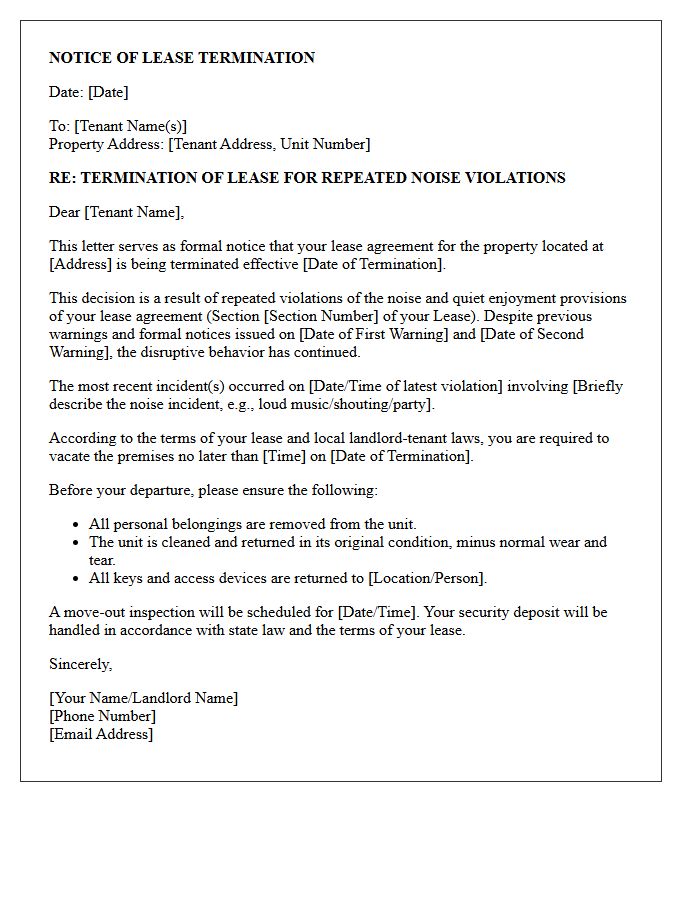
A Notice of Lease Termination for repeated noise violations is a formal legal document issued when a tenant consistently breaches quiet enjoyment clauses. This eviction notice serves as final notification that the rental agreement is ending due to documented, persistent disturbances. It is essential to include specific dates and times of past infractions to ensure legal compliance. Landlords must provide a clear deadline to vacate the property as per local housing laws. This notice protects the rights of other residents while establishing a documented paper trail for potential court proceedings.
Notice of Lease Termination Letter for Unauthorized Occupants
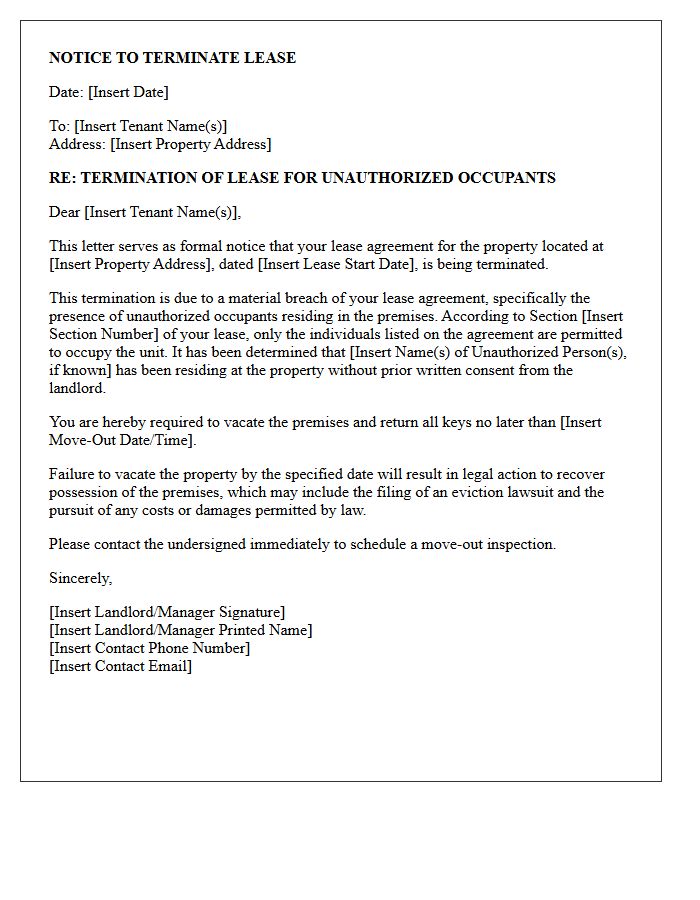
A Notice of Lease Termination for unauthorized occupants is a formal legal document issued by a landlord when a tenant violates their rental agreement by hosting guests who are not listed on the lease. To protect your rights, the notice must clearly state the specific lease violation, identifying the individual residing there without permission. Providing a mandatory cure period allows the tenant to rectify the breach before eviction proceedings begin. Ensuring accurate documentation and following local housing laws is essential for maintaining a valid termination process and protecting property interests.
Notice of Lease Termination Letter for Health and Safety Violations
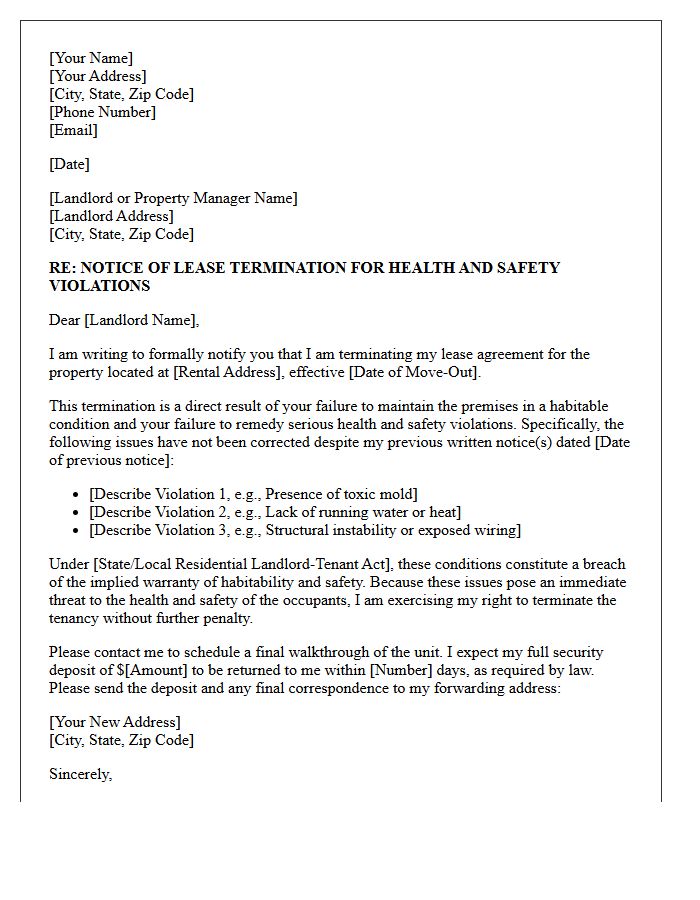
A Notice of Lease Termination for health and safety violations is a formal legal document used by landlords to end a rental agreement when a tenant's actions create hazardous living conditions. This notice must clearly specify the breach of contract, such as extreme hoarding, fire hazards, or sanitation issues that endanger occupants. Providing a specific cure period is often required by law before eviction. Proper documentation of the violations is essential to ensure the termination process remains legally enforceable and protects the property's integrity while ensuring resident safety.
Notice of Lease Termination Letter for Smoking Policy Violation
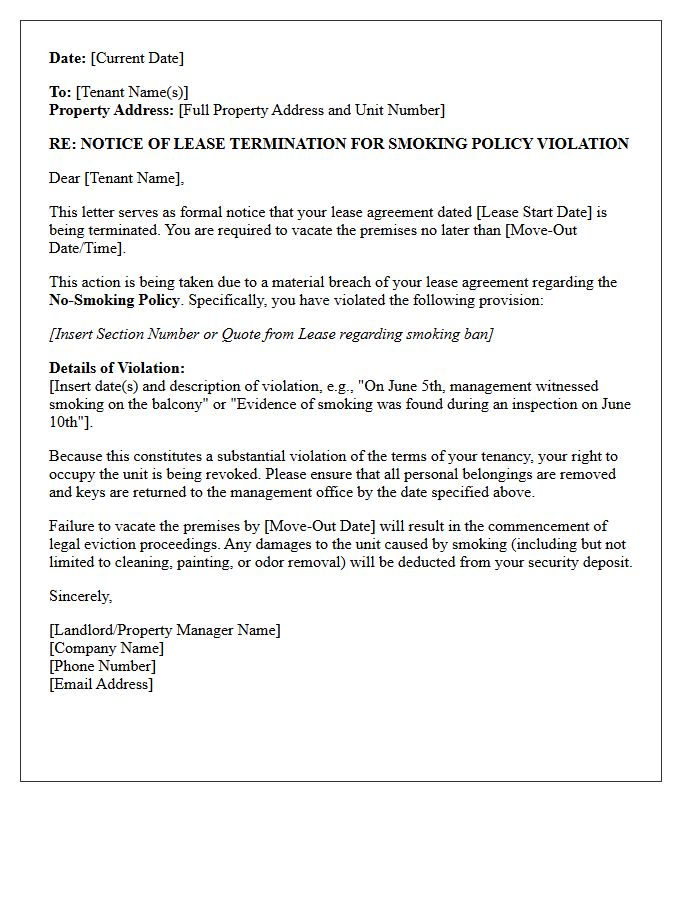
A Notice of Lease Termination Letter for a smoking policy violation is a formal legal document used by landlords to end a rental agreement when a tenant breaches non-smoking clauses. To ensure validity, the notice must clearly cite specific lease terms and provide evidence of the infraction. Depending on local laws, landlords may issue a "notice to quit" or a "cure or quit" order, giving the tenant a final chance to comply. Accurate documentation is essential for legal enforcement and successful eviction proceedings if the tenant refuses to vacate the premises.
Notice of Lease Termination Letter for Illegal Subletting
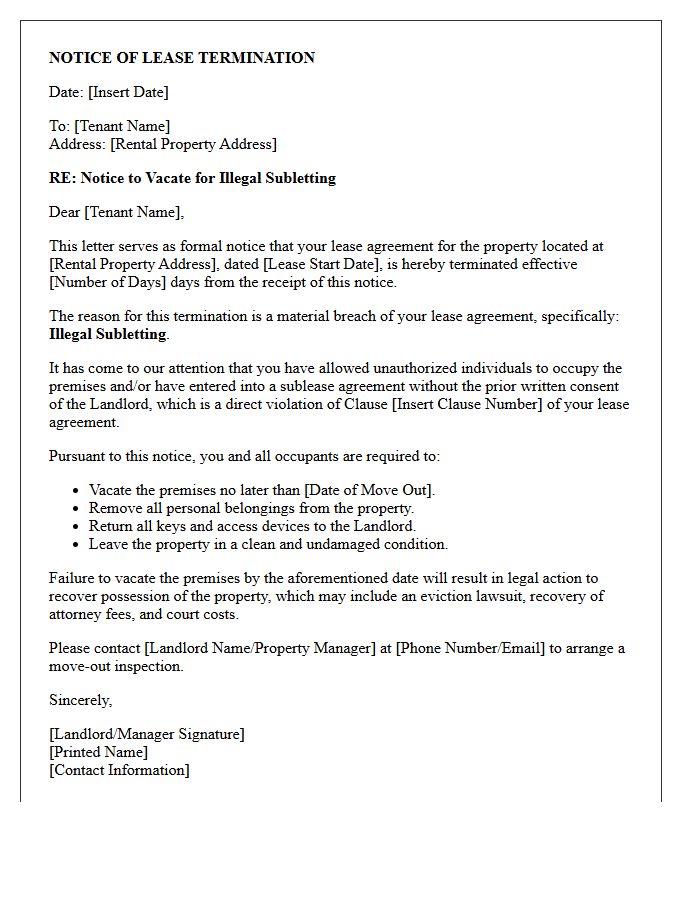
A Notice of Lease Termination Letter for Illegal Subletting serves as a formal legal document notifying a tenant they have breached their rental agreement by hosting unauthorized occupants. This notice specifies the violation, referencing the original lease terms that prohibit subleasing without prior written consent. Landlords use this letter to initiate the eviction process or demand the immediate removal of subtenants. It is crucial to include a clear termination date and instructions for vacating the premises to protect the property owner's rights and maintain legal compliance during the move-out period.
Notice of Lease Termination Letter for Repeated Refusal of Landlord Entry
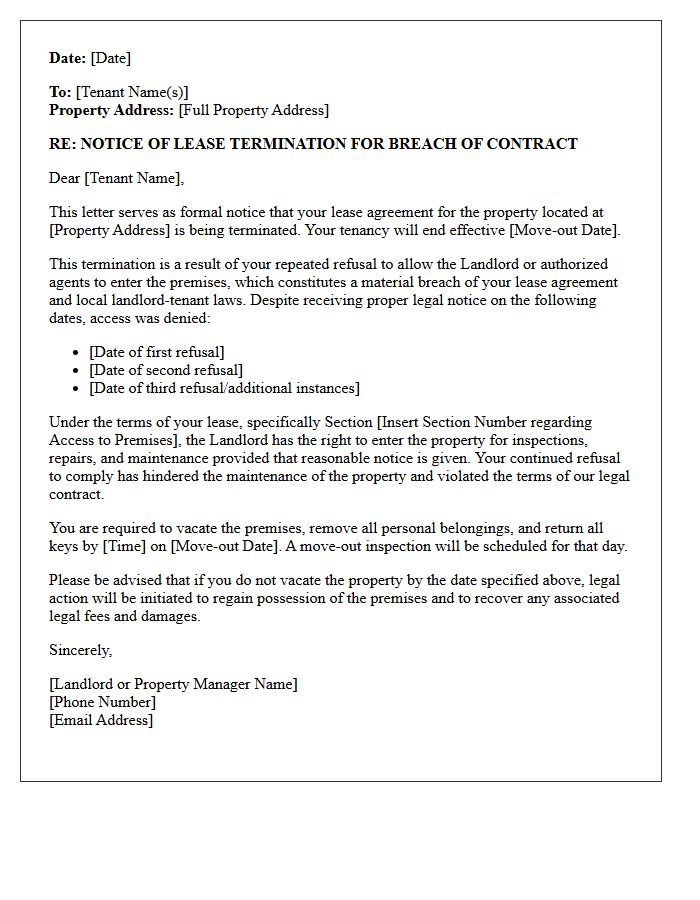
A Notice of Lease Termination Letter for repeated refusal of landlord entry is a formal legal document used when a tenant consistently denies a property owner's lawful right to access the premises. Most lease agreements and local housing laws require tenants to allow entry for repairs or inspections, provided proper notice is given. If the tenant persists in blocking access, it constitutes a material breach of contract. This notice serves as a final step to terminate the tenancy and protect the landlord's property rights through legal eviction proceedings.
Notice of Lease Termination Letter for Failure to Maintain Utilities
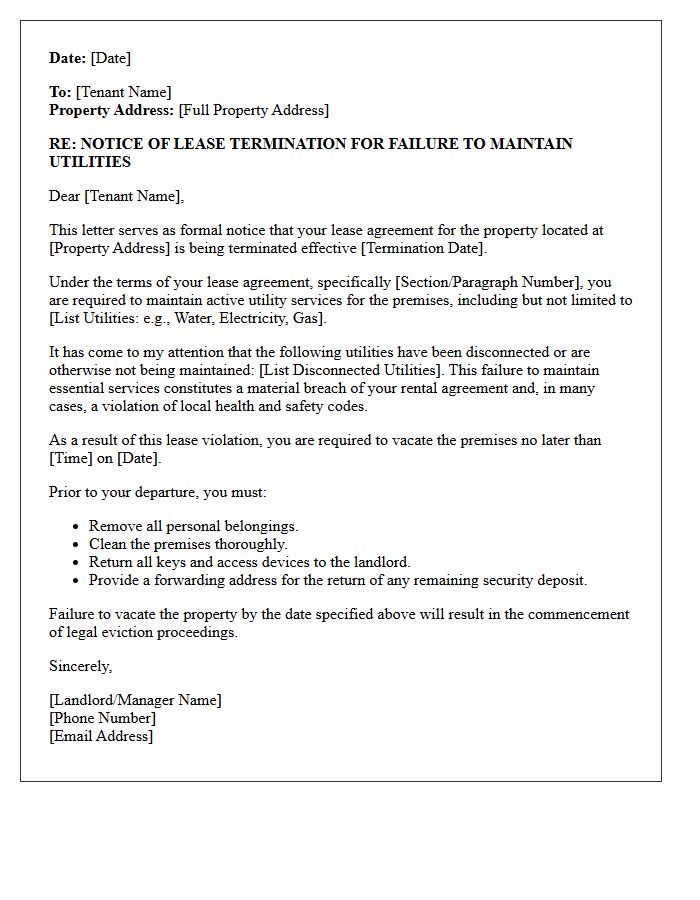
A Notice of Lease Termination for Failure to Maintain Utilities is a formal legal document issued when a tenant breaches lease obligations by neglecting essential services. Maintaining water, electricity, and gas is critical for property safety and local habitability standards. This notice informs the tenant of the specific violation and provides a mandatory compliance deadline. Failure to restore services promptly can lead to eviction proceedings, as utility shut-offs pose significant risks to the structural integrity and sanitation of the premises. Clear communication regarding these terms protects the landlord's investment.
Notice of Lease Termination Letter for Homeowners Association Rule Violations
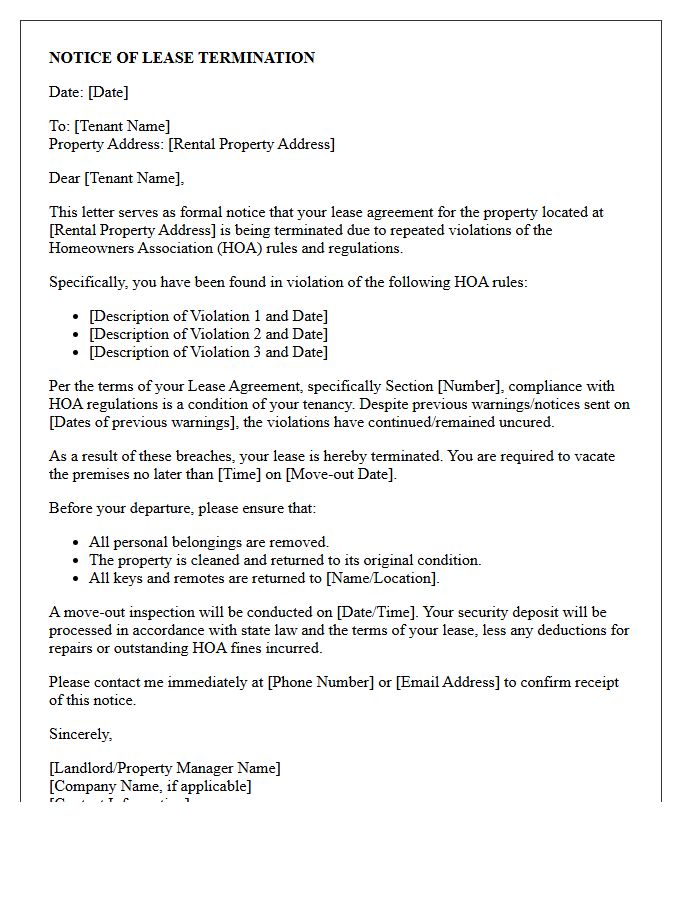
A Notice of Lease Termination for HOA rule violations is a formal legal document issued when a tenant fails to comply with association regulations. Landowners must ensure the specific governing document breach is clearly cited to justify the eviction process. It is crucial to verify if the CC&Rs allow for immediate termination or require a prior opportunity to cure the violation. Providing written evidence of the infraction protects the landlord's interests during potential legal disputes and ensures compliance with local housing laws and association requirements.
What is a Notice of Lease Termination for Cause?
A Notice of Lease Termination for Cause is a legal document issued by a landlord to a tenant to end a rental agreement early due to a specific breach of lease terms, such as non-payment of rent, property damage, or illegal activity.
What are the common grounds for terminating a lease for cause?
Common grounds include failure to pay rent, unauthorized occupants or pets, repeated noise violations, significant property damage, and engaging in criminal activity on the premises.
What is the difference between a "Cure" and "Quit" notice?
A "Cure" notice allows the tenant a specific timeframe to fix the violation (e.g., paying overdue rent), while a "Quit" notice (unconditional) requires the tenant to vacate the property immediately without the option to remedy the breach.
How much notice must a landlord provide for a termination for cause?
Notice periods vary by state and local laws, typically ranging from 3 to 14 days. You must consult your local landlord-tenant statutes to ensure the notice period complies with legal requirements.
What information must be included in a termination notice for cause?
The notice must include the date of service, the tenant's name and address, a detailed description of the specific lease violation, the deadline to remedy the issue or vacate, and the landlord's signature.

Comments