
An Unconditional Notice to Quit is a legal document used by landlords to terminate a lease immediately without providing the tenant an opportunity to correct a lease violation. This notice is typically reserved for severe breaches, such as illegal activity or repeated non-compliance. Understanding the legal requirements is essential for a valid eviction process. Below are some ready to use templates.

Image cover: Essential Templates and Samples for Unconditional Notice to Quit Forms
Letter Samples List
- Unconditional Notice to Quit Letter for Severe Property Damage
- Unconditional Notice to Quit Letter for Illegal Drug Activity on Premises
- Unconditional Notice to Quit Letter for Repeated Lease Violations
- Unconditional Notice to Quit Letter for Unauthorized Subletting of Unit
- Unconditional Notice to Quit Letter for Endangering Other Tenants
- Unconditional Notice to Quit Letter for Conducting Illegal Business Operations
- Unconditional Notice to Quit Letter for Chronic Habitual Late Rent Payments
- Unconditional Notice to Quit Letter for Severe Health and Safety Hazards
- Unconditional Notice to Quit Letter for Threatening Property Management Staff
- Unconditional Notice to Quit Letter for Unlawful Possession of Firearms
- Unconditional Notice to Quit Letter for Irreparable Nuisance and Disturbance
- Unconditional Notice to Quit Letter for Refusal to Allow Landlord Entry
Unconditional Notice to Quit Letter for Severe Property Damage
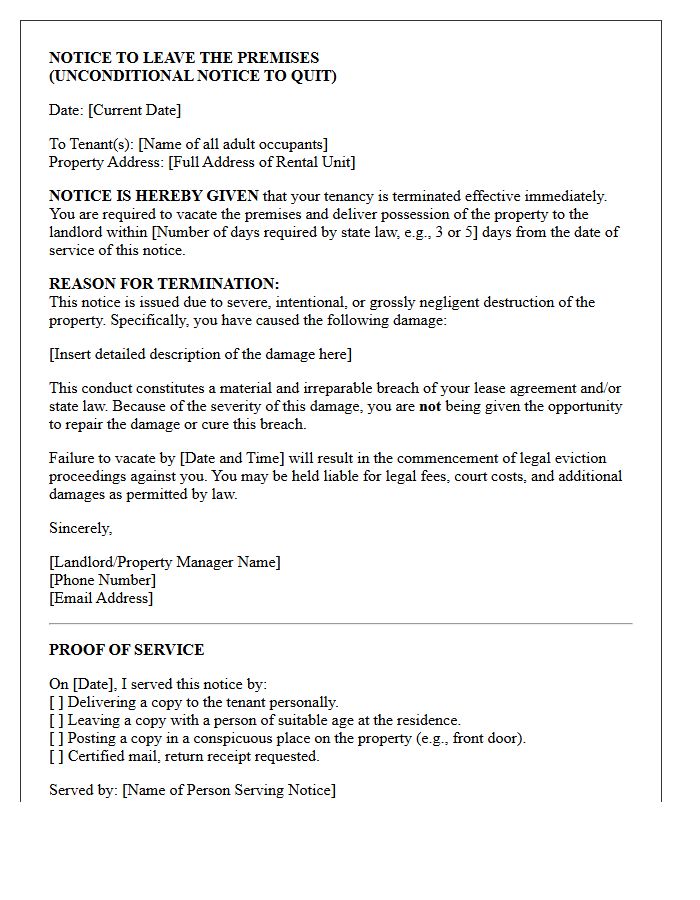
An unconditional notice to quit for severe property damage is a legal document used by landlords to terminate a tenancy immediately without the option for repair. This notice is issued when a tenant causes intentional or gross destruction to the premises. Unlike standard notices, it requires the occupant to vacate the property within a specific timeframe, often as short as three days. Because this action bypasses the "cure" process, landlords must provide clear evidence of the waste or damage to ensure legal compliance during subsequent eviction proceedings.
Unconditional Notice to Quit Letter for Illegal Drug Activity on Premises
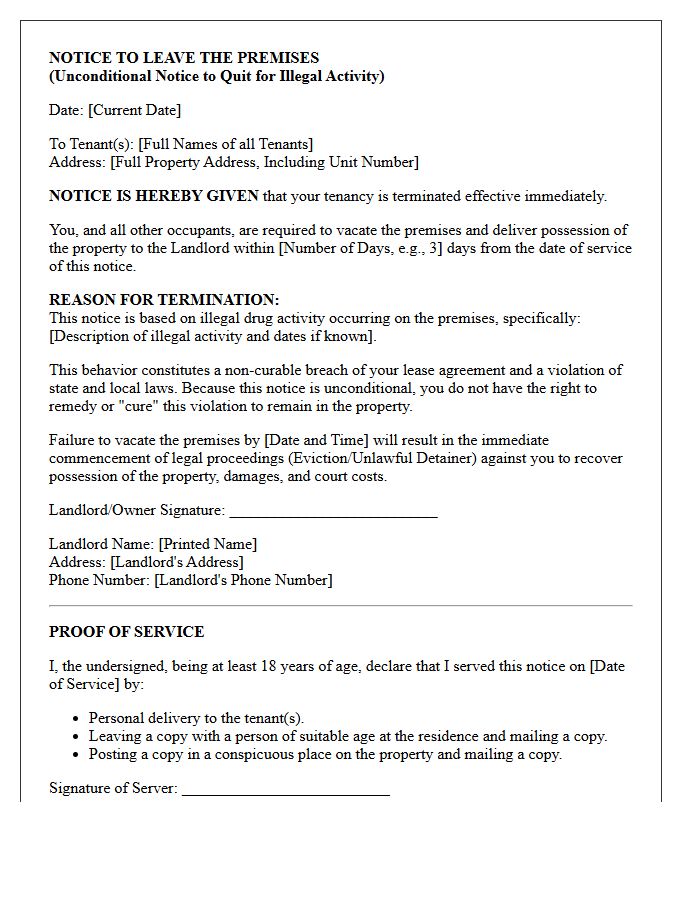
An Unconditional Notice to Quit is a severe legal document issued when a tenant engages in illegal drug activity on the premises. Unlike standard notices, this does not provide an option to cure the violation. It mandates that the occupant vacate the property immediately or within a strictly defined period, typically three to five days. Landlords use this to protect the community and mitigate liability. Ensure the notice explicitly cites state-specific statutes and provides clear evidence of the criminal conduct to remain legally enforceable during the eviction process.
Unconditional Notice to Quit Letter for Repeated Lease Violations
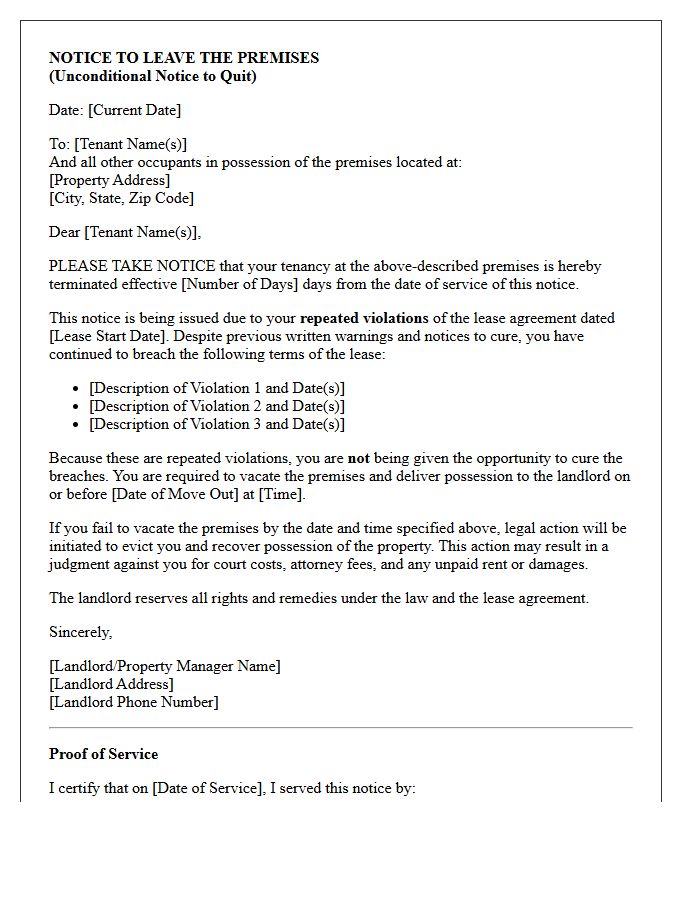
An Unconditional Notice to Quit is a severe legal document used when a tenant commits repeated lease violations. Unlike a standard notice, it does not provide an opportunity to cure the breach or fix the issue. This legal eviction notice informs the tenant they must vacate the premises within a specific timeframe, typically due to chronic late payments or recurring lease non-compliance. Landlords must ensure the document strictly adheres to state-specific regulations to be enforceable in court. It serves as the final step before formal eviction proceedings begin.
Unconditional Notice to Quit Letter for Unauthorized Subletting of Unit
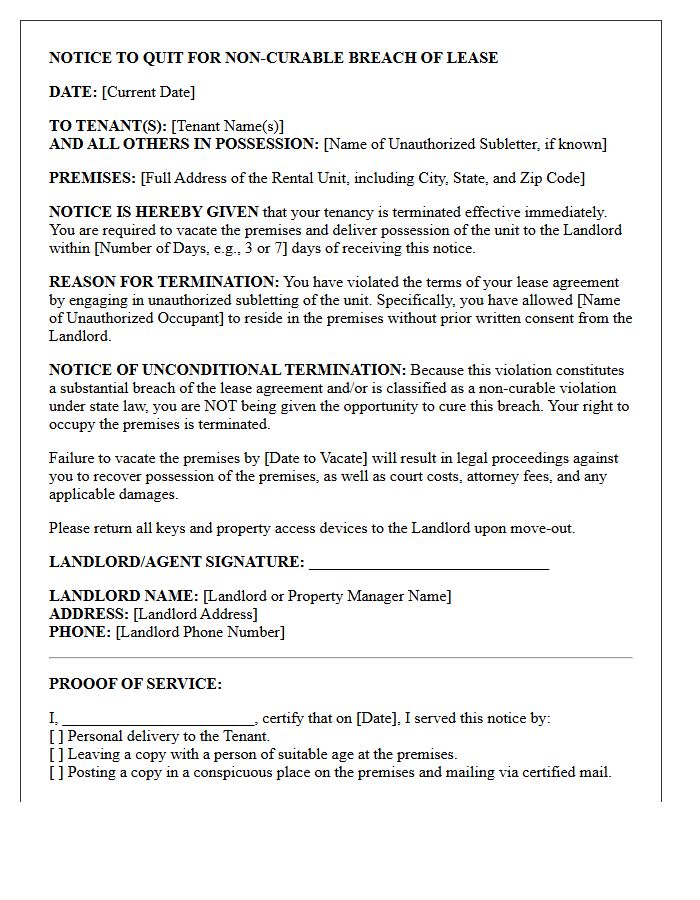
An unconditional notice to quit is a formal legal document used when a tenant violates a lease by unauthorized subletting. Unlike standard notices, this demand requires the occupant to vacate the premises immediately without the right to cure or fix the violation. It serves as a critical first step in the eviction process, documenting the breach of contract. Landlords must ensure the notice complies with local regulations, clearly stating the termination date and the specific lease violation to remain legally enforceable in court.
Unconditional Notice to Quit Letter for Endangering Other Tenants
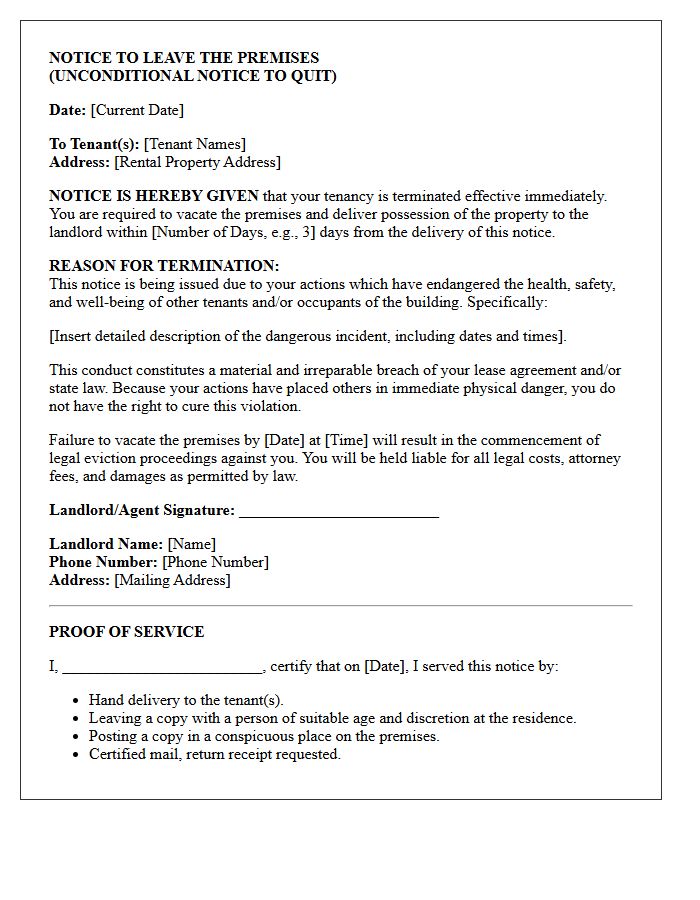
An Unconditional Notice to Quit is a critical legal document used when a resident's behavior poses an immediate threat to the safety of others. Unlike standard notices, this demand requires the tenant to vacate the premises permanently without the right to cure the violation. It is typically issued for endangering other tenants through violence, illegal weapon discharge, or serious safety hazards. Landlords must ensure the notice strictly complies with local statutes to successfully pursue an expedited eviction and maintain a secure living environment for all residents.
Unconditional Notice to Quit Letter for Conducting Illegal Business Operations
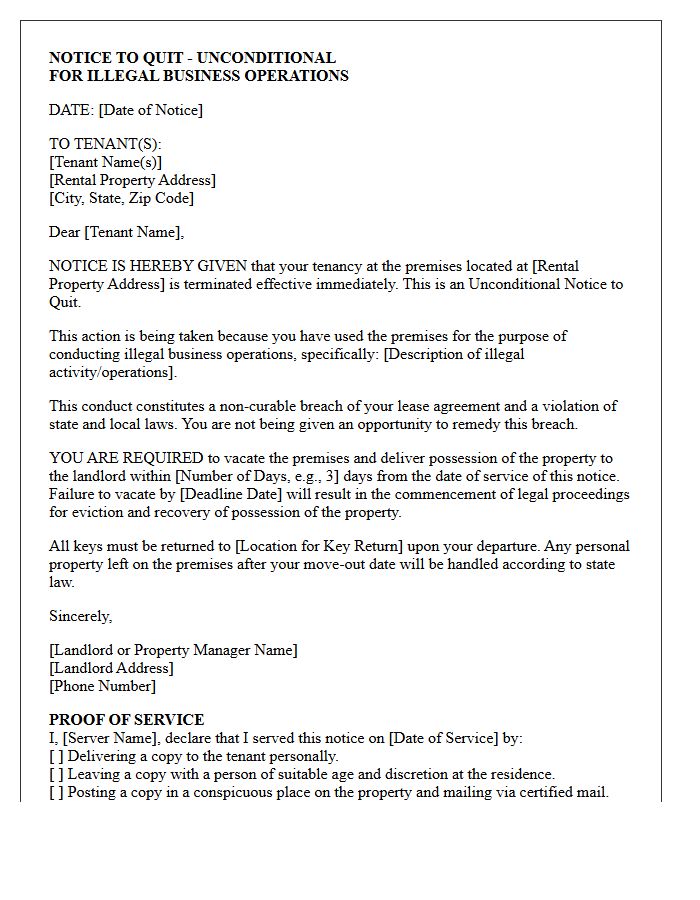
An Unconditional Notice to Quit is a severe legal document issued when a tenant conducts illegal business operations on a leased property. Unlike standard notices, this demand requires the occupant to vacate the premises immediately without the opportunity to remedy the violation. Common triggers include drug trafficking, unlicensed commercial activity, or organized crime. Landlords use this to mitigate liability and protect the community. Failure to comply typically leads to an expedited eviction lawsuit. It serves as a final termination of the rental agreement due to serious criminal breaches of the lease terms.
Unconditional Notice to Quit Letter for Chronic Habitual Late Rent Payments
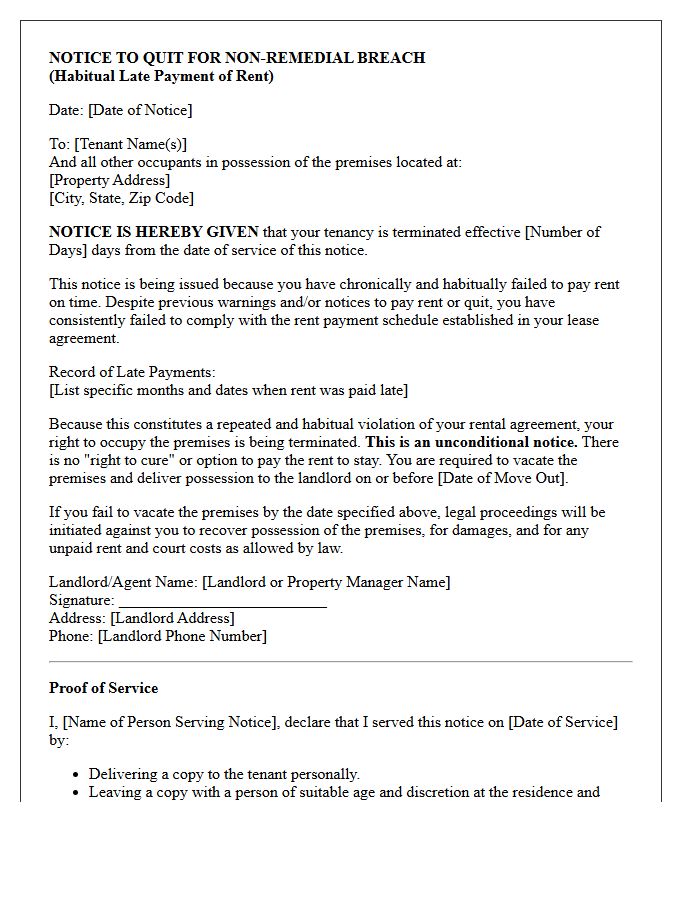
An Unconditional Notice to Quit is a formal legal document used when a tenant demonstrates chronic habitual late rent payments. Unlike a standard notice, this letter does not provide an opportunity to cure the lease violation. It informs the tenant that their rental agreement is being terminated immediately due to repeated delinquency. Landlords must strictly follow local state statutes regarding notice periods and delivery methods. This final step is essential for initiating eviction proceedings when previous warnings and late fees have failed to ensure consistent payment compliance.
Unconditional Notice to Quit Letter for Severe Health and Safety Hazards
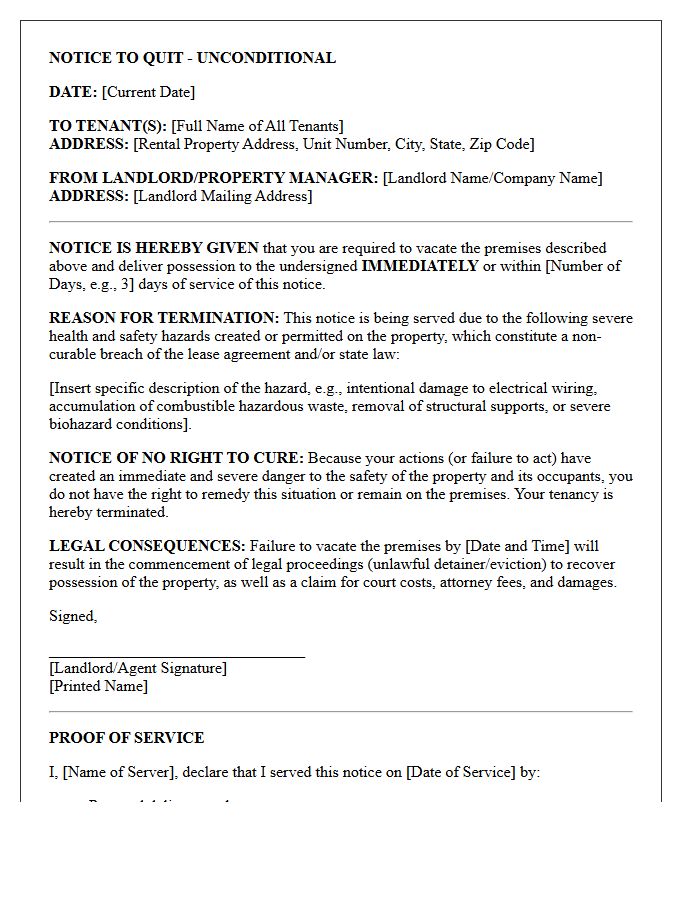
An Unconditional Notice to Quit is a legal document used when a tenant creates severe health and safety hazards that jeopardize the property or other residents. Unlike standard notices, this demand requires the tenant to vacate immediately without the option to fix the issue. It is typically reserved for extreme situations like structural damage, toxic waste, or fire risks. Landlords must ensure the violation is documented thoroughly to comply with eviction laws, as this "notice to vacate" bypasses the traditional "cure or quit" process due to the urgency of the danger.
Unconditional Notice to Quit Letter for Threatening Property Management Staff
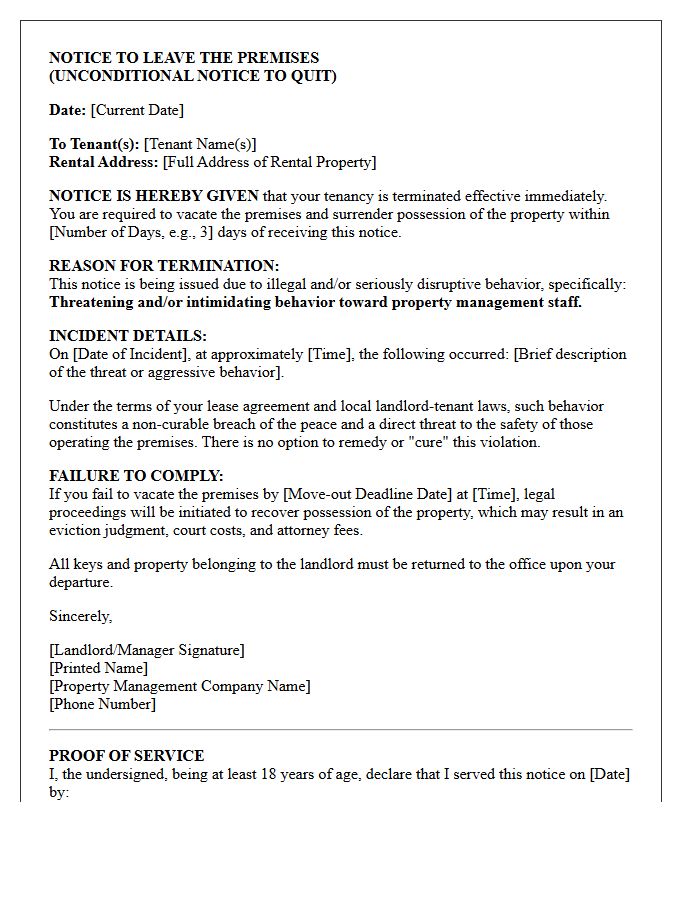
An Unconditional Notice to Quit is a severe legal document issued when a tenant exhibits extreme misconduct, such as making direct threats toward property management staff. Unlike standard notices, this directive provides no opportunity to remedy the behavior. It mandates that the tenant vacate the premises immediately or within a strictly defined period, typically three to five days. Because threatening behavior compromises workplace safety and creates a hostile environment, landlords use this notice to terminate the lease agreement instantly to protect their employees and ensure property security.
Unconditional Notice to Quit Letter for Unlawful Possession of Firearms
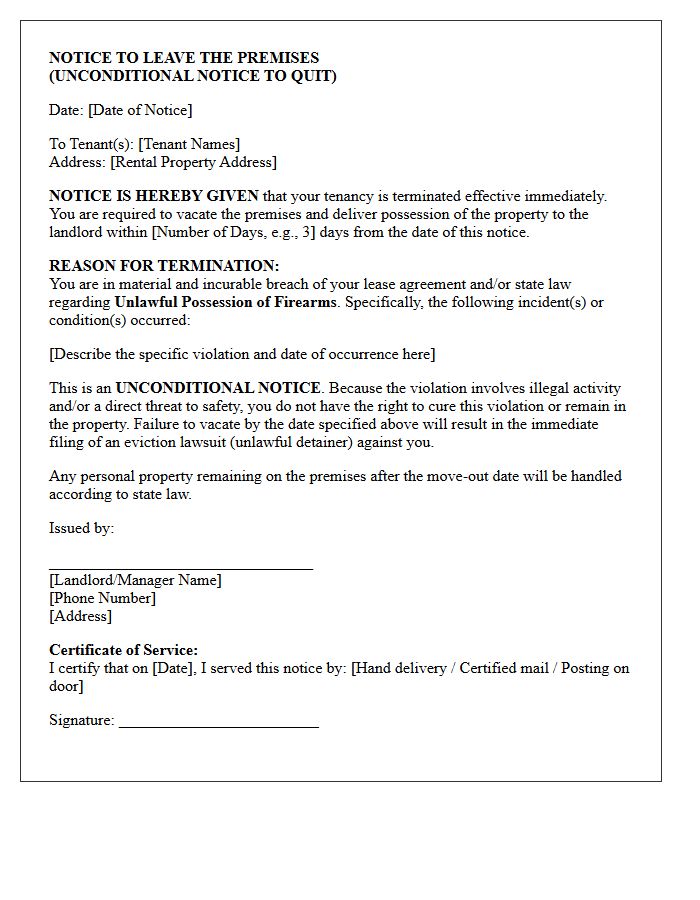
An Unconditional Notice to Quit for unlawful firearm possession is a legal document used to terminate a tenancy immediately without the opportunity for a cure. Landlords issue this notice when a tenant violates public safety or lease terms by keeping prohibited weapons on the premises. This severe action typically leads to an immediate eviction filing because the breach is considered an incurable danger. State laws vary, so ensuring the document clearly specifies the illegal activity is essential for legal compliance and successful property recovery in court.
Unconditional Notice to Quit Letter for Irreparable Nuisance and Disturbance
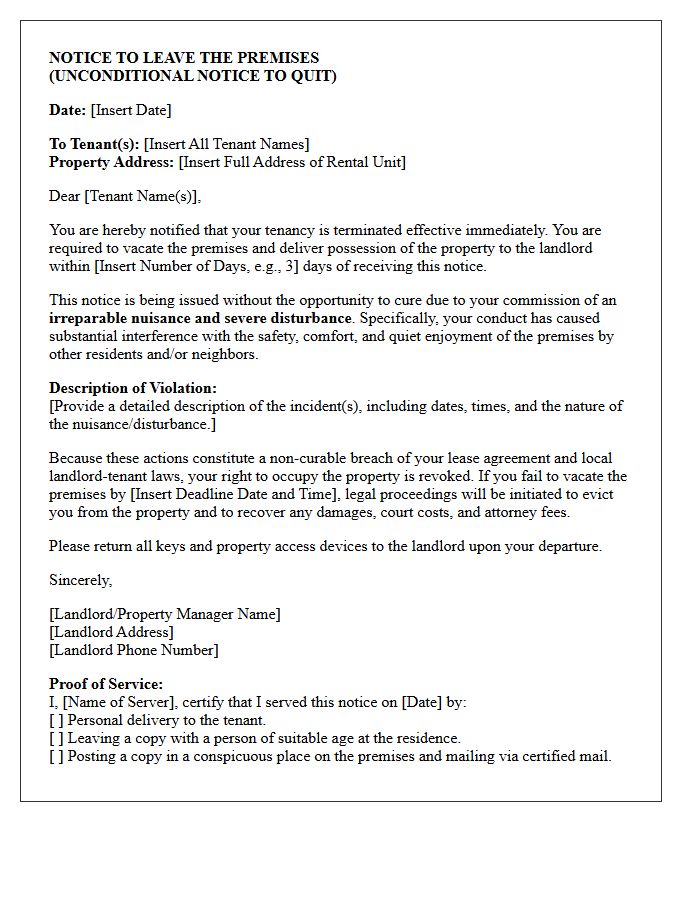
An Unconditional Notice to Quit is a formal legal document used by landlords to terminate a tenancy immediately without the option for the tenant to correct the issue. This severe action is typically reserved for instances of irreparable nuisance, such as illegal drug activity, serious violence, or extreme property damage. Unlike standard notices, this requires the tenant to vacate the premises by a specific deadline due to the gravity of the disturbance. Landlords must ensure the notice strictly complies with local statutes to avoid wrongful eviction claims during subsequent legal proceedings.
Unconditional Notice to Quit Letter for Refusal to Allow Landlord Entry
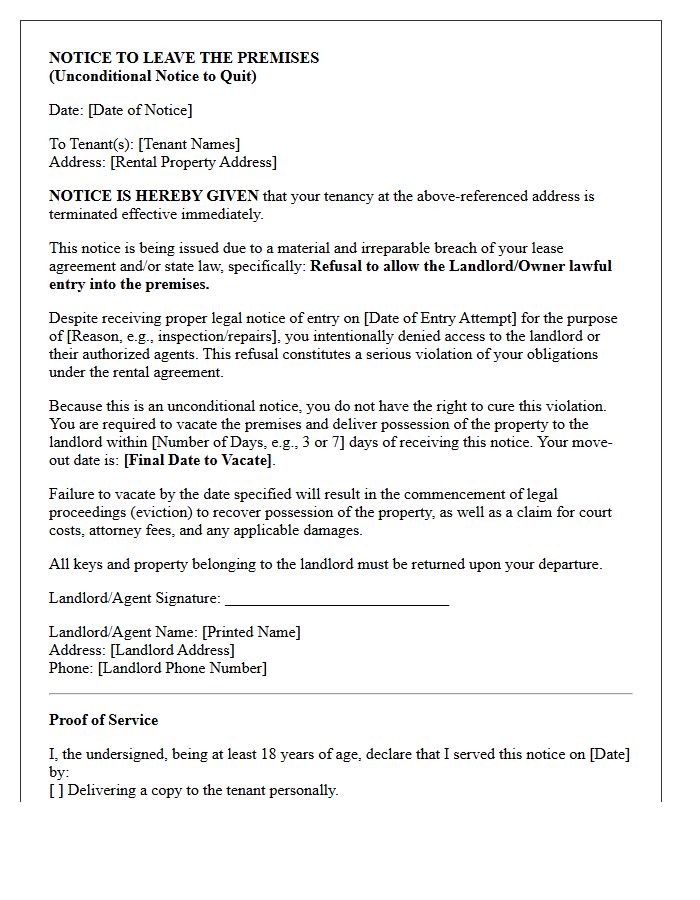
An Unconditional Notice to Quit for refusing landlord entry is a severe legal document used when a tenant repeatedly denies access for repairs or inspections. Unlike standard notices, this typically provides no opportunity to cure the violation, meaning the tenant must vacate immediately. Landlords must ensure the refusal violates specific lease terms or state statutes regarding reasonable access. Because this leads directly to eviction proceedings without a second chance, landlords must strictly follow local notice periods and delivery requirements to remain legally compliant during the process.
What is an Unconditional Notice to Quit?
An Unconditional Notice to Quit is a legal document served by a landlord to a tenant that orders the tenant to vacate the premises immediately without the opportunity to fix or "cure" the violation. Unlike a traditional notice, it does not provide an option to pay overdue rent or correct a lease breach to stay in the property.
Under what circumstances can a landlord serve an Unconditional Notice to Quit?
This notice is typically reserved for severe lease violations, such as engaging in illegal activities on the property (drug dealing or gambling), causing intentional and substantial damage to the premises, or repeatedly violating lease terms after receiving prior warnings.
How much time does a tenant have to move out after receiving this notice?
The notice period varies by state law, but it is generally very short, often ranging from 3 to 14 days. Because the notice is "unconditional," the tenant must move out by the deadline specified in the document or face an immediate eviction lawsuit (Unlawful Detainer).
Can a tenant fight an Unconditional Notice to Quit?
Yes, a tenant can challenge the notice in court if they believe the allegations are false, if the landlord is retaliating or discriminating, or if the notice was served improperly according to local statutes. However, since there is no "cure" option, the defense must usually prove that the violation never occurred.
What happens if a tenant stays past the date on an Unconditional Notice to Quit?
If the tenant remains on the property after the notice period expires, the landlord can file for a formal eviction in court. If the landlord wins, the court will issue a judgment for possession, and law enforcement will be authorized to physically remove the tenant and their belongings from the property.


Comments