
A Lease Agreement Addendum For Property Alterations is a legal supplement that grants tenants permission to modify a rental unit while protecting the landlord's interests. It outlines specific construction standards, restoration requirements, and liability terms for improvements. Clearly defining these rules prevents disputes and ensures structural integrity. To simplify your documentation process, below are some ready to use template.
Image cover: Property Alteration Lease Addendum: Templates and Letter Samples for Landlords and Tenants
Letter Samples List
- Tenant Request For Property Alterations Addendum Letter
- Approval Of Lease Agreement Addendum For Property Alterations Letter
- Denial Of Lease Agreement Addendum For Property Alterations Letter
- Conditional Approval For Minor Property Alterations Letter
- Notice Of Unauthorized Property Alterations Violation Letter
- Requirement For Licensed Contractor Property Alterations Letter
- Post-Alteration Property Inspection And Compliance Letter
- Interior Paint Color Modification Addendum Letter
- Exterior Landscaping Alteration Agreement Letter
- Smart Home Device Installation Addendum Letter
- Satellite Dish Installation Property Alteration Letter
- Security Deposit Clause For Property Alterations Letter
- Move-Out Reversion Of Property Alterations Letter
Tenant Request For Property Alterations Addendum Letter
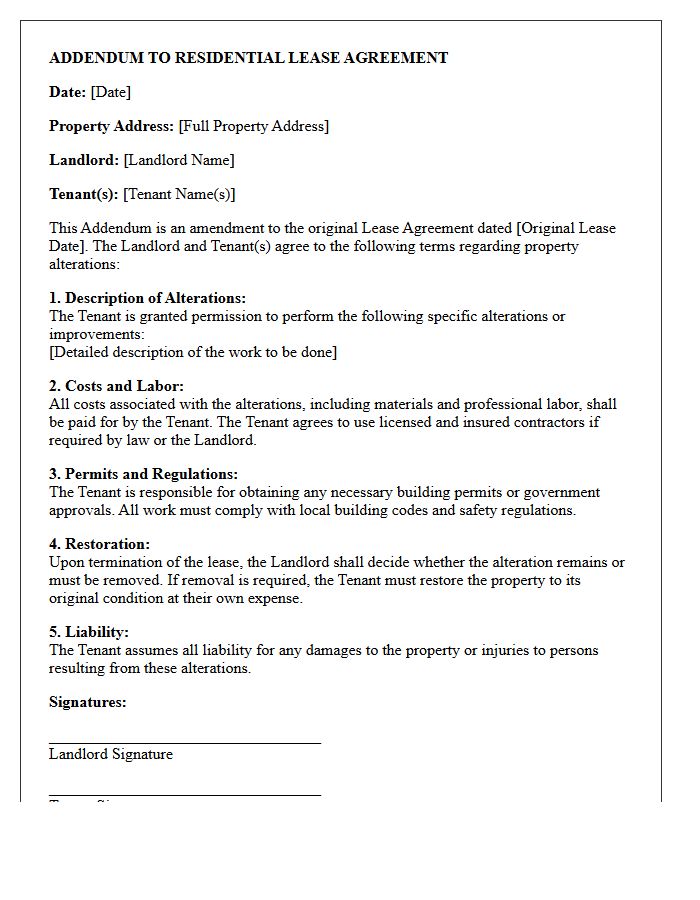
A Tenant Request For Property Alterations Addendum Letter is a formal legal document used to modify an existing lease agreement. It outlines specific tenant-proposed modifications, such as painting or structural updates, ensuring the landlord provides written consent. This addendum is crucial for defining who bears the financial responsibility for costs and whether the property must be restored to its original condition upon move-out. Using this letter protects both parties by establishing clear expectations, preventing disputes over security deposits, and maintaining property value through authorized, professional workmanship.
Approval Of Lease Agreement Addendum For Property Alterations Letter
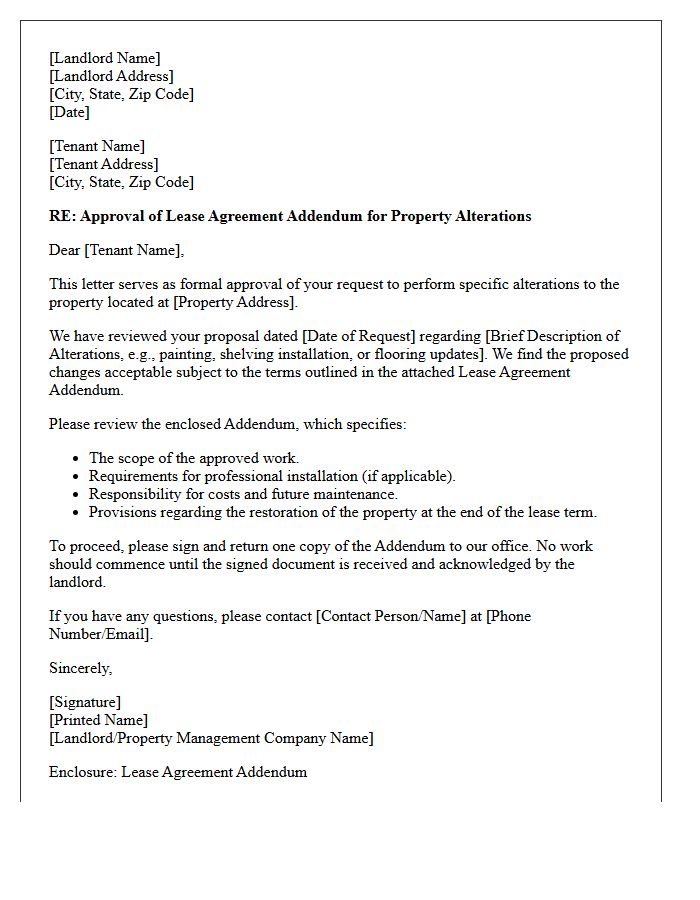
An Approval of Lease Agreement Addendum serves as formal authorization for a tenant to perform property alterations. This document ensures all structural or aesthetic changes are legally documented, preventing future disputes regarding security deposits or restoration requirements. It must clearly outline the scope of work, safety standards, and whether improvements become permanent fixtures. Obtaining written consent protects both parties by confirming that modifications comply with the original lease terms and local building codes, maintaining the asset value and ensuring legal compliance for the rental property.
Denial Of Lease Agreement Addendum For Property Alterations Letter
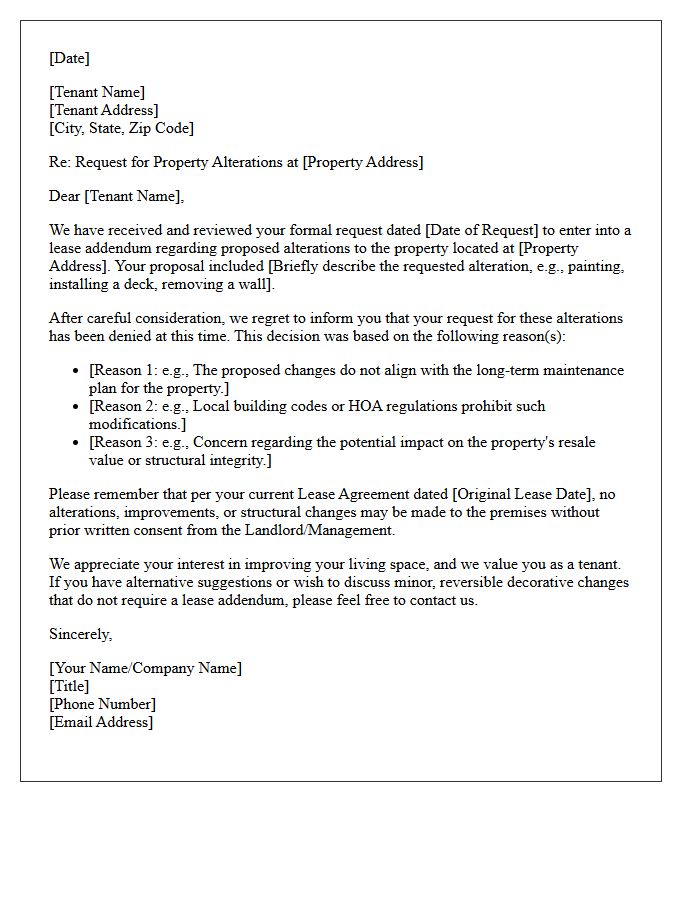
A Denial of Lease Agreement Addendum for property alterations is a formal written notice issued by a landlord to reject a tenant's request for structural or aesthetic changes. This document protects property integrity by clearly stating that the proposed modifications violate lease terms or safety standards. It ensures legal compliance and prevents unauthorized construction, maintaining the original rental unit condition. Landlords use this letter to document their decision and mitigate future liability regarding unapproved renovations or potential damages caused by tenant-led alterations.
Conditional Approval For Minor Property Alterations Letter
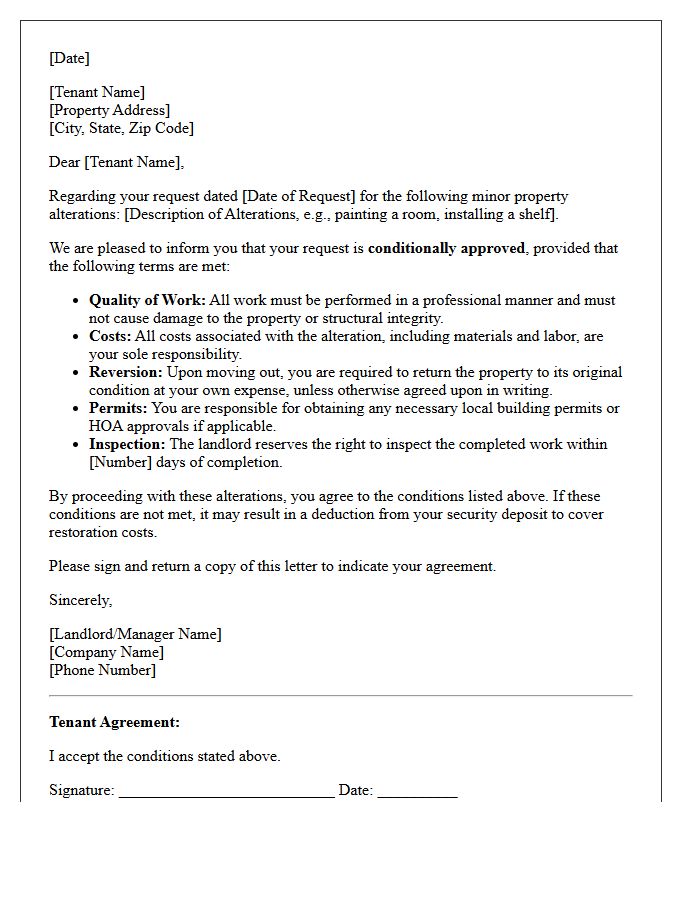
A Conditional Approval For Minor Property Alterations Letter serves as a preliminary agreement from a landlord or homeowners' association. It confirms that your renovation request is accepted, provided specific legal requirements and safety standards are met. This document typically outlines essential compliance criteria, such as obtaining necessary permits, adhering to time constraints, and using licensed contractors. Receiving this letter ensures that your project aligns with property guidelines while protecting the interests of both parties before any physical construction or permanent structural modification begins on the premises.
Notice Of Unauthorized Property Alterations Violation Letter
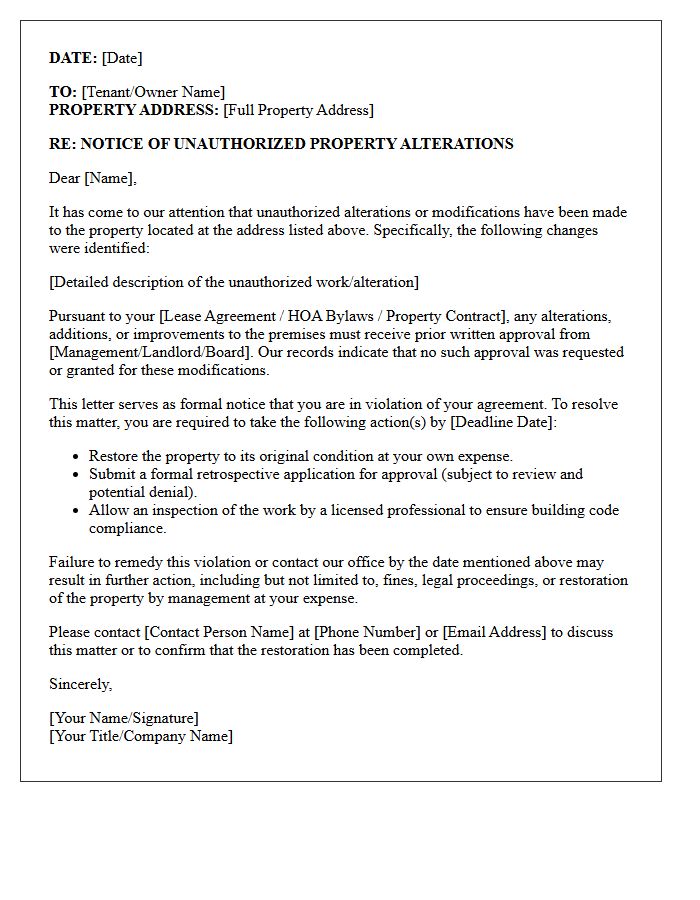
A Notice of Unauthorized Property Alterations Violation Letter is a formal warning issued when structural modifications or aesthetic changes occur without prior board approval. This document identifies the specific unauthorized alteration and cites the governing community rules or local building codes. Homeowners must typically pause work, apply for retroactive permits, or restore the property to its original state to avoid fines or legal action. Promptly addressing this notice is essential to maintain property compliance and ensure safety standards within the development or municipality.
Requirement For Licensed Contractor Property Alterations Letter
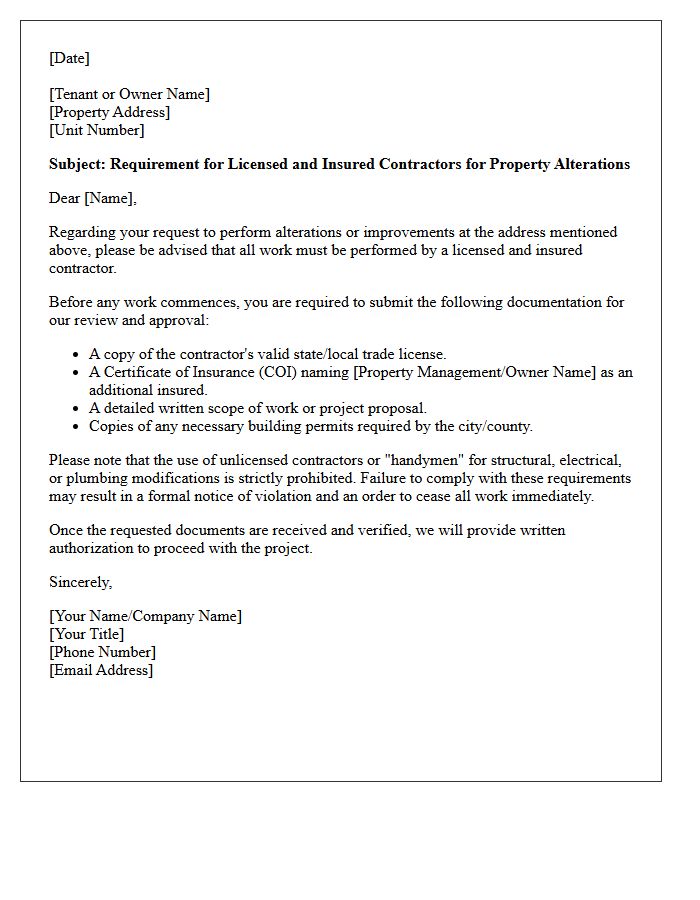
A Requirement For Licensed Contractor Property Alterations Letter is a formal notice issued by property owners or associations to ensure structural integrity and compliance. This document mandates that any renovations or improvements must be performed by a professional holding a valid state license and insurance. Its primary purpose is to mitigate liability risks, protect property values, and guarantee that all work adheres to local building codes. Homeowners must typically submit this letter along with detailed project plans to obtain necessary approval before starting any physical alterations on the premises.
Post-Alteration Property Inspection And Compliance Letter
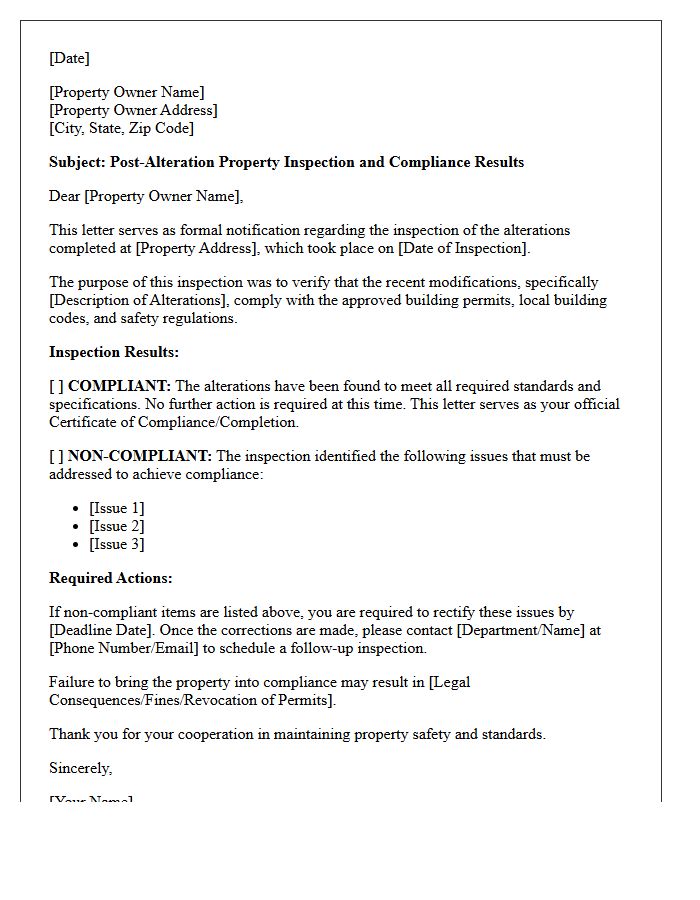
A post-alteration property inspection ensures that any structural changes or renovations adhere to local building codes and safety standards. After completing works, a qualified inspector verifies the project against approved plans. Once satisfied, authorities issue a compliance letter, which serves as official proof that the modifications are legal and safe. This documentation is essential for maintaining property value, securing insurance coverage, and facilitating future real estate transactions. Always retain this letter to prevent legal complications or fines during a property sale or refinancing process.
Interior Paint Color Modification Addendum Letter
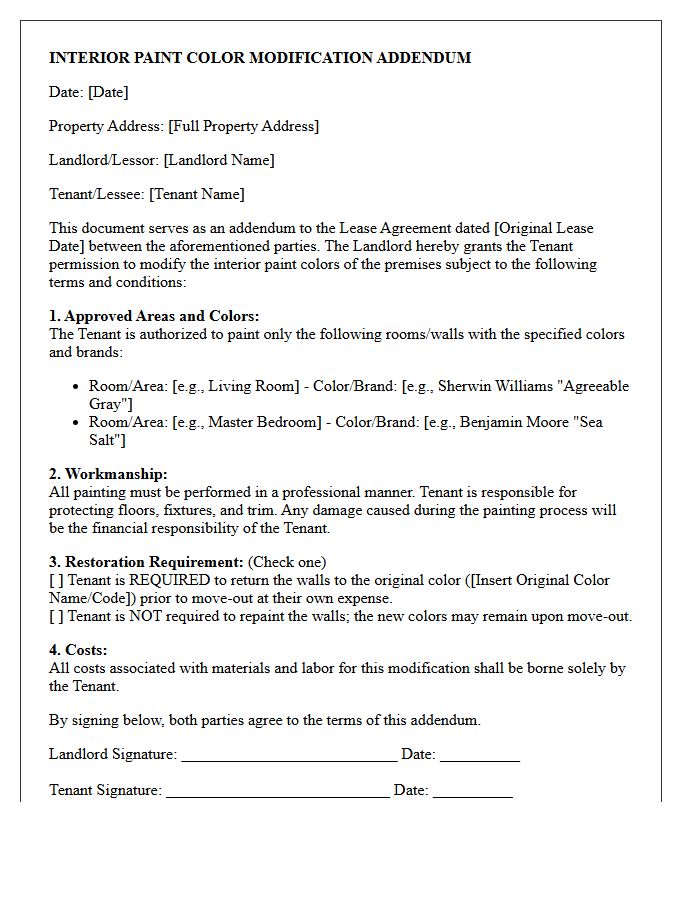
An Interior Paint Color Modification Addendum Letter is a formal legal document used to amend a lease agreement. It grants a tenant permission to change wall colors while outlining specific responsibilities. Key details include the approved paint brand, finish, and exact color codes. Crucially, the addendum specifies if the tenant must restore the original paint upon move-out or pay professional repainting costs. Both landlord and tenant must sign this written consent to prevent disputes over security deposit deductions and ensure property maintenance standards are upheld during the tenancy.
Exterior Landscaping Alteration Agreement Letter
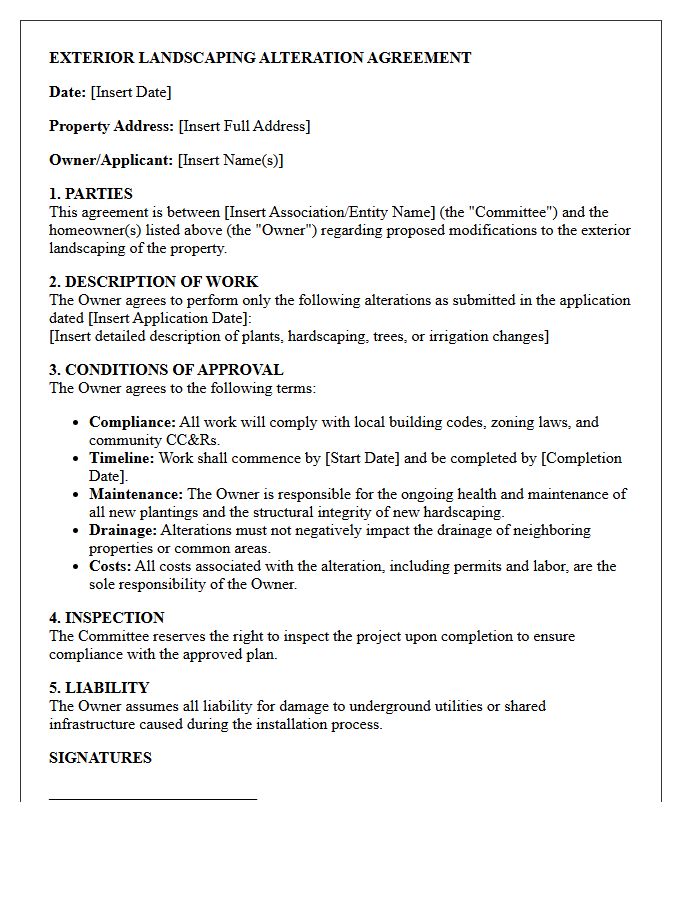
An Exterior Landscaping Alteration Agreement Letter is a formal document used to obtain Homeowners Association (HOA) approval before modifying your property. It ensures that proposed changes, such as planting trees or installing hardscapes, comply with community aesthetic standards and drainage requirements. Homeowners must submit detailed plans to avoid potential fines or the costly reversal of unauthorized work. This agreement protects property values by maintaining a cohesive neighborhood appearance while clearly defining the maintenance responsibilities and liability of the owner regarding the new landscape features.
Smart Home Device Installation Addendum Letter
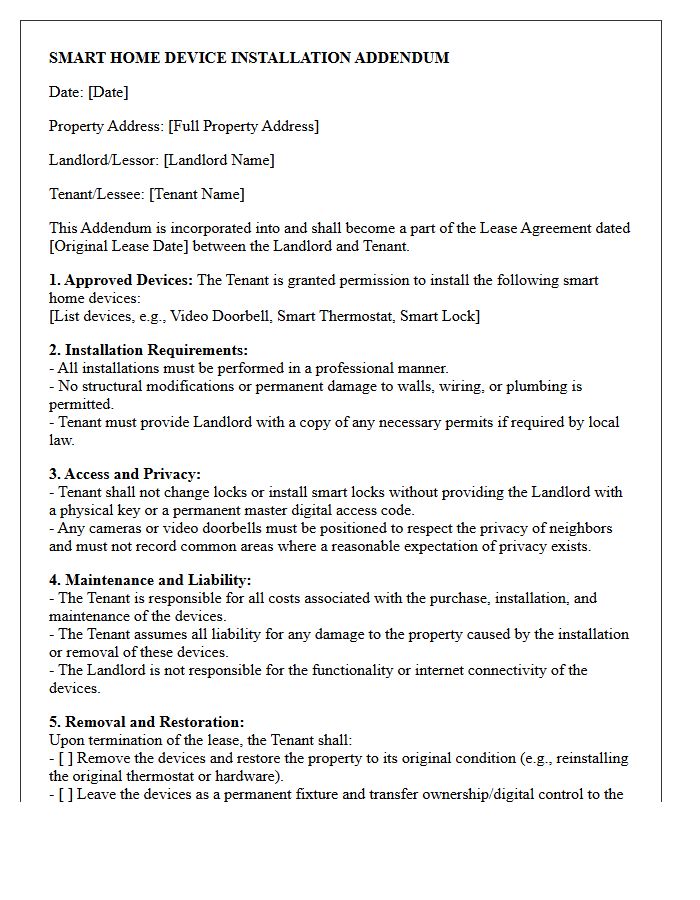
A Smart Home Device Installation Addendum is a legal supplement to a lease agreement that outlines the terms for integrating automated technology. It clearly specifies tenant responsibilities regarding the maintenance, privacy, and security of smart locks, thermostats, or cameras. Most importantly, the letter defines ownership rights, ensuring that integrated systems remain property of the landlord or are removed without causing damage. Establishing these rules protects property infrastructure while ensuring cybersecurity compliance and clarifying who pays for subscription services or hardware repairs during the tenancy.
Satellite Dish Installation Property Alteration Letter
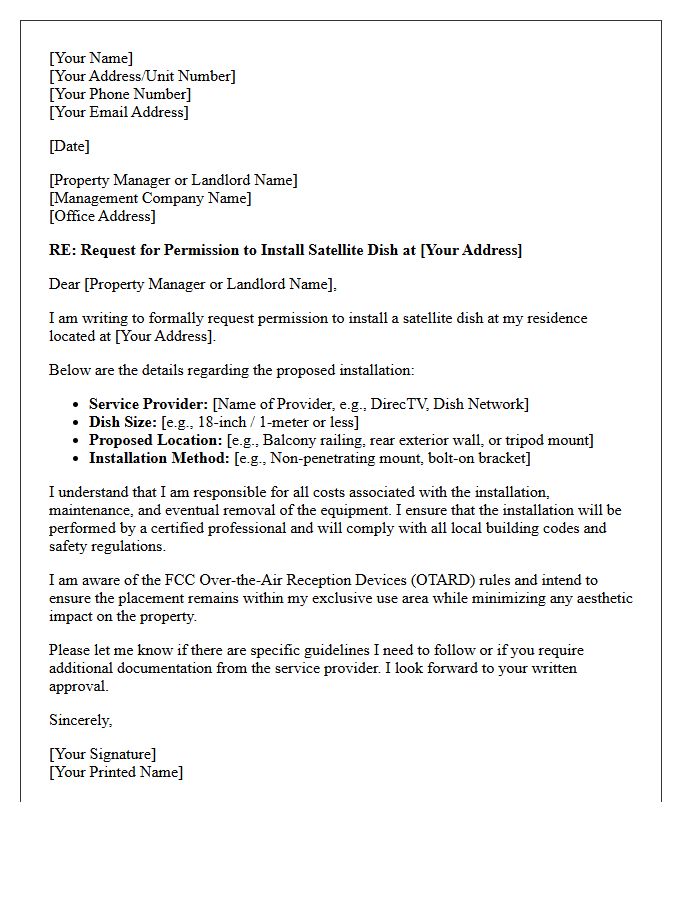
A Satellite Dish Installation Property Alteration Letter is a formal request sent to a landlord or homeowner association (HOA) to seek written approval before modifying a building. It serves as a legal record ensuring the installation complies with safety standards and community guidelines. This document should detail the proposed location, mounting method, and contractor information. Obtaining this permission prevents property damage disputes and potential fines, confirming that your right to signal reception aligns with the owner's maintenance requirements and specific architectural rules of the premises.
Security Deposit Clause For Property Alterations Letter
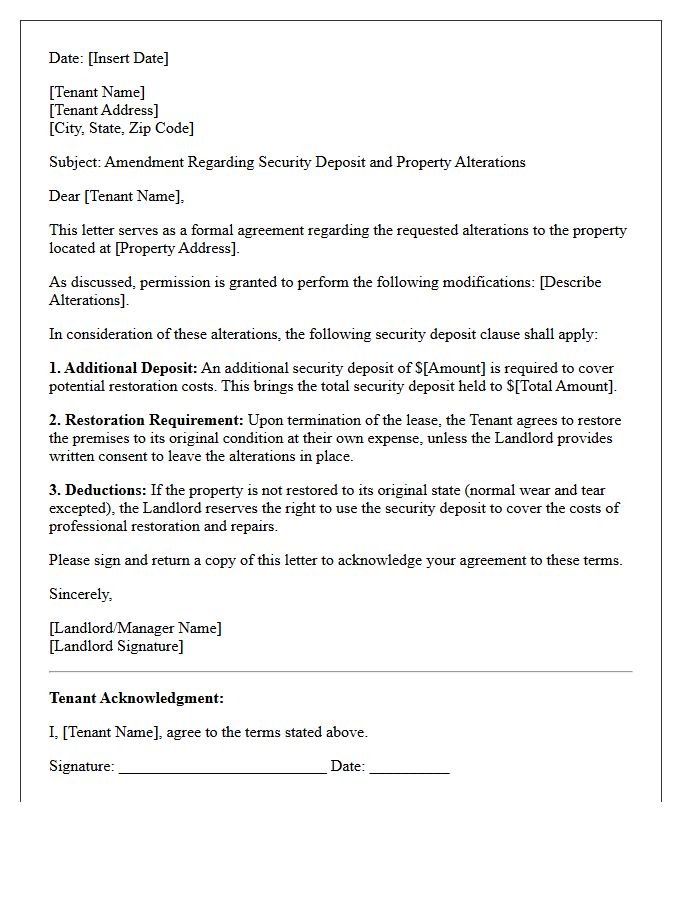
A security deposit clause for alterations ensures that any unauthorized modifications to a property are financially covered. It is crucial to highlight that the tenant is responsible for restoring the premises to its original condition upon move-out. If the tenant fails to reverse changes, the landlord may legally deduct restoration costs from the security deposit. This clause protects the property value and provides clear guidelines for reimbursement regarding structural or cosmetic changes made during the lease term, ensuring legal transparency for both parties involved.
Move-Out Reversion Of Property Alterations Letter
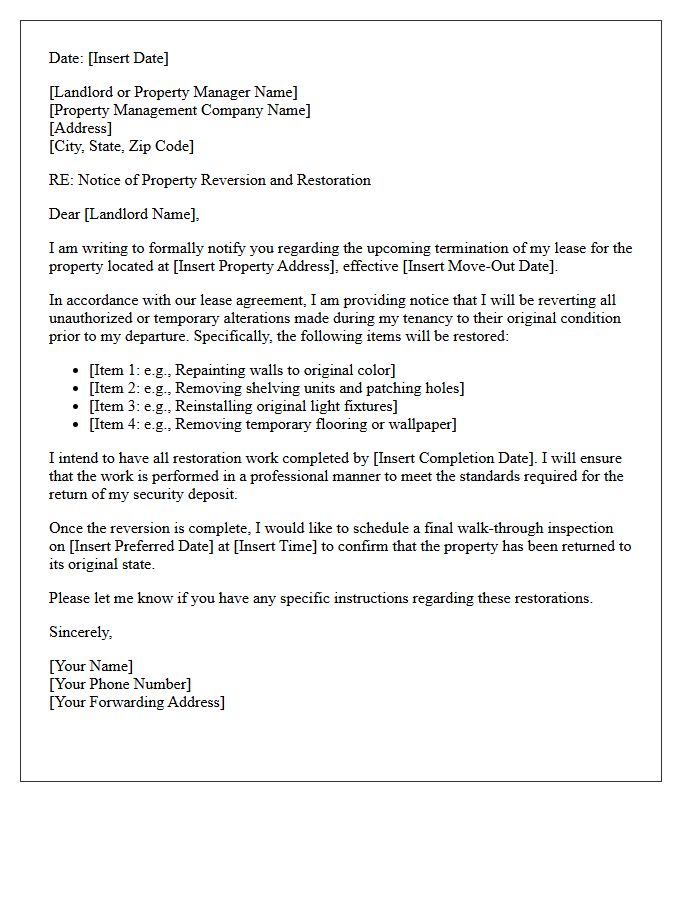
A Move-Out Reversion of Property Alterations Letter is a formal notification issued by a landlord requiring a tenant to restore the premises to its original condition. This document specifies which unauthorized or temporary structural changes must be removed before the lease ends. Failure to comply can lead to security deposit deductions to cover professional remediation costs. It serves as a vital legal record to ensure the property is returned in an acceptable state, preventing disputes regarding restorative repairs and maintaining the asset's value for future occupancy.
What is a Lease Agreement Addendum for Property Alterations?
A Lease Agreement Addendum for Property Alterations is a legal document used to modify an existing lease to permit specific structural or cosmetic changes to a rental property. It outlines the scope of work, who is responsible for costs, and whether the alterations must be removed at the end of the tenancy.
When should a tenant use an Alteration Addendum letter?
A tenant should use this letter whenever they wish to make permanent or semi-permanent modifications to a property, such as painting walls, installing new fixtures, or remodeling a kitchen. It ensures the tenant has written landlord consent, preventing claims of lease violations or property damage.
What key details must be included in a Property Alteration Addendum?
The addendum should include a detailed description of the proposed changes, a timeline for completion, a list of required permits, insurance requirements for contractors, and a clear statement regarding whether the landlord or tenant owns the improvements upon move-out.
Does a landlord have to approve a request for property alterations?
No, a landlord is generally not required to approve elective alterations unless the lease agreement states otherwise or if the request is a "reasonable accommodation" under the Fair Housing Act for a tenant with a disability. Landlords may deny requests that decrease property value or violate local building codes.
Who is responsible for repairs if an alteration causes damage?
Under a standard Lease Agreement Addendum for Property Alterations, the tenant is typically responsible for all costs associated with damages caused by the installation or removal of the modification. The addendum usually requires the tenant to restore the premises to its original condition or pay for professional repairs.


Comments