
Ensuring safety and legal compliance is critical when managing properties. A Notice of Asbestos Hazard Disclosure informs tenants and workers about potential health risks and safety protocols regarding hazardous materials. Providing clear documentation protects occupants and mitigates liability for property owners. To help you draft a professional notification, below are some ready to use template.
Image cover: Essential Asbestos Hazard Disclosure Notice Templates and Compliance Samples
Letter Samples List
- Initial Move-In Asbestos Hazard Disclosure Letter
- Annual Tenant Notification of Asbestos Presence Letter
- Pre-Renovation Asbestos Hazard Warning Letter
- Commercial Lease Asbestos Disclosure Letter
- Residential Property Asbestos Notice Letter
- Post-Inspection Asbestos Status Update Letter
- Scheduled Asbestos Abatement Project Letter
- Property Transfer Asbestos Disclosure Letter
- Maintenance Vendor Asbestos Hazard Letter
- Shared Common Area Asbestos Notification Letter
- Emergency Asbestos Disturbance Warning Letter
- Tenant Acknowledgement of Asbestos Disclosure Letter
- Updated Asbestos Management Plan Notification Letter
- Lease Renewal Asbestos Hazard Disclosure Letter
Initial Move-In Asbestos Hazard Disclosure Letter
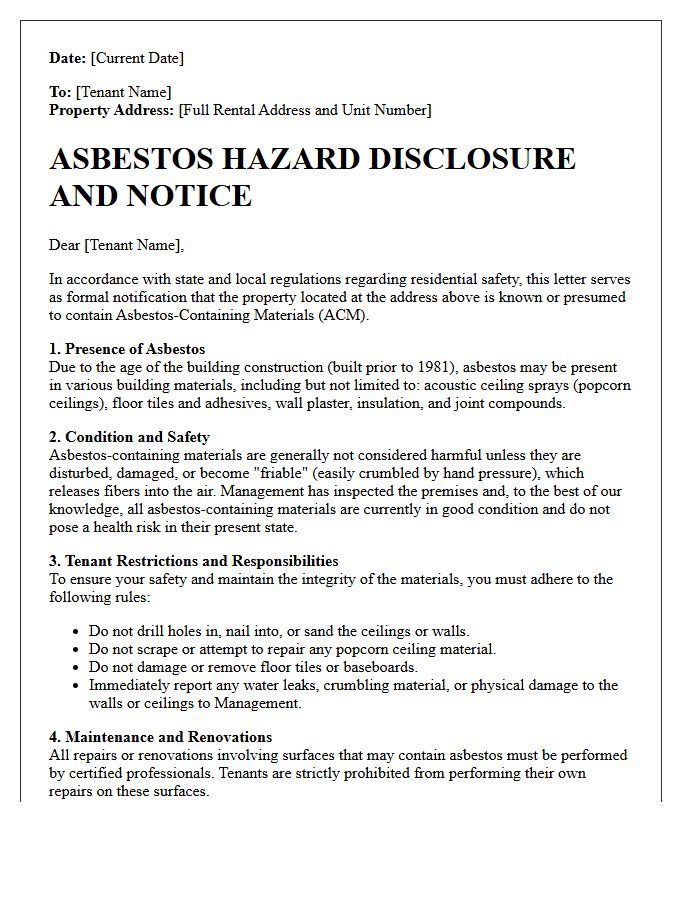
The Initial Move-In Asbestos Hazard Disclosure Letter is a mandatory legal document provided to tenants in older buildings. It identifies the presence of Asbestos-Containing Materials (ACM) within the premises. This disclosure outlines safety protocols to prevent fiber release, such as avoiding drilling or sanding walls. Understanding these health risks ensures tenant safety and limits landlord liability. Tenants must sign this acknowledgment to confirm they are aware of the material's location and the importance of maintaining it in undisturbed condition to prevent respiratory hazards.
Annual Tenant Notification of Asbestos Presence Letter
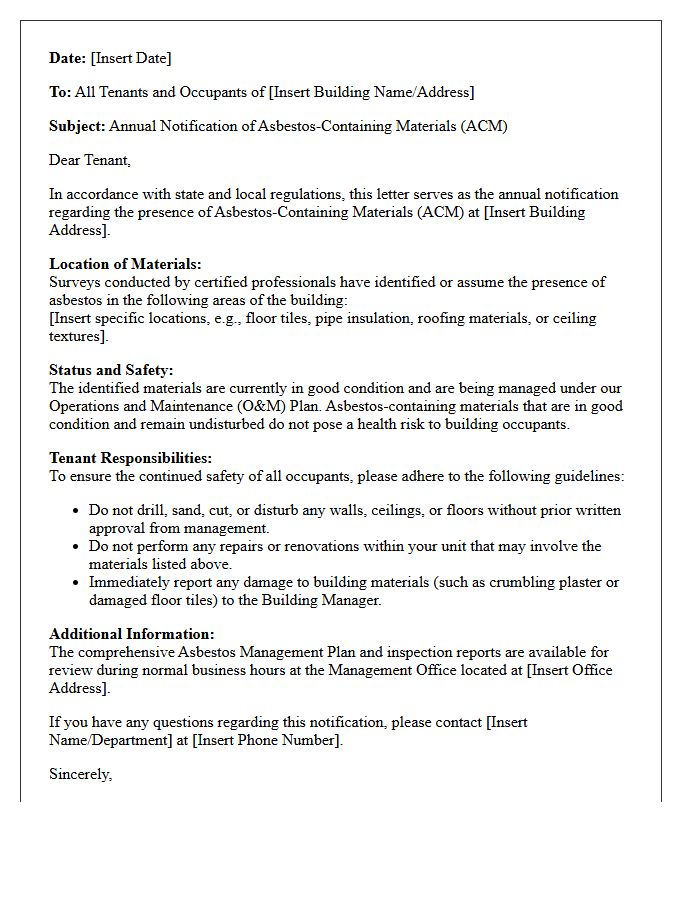
The Annual Tenant Notification of Asbestos Presence Letter is a legally mandated document informing residents about asbestos-containing materials (ACM) within a building. It ensures transparency regarding the location and condition of these materials. Building owners must distribute this notice to guarantee that tenants avoid disturbing surfaces that could release harmful fibers. Understanding this notification is essential for maintaining resident safety and ensuring compliance with local health department regulations. Always follow the specific safety protocols outlined in the letter to minimize potential exposure risks during your tenancy.
Pre-Renovation Asbestos Hazard Warning Letter
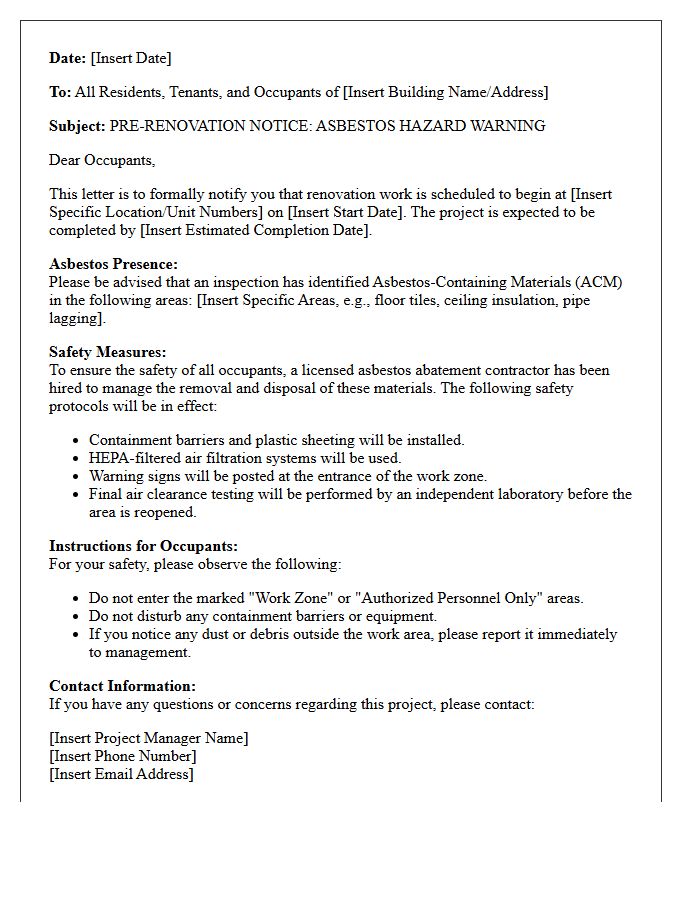
A Pre-Renovation Asbestos Hazard Warning Letter is a critical legal notification issued before starting construction on older properties. It informs tenants and contractors about the potential presence of asbestos-containing materials (ACM) that could be disturbed. Federal and local regulations, such as AHERA or OSHA standards, often mandate this document to ensure occupational safety and public health. Property owners must conduct a thorough asbestos inspection and provide this formal disclosure to prevent hazardous fiber release, ensuring all parties follow proper abatement protocols to mitigate serious long-term respiratory risks during the renovation process.
Commercial Lease Asbestos Disclosure Letter
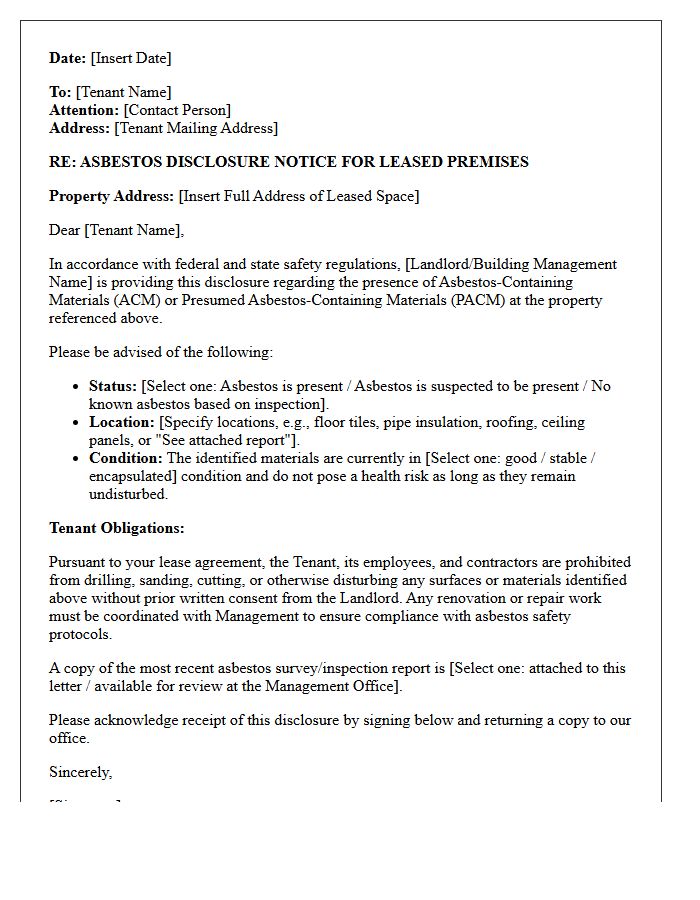
A Commercial Lease Asbestos Disclosure Letter is a vital legal document used by landlords to inform tenants about the presence and location of asbestos-containing materials (ACMs) within a property. Compliance with federal OSHA regulations is mandatory for buildings constructed before 1981. Providing this written notification ensures workplace safety, minimizes health risks during renovations, and protects the property owner from potential liability. It is essential for tenants to review this disclosure before signing a lease to understand their responsibilities regarding maintenance and safety protocols in the commercial space.
Residential Property Asbestos Notice Letter
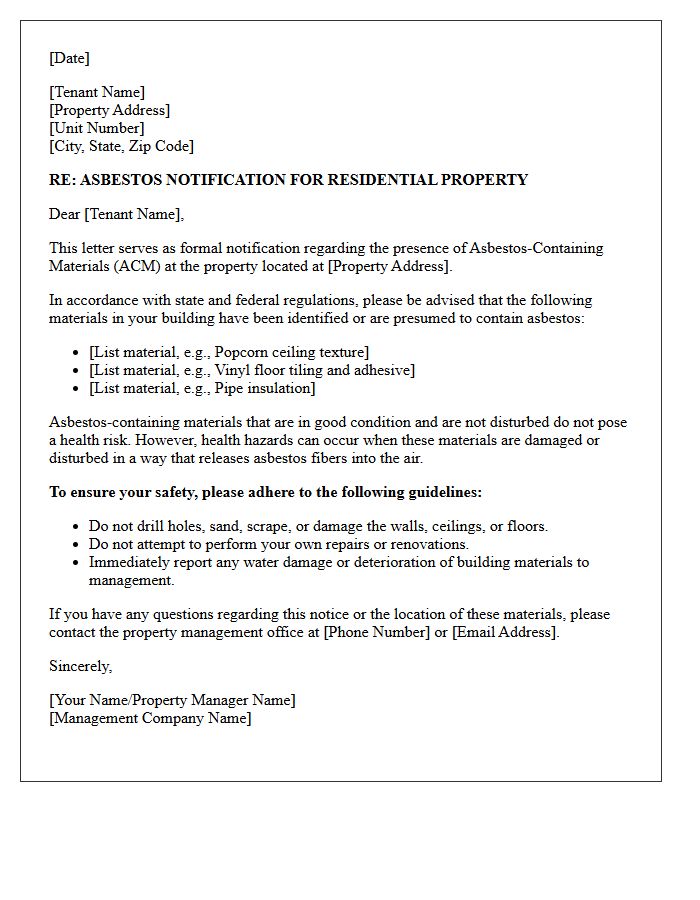
A Residential Property Asbestos Notice Letter is a critical legal document used to inform tenants or buyers about the presence of asbestos-containing materials within a building. It ensures compliance with safety regulations and highlights potential health risks if fibers become airborne. Property owners must provide this mandatory disclosure before any renovation or leasing activity begins. Understanding this notice helps residents take necessary precautions, such as avoiding damage to walls or ceilings. Providing clear, timely information is essential for occupant safety and protecting owners from significant legal liability or regulatory fines.
Post-Inspection Asbestos Status Update Letter
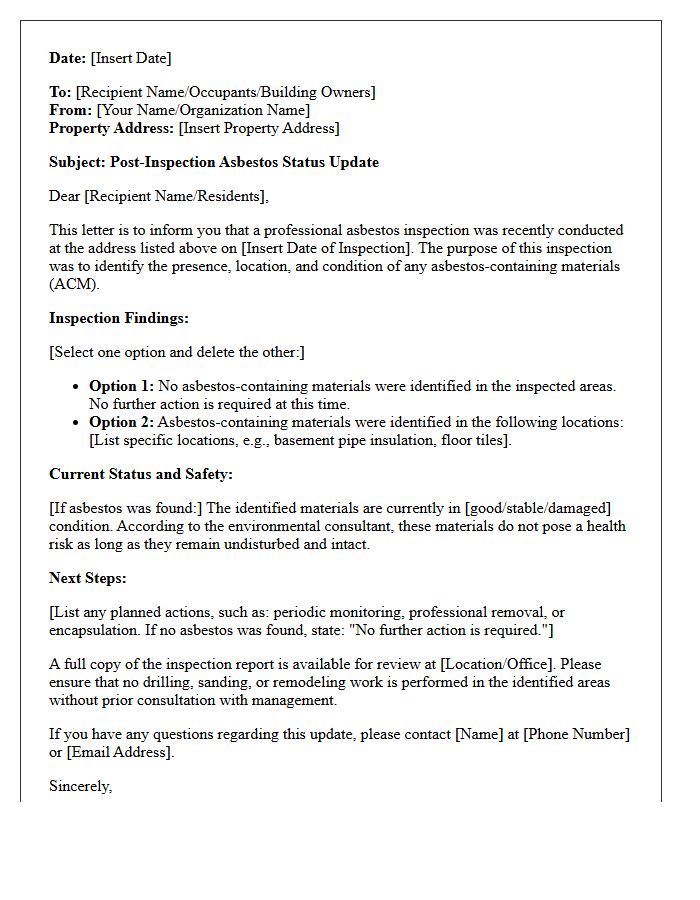
A Post-Inspection Asbestos Status Update Letter is a critical document confirming the current condition of asbestos-containing materials within a building. Following a professional assessment, this formal notice informs occupants and stakeholders if hazards were identified or if the site is safe for occupancy. It serves as an essential compliance record for safety regulations, detailing necessary remediation actions or ongoing management plans. Maintaining this updated documentation is vital for legal liability protection and ensuring the long-term health and safety of all building users through transparent environmental reporting.
Scheduled Asbestos Abatement Project Letter
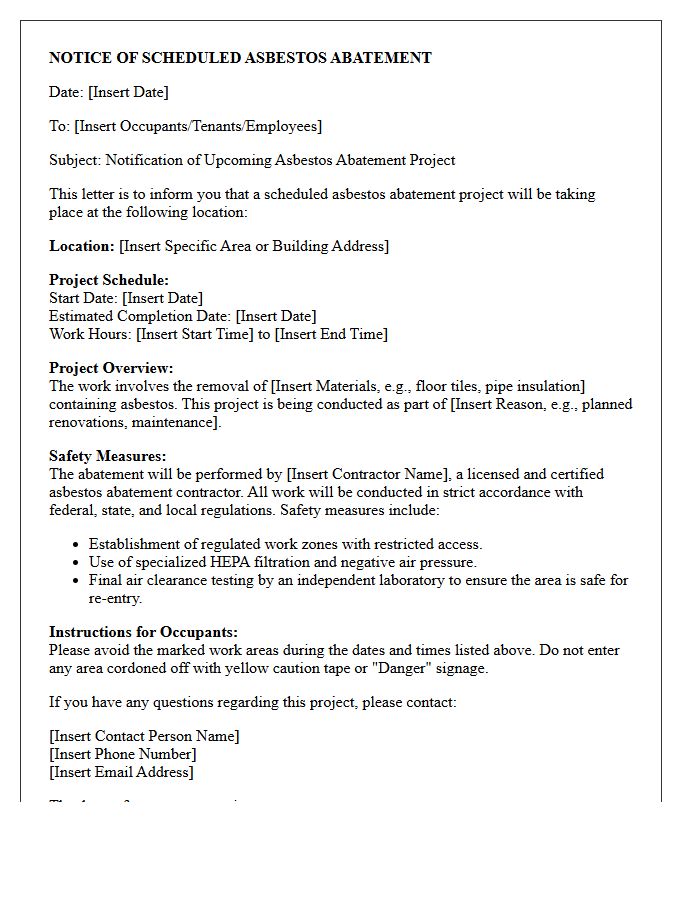
A Scheduled Asbestos Abatement Project Letter is a formal notification informing occupants about planned hazardous material removal. This document provides essential safety protocols, including the specific work dates, exact locations of containment zones, and the certified contractor's credentials. It serves as a legal requirement to ensure public health transparency and compliance with environmental regulations. Residents must follow all posted instructions and avoid restricted areas to prevent exposure to airborne fibers during the remediation process. Timely communication ensures workplace safety and minimizes potential health risks for everyone in the building vicinity.
Property Transfer Asbestos Disclosure Letter
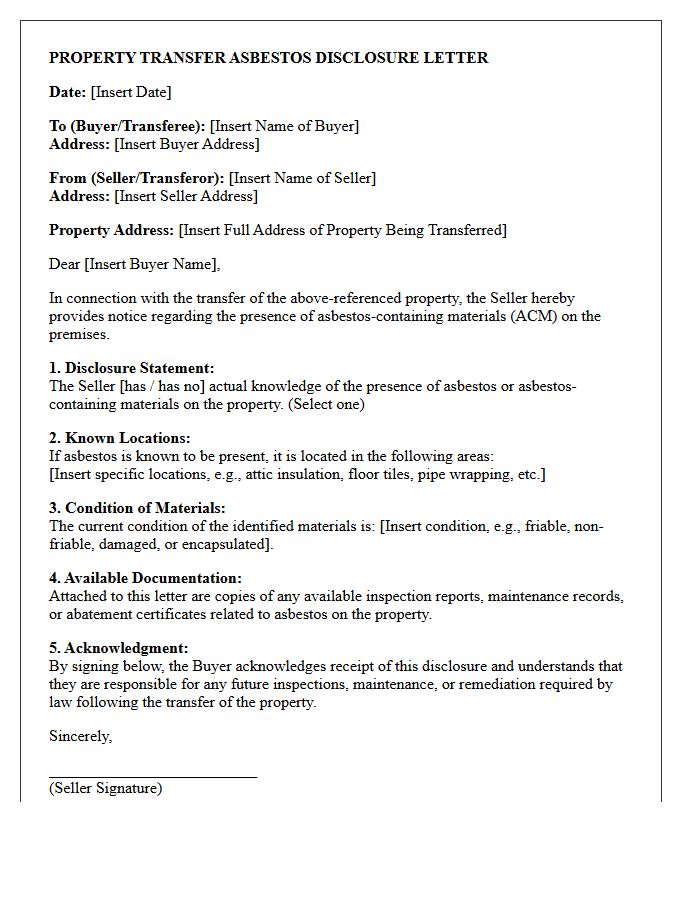
A Property Transfer Asbestos Disclosure Letter is a critical legal document informing buyers about the presence or condition of asbestos-containing materials within a building. Sellers or landlords must provide this notification to ensure regulatory compliance and protect occupants from health risks. It typically details specific locations of hazards and any previous abatement actions taken. Reviewing this disclosure is essential for risk management, as it influences future renovation costs and safety protocols. Proper documentation prevents legal disputes and ensures a transparent real estate transaction regarding environmental safety standards.
Maintenance Vendor Asbestos Hazard Letter
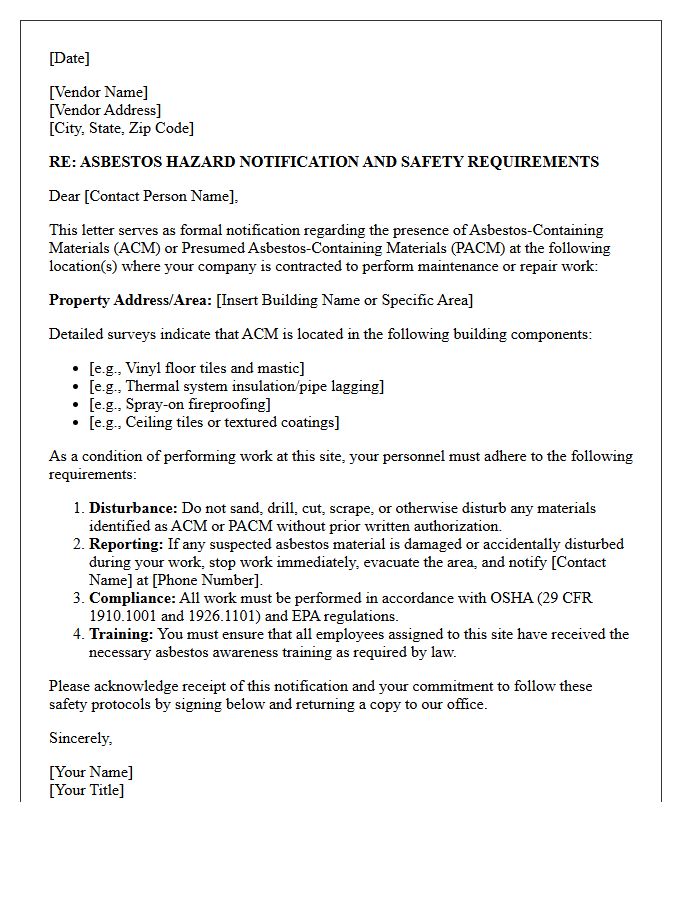
A Maintenance Vendor Asbestos Hazard Letter is a legal notification issued to contractors before work begins in older buildings. It serves as a formal disclosure regarding the presence and location of asbestos-containing materials (ACM). This document is essential for occupational safety and regulatory compliance, ensuring workers use proper protective equipment and containment protocols. Receiving this letter means you must strictly follow safety guidelines to prevent fiber release, protecting both the vendors and building occupants from hazardous exposure risks and potential long-term health complications.
Shared Common Area Asbestos Notification Letter
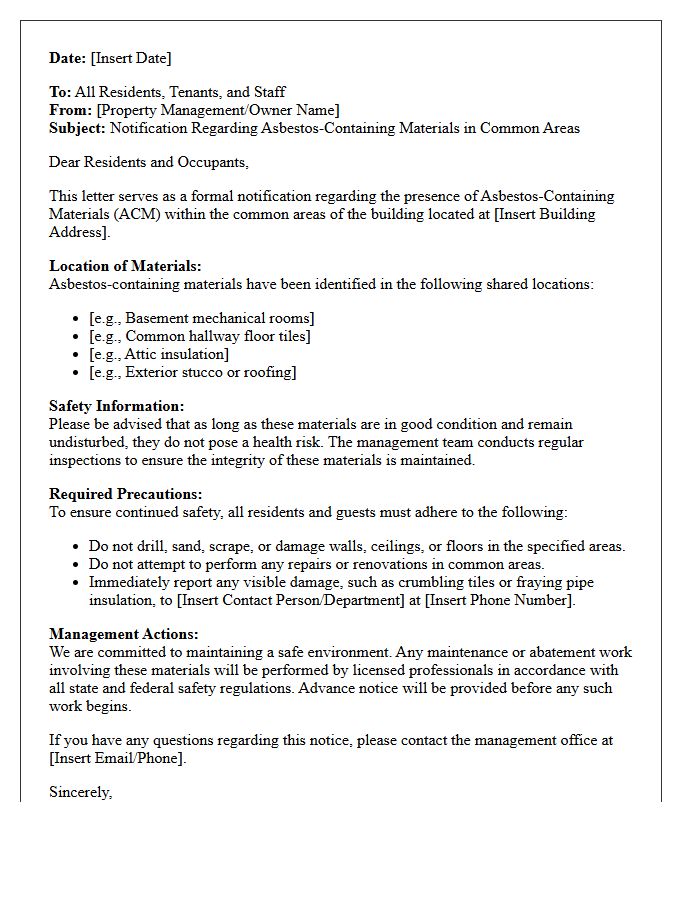
A Shared Common Area Asbestos Notification Letter is a mandatory legal document issued by building owners to inform occupants about the presence and location of asbestos-containing materials (ACM). This notice ensures safety by outlining specific protocols to avoid disturbing hazardous fibers during maintenance or daily activities. It typically includes the asbestos management plan, emergency procedures, and contact details for the responsible officer. Compliance with these safety regulations is essential for protecting public health and minimizing long-term liability within multi-unit residential or commercial properties.
Emergency Asbestos Disturbance Warning Letter
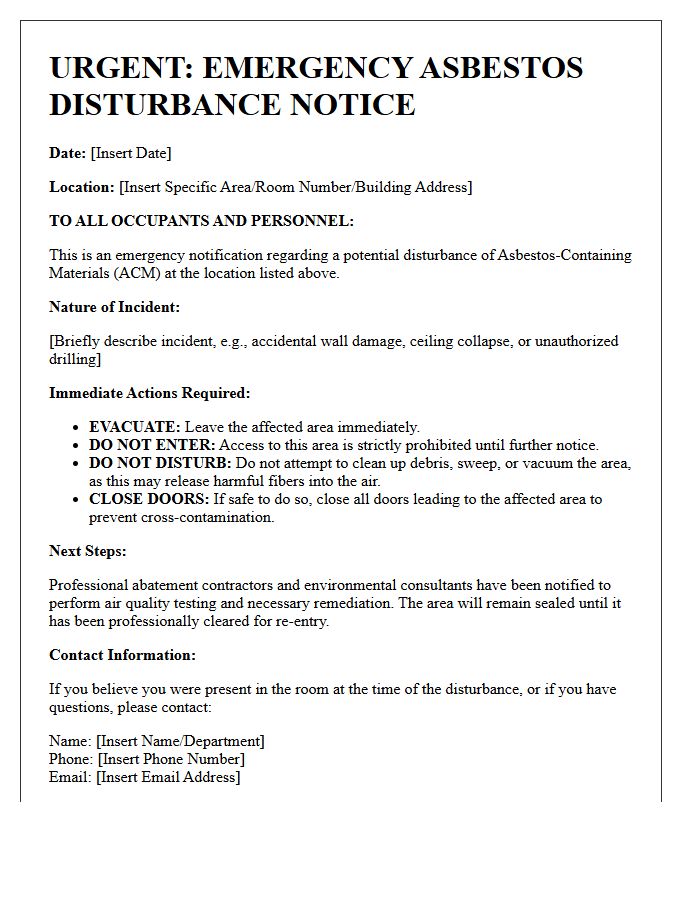
An Emergency Asbestos Disturbance Warning Letter is a critical formal notice issued when hazardous fibers are accidentally released into the air. This document informs occupants of immediate health risks, such as mesothelioma or lung scarring, caused by inhalation. It outlines necessary safety protocols, including immediate area evacuation and restricted access to contaminated zones. The letter serves as a legal record of exposure, detailng remediation steps and air quality testing requirements to ensure the environment is safe before re-entry. Prompt communication is essential to minimize long-term liability and protect public well-being.
Tenant Acknowledgement of Asbestos Disclosure Letter
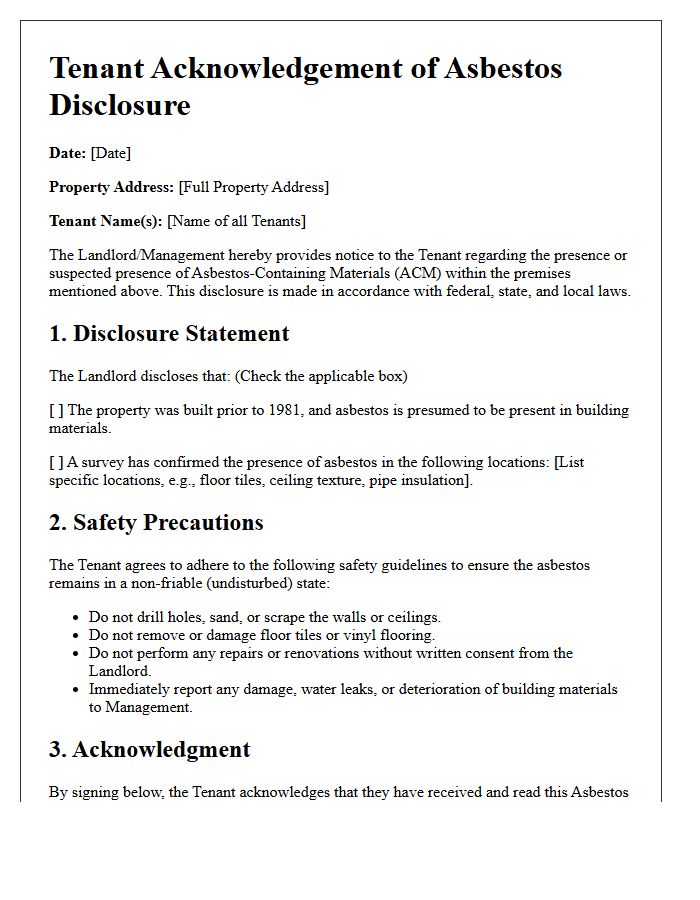
A Tenant Acknowledgement of Asbestos Disclosure Letter is a critical legal document confirming that a renter has been formally notified about the presence of asbestos-containing materials within a property. This disclosure ensures compliance with safety regulations and protects landlords from liability. It informs tenants about the specific locations of potential hazards and provides essential guidelines on how to avoid disturbing these materials to prevent health risks. Signing this letter acknowledges receipt of this information, emphasizing the importance of safety awareness and proper property maintenance in older buildings.
Updated Asbestos Management Plan Notification Letter
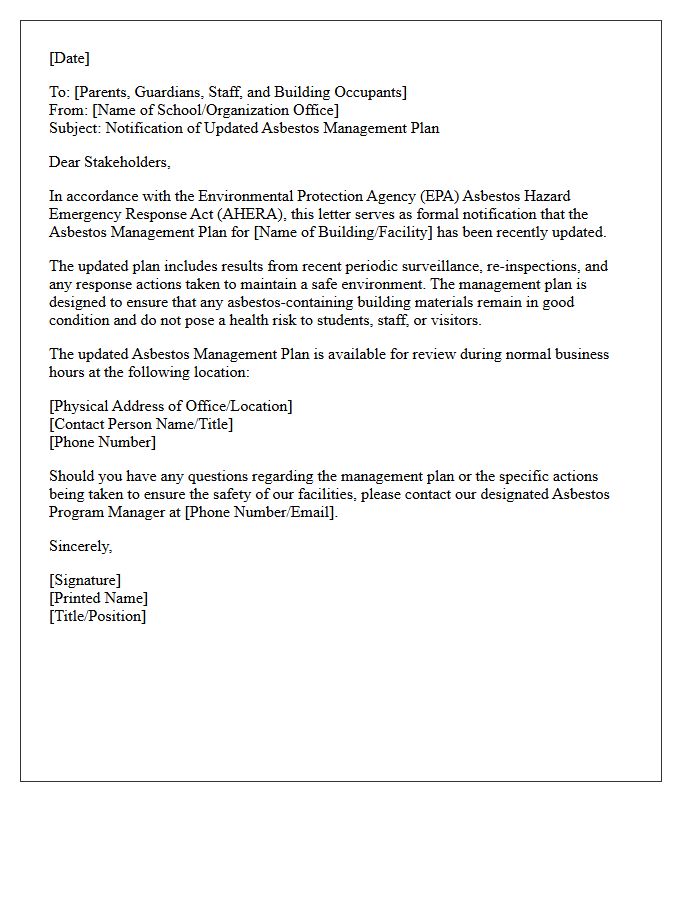
An updated Asbestos Management Plan Notification Letter is a legal requirement under AHERA regulations for schools and public buildings. This document informs parents, staff, and occupants about the presence of asbestos-containing materials and the specific actions taken to maintain safety. It confirms that an updated management plan is available for public review, detailing recent inspections, response actions, and periodic surveillance. Maintaining this compliance notification is essential to ensure transparency and protect building occupants from potential health risks associated with fiber exposure through proper, documented monitoring protocols.
Lease Renewal Asbestos Hazard Disclosure Letter
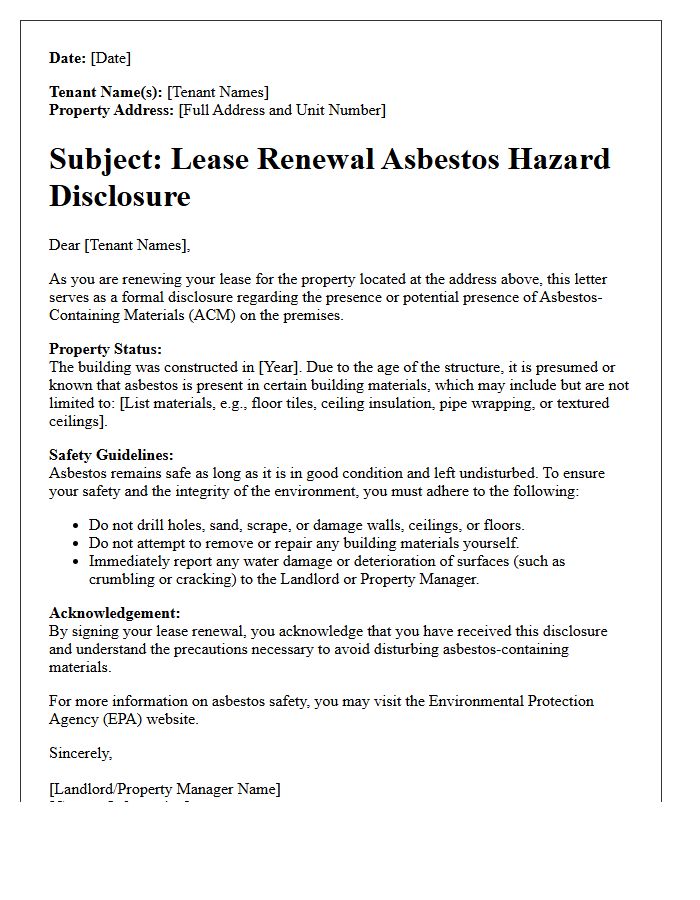
A Lease Renewal Asbestos Hazard Disclosure Letter is a critical legal document informing tenants of the presence of asbestos-containing materials before extending a rental agreement. Property owners must provide this safety notification to comply with local housing regulations and federal law. It ensures transparency regarding potential health risks and outlines necessary precautionary measures to prevent fiber release. Tenants should review this disclosure carefully to understand their legal rights and maintenance responsibilities, ensuring a safe living environment during the renewed lease term.
What is a Notice of Asbestos Hazard Disclosure?
A Notice of Asbestos Hazard Disclosure is a legal document used by property owners or sellers to inform tenants, buyers, or employees of the presence, location, and condition of asbestos-containing materials (ACM) within a building.
When is an asbestos disclosure notice legally required?
Disclosure is typically required during real estate transactions, prior to signing a lease agreement, or before starting renovation and demolition projects in buildings constructed before the late 1970s, as mandated by federal and state environmental regulations.
Does the presence of asbestos mean a building is unsafe?
Not necessarily. Asbestos is generally considered safe if it is in good condition and remains undisturbed (non-friable). The hazard arises when the material is damaged or disturbed, releasing microscopic fibers into the air that can be inhaled.
What information must be included in an asbestos disclosure?
A comprehensive disclosure should include the specific locations of identified asbestos, the type of material (such as insulation, floor tiles, or ceiling textures), the current condition of those materials, and recommended safety precautions for occupants.
What should I do if I receive a Notice of Asbestos Hazard Disclosure?
If you receive a disclosure, review the locations of the asbestos and avoid any activities that could damage those surfaces, such as drilling, sanding, or remodeling. Ensure that any future maintenance is performed by licensed asbestos abatement professionals.

Comments