
Receiving a Notice of Noise Ordinance Violation can be stressful for homeowners and tenants alike. This formal warning indicates that sound levels from your property have exceeded local legal limits. Understanding your rights and the specific regulations is essential to resolve the issue and avoid hefty fines. To help you respond professionally, below are some ready to use template.
Image cover: Professional Templates and Samples for Noise Ordinance Violation Notices
Letter Samples List
- First Warning Noise Ordinance Violation Letter
- Second Warning Noise Ordinance Violation Letter
- Final Notice of Noise Ordinance Violation Letter
- Quiet Hours Policy and Noise Ordinance Violation Letter
- Excessive Noise Complaint and Lease Violation Letter
- Tenant Notice of Municipal Noise Ordinance Violation Letter
- Official Property Management Noise Nuisance Warning Letter
- Late Night Noise Ordinance Infraction Notice Letter
- Letter of Warning for Repeated Noise Ordinance Violations
- Formal Notice to Cease Noise Ordinance Violations Letter
- Notice of Eviction Due to Noise Ordinance Violation Letter
- Community Rules and Noise Ordinance Noncompliance Letter
First Warning Noise Ordinance Violation Letter
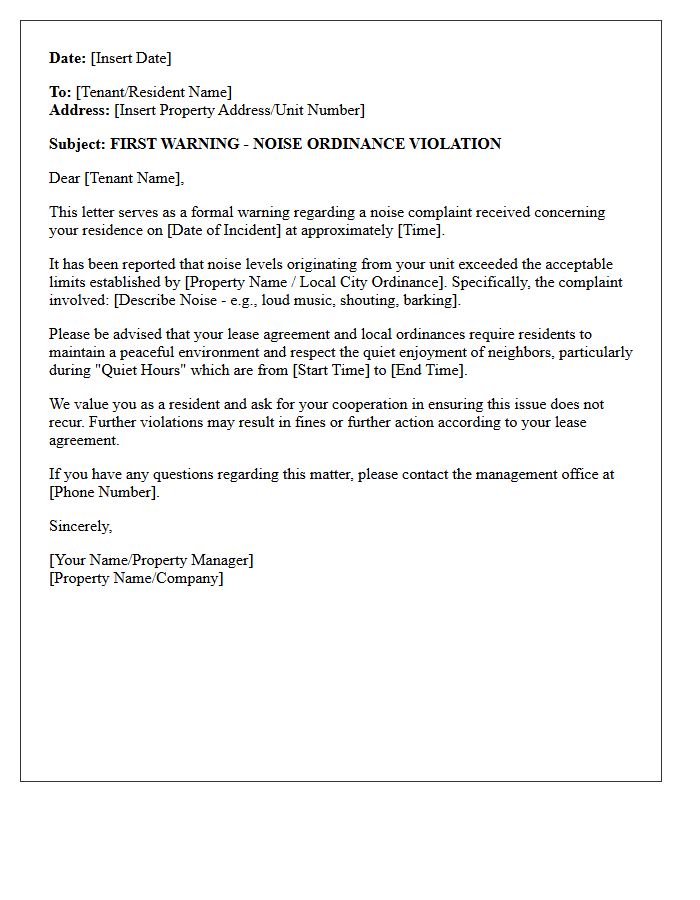
A First Warning Noise Ordinance Violation Letter serves as a formal notification that your property has exceeded local sound limits. This legal notice typically outlines the specific date and time of the disturbance reported by neighbors or officials. It is crucial to remedy the situation immediately to avoid escalating penalties, such as heavy fines or court appearances. Understanding your local compliance requirements is essential to maintaining community standards. Treating this initial document as a serious advisory allows you to resolve issues through noise mitigation without facing further enforcement actions or permanent records.
Second Warning Noise Ordinance Violation Letter
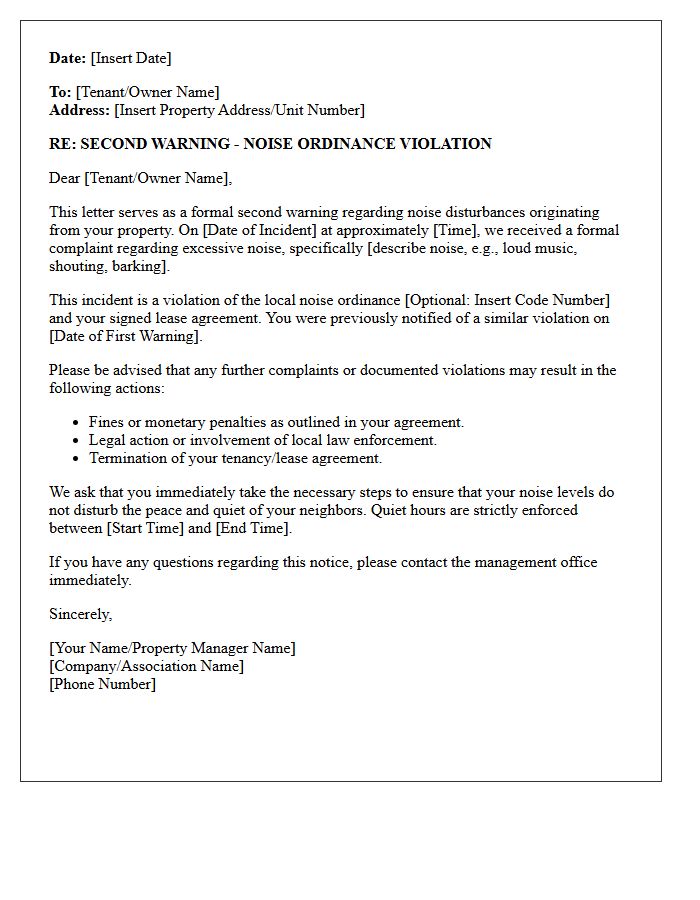
Receiving a Second Warning Noise Ordinance Violation Letter indicates a repeated failure to comply with local sound regulations. This formal notice serves as a final opportunity to rectify excessive noise levels before legal action or heavy fines are imposed. It typically outlines the specific dates of infractions and the potential penalties for continued non-compliance. Property owners should immediately address the source of the disturbance and implement sound-mitigation strategies to ensure regulatory adherence. Ignoring this official warning often leads to mandatory court appearances or civil citations that negatively impact your record.
Final Notice of Noise Ordinance Violation Letter
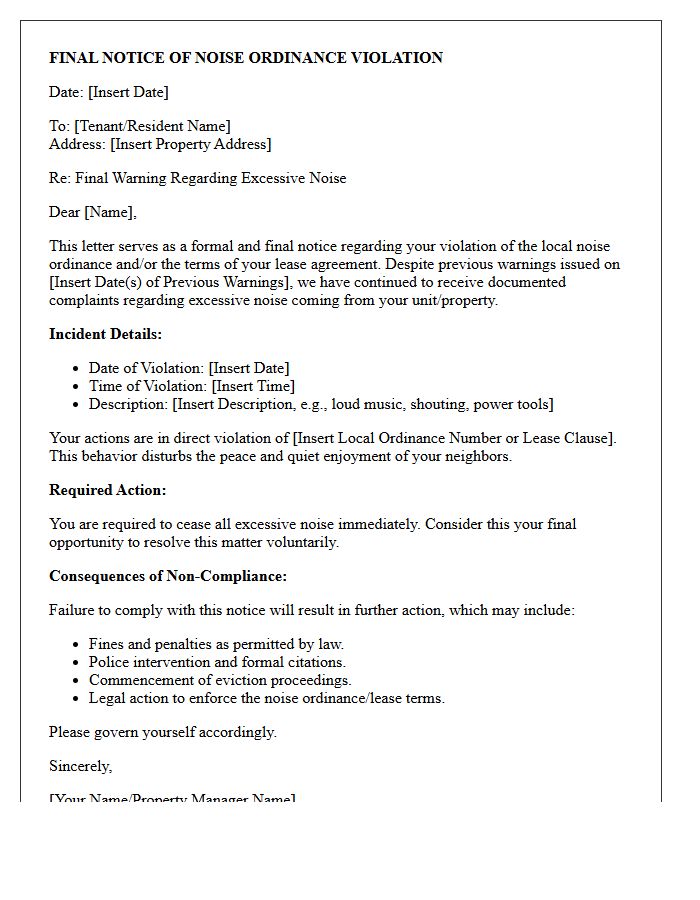
A Final Notice of Noise Ordinance Violation Letter is a formal legal warning issued after previous attempts to resolve sound disturbances have failed. It highlights a persistent breach of local noise regulations and serves as the last step before the governing body imposes strict fines, legal action, or property liens. Receiving this document signifies that the recipient must immediately implement noise mitigation measures to avoid prosecution. It typically includes specific details regarding the violation dates, local statutes violated, and the severe consequences of continued non-compliance with the established community peace standards.
Quiet Hours Policy and Noise Ordinance Violation Letter
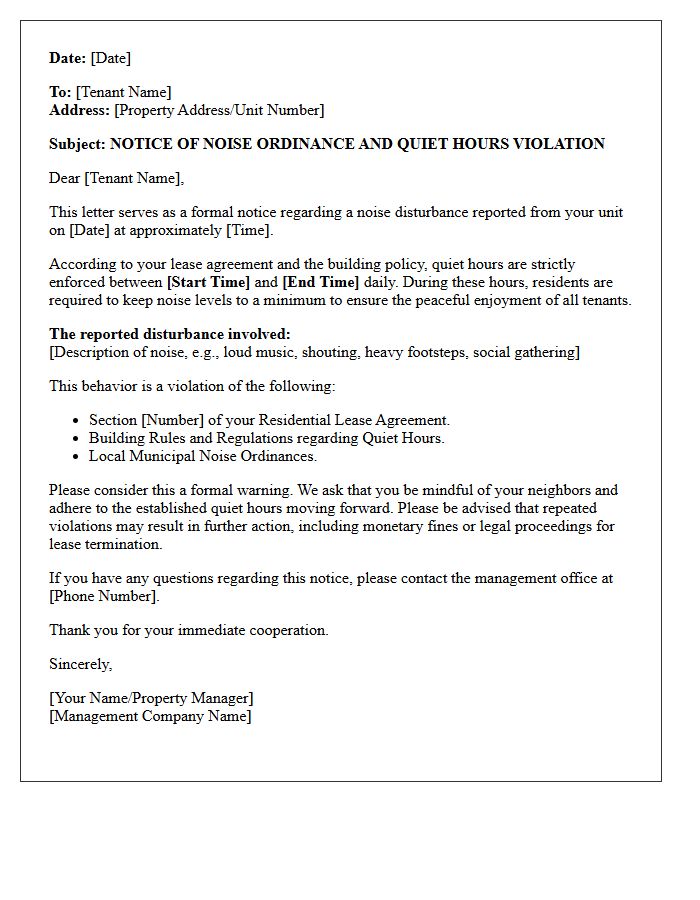
A Quiet Hours Policy establishes specific times when residents must minimize noise to ensure communal comfort. If these rules are breached, a Noise Ordinance Violation Letter serves as a formal warning or legal notice detailing the infraction. Understanding these documents is essential for maintaining residential compliance and avoiding potential fines or eviction. Always review local bylaws and lease agreements to identify designated quiet periods, as consistent noise disturbances can lead to documented legal consequences or the termination of your rental contract.
Excessive Noise Complaint and Lease Violation Letter
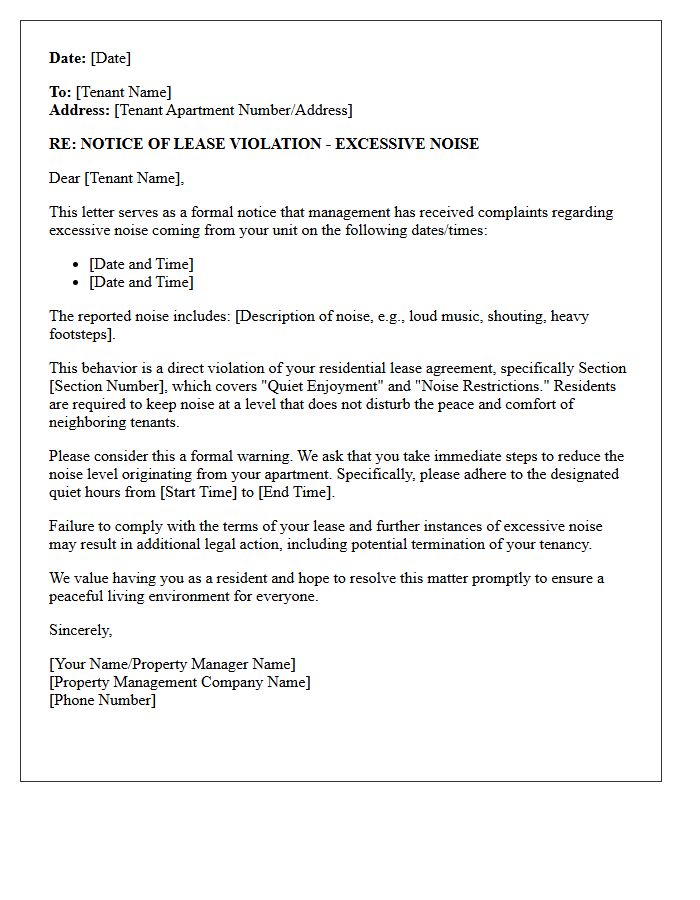
An excessive noise complaint serves as formal notice that a tenant has breached the implied covenant of quiet enjoyment. When a property manager issues a lease violation letter, it documents specific disturbances and establishes a legal timeline for resolution. Repeated offenses can lead to eviction proceedings if the behavior continues. To ensure compliance, tenants should immediately reduce volume levels and address the mentioned grievances. Clear communication and documentation are essential for both landlords and residents to maintain a peaceful living environment and protect their tenancy rights under the rental agreement.
Tenant Notice of Municipal Noise Ordinance Violation Letter
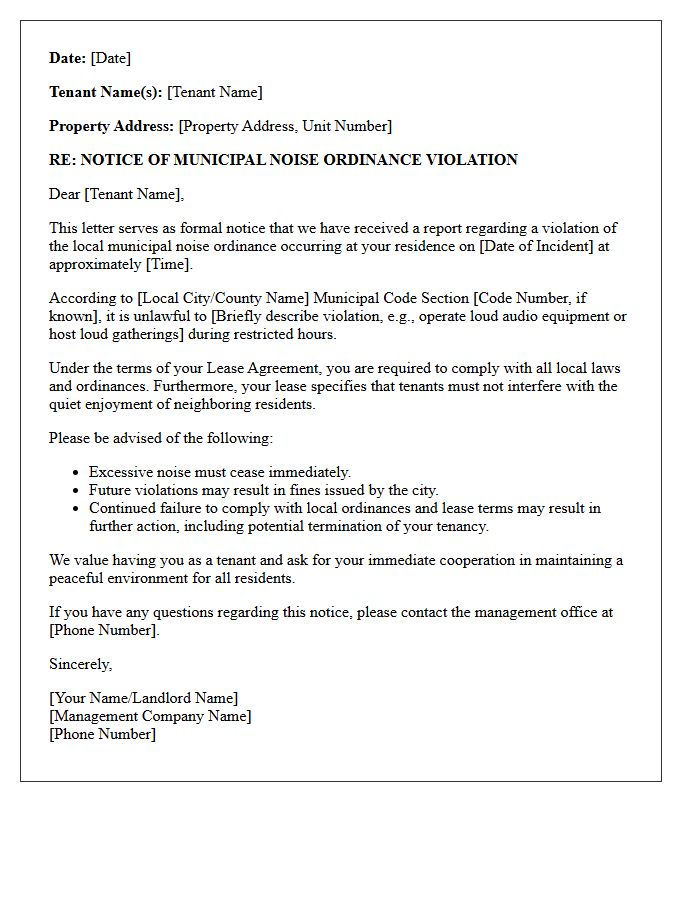
A Tenant Notice of Municipal Noise Ordinance Violation Letter is a formal document issued by a landlord to inform a tenant that their behavior has breached local noise laws. This letter serves as a critical legal warning, documenting the specific date and nature of the disturbance. It notifies the resident that continued non-compliance may lead to eviction proceedings or financial penalties. To ensure enforceability, the notice should clearly reference the specific city ordinance violated and outline the necessary corrective actions to maintain a peaceful living environment for all neighbors.
Official Property Management Noise Nuisance Warning Letter
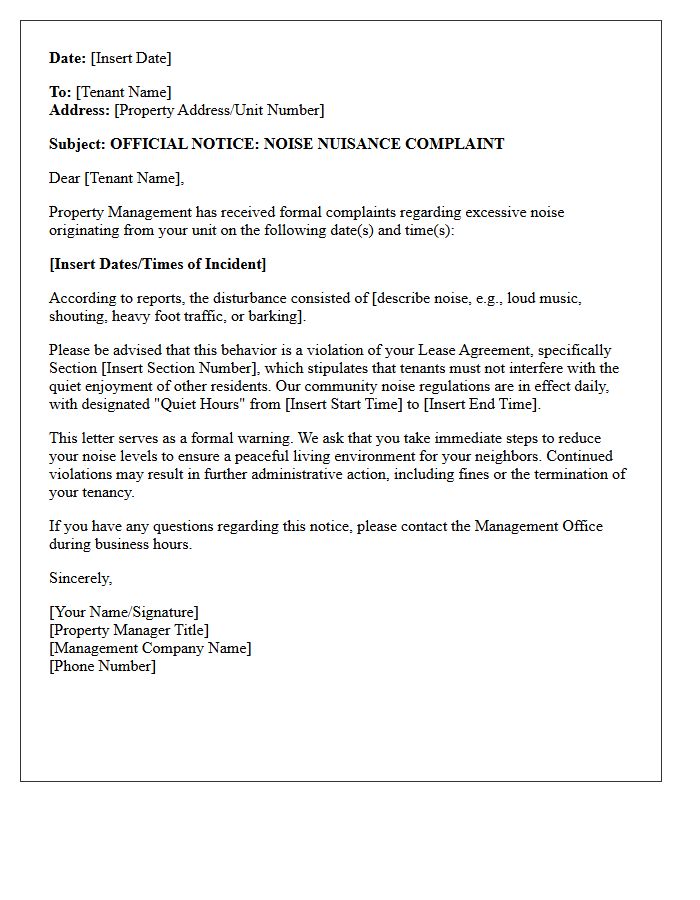
An official property management noise nuisance warning letter serves as a formal notice to tenants regarding documented lease violations. It specifies the nature of the disturbance, the exact dates of the incidents, and the potential consequences of continued non-compliance. This document acts as a critical legal record, providing clear instructions to cease the noise immediately. Property managers use these letters to enforce community standards and ensure quiet enjoyment for all residents. Failure to resolve the issue after receiving this warning can lead to eviction proceedings or financial penalties under the rental agreement.
Late Night Noise Ordinance Infraction Notice Letter
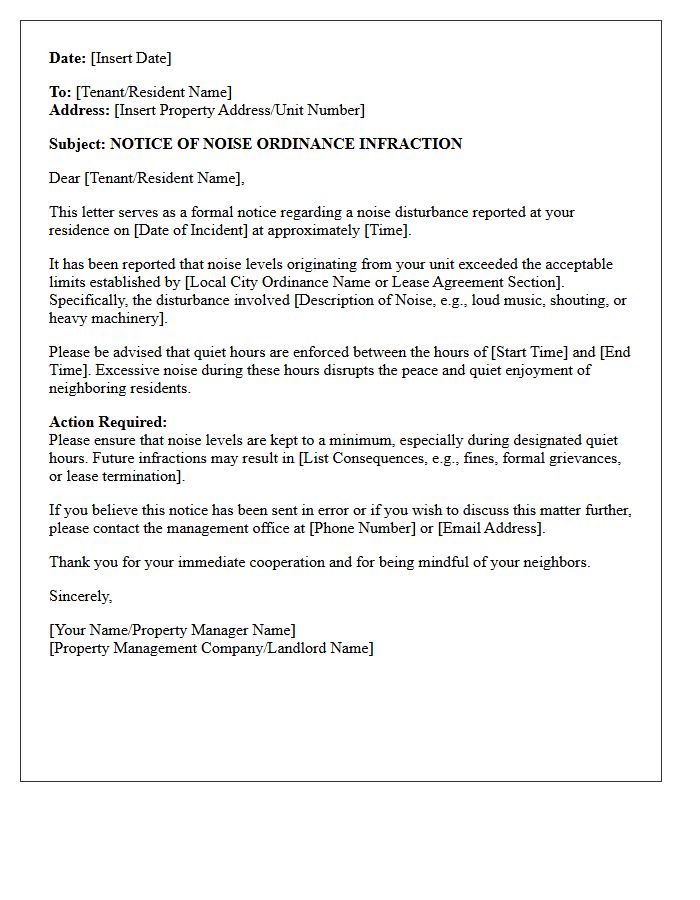
A Late Night Noise Ordinance Infraction Notice is a formal warning issued when a noise complaint occurs during restricted hours. Receiving this letter indicates that sound levels from your property violated local municipal codes, potentially resulting in fines or legal action if the behavior persists. It is essential to review the specific compliance requirements and designated quiet hours mentioned in the document. To resolve the issue, address the source of the disturbance immediately and maintain neighborly consideration to avoid further escalation or permanent records of non-compliance with local authorities.
Letter of Warning for Repeated Noise Ordinance Violations
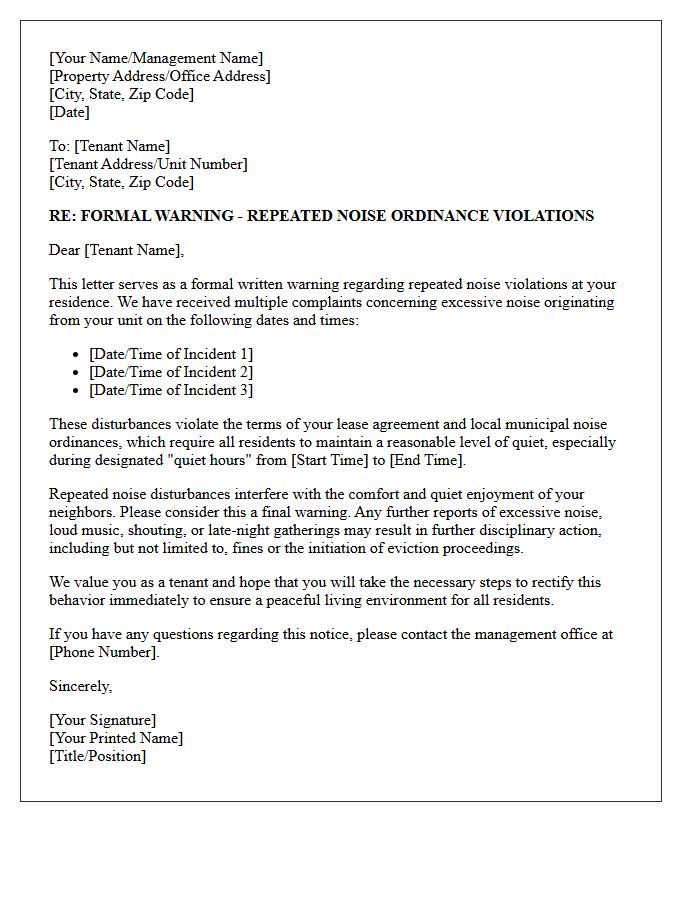
Receiving a Letter of Warning indicates a formal notification of repeated noise ordinance violations. This document serves as a final legal notice before the authorities escalate to fines, citations, or criminal charges. It typically details specific dates, times, and decibel levels of past disturbances. To avoid further penalties, you must immediately implement noise mitigation strategies and adhere to local quiet hours. Maintaining a written record of your compliance efforts is essential, as this warning creates a permanent administrative trail that could influence future judicial proceedings or lease terminations.
Formal Notice to Cease Noise Ordinance Violations Letter
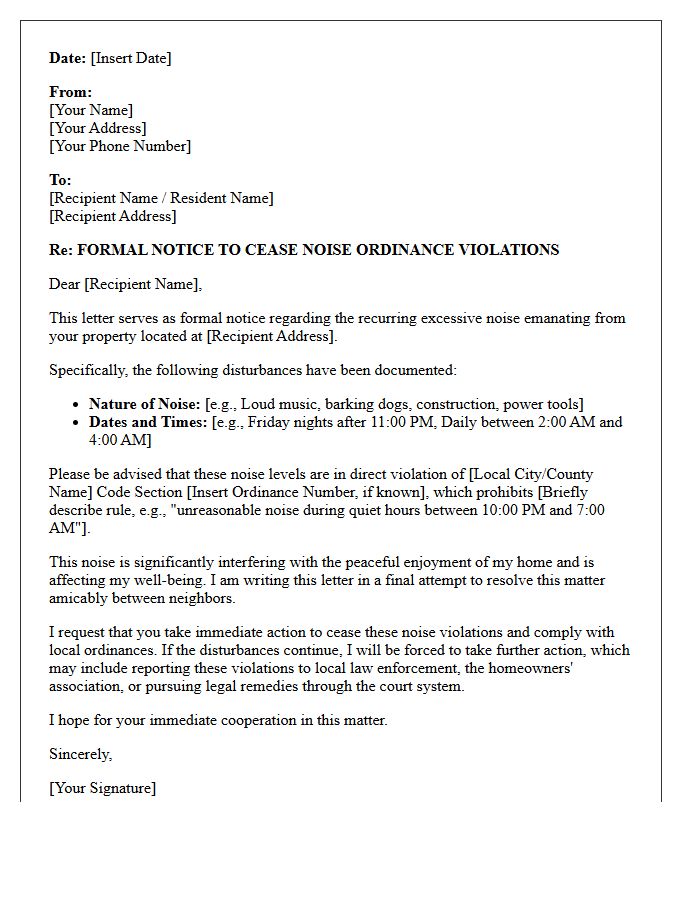
A formal cease and desist letter is a critical legal document used to officially notify a neighbor or business of noise ordinance violations. It clearly outlines specific disturbances, citing local laws and dates of occurrence. This letter serves as formal evidence of your attempt to resolve the conflict before escalating to litigation or police involvement. By documenting the impact on your quality of life, you create a legal paper trail that strengthens your position in future mediation or court proceedings, demanding an immediate end to the disruptive behavior.
Notice of Eviction Due to Noise Ordinance Violation Letter
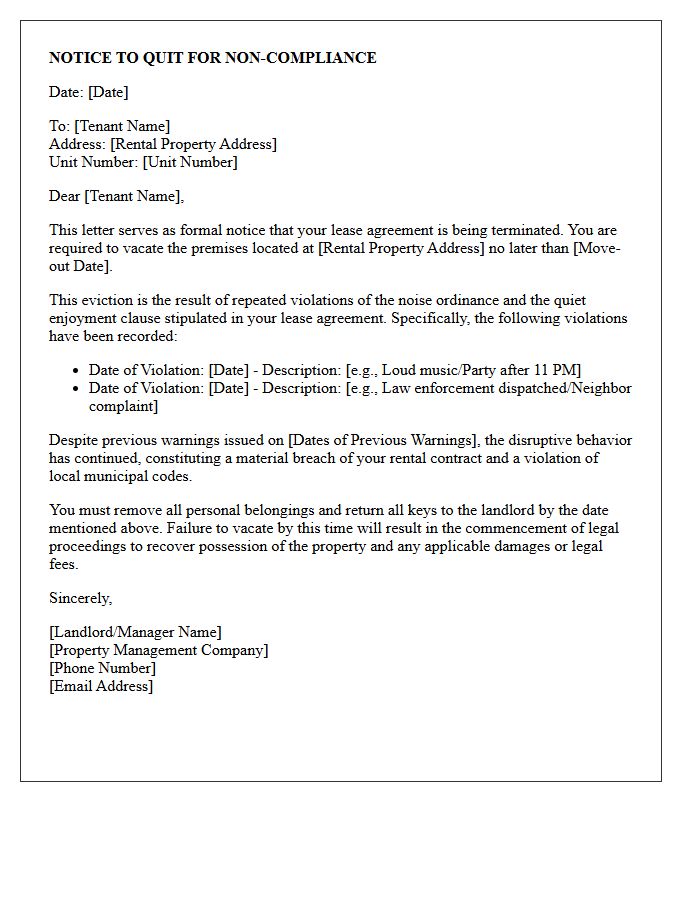
A Notice of Eviction Due to Noise Ordinance Violation is a formal legal document informing a tenant they must vacate the property for breaching local noise regulations. This letter specifies the dates and times of the non-compliance incidents. Landlords often issue this after previous warnings go ignored. It is essential to understand your legal rights and the state-mandated notice period required before an unconditional quit notice is finalized. Tenants should immediately review their lease agreement and local ordinances to determine if the violation is curable or leads to permanent lease termination.
Community Rules and Noise Ordinance Noncompliance Letter
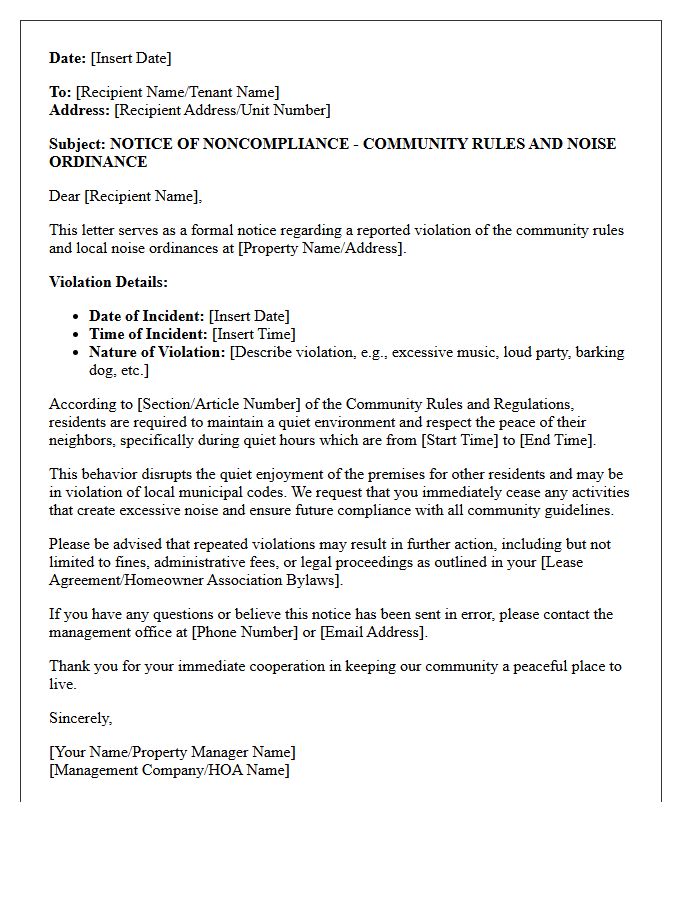
A Community Rules and Noise Ordinance Noncompliance Letter serves as a formal notice that a resident has violated specific local laws or homeowner association regulations. This legal communication outlines the nature of the disturbance, specifies the date of the occurrence, and demands immediate corrective action to avoid further penalties. Receiving this letter is a critical warning; failure to comply often results in monetary fines, loss of community privileges, or potential legal escalation. It is essential to document your response and address the underlying behavioral issues promptly to maintain neighborhood harmony.
What is a Notice of Noise Ordinance Violation?
A Notice of Noise Ordinance Violation is an official citation or warning issued by local law enforcement or municipal authorities when a person or business exceeds the allowable decibel limits or restricted noise hours defined by local city codes.
How can I contest a noise violation citation?
To contest a noise violation, you must typically follow the instructions on the back of the notice, which usually involve requesting an administrative hearing or appearing in municipal court to present evidence, such as sound logs or proof that the noise did not originate from your property.
What are the common penalties for violating a noise ordinance?
Penalties for noise ordinance violations generally range from a formal written warning for first-time offenders to monetary fines that increase with subsequent offenses; extreme cases or habitual violations may result in misdemeanor charges or court appearances.
What are the standard "quiet hours" in most residential areas?
While specific times vary by municipality, most local noise ordinances enforce "quiet hours" between 10:00 PM and 7:00 AM on weekdays, and may extend until 8:00 AM or 9:00 AM on weekends and holidays.
What should I do if I receive a noise violation notice for a tenant?
If you are a property owner who receives a notice regarding a tenant's behavior, you should immediately provide a copy of the violation to the tenant, document the incident for lease compliance records, and notify the issuing agency if the lease agreement holds the tenant legally responsible for municipal fines.


Comments