
A Month-to-Month Tenancy Rent Increase Notice Letter is a formal document used by landlords to notify tenants of a price adjustment. Legal requirements typically mandate a specific notice period, often 30 days, to ensure compliance with local housing laws. Clear communication helps maintain a professional landlord-tenant relationship during transitions. Below are some ready to use template options to simplify the process.
Image cover: Free Month-to-Month Rent Increase Notice Templates and Tenant Letter Samples
Letter Samples List
- Standard Month-to-Month Rent Increase Notice Letter
- Thirty-Day Notice of Rent Increase Letter
- Sixty-Day Rent Increase Notification Letter
- Property Management Month-to-Month Rent Adjustment Letter
- Friendly Month-to-Month Tenancy Rent Increase Letter
- Formal Rent Increase Notice Letter for Month-to-Month Tenants
- Month-to-Month Lease Update and Rent Increase Letter
- Notice of Rent Increase Letter for Periodic Tenancy
- Annual Rent Adjustment Letter for Month-to-Month Lease
- Month-to-Month Tenancy Rent Revision Notice Letter
- Month-to-Month Rental Rate Change Notice Letter
- Fair Market Rent Increase Letter for Month-to-Month Tenants
Standard Month-to-Month Rent Increase Notice Letter
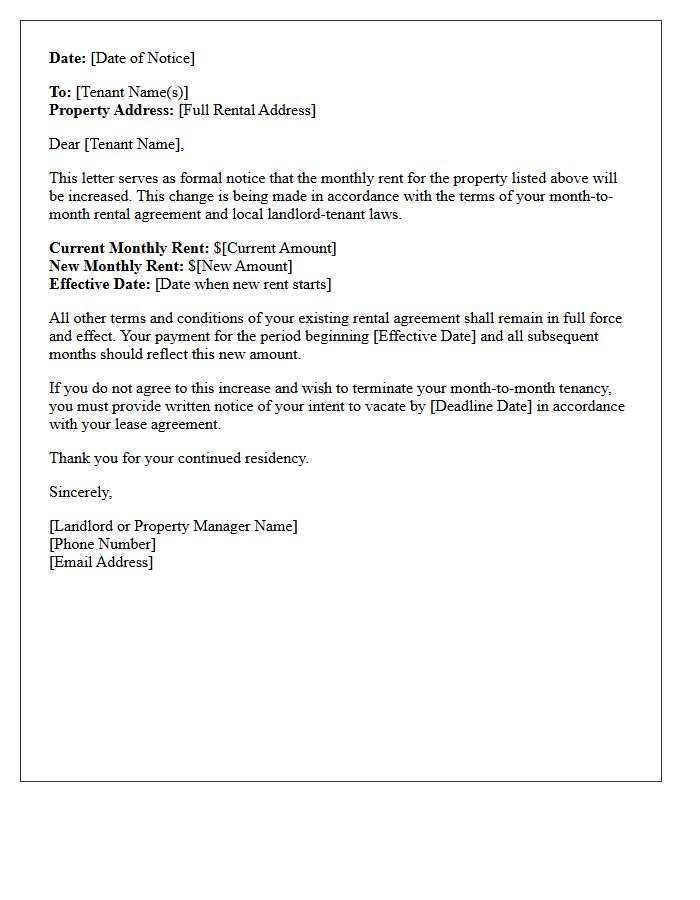
A Standard Month-to-Month Rent Increase Notice Letter is a formal document used by landlords to inform tenants of a price adjustment. To remain legally compliant, the notice must follow state-specific notice periods, typically requiring at least 30 days' advance warning. The letter should clearly state the current rent, the new amount, and the effective date. Proper written documentation ensures transparency and serves as a vital record for both parties. Always verify local rent control ordinances, as they may limit the maximum allowable increase or impose additional service requirements.
Thirty-Day Notice of Rent Increase Letter
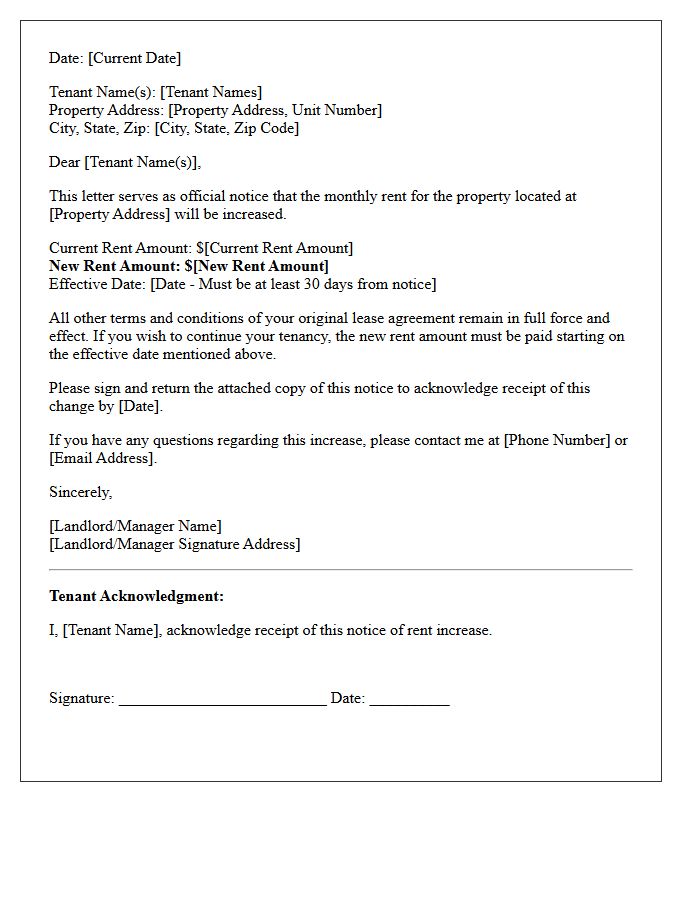
A Thirty-Day Notice of Rent Increase Letter is a formal document landlords must provide to inform tenants of an upcoming rent adjustment. This written notice ensures legal compliance and transparency, typically required for month-to-month tenancies. It must clearly state the new rental amount, the effective date, and property details. Timely delivery is crucial to respect tenant rights and maintain a professional relationship. Always verify local housing laws, as some jurisdictions require longer notice periods or cap the percentage of allowable increases to prevent illegal displacement.
Sixty-Day Rent Increase Notification Letter
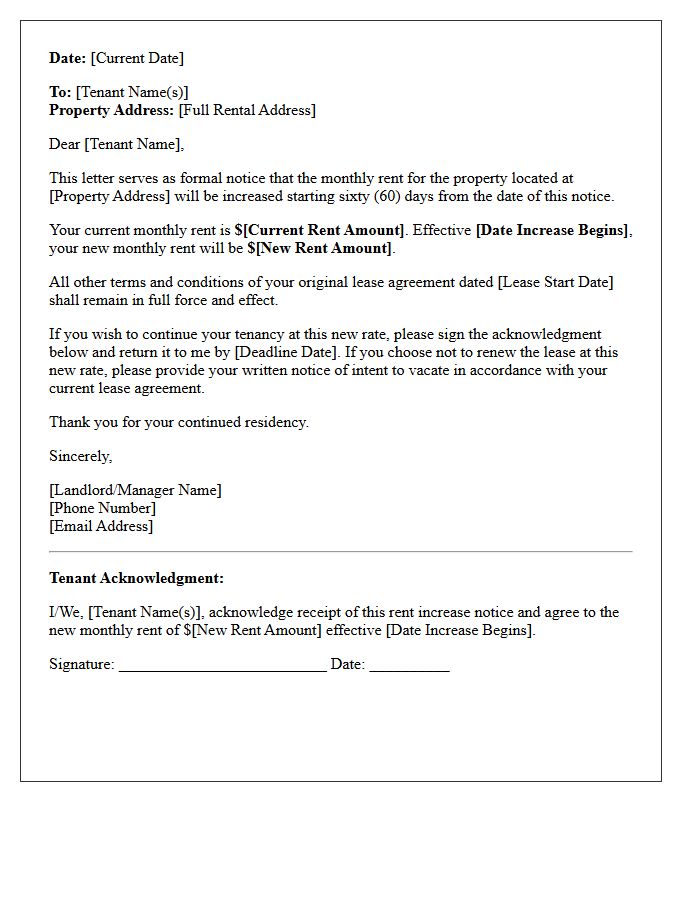
A Sixty-Day Rent Increase Notification Letter is a formal legal document landlords must provide when raising rent by more than 10%. In many jurisdictions, this written notice ensures tenant protection by allowing sufficient time to budget or relocate. The letter must clearly state the new rental amount and the effective date. Proper compliance with local housing laws is essential to ensure the increase is legally enforceable. Always verify specific state statutes, as some areas require longer notice periods for substantial lease adjustments or rent-controlled properties.
Property Management Month-to-Month Rent Adjustment Letter
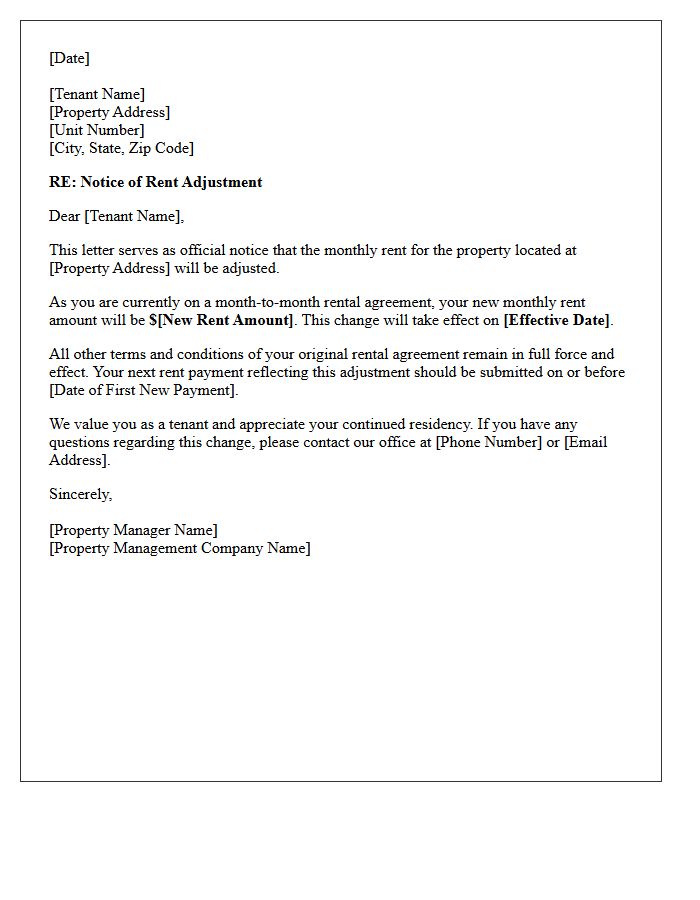
A property management month-to-month rent adjustment letter is a formal notice used to modify the monthly lease amount for flexible tenancies. The most critical element is providing the legally required notice period, typically 30 or 60 days, depending on local regulations. This document must clearly state the new rental rate, the effective date of the change, and instructions for the tenant to accept or vacate. Sending this notification via certified mail ensures professional compliance and maintains clear communication between landlords and occupants during the transition.
Friendly Month-to-Month Tenancy Rent Increase Letter
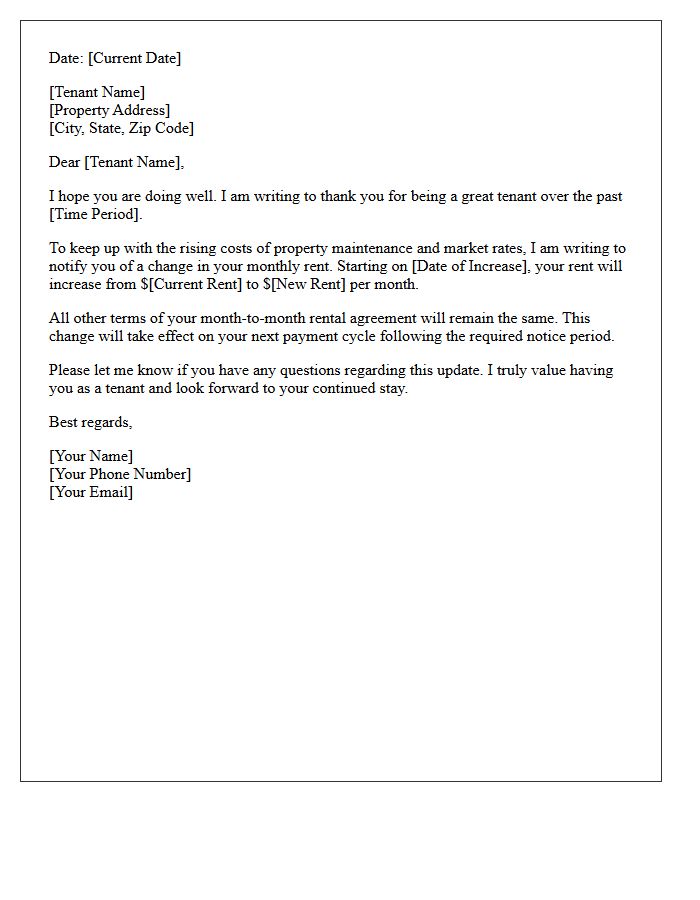
A friendly month-to-month tenancy rent increase letter should maintain a positive landlord-tenant relationship while clearly stating new terms. The most critical element is providing proper legal notice, typically 30 or 60 days depending on local statutes. Ensure the document includes the effective date, the new monthly rate, and a brief explanation for the adjustment, such as rising market costs. Keeping the tone professional yet empathetic encourages tenant retention and ensures a smooth transition to the updated payment amount without causing unnecessary conflict or misunderstanding.
Formal Rent Increase Notice Letter for Month-to-Month Tenants
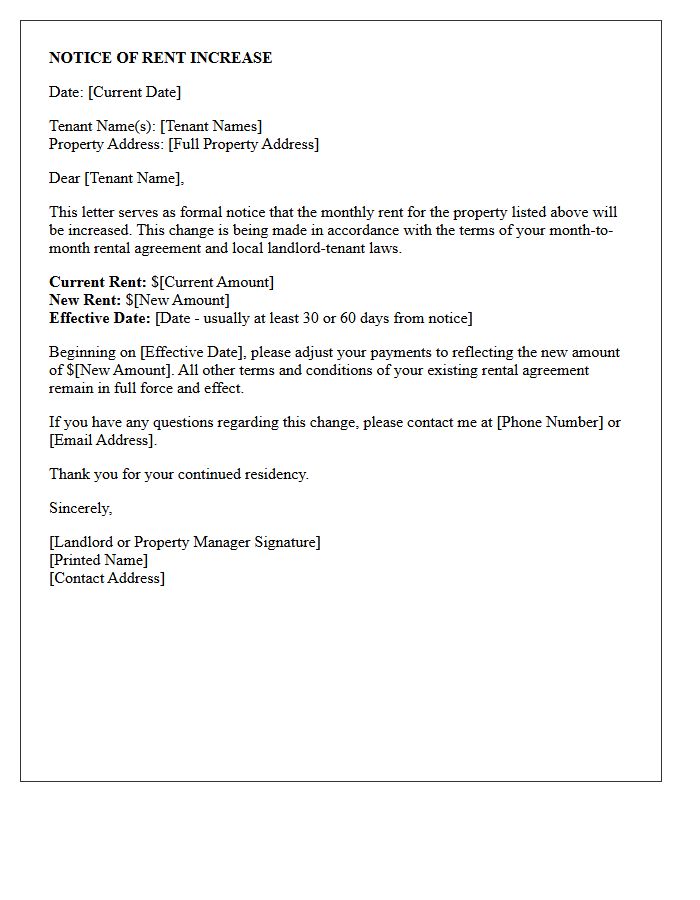
A formal rent increase notice is a legal requirement when adjusting lease terms for month-to-month tenants. Landlords must provide a written document specifying the new rental amount and the effective date of the change. Most jurisdictions require a minimum 30-day notice period, though local laws may vary. To ensure compliance, the letter should include the tenant's name, property address, and the landlord's signature. Delivering this notice via certified mail is recommended to maintain a reliable record of service and avoid potential legal disputes regarding housing regulations.
Month-to-Month Lease Update and Rent Increase Letter
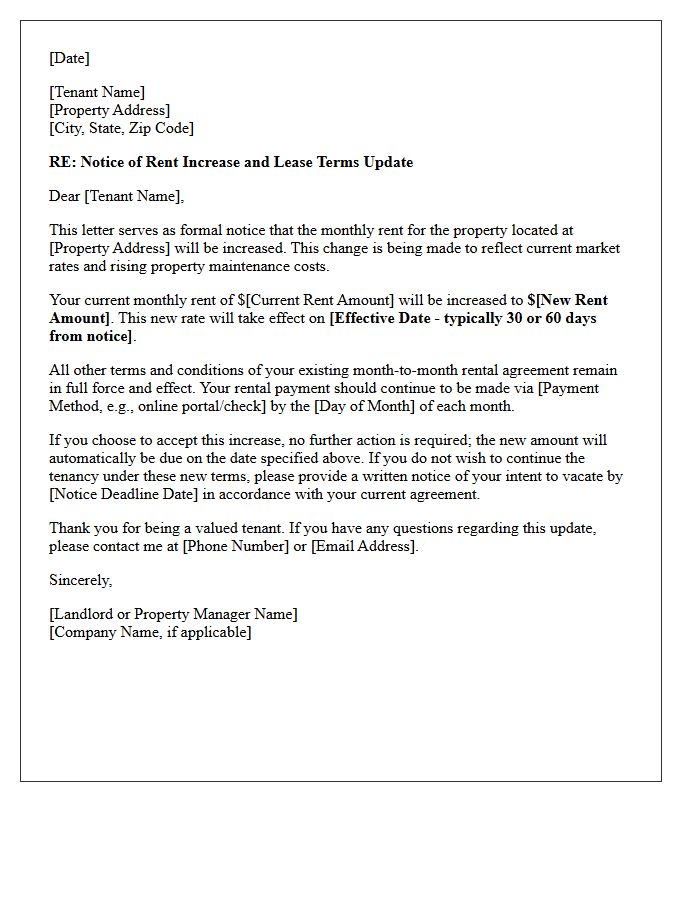
A month-to-month lease update requires a formal written notice to ensure legal compliance. Landlords must typically provide a 30-day notice before implementing a rent increase or altering rental terms. This letter should clearly state the new monthly rate, the effective date of the change, and the deadline for the tenant to accept or vacate. Providing clear communication helps maintain positive landlord-tenant relationships while adhering to local housing laws and rent control regulations to avoid potential legal disputes during the transition period.
Notice of Rent Increase Letter for Periodic Tenancy
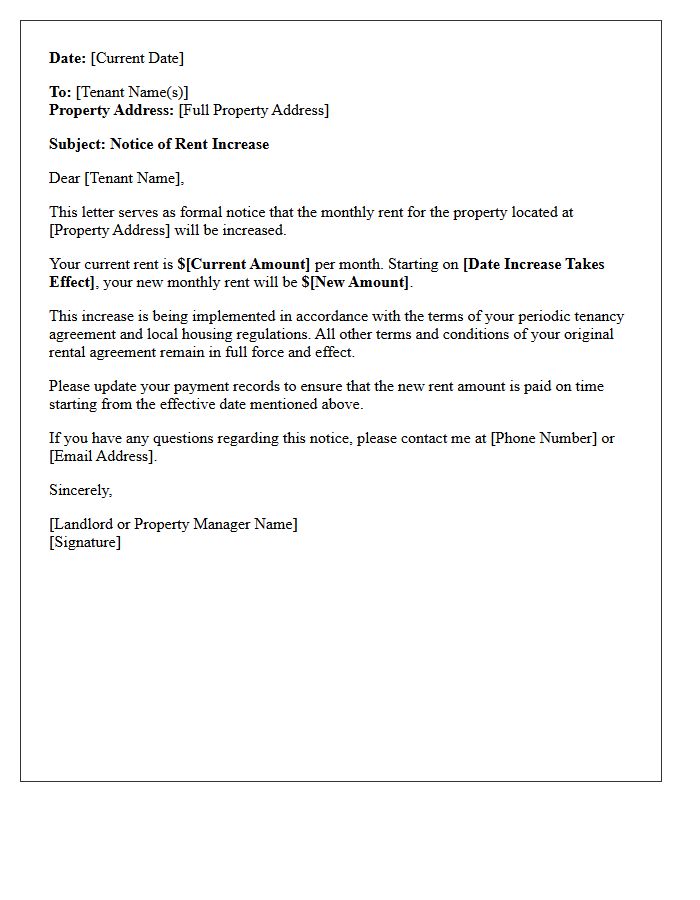
A Notice of Rent Increase Letter is a formal document used by landlords to adjust the cost of a periodic tenancy. In most jurisdictions, you must provide a specific notice period, typically 30 or 60 days, before the new rate applies. The letter must clearly state the new rent amount and the effective date of the change. Ensure the notice complies with local rent control laws and is delivered in writing to maintain legal validity and transparency throughout the rental agreement.
Annual Rent Adjustment Letter for Month-to-Month Lease
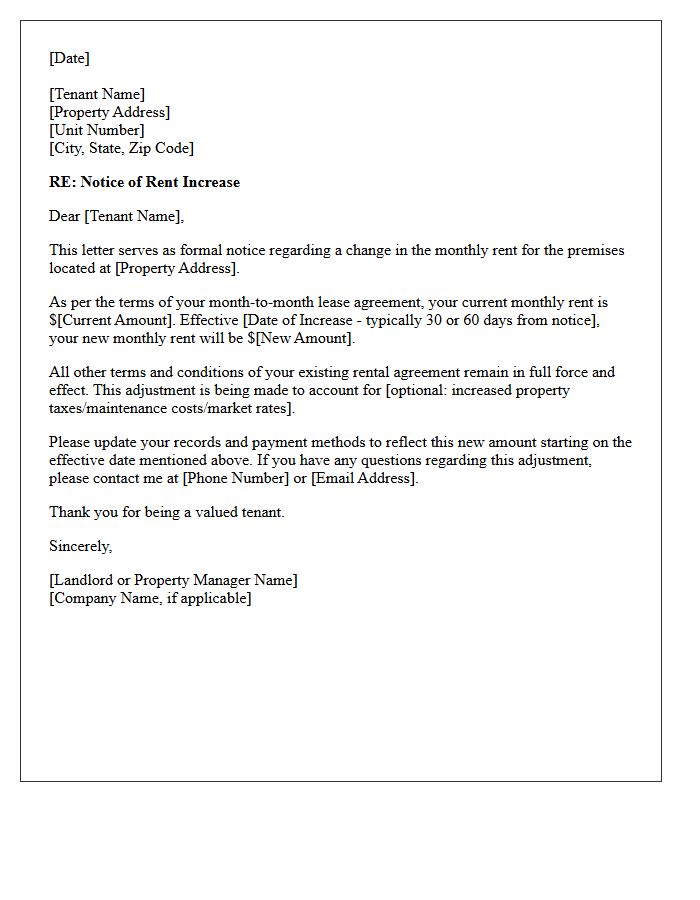
An Annual Rent Adjustment Letter is a formal notice sent by landlords to inform tenants of a price increase. For a month-to-month lease, the most critical factor is the required notice period, which is typically 30 or 60 days depending on local state laws. The document must clearly state the new rent amount and the specific date it becomes effective. To ensure legal compliance, landlords should deliver this written notice via certified mail, keeping a record to prevent disputes regarding the lease modification or payment terms.
Month-to-Month Tenancy Rent Revision Notice Letter
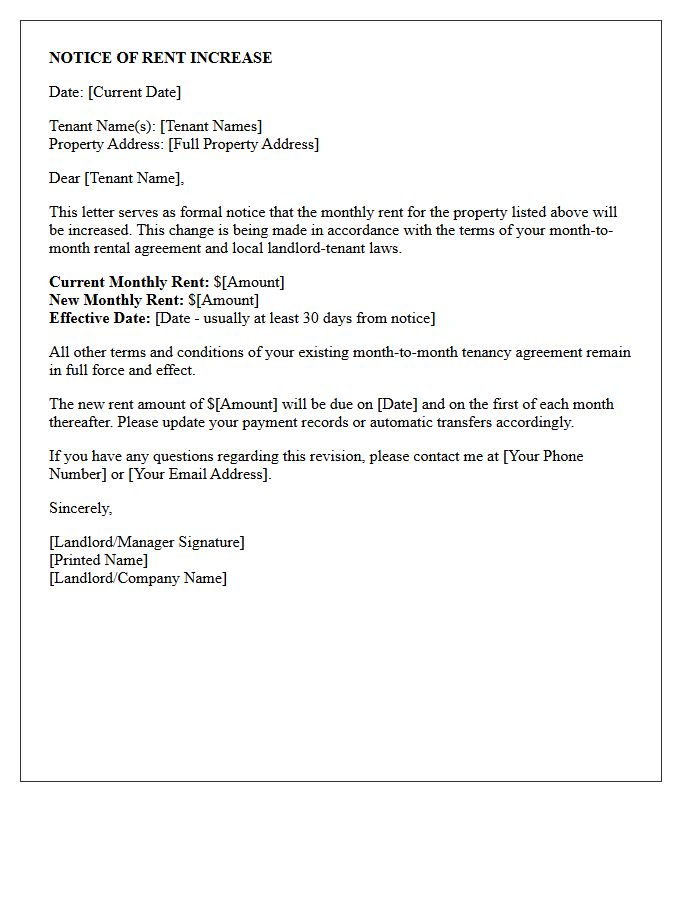
A month-to-month tenancy rent revision notice letter is a formal document used by landlords to inform tenants of a price increase. In most jurisdictions, providing a 30-day written notice is a mandatory legal requirement before the new rate takes effect. This letter must clearly state the current rent, the new amount, and the effective date. Using clear communication helps ensure compliance with local landlord-tenant laws while maintaining transparency. Proper delivery of this notice protects both parties by documenting the changes to the periodic rental agreement in a legally enforceable manner.
Month-to-Month Rental Rate Change Notice Letter
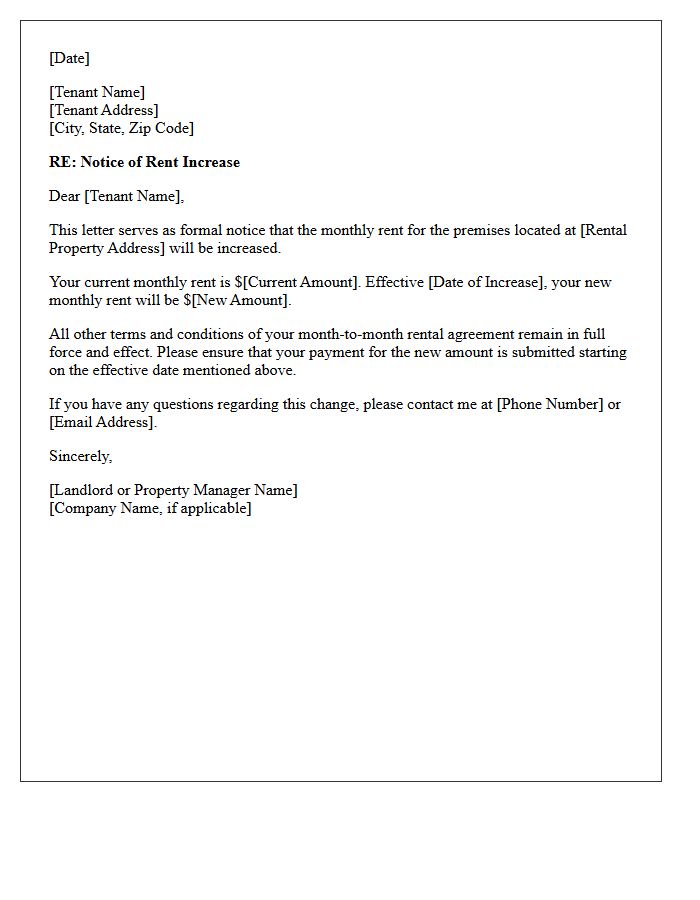
A Month-to-Month Rental Rate Change Notice Letter is a formal document used by landlords to inform tenants of an upcoming rent increase. To ensure legal compliance, the notice must be delivered in writing, typically providing a 30-day or 60-day notice period depending on local jurisdiction and state laws. This communication should clearly state the new monthly amount and the specific date the change takes effect. Providing clear, timely notification helps maintain positive landlord-tenant relationships while ensuring all lease modifications are properly documented and enforceable under residential tenancy regulations.
Fair Market Rent Increase Letter for Month-to-Month Tenants
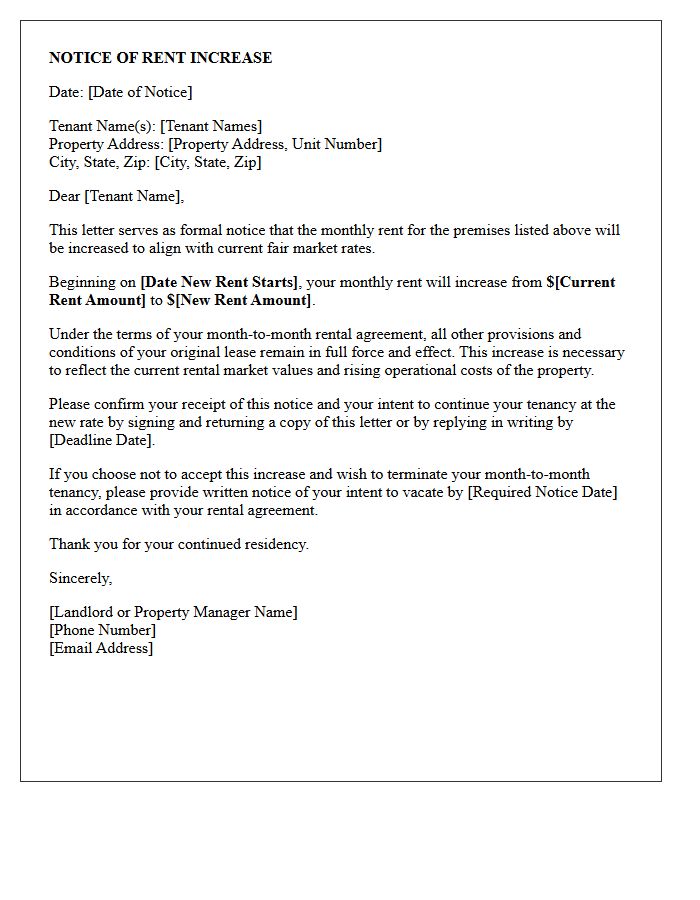
A Fair Market Rent Increase Letter notifies month-to-month tenants of a rate adjustment to align with current local economic trends. Landlords must provide a formal written notice, typically 30 to 60 days before the new rate takes effect, depending on local jurisdiction laws. The document should clearly state the new monthly amount, the effective date, and the deadline for the tenant to accept or terminate the lease. Ensuring the increase reflects fair market value helps maintain property profitability while complying with essential housing regulations and protecting tenant rights.
How much notice is required for a rent increase in a month-to-month tenancy?
In most jurisdictions, a landlord must provide a written notice at least 30 to 60 days before the rent increase takes effect. The specific timeframe often depends on local state laws and the percentage of the total increase being requested.
What information must be included in a rent increase notice letter?
A formal rent increase letter should include the current rent amount, the new rent amount, the effective date of the change, the date the notice was issued, and the property address. It should also be signed by the landlord or property manager to be legally binding.
Can a landlord increase rent every month on a month-to-month lease?
While month-to-month leases offer flexibility, landlords are generally prohibited from increasing rent more than once or twice in a 12-month period, depending on local rent control laws. Each increase must always be preceded by the legally required notice period.
Do I have to sign a new lease agreement if my month-to-month rent is increased?
No, you do not necessarily need to sign a new lease. A rent increase notice acts as an amendment to your existing month-to-month verbal or written agreement. However, continuing to pay the new rate and occupying the unit typically signifies legal acceptance of the new terms.
Can I negotiate or refuse a rent increase in a month-to-month tenancy?
You can attempt to negotiate the increase with your landlord by citing market rates or your history as a reliable tenant. However, if you refuse a lawful increase, the landlord typically has the right to terminate the month-to-month tenancy with a proper 30-day notice to vacate.


Comments