
Gathering feedback on a candidate's cultural fit is essential for long-term hiring success. This guide explains how to effectively ask clients for their impressions of a professional's personality and values after an interview. Ensuring a alignment with company culture reduces turnover and enhances team cohesion. To simplify your communication, below are some ready to use templates.
Image cover: Client Feedback Templates: Assessing Candidate Cultural Alignment
Letter Samples List
- Post-Interview Candidate Cultural Fit Feedback Request Letter
- Final Stage Candidate Cultural Alignment Evaluation Letter
- Executive Search Cultural Fit Assessment Request Letter
- Post-Placement Cultural Fit Follow-Up Letter
- Remote Team Cultural Dynamics Feedback Letter
- Probationary Period Cultural Integration Review Letter
- Comprehensive Candidate Cultural Fit Questionnaire Letter
- Technical Department Cultural Alignment Feedback Letter
- Start-Up Environment Cultural Fit Assessment Letter
- Leadership Style And Cultural Integration Review Letter
- Unsuccessful Candidate Cultural Fit Clarification Letter
- Short-Term Contract Cultural Fit Feedback Letter
Post-Interview Candidate Cultural Fit Feedback Request Letter
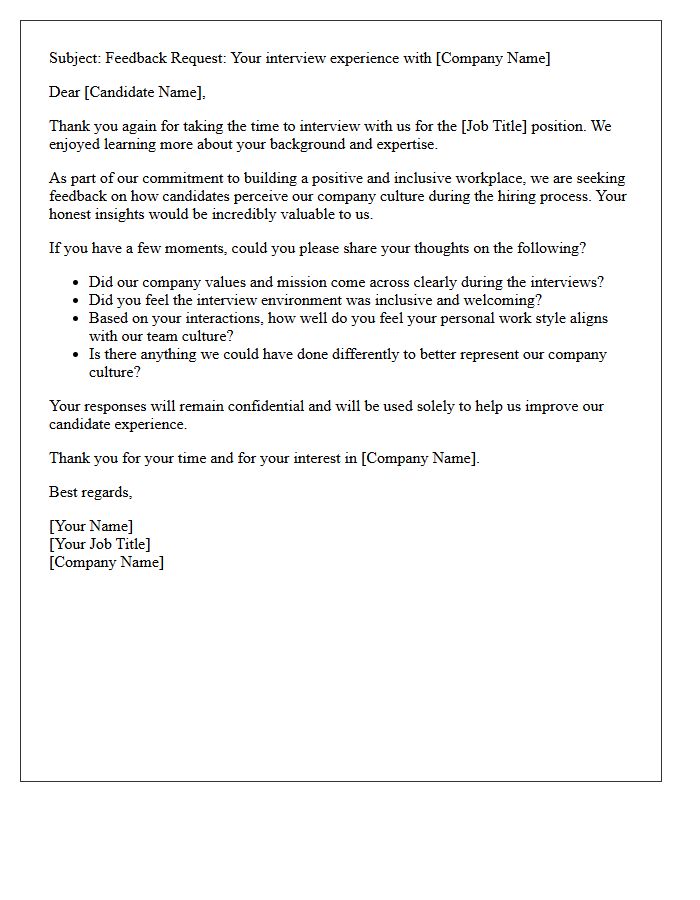
A post-interview cultural fit feedback request is a strategic communication tool used to assess how well a candidate aligns with organizational values and team dynamics. This letter invites interviewers to provide objective observations regarding a candidate's soft skills and behavioral traits. To ensure effectiveness, focus on specific cultural pillars rather than vague likability. Prompt feedback helps hiring managers make data-driven decisions, minimizing turnover by ensuring long-term compatibility. Keep the request concise, professional, and centered on inclusive hiring standards to maintain a fair and high-performing workplace environment.
Final Stage Candidate Cultural Alignment Evaluation Letter
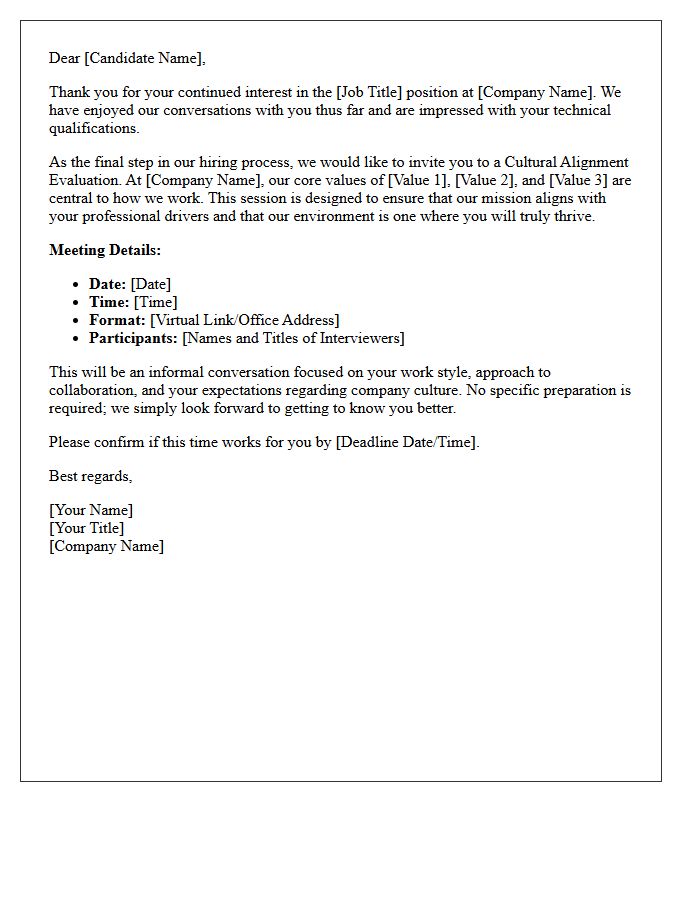
A Final Stage Candidate Cultural Alignment Evaluation Letter confirms if a professional's core values synchronize with the organizational mission. This document outlines specific behaviors and soft skills observed during the culture fit interview phase. It serves as a decisive tool for hiring managers to ensure long-term retention and team synergy. By documenting how a candidate embodies company principles, the letter provides a strategic justification for the final hiring choice, minimizing the risk of a toxic workplace environment and ensuring a holistic assessment beyond technical expertise.
Executive Search Cultural Fit Assessment Request Letter
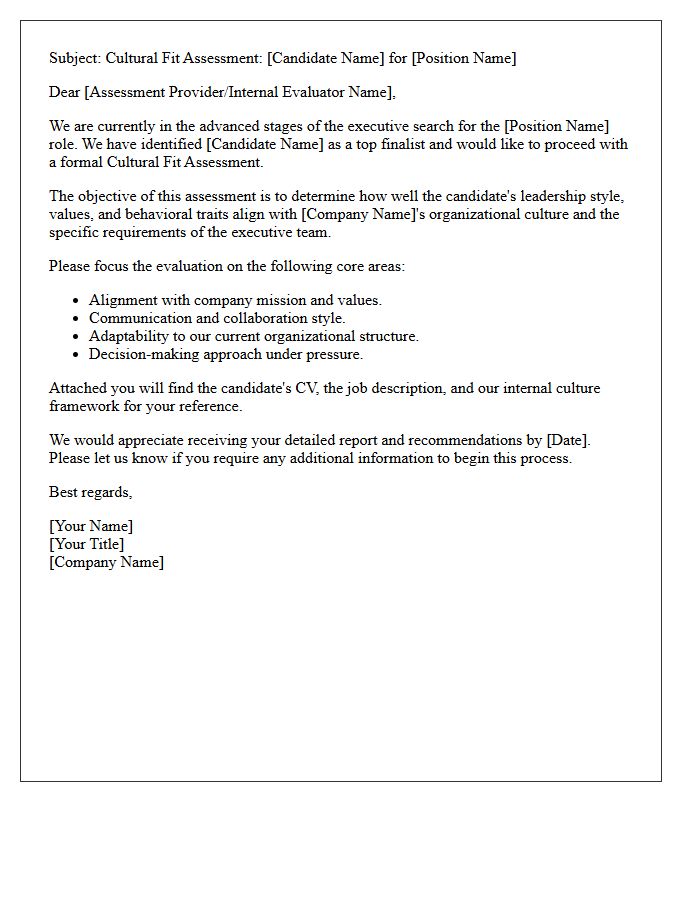
An Executive Search Cultural Fit Assessment Request Letter is a formal document used to evaluate if a candidate aligns with a company's core values and leadership style. It outlines the specific behavioral attributes and organizational dynamics required for long-term success. This request ensures that potential hires possess the soft skills necessary to thrive within the existing corporate environment. By formalizing this step, companies mitigate the risk of turnover and ensure strategic alignment between the new executive's vision and the established workplace culture.
Post-Placement Cultural Fit Follow-Up Letter
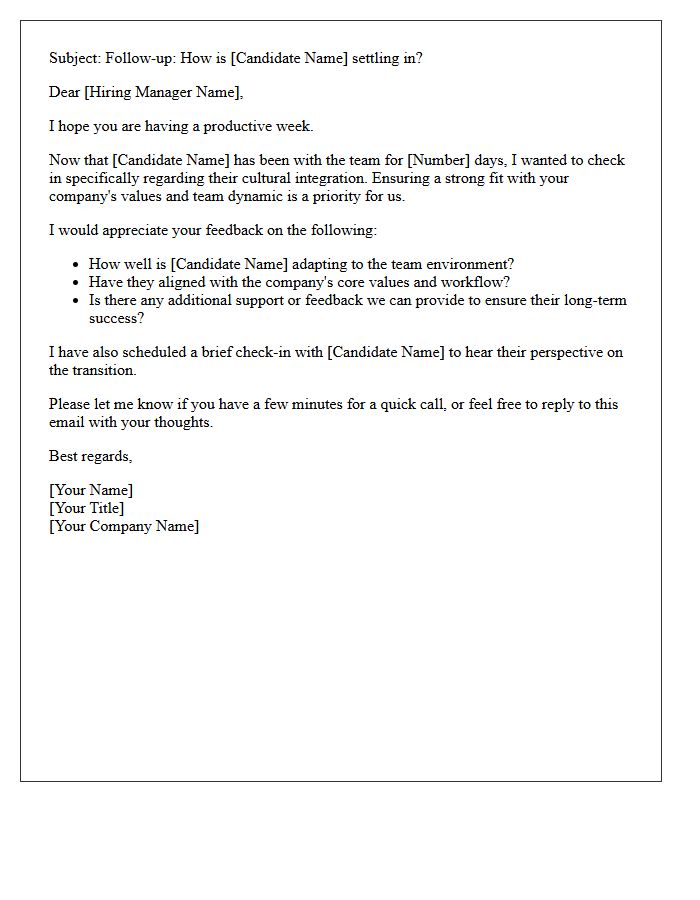
A post-placement cultural fit follow-up letter is a strategic retention tool used to ensure a new hire aligns with the company's core values. This communication allows employers to address early integration challenges and gather feedback on the onboarding experience. By proactively assessing the professional synergy between the employee and the team, organizations can reduce turnover and foster long-term engagement. Sending this letter demonstrates a commitment to a supportive work environment, reinforcing the hire's decision to join while identifying potential cultural friction before it impacts overall performance.
Remote Team Cultural Dynamics Feedback Letter
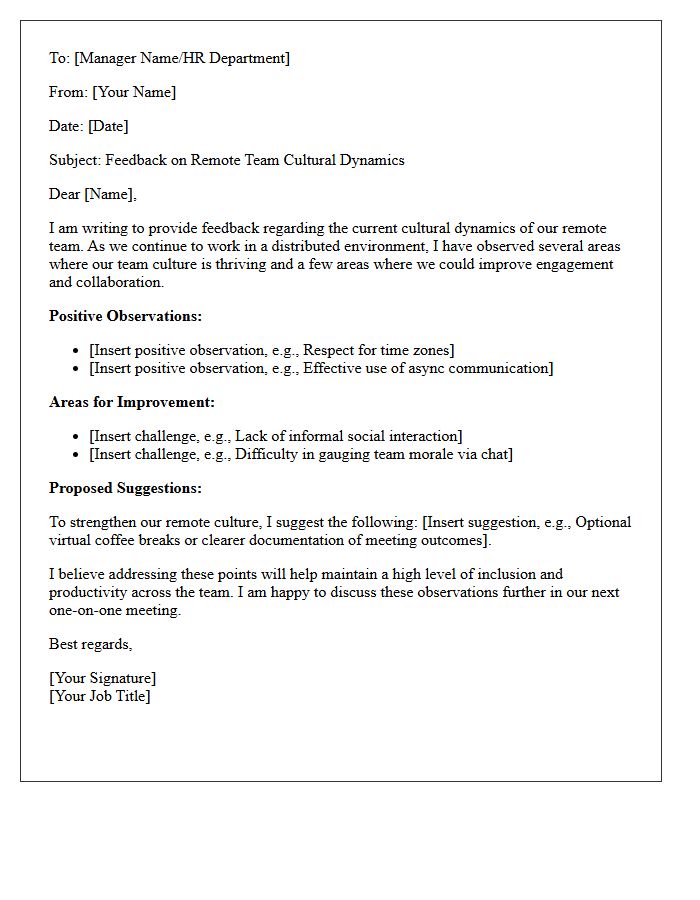
A Remote Team Cultural Dynamics Feedback Letter is a critical tool for identifying inclusive workplace behaviors and communication gaps in distributed environments. It should highlight how cross-cultural collaboration impacts project efficiency and morale. By documenting specific cultural nuances and interpersonal interactions, leaders can implement targeted sensitivity training and improve team cohesion. Effective feedback ensures that diverse perspectives are valued, ultimately reducing isolation and fostering a unified organizational culture across different time zones. Use this letter to bridge geographical divides and build trust within your global workforce.
Probationary Period Cultural Integration Review Letter
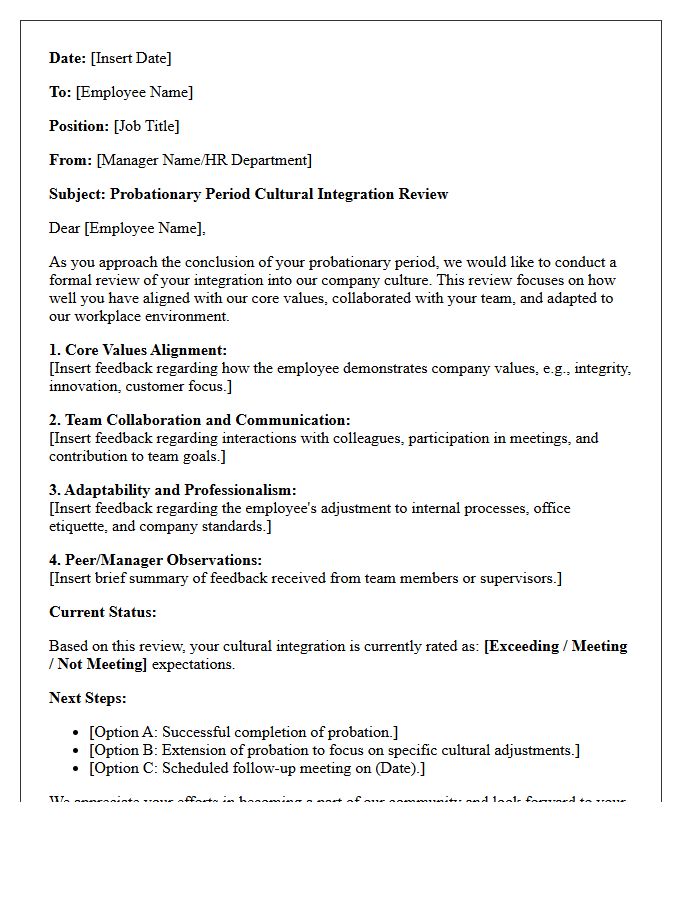
A Probationary Period Cultural Integration Review Letter evaluates how well a new hire aligns with organizational values and team dynamics. Beyond technical skills, this formal document assesses soft skills, communication styles, and adherence to company ethics. It serves as a critical performance benchmark to determine if the employee is a long-term cultural fit. Clear feedback within this letter helps bridge gaps in workplace behavior, ensuring the individual contributes positively to the collective environment before granting permanent status. It is an essential tool for maintaining workplace harmony and professional standards.
Comprehensive Candidate Cultural Fit Questionnaire Letter
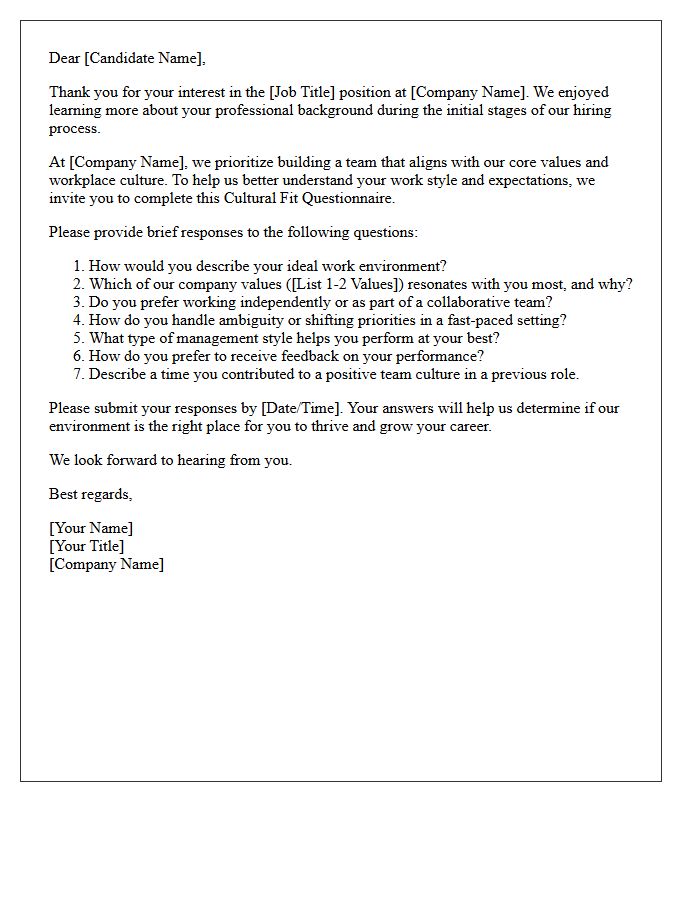
A Comprehensive Candidate Cultural Fit Questionnaire is a strategic tool designed to evaluate alignment between a job seeker's values and your organization's core mission. This letter introduces the assessment process, ensuring candidates understand that professional synergy is as vital as technical expertise. By focusing on behavioral traits and interpersonal dynamics, it helps identify individuals who will thrive within your unique work environment. Sending this questionnaire early minimizes turnover risk and fosters a cohesive team culture, making it an essential component of a modern, holistic recruitment strategy.
Technical Department Cultural Alignment Feedback Letter
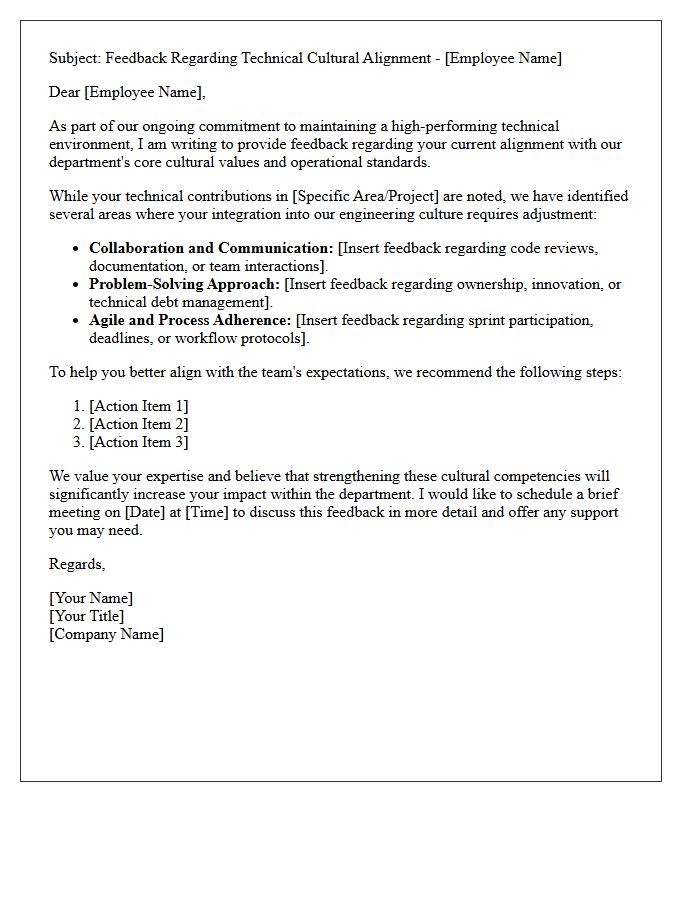
A Technical Department Cultural Alignment Feedback Letter evaluates how well an engineer integrates into the team's core values and operational mindset. It focuses on soft skills, such as communication, collaboration style, and adaptability to technical standards. This document identifies gaps between individual behaviors and the engineering culture, providing actionable steps for improvement. Effective feedback ensures long-term synergy and maintains a healthy, high-performing environment. It serves as a strategic tool for professional development, ensuring every developer aligns with the organizational vision while fostering a cohesive and productive technical workplace.
Start-Up Environment Cultural Fit Assessment Letter
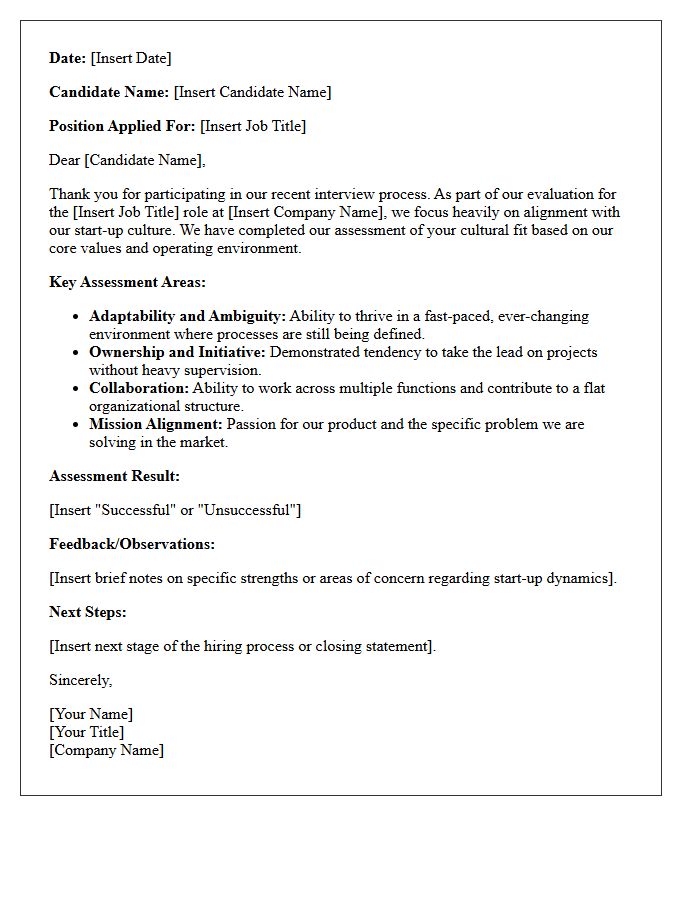
A Start-Up Environment Cultural Fit Assessment Letter evaluates a candidate's alignment with a company's unique core values and fast-paced dynamics. It determines if an individual possesses the adaptability, self-motivation, and collaborative mindset required to thrive in evolving structures. This document ensures new hires can handle high-pressure scenarios while contributing to a cohesive team atmosphere. By focusing on behavioral traits rather than just technical skills, the assessment helps mitigate turnover risks, ensuring long-term synergy between the employee and the organization's mission.
Leadership Style And Cultural Integration Review Letter
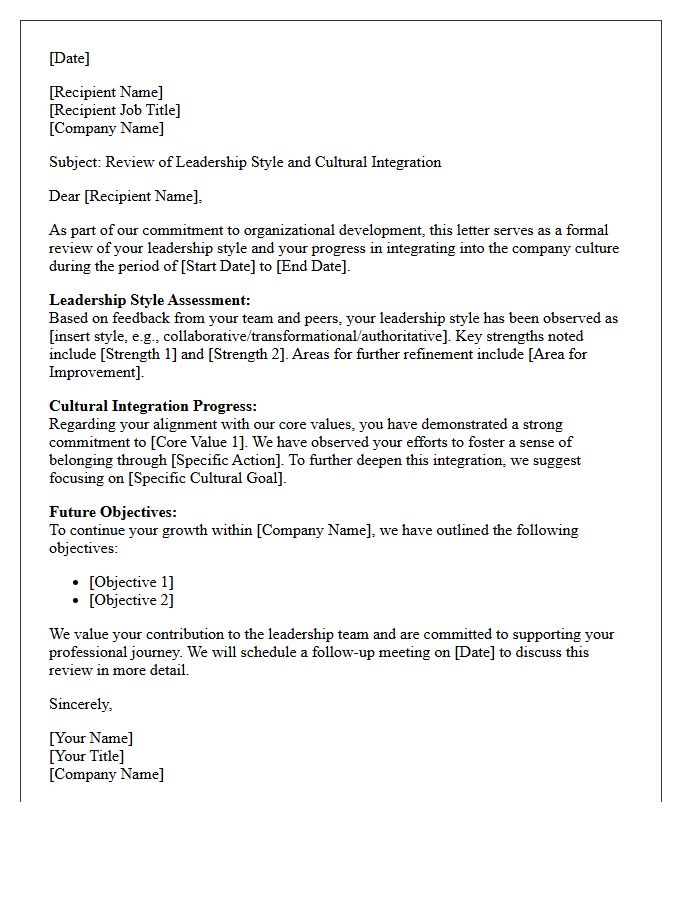
A Leadership Style and Cultural Integration Review Letter evaluates how an executive's management approach aligns with organizational values. It provides a formal assessment of a leader's ability to foster synergy within diverse teams while maintaining operational standards. This document is essential for identifying behavioral gaps and ensuring that leadership behaviors actively support the company's long-term mission. By reviewing cultural compatibility, the letter helps mitigate internal friction and promotes a cohesive environment where shared goals and professional integrity drive sustainable business growth.
Unsuccessful Candidate Cultural Fit Clarification Letter
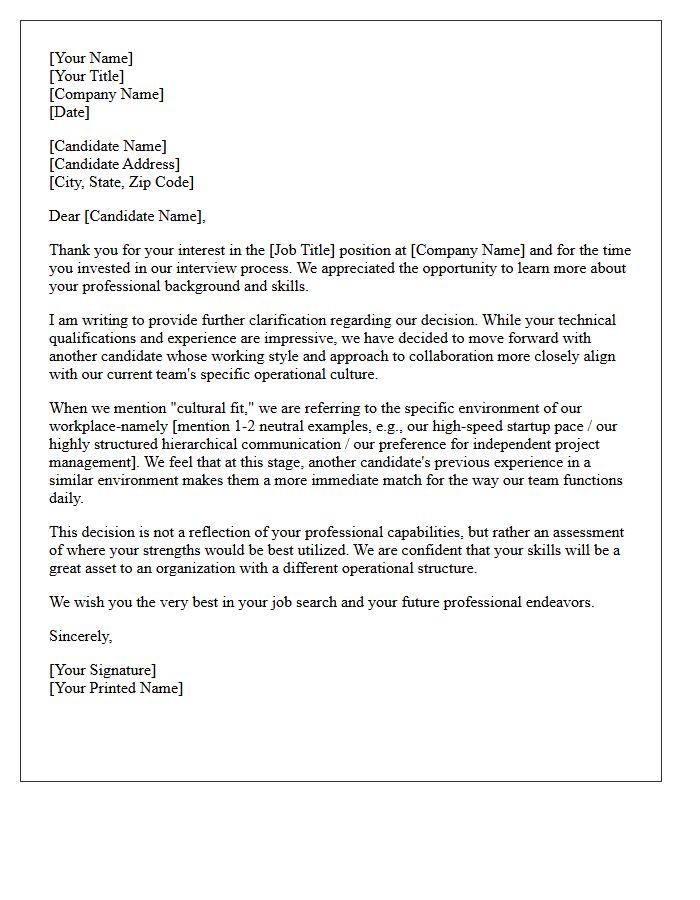
An Unsuccessful Candidate Cultural Fit Clarification Letter is a professional document used to provide transparent feedback after a rejection. It specifies how an applicant's values or working style differed from the organizational culture. Providing this clarity helps maintain your employer brand and ensures the candidate understands the decision was based on environmental alignment rather than a lack of technical skill. It serves as a respectful way to close the recruitment cycle while offering constructive insights for the candidate's future career path in more suitable workplace settings.
Short-Term Contract Cultural Fit Feedback Letter
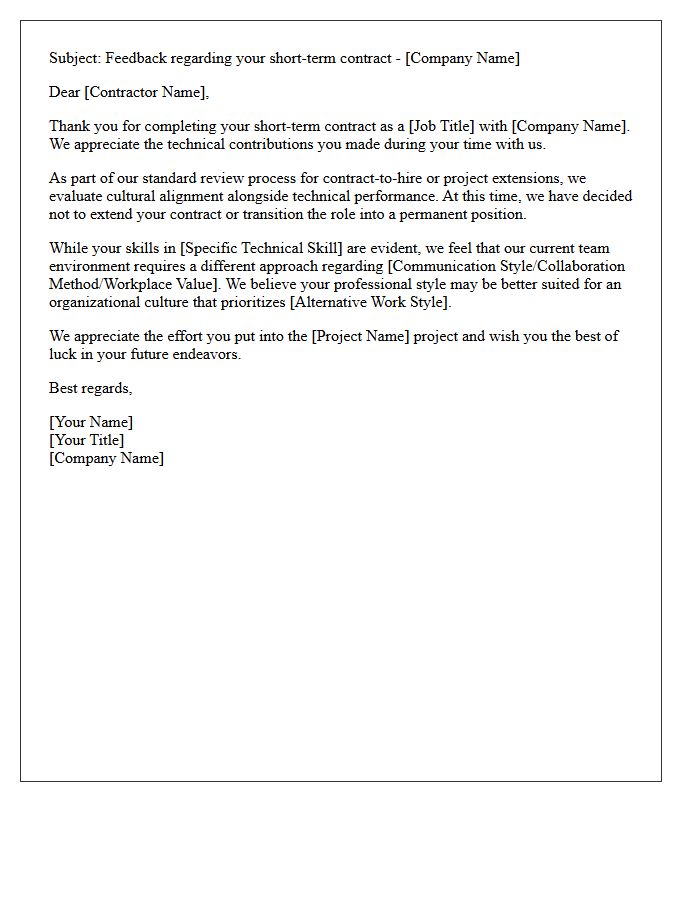
A short-term contract cultural fit feedback letter assesses how well a temporary professional integrated into the team environment. The primary purpose is to evaluate interpersonal dynamics, communication styles, and alignment with organizational values beyond mere technical skills. This performance documentation provides valuable insights for future hiring decisions or potential permanent conversions. It should remain constructive, objective, and specific to observed behaviors. Clearly defining cultural alignment helps both the employer and the contractor understand if a long-term partnership is viable, ensuring a cohesive and productive workplace culture.
What is the purpose of a feedback request letter regarding a candidate's cultural fit?
The primary purpose is to gather qualitative insights on how well a candidate aligns with your organization's core values, communication style, and team dynamics following an interview or trial period.
When is the best time to send a cultural fit feedback request to a client?
You should send the request within 24 hours of the interview completion to ensure the client's impressions are fresh and to maintain momentum in the hiring process.
What specific questions should be included in a cultural fit feedback request?
Effective questions include asking how the candidate interacted with the team, whether their work philosophy aligns with the company's mission, and if the client envisions them thriving in the specific office environment.
How can I encourage a client to provide detailed feedback instead of one-word answers?
Use open-ended questions and provide a brief template or specific examples of behaviors you are looking for, which prompts the client to provide more descriptive and actionable evaluations.
Why is assessing cultural fit through client feedback important for long-term retention?
Gathering this feedback helps identify potential friction points early, ensuring that the candidate not only possesses the required technical skills but is also likely to remain engaged and satisfied within the company culture over time.

Comments