
Re-establishing contact with previous applicants requires a strategic approach to maintain your employer brand. This guide explores how to professionally invite past talent back into your recruitment funnel using a Post-Hiatus Candidate Re-Engagement Interview Invitation. Learn to reignite interest and streamline your hiring process effectively. To help you get started, below are some ready to use templates.
Image cover: Reconnecting with Past Talent: Candidate Re-Engagement Email Templates and Best Practices
Letter Samples List
- Post-Hiatus Candidate Re-Engagement Interview Invitation Letter
- Career Break Return Interview Invitation Letter
- Candidate Profile Reactivation and Interview Invitation Letter
- Recruitment Agency Post-Hiatus Reconnect Interview Letter
- Returning Professional Re-Engagement Interview Invitation Letter
- Talent Pool Reactivation Interview Invitation Letter
- Career Resumption Discussion and Interview Invitation Letter
- Post-Sabbatical Candidate Re-Engagement Interview Letter
- Agency Re-Engagement and New Opportunity Interview Letter
- Candidate Sabbatical Return Interview Invitation Letter
- Workforce Re-Entry Interview Invitation Letter
- Dormant Candidate Profile Reactivation Interview Letter
- Post-Hiatus Career Consultation and Interview Letter
- Talent Network Re-Engagement Interview Invitation Letter
Post-Hiatus Candidate Re-Engagement Interview Invitation Letter
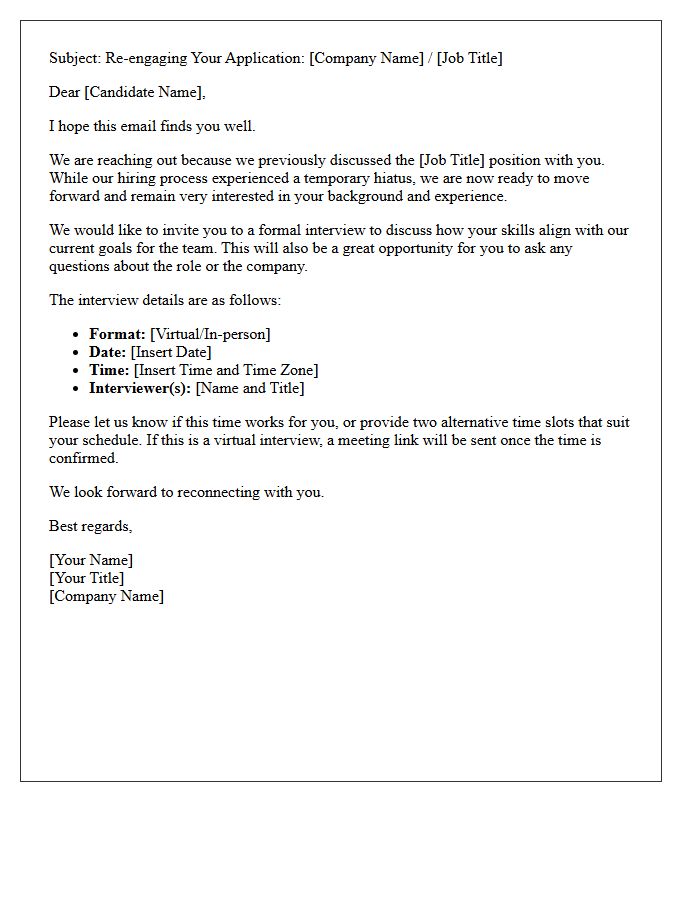
A post-hiatus candidate re-engagement interview invitation is a strategic communication tool used to reconnect with previous applicants. The primary goal is to gauge their current availability and interest in newly opened positions after a period of inactivity. This outreach must be personalized, acknowledging the prior relationship while clearly outlining the updated role requirements. Effective letters emphasize a positive candidate experience to rebuild rapport. By highlighting growth opportunities, companies can efficiently tap into a warm talent pool, reducing time-to-hire and leveraging familiar, pre-vetted potential for modern organizational needs.
Career Break Return Interview Invitation Letter
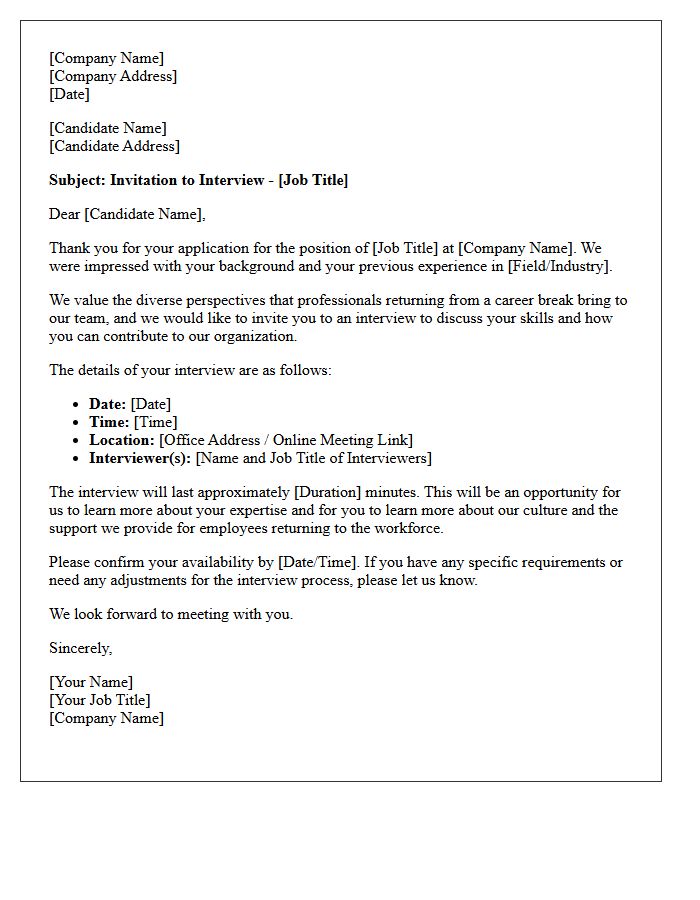
Receiving a career break return interview invitation is a positive milestone in your professional relaunch. This letter confirms the employer values your previous experience and potential despite your time away. To prepare, focus on your transferable skills and have a concise explanation for your hiatus ready. Review the interview format mentioned, research the company's current goals, and demonstrate your readiness to re-enter the workforce. Treat this invitation as a formal bridge to your next chapter, showing confidence in how your unique perspective will benefit the organization today.
Candidate Profile Reactivation and Interview Invitation Letter
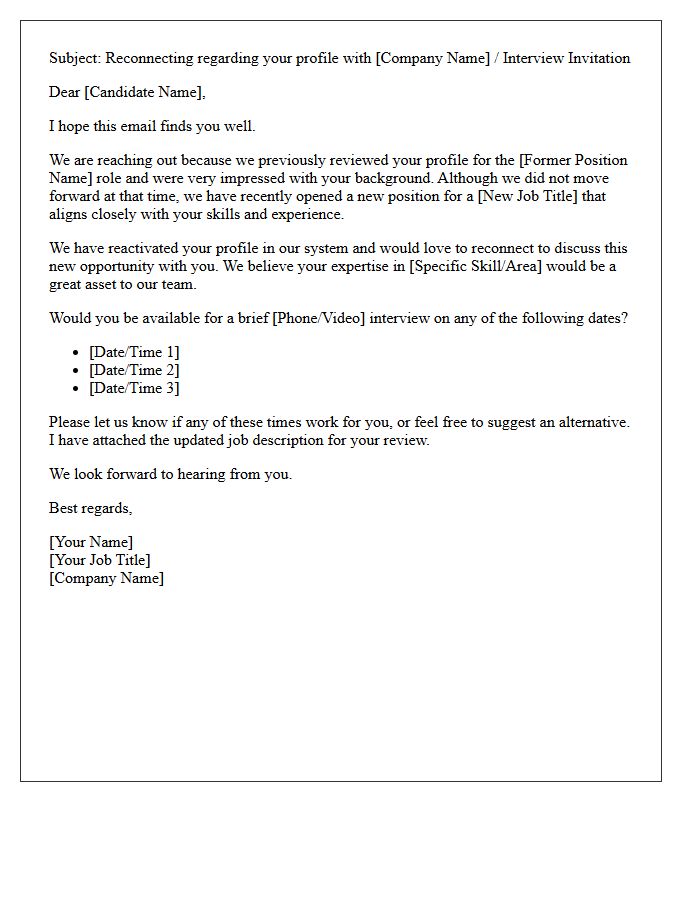
A candidate profile reactivation letter re-engages former applicants by inviting them to update their professional details for new opportunities. This strategic outreach leverages existing talent pools to reduce hiring costs and time. Simultaneously, an interview invitation letter formally requests a meeting, detailing the interview format and schedule. To maximize response rates, both documents must be clear, personalized, and include a direct call-to-action. Maintaining a professional tone ensures a positive candidate experience, keeping your employer brand strong while efficiently identifying the best fit for current organizational needs.
Recruitment Agency Post-Hiatus Reconnect Interview Letter
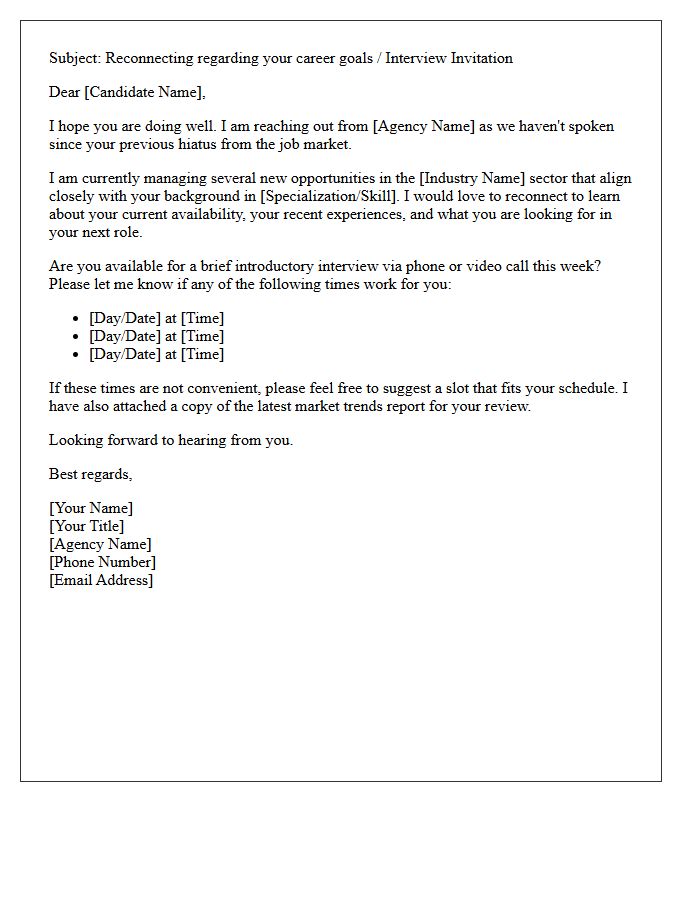
A post-hiatus reconnect letter is a strategic professional communication used to re-engage recruiters after a career break. It should briefly explain your temporary absence while emphasizing that your core industry skills remain current. Focus on your readiness to return and highlight any professional development or certifications completed during the interval. Expressing proactive interest in upcoming opportunities signals confidence and reliability. Keeping the tone positive and forward-looking ensures the recruitment agency views your re-entry as a valuable addition to their talent pool rather than a liability.
Returning Professional Re-Engagement Interview Invitation Letter
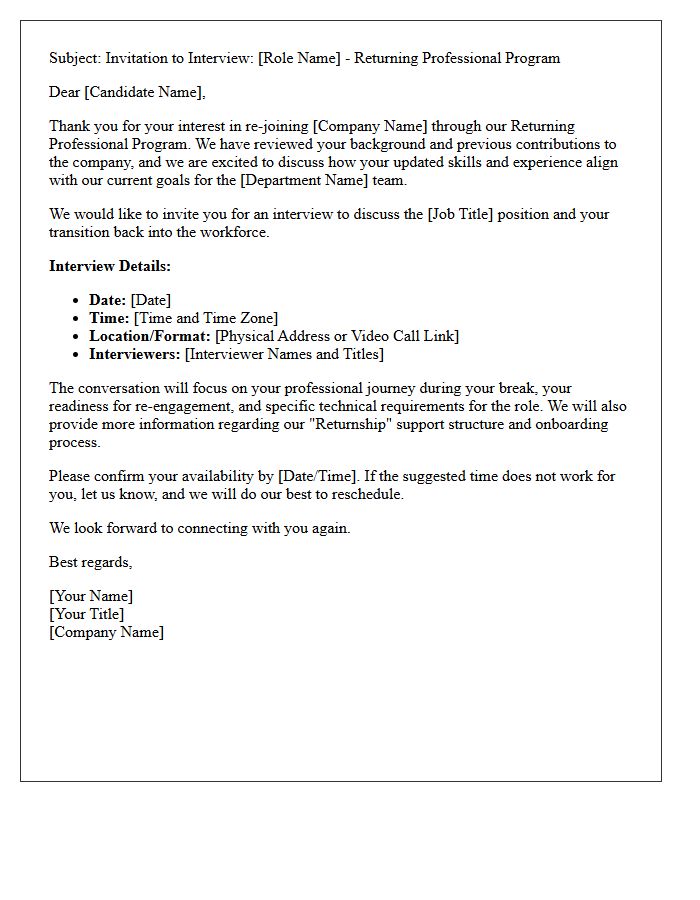
A Returning Professional Re-Engagement Interview Invitation Letter is a strategic document designed to re-establish contact with former employees who previously left on good terms. This invitation highlights the company's continued interest in their expertise and proposes a formal discussion regarding new career opportunities. The primary goal is to leverage their existing institutional knowledge to reduce onboarding time. A professional tone is essential to reflect mutual respect and value, ensuring the candidate feels welcomed back while clarifying that the interview is a re-evaluation of their current skills and cultural fit.
Talent Pool Reactivation Interview Invitation Letter
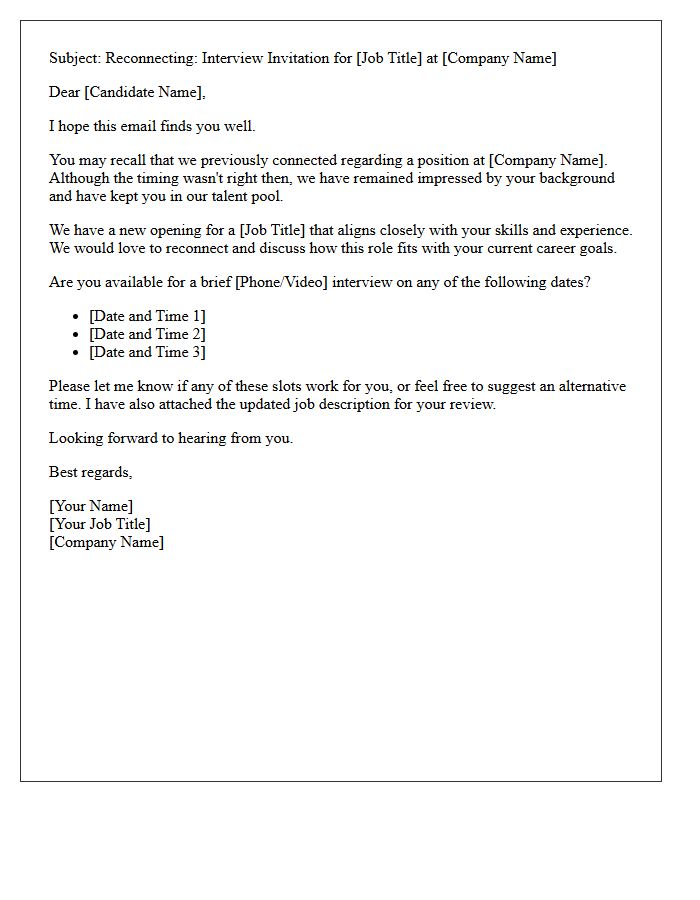
A talent pool reactivation interview invitation letter is a strategic recruitment tool used to re-engage previous silver-medal candidates. This outreach focuses on reconnecting with qualified talent already familiar with your employer brand. It should clearly state why the candidate's profile remains relevant for a new opportunity while highlighting recent company growth. Personalizing the message is essential to boost response rates and reduce the time-to-hire. By leveraging your existing database, you efficiently fill roles with pre-vetted professionals who previously demonstrated strong cultural alignment and technical potential.
Career Resumption Discussion and Interview Invitation Letter
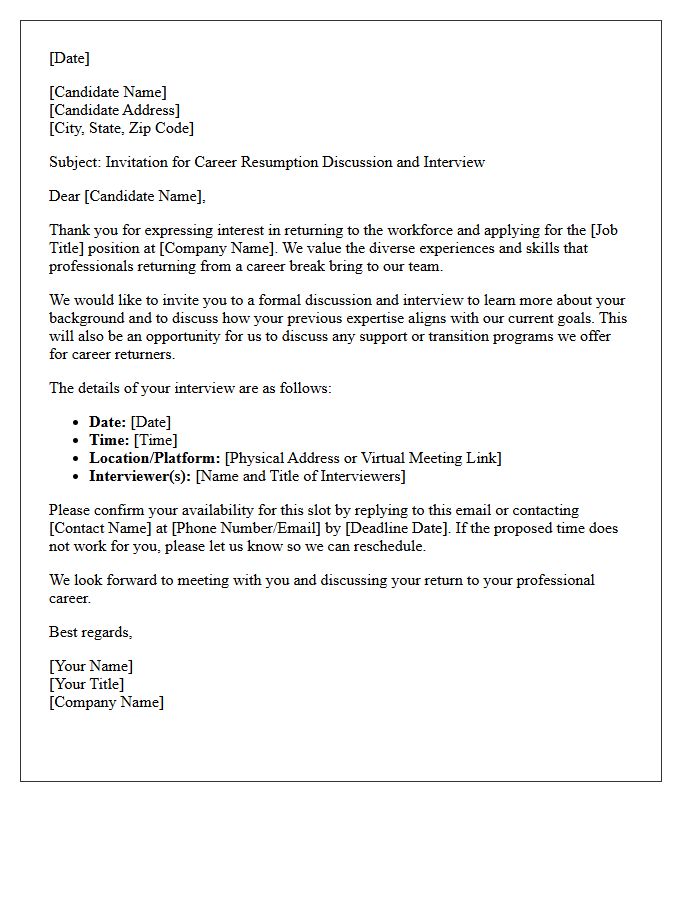
A Career Resumption Discussion and Interview Invitation Letter is a professional outreach to candidates returning from a long-term hiatus. It formally recognizes their employment gap while expressing interest in their updated skill set. The primary goal is to foster an inclusive environment that values workforce re-entry. It outlines the specific role, interview logistics, and sets a supportive tone for the upcoming conversation. Effective letters highlight the organization's commitment to diversity and inclusion, ensuring the candidate feels confident and prepared to discuss their professional transition and future contributions to the team.
Post-Sabbatical Candidate Re-Engagement Interview Letter
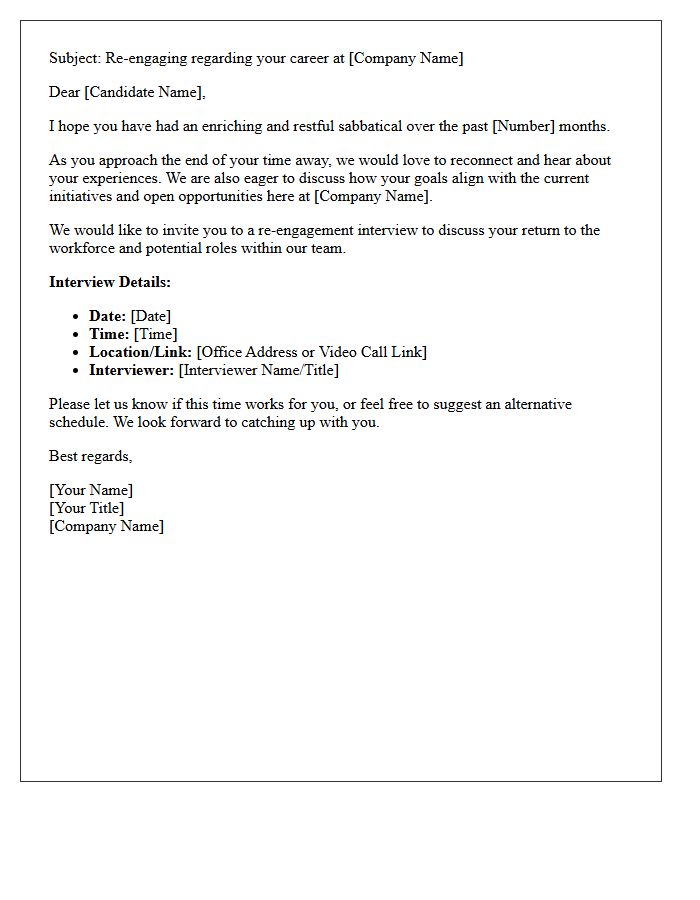
A Post-Sabbatical Candidate Re-Engagement Interview Letter is a strategic communication tool used to reconnect with talent returning from an extended career break. This letter acknowledges their time away while expressing a genuine interest in re-evaluating their skills for current roles. The primary goal is to assess how their professional goals or expertise have evolved during the hiatus. By maintaining a professional relationship and using a welcoming tone, organizations can successfully reactivate high-quality candidates who possess refreshed perspectives and renewed motivation for their next career chapter.
Agency Re-Engagement and New Opportunity Interview Letter
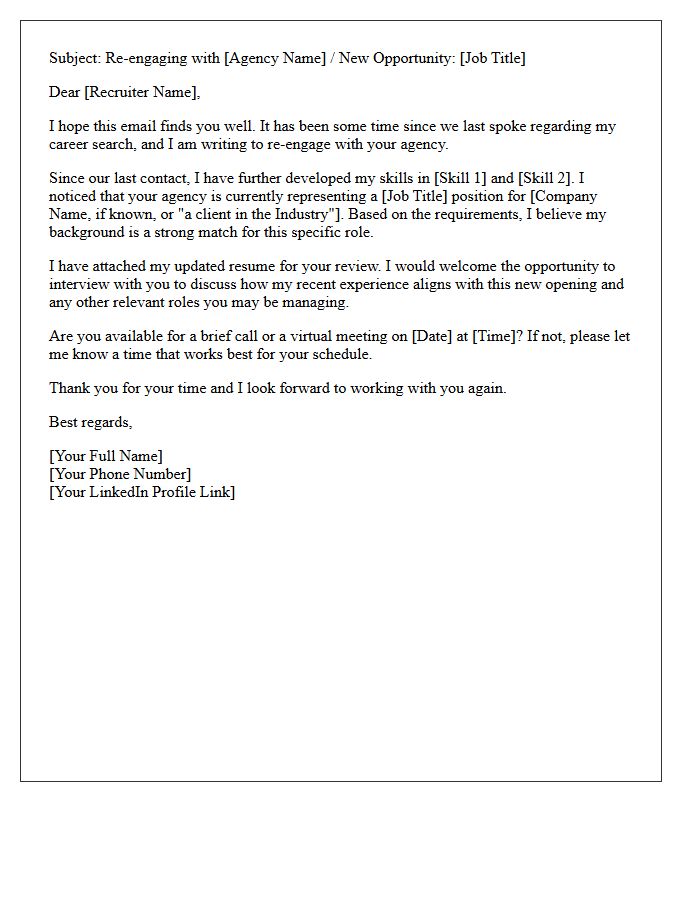
An Agency Re-Engagement and New Opportunity Interview Letter is a professional document used to reconnect with recruiters after a period of inactivity. It highlights your updated skills and current career goals to secure a fresh interview for new roles. This letter serves as a strategic follow-up tool to stay top-of-mind within a firm's talent pool. By emphasizing your professional growth and continued interest, you increase your chances of being shortlisted for exclusive job openings that align with your evolving expertise and the agency's latest client requirements.
Candidate Sabbatical Return Interview Invitation Letter
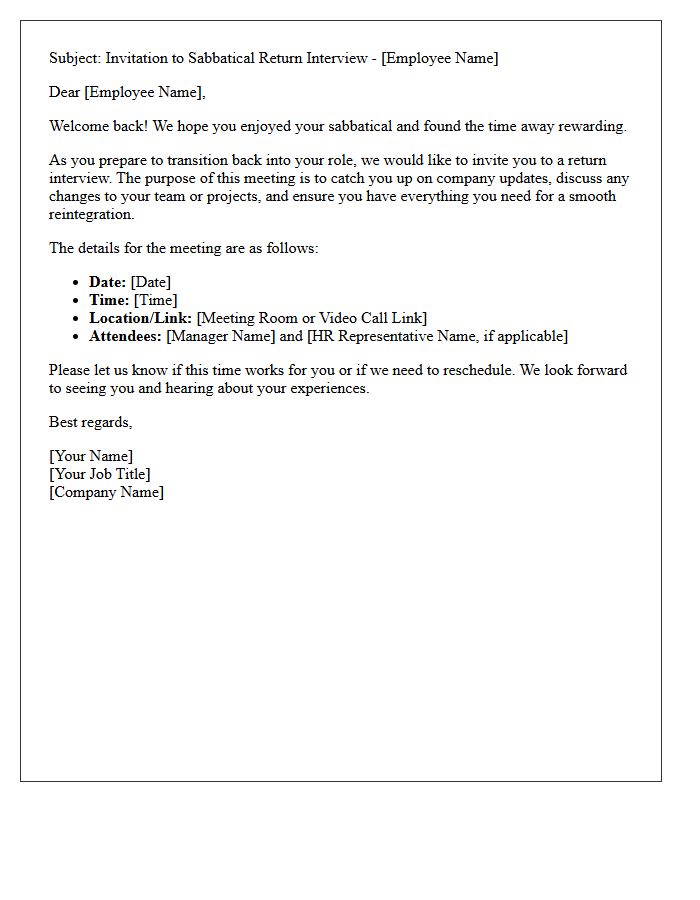
A Candidate Sabbatical Return Interview Invitation Letter is a professional document used to re-engage employees returning from extended leave. It aims to reintegrate the individual into the current workplace culture while assessing any newly acquired skills or perspectives. The letter should clearly outline the meeting agenda, date, and expectations to ensure a smooth transition back into their role. Formalizing this process helps align the returning employee's goals with the organization's evolving objectives, fostering long-term retention and mutual growth.
Workforce Re-Entry Interview Invitation Letter
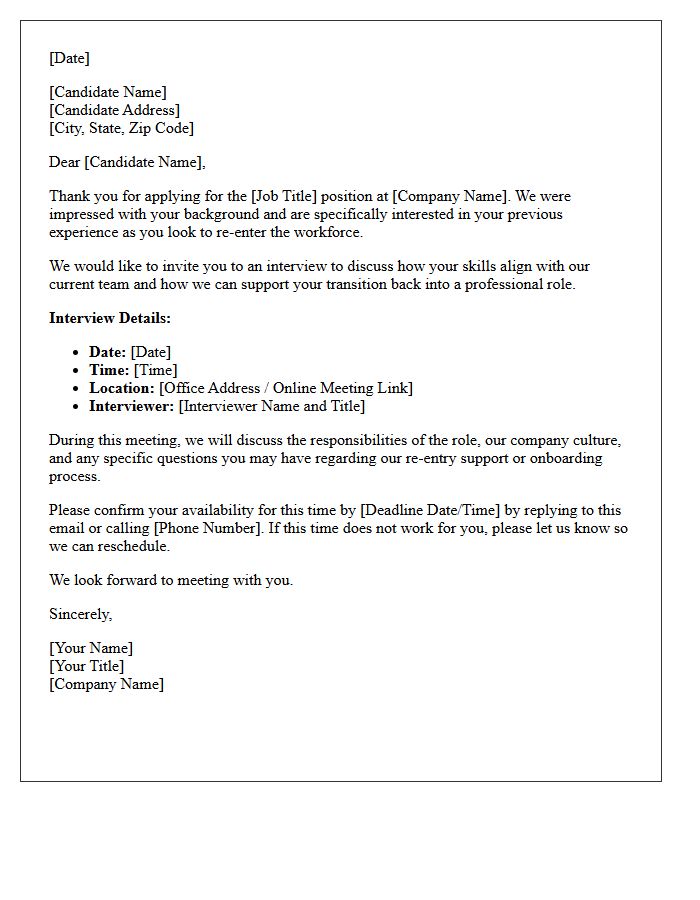
A Workforce Re-Entry Interview Invitation Letter is a formal document sent to candidates returning to the labor market after an extended break. It acknowledges the applicant's unique background while confirming interview logistics like date, time, and location. Employers use this letter to signal an inclusive hiring culture that values diverse life experiences, such as caregiving or career pivots. Receiving this invitation confirms that your transferable skills are recognized. Candidates should review the letter carefully for specific instructions regarding required documentation or technical setups for virtual meetings to ensure a professional re-entry process.
Dormant Candidate Profile Reactivation Interview Letter
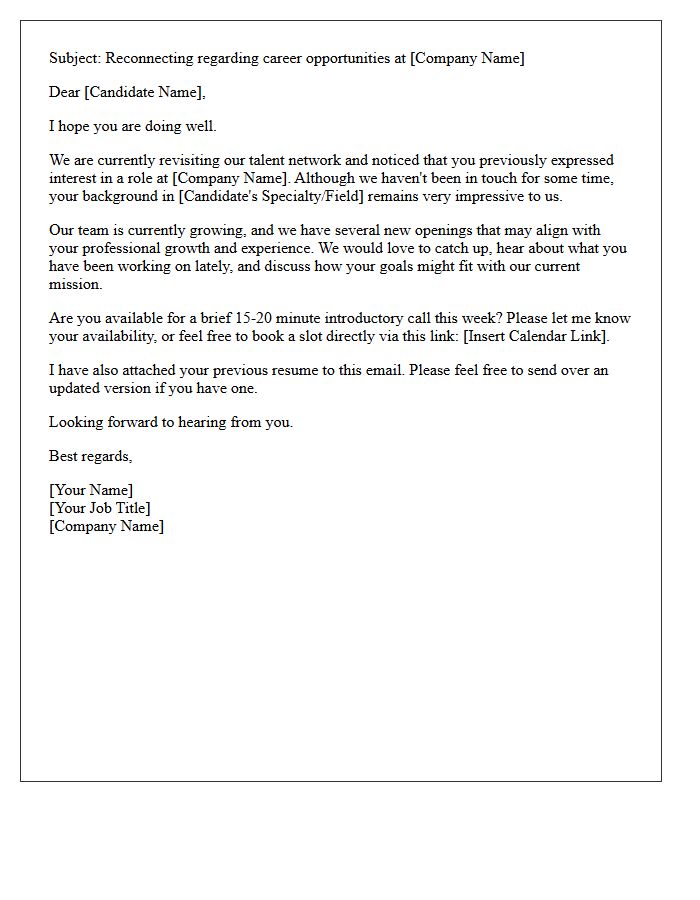
A Dormant Candidate Profile Reactivation Interview Letter is a strategic re-engagement tool used to reconnect with previous applicants. The primary goal is to assess if a former candidate is still available and interested in new opportunities. This communication should highlight updated company growth and specific role requirements to spark fresh interest. By leveraging your existing talent pool, you reduce recruitment costs and time-to-hire. Ensure the tone is professional yet welcoming, inviting the candidate to provide an updated resume or schedule a brief screening call to discuss their current career aspirations.
Post-Hiatus Career Consultation and Interview Letter
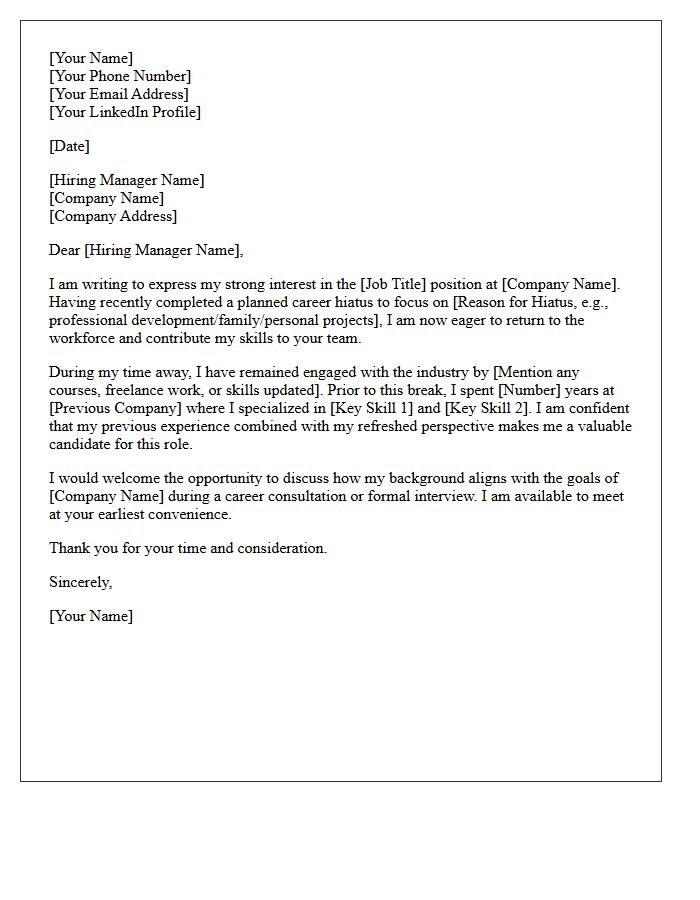
A post-hiatus career consultation focuses on rebranding professional gaps by highlighting transferable skills and updated expertise. When drafting an interview letter, transparency is vital; use it to frame your career break as a period of growth or necessary transition. Address the hiatus directly but briefly, then pivot quickly to your readiness for the role. This strategic approach demonstrates confidence and accountability, ensuring employers value your maturity and unique perspective. A well-crafted narrative bridge turns a resume pause into a compelling asset during the recruitment process.
Talent Network Re-Engagement Interview Invitation Letter
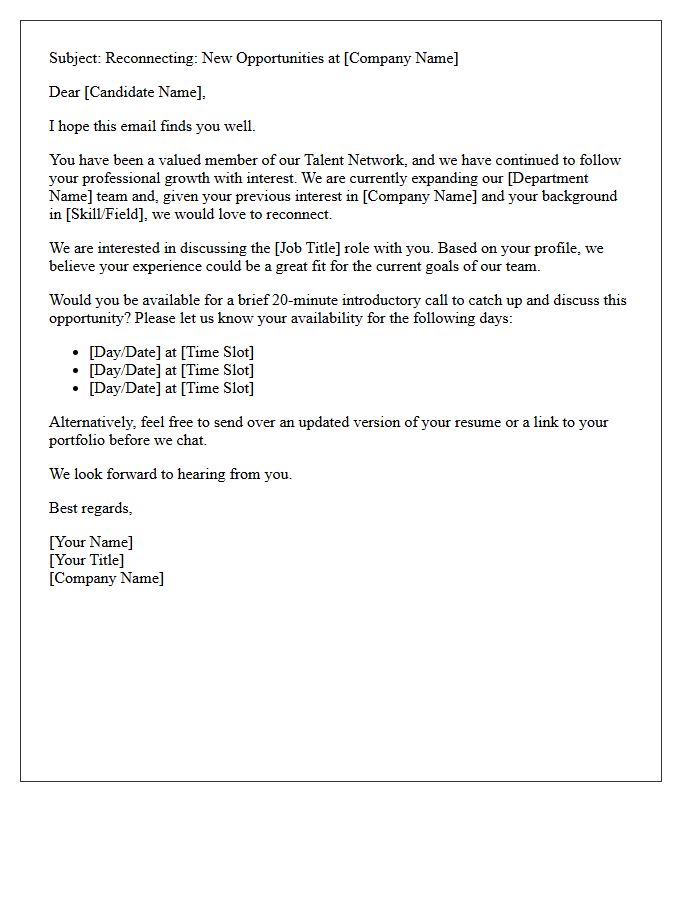
A Talent Network Re-Engagement Interview Invitation Letter is a strategic recruitment tool used to reconnect with previous high-quality applicants. The primary goal is to reactivate passive candidates who already possess familiarity with your brand. This letter should highlight new opportunities that align with their specific skills while emphasizing a personalized approach to candidate experience. By leveraging your existing database, you reduce hiring costs and shorten the time-to-fill. Ensure the message is professional, inviting, and includes a clear call-to-action to schedule a follow-up discussion regarding current career openings.
What should be included in a re-engagement interview invitation for a candidate after a hiatus?
A professional re-engagement invitation should include a warm greeting, a reference to their previous application, a brief explanation of why you are reaching out now, and a clear call to action to schedule a follow-up interview.
How do I address a candidate's previous employment gap or hiatus in the invitation letter?
Focus on the future rather than the past by expressing interest in their current availability and updated professional goals; it is best to frame the hiatus as an opportunity to reconnect rather than a subject for scrutiny in the initial email.
What is the best subject line for a post-hiatus candidate re-engagement email?
The subject line should be direct and personalized, such as "Reconnecting regarding your interest in [Company Name]" or "Following up on your previous application for the [Job Title] position."
How soon should I expect a response from a re-engaged candidate?
While response times vary, providing a deadline or a specific timeframe for the interview in your invitation helps set expectations and encourages the candidate to respond within 48 to 72 hours.
Is it necessary to mention why the hiring process was previously paused?
It is helpful to provide a high-level reason, such as a shift in project timelines or organizational restructuring, to provide context and rebuild trust with the candidate during the re-engagement process.

Comments