
Maintaining a professional employer brand requires delivering clear, respectful feedback to applicants who aren't selected. A well-crafted Temporary Placement Candidate Rejection Letter helps preserve positive relationships with flexible talent while ensuring legal compliance and clarity. Communicating decisions promptly is essential for a smooth recruitment process. To help you streamline your hiring communications, below are some ready to use templates.

Image cover: Professional Templates for Rejecting Temporary Placement Candidates
Letter Samples List
- Standard Temporary Placement Rejection Letter
- Post Interview Temporary Assignment Rejection Letter
- Filled Position Temporary Role Rejection Letter
- Future Opportunities Temporary Placement Rejection Letter
- Skillset Mismatch Temporary Contract Rejection Letter
- Short Term Assignment Candidate Rejection Letter
- Schedule Incompatibility Temporary Role Rejection Letter
- Seasonal Placement Candidate Rejection Letter
- Initial Agency Screening Rejection Letter
- Client Decision Temporary Assignment Rejection Letter
- Experience Level Temporary Role Rejection Letter
- Cancelled Project Temporary Placement Rejection Letter
- High Volume Applicant Temporary Assignment Rejection Letter
Standard Temporary Placement Rejection Letter
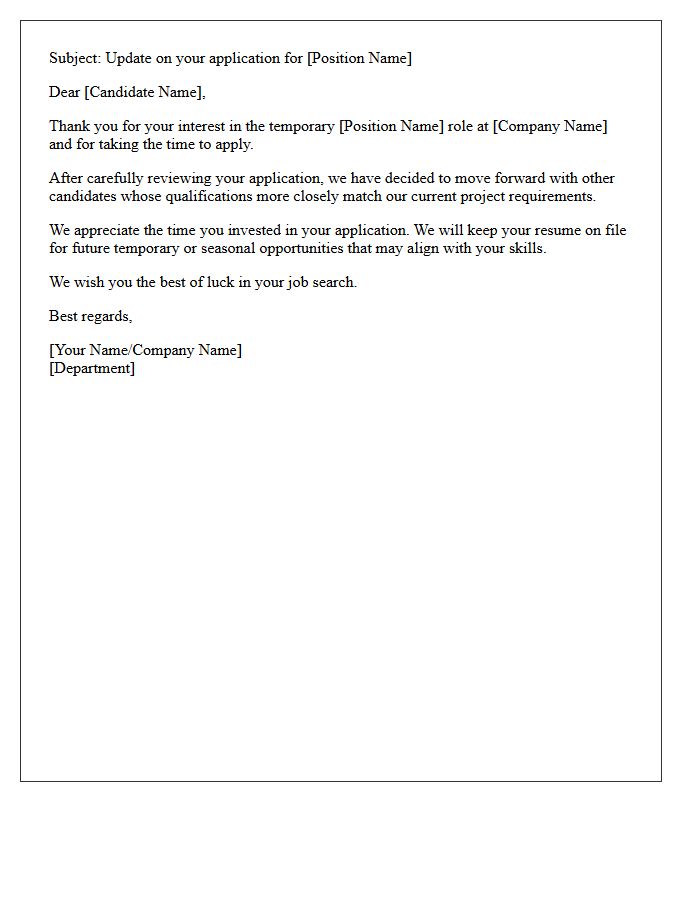
A Standard Temporary Placement Rejection Letter professionally informs candidates they were not selected for a specific short-term role. It is vital for maintaining a positive employer brand and providing closure. The content should be concise, thanking the applicant for their time while clearly stating the decision. Avoid detailed feedback to minimize legal liability, but remain courteous to keep doors open for future temporary staffing needs. Timely communication ensures a respectful candidate experience, reflecting well on your organization's professionalism and operational efficiency during the hiring process.
Post Interview Temporary Assignment Rejection Letter
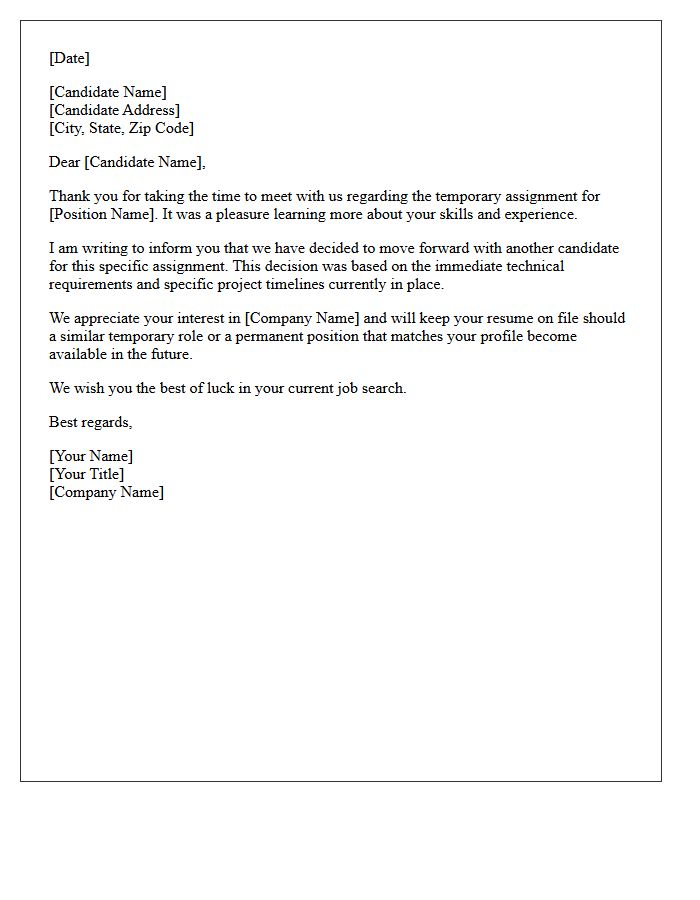
A post-interview temporary assignment rejection letter is a professional notification sent to candidates who were not selected for a short-term role. It is crucial to maintain a positive employer brand by providing clear, timely communication. The letter should express gratitude for the applicant's time and interest while formally stating the decision. Mentioning that their qualifications will be kept on file for future contract opportunities helps preserve professional relationships. Keeping the tone polite and concise ensures a respectful candidate experience even when delivering unfavorable news regarding the specific temporary placement.
Filled Position Temporary Role Rejection Letter
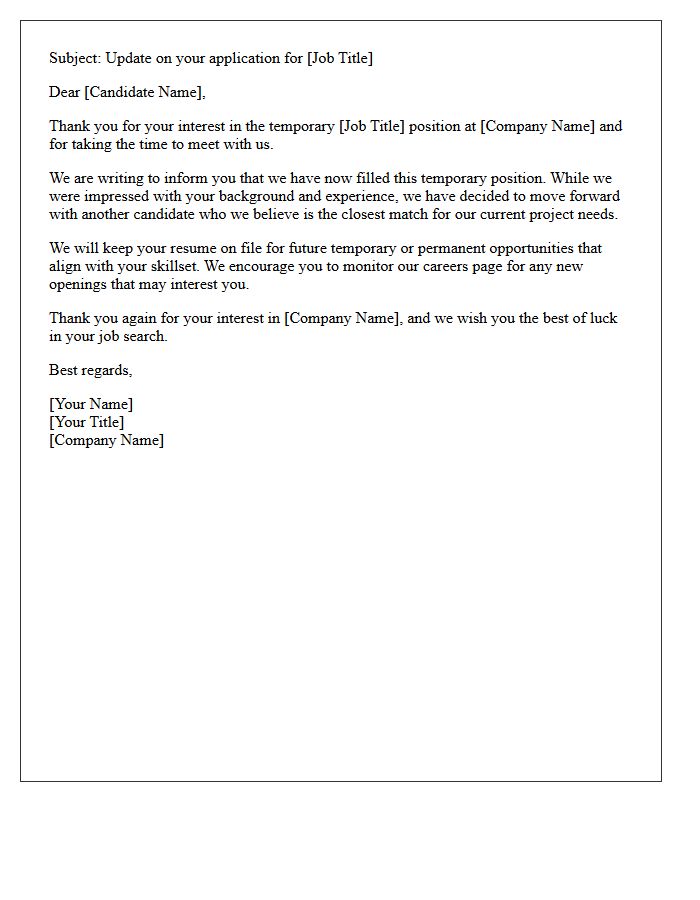
A Filled Position Temporary Role Rejection Letter is a formal notification sent to candidates when a short-term vacancy has been permanently occupied. It is crucial to maintain professionalism by clearly stating that the selection process has concluded. Highlighting that the decision was based on specific project requirements helps maintain a positive employer brand. Timely communication ensures candidates can pursue other opportunities without uncertainty. Keeping the tone respectful encourages high-quality applicants to consider your organization for future permanent openings or additional temporary assignments as they arise.
Future Opportunities Temporary Placement Rejection Letter
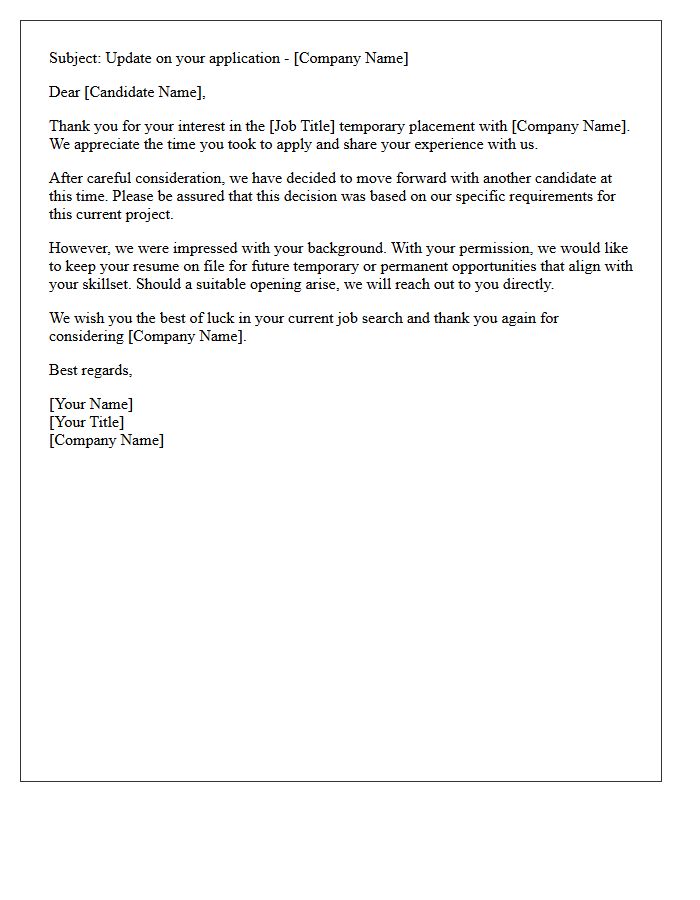
Receiving a temporary placement rejection letter is not a finality but a strategic touchpoint for future opportunities. These notices often indicate that while you weren't selected for a specific short-term role, your profile remains in the talent pool for upcoming vacancies. It is essential to maintain a professional relationship by responding graciously, as recruiters frequently revisit past applicants for urgent needs. Viewing this rejection as a networking opening ensures you stay visible for high-priority projects and permanent career paths within the organization's evolving workforce requirements.
Skillset Mismatch Temporary Contract Rejection Letter
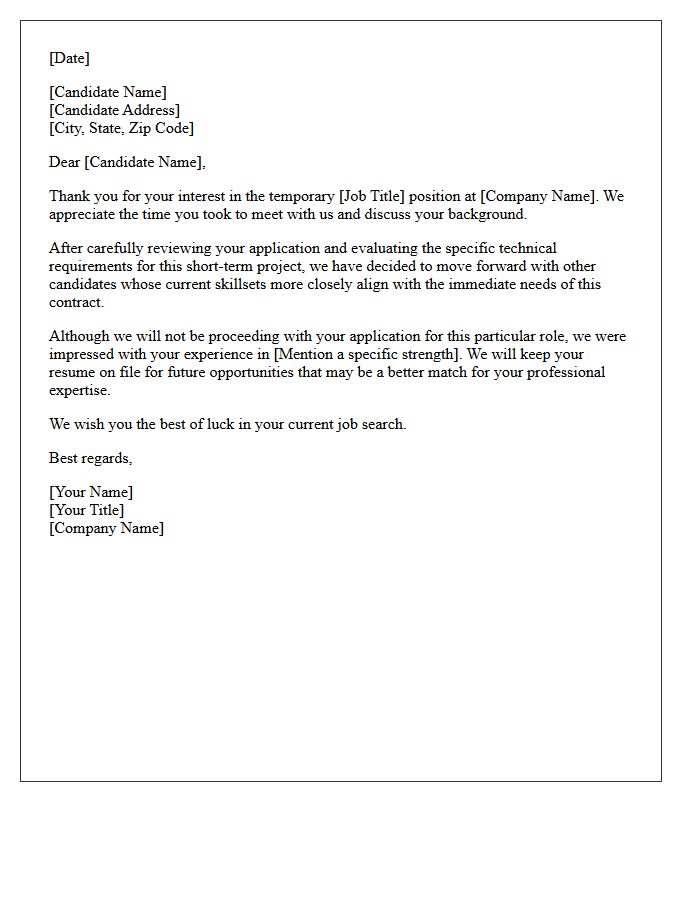
A Skillset Mismatch Temporary Contract Rejection Letter professionally informs candidates that their specific technical abilities do not currently align with short-term project requirements. It is essential to maintain a positive employer brand by clearly stating the lack of fit while encouraging future applications. This brief notification should thank the applicant for their time and specify that the decision is based strictly on immediate operational needs. Providing a concise reason helps candidates understand the outcome without creating legal liability, ensuring a respectful conclusion to the recruitment cycle for temporary staffing.
Short Term Assignment Candidate Rejection Letter
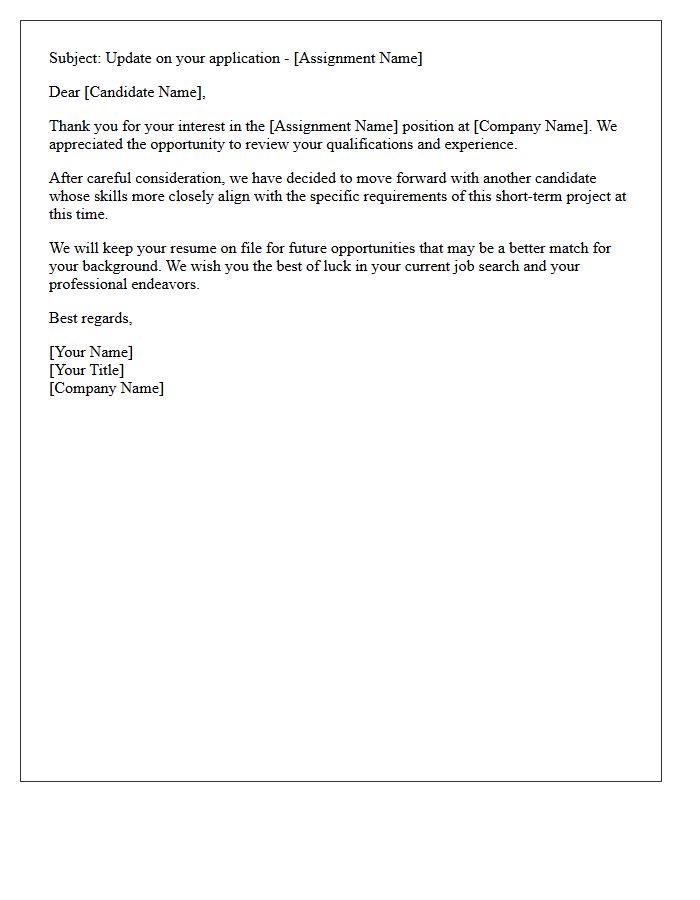
A professional short-term assignment rejection letter maintains brand reputation while ensuring clear communication. It is essential to express gratitude for the candidate's time and provide a timely notification to allow them to pursue other opportunities. Keep the message concise, focusing on the specific needs of the project without disclosing sensitive details. Providing brief, constructive feedback can be beneficial, but the primary goal is a respectful conclusion that leaves the door open for future contingent roles or seasonal work when requirements align more closely with their profile.
Schedule Incompatibility Temporary Role Rejection Letter
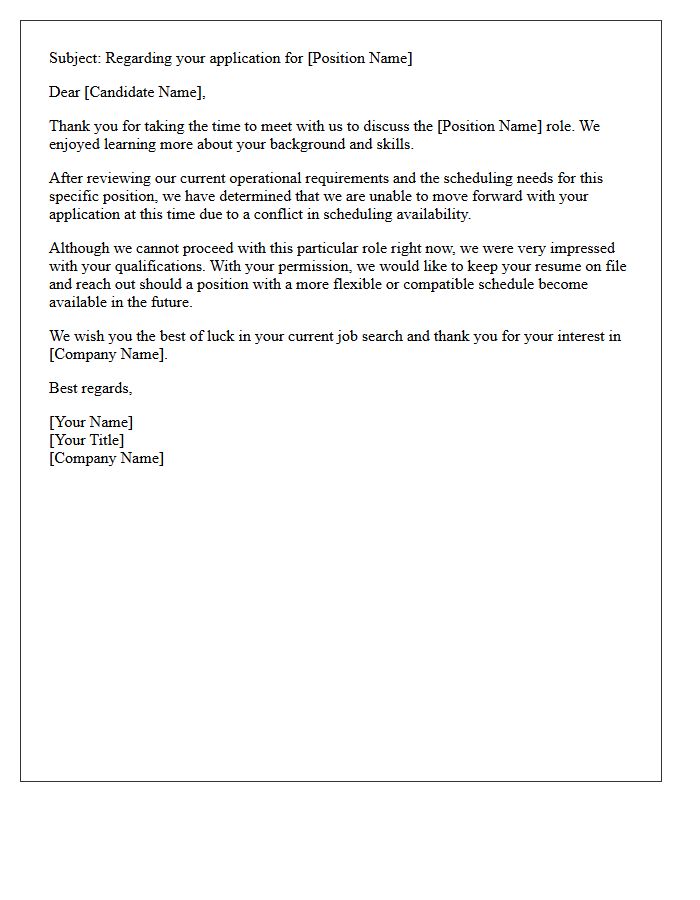
A schedule incompatibility temporary role rejection letter formally notifies a candidate that their availability does not align with current shifts. This professional communication preserves the candidate relationship by explaining that the decision is based solely on timing rather than skill. Highlighting the temporary nature of the rejection allows recruiters to keep the applicant in their talent pool for future openings with different hours. Clear, polite messaging ensures a positive employer brand while keeping the door open for future collaboration when schedules eventually synchronize.
Seasonal Placement Candidate Rejection Letter
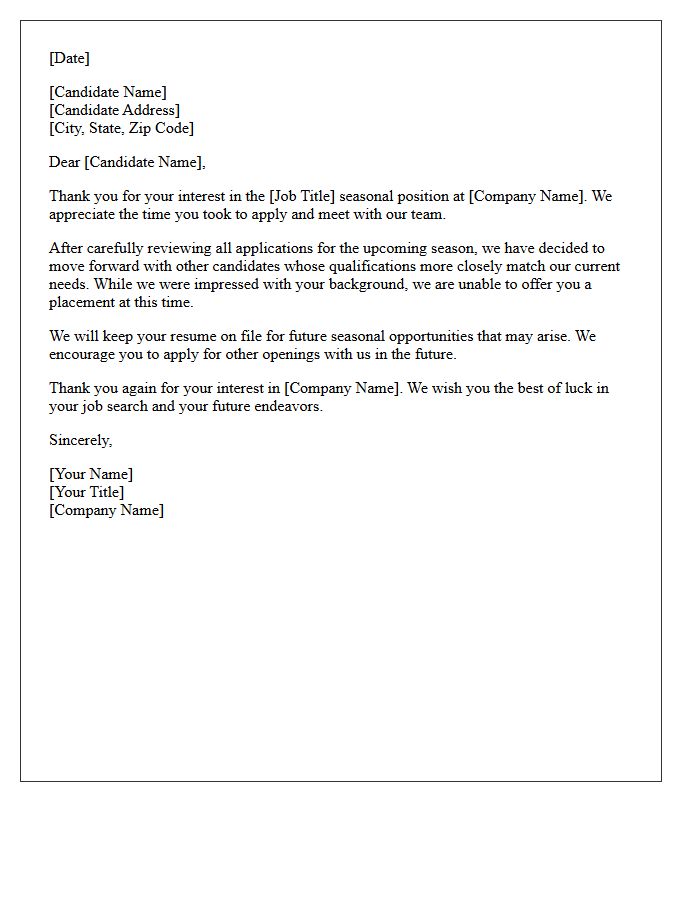
A professional seasonal rejection letter is essential for maintaining a positive employer brand and ensuring a high-quality candidate experience. Even for temporary roles, timely communication shows respect for the applicant's effort. Clearly state that the position has been filled while encouraging them to apply for future peak periods. By providing a clear status update, you preserve your talent pipeline and protect your company's reputation. Personalizing the message, even slightly, helps build long-term professional goodwill within the local labor market.
Initial Agency Screening Rejection Letter
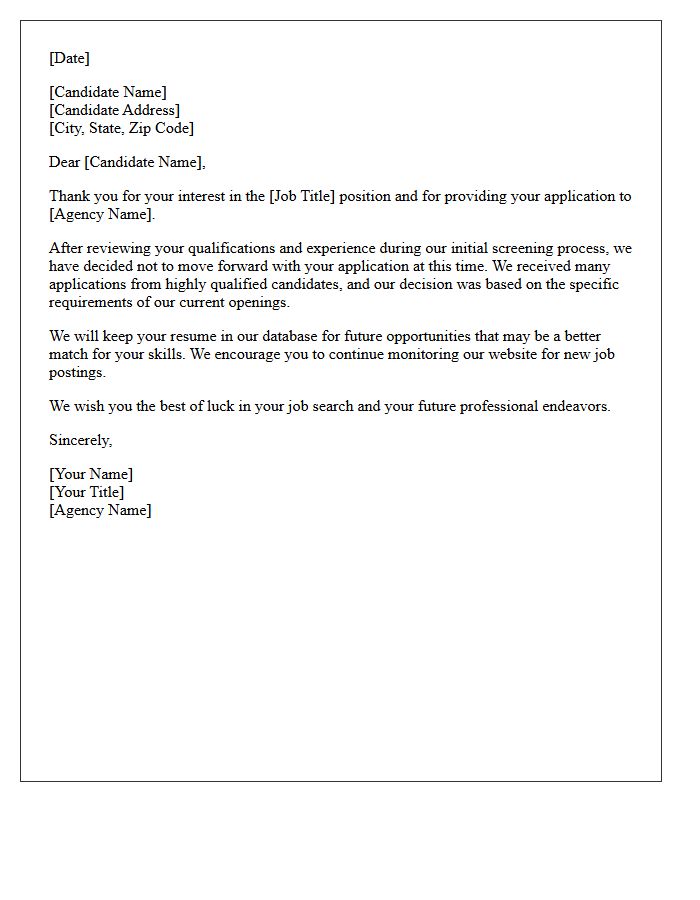
An Initial Agency Screening Rejection Letter notifies a job applicant that their profile did not meet the preliminary qualifications required for a specific role. This automated or manual notice typically occurs before the formal interview stage. It often cites a lack of specialized experience or missing certifications. Receiving this notification allows candidates to refine their resumes for future opportunities. It marks the conclusion of the recruitment workflow for that particular position, ensuring both the agency and the applicant can focus on more compatible professional matches.
Client Decision Temporary Assignment Rejection Letter
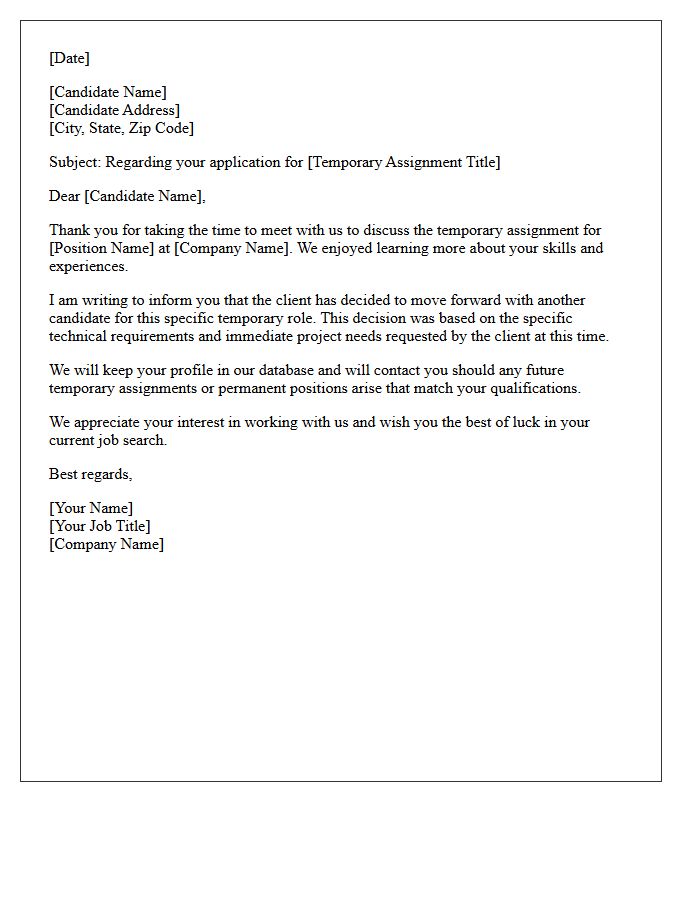
A Client Decision Temporary Assignment Rejection Letter is a formal notification sent by a staffing agency to a candidate when a client declines their profile. It is essential to maintain professionalism while clearly stating that the specific selection process has concluded. The letter should express gratitude for the applicant's time and confirm that their details remain in the talent pool for future opportunities. Providing a prompt, polite update ensures a positive candidate experience and protects the agency's reputation, even when delivering unfavorable news regarding a temporary role.
Experience Level Temporary Role Rejection Letter
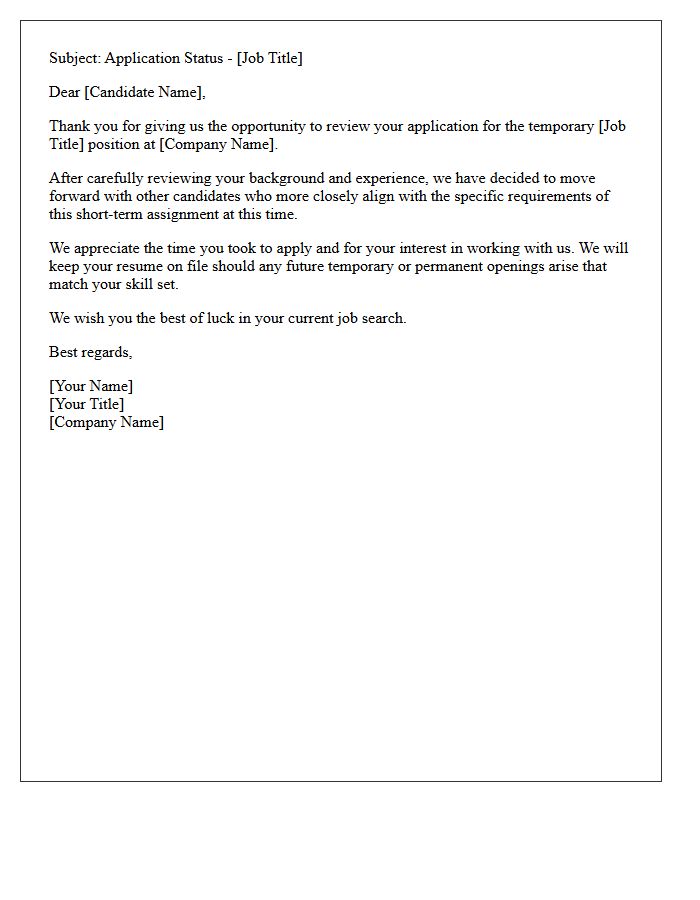
When drafting a rejection letter for a temporary role based on experience level, clarity and professionalism are essential. Clearly state that the candidate's current expertise does not align with the specific technical or operational demands of the short-term contract. Focus on the misalignment between their background and the immediate project requirements rather than a lack of general ability. Offering brief, constructive feedback helps maintain a positive employer brand. This approach ensures transparency while respecting the candidate's time and professional journey in a competitive job market.
Cancelled Project Temporary Placement Rejection Letter
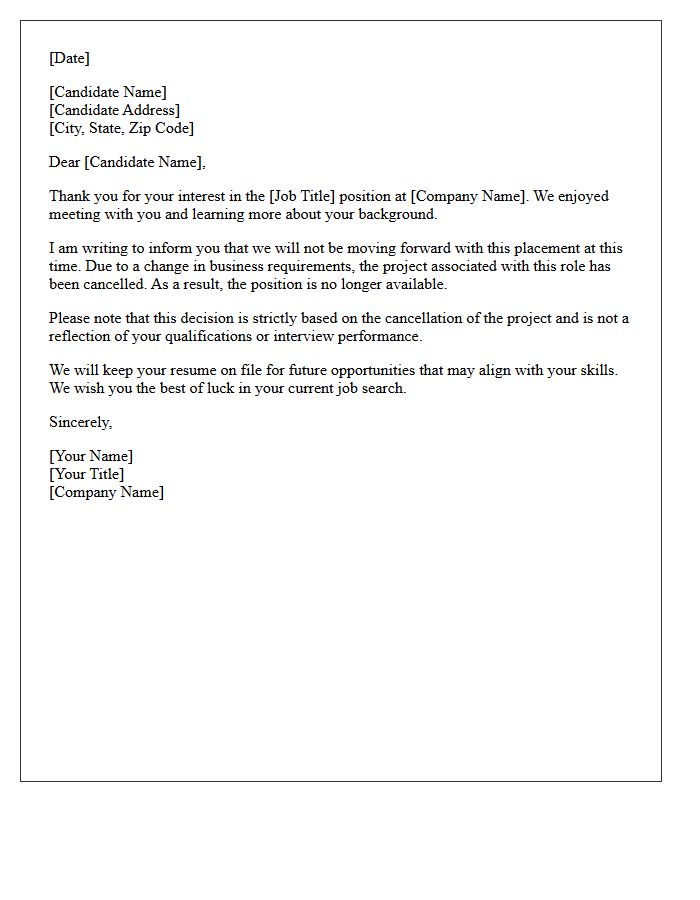
A Cancelled Project Temporary Placement Rejection Letter informs candidates that a specific job opening is no longer available due to internal budget cuts or strategic shifts. This formal notice clarifies that the decision is not based on the applicant's qualifications but on the termination of the project itself. Organizations use these letters to maintain professional relationships and a positive employer brand. It is essential to provide a clear explanation to ensure candidates understand the external factors involved and remain open to potential future opportunities within the company.
High Volume Applicant Temporary Assignment Rejection Letter
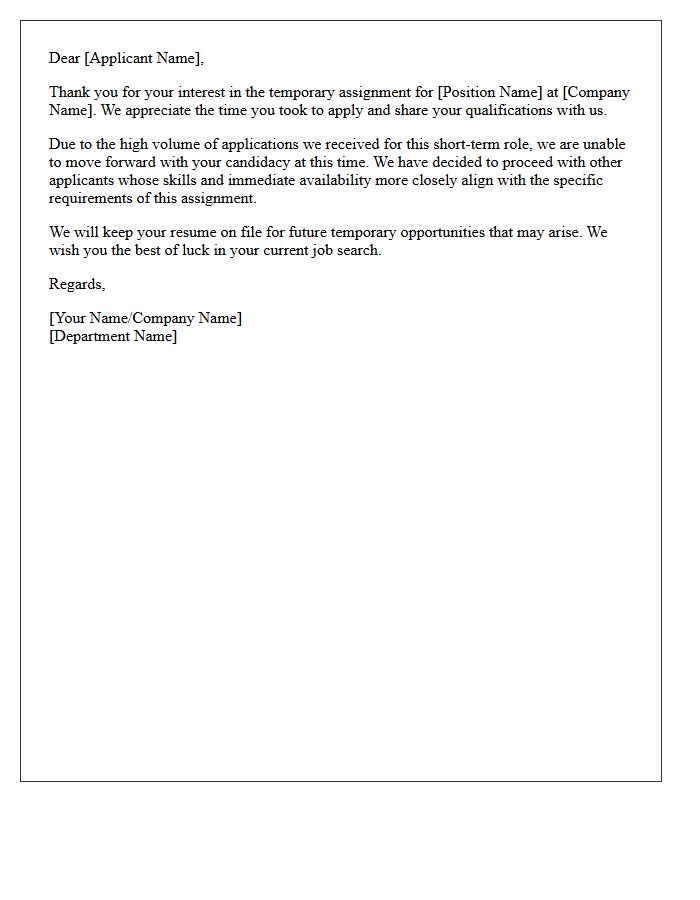
A high volume applicant temporary assignment rejection letter is a professional notice informing candidates they were not selected for a specific role. Its primary purpose is to maintain a positive employer brand by providing closure during large-scale hiring phases. Effective letters remain concise, expressing gratitude for the applicant's time while clearly stating the decision. Automating this communication ensures all candidates receive timely updates, reducing uncertainty. Personalization, where possible, helps mitigate negative candidate experience, keeping rejected applicants open to future opportunities within your organization's talent pipeline.
What should be included in a temporary placement candidate rejection letter?
A professional rejection letter for temporary roles should include a clear statement of the decision, a thank you for the candidate's time, and a brief explanation that the selection was based on the closest match to current project requirements.
When is the best time to send a rejection email to a temp candidate?
You should send the rejection notification as soon as a decision is made, ideally within 24 to 48 hours of the interview, as temporary candidates often need to secure alternative short-term income quickly.
Should I provide specific feedback in a temporary job rejection letter?
While not legally required, providing brief, constructive feedback regarding specific technical skills or availability can help temporary workers improve their profile for future short-term assignments.
Can I keep a rejected temporary candidate's resume on file?
Yes, it is common practice to inform the candidate that you will keep their details in your talent pool for future urgent or seasonal placements, provided you comply with local data privacy regulations.
How do I professionally decline a candidate after a temporary trial period?
If a candidate is not a fit after a trial, send a polite letter focusing on the specific operational needs of the role and confirming the final date of the assignment and the process for their final payment.


Comments