
When a tenant requests to break their rental agreement prematurely without legal justification, a landlord may issue an Early Lease Termination Denial Letter. This formal notice explains why the request was rejected and outlines the ongoing financial obligations of the lease. Understanding how to draft this response professionally is essential for protecting your property rights. Below are some ready to use templates.
Image cover: Official Response Templates: Denying a Request for Early Lease Termination
Letter Samples List
- Insufficient Notice Early Lease Termination Denial Letter
- Outstanding Balance Early Lease Termination Denial Letter
- Invalid Hardship Claim Early Lease Termination Denial Letter
- Incomplete Documentation Early Lease Termination Denial Letter
- Missing Buyout Fee Early Lease Termination Denial Letter
- Strict Fixed Term Policy Early Lease Termination Denial Letter
- Joint Tenant Disagreement Early Lease Termination Denial Letter
- Commercial Property Early Lease Termination Denial Letter
- Residential Property Early Lease Termination Denial Letter
- Unverified Military Orders Early Lease Termination Denial Letter
- Standard Policy Early Lease Termination Denial Letter
- Alternative Option Offer Early Lease Termination Denial Letter
Insufficient Notice Early Lease Termination Denial Letter
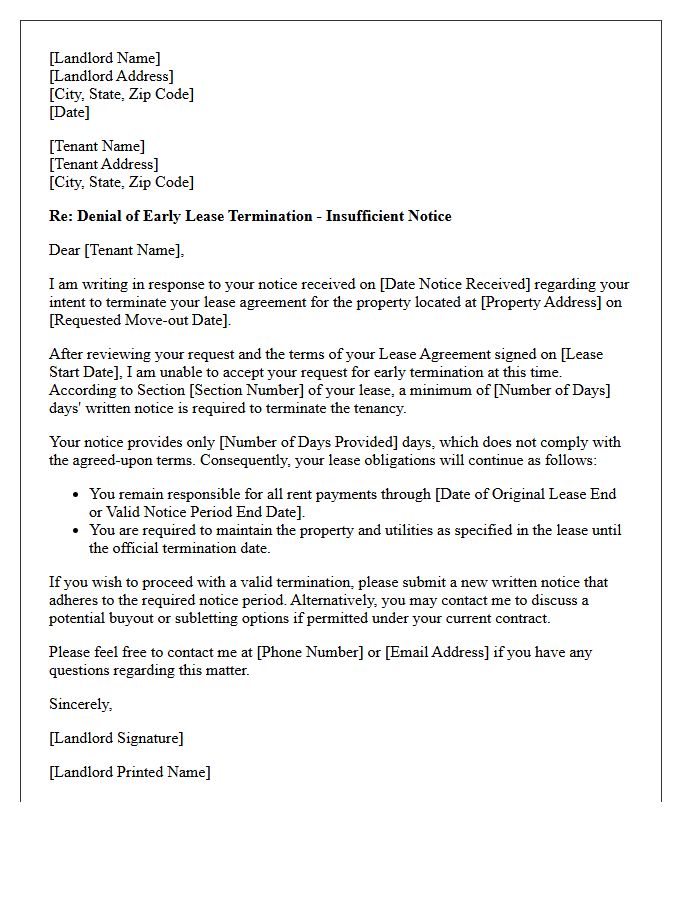
An Insufficient Notice Early Lease Termination Denial Letter is a formal document sent by a landlord to reject a tenant's request to end their rental agreement prematurely. It serves as legal notification that the tenant failed to provide the required notice period specified in the contract. This letter typically outlines the remaining financial obligations, such as unpaid rent or lease break fees, and reaffirms that the tenant remains legally bound by the existing terms until a valid termination occurs.
Outstanding Balance Early Lease Termination Denial Letter
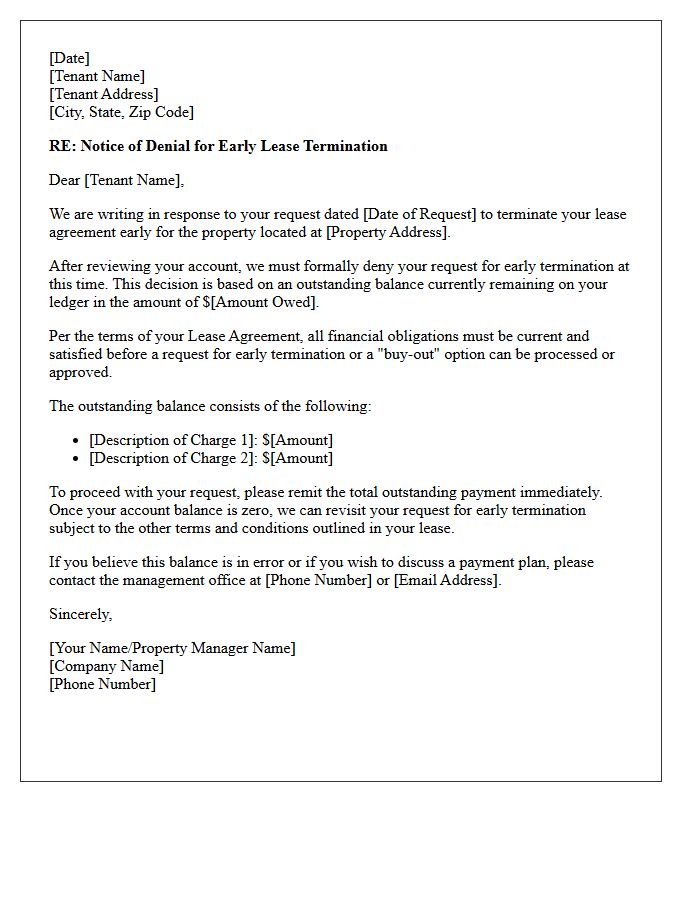
An Outstanding Balance Early Lease Termination Denial Letter informs a tenant that their request to end a rental agreement prematurely is rejected due to unpaid debts. Landlords issue this formal notice when rent, late fees, or utility charges remain delinquent, preventing the fulfillment of move-out requirements. To resolve the denial, the tenant must clear the total balance owed immediately. Clear documentation of these arrears ensures legal compliance and protects the property owner's rights before any lease buyout or release can be officially authorized or processed.
Invalid Hardship Claim Early Lease Termination Denial Letter
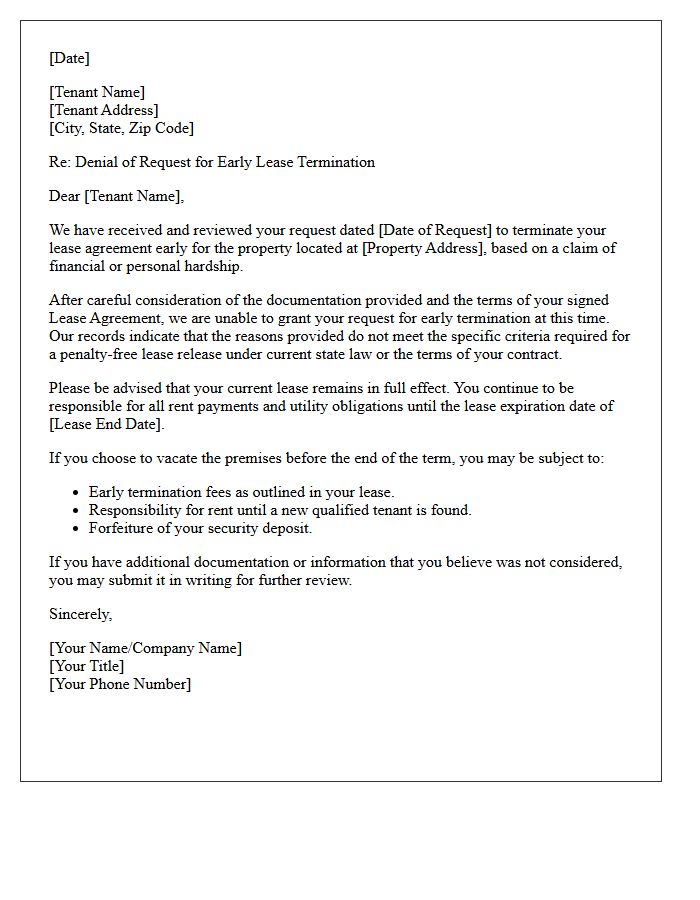
An Invalid Hardship Claim Early Lease Termination Denial Letter is a formal notice issued by a landlord when a tenant's request to break a lease fails to meet legal requirements or lease-specific criteria. This document specifies why the provided justification-such as financial loss or job relocation-was rejected. It is crucial to review the lease agreement and local housing laws, as tenants may still be legally liable for remaining rent payments, advertising costs, or early termination fees if their hardship claim is deemed insufficient or lacks proper documentation.
Incomplete Documentation Early Lease Termination Denial Letter
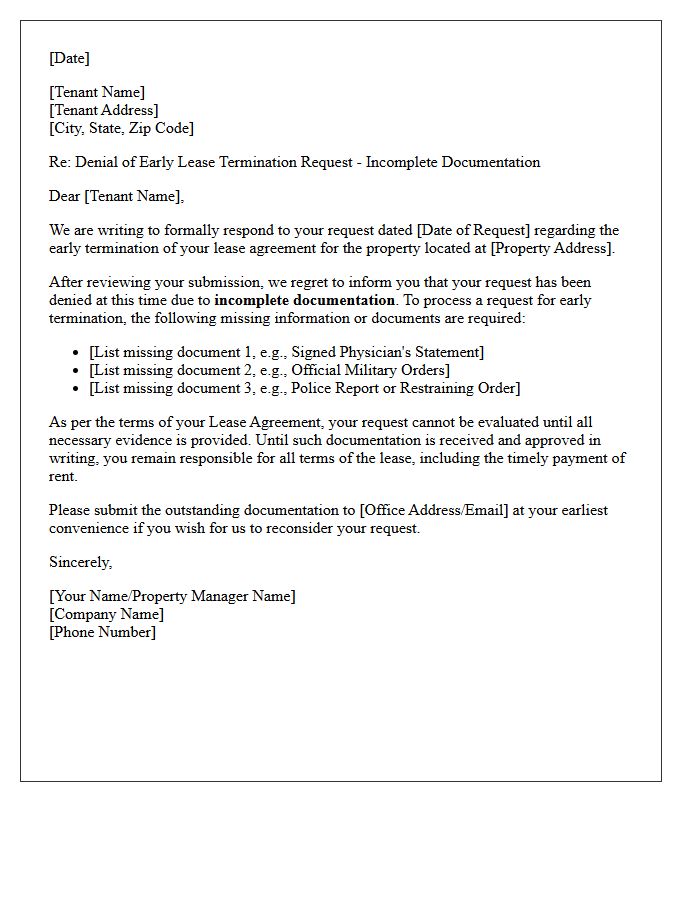
An Incomplete Documentation Early Lease Termination Denial Letter is a formal notice sent by landlords when a tenant fails to provide necessary proof for ending a contract early. To ensure legal compliance, the letter must clearly identify which supporting evidence is missing, such as military orders or medical certifications. Providing a specific deadline for resubmission is essential for clarity. Without valid documentation, the lease remains legally binding, making the tenant responsible for ongoing rent. Proper communication helps resolve disputes and protects the property owner's rights under local housing laws.
Missing Buyout Fee Early Lease Termination Denial Letter
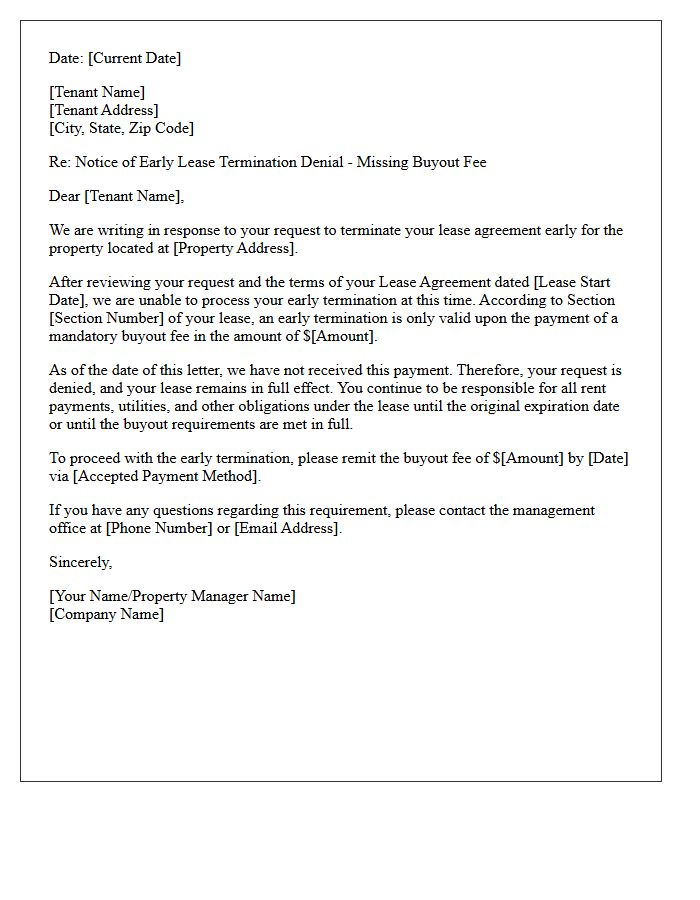
Receiving a Missing Buyout Fee Early Lease Termination Denial Letter indicates your request to end a rental agreement was rejected due to unpaid contractual penalties. Landlords issue this notice when the required liquidation damages or buyout amount specified in your lease was not included with your notice to vacate. To resolve this, review your lease agreement for specific fee requirements and ensure all outstanding balances are settled. Failure to pay may result in continued rent liability and legal action for breach of contract.
Strict Fixed Term Policy Early Lease Termination Denial Letter
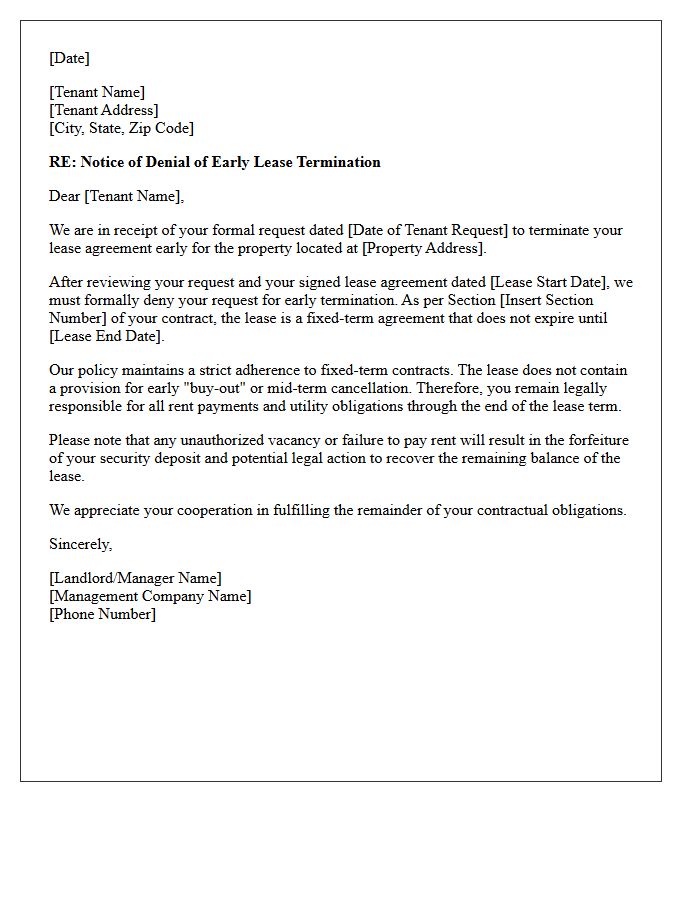
A Strict Fixed Term Policy Early Lease Termination Denial Letter formally rejects a tenant's request to end their rental agreement before the specified date. Landlords use this document to uphold the legally binding contract, emphasizing that early departure is not permitted under current terms. It serves as official notice that the tenant remains responsible for all rent obligations until the lease expires. This letter reinforces lease integrity and protects property revenue by clearly outlining the non-negotiable nature of the fixed-term commitment while providing a documented paper trail for potential legal disputes.
Joint Tenant Disagreement Early Lease Termination Denial Letter
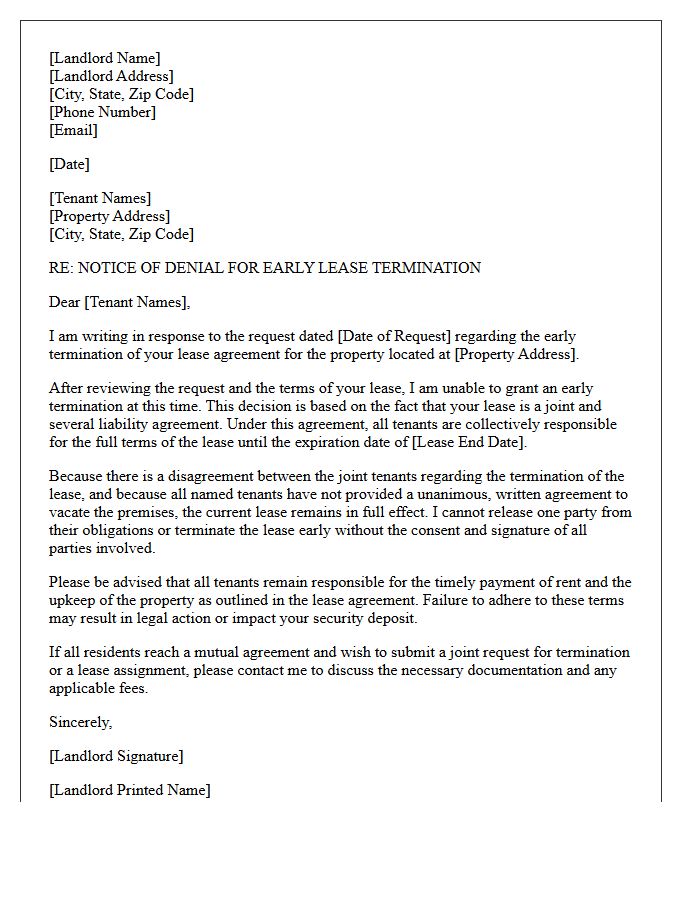
When drafting a Joint Tenant Disagreement Early Lease Termination Denial Letter, it is crucial to emphasize joint and several liability. Landlords must clearly state that all tenants are collectively responsible for the full rent until the lease expires. The letter should explicitly deny the request for early termination due to internal disputes, citing the binding terms of the original rental agreement. Remind occupants that personal disagreements do not legally void contractual obligations, and any changes to the tenancy typically require unanimous written consent from all parties and the property owner.
Commercial Property Early Lease Termination Denial Letter
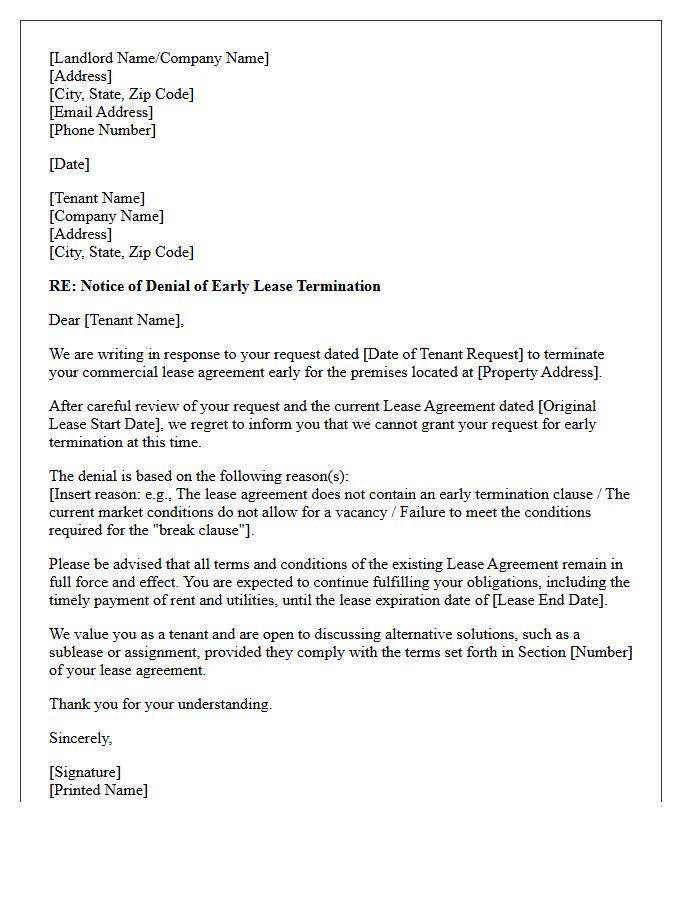
A Commercial Property Early Lease Termination Denial Letter is a formal notice issued by a landlord to reject a tenant's request to end a rental agreement before the expiration date. It is crucial to understand that commercial leases are legally binding contracts typically lacking a standard cooling-off period. The letter should clearly cite the specific lease clauses that prohibit early exit or outline the financial penalties required for release. Maintaining written documentation of this denial protects the property owner's rights and clarifies the ongoing rental obligations the tenant must fulfill.
Residential Property Early Lease Termination Denial Letter
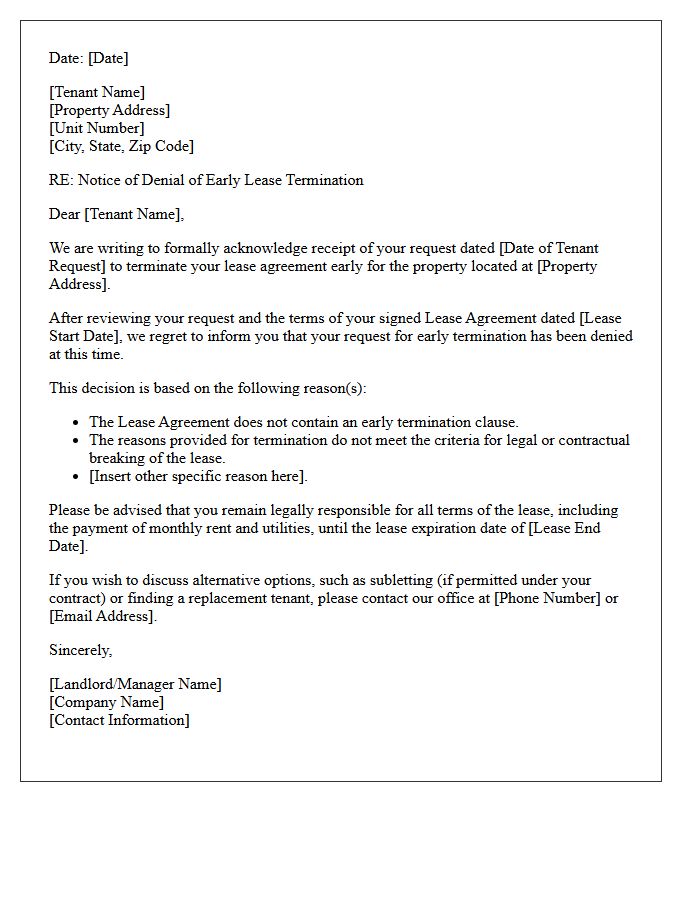
A Residential Property Early Lease Termination Denial Letter is a formal document issued by a landlord to reject a tenant's request to break a rental agreement before its end date. It is crucial to clearly state the legal justification for the refusal, often citing specific clauses within the original lease contract. Landlords use this response to highlight tenant obligations regarding ongoing rent payments and potential penalties. Providing such a written notice helps maintain a clear record of communication and ensures compliance with local housing regulations if a dispute arises later.
Unverified Military Orders Early Lease Termination Denial Letter
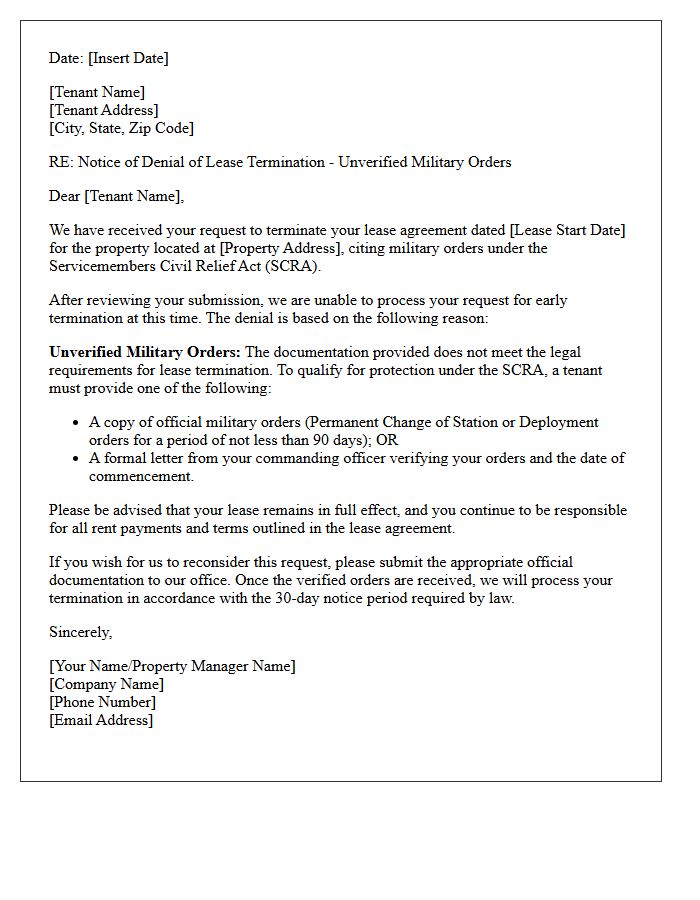
Receiving an Unverified Military Orders Early Lease Termination Denial Letter indicates a landlord has rejected your request to break a rental agreement under the Servicemembers Civil Relief Act (SCRA). This typically occurs because the provided documentation lacks official verification or fails to meet legal criteria for permanent change of station or deployment. To resolve this, ensure your orders are signed by a commanding officer or provide a formal letter on military letterhead. Validating your termination notice promptly is essential to protect your legal rights and avoid unnecessary financial penalties or legal disputes.
Standard Policy Early Lease Termination Denial Letter
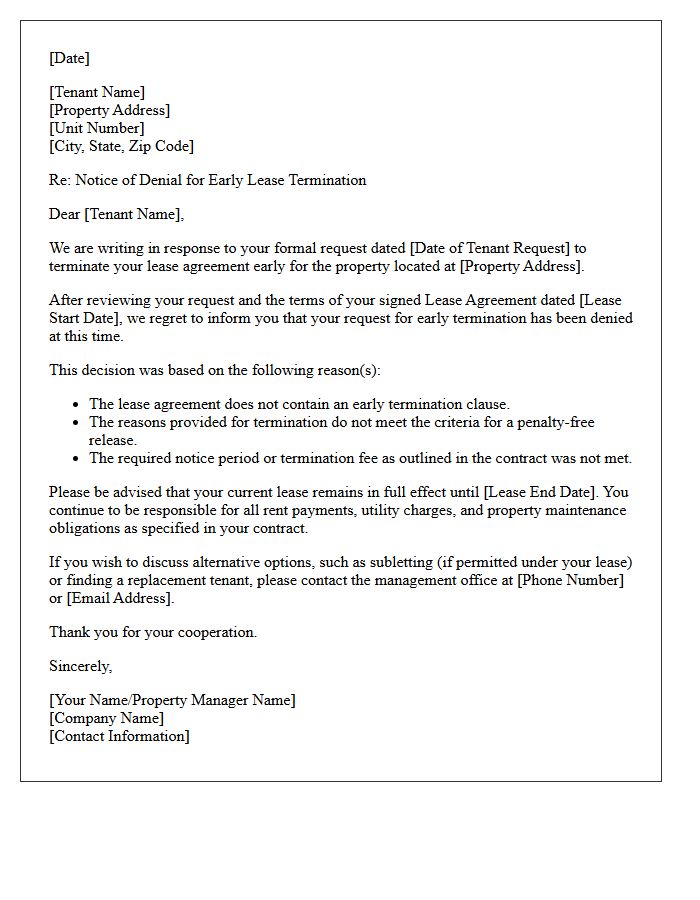
A Standard Policy Early Lease Termination Denial Letter is a formal notice sent by a landlord to reject a tenant's request to end a rental agreement before the specified contract expiration. This document typically cites specific lease clauses that prohibit early departure without penalty or valid legal justification. It serves as a legal record confirming that the tenant remains obligated to pay rent and maintain the property until the term ends or a suitable replacement is found, unless mitigation requirements under local law provide an alternative resolution.
Alternative Option Offer Early Lease Termination Denial Letter
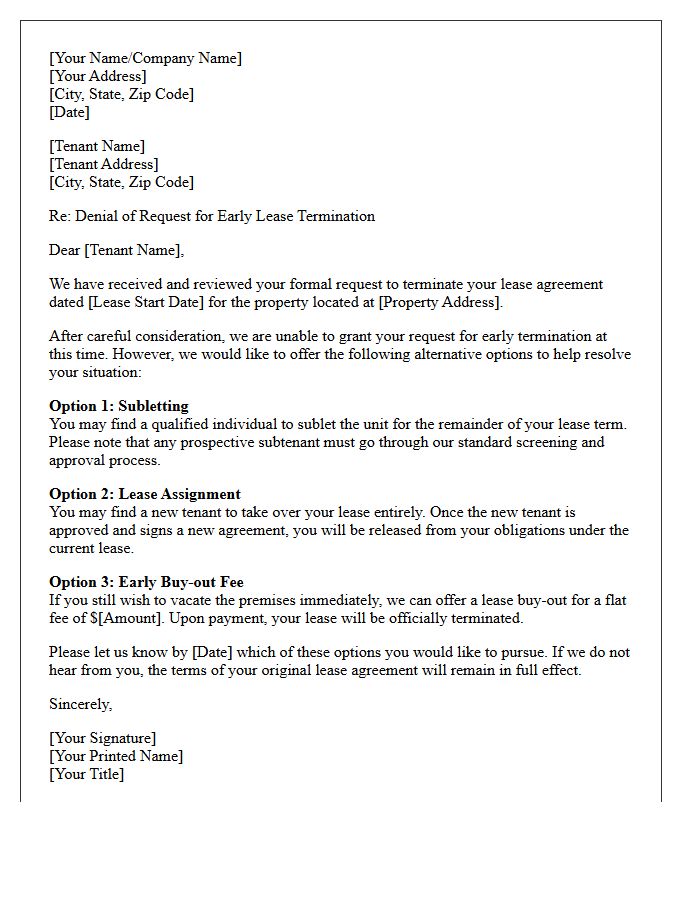
An Alternative Option Offer is a strategic addition to an early lease termination denial letter. When a landlord cannot grant a full release, they may propose subletting, lease assignments, or a buy-out fee as viable compromises. This approach maintains the legal integrity of the original contract while providing the tenant with a flexible exit strategy. Providing these alternatives helps mitigate financial loss for both parties and can prevent potential legal disputes or prolonged vacancies, ensuring a professional resolution to a tenant's request to vacate early.
What is an Early Lease Termination Denial Letter?
An Early Lease Termination Denial Letter is a formal written response from a landlord or property manager officially rejecting a tenant's request to end their lease agreement before the contractually agreed-upon expiration date.
On what grounds can a landlord deny an early lease termination request?
A landlord may deny a request if the tenant fails to meet specific "break clause" conditions, does not provide a legally valid reason (such as military deployment or uninhabitable conditions), or if the proposed move-out date violates the required notice period outlined in the lease.
What should be included in a formal denial of lease termination?
The letter should include the date of the request, the specific lease clauses being enforced, the reason for the denial, and a reminder of the tenant's ongoing financial obligations, including rent and utility payments through the end of the term.
Can a tenant appeal a denial of early lease termination?
A tenant can attempt to negotiate by offering a lease buyout, finding a qualified replacement tenant (subletting), or providing documentation of extenuating circumstances that might qualify for protection under local landlord-tenant laws.
What are the legal consequences for a tenant moving out after a denial?
If a tenant vacates after receiving a denial letter, they may be held liable for the remaining rent balance, lose their security deposit, face legal action for breach of contract, and sustain damage to their credit score due to unpaid debt collections.

Comments