
A Notice of Health and Safety Violation is a formal document issued to address workplace hazards or regulatory non-compliance. It outlines specific safety breaches, required corrective actions, and deadlines to ensure a secure environment and legal adherence. Promptly documenting these issues prevents accidents and potential legal liabilities. To help you maintain compliance efficiently, below are some ready to use template.

Image cover: Issuing a Professional Health and Safety Violation Notice: Templates and Best Practices
Letter Samples List
- Notice of Health and Safety Violation Letter for Mold Growth
- Health and Safety Violation Letter Regarding Blocked Fire Exits
- Unauthorized Hazardous Materials Safety Violation Letter
- Pet Waste Accumulation Health Violation Letter
- Disabled Smoke Detector Safety Violation Letter
- Excessive Clutter and Hoarding Health Violation Letter
- Improper Trash Disposal Health and Safety Violation Letter
- Pest Infestation Notice of Health Violation Letter
- Unsanitary Living Conditions Health Violation Letter
- Illegal Storage of Combustible Items Safety Violation Letter
- Biohazard Cleanup Requirement Health Violation Letter
- Balcony Structural Overload Safety Violation Letter
Notice of Health and Safety Violation Letter for Mold Growth
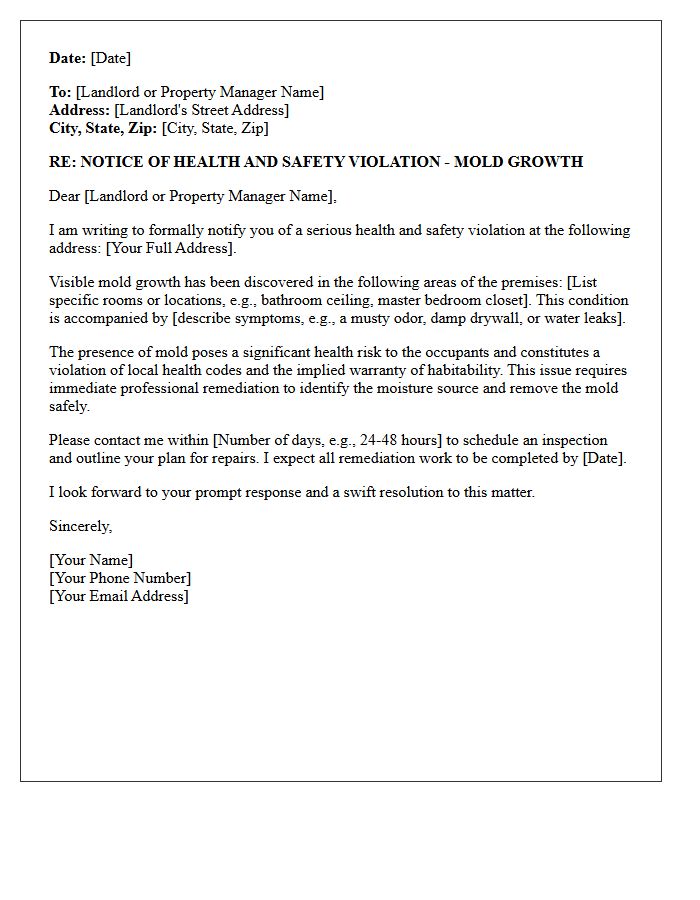
A Notice of Health and Safety Violation Letter for mold growth is a formal legal document issued by tenants or inspectors to notify landlords of hazardous indoor air quality. It highlights the urgent need for professional remediation to prevent respiratory illnesses and structural damage. This written record serves as vital evidence if legal action or lease termination becomes necessary. It must clearly outline the specific location of the infestation and demand a swift rectification period to ensure the property complies with local building codes and habitability standards.
Health and Safety Violation Letter Regarding Blocked Fire Exits
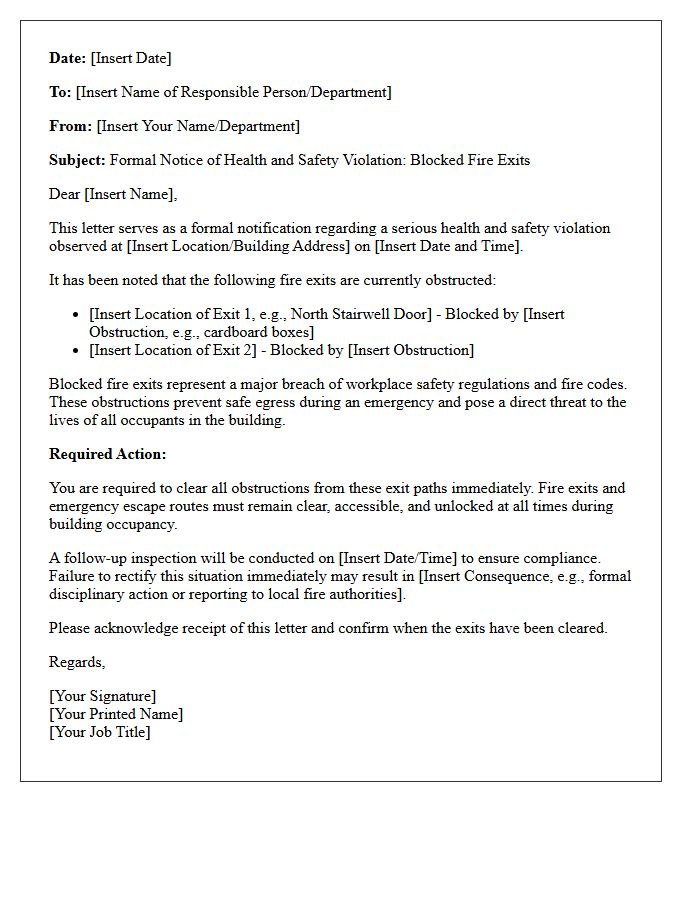
Receiving a health and safety violation letter regarding blocked fire exits requires immediate corrective action. Obstructions like boxes, equipment, or locked doors compromise emergency egress, posing a severe risk to life during a fire. Property owners must clear all pathways instantly and document the resolution to avoid heavy fines or legal liability. Maintaining unobstructed exit routes is a mandatory legal requirement under fire safety codes. Ensure all personnel are trained to keep these areas clear to guarantee a safe workplace environment and pass subsequent follow-up inspections.
Unauthorized Hazardous Materials Safety Violation Letter
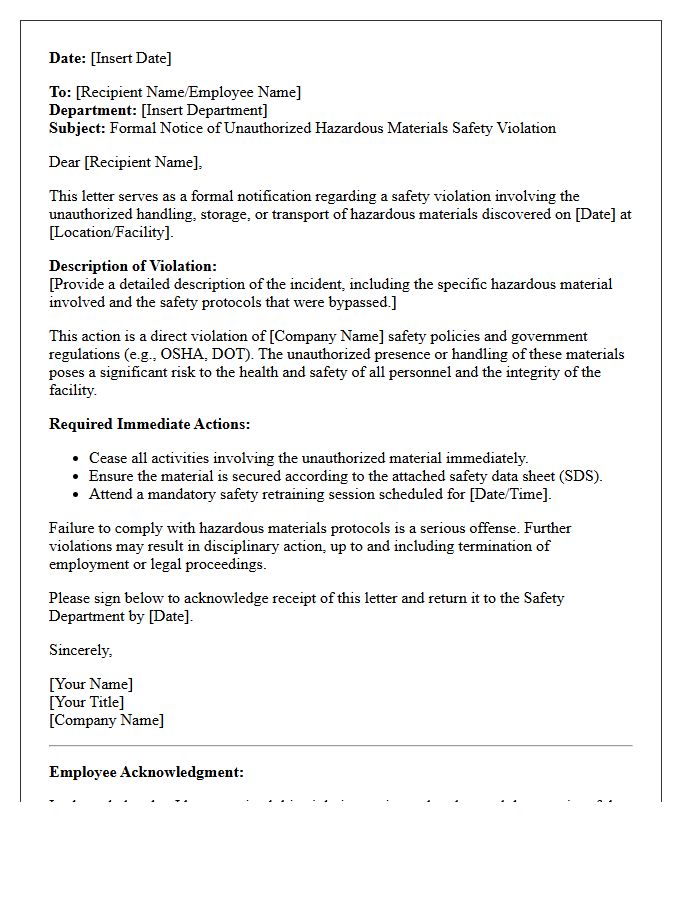
An Unauthorized Hazardous Materials Safety Violation Letter is a formal notification from the FMCSA indicating that a motor carrier transported regulated dangerous goods without proper federal registration or safety permits. Receiving this notice signifies a serious compliance breach that can lead to civil penalties, out-of-service orders, and a degraded safety rating. To resolve this, carriers must immediately cease hazardous operations and complete the PHMSA registration process. Prompt corrective action is essential to maintain legal operating authority and ensure public safety during the transportation of sensitive materials.
Pet Waste Accumulation Health Violation Letter
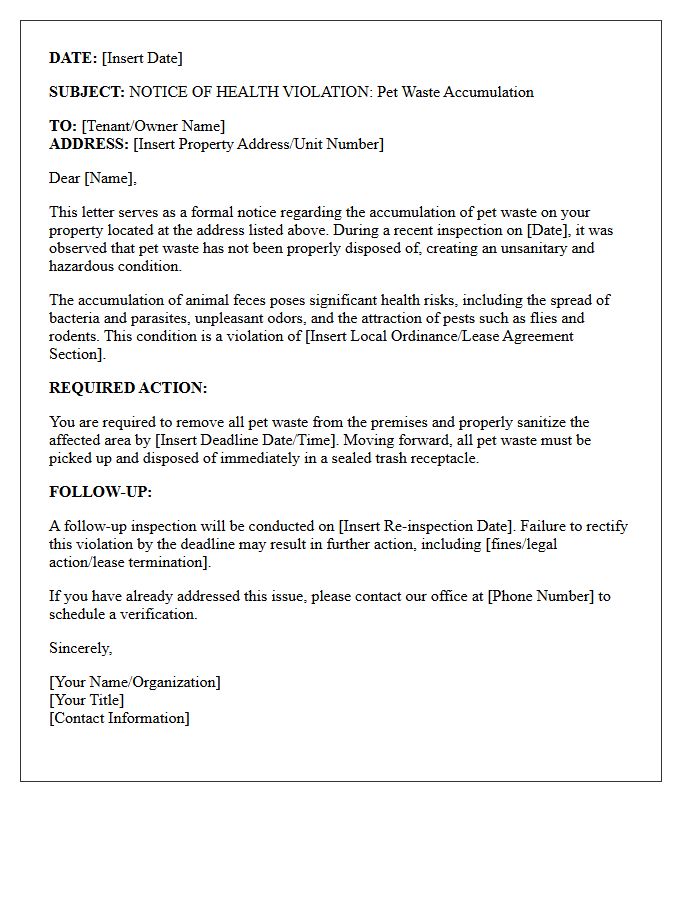
Receiving a pet waste accumulation health violation letter indicates a formal notification of sanitary non-compliance. Such notices are issued when excessive animal feces create odors, attract pests, or pose public health risks through bacterial runoff. Property owners must promptly remove waste and sanitize the area to avoid fines or legal action. Ensuring proper disposal is essential for community hygiene and environmental safety. To resolve the citation, clean the affected space immediately and maintain a regular sanitation schedule to prevent future complaints or recurring inspections from local health departments.
Disabled Smoke Detector Safety Violation Letter
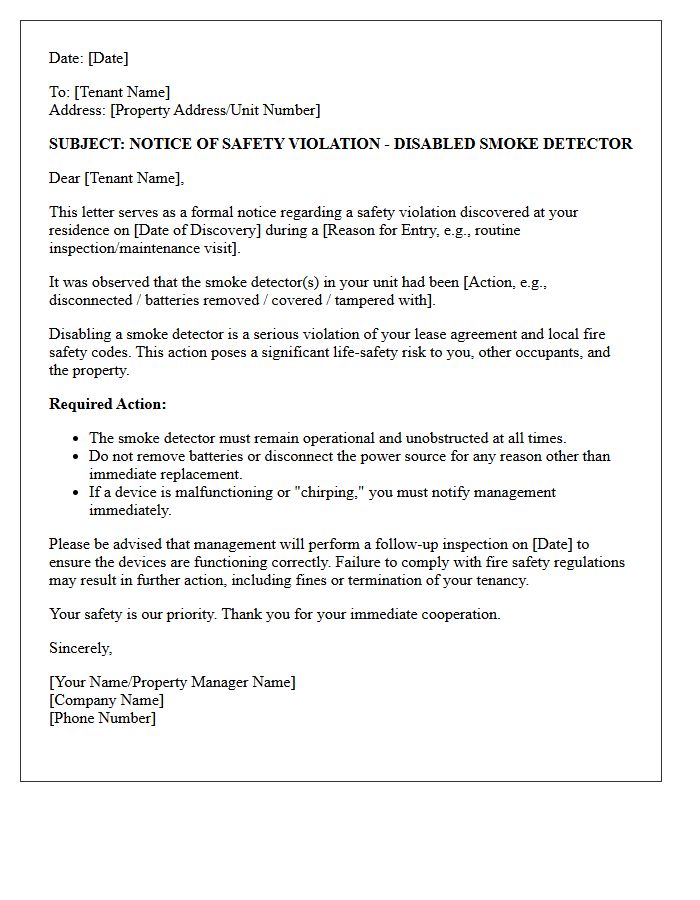
Receiving a Disabled Smoke Detector Safety Violation Letter indicates a serious breach of fire safety codes and lease agreements. It is crucial to immediately restore the device to working order, as tampering with life-saving equipment creates extreme liability and puts all occupants at risk. Failure to comply often results in hefty fines, mandatory inspections, or eviction proceedings. Treat this legal notice with urgency by ensuring batteries are replaced and sensors are unobstructed to maintain a safe living environment and meet municipal fire compliance standards.
Excessive Clutter and Hoarding Health Violation Letter
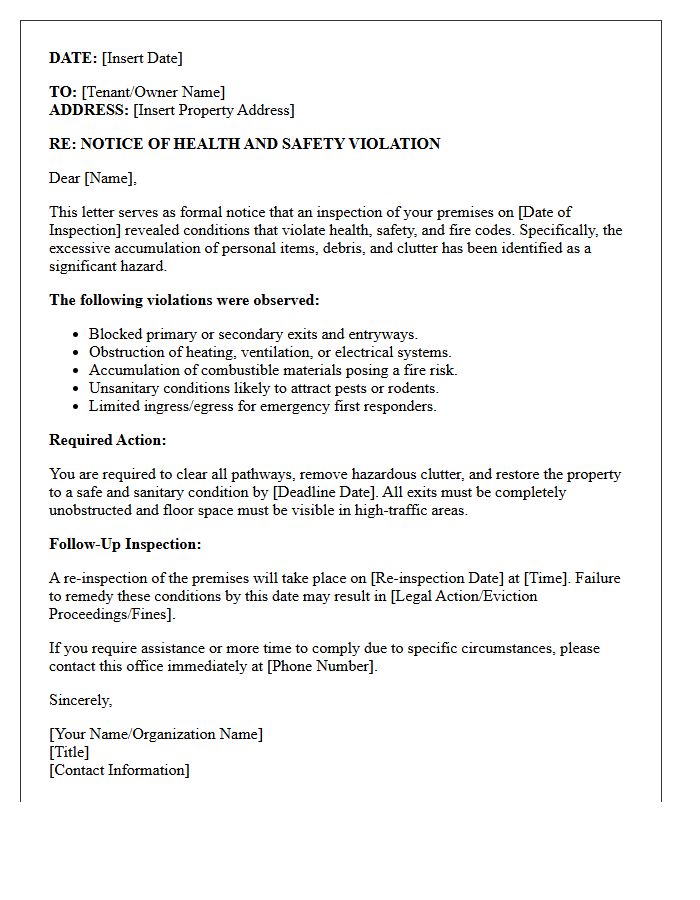
An Excessive Clutter and Hoarding Health Violation Letter is a formal notice issued by authorities or landlords regarding unsanitary conditions that pose safety risks. These letters typically cite violations of fire codes, blocked exits, or pest infestations that endanger occupants. To avoid eviction or legal penalties, recipients must complete remediation within a specific timeframe. Addressing these notices promptly is essential, as they prioritize public health and structural integrity. Seeking professional organizational help or mental health support can assist in resolving these compliance issues and maintaining a safe living environment.
Improper Trash Disposal Health and Safety Violation Letter
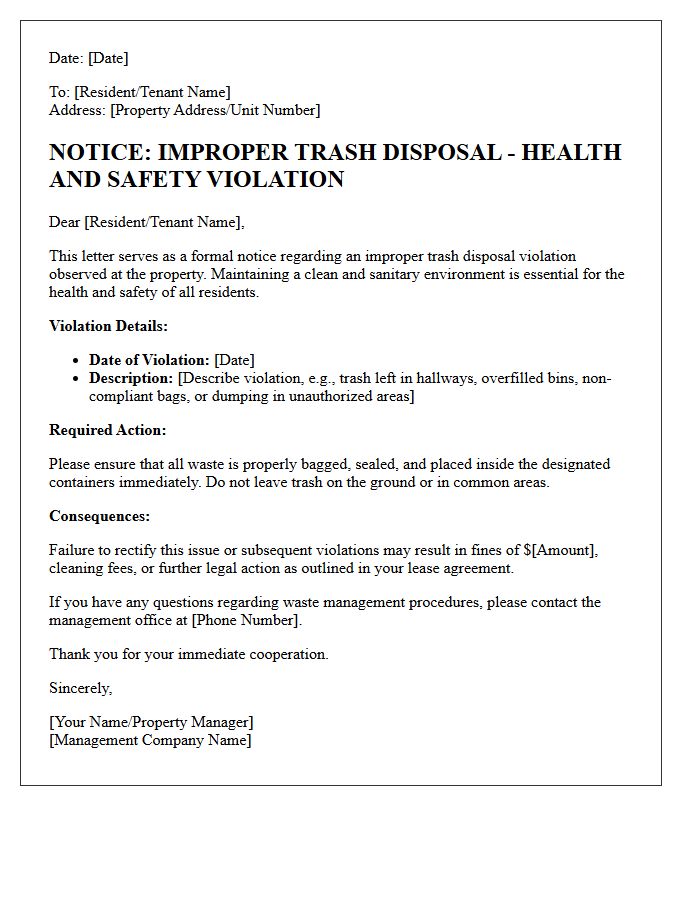
An Improper Trash Disposal Health and Safety Violation Letter serves as a formal notice that waste management practices at a property breach local sanitary codes. This document highlights environmental hazards, such as pest infestations, odors, and fire risks caused by accumulated debris. Receiving this notice requires immediate corrective action to avoid legal penalties or heavy fines. Property owners must ensure garbage is secured in designated containers to maintain public health standards and prevent neighborhood contamination. Compliance ensures a safe living environment and resolves the documented safety infraction effectively.
Pest Infestation Notice of Health Violation Letter
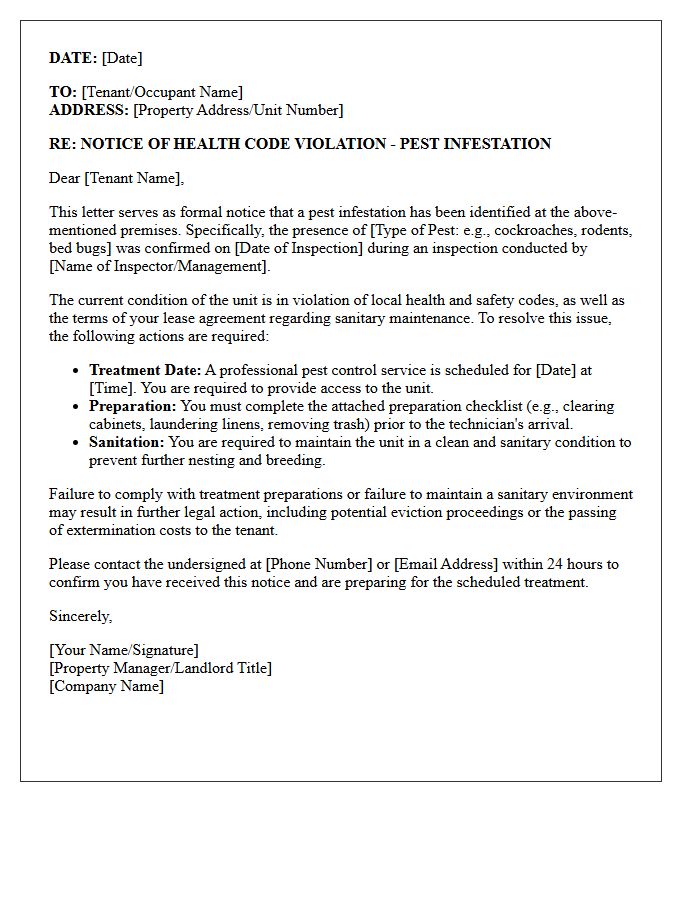
A Pest Infestation Notice of Health Violation is a formal legal warning issued by local authorities when sanitary standards are breached. This document confirms the presence of vermin, such as rodents or insects, which pose a direct threat to public safety. Property owners must initiate immediate professional pest remediation to avoid heavy fines, business closure, or legal action. It is essential to keep detailed records of all treatments and inspections to prove compliance with municipal health codes and successfully resolve the citation within the specified deadline.
Unsanitary Living Conditions Health Violation Letter
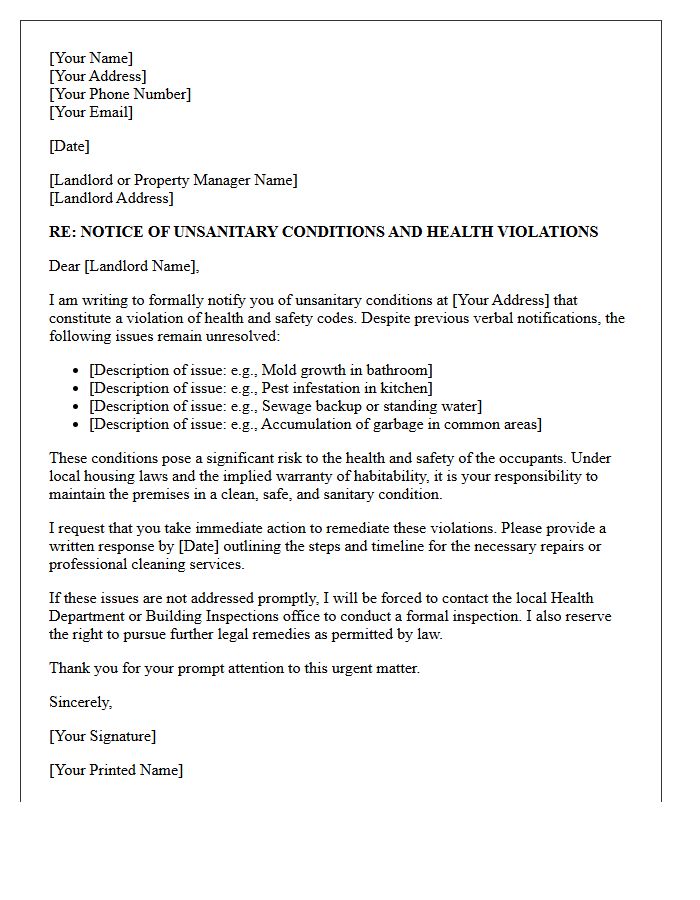
Receiving an Unsanitary Living Conditions Health Violation Letter is a formal notice that a property fails to meet essential sanitary standards. These letters typically cite issues like mold, pest infestations, or structural decay that pose immediate risks to human health. It is crucial for landlords to address these remedial actions within the specified timeframe to avoid heavy fines or legal eviction proceedings. Tenants should keep copies of this documentation as vital evidence if a habitability dispute arises, ensuring their rights to a safe and clean environment are legally protected.
Illegal Storage of Combustible Items Safety Violation Letter
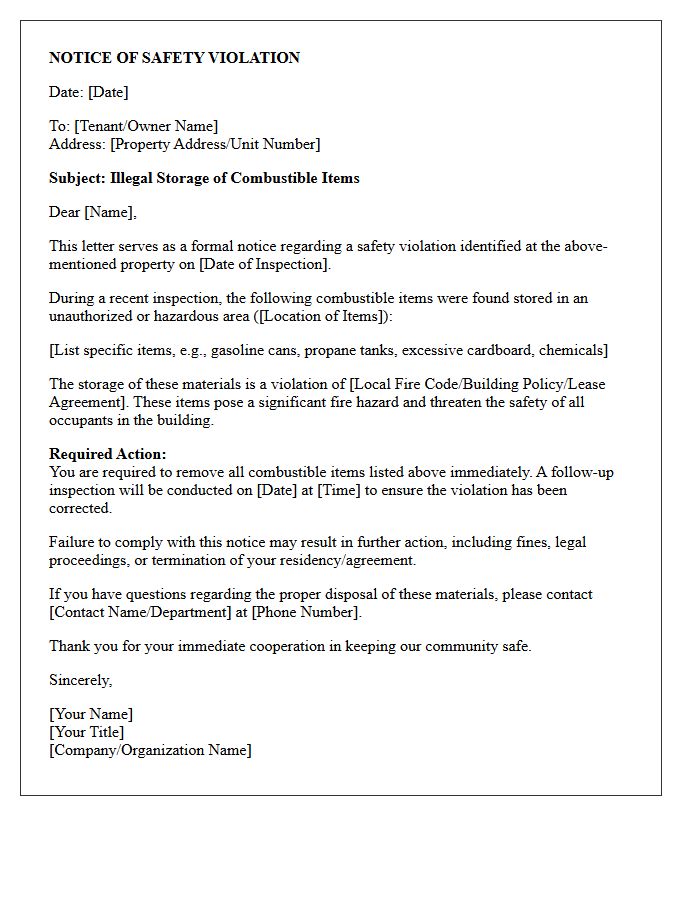
Receiving an Illegal Storage of Combustible Items Safety Violation Letter indicates a serious fire hazard that must be addressed immediately. These notices are issued when materials like cardboard, chemicals, or excessive debris obstruct pathways or ignition sources, violating fire codes. Failure to comply can lead to heavy fines, legal action, or eviction. To resolve the issue, you must promptly remove all flammable hazards and schedule a follow-up inspection. Prioritizing fire safety compliance is essential to protect the building's structural integrity and ensure the well-being of all occupants.
Biohazard Cleanup Requirement Health Violation Letter
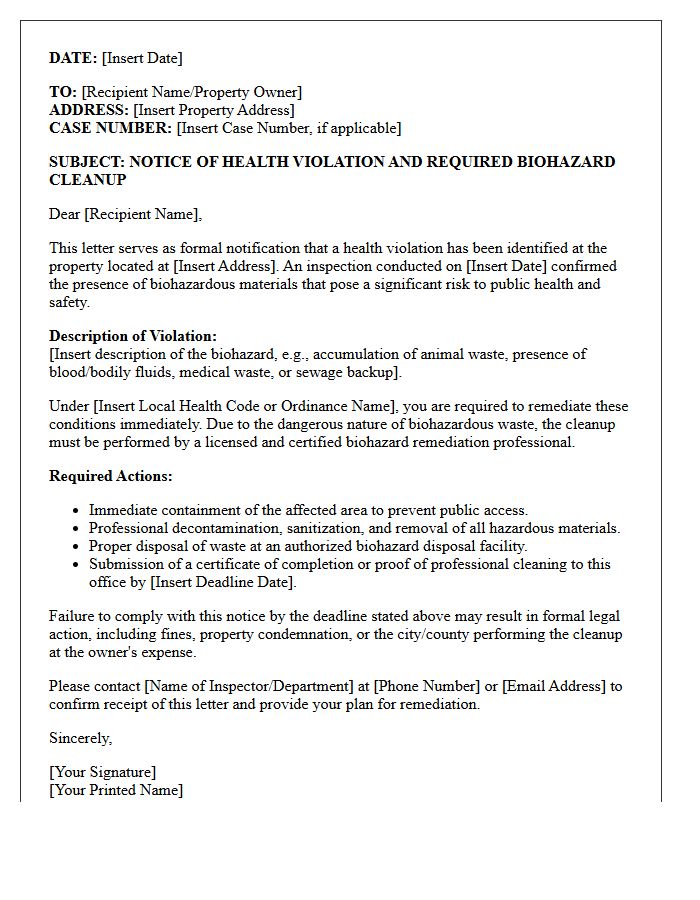
A Biohazard Cleanup Requirement Health Violation Letter is a formal notification from authorities mandating the immediate remediation of biological contaminants. Receiving this document signifies that a property poses a severe public health risk due to pathogens, blood, or hazardous waste. Failure to comply can lead to heavy fines, legal action, or property condemnation. It is essential to hire certified restoration professionals who follow OSHA standards to ensure safe disposal and decontamination. Promptly addressing these violations protects occupants and ensures the environment meets legal sanitary regulations for safe habitation.
Balcony Structural Overload Safety Violation Letter
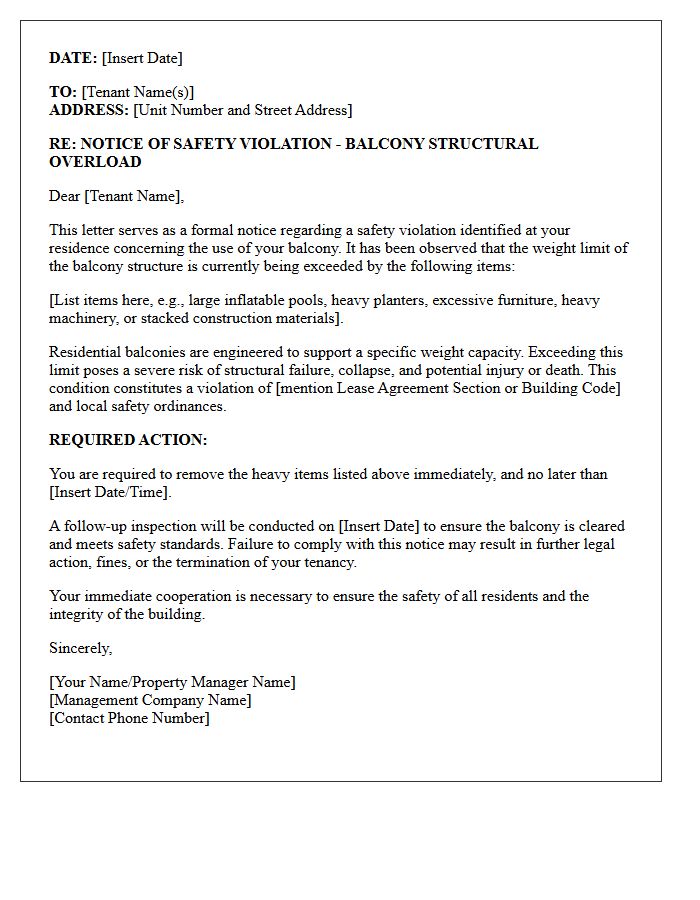
Receiving a Balcony Structural Overload Safety Violation Letter indicates that your outdoor space exceeds weight capacity limits, posing a collapse risk. Building codes mandate strict load requirements to ensure occupant safety and structural integrity. You must immediately reduce heavy items, such as large planters or hot tubs, to prevent catastrophic failure and legal liability. To resolve this citation, schedule a structural inspection by a licensed engineer to verify the balcony's load-bearing health. Failure to comply can result in heavy fines, property evacuation, or life-threatening accidents.
What is a Notice of Health and Safety Violation?
A Notice of Health and Safety Violation is an official document issued by a regulatory body or property management stating that a specific condition or behavior has breached established safety protocols, building codes, or health regulations.
What should I do immediately after receiving a safety violation notice?
Upon receiving a notice, you should carefully review the specific regulation cited, identify the deadline for compliance, and take immediate steps to remediate the hazard to avoid further penalties or legal action.
Can a Notice of Health and Safety Violation lead to fines?
Yes, failure to address the issues outlined in the notice by the specified deadline typically results in monetary fines, increased insurance premiums, or the temporary suspension of business operations until the site passes reinspection.
How do I dispute a Notice of Health and Safety Violation?
To dispute a violation, you must follow the formal appeals process outlined in the notice, which usually involves submitting written evidence, documentation of compliance, or scheduling a hearing with the issuing authority within a strict timeframe.
What are the most common reasons for receiving a health and safety notice?
Common triggers include blocked fire exits, improper chemical storage, lack of required safety equipment (PPE), sanitation issues, or failure to maintain structural integrity and electrical systems according to local codes.

Comments