
Landlords must enforce local housing codes to prevent safety hazards and property damage. Issuing a Notice to Vacate for Exceeding Maximum Occupancy Limits is a necessary legal step when unauthorized tenants breach the lease agreement. This guide explains how to document violations, comply with state regulations, and regain control of your rental property. To simplify the process, below are some ready to use templates.
Image cover: Notice to Vacate: Over-Occupancy Lease Violation Templates
Letter Samples List
- Notice to Vacate for Exceeding Maximum Occupancy Limits Letter
- Lease Violation Letter for Maximum Occupancy Breach and Notice to Vacate
- Final Notice to Vacate Letter Regarding Unauthorized Occupants
- Thirty-Day Notice to Vacate Letter for Occupancy Limit Violation
- Official Property Management Letter Demanding Vacatur for Overcrowding
- Notice to Quit and Vacate Letter for Exceeding Maximum Allowed Tenants
- Eviction Warning Letter for Maximum Occupancy Lease Violation
- Unconditional Notice to Vacate Letter for Severe Occupancy Breach
- Property Manager Notice Letter to Vacate Due to Over-Occupancy
- Seven-Day Notice to Vacate Letter for Exceeding Occupancy Restrictions
- Breach of Lease Occupancy Clause Notice to Vacate Letter
- Demand to Vacate Letter for Unauthorized Additional Residents
- Legal Notice to Vacate Letter for Violating Maximum Occupancy Codes
Notice to Vacate for Exceeding Maximum Occupancy Limits Letter
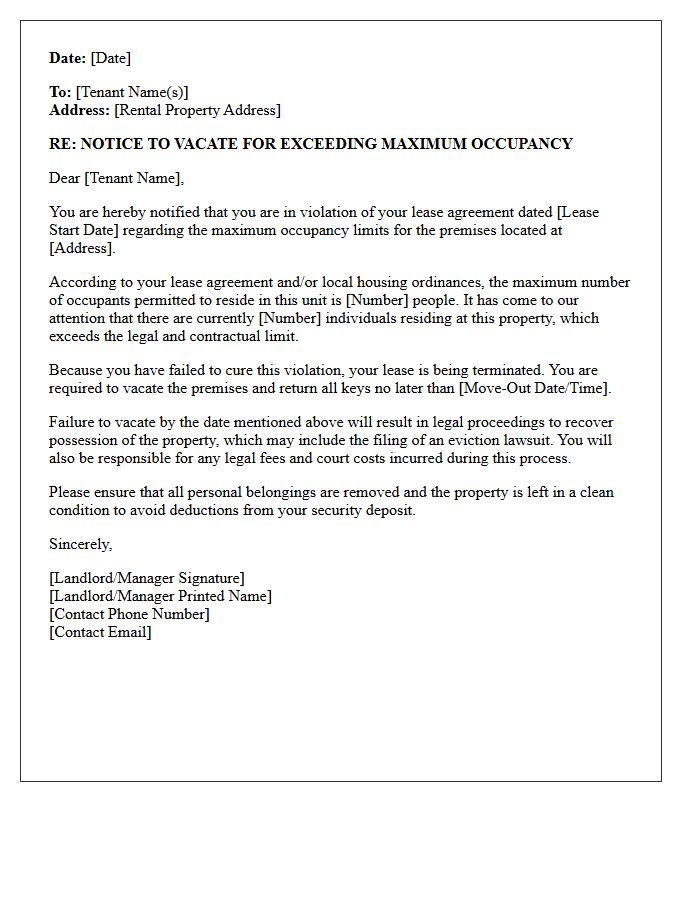
A Notice to Vacate for Exceeding Maximum Occupancy Limits is a formal legal document issued by a landlord when a tenant violates occupancy standards defined in the lease or local housing codes. This letter notifies the resident that having too many unauthorized occupants is a lease default. It typically serves as a Cure or Quit notice, granting a specific timeframe to remove additional persons or move out entirely. Failure to comply can lead to formal eviction proceedings to maintain safety and habitability standards within the rental property.
Lease Violation Letter for Maximum Occupancy Breach and Notice to Vacate
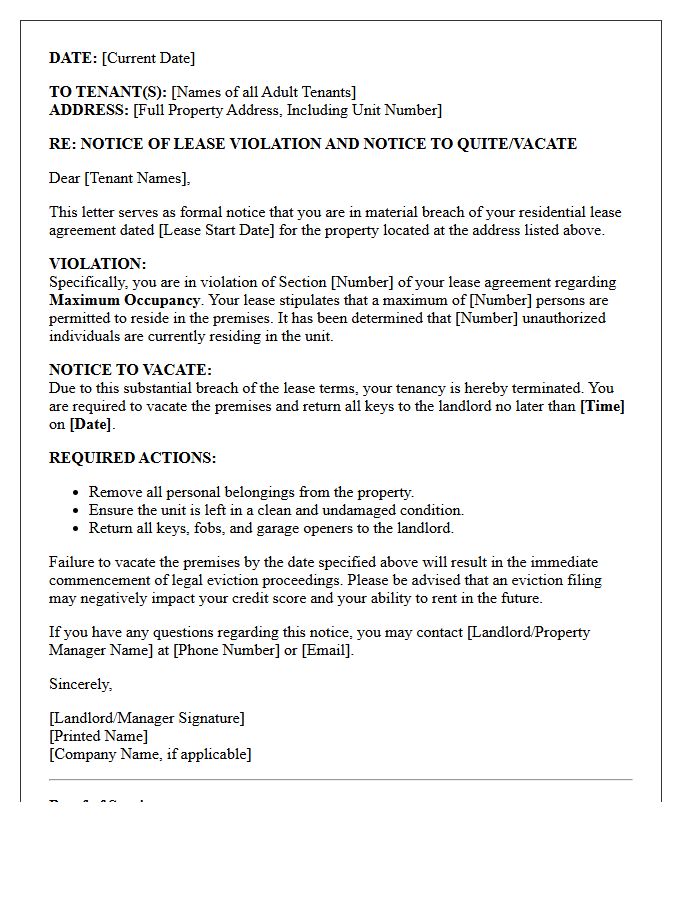
A Lease Violation Letter serves as formal notice when a tenant exceeds the maximum occupancy limits defined in the rental agreement. This breach typically occurs when unauthorized occupants reside in the unit, potentially violating local safety codes or building policies. The document outlines the specific violation, provides a deadline to cure the breach by removing extra residents, and serves as a Notice to Vacate if compliance is not met. Issuing this letter is a critical legal step before initiating formal eviction proceedings to regain possession of the property.
Final Notice to Vacate Letter Regarding Unauthorized Occupants
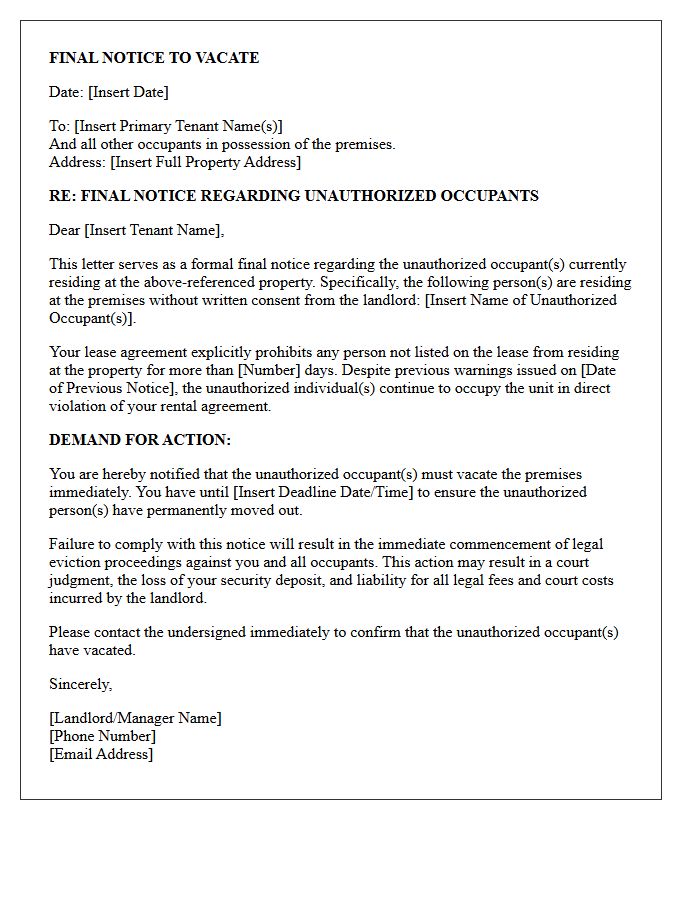
A final notice to vacate for unauthorized occupants is a legal demand requiring individuals living on a property without a valid lease or landlord consent to leave immediately. This document formally outlines the violation of the rental agreement and establishes a strict deadline for departure. It serves as a critical prerequisite for initiating a formal eviction lawsuit (unlawful detainer). Landlords must ensure the notice complies with local housing laws to maintain the legal right to regain possession of their property and protect against potential liability during the removal process.
Thirty-Day Notice to Vacate Letter for Occupancy Limit Violation
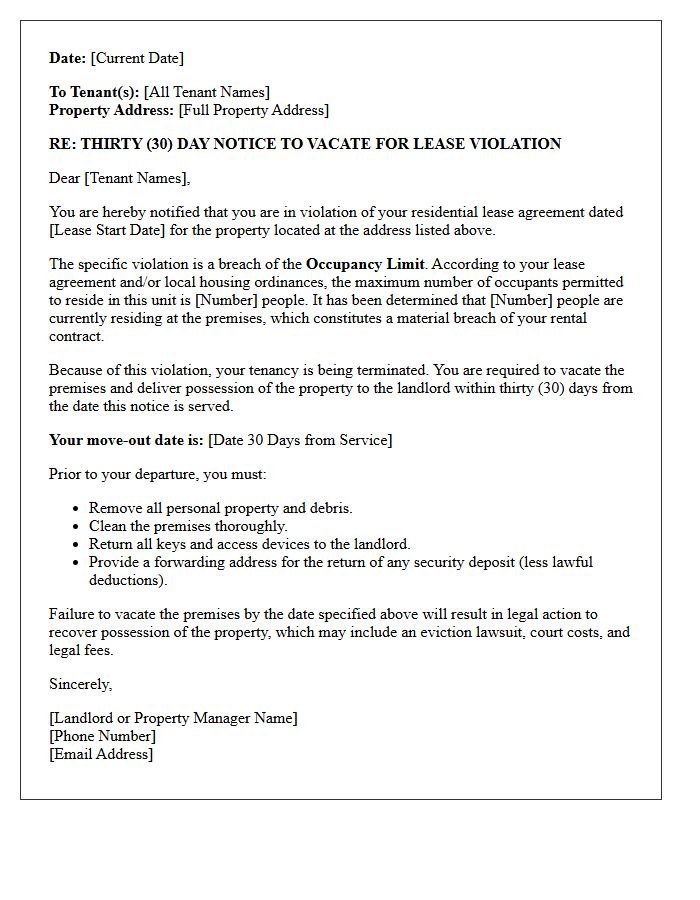
A Thirty-Day Notice to Vacate for an occupancy limit violation is a formal legal document issued when a tenant exceeds the maximum number of permitted residents. This notice informs the tenant they have breached the lease agreement or local housing ordinances. To ensure validity, the letter must clearly state the specific violation, the move-out deadline, and instructions for remedying the breach if applicable. Landlords must provide this written warning to initiate the eviction process legally, protecting the property from overcrowding and maintaining safety standards according to municipal regulations.
Official Property Management Letter Demanding Vacatur for Overcrowding
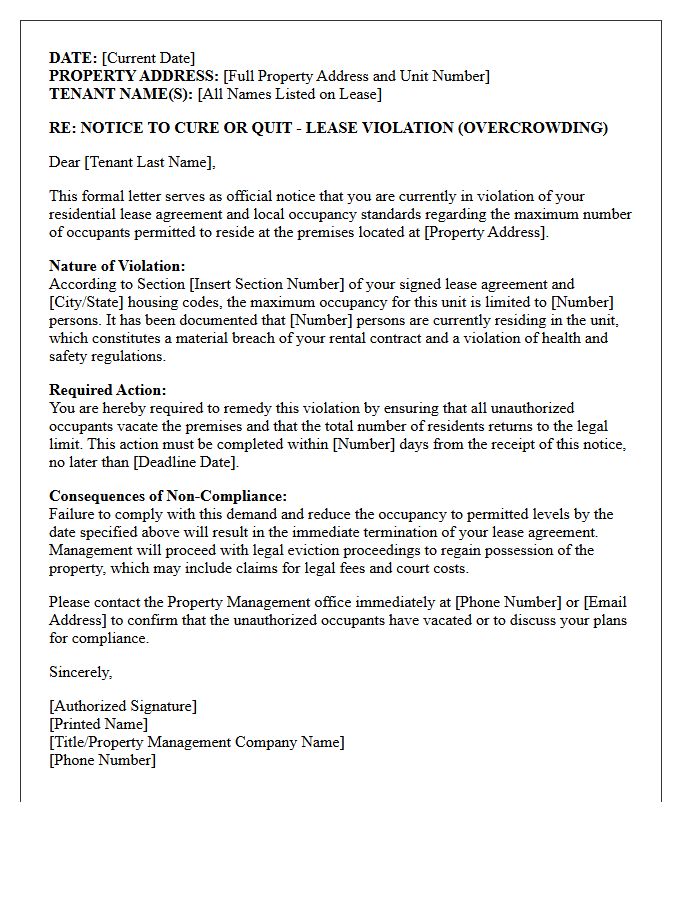
An official demand to vacate due to overcrowding is a formal legal notice issued when a tenant exceeds the maximum occupancy limits defined by local housing codes or the lease agreement. It is legally binding and serves as a precursor to eviction proceedings if the violation is not cured. Tenants must immediately address the safety hazards or lease violations cited. Understanding your local tenant rights is essential to respond effectively, as property managers must follow specific statutory timelines and provide written evidence before terminating a residency based on density standards.
Notice to Quit and Vacate Letter for Exceeding Maximum Allowed Tenants
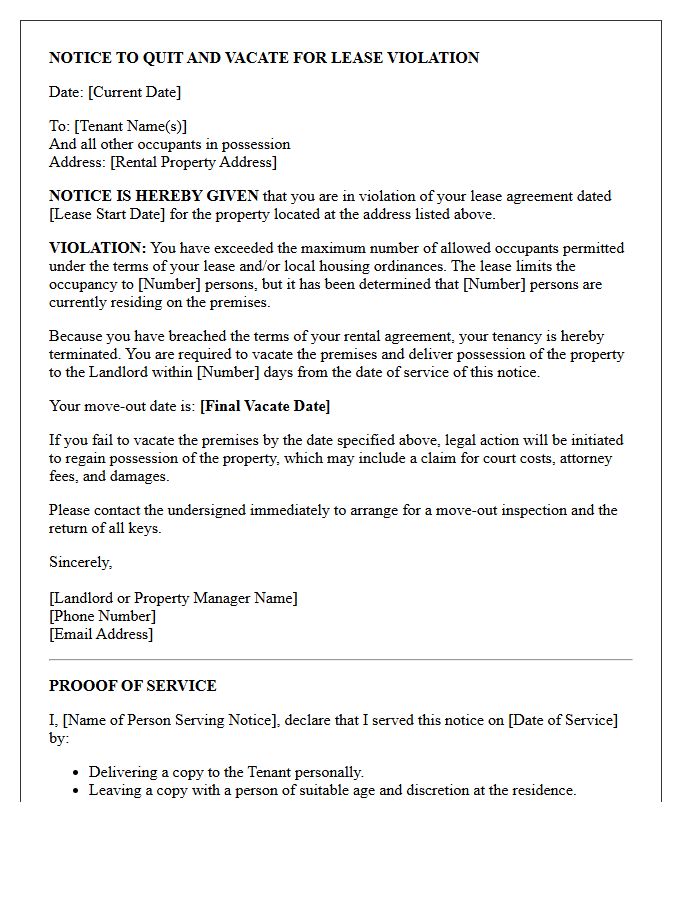
A Notice to Quit and Vacate for exceeding maximum occupancy is a formal legal demand issued when a rental unit hosts more residents than the lease agreement or local housing codes permit. Landlords must specify the names of unauthorized occupants and the exact lease provision violated. This document serves as a final warning to remedy the breach by removing extra tenants or vacating the premises entirely by a set deadline. Proper legal service of this notice is the essential first step before filing for an eviction in court.
Eviction Warning Letter for Maximum Occupancy Lease Violation
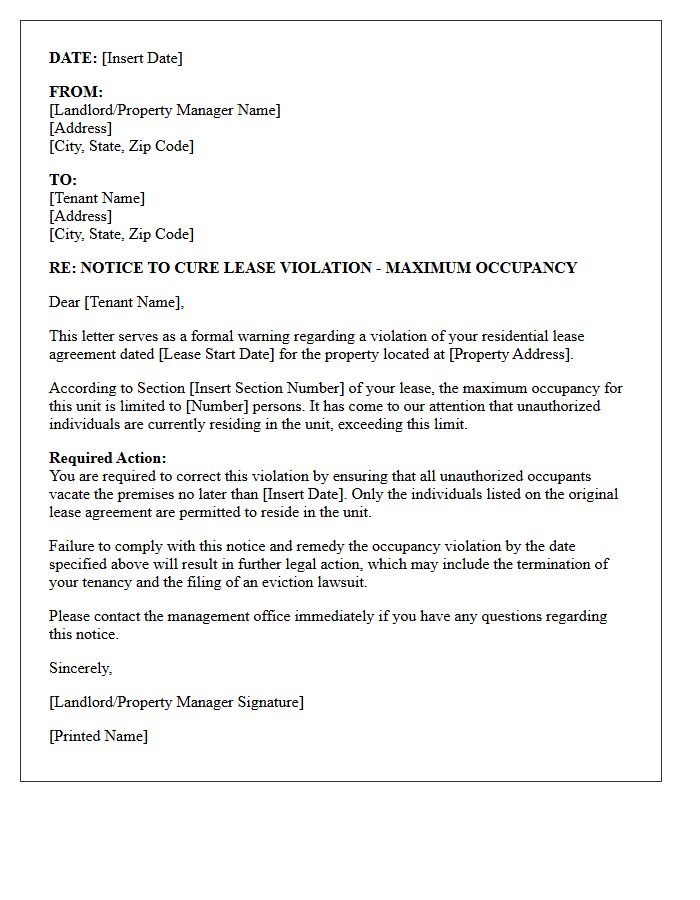
An eviction warning letter for a maximum occupancy violation serves as a formal notice that too many residents are living in the unit. To avoid legal action, the tenant must immediately remedy the breach by ensuring the number of occupants aligns with the lease agreement and local housing codes. This document is a critical first step in the legal eviction process, documenting the lease violation and providing a specific timeframe for compliance. Failure to address the overcrowding issue can lead to a formal notice to quit or lease termination.
Unconditional Notice to Vacate Letter for Severe Occupancy Breach
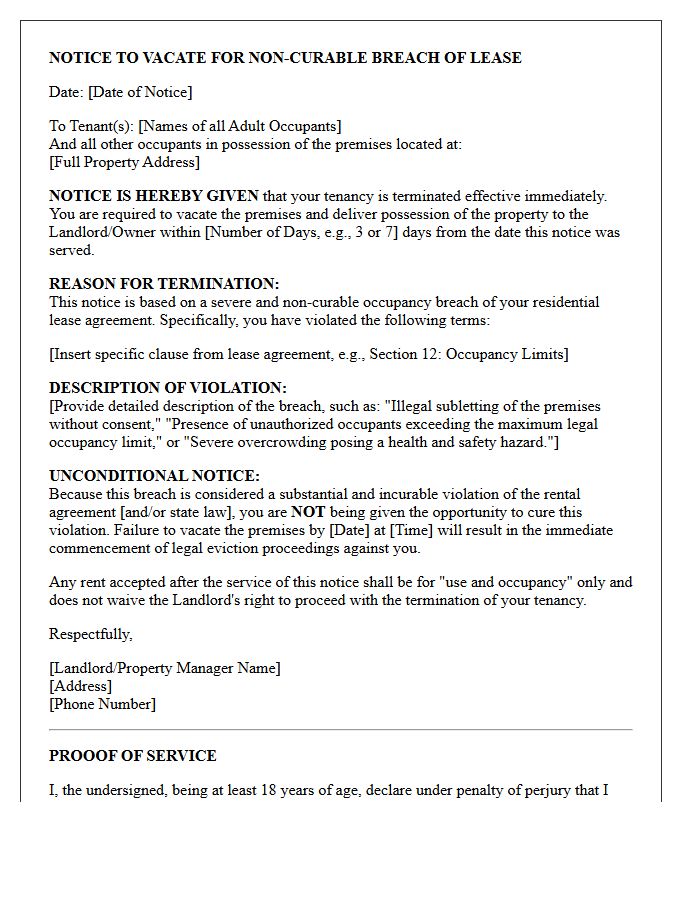
An Unconditional Notice to Vacate is a legal document used for severe occupancy breaches that cannot be corrected. Unlike standard notices, it provides no opportunity for the tenant to "cure" the violation. This eviction notice is typically reserved for illegal activities, serious property damage, or safety threats. Landlords must ensure the breach is strictly documented as state laws vary regarding valid grounds for immediate termination. Serving this letter is the final step before filing for expedited eviction to regain possession of the premises and protect the property's integrity.
Property Manager Notice Letter to Vacate Due to Over-Occupancy
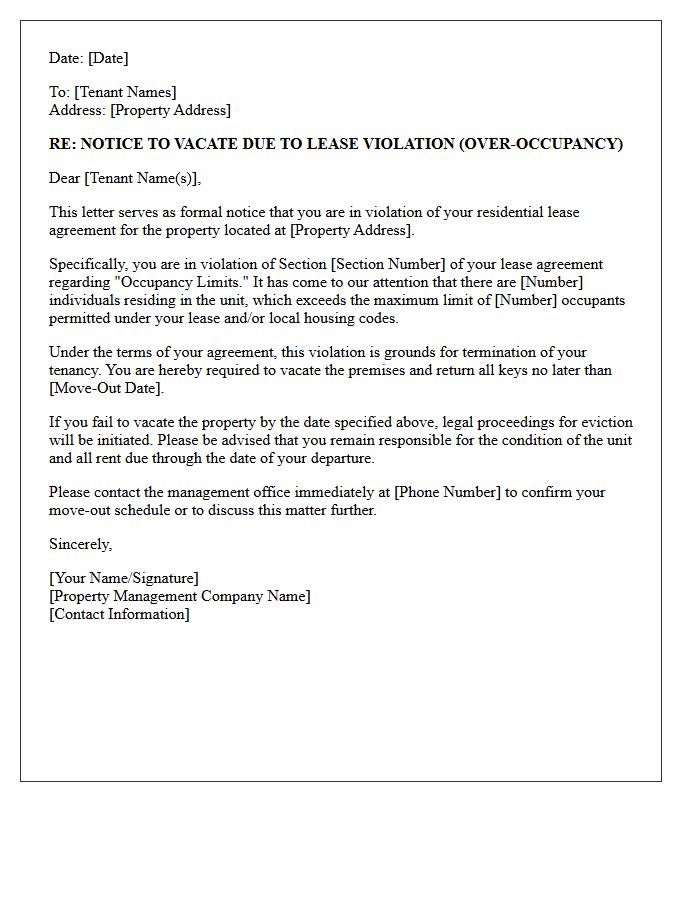
A property manager issues a Notice to Vacate when a tenant exceeds the legal occupancy limits defined in the lease agreement or local housing codes. This formal document serves as a legal warning, stating that the household size violates safety regulations or contractual terms. To avoid eviction, tenants must typically resolve the over-occupancy issue within a specified timeframe. If the unauthorized occupants do not leave, the landlord may terminate the tenancy. Ensuring compliance with occupancy standards is essential to maintain property safety and adhere to municipal habitability laws.
Seven-Day Notice to Vacate Letter for Exceeding Occupancy Restrictions
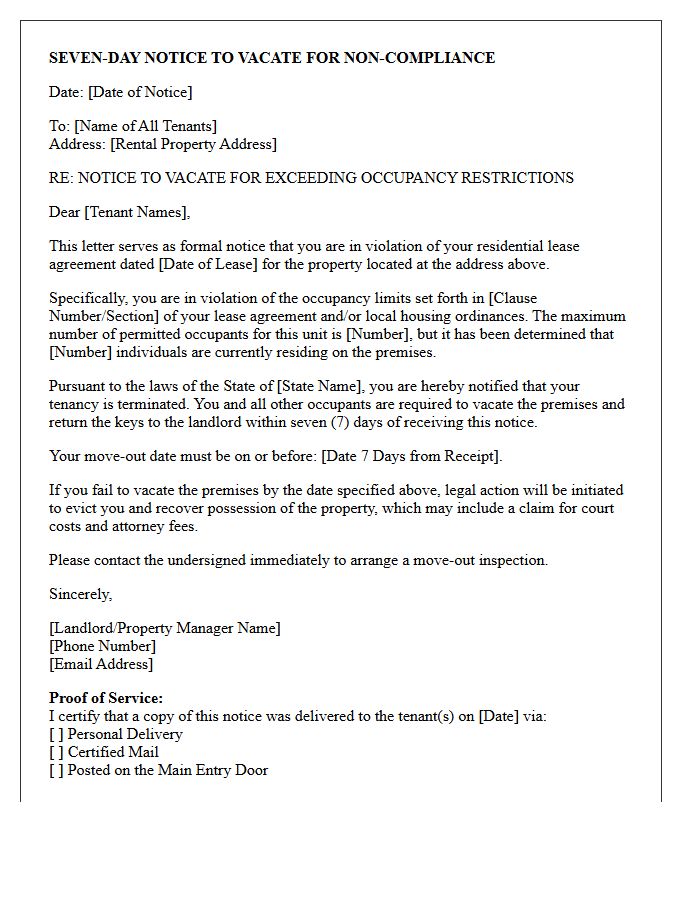
A Seven-Day Notice to Vacate is a formal legal document issued by a landlord when a tenant violates occupancy restrictions specified in the lease. This notice informs the tenant that they have exceeded the allowed number of residents, creating a lease violation. Depending on state laws, this notice may be unconditional, requiring the tenant to move out within seven days without the option to fix the issue, or it may allow them to cure the breach by removing unauthorized occupants to avoid eviction proceedings.
Breach of Lease Occupancy Clause Notice to Vacate Letter
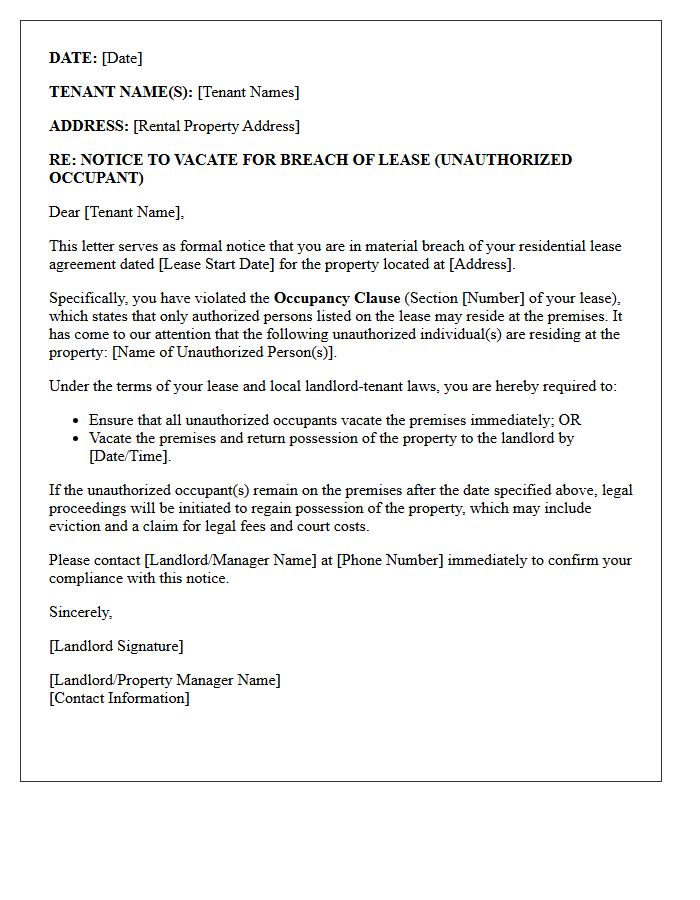
A Breach of Lease Occupancy Clause Notice to Vacate is a formal legal document issued when a tenant allows unauthorized individuals to reside in the rental property. This letter serves as written notification that the tenant has violated specific occupancy limits defined in the agreement. It typically provides a remedy period to remove unauthorized guests or mandates that the tenant vacate the premises by a certain date. Properly documenting this violation is essential for landlords to protect property standards and maintain legal compliance during potential eviction proceedings.
Demand to Vacate Letter for Unauthorized Additional Residents
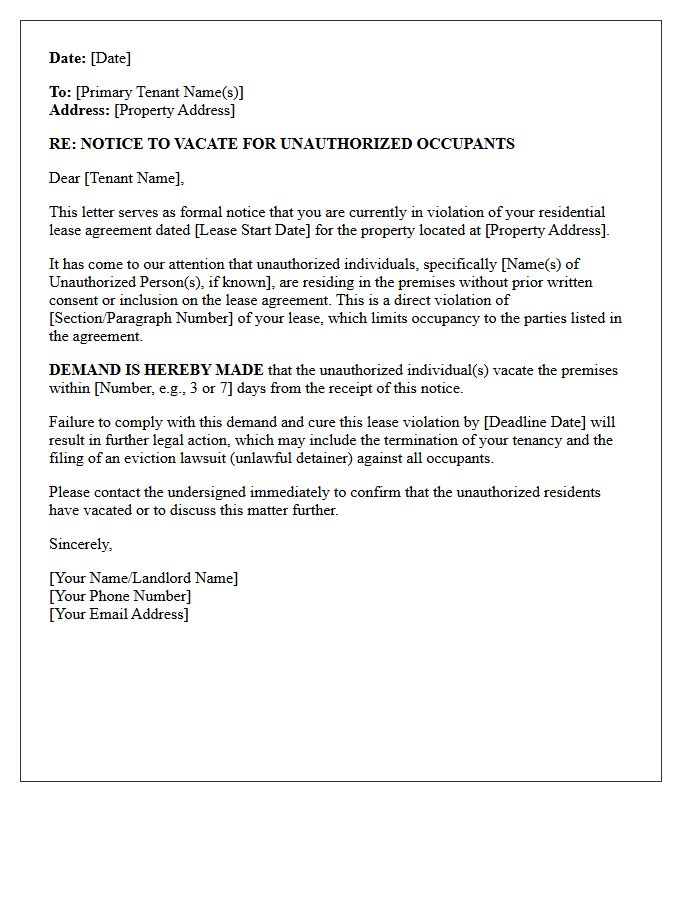
A demand to vacate letter for unauthorized residents is a formal legal notice issued when a tenant allows unapproved occupants to live in a rental unit. This document identifies the specific lease violation and provides a strict deadline for the additional persons to leave. To maintain tenancy rights, the primary renter must ensure all residents are officially authorized by the landlord. Failure to comply with this notice often serves as the initial step toward an eviction lawsuit for breaching the contractual rental agreement.
Legal Notice to Vacate Letter for Violating Maximum Occupancy Codes
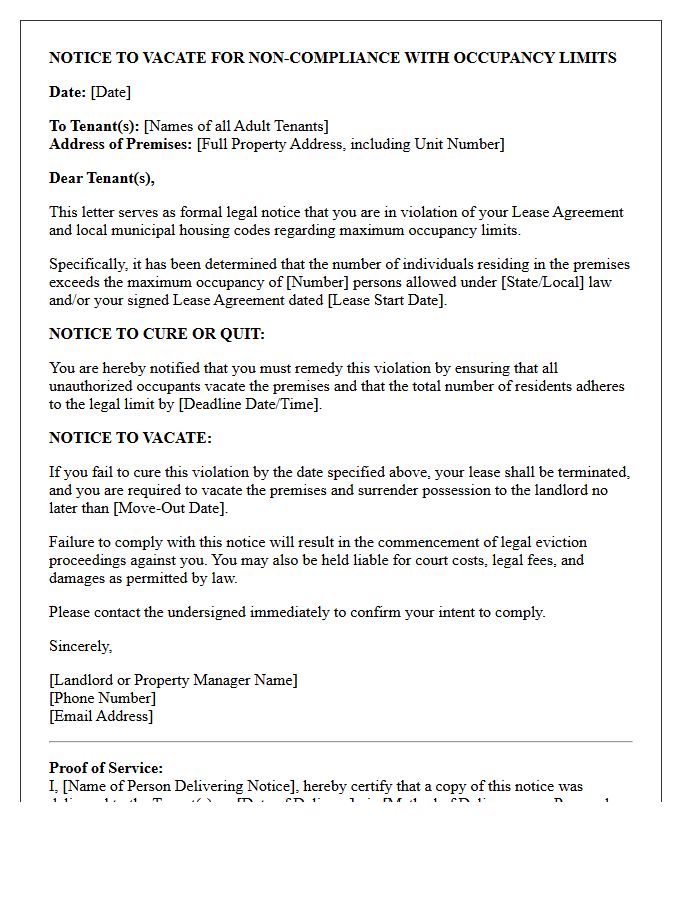
A legal notice to vacate for violating maximum occupancy codes serves as a formal demand for tenants to rectify safety violations or surrender the premises. These codes are strictly enforced to ensure building safety and adherence to zoning regulations. Landlords must provide a specific cure period, allowing residents to reduce the number of occupants to legal limits. Failure to comply with this lease violation notice typically results in formal eviction proceedings. It is essential to document the over-occupancy clearly to maintain legal standing during court hearings.
What is a Notice to Vacate for exceeding maximum occupancy limits?
A Notice to Vacate for exceeding maximum occupancy is a legal document issued by a landlord to a tenant when the number of residents in a rental unit exceeds the limit defined in the lease agreement or local housing codes. This notice typically serves as a formal demand for the unauthorized occupants to leave or for the entire household to surrender the property.
How many people are legally allowed to live in a rental property?
Occupancy limits are generally determined by local zoning laws, building codes, and federal HUD guidelines, which often follow the "two heartbeats per bedroom" rule. However, specific limits depend on the square footage of habitable space and the specific terms outlined in the signed residential lease agreement.
Can a landlord evict a tenant for having too many guests?
Yes, if guests stay for an extended period (typically defined in the lease as more than 10-14 consecutive days), they may be legally classified as unauthorized occupants. If the total number of occupants then exceeds safety or contractual limits, the landlord has the right to issue a notice to cure the violation or vacate the premises.
What should I do if I receive a notice for exceeding occupancy limits?
Upon receiving a notice, you should first review your lease agreement and local occupancy laws to verify the violation. You can typically resolve the issue by having the unauthorized occupants move out within the timeframe specified in the notice (the "cure" period) to avoid a formal eviction filing in court.
Does a newborn baby count toward the maximum occupancy limit?
Under the Fair Housing Act, landlords generally cannot count an infant toward occupancy limits in a way that discriminates against families. Most jurisdictions do not consider a child under the age of two as a separate occupant for the purpose of maximum density limits, though local laws may vary once the child reaches a certain age.

Comments