
Addressing excessive clutter or hygiene concerns requires a clear Warning for Hoarding or Unsanitary Conditions to ensure property safety and compliance. This guide outlines how to communicate effectively with tenants while maintaining professional standards and legal requirements. Below are some ready to use templates.
Image cover: Essential Templates for Hoarding and Unsanitary Condition Notices
Letter Samples List
- First Warning Letter for Unsanitary Living Conditions
- Official Notice Letter Regarding Hoarding Lease Violation
- Property Management Letter for Mandatory Cleaning Compliance
- Final Warning Letter for Severe Hoarding Hazards
- Routine Inspection Letter Citing Unsanitary Premises
- Notice to Cure Letter for Excessive Clutter
- Health and Safety Hazard Letter for Hoarding Activities
- Follow-Up Letter on Failed Cleanliness Inspection
- Lease Infraction Letter Concerning Unsanitary Unit Conditions
- Pre-Eviction Letter for Unresolved Hoarding Violations
- Management Letter Requesting Immediate Removal of Debris
- Fire Code Violation Letter Due to Hoarding
First Warning Letter for Unsanitary Living Conditions
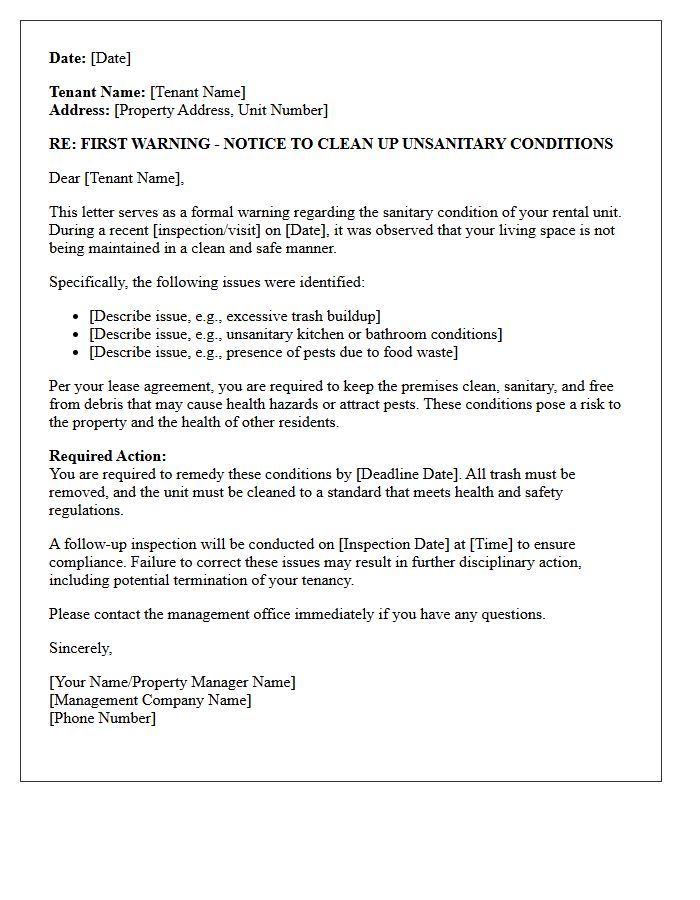
Receiving a First Warning Letter for Unsanitary Living Conditions is a formal notice that your residence fails to meet essential health and safety standards. This legal document typically outlines specific lease violations, such as excessive clutter, pest infestations, or improper waste disposal. It serves as a final opportunity to perform remediation before facing harsher consequences. Tenants must immediately clean the premises and address the cited issues to prevent eviction proceedings or permanent marks on their rental history. Timely cooperation is vital to maintaining your housing security and legal standing.
Official Notice Letter Regarding Hoarding Lease Violation
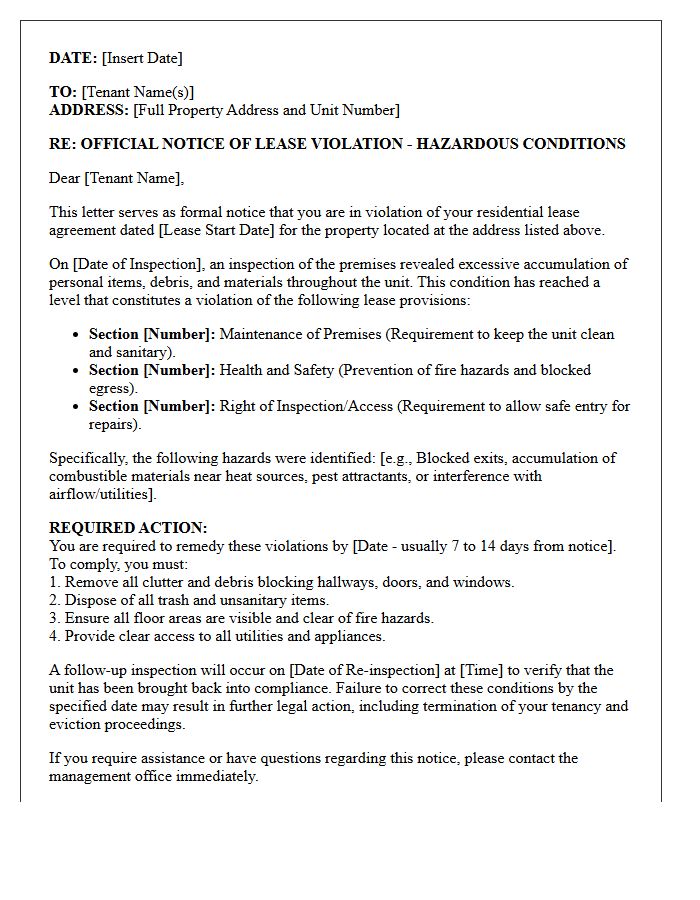
An official notice letter regarding a hoarding lease violation serves as a formal warning that property conditions pose health or safety risks. It identifies specific lease clauses breached, such as sanitation or fire safety codes. The document provides a mandatory timeframe for the tenant to remediate the clutter and restore the unit to a habitable state. Failure to address these unsanitary conditions or structural obstructions can lead to legal action, including eviction. Understanding this notice is crucial for maintaining tenancy and ensuring the overall safety of the residential building.
Property Management Letter for Mandatory Cleaning Compliance
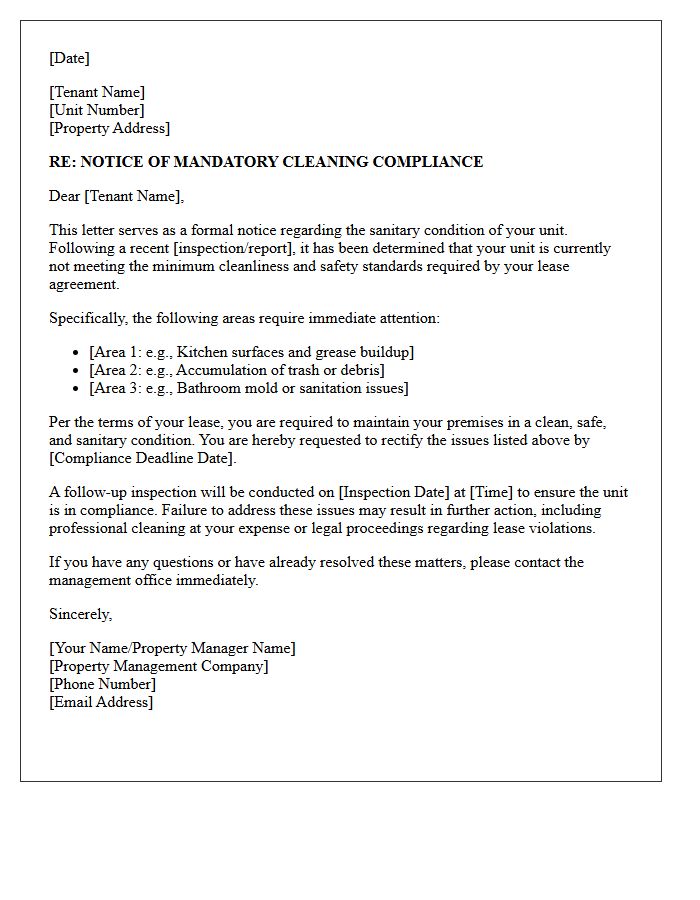
A property management letter for mandatory cleaning compliance serves as an official notice to tenants regarding hygiene standards. It outlines specific maintenance requirements to ensure sanitary living conditions and prevent property deterioration. The document typically specifies the required actions, a deadline for completion, and potential penalties for non-compliance. Clear communication in this notice is essential for risk mitigation and maintaining the structural integrity of the asset. Property managers use these letters to enforce lease agreements and protect the overall health and safety of all residents within the community.
Final Warning Letter for Severe Hoarding Hazards
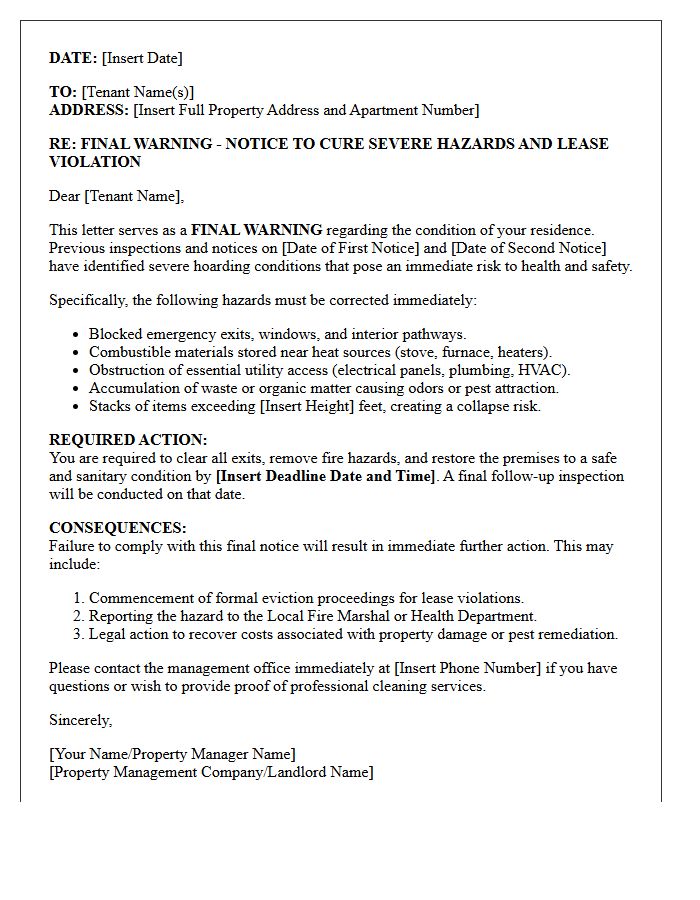
A final warning letter for severe hoarding hazards is a legal notice issued to tenants who violate safety and sanitary regulations. This formal document outlines specific fire hazards, structural risks, and health concerns that must be addressed immediately to avoid eviction. It provides a mandatory deadline for clearing clutter to restore property standards. Failure to comply with these professional cleaning requirements typically results in lease termination or legal action. Property owners use this as a final attempt to resolve dangerous living conditions while documenting the non-compliance for potential court proceedings.
Routine Inspection Letter Citing Unsanitary Premises
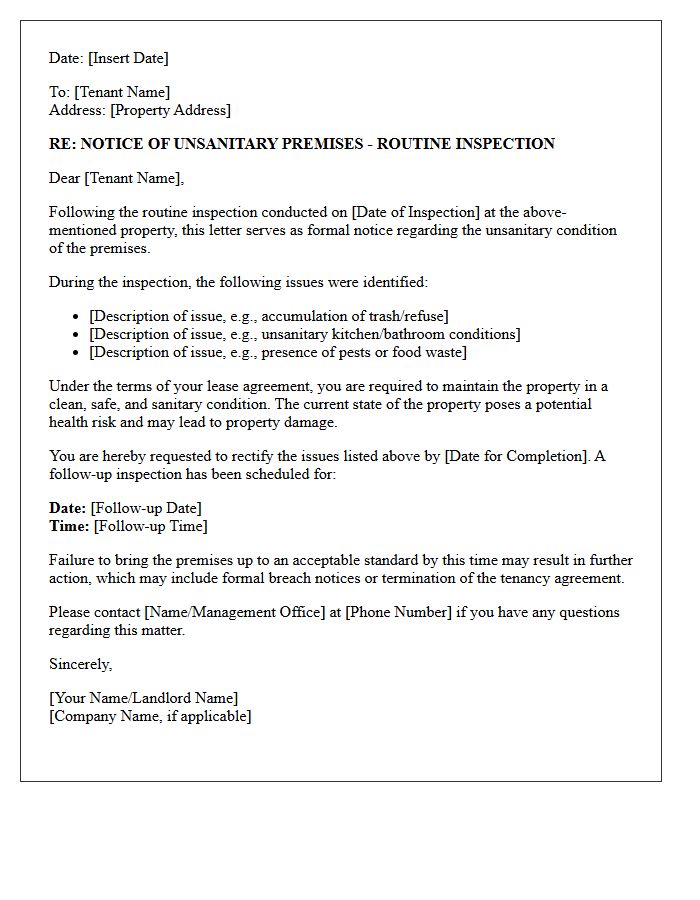
Receiving a routine inspection letter citing unsanitary premises is a formal notice requiring immediate corrective action. This legal document indicates that a property manager or landlord identified hygiene issues that violate lease agreements or health standards. To avoid potential eviction or financial penalties, tenants must thoroughly clean the property and address specific concerns mentioned in the report. Promptly rectifying these conditions and requesting a re-inspection is essential to demonstrate compliance and maintain a positive rental history while ensuring a safe, habitable environment for all occupants.
Notice to Cure Letter for Excessive Clutter
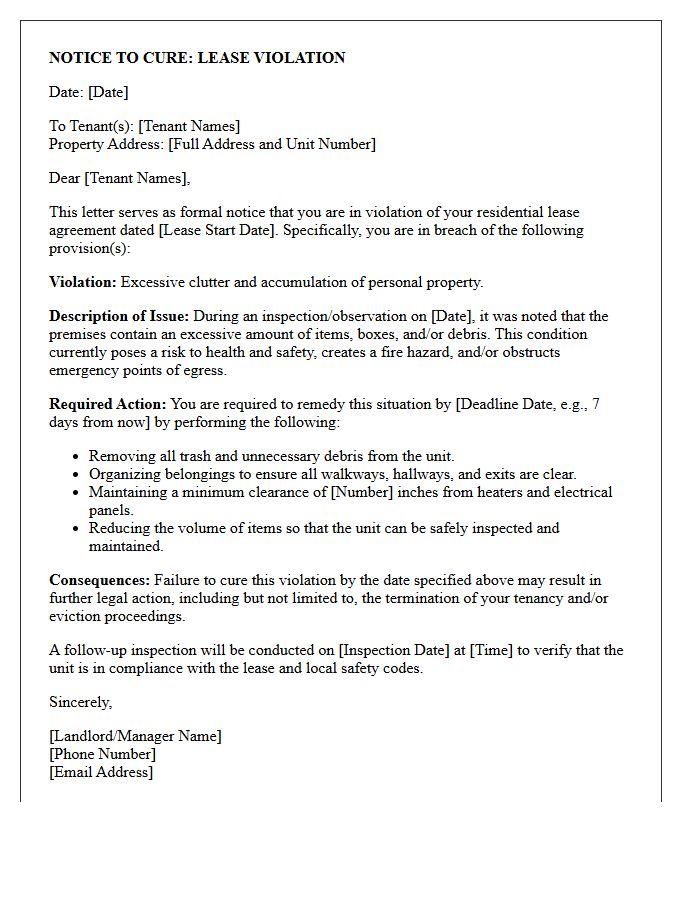
A Notice to Cure Letter is a formal legal warning issued by a landlord requiring a tenant to address excessive clutter that violates lease terms. This document typically cites specific health, fire, or safety hazards caused by hoarding behaviors. It establishes a mandatory deadline to remove items and restore the premises to a safe condition. Failing to comply with this legal demand can lead to an eviction filing. It serves as a final opportunity for tenants to rectify sanitation issues and maintain their tenancy through immediate corrective action.
Health and Safety Hazard Letter for Hoarding Activities
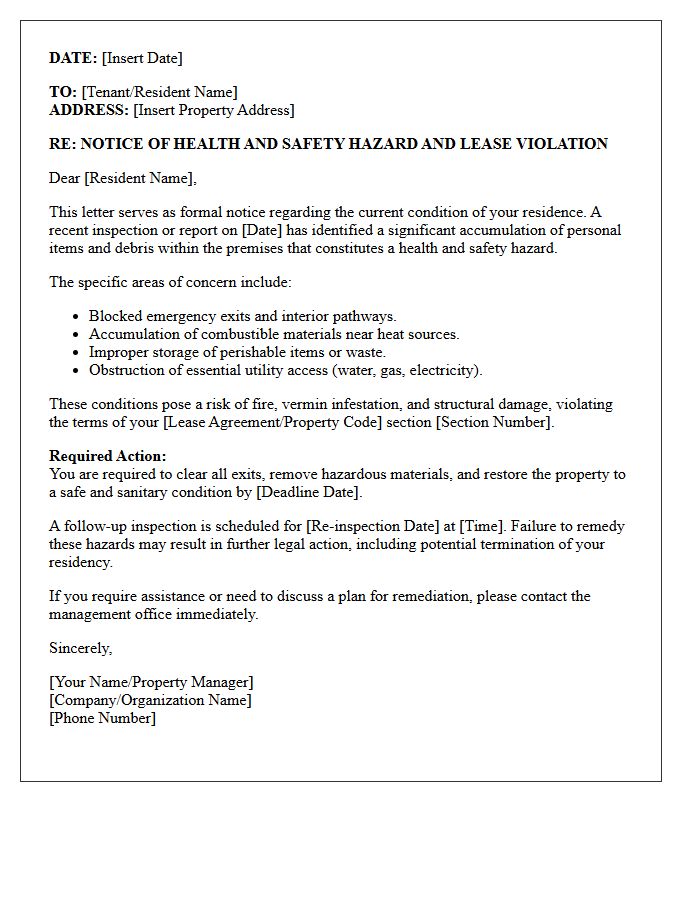
A Health and Safety Hazard Letter for hoarding activities is a formal notification issued when extreme clutter creates significant risks. It identifies dangers like fire hazards, structural strain, and sanitary concerns that jeopardize residents and emergency responders. This legal document mandates corrective action to restore a safe living environment. Failure to comply can lead to eviction or property condemnation. Understanding these requirements is essential for remediation planning and ensuring compliance with local housing codes while prioritizing the occupant's welfare and community safety.
Follow-Up Letter on Failed Cleanliness Inspection
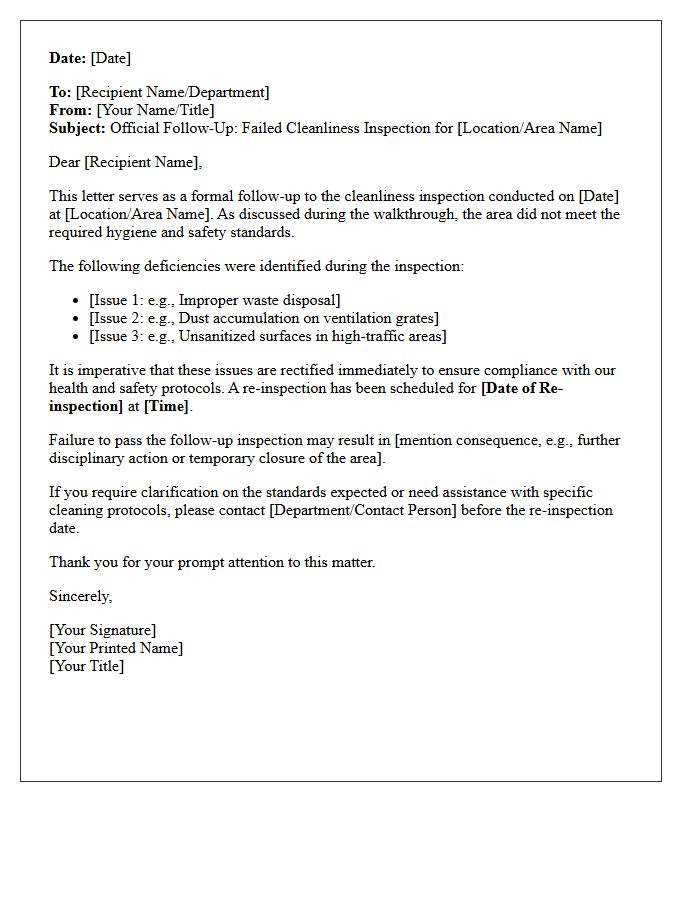
A Follow-Up Letter on Failed Cleanliness Inspection is a formal notification issued after a site fails to meet established sanitary standards. It serves as a corrective action plan, detailing specific hygiene deficiencies that require immediate remediation. The document outlines a clear timeline for a re-inspection to ensure compliance with health and safety regulations. Professional documentation of these failures is essential for maintaining accountability, protecting public health, and establishing a legal record of non-compliance and subsequent improvement efforts within the facility.
Lease Infraction Letter Concerning Unsanitary Unit Conditions
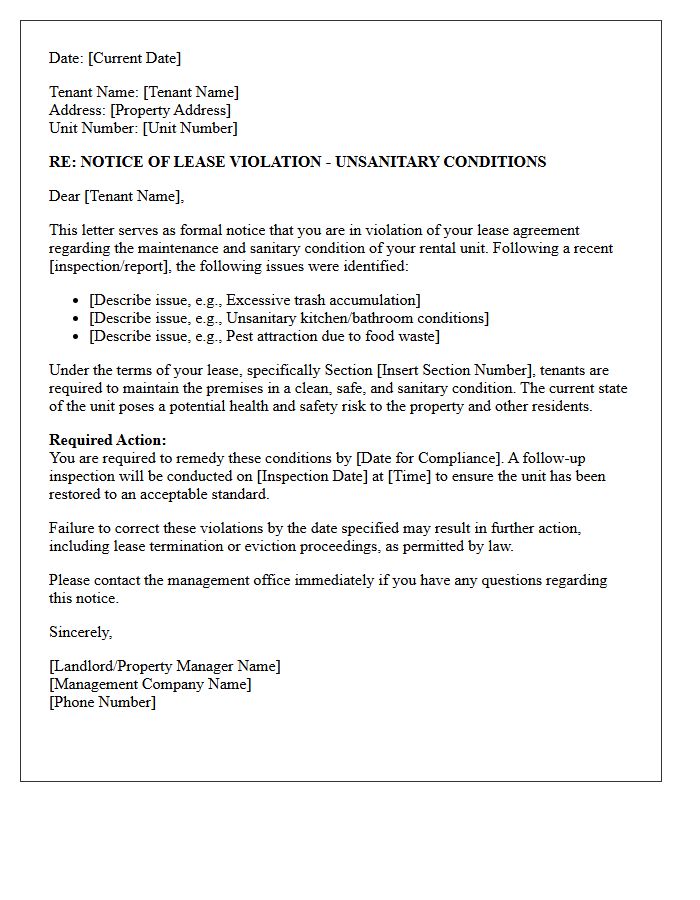
A Lease Infraction Letter serves as a formal notice regarding unsanitary unit conditions that violate health or safety standards. It outlines specific hygiene issues, such as excessive clutter, waste accumulation, or pest attractions, that breach the rental agreement. Tenants must address these sanitation violations within a designated timeframe to avoid further legal action or eviction. Documenting the breach protects the landlord's property value while ensuring a habitable environment for all residents. Prompt remediation is essential to maintain compliance with local housing codes and the terms of the signed lease document.
Pre-Eviction Letter for Unresolved Hoarding Violations
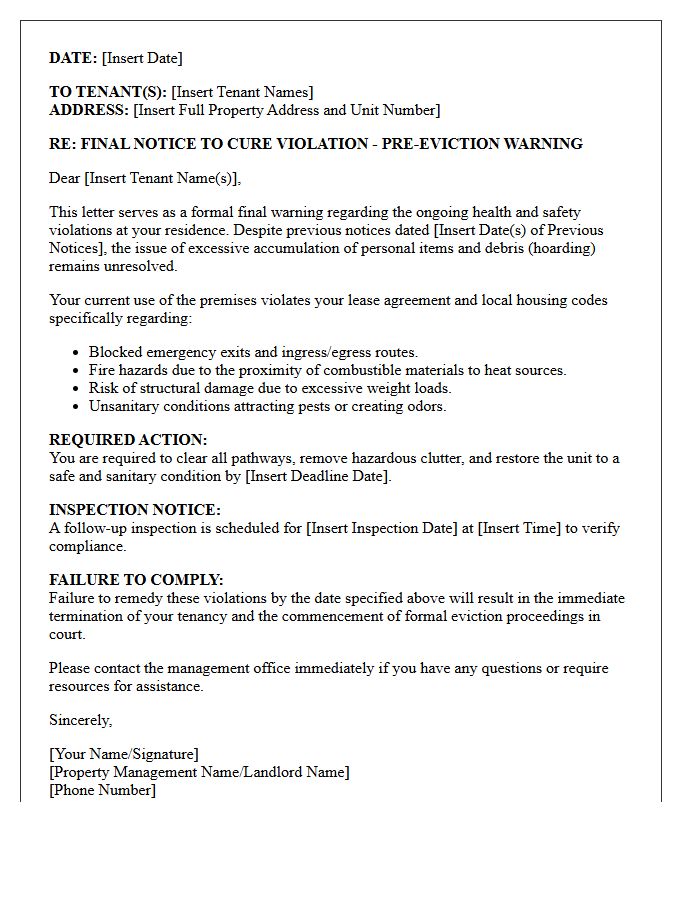
A Pre-Eviction Letter serves as a formal legal notice issued to tenants regarding unresolved hoarding violations. This document identifies specific health and safety risks, such as blocked emergency exits or fire hazards, which breach the lease agreement. It provides a final opportunity for the occupant to perform remediation through professional cleaning or organizational support. Failure to address these sanitary concerns within the designated timeframe allows the landlord to initiate formal eviction proceedings. Promptly responding to this notice is critical to preventing permanent loss of housing and potential legal action.
Management Letter Requesting Immediate Removal of Debris
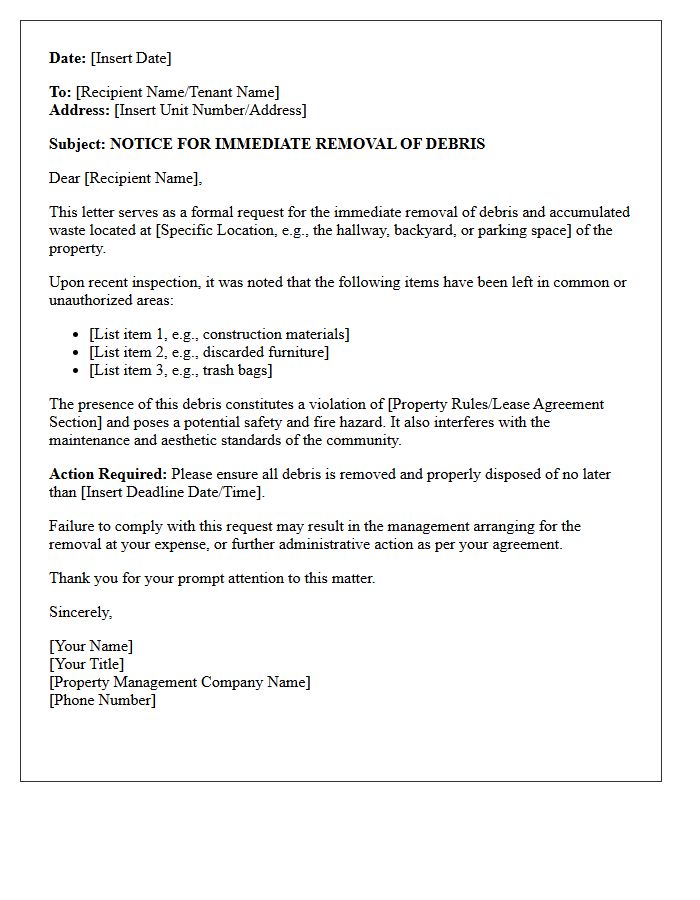
A management letter requesting the immediate removal of debris is a formal notice issued to address safety hazards and maintain property standards. It is crucial to specify the exact location and nature of the waste to avoid confusion. Setting a strict deadline for compliance ensures accountability and prevents potential fines or legal liabilities. Clear communication regarding the consequences of non-compliance encourages prompt action from tenants or contractors. Prioritizing site safety and aesthetics through this document helps protect property value and ensures a secure environment for all occupants.
Fire Code Violation Letter Due to Hoarding
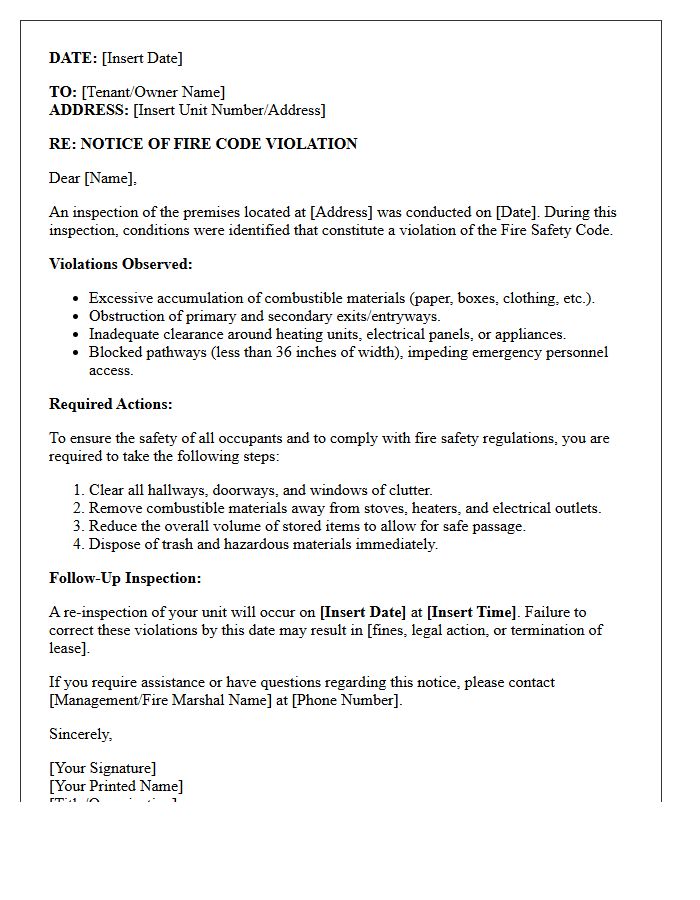
Receiving a fire code violation letter due to hoarding indicates that excessive personal items have created a significant life-safety hazard. Fire marshals issue these notices because blocked exits and combustible materials increase fire spread and impede emergency responders. To achieve compliance, you must clear egress paths and reduce clutter within the specified deadline. Addressing these violations promptly is essential to prevent legal penalties, fines, or potential eviction while ensuring the safety of all building occupants and first responders during an emergency event.
What constitutes a formal warning for hoarding or unsanitary conditions?
A formal warning is a legal or administrative notice issued when a living space poses health and safety risks due to excessive accumulation of items, blocked exits, fire hazards, or pest infestations. This notice outlines the specific violations and provides a mandatory timeframe for remediation to avoid eviction or legal action.
How much time do I have to clean up after receiving a hoarding notice?
The timeframe varies by jurisdiction and lease agreement, but most compliance periods range from 7 to 30 days. You should review your specific notice for a "Cure Date," which is the deadline to bring the property up to health and safety standards before a follow-up inspection occurs.
Can I be evicted for unsanitary conditions or hoarding?
Yes, hoarding and unsanitary conditions can lead to eviction if they violate lease terms regarding property damage, fire safety codes, or the "right to quiet enjoyment" for neighbors. Failure to comply with the initial warning or failing a follow-up inspection provides the landlord with grounds to file for an eviction in court.
What are the specific safety hazards cited in an unsanitary conditions warning?
Commonly cited hazards include "egress" issues (blocked doors or windows), "fire load" (excessive combustible materials), "tripping hazards" in common walkways, and "sanitary nuisances" such as rotting food, animal waste, or pest harborages that threaten the structural integrity of the building and the health of occupants.
What help is available if I receive a warning for hoarding?
Individuals receiving a warning can seek assistance from professional hoarding cleanup services, adult protective services, or mental health professionals specializing in hoarding disorder. Many cities also have "Hoarding Task Forces" that provide resources to help residents meet compliance standards without immediate displacement.

Comments