
Protect your brand's integrity with a formal Cease and Desist Letter designed for unauthorized trademark usage by financial affiliates. This guide outlines legal strategies to stop intellectual property infringement and ensure regulatory compliance within the financial sector. Maintain professional standards and secure your identity against misleading marketing tactics effectively. Below are some ready to use templates.
Image cover: Protect Your Brand: Financial Affiliate Trademark Infringement Cease and Desist Templates
Letter Samples List
- Initial Notice Cease and Desist Letter for Unauthorized Banking Trademark Usage
- Demand Letter for Immediate Removal of Bank Logos by Unapproved Financial Affiliates
- Formal Cease and Desist Letter Regarding Misleading Affiliate Branding in Financial Services
- Final Warning Letter for Trademark Infringement by Third-Party Banking Affiliates
- Notice Letter Demanding Cessation of Unauthorized Bank Trademark Monetization
- Legal Cease and Desist Letter for Deceptive Financial Affiliate Marketing Practices
- Official Notice Letter Addressing Improper Use of Banking Institution Trade Names
- Cease and Desist Letter for Intellectual Property Violations by Financial Promoters
- Breach of Affiliate Terms Letter for Unauthorized Banking Trademark Representation
- Cease and Desist Letter Targeting Fraudulent Banking Endorsements by Affiliates
- Trademark Takedown Notice Letter for Non-Compliant Financial Affiliate Websites
- Urgent Cease and Desist Letter for Unauthorized Bank Identity Impersonation
- Legal Action Warning Letter Concerning Brand Dilution by Rogue Financial Affiliates
Initial Notice Cease and Desist Letter for Unauthorized Banking Trademark Usage
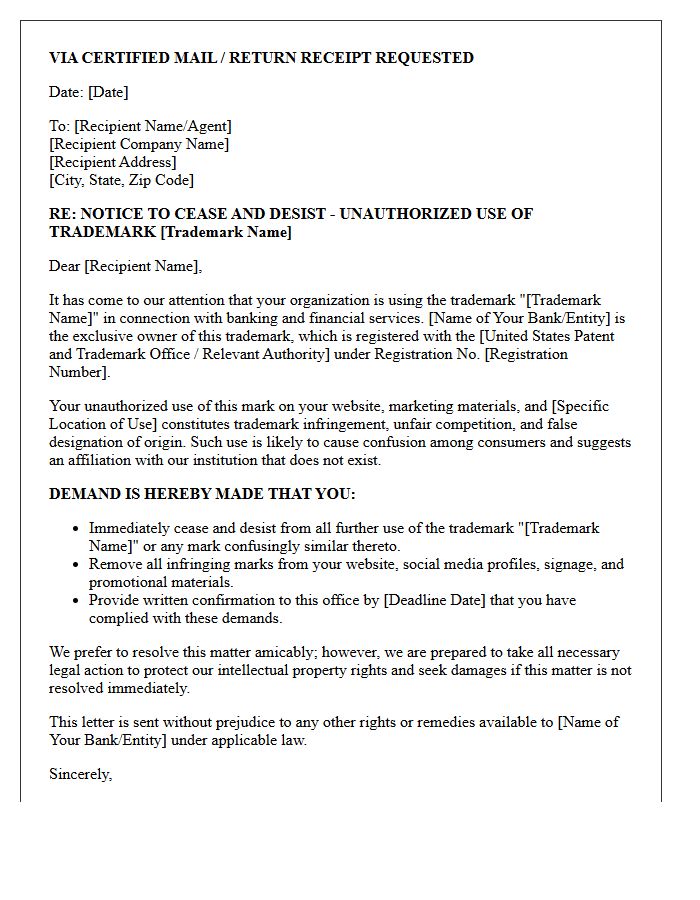
An Initial Notice Cease and Desist Letter is a formal legal demand used to stop unauthorized trademark usage within the financial sector. It notifies the infringing party that their use of a banking name, logo, or slogan violates intellectual property rights. This document serves as a critical first step to prevent consumer confusion and protect brand reputation. It outlines specific legal demands, provides a deadline for compliance, and warns of potential litigation or regulatory escalation if the trademark infringement persists in the marketplace.
Demand Letter for Immediate Removal of Bank Logos by Unapproved Financial Affiliates
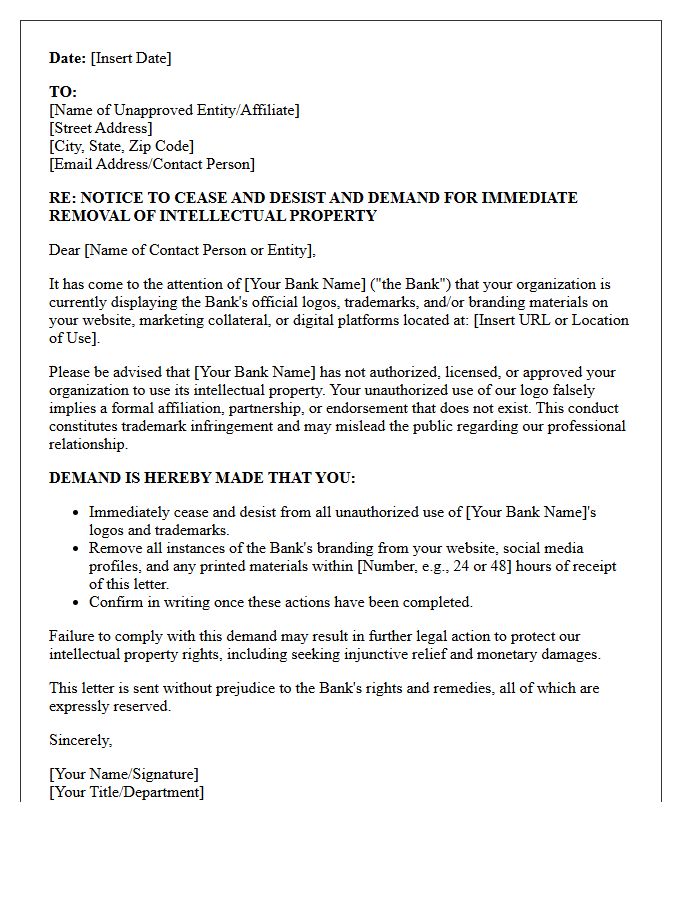
A demand letter for the immediate removal of bank logos is a legal notice issued to protect intellectual property rights. Unapproved financial affiliates often use trademarks to imply a false partnership, misleading consumers and risking regulatory non-compliance. These letters demand the urgent cessation of unauthorized branding to prevent trademark infringement and maintain brand integrity. Failure to comply can lead to litigation, statutory damages, and formal complaints to regulatory bodies. Establishing clear boundaries through such documentation ensures that proprietary assets remain exclusive to authorized entities and prevents consumer confusion within the financial marketplace.
Formal Cease and Desist Letter Regarding Misleading Affiliate Branding in Financial Services
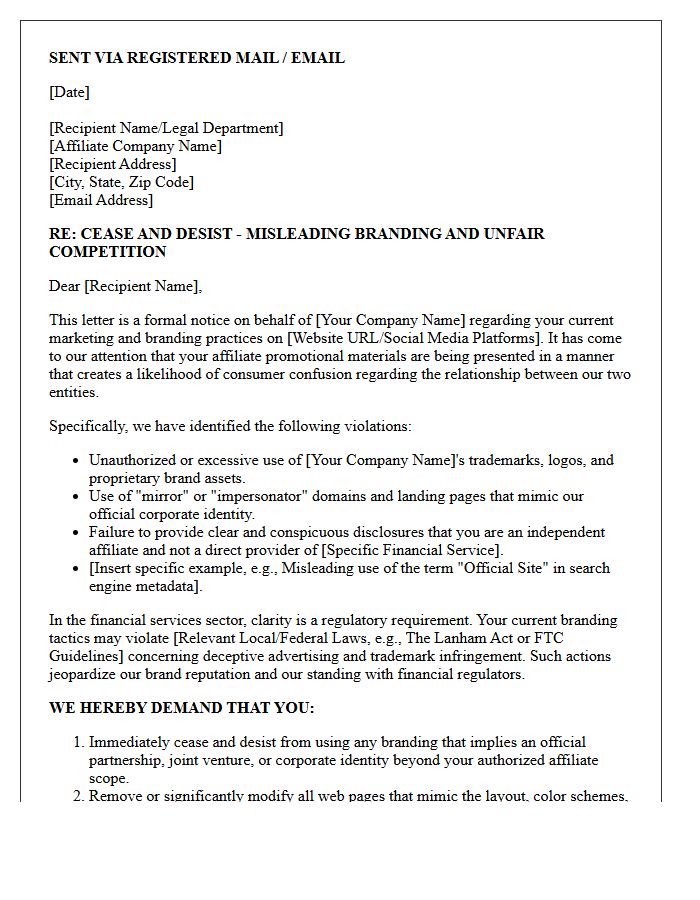
A formal cease and desist letter is a critical legal tool used to stop unauthorized trademark use within financial services. It addresses affiliates who employ misleading branding to impersonate established firms, which can cause severe regulatory non-compliance and reputational damage. This document serves as a final warning to cease deceptive marketing practices and remove infringing content before initiating formal litigation. Protecting brand integrity is essential to maintain consumer trust and ensure all promotional activities strictly adhere to industry transparency standards and legal requirements.
Final Warning Letter for Trademark Infringement by Third-Party Banking Affiliates
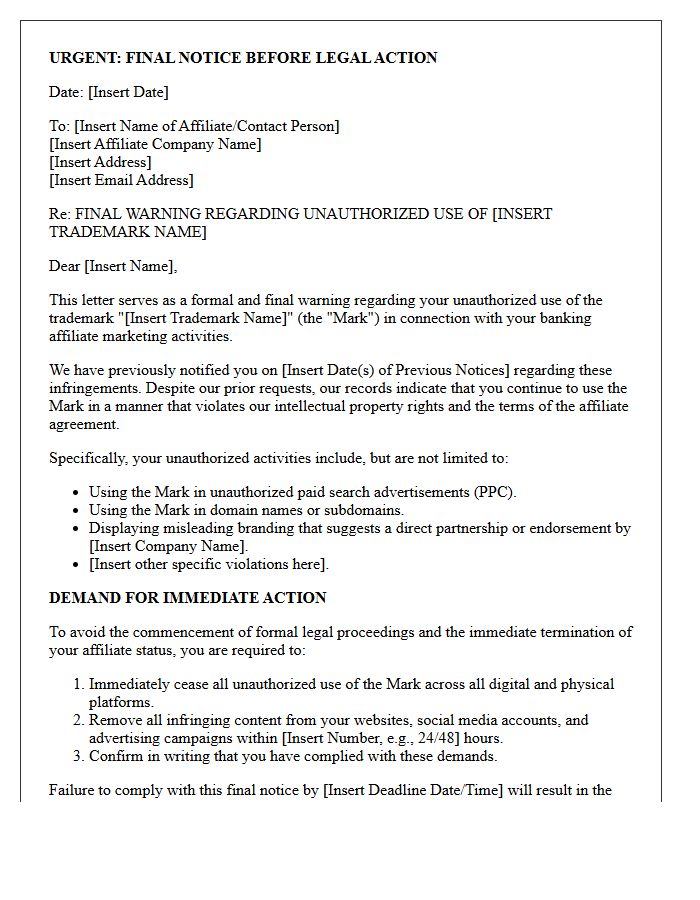
A final warning letter serves as a critical legal notice before initiating formal litigation against unauthorized entities. When third-party banking affiliates misuse protected intellectual property, this document demands an immediate cease and desist of all infringing activities. It outlines specific violations, establishes a strict deadline for compliance, and preserves the right to seek financial damages. Ignoring this correspondence can lead to escalated enforcement actions, including court injunctions and brand protection lawsuits. Financial institutions must ensure clear documentation of ownership to effectively resolve these high-stakes trademark disputes and maintain market integrity.
Notice Letter Demanding Cessation of Unauthorized Bank Trademark Monetization
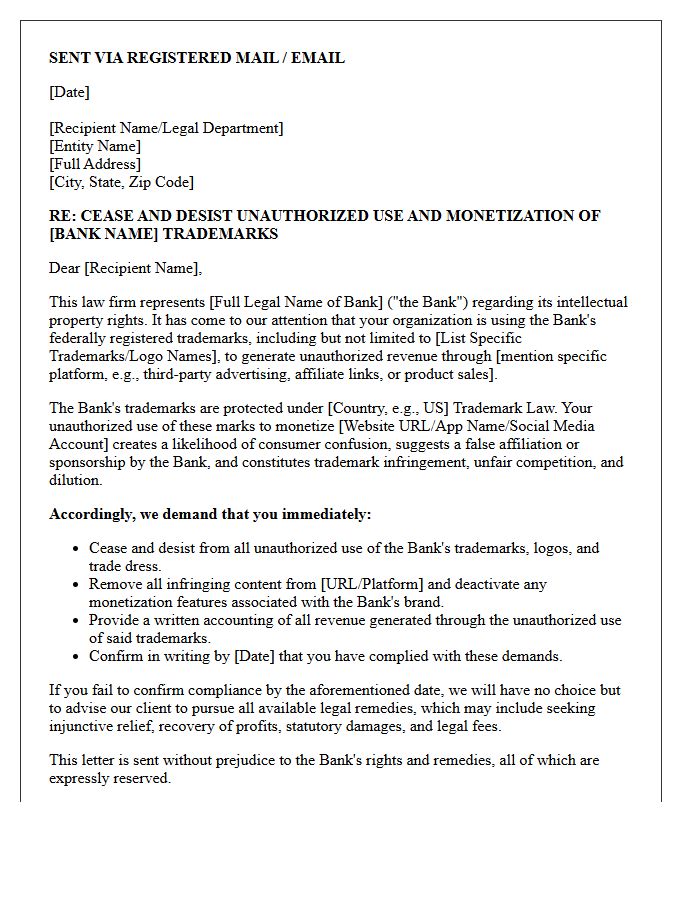
A Trademark Infringement Cease and Desist Letter is a formal legal notice demanding that an entity immediately stop the unauthorized monetization of a bank's protected intellectual property. This document outlines specific violations, such as using logos or names to mislead customers. It serves as a legal prerequisite for litigation, providing evidence that the infringer was notified of their misconduct. Financial institutions use these notices to prevent brand dilution, protect consumer trust, and maintain exclusive control over their commercial assets in a competitive marketplace.
Legal Cease and Desist Letter for Deceptive Financial Affiliate Marketing Practices
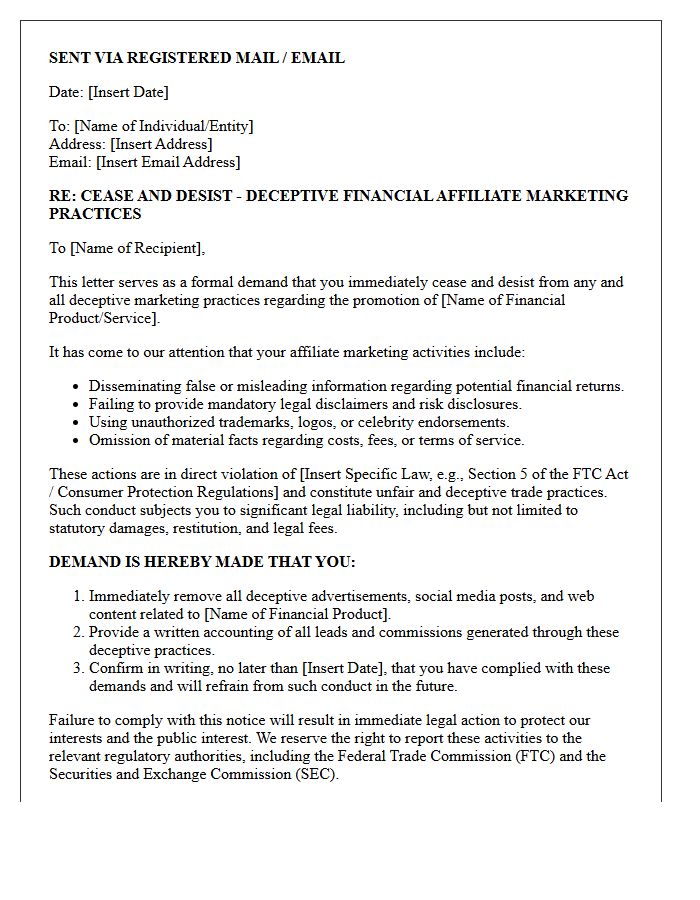
A legal cease and desist letter serves as a formal demand to stop deceptive financial affiliate marketing practices immediately. These letters target misleading claims, undisclosed partnerships, and fraudulent promotional tactics that violate consumer protection laws. Recipients must acknowledge the legal notice to avoid potential litigation, heavy fines, or regulatory action from authorities like the FTC. Ensuring transparency and accurate financial disclosures is essential for compliance. Ignoring such a directive can result in permanent brand damage and severe legal consequences for both affiliates and parent organizations involved in predatory marketing schemes.
Official Notice Letter Addressing Improper Use of Banking Institution Trade Names
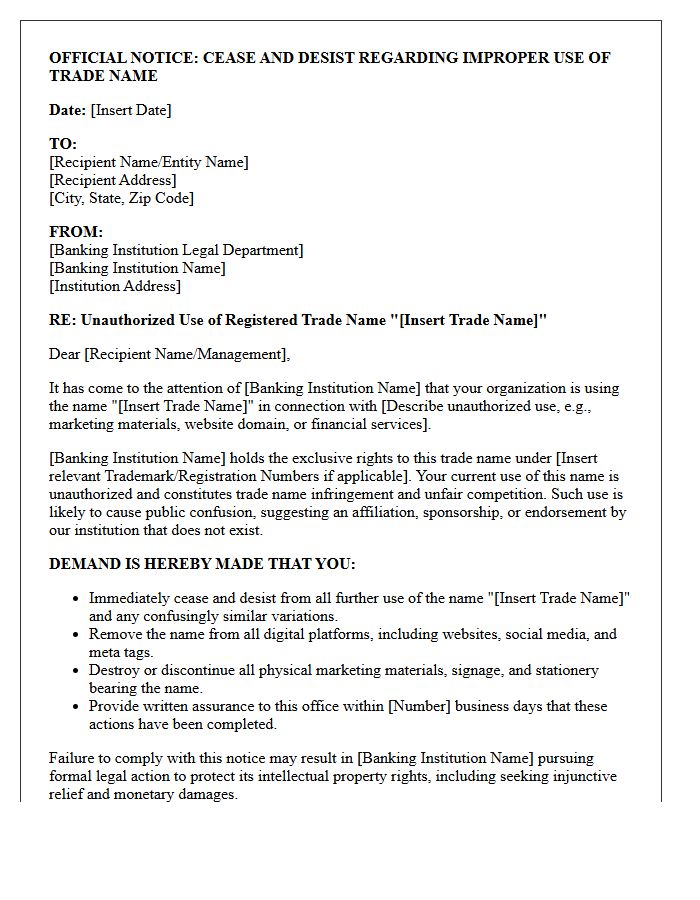
An official notice regarding the improper use of banking institution trade names serves as a formal demand to cease deceptive branding. It ensures that entities do not mislead consumers by using protected financial trademarks or logos without authorization. Unauthorized usage can lead to severe legal penalties under banking regulations and trademark laws. These letters protect the integrity of the financial system and prevent fraudulent activities. Recipients must immediately audit their marketing materials to ensure full compliance with federal and state banking statutes to avoid litigation or regulatory enforcement actions.
Cease and Desist Letter for Intellectual Property Violations by Financial Promoters
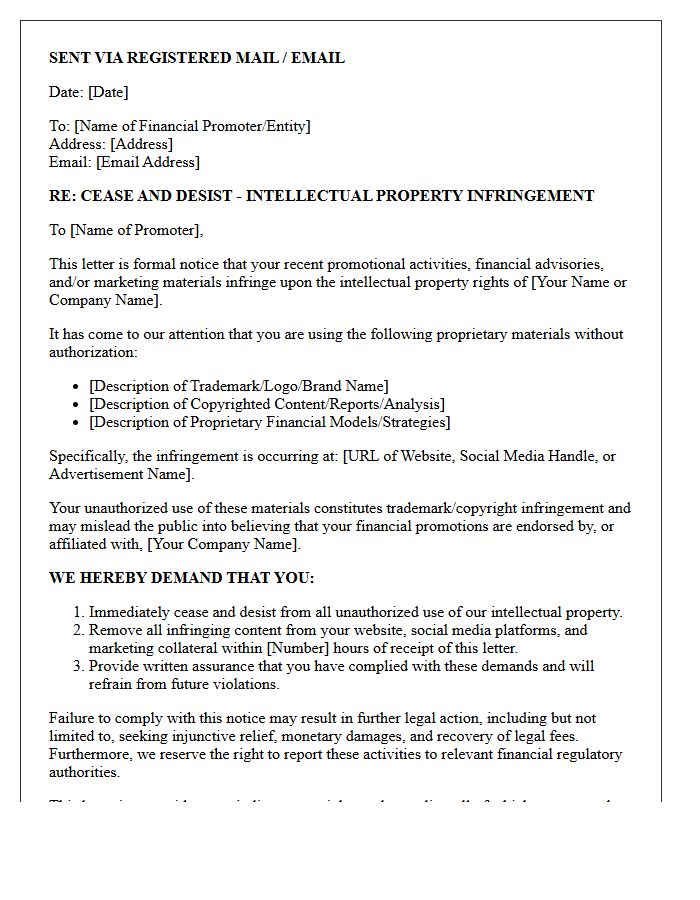
A Cease and Desist Letter is a formal legal notice demanding that financial promoters immediately stop unauthorized use of protected content. These letters are critical for addressing intellectual property violations, such as trademark infringement, copyright theft, or misappropriation of proprietary investment strategies. By establishing a clear paper trail, the sender asserts their legal rights and warns of potential litigation. It serves as a cost-effective first step to protect brand integrity and prevent promoters from misleading investors using stolen assets or proprietary information without express permission.
Breach of Affiliate Terms Letter for Unauthorized Banking Trademark Representation
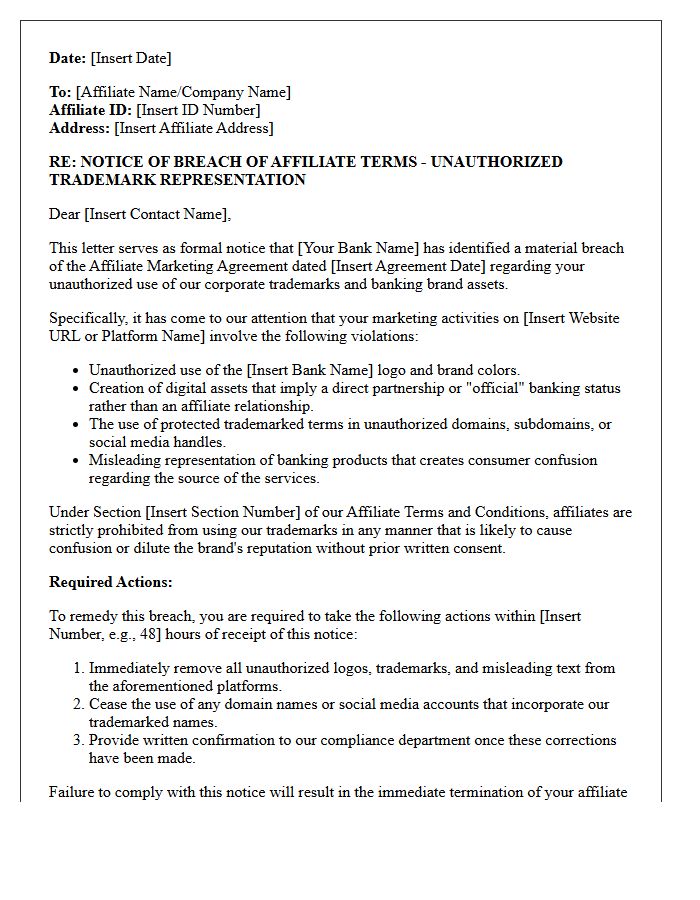
A breach of affiliate terms letter is a formal legal notice issued when a partner uses a banking trademark without authorization. Financial institutions must strictly control brand representation to ensure regulatory compliance and prevent consumer confusion. This document identifies specific violations, such as misleading logos or false claims of affiliation, and demands immediate corrective action. Failure to comply typically results in the termination of the partnership and potential legal liability. Protecting intellectual property is vital for maintaining trust and security within the highly regulated financial services industry.
Cease and Desist Letter Targeting Fraudulent Banking Endorsements by Affiliates
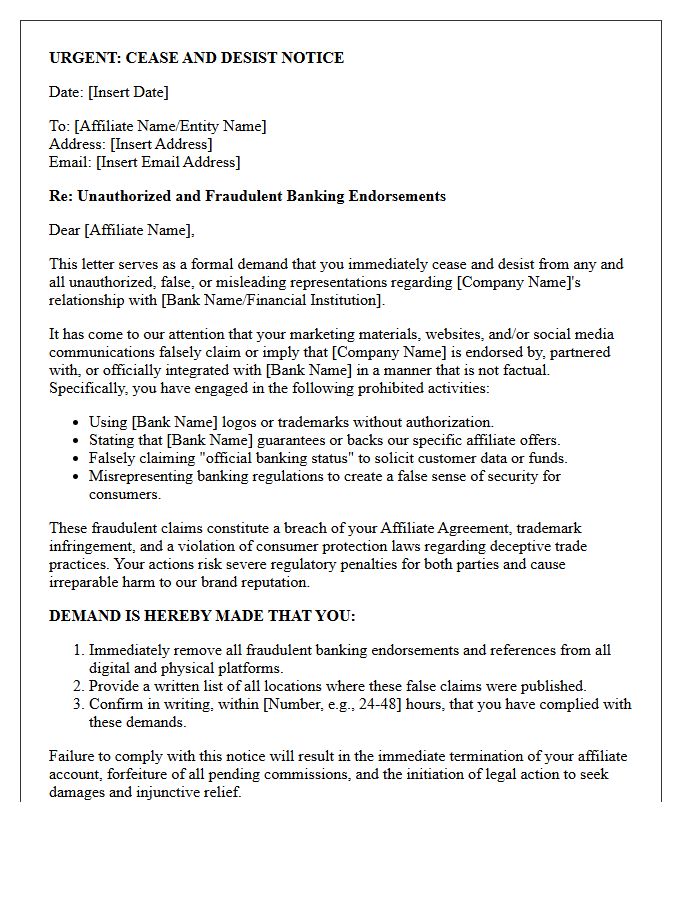
A Cease and Desist Letter is a formal legal notice used to stop affiliates from using unauthorized or deceptive banking endorsements. Financial institutions issue these to protect their brand reputation and ensure regulatory compliance. It demands the immediate removal of fraudulent endorsements that falsely imply official partnerships or government backing. Failure to comply can lead to litigation, trademark infringement claims, and severe regulatory penalties. Maintaining strict oversight of marketing partners is essential to prevent consumer confusion and safeguard the integrity of the banking system against misleading promotional tactics.
Trademark Takedown Notice Letter for Non-Compliant Financial Affiliate Websites
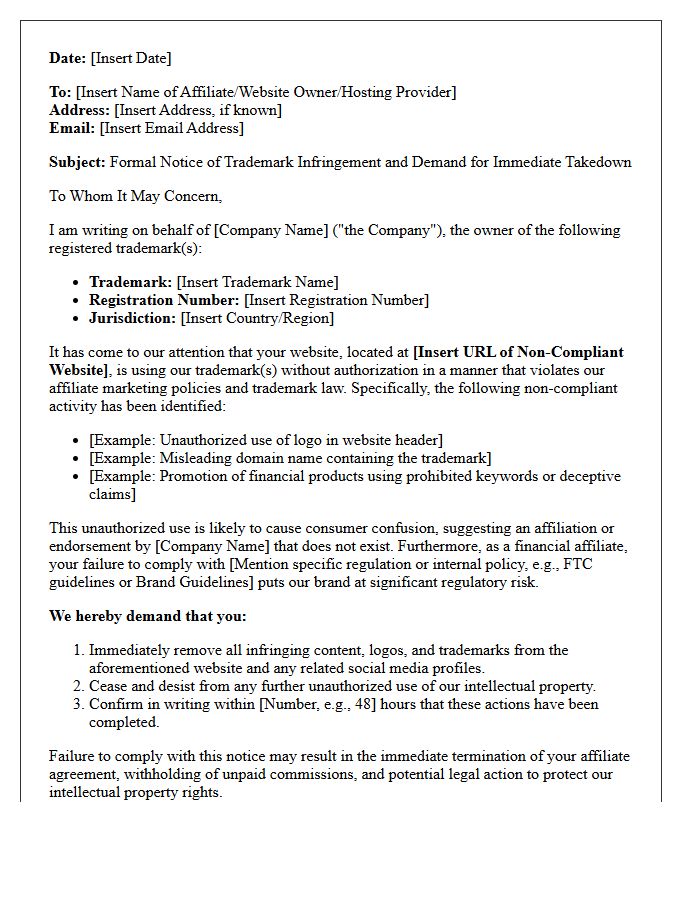
A Trademark Takedown Notice is a legal demand sent to non-compliant financial affiliate websites that misuse protected brand assets. Sending this letter is essential to prevent brand dilution and protect consumers from misleading financial promotions. It formally notifies the site owner and hosting provider of the infringement, requesting immediate removal of unauthorized logos or names. Failure to comply can lead to website suspension or litigation. For financial brands, proactive enforcement ensures regulatory compliance and maintains the integrity of their affiliate marketing ecosystem against bad actors and deceptive practices.
Urgent Cease and Desist Letter for Unauthorized Bank Identity Impersonation
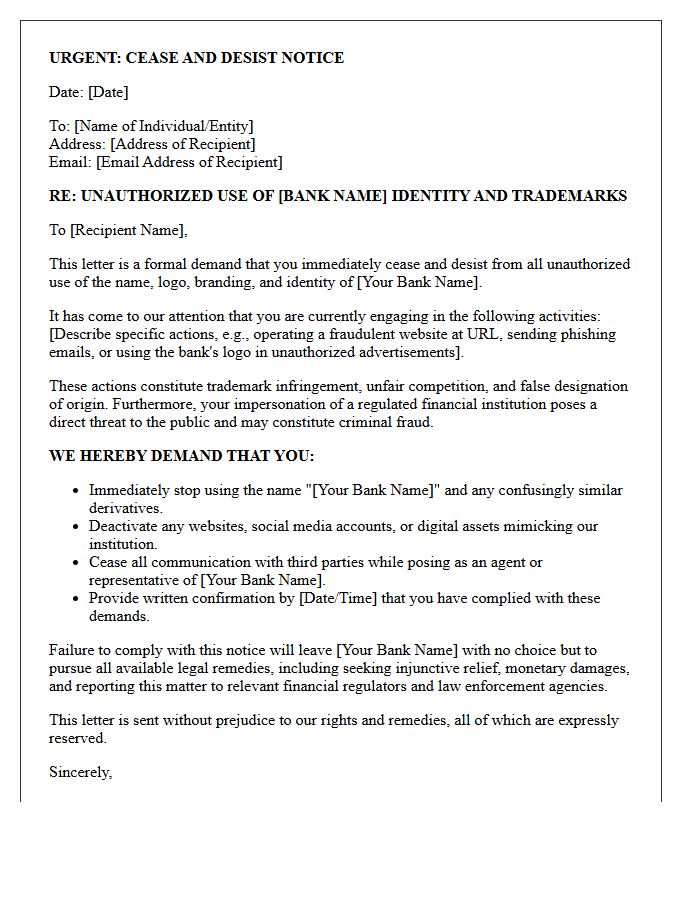
An Urgent Cease and Desist Letter is a formal legal demand used to stop unauthorized bank identity impersonation immediately. This critical document notifies the offending party that their fraudulent use of a financial institution's name, logo, or reputation constitutes trademark infringement and consumer fraud. It serves as a final warning before escalating to litigation or reporting the activity to regulatory authorities like the Consumer Financial Protection Bureau. Protecting brand integrity is vital to prevent financial phishing scams and maintain customer trust through swift, documented legal intervention against identity theft.
Legal Action Warning Letter Concerning Brand Dilution by Rogue Financial Affiliates
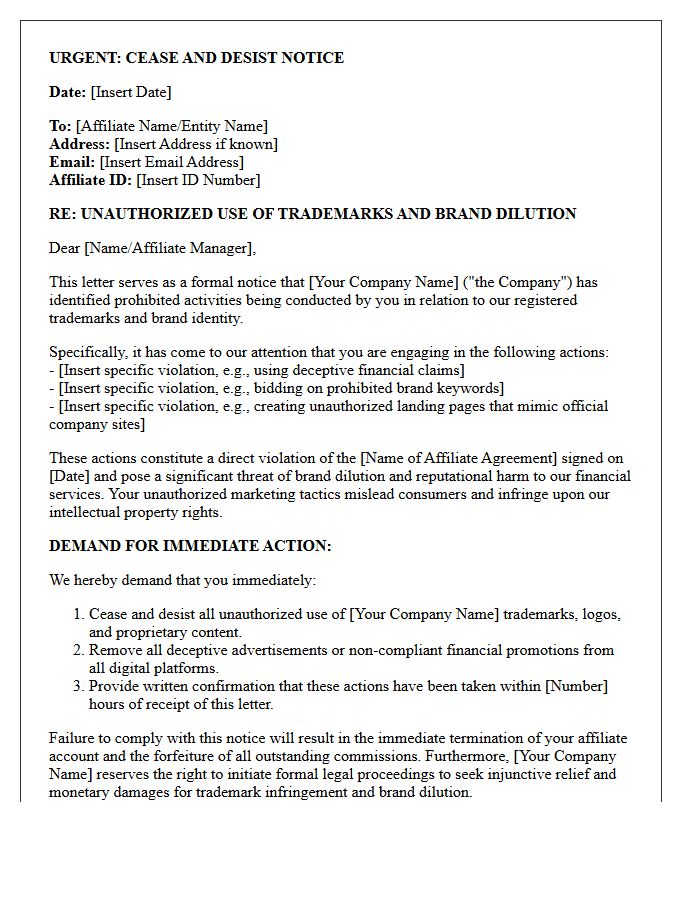
A legal action warning letter is a critical enforcement tool used to stop brand dilution caused by unauthorized financial entities. These rogue financial affiliates often exploit trademarks to mislead consumers or promote high-risk schemes, damaging your firm's market reputation. Issuing a formal notice serves as a final demand to cease all infringing activities before escalating to litigation. It is essential for protecting intellectual property and maintaining regulatory compliance within the financial sector. Acting swiftly ensures your brand's integrity remains untarnished by deceptive third-party marketing practices.
What is a cease and desist letter for unauthorized trademark usage?
A cease and desist letter for unauthorized trademark usage is a formal legal notice sent to an individual or entity-such as a financial affiliate-demanding they immediately stop using a protected brand name, logo, or trademark without permission to avoid legal action.
When should a financial institution send a cease and desist to an affiliate?
A financial institution should send this letter when an affiliate uses its proprietary trademarks in predatory advertising, creates confusingly similar domain names, or misrepresents a partnership in a way that violates compliance standards or trademark laws.
What must be included in a trademark infringement notice for affiliates?
The notice must include the specific trademark registration details, clear evidence of the unauthorized usage by the affiliate, a deadline for compliance, and a formal demand to remove all infringing materials from websites, social media, and marketing collateral.
What are the consequences for financial affiliates who ignore a cease and desist?
Affiliates who ignore a cease and desist letter face severe consequences, including the immediate termination of their affiliate agreement, forfeiture of unpaid commissions, and potential federal lawsuits for trademark infringement and statutory damages.
How does trademark enforcement protect financial brands from affiliate fraud?
Proactive trademark enforcement prevents "brand bidding" and phishing scams, ensuring that consumers are not misled by unauthorized third parties and maintaining the integrity of the financial institution's regulatory standing and brand reputation.

Comments