
An Extension of Commitment Letter is a formal legal document used to prolong the validity of a loan offer or financing agreement beyond its original expiration date. This ensures borrowers maintain their funding terms while finalizing property closures or legal requirements. Understanding how to request more time is essential for successful real estate transactions. Below are some ready to use templates.
Image cover: Official Request Templates for Extending Loan and Mortgage Commitment Letters
Letter Samples List
- Standard Mortgage Commitment Extension Letter
- Rate Lock Expiration Commitment Extension Letter
- Appraisal Delay Commitment Extension Letter
- Title Clearance Delay Commitment Extension Letter
- Borrower Requested Commitment Extension Letter
- New Construction Delay Commitment Extension Letter
- Underwriting Review Commitment Extension Letter
- Outstanding Conditions Commitment Extension Letter
- Closing Date Rescheduling Commitment Extension Letter
- Third Party Document Delay Commitment Extension Letter
- Seller Delay Commitment Extension Letter
- Final Verification Delay Commitment Extension Letter
Standard Mortgage Commitment Extension Letter
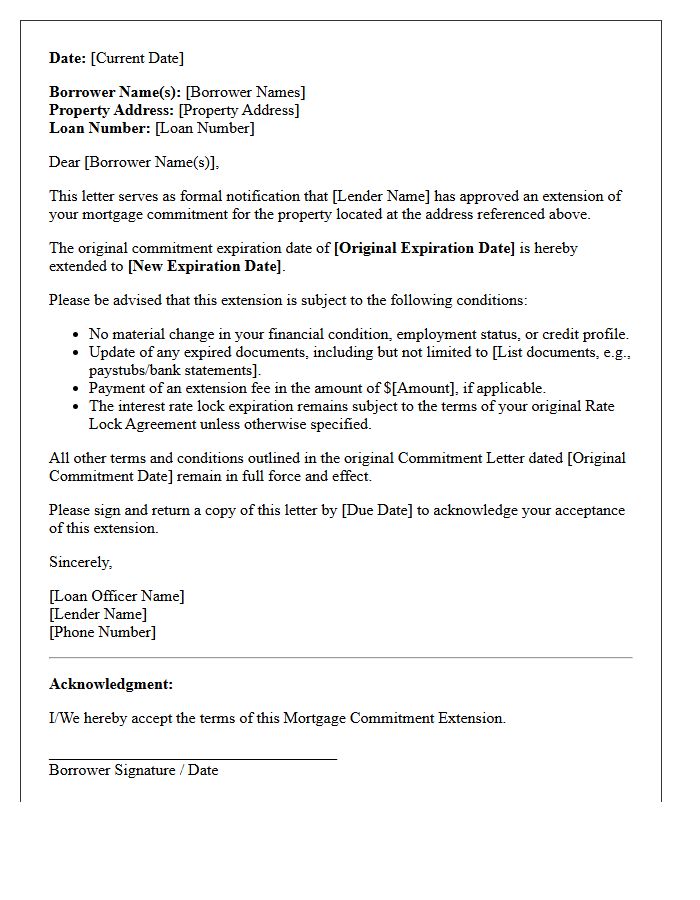
A Standard Mortgage Commitment Extension Letter is a formal document that prolongs the validity of a lender's initial loan approval. It is essential when a real estate closing is delayed beyond the original expiration date. This letter ensures that the agreed-upon interest rate and financing terms remain active, provided there are no significant changes to the borrower's credit profile. Obtaining this extension is a critical step to prevent the mortgage commitment from lapsing, which protects the buyer's financing contingency and ensures the transaction continues smoothly toward completion.
Rate Lock Expiration Commitment Extension Letter
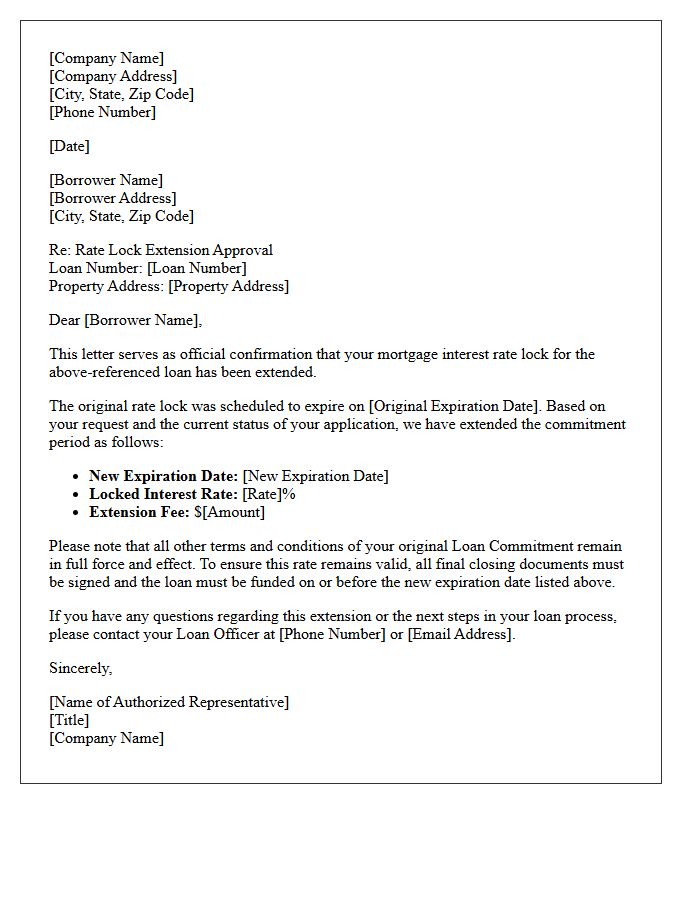
A Rate Lock Expiration Commitment Extension Letter is a formal document issued by a lender to extend the interest rate guarantee beyond its original end date. This extension ensures that your specific financing terms remain valid despite processing delays. It is crucial to review the letter for potential extension fees and the new deadline date. If the commitment expires before closing, your rate may float to current market levels, potentially increasing monthly payments. Always confirm the new terms in writing to maintain your financial security.
Appraisal Delay Commitment Extension Letter
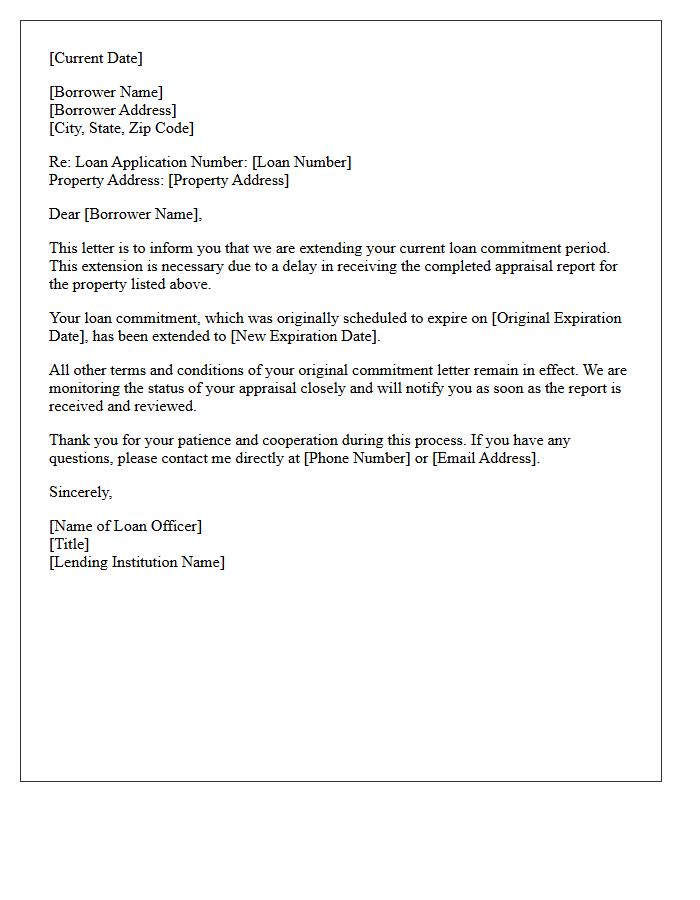
An Appraisal Delay Commitment Extension Letter is a formal document issued by lenders when property valuation takes longer than expected. It serves to maintain your current interest rate lock and financing terms beyond the original expiration date. This letter protects borrowers from market fluctuations while the appraisal report is finalized. It is crucial to review any associated extension fees or updated deadlines to ensure your mortgage approval remains valid during the closing process. Clear communication with your loan officer ensures the extension covers the remaining processing time effectively.
Title Clearance Delay Commitment Extension Letter
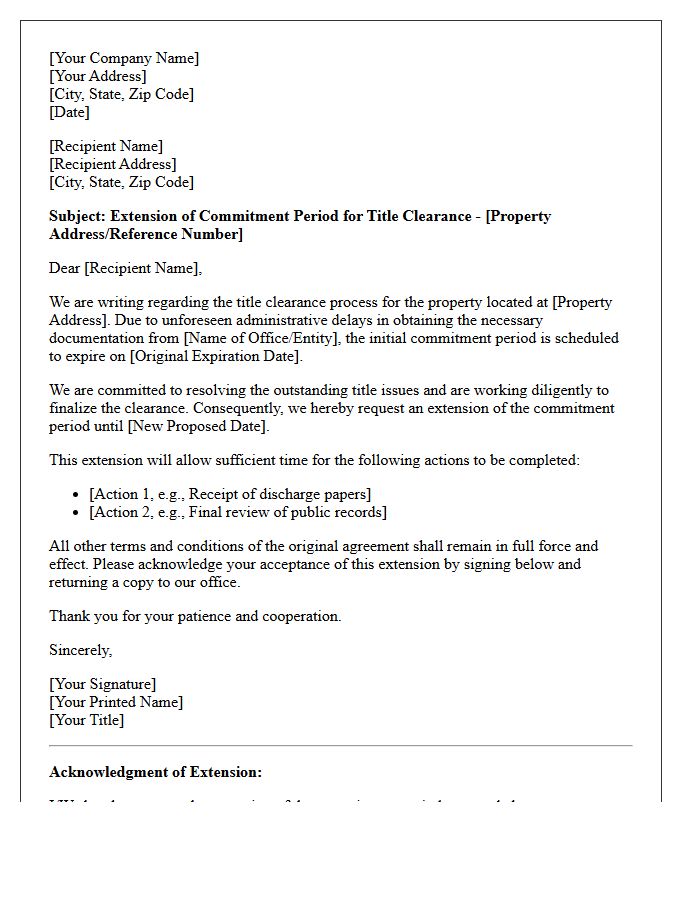
A Title Clearance Delay Commitment Extension Letter is a formal document used when unresolved property liens or legal issues prevent a timely closing. This letter serves as a written agreement to extend the original mortgage commitment period while the title company clears outstanding encumbrances. It protects the buyer's financing terms from expiring due to unforeseen title defects. Ensuring this extension is signed by all parties is critical to maintaining the loan's interest rate lock and preventing the real estate transaction from falling through during the resolution process.
Borrower Requested Commitment Extension Letter
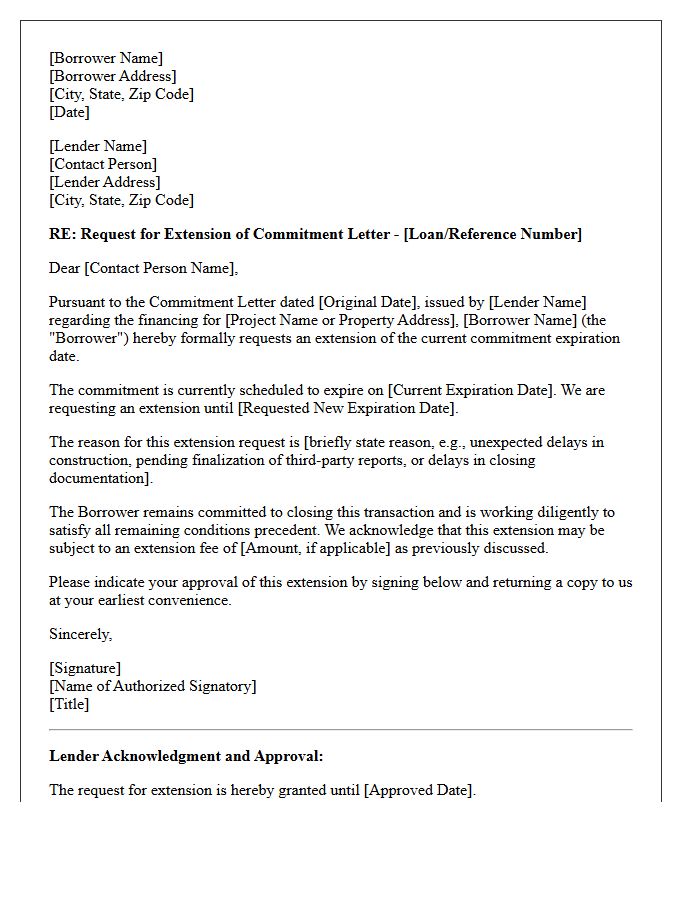
A Borrower Requested Commitment Extension Letter is a formal proposal sent to a lender to prolong the availability period of a loan facility. This document is crucial when a project faces delays or requires additional liquidity beyond the original expiration date. It must clearly outline the reasons for the request and any proposed fee adjustments. Timely submission is vital, as lenders need to perform credit assessments and internal approvals to maintain the funding commitment and ensure continued financial stability for the borrower.
New Construction Delay Commitment Extension Letter
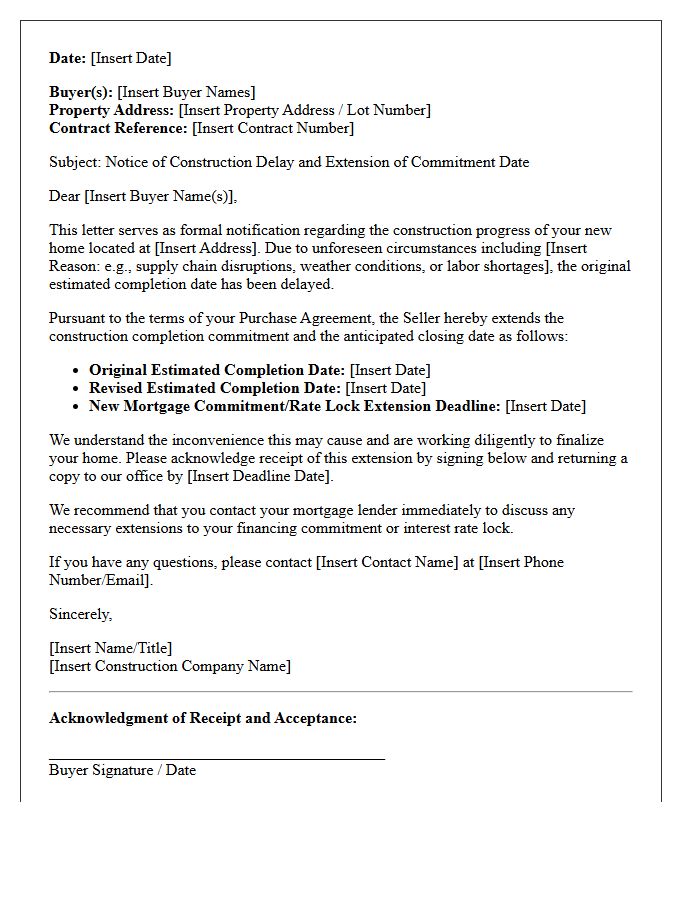
A New Construction Delay Commitment Extension Letter is a formal document issued by a lender to extend a mortgage rate lock beyond its original expiration date. This becomes necessary when builders face unforeseen construction delays that prevent a timely closing. It is crucial for borrowers to understand any associated extension fees and to verify that the new commitment period aligns with the updated certificate of occupancy. Obtaining this written confirmation ensures your financing terms remain secure despite project setbacks.
Underwriting Review Commitment Extension Letter
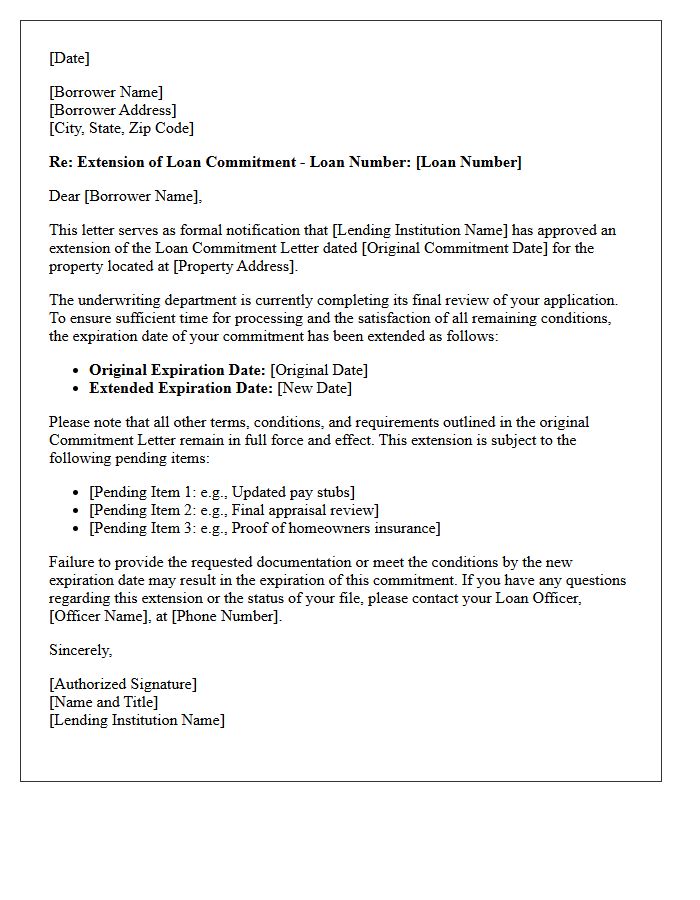
An Underwriting Review Commitment Extension Letter is a formal document that extends the validity of a lender's initial loan approval. It is crucial when a real estate closing is delayed beyond the original expiration date. This letter ensures that the financing terms remain locked while the underwriter re-verifies financial stability and creditworthiness. Borrowers must often provide updated documentation, such as recent paystubs or bank statements, to maintain their loan commitment. Securing this extension prevents the loan application from being canceled or requiring a full re-application process during a transaction.
Outstanding Conditions Commitment Extension Letter
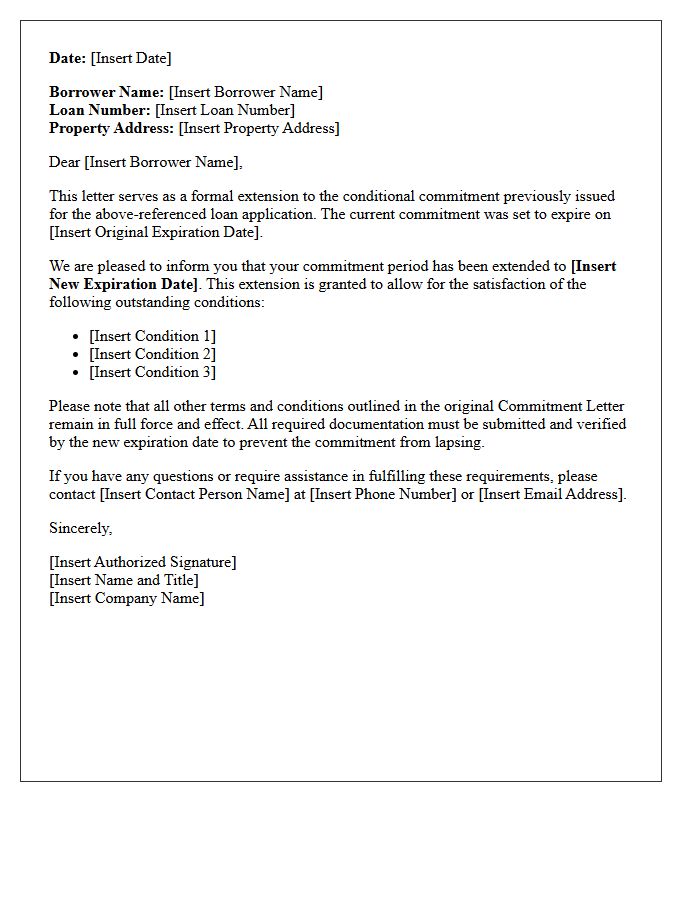
An Outstanding Conditions Commitment Extension Letter is a formal document issued by a lender to prolong the validity of a loan approval. It grants the borrower additional time to satisfy mandatory requirements or documentation specified in the initial offer. This extension prevents the commitment from expiring while final underwriting criteria are met. It is essential for maintaining your interest rate lock and ensuring the financing remains secure during processing delays. Always review the new expiration date to avoid losing your loan approval status or incurring additional extension fees.
Closing Date Rescheduling Commitment Extension Letter
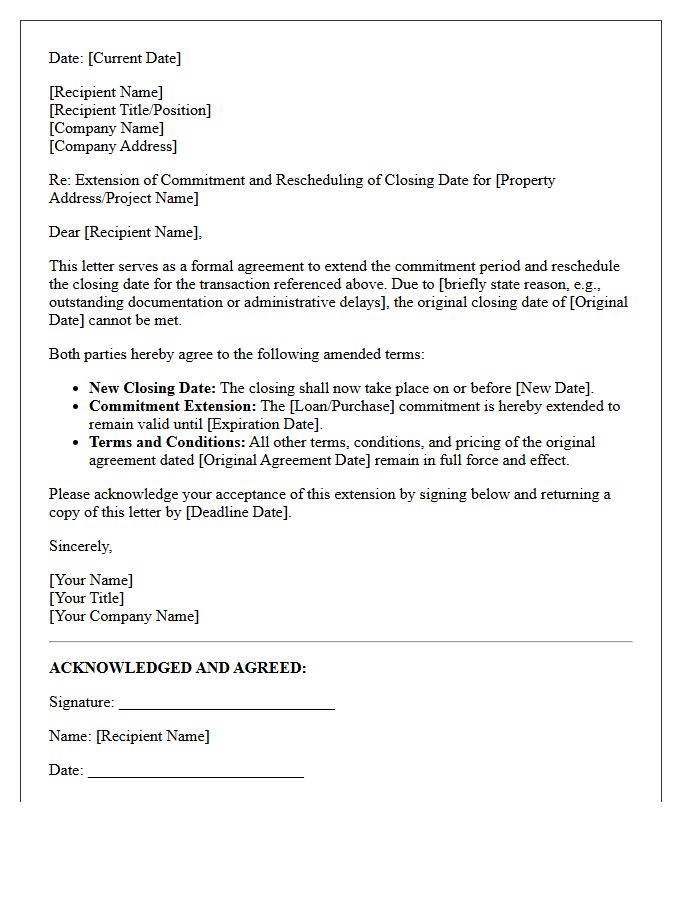
A Closing Date Rescheduling Commitment Extension Letter is a formal agreement used to postpone the final settlement of a real estate transaction. This document officially extends the lock-in period of a mortgage commitment, ensuring that financing terms remain valid despite delays. It protects both parties by documenting the new deadline and any associated extension fees. Timely execution is critical to maintain the lender's funding obligation and prevent the contract from expiring, ultimately securing the legal transfer of property ownership under updated timelines.
Third Party Document Delay Commitment Extension Letter
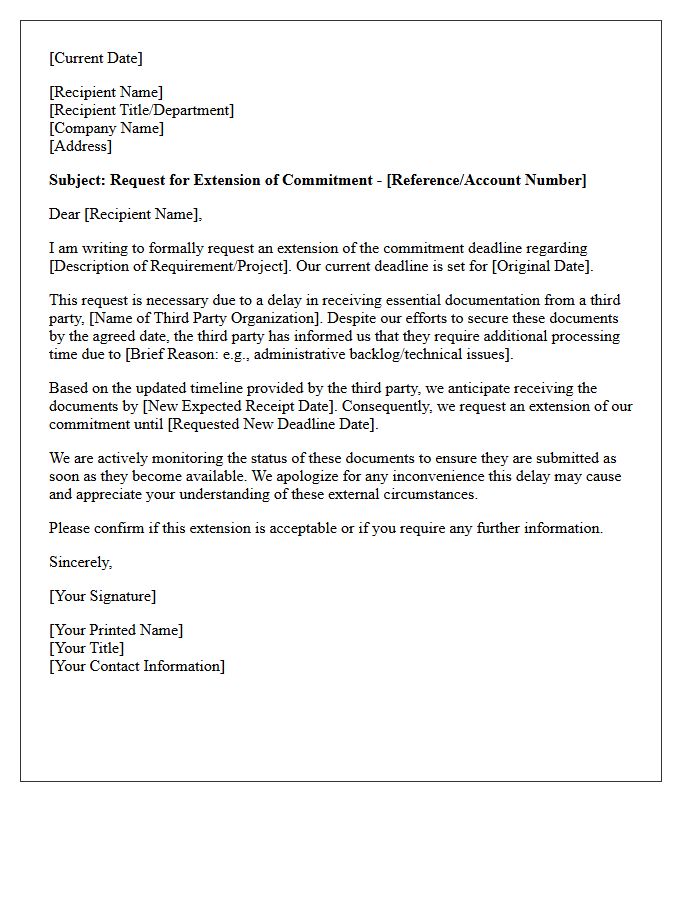
A Third Party Document Delay Commitment Extension Letter is a formal notification used to extend a loan or contract deadline when external paperwork is missing. The commitment extension ensures that your original terms remain valid despite external setbacks. This document is essential when third-party verification, such as appraisals or legal titles, is delayed beyond your control. By submitting this request, you protect your interest rate and prevent agreement expiration, providing the necessary legal protection and additional time required to finalize your transaction successfully while maintaining professional compliance with the lender.
Seller Delay Commitment Extension Letter
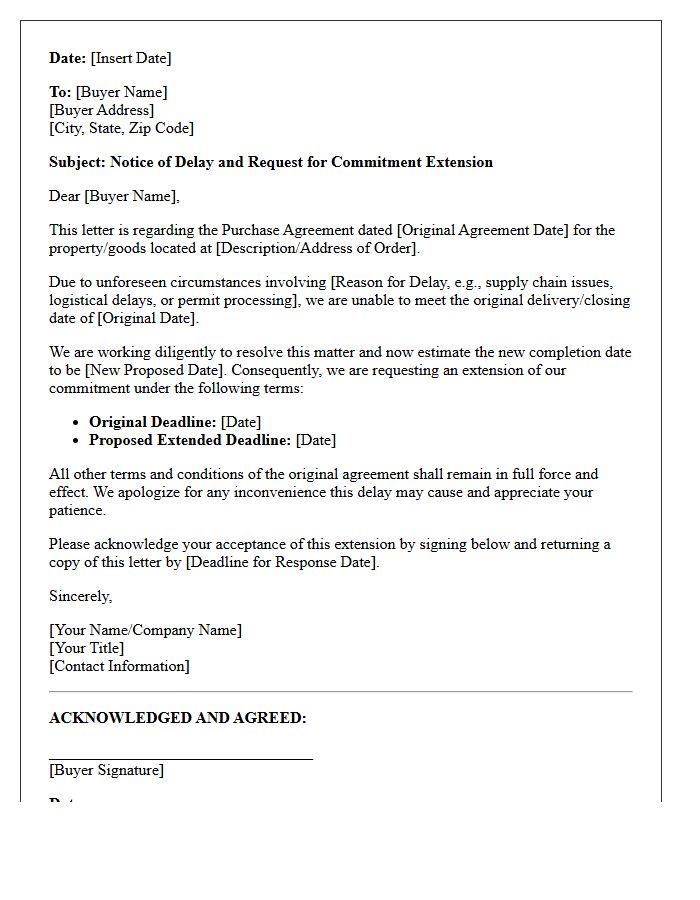
A Seller Delay Commitment Extension Letter is a formal document used when a property seller cannot meet the original closing date. This letter requests a specific timeline extension to resolve issues like title defects or repairs. It is a critical legal amendment to the purchase agreement that protects the buyer's interests while maintaining the contract's validity. Both parties must sign this extension to avoid a breach of contract, ensuring that financing commitments remain active and the transaction timeline remains transparent for all stakeholders involved in the real estate sale.
Final Verification Delay Commitment Extension Letter
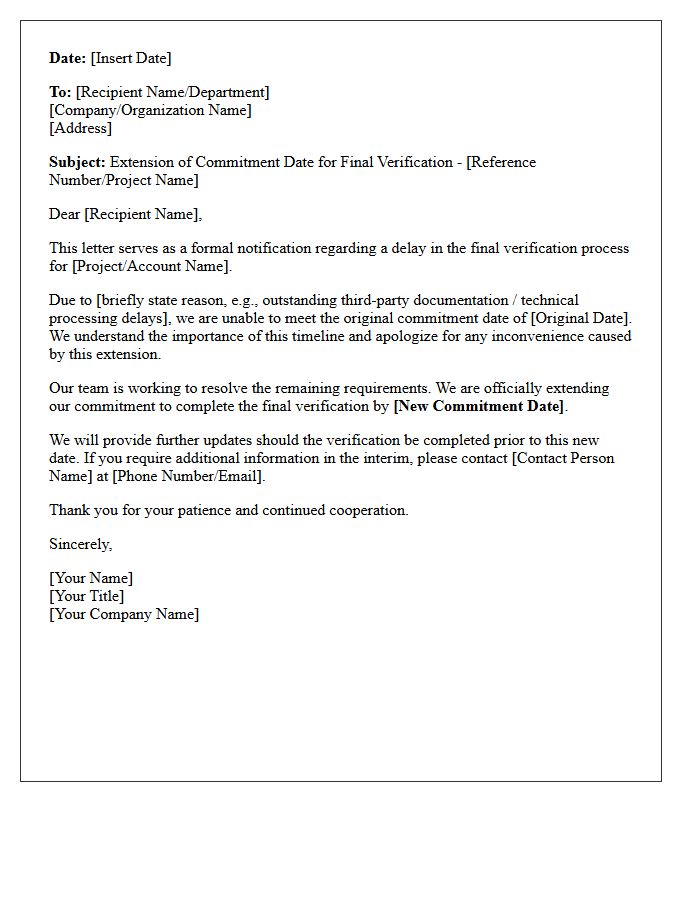
A Final Verification Delay Commitment Extension Letter is a formal document used to request additional time to complete mandatory compliance checks. It acknowledges the missed original deadline and provides a clear, revised timeline for final submission. This letter is crucial for maintaining transparency with regulatory bodies or financial institutions, ensuring that stakeholders remain informed about progress. It outlines the specific reasons for the delay, demonstrates a continued commitment to accuracy, and seeks to avoid penalties or legal repercussions by formalizing the extension of the verification process.
What is an extension of a commitment letter?
An extension of a commitment letter is a formal agreement between a lender and a borrower to prolong the validity period of a previous loan approval. This document ensures that the terms, interest rates, and financing conditions remain locked in beyond the original expiration date.
When should I request a commitment letter extension?
You should request an extension as soon as it becomes apparent that the real estate closing or project milestone will not occur before the commitment's original expiry date. Common reasons include construction delays, title issues, or prolonged inspections.
Are there fees associated with extending a loan commitment?
Yes, many lenders charge an extension fee to keep the funds reserved and the interest rate locked. These fees vary by institution and are typically calculated as a small percentage of the total loan amount or a flat administrative fee.
Can a lender deny an extension of a commitment letter?
A lender can deny an extension if there has been a negative change in the borrower's financial situation, a significant drop in the property's appraised value, or if market conditions have shifted drastically since the initial approval.
Does an extension change the original terms of the loan?
Generally, an extension preserves the original terms; however, the lender may require an updated credit report or financial statements to ensure eligibility. If the extension is lengthy, the lender may also reserve the right to adjust the interest rate to current market levels.

Comments