
An Unconditional Release of Lien is a legal document confirming that a contractor or supplier has received final payment and waives all future claims against a property. This essential form protects property owners from double payment and ensures a clear title. Understanding how to properly execute this waiver is crucial for closing construction projects securely. Below are some ready to use templates.
Image cover: Free Unconditional Lien Release Forms and Letter Templates
Letter Samples List
- Unconditional Release of Mortgage Lien Letter
- Full Satisfaction of Mortgage Letter
- Final Payment Unconditional Release Letter
- Notice of Unconditional Lien Release Letter
- Certificate of Mortgage Discharge Letter
- Deed of Reconveyance Lien Release Letter
- Unconditional Waiver and Release of Lien Letter
- Clear Title Unconditional Release Letter
- Mortgage Payoff Unconditional Release Letter
- Lender Unconditional Lien Discharge Letter
- Final Settlement Lien Release Letter
- Real Property Unconditional Release Letter
- Zero Balance Unconditional Release Letter
Unconditional Release of Mortgage Lien Letter
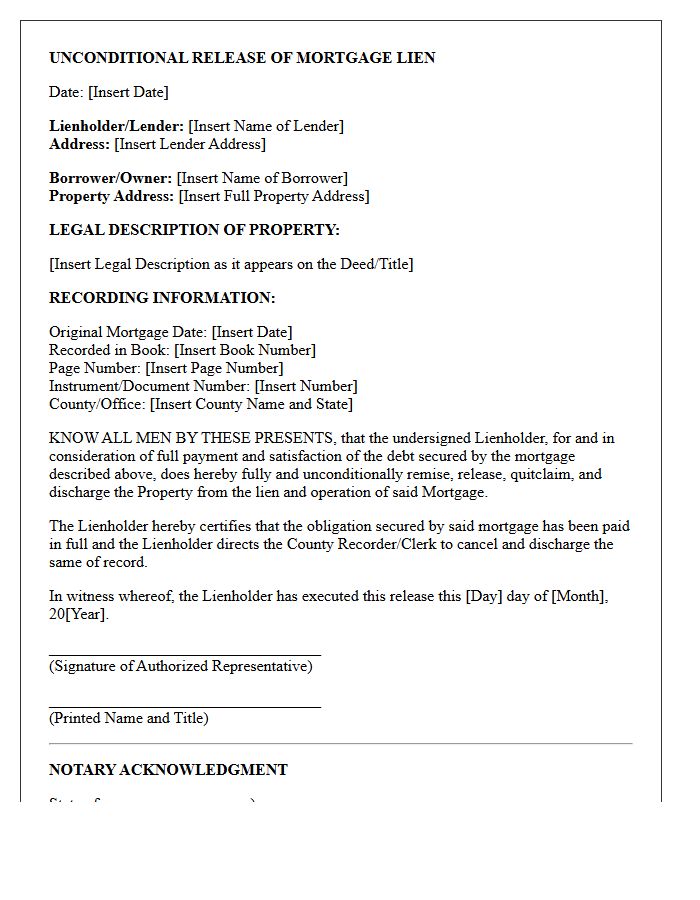
An Unconditional Release of Mortgage Lien Letter is a legal document issued by a lender confirming that a debt is paid in full. It officially cancels the bank's claim, allowing the property owner to obtain a clear title. This document must be recorded with the local county clerk or land registry to remove the lien from public records. Without this formal release, the mortgage remains an encumbrance, potentially preventing the future sale or refinancing of the property. Always verify that the lien satisfaction is properly filed after the final payment.
Full Satisfaction of Mortgage Letter
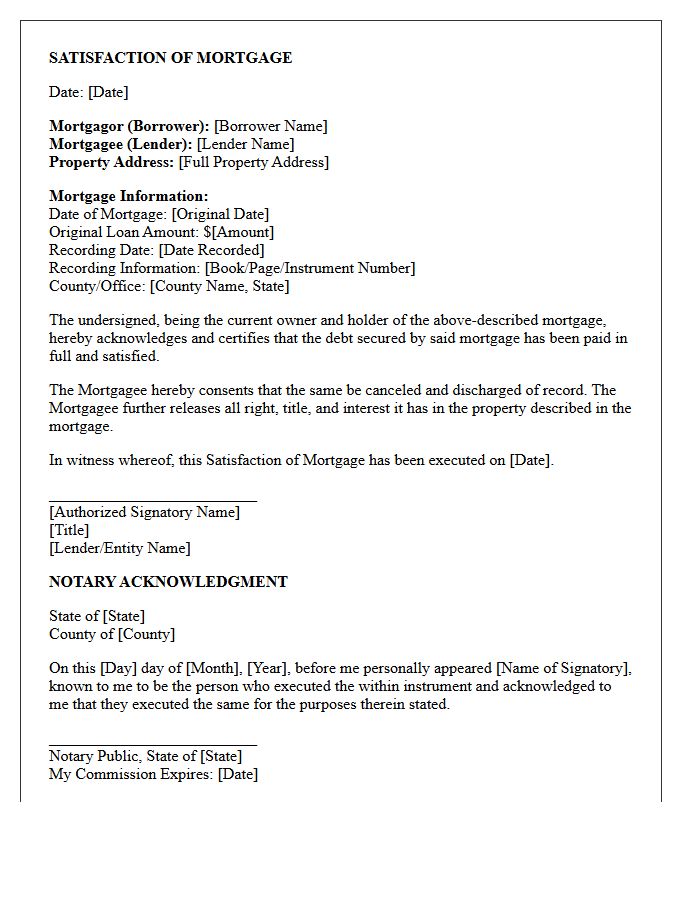
A Full Satisfaction of Mortgage Letter is a legal document issued by a lender confirming that a home loan has been paid in full. This essential instrument officially releases the lien on the property, proving the borrower's 100% ownership. It must be recorded at the local county recorder's office to clear the public title record. Without this filed document, the mortgage remains an active encumbrance, potentially delaying future sales or refinancing. Always verify that the satisfaction notice is properly recorded to ensure a clear title deed.
Final Payment Unconditional Release Letter
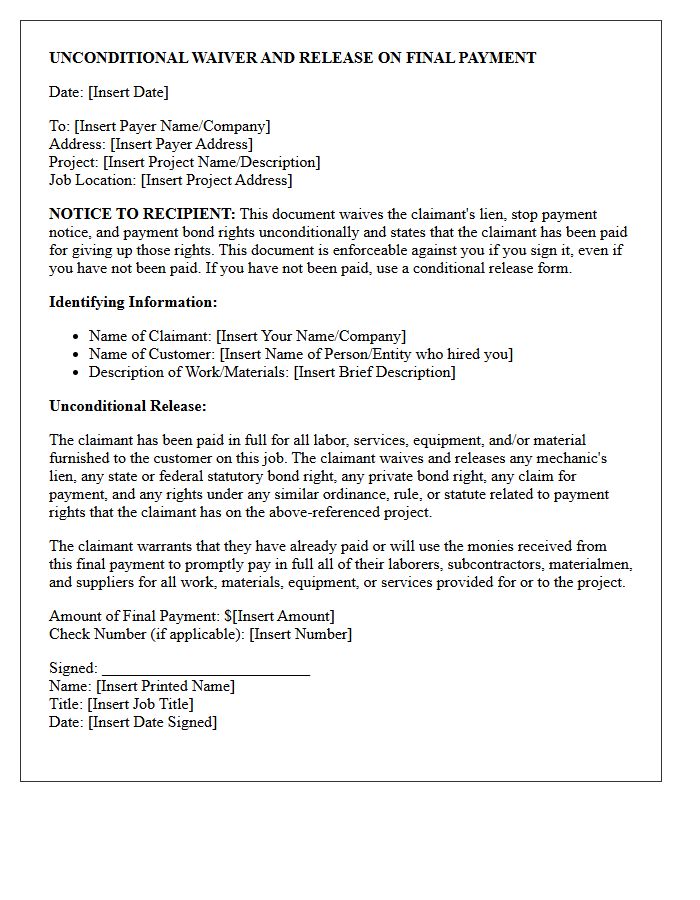
A Final Payment Unconditional Release Letter is a critical legal document used in construction to confirm that a contractor has received their total payment. By signing, the payee extinguishes all lien rights against the property permanently. It is essential to ensure funds are actually cleared in the bank before execution, as this waiver is binding and effective immediately. Once delivered, the payer is fully protected from future claims, making it the final step in securing a clear title and concluding the financial obligations of a project.
Notice of Unconditional Lien Release Letter
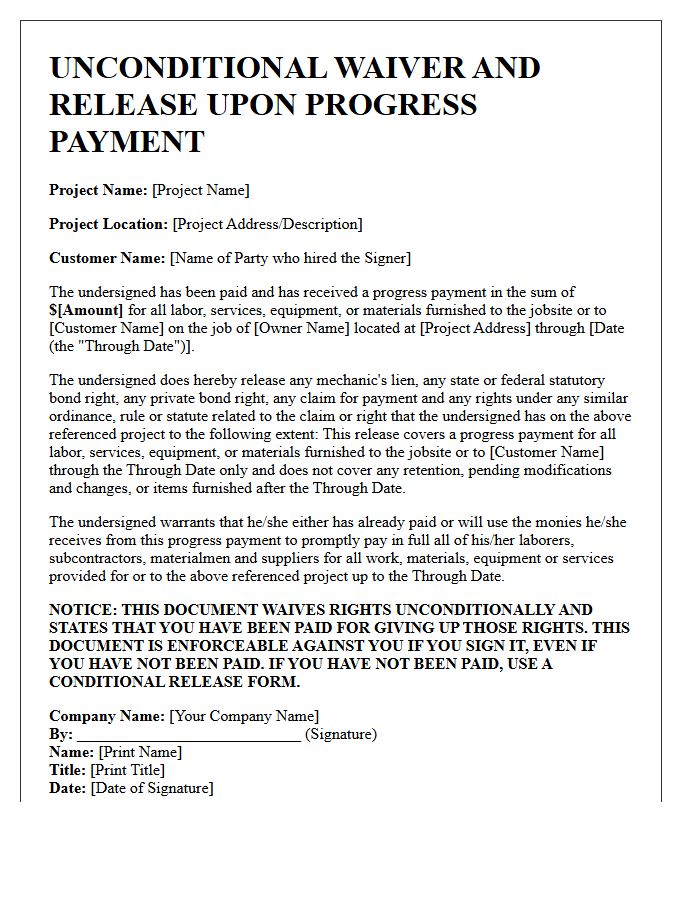
A Notice of Unconditional Lien Release Letter is a critical legal document confirming that payment has been received and the claimant permanently waives their right to file a mechanic's lien against a property. Unlike conditional releases, this version is effective immediately upon signing, regardless of whether the funds have actually cleared the bank. Owners must ensure payment is fully processed before finalizing this letter to prevent financial liability or legal disputes. It serves as final proof that all financial obligations for labor or materials have been satisfied in full.
Certificate of Mortgage Discharge Letter
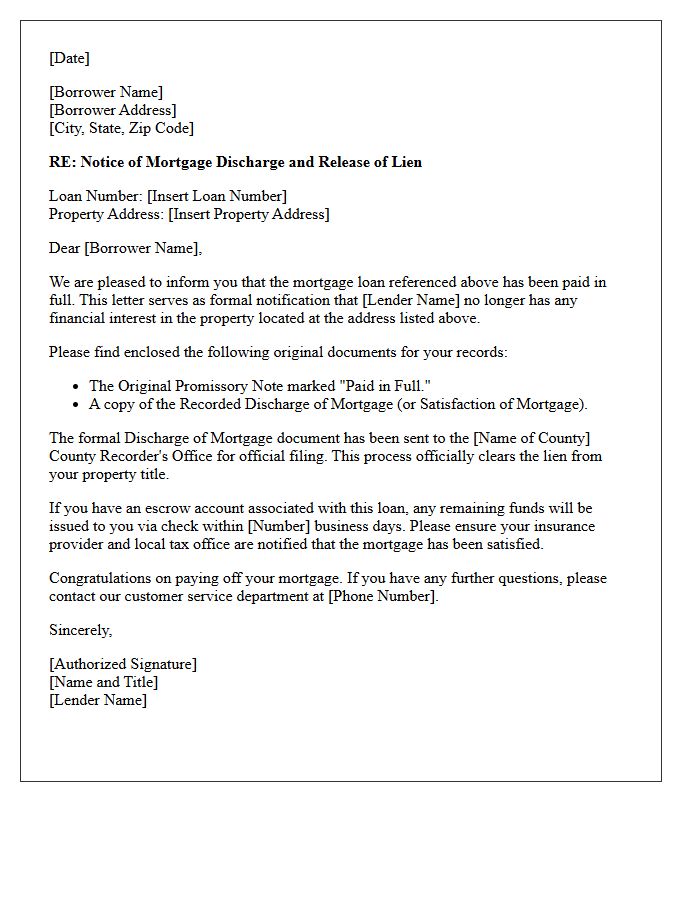
A Certificate of Mortgage Discharge Letter is a legal document issued by a lender confirming that a home loan has been paid in full. It serves as official proof that the financial institution no longer holds a legal claim or lien against your property. Homeowners must ensure this document is recorded with the local land registry to clear the title. Obtaining this discharge is essential for establishing debt-free ownership and facilitates the future sale or refinancing of the real estate without legal encumbrances.
Deed of Reconveyance Lien Release Letter
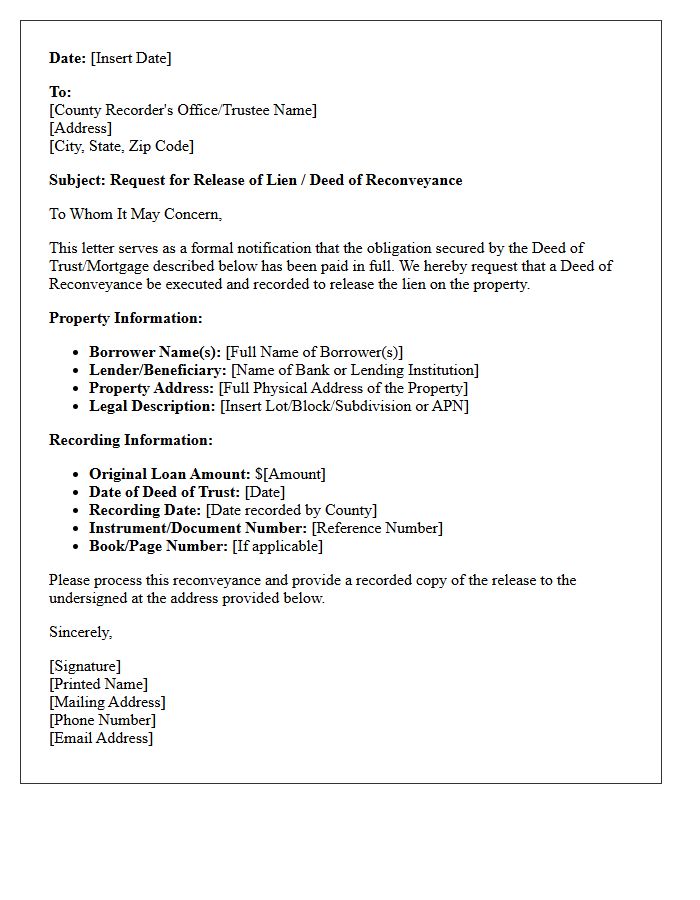
A Deed of Reconveyance is a legal document issued by a mortgage lender once a loan is paid in full. It officially transfers the property title from the trustee back to the borrower, clearing the lien against the home. Receiving a lien release letter confirms your debt is satisfied and ensures public records reflect your clear ownership. Without recording this document with the local county office, the title remains encumbered, which can prevent future sales or refinancing. Always verify that your legal interest is fully restored after final payment.
Unconditional Waiver and Release of Lien Letter
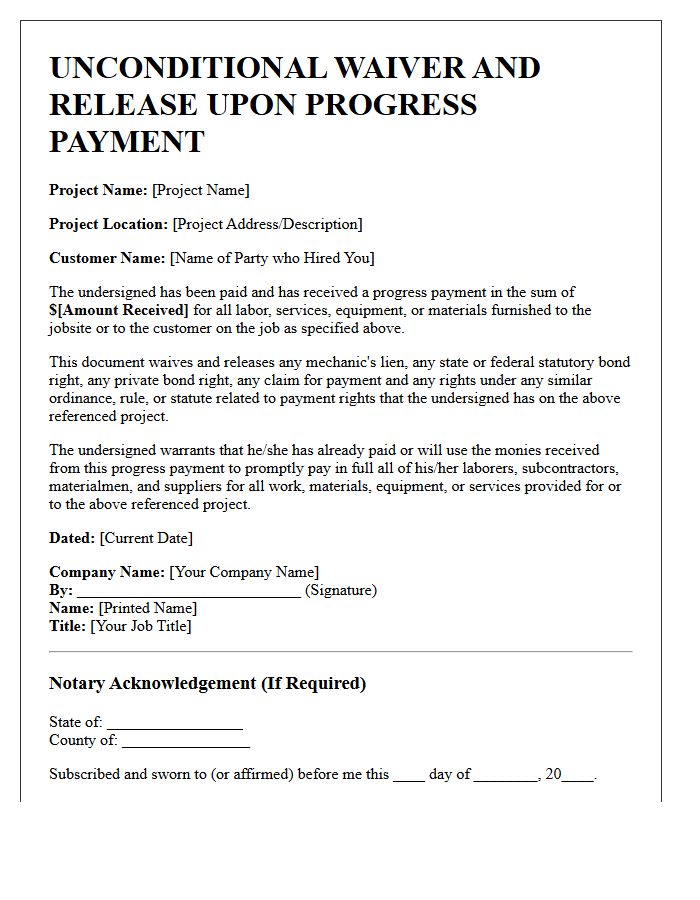
An Unconditional Waiver and Release of Lien is a critical legal document used in construction to confirm that payment has been received and lien rights are officially surrendered. Unlike conditional versions, this form becomes effective immediately upon execution, regardless of whether the funds have cleared the bank. It is essential to sign this only after verified payment is in hand, as it permanently prevents contractors or suppliers from filing a claim against the property for the specified amount. Using this letter ensures clear financial communication and protects property titles from future encumbrances.
Clear Title Unconditional Release Letter
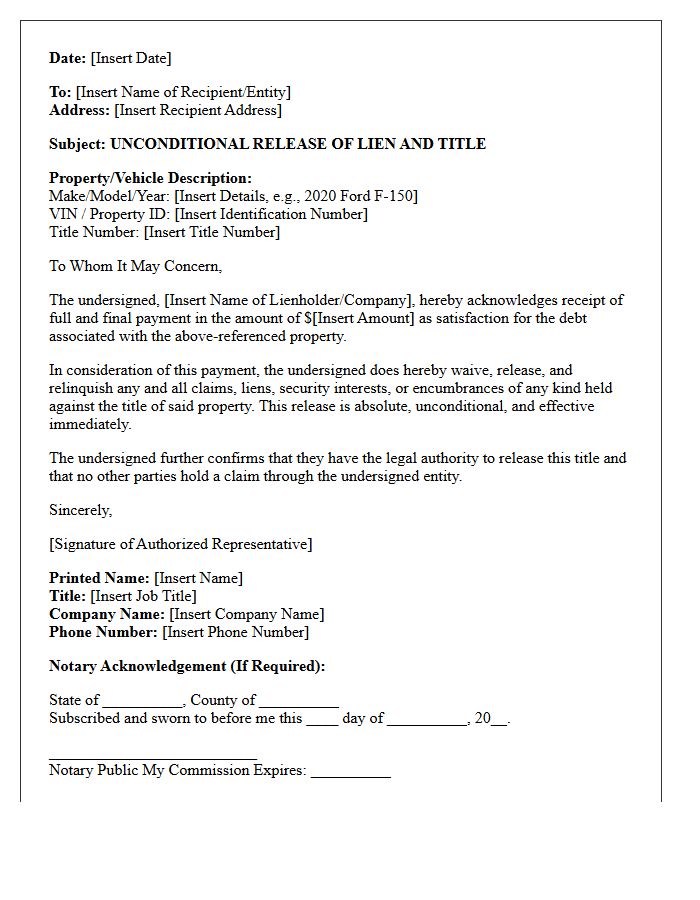
A Clear Title Unconditional Release Letter is a formal document issued by a lienholder, typically a bank, confirming that a financial obligation has been fully satisfied. This legal discharge proves that the lender no longer holds a claim against the property or vehicle. It is essential for transferring ownership, as it allows the owner to obtain a clean title free of encumbrances. Always ensure the letter includes the asset's identification details and an official signature to guarantee a smooth title transfer process during a sale or refinancing.
Mortgage Payoff Unconditional Release Letter
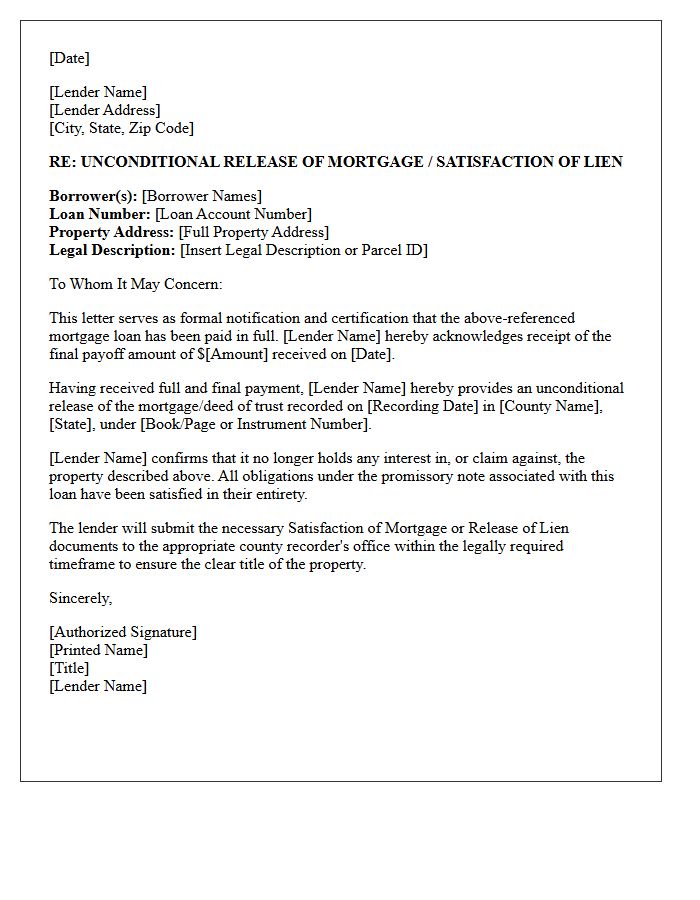
A Mortgage Payoff Unconditional Release Letter is a formal document issued by a lender confirming that a debt is fully satisfied. It serves as definitive proof that the financial institution no longer holds a lien against the property. This letter is crucial for homeowners because it clears the title, allowing for a smooth sale or transfer of ownership. Homeowners should ensure this release is recorded with the local county clerk to legally update public records and verify that the mortgage is officially discharged and no longer an active encumbrance.
Lender Unconditional Lien Discharge Letter
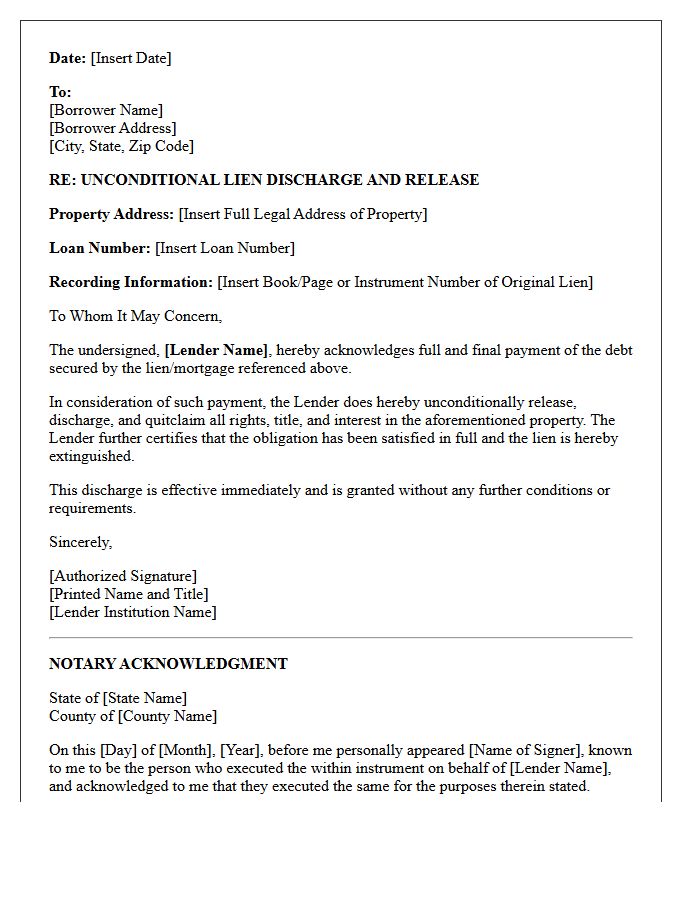
A Lender Unconditional Lien Discharge Letter is a legal document confirming that a debt is fully satisfied. It officially releases the security interest held by a financial institution over an asset, such as a vehicle or property. Receiving this letter is crucial because it proves you have clear title and full ownership, allowing for a future sale or transfer. Once issued, the lender can no longer claim rights to the collateral. Always ensure this document is recorded with the appropriate government agency to formally update public records and clear the title.
Final Settlement Lien Release Letter
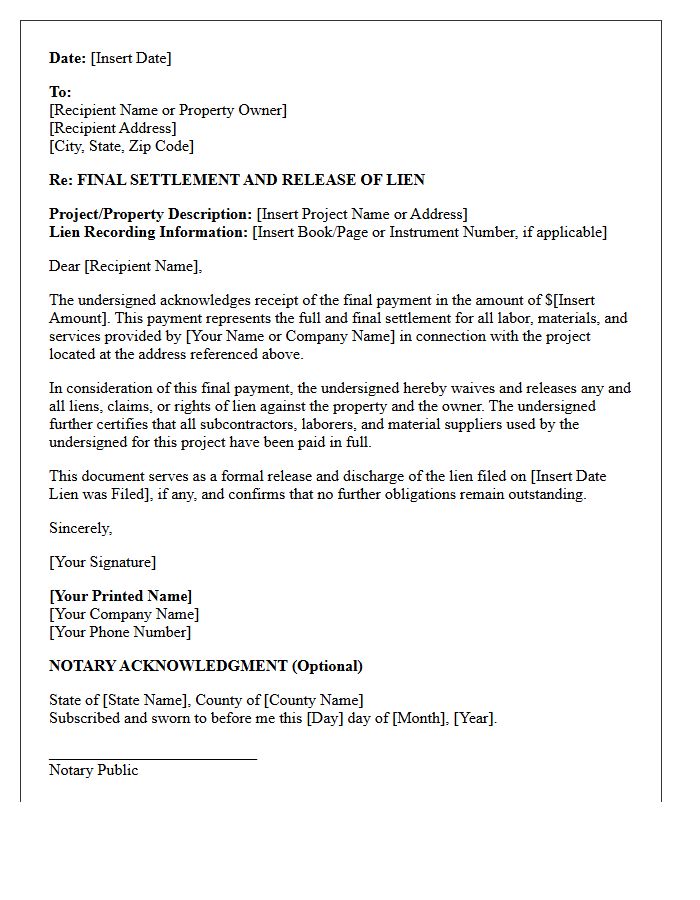
A Final Settlement Lien Release Letter is a critical legal document confirming that a debt is fully satisfied. Once payment is processed, the creditor issues this notice to extinguish legal claims against a property or asset. It serves as formal proof that the financial obligation is cleared, protecting the owner from future collections. To ensure full protection, property owners must record the release with the appropriate county office to clear the title. Always verify that the document includes the notarized signature and specific legal descriptions of the assets involved.
Real Property Unconditional Release Letter
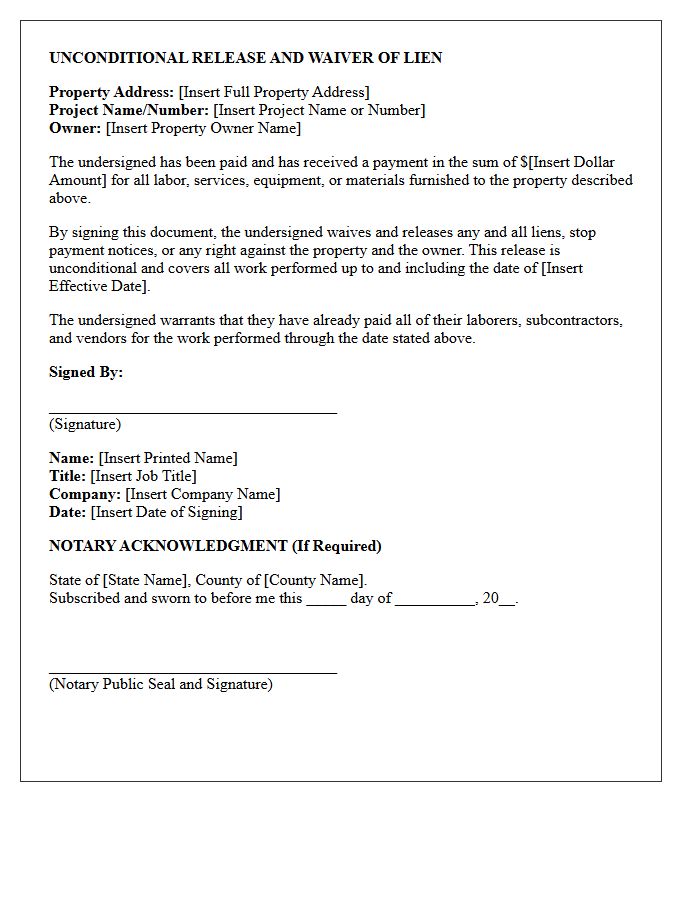
A Real Property Unconditional Release Letter is a critical legal document used to confirm that a lien has been fully discharged. Once signed, it serves as conclusive evidence that all financial obligations related to a property have been satisfied. This letter prevents future claims against the title, ensuring a clear transfer of ownership during a sale or refinancing. It is essential to verify that all payments are cleared before issuance, as this release permanently waives the claimant's right to pursue further legal action regarding the specific debt or encumbrance mentioned.
Zero Balance Unconditional Release Letter
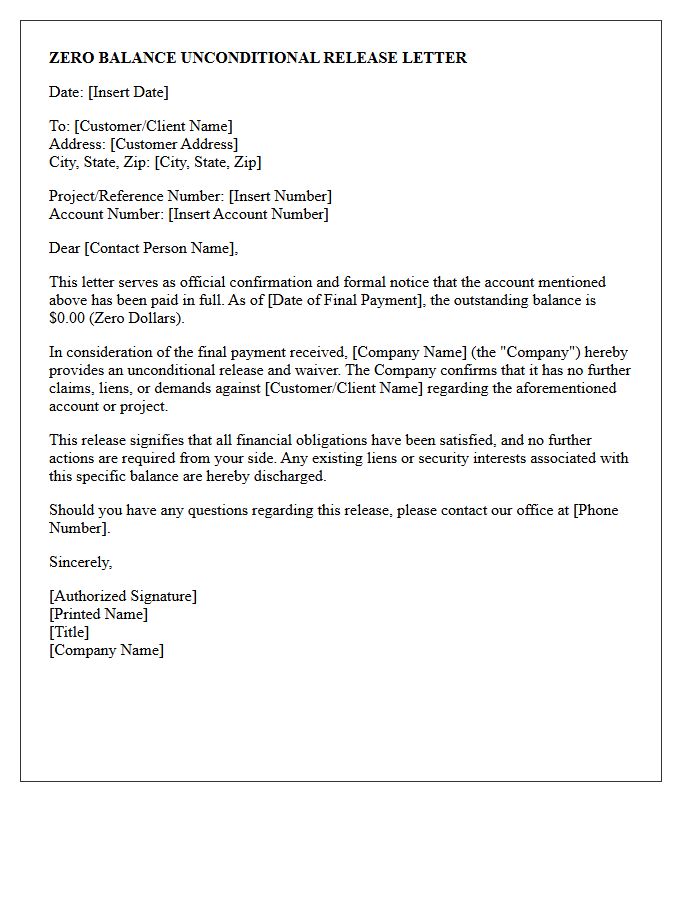
A Zero Balance Unconditional Release Letter is a legal document issued by a creditor confirming that a debt is fully paid. It serves as final proof that no outstanding liabilities remain, extinguishing all liens or financial claims against the debtor. This letter is essential for property transactions and credit repairs, as it provides absolute legal protection against future collection attempts. Always ensure the document is signed by an authorized representative to guarantee its validity and to permanently secure your financial clearance.
What is an Unconditional Waiver and Release of Lien?
An Unconditional Waiver and Release of Lien is a legal document confirming that a contractor or supplier has received full payment and permanently relinquishes all future lien rights against a property for the specified work period.
When should you sign an Unconditional Waiver and Release?
You should only sign an unconditional release after payment has been cleared by the bank and is physically in your possession. Once signed, these documents are immediately effective and legally binding, regardless of whether the funds actually clear.
What is the difference between a Conditional and Unconditional Lien Release?
A Conditional Release is dependent on the payment clearing the bank to become valid, whereas an Unconditional Release is effective the moment it is signed, providing no protection to the signer if the payment fails or a check bounces.
What information must be included in an Unconditional Release of Lien letter?
A legally valid release should include the property owner's name, the project address, the total amount paid, a description of the labor or materials provided, and the specific "through date" covering the work performed.
Does an Unconditional Release cover extra work or pending change orders?
No, an Unconditional Release typically only covers work performed up to the "through date" listed on the form. Any work performed after that date or disputed change orders not included in the payment amount remain eligible for future lien claims unless specifically waived.


Comments