
Ending a month-to-month lease requires a formal Sixty-Day Notice to Terminate in many jurisdictions, especially for long-term tenants. This legal document ensures both landlords and renters have sufficient time to coordinate a move and find new housing. Understanding the specific notice requirements is essential to avoid legal complications. To help you get started, below are some ready to use templates.
Image cover: Essential Guide and Templates for 60-Day Lease Termination Notices
Letter Samples List
- Standard Sixty-Day Notice to Terminate Month-to-Month Tenancy Letter
- Residential Property Sixty-Day Lease Termination Notice Letter
- Commercial Month-to-Month Tenancy Sixty-Day Termination Letter
- Property Management Sixty-Day Notice to Vacate Letter
- Landlord Sixty-Day Month-to-Month Tenancy Termination Letter
- No-Fault Sixty-Day Notice to Terminate Tenancy Letter
- Multi-Family Property Sixty-Day Lease Termination Letter
- Single-Family Home Sixty-Day Month-to-Month Termination Letter
- Owner Move-In Sixty-Day Tenancy Termination Notice Letter
- Property Sale Sixty-Day Month-to-Month Termination Letter
- Major Renovation Sixty-Day Tenancy Termination Letter
- Corporate Portfolio Sixty-Day Month-to-Month Termination Letter
Standard Sixty-Day Notice to Terminate Month-to-Month Tenancy Letter
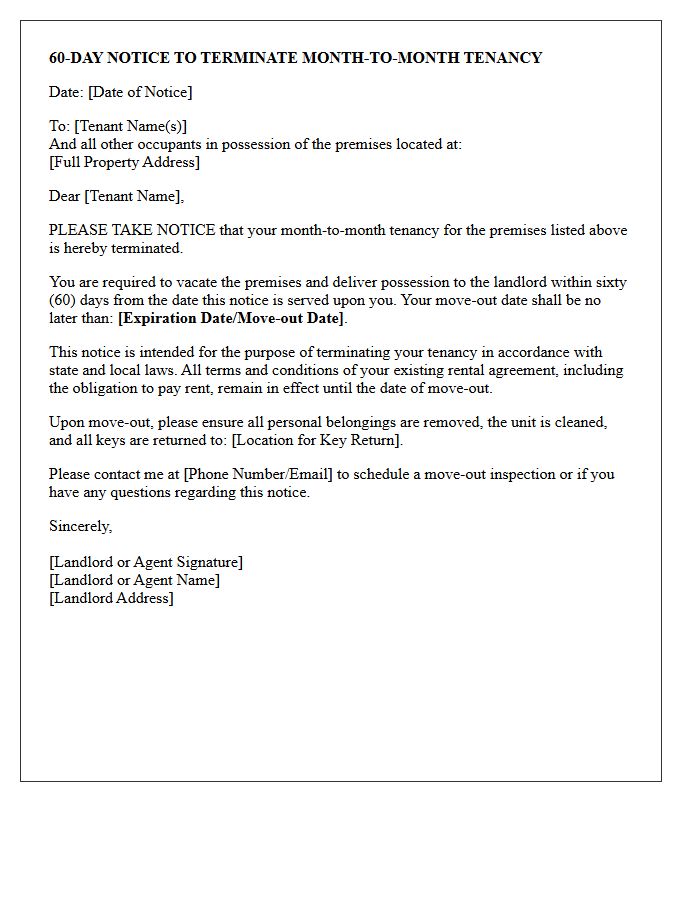
A Standard Sixty-Day Notice to Terminate Month-to-Month Tenancy is a formal legal document used by landlords or tenants to end a rental agreement. In many jurisdictions, this specific duration is legally required when a tenant has resided in the property for one year or more. The letter must be delivered in writing and clearly state the final move-out date. Compliance ensures a lawful transition, helping parties avoid potential eviction proceedings or financial penalties while maintaining proper notice standards under local landlord-tenant laws.
Residential Property Sixty-Day Lease Termination Notice Letter
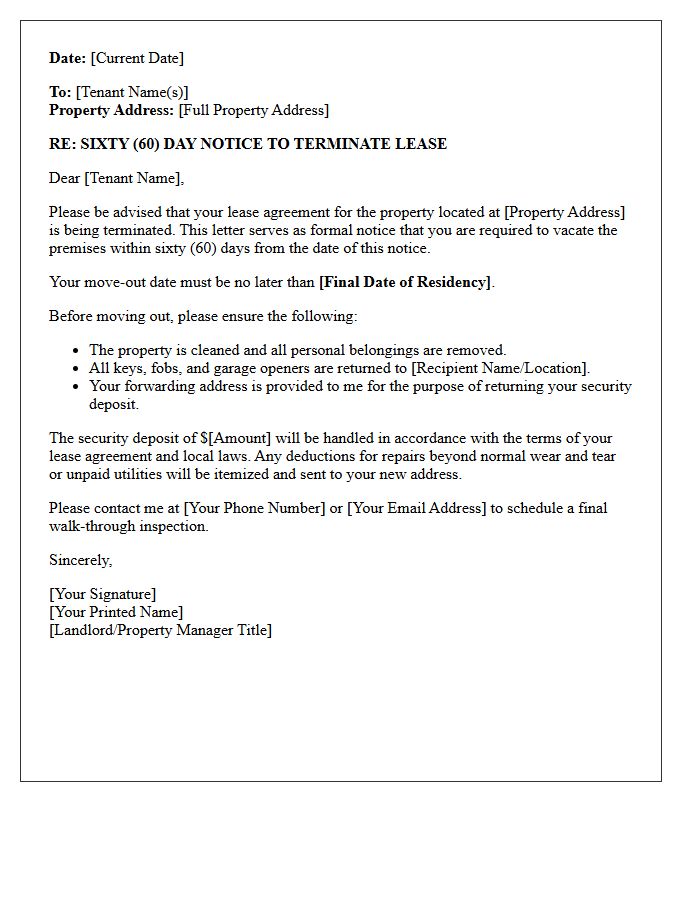
A residential property sixty-day lease termination notice is a legal document used to end a month-to-month tenancy. In many jurisdictions, landlords must provide this written notice if a tenant has resided in the unit for more than one year. It ensures both parties have sufficient time to arrange for relocation or property turnover. The letter must clearly state the termination date and comply with local housing laws to be valid. Failure to provide proper notice can lead to legal delays or the invalidations of the eviction process.
Commercial Month-to-Month Tenancy Sixty-Day Termination Letter
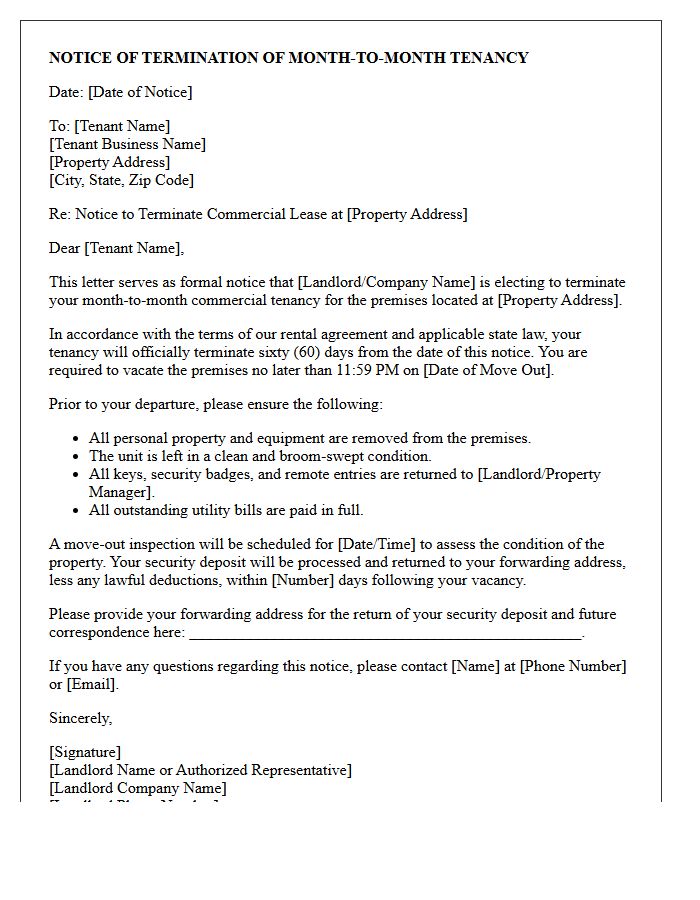
A Commercial Month-to-Month Tenancy Sixty-Day Termination Letter is a formal legal notice used to end a periodic lease agreement. In many jurisdictions, providing a sixty-day notice is a mandatory requirement to ensure sufficient transition time for either the landlord or the tenant. This document must clearly state the termination date and compliance with local property laws to remain legally binding. It serves as essential written proof of intent, protecting both parties from potential disputes regarding the vacancy timeline or remaining financial obligations at the business premises.
Property Management Sixty-Day Notice to Vacate Letter
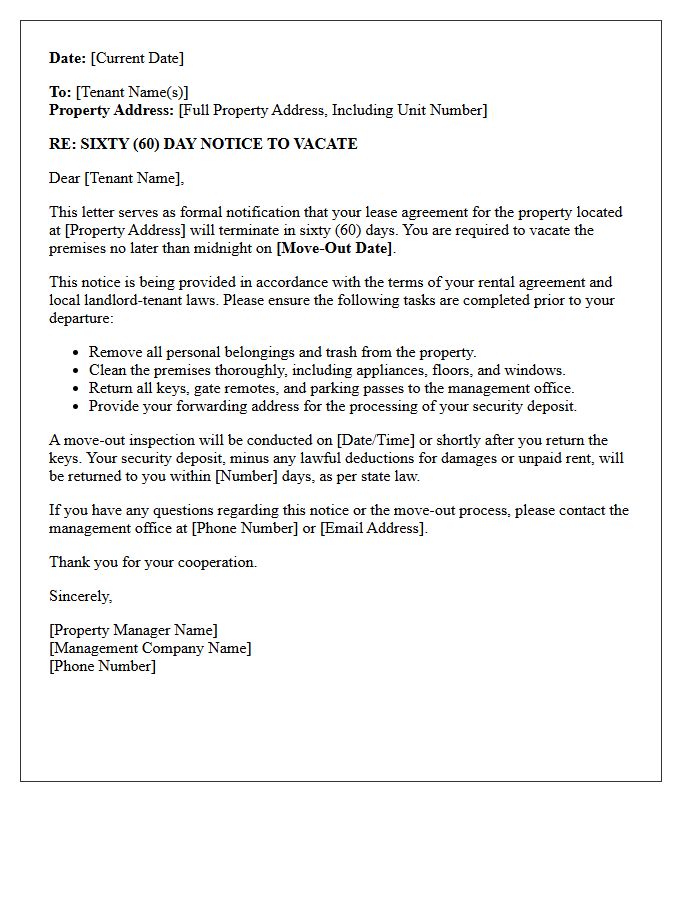
A Sixty-Day Notice to Vacate is a formal legal document used by landlords or property managers to terminate a month-to-month tenancy. This written notice provides tenants exactly sixty days to relocate, typically required by law for residents who have occupied a unit for more than one year. It is crucial to ensure the letter includes the move-out date, property address, and compliance with local landlord-tenant regulations. Proper delivery serves as essential legal protection should formal eviction proceedings become necessary to regain possession of the rental property.
Landlord Sixty-Day Month-to-Month Tenancy Termination Letter
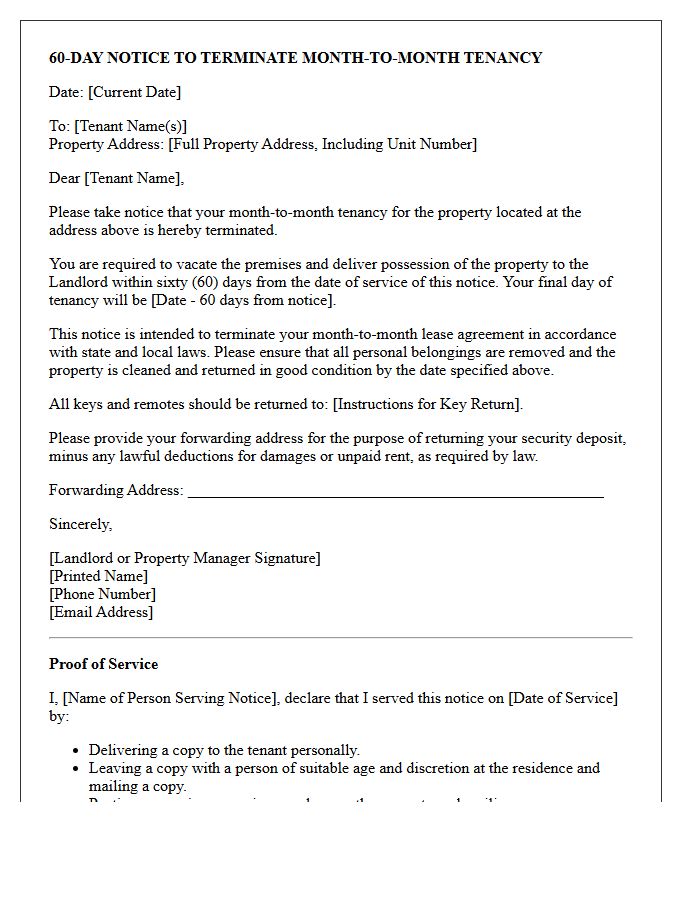
A Landlord Sixty-Day Month-to-Month Tenancy Termination Letter is a formal legal notice used to end a rental agreement without specific cause. In many jurisdictions, this 60-day notice is mandatory if a tenant has resided in the property for one year or longer. The document must clearly state the final termination date and be served according to local housing laws to remain valid. It provides tenants ample time to secure new housing while allowing property owners to regain possession of their investment for relocation, sales, or renovations.
No-Fault Sixty-Day Notice to Terminate Tenancy Letter
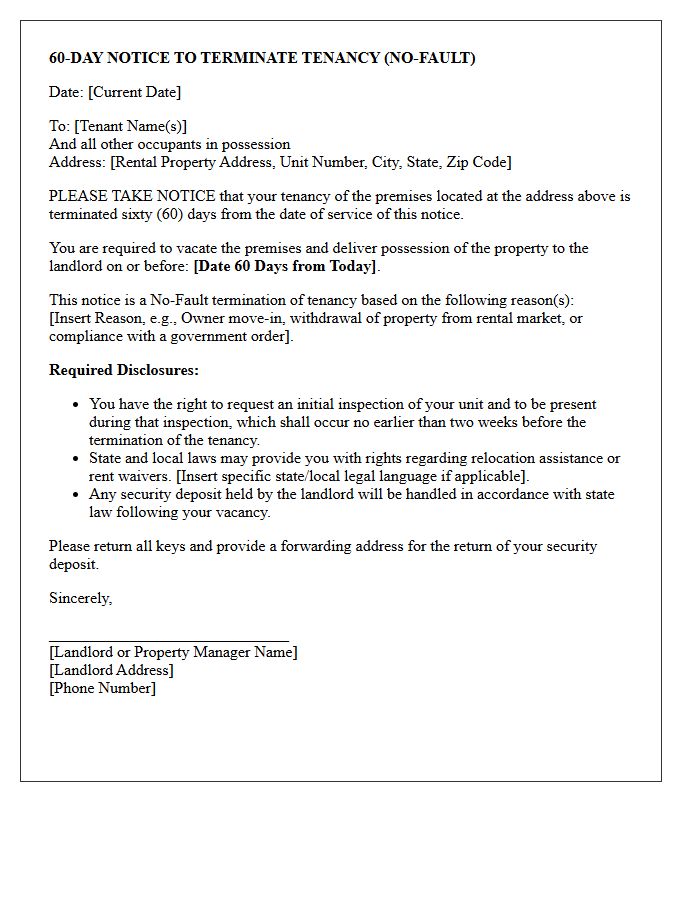
A No-Fault Sixty-Day Notice to Terminate Tenancy is a legal document used by California landlords to end a month-to-month lease when a tenant has resided in the unit for one year or more. Under the Tenant Protection Act, the owner must state a "just cause" reason, such as owner move-in or substantial remodeling. Failure to provide this written notice or include required language regarding relocation assistance can invalidate the termination. This notice is essential for ensuring a lawful transition while protecting tenant rights under state housing regulations.
Multi-Family Property Sixty-Day Lease Termination Letter
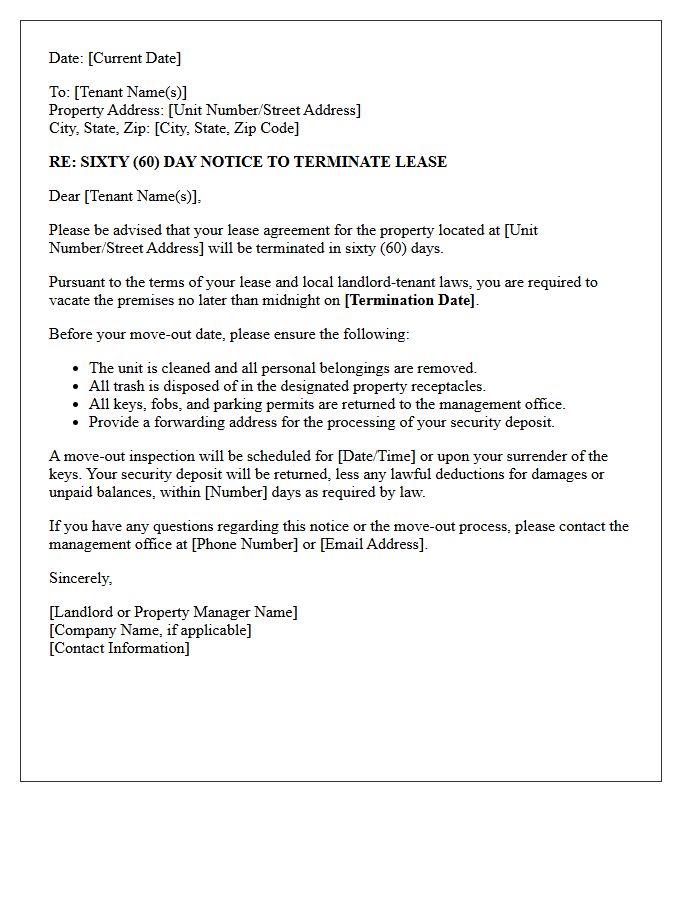
A Sixty-Day Lease Termination Letter is a formal legal notice used in multi-family housing to end a month-to-month tenancy. Under many jurisdictions, proper written notice is mandatory when a landlord or tenant chooses to vacate after a long-term residency, typically exceeding one year. This document must clearly state the move-out date and compliance requirements to avoid potential legal disputes or eviction proceedings. Ensuring the letter is delivered according to local landlord-tenant laws is essential for a valid and smooth transition for all parties involved.
Single-Family Home Sixty-Day Month-to-Month Termination Letter
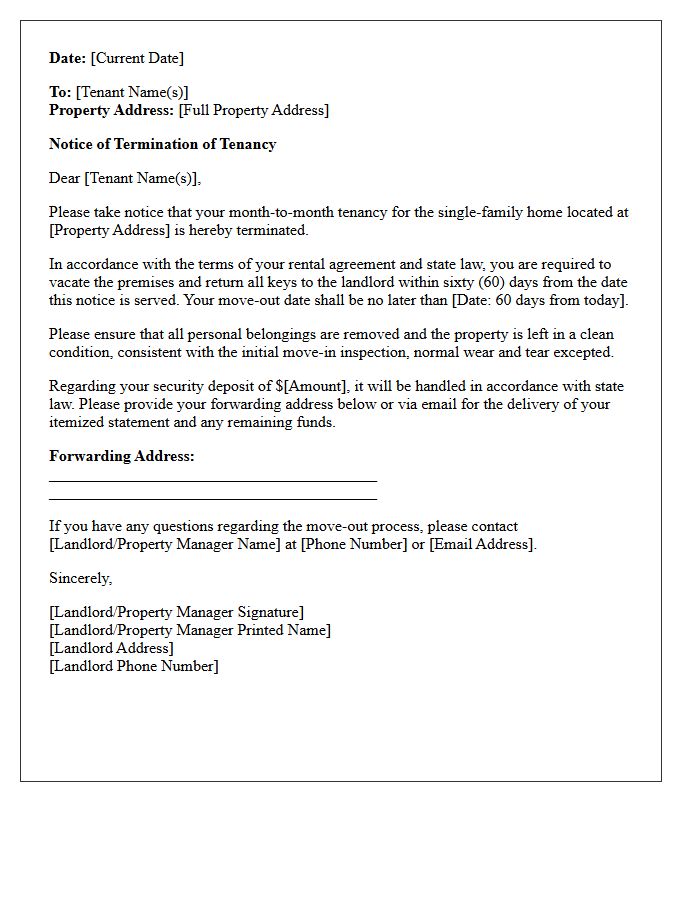
A Single-Family Home Sixty-Day Month-to-Month Termination Letter is a formal legal notice used to end a periodic tenancy. In many jurisdictions, landlords must provide a sixty-day notice period if the tenant has resided in the property for over one year. This document must clearly state the termination date and follow local landlord-tenant laws to ensure validity. Proper delivery is essential to regain possession of the real estate asset legally while protecting the rights of both parties involved in the rental agreement.
Owner Move-In Sixty-Day Tenancy Termination Notice Letter
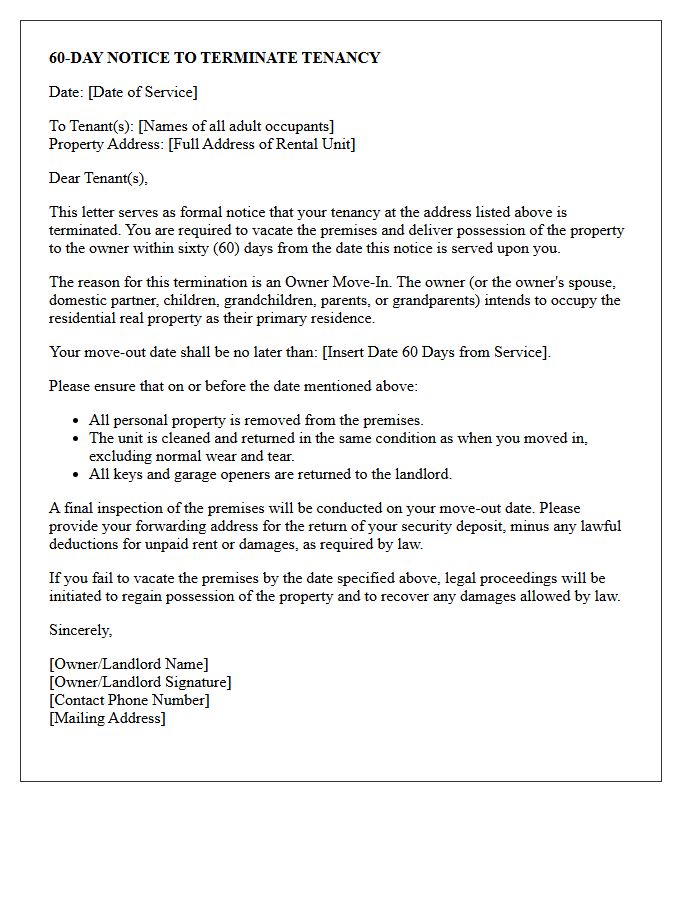
Under California law, an Owner Move-In (OMI) eviction requires a written Sixty-Day Tenancy Termination Notice if the tenant has resided in the property for at least one year. This notice must be served in good faith, intending for the owner or a close relative to occupy the unit as their primary residence. Landlords must strictly follow local just cause ordinances and may be required to provide relocation assistance payments. Failure to comply with specific disclosure requirements or residency duration rules can lead to significant legal penalties for wrongful eviction.
Property Sale Sixty-Day Month-to-Month Termination Letter
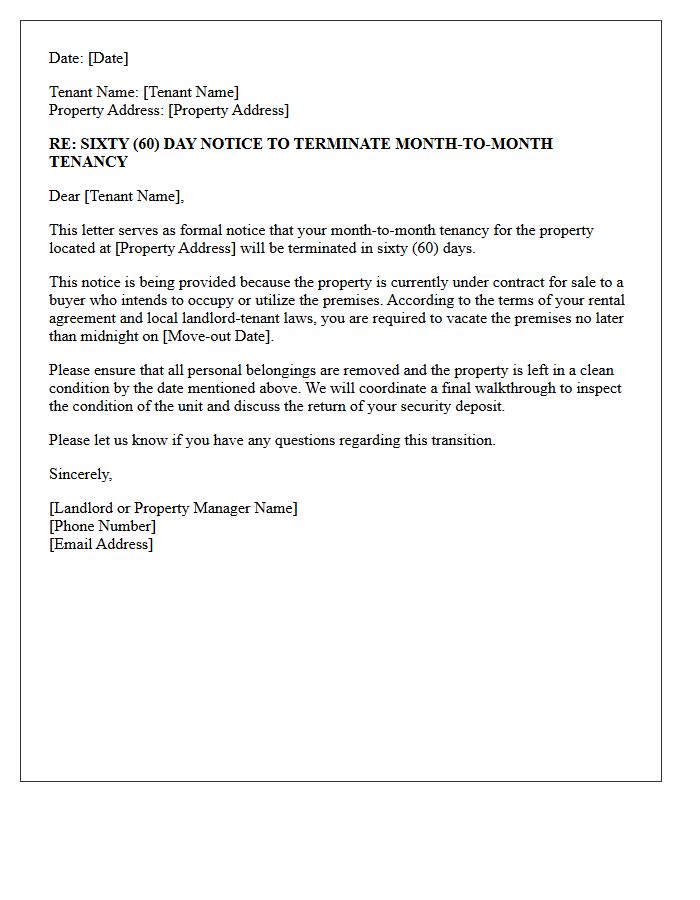
A Sixty-Day Month-to-Month Termination Letter is a legal notice used in a property sale to end a periodic tenancy. In many jurisdictions, if a landlord sells a residential dwelling to a buyer who intends to occupy it, the tenant must be given at least sixty days' notice to vacate. This document must clearly state the termination date and comply with local housing laws to be enforceable. Providing timely written notice ensures a smooth ownership transfer and protects the legal rights of both the seller and the resident.
Major Renovation Sixty-Day Tenancy Termination Letter
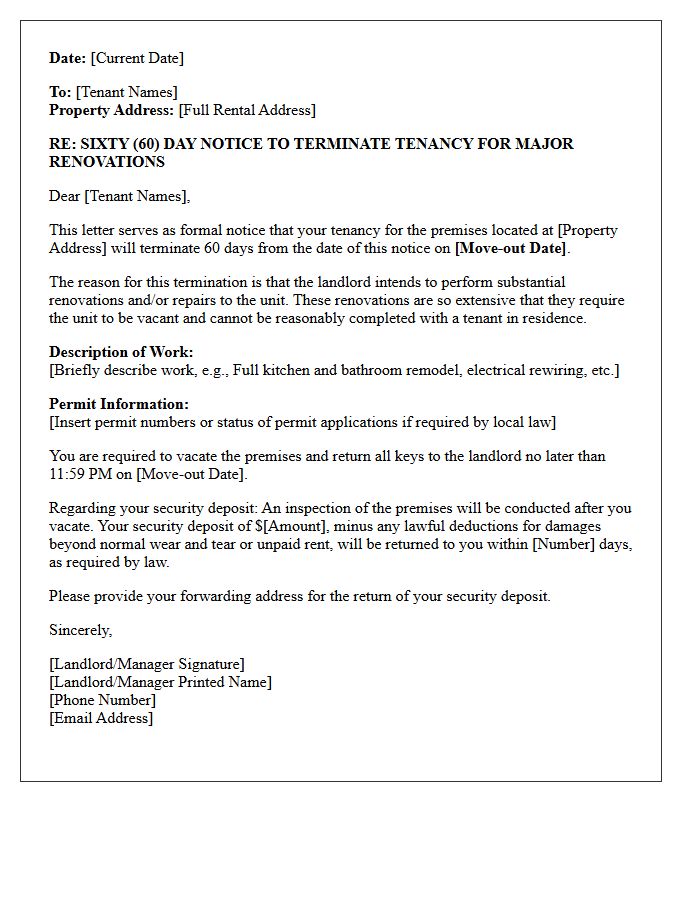
A Major Renovation Sixty-Day Tenancy Termination Letter is a legal notice used by landlords to end a lease when substantial remodeling requires the unit to be vacant. To be valid, the owner must act in good faith and obtain all necessary building permits beforehand. In many jurisdictions, this notice must include a specific description of the planned work and inform tenants of their right to relocation assistance or rent waivers. Tenants should verify local rent control laws to ensure the termination meets all statutory requirements for displacement.
Corporate Portfolio Sixty-Day Month-to-Month Termination Letter
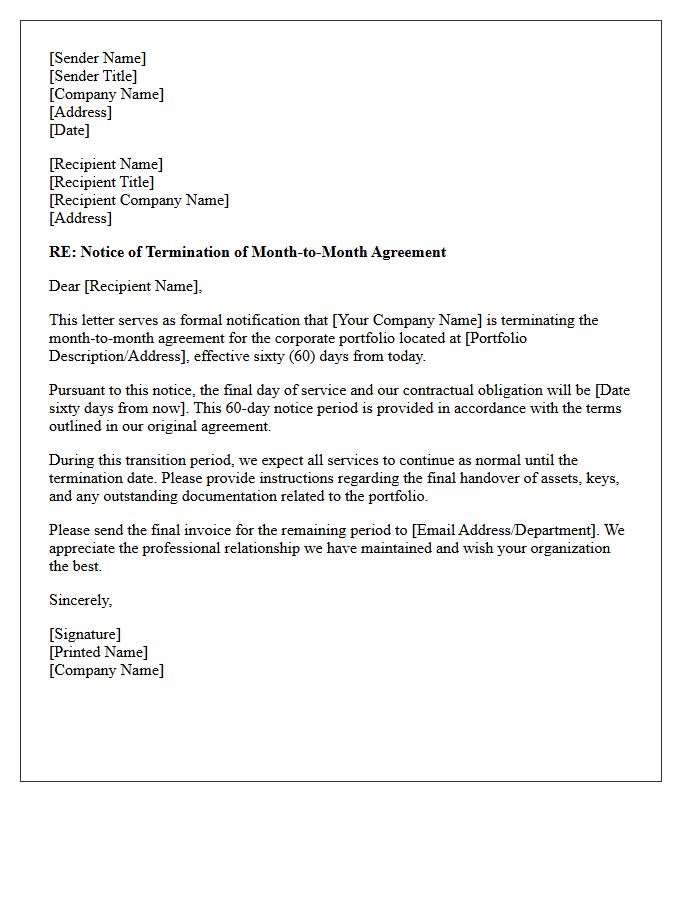
A Corporate Portfolio Sixty-Day Month-to-Month Termination Letter serves as a formal legal notice to end a flexible rental agreement. The 60-day notice period is a critical requirement, ensuring both parties have sufficient time to manage transitions or reallocate assets. This document must clearly state the intent to vacate, the specific termination date, and any obligations regarding the property's condition. Providing this written notification protects the entity from unexpected financial penalties and ensures a structured exit strategy within a professional corporate portfolio management framework.
What is a Sixty-Day Notice to Terminate Month-to-Month Tenancy?
A Sixty-Day Notice to Terminate Month-to-Month Tenancy is a formal legal document used by a landlord to inform a tenant that their periodic lease agreement will end in 60 days. This notice is typically required in many jurisdictions when a tenant has resided in a rental unit for one year or longer.
When is a landlord required to provide a 60-day notice instead of a 30-day notice?
In most states with these protections, such as California, a landlord must provide a 60-day notice if the tenant has lived in the property for 12 months or more. If the tenancy has lasted less than one year, a 30-day notice is generally sufficient to terminate the month-to-month agreement.
Does a Sixty-Day Notice to Terminate need to state a specific reason for eviction?
In "no-fault" jurisdictions, a landlord may not need to provide a reason; however, many modern rent control laws and "just cause" eviction statutes now require landlords to state a specific, legal reason for termination even with a 60-day notice. It is essential to check local municipal codes to determine if a stated cause is required.
How must a 60-day notice be served to a tenant to be legally valid?
To be legally enforceable, the notice must typically be served via personal delivery, substituted service (leaving it with a competent person and mailing a copy), or via certified mail with a return receipt requested. Posting the notice on the door without mailing a secondary copy is often considered insufficient in a court of law.
What happens if a tenant does not move out after the 60-day period expires?
If the tenant remains in the property after the 60 days have passed, the landlord cannot forcibly remove them or change the locks. Instead, the landlord must file an unlawful detainer lawsuit to obtain a court order for eviction, using the expired 60-day notice as the legal basis for the filing.

Comments