
Property owners and tenants may receive a Notice of Entry for Environmental Testing and Remediation to allow specialists to assess and mitigate potential hazards. This formal document ensures legal compliance while protecting public health and property safety through necessary soil, air, or water quality evaluations. Understanding your rights during this process is essential. To assist you, below are some ready to use templates.
Image cover: Environmental Testing and Remediation: Access Notice Guide and Templates
Letter Samples List
- Notice of Entry Letter for Mold Testing and Remediation
- Notice of Entry Letter for Asbestos Inspection and Removal
- Lead-Based Paint Environmental Testing Notice Letter
- Indoor Air Quality Assessment Notice of Entry Letter
- Radon Gas Testing and Remediation Entry Notice Letter
- Notice of Entry Letter for Soil Contamination Sampling
- Water Quality Testing and Environmental Remediation Letter
- Hazardous Material Inspection Notice of Entry Letter
- Phase Two Environmental Site Assessment Notice Letter
- Emergency Environmental Remediation Notice of Entry Letter
- Underground Storage Tank Testing Entry Notice Letter
- Notice of Entry Letter for Groundwater Contamination Testing
- Routine Environmental Compliance Inspection Notice Letter
Notice of Entry Letter for Mold Testing and Remediation
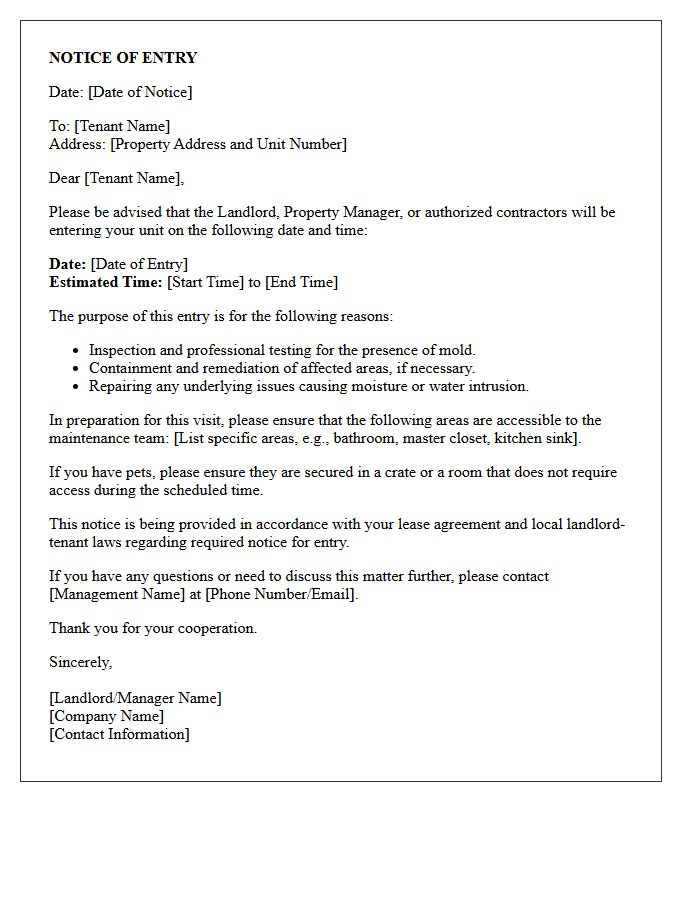
A Notice of Entry Letter is a formal legal document informing tenants that a landlord or specialist will enter the premises for mold testing and remediation. This notice must comply with local housing laws, typically requiring a 24 to 48-hour warning. It ensures transparency regarding the scope of work, potential chemical use, and necessary workspace preparations. Understanding your rights during this process is essential to ensure indoor air quality standards are met while maintaining your privacy and safety within the rental property.
Notice of Entry Letter for Asbestos Inspection and Removal
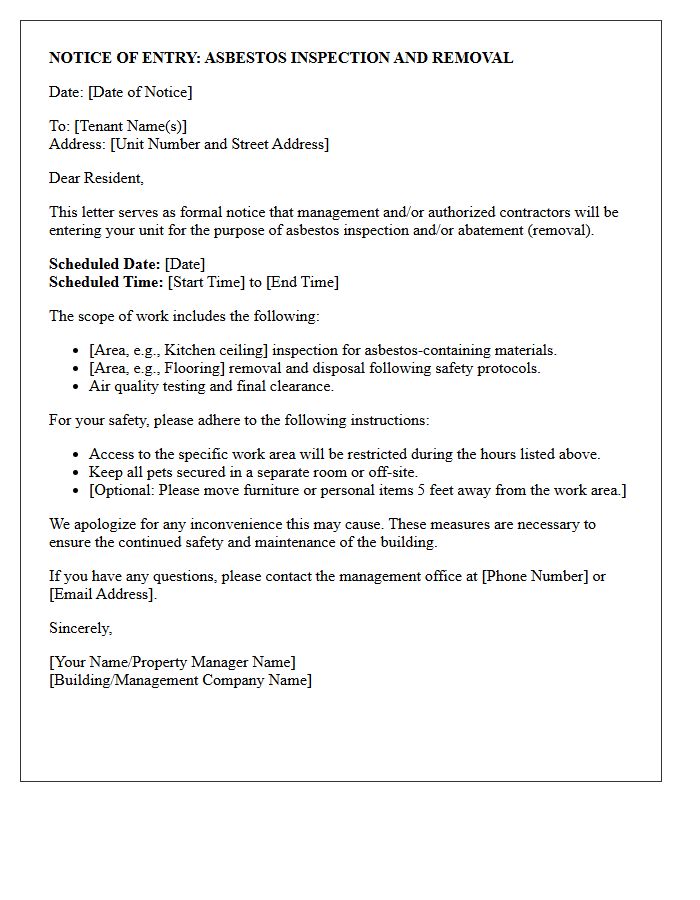
A Notice of Entry Letter is a legal requirement informing tenants that landlords or contractors must access the property for asbestos inspection and removal. It must specify the exact date and duration of the work to ensure safety and compliance. Since asbestos fibers pose health risks, the notice provides essential time for residents to prepare or vacate the area. Reviewing this document carefully is vital to understand protective measures and legal rights regarding property access during hazardous material abatement procedures.
Lead-Based Paint Environmental Testing Notice Letter
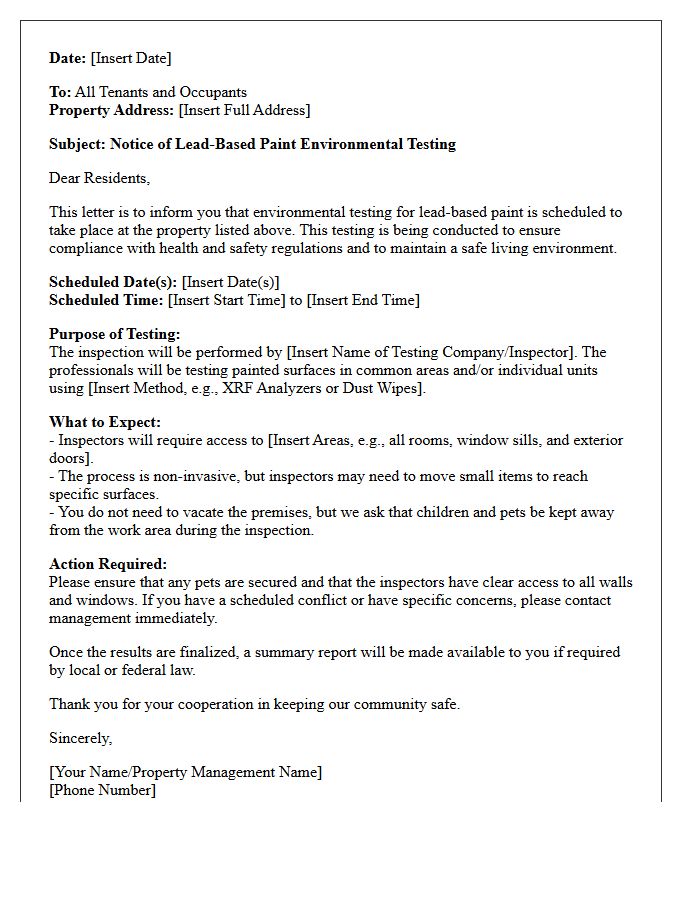
A Lead-Based Paint Environmental Testing Notice Letter is a critical document informing residents of upcoming professional lead inspections. Federal law requires landlords to provide this formal notification before testing older properties built before 1978. The notice outlines the scheduled date, the specific areas to be tested, and safety precautions to follow. Understanding this document is essential for maintaining regulatory compliance and ensuring occupant safety. If lead hazards are identified, the results must be disclosed to current and future tenants to mitigate potential health risks associated with lead exposure.
Indoor Air Quality Assessment Notice of Entry Letter
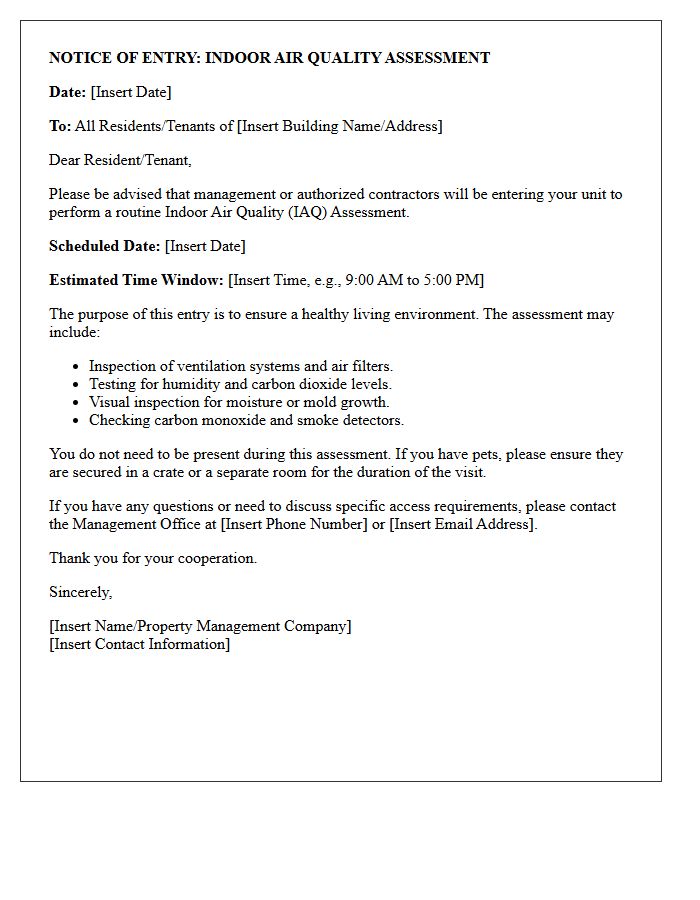
An Indoor Air Quality Assessment Notice of Entry is a formal document notifying tenants that professionals will enter their unit to evaluate environmental conditions. This letter ensures compliance with local housing laws and lease agreements by providing mandatory advance notice, typically 24 to 48 hours. It highlights the assessment's goal to identify potential contaminants like mold, allergens, or VOCs. To prepare, residents should ensure clear access to vents and windows. This proactive measure is essential for maintaining a healthy living environment and protecting the building's structural integrity through regular monitoring.
Radon Gas Testing and Remediation Entry Notice Letter
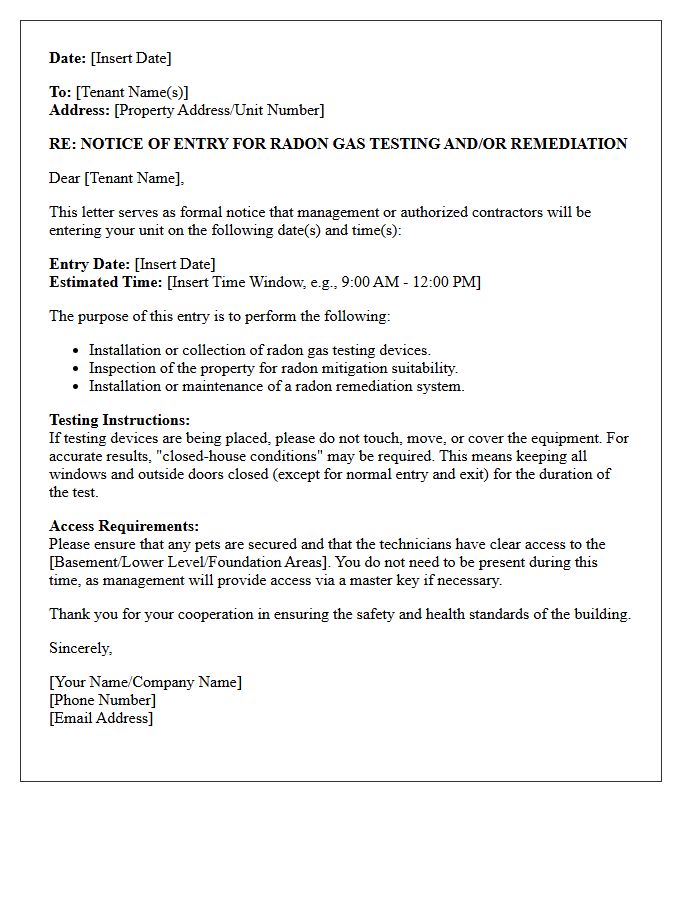
A Radon Gas Testing and Remediation Entry Notice Letter is a formal document notifying tenants of upcoming safety inspections or mitigation work. It is essential for property managers to provide clear notice regarding the date, time, and scope of access required. Testing ensures indoor air quality is safe from radioactive gas, while remediation addresses elevated levels. Tenants should ensure unobstructed access to the lowest habitable areas for accurate sensor placement. Compliance with local tenant-landlord laws is necessary to ensure legal entry while prioritizing the health and safety of all building occupants.
Notice of Entry Letter for Soil Contamination Sampling
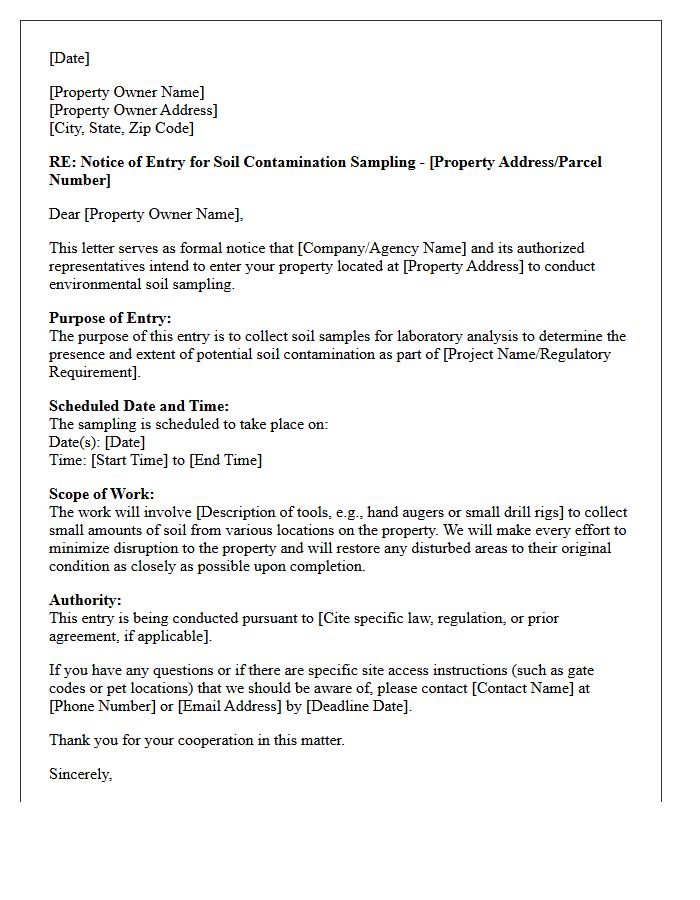
A Notice of Entry Letter is a legal document requesting property access for soil contamination sampling. It informs owners that environmental experts need to collect earth samples to test for pollutants or hazardous substances. This process is crucial for environmental due diligence and public safety. The notice typically outlines the specific areas of interest, the sampling methods used, and the scheduled timeframe. Granting access helps identify potential liability issues or health risks, ensuring the land meets safety standards for residential or commercial use.
Water Quality Testing and Environmental Remediation Letter
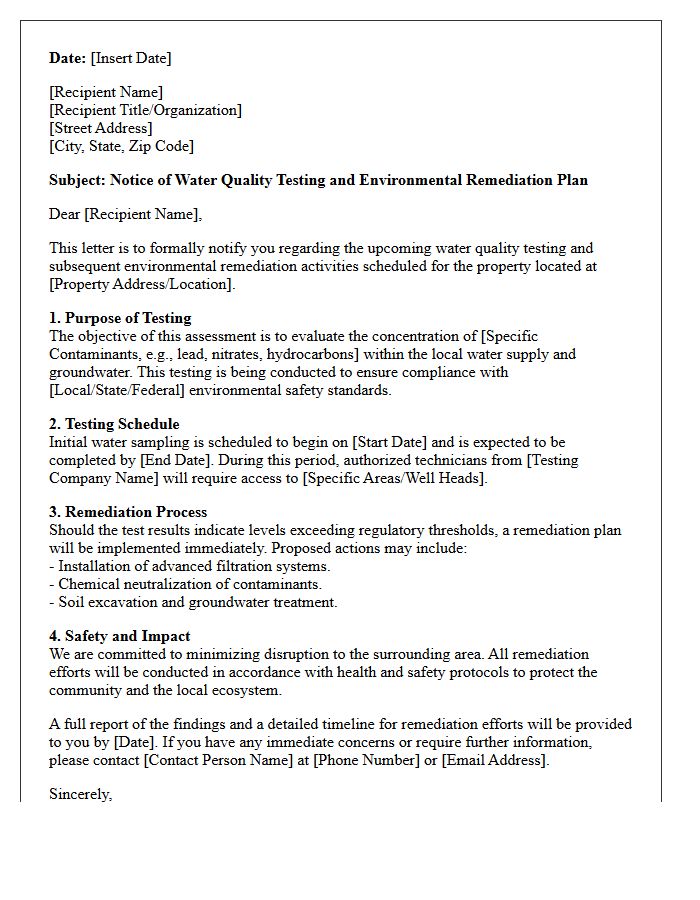
A Water Quality Testing and Environmental Remediation Letter serves as critical documentation verifying that water sources meet safety standards or detailing necessary decontamination steps. These reports identify hazardous pollutants like lead, bacteria, or chemicals, ensuring regulatory compliance and public health protection. If contaminants are detected, the letter outlines specific remediation strategies to restore environmental safety. Property owners and developers rely on these findings to mitigate environmental liabilities and ensure a secure, potable water supply during real estate transactions or industrial site restoration projects.
Hazardous Material Inspection Notice of Entry Letter
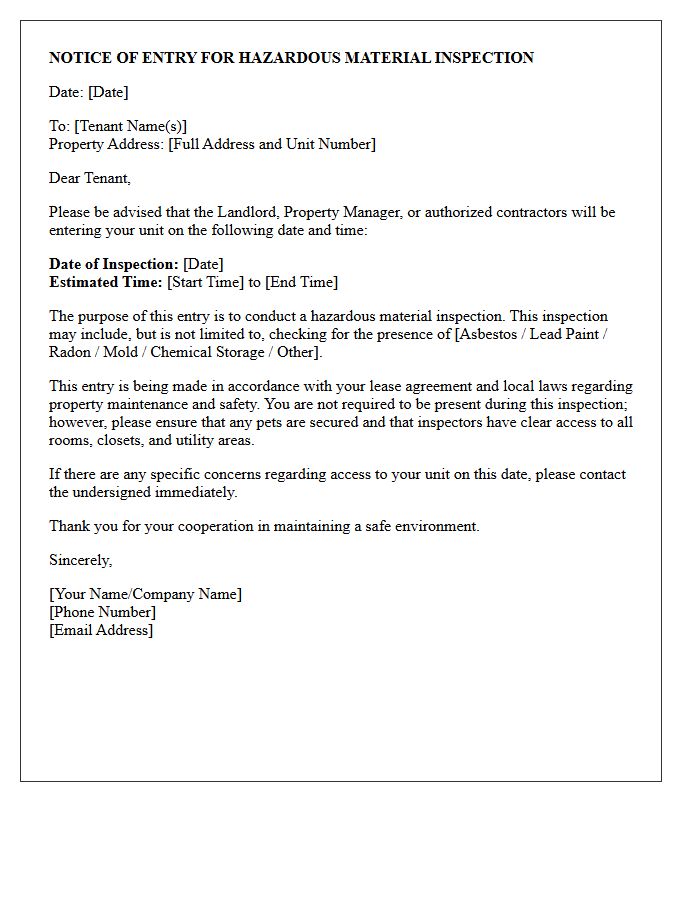
A Hazardous Material Inspection Notice of Entry Letter is a formal notification sent by authorities or property owners to inform residents of an upcoming safety evaluation. The primary goal is to identify environmental risks like lead, asbestos, or chemical leaks. Residents must provide access to the premises on the specified date to ensure compliance with health and safety regulations. Timely cooperation is essential to maintain a secure living environment and address potential hazards. Understanding your rights and responsibilities during this process ensures legal compliance and prioritizes the well-being of all occupants within the building.
Phase Two Environmental Site Assessment Notice Letter
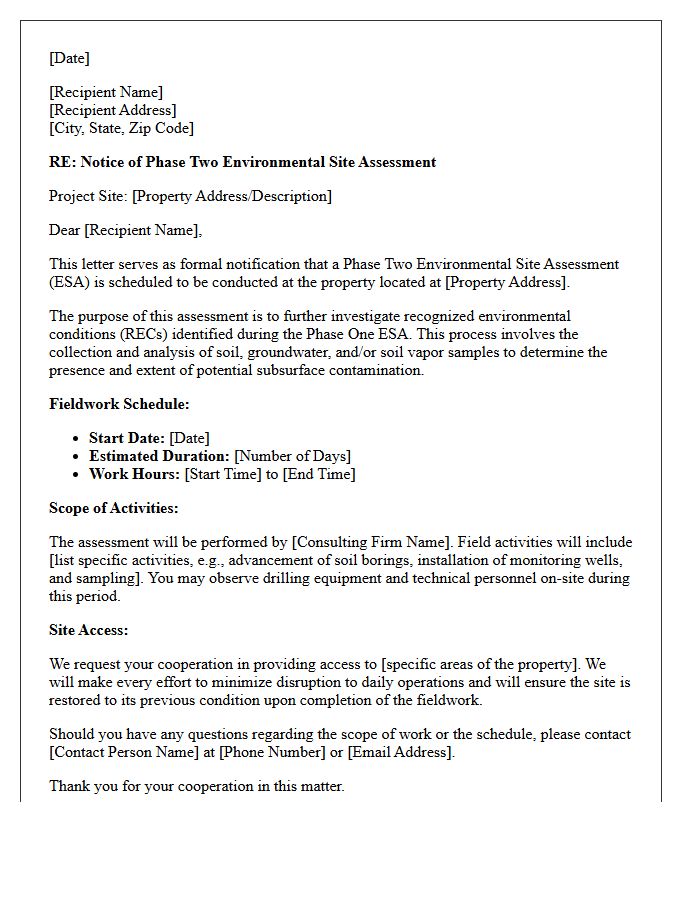
A Phase Two Environmental Site Assessment Notice Letter informs property owners that subsurface testing is required due to identified environmental risks. This formal notice typically highlights the presence of recognized environmental conditions (RECs) found during Phase One. The investigation involves collecting soil, groundwater, or vapor samples to determine if contamination exceeds regulatory limits. Understanding this letter is crucial for assessing potential remediation costs, legal liabilities, and property value impacts. It serves as a vital step in due diligence for real estate transactions, financing, or regulatory compliance.
Emergency Environmental Remediation Notice of Entry Letter
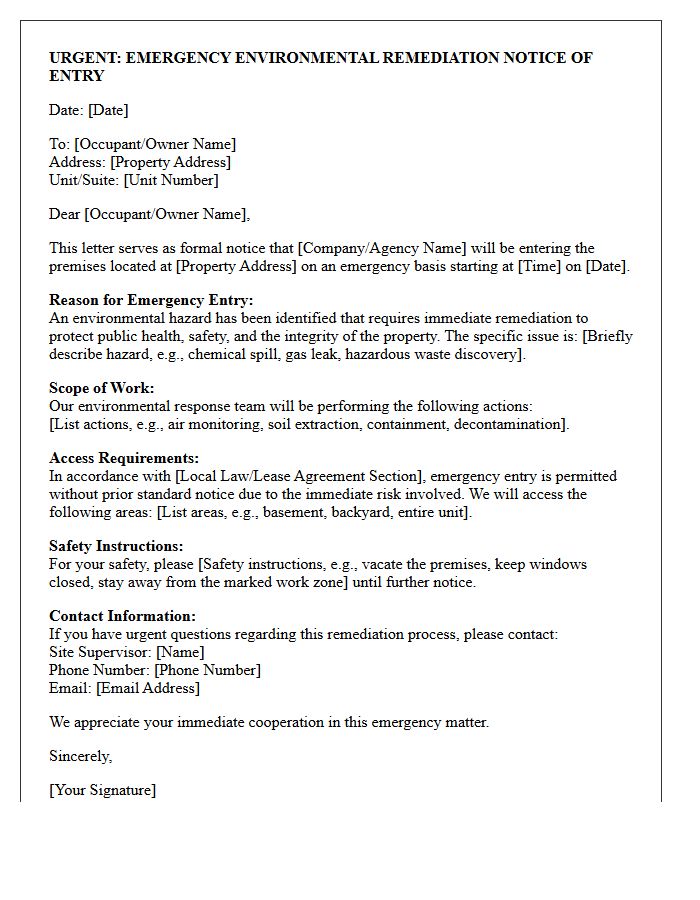
An Emergency Environmental Remediation Notice of Entry is a critical legal document informing property owners of urgent access requirements to mitigate immediate hazards. It typically outlines the nature of the environmental threat, such as chemical spills or hazardous leaks, and the necessary cleanup actions. This letter grants authorized personnel the right to enter private property without standard notice periods to protect public health and safety. Property owners should review the notice to understand their rights, liability implications, and the specific scope of the remediation work being performed on their land.
Underground Storage Tank Testing Entry Notice Letter
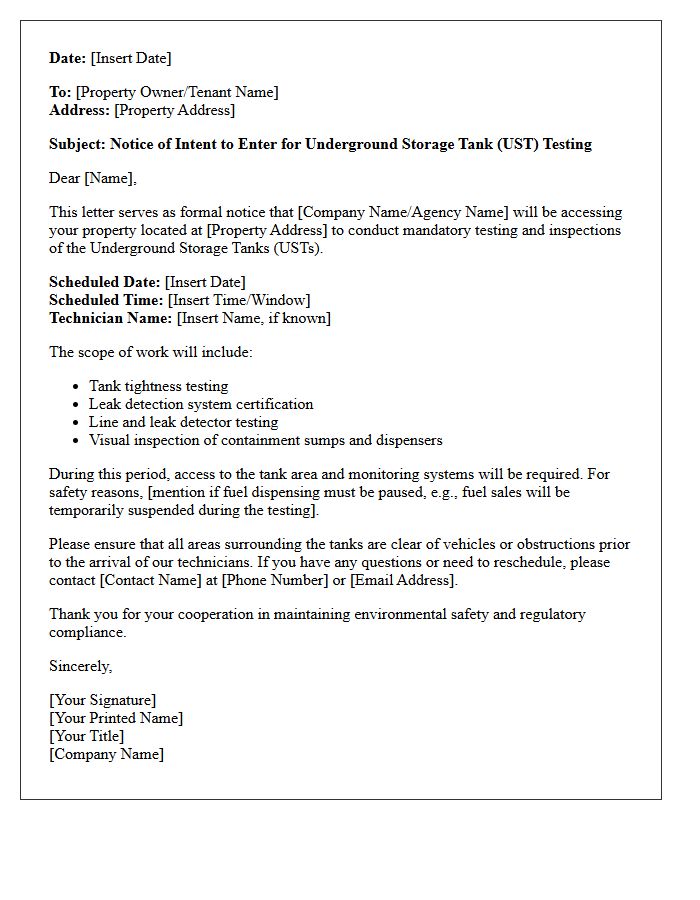
An Underground Storage Tank (UST) Testing Entry Notice Letter is a formal notification sent to property owners or occupants before required environmental inspections. It outlines the scheduled date for compliance testing, leak detection, and equipment maintenance to ensure safety standards. Property access is mandatory for technicians to perform pressure tests and spill bucket evaluations. This document serves as legal notice to minimize business disruptions while ensuring environmental protection and preventing soil contamination. Reviewing the notice helps facility managers prepare for temporary system shutdowns during the safety assessment process.
Notice of Entry Letter for Groundwater Contamination Testing
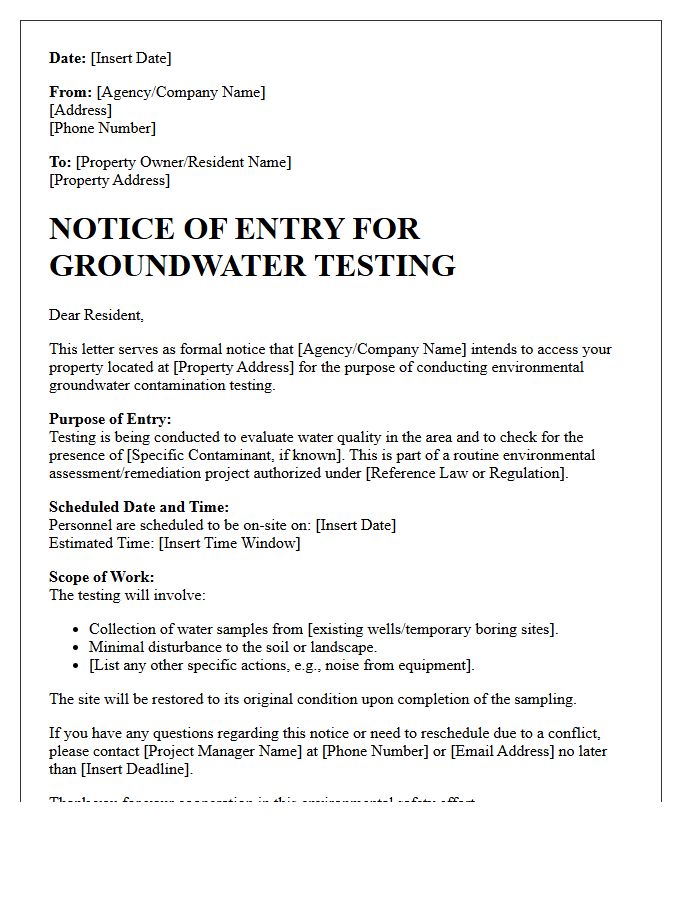
A Notice of Entry is a legal document informing property owners that environmental agencies or consultants require access to conduct groundwater contamination testing. This notice outlines the specific sampling activities, tools, and schedule intended for your site. Receiving this letter does not necessarily mean your land is polluted; rather, it often signifies environmental due diligence or proximity to a known plume. Reviewing the notice is essential to understand your legal rights, liability protections, and the remediation timeline to ensure your property remains safe and compliant with environmental regulations.
Routine Environmental Compliance Inspection Notice Letter
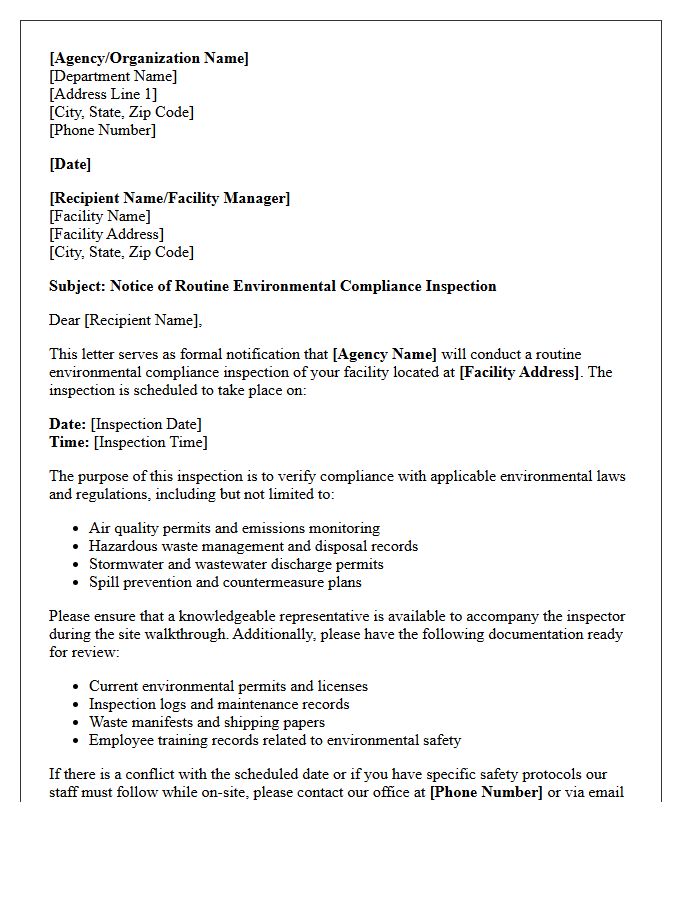
A Routine Environmental Compliance Inspection Notice Letter informs facilities that regulators will assess their adherence to environmental laws and permits. Receiving this official notification allows management to organize necessary records, ensure site safety, and prepare technical personnel for the walkthrough. To maintain status, ensure all waste manifests, discharge logs, and emission data are readily available. Proactive preparation demonstrates operational transparency and helps identify potential issues before they become violations. Treat this document as a tool for regulatory oversight and an opportunity to verify your facility's long-term sustainability and legal standing.
What is a Notice of Entry for environmental testing and remediation?
A Notice of Entry is a formal legal document issued by a property owner, government agency, or environmental firm to inform occupants that authorized personnel will access the premises to conduct soil, air, or water sampling and perform necessary cleanup activities.
How much advance notice must be given before environmental testing begins?
Typically, a minimum of 24 to 72 hours' notice is required before entry, though specific timeframes may vary based on local landlord-tenant laws, municipal regulations, or the urgency of the environmental hazard being addressed.
Do I need to be present during the environmental remediation process?
While you are not usually required to be present, you have the right to be there during the scheduled window. The Notice of Entry will specify the date and estimated duration of the testing to help you plan for any temporary displacement or restricted access to specific areas.
What types of activities are performed during an environmental site entry?
Activities may include the installation of monitoring wells, collecting indoor air quality samples, testing for lead or asbestos, or the removal of contaminated materials. The notice should outline the specific scope of work to be performed on your property.
Can I refuse entry to environmental contractors or inspectors?
Generally, you cannot refuse entry if the request complies with legal notice requirements and is for essential environmental safety or regulatory compliance. Refusal may lead to legal action or the issuance of a court order, especially if the testing is mandated by environmental protection laws.

Comments