
Managing inconsistent cash flow is challenging for property owners. A Notice to Vacate for Repeated Late Rent Payments serves as a formal legal warning when tenants habitually miss deadlines despite prior notices. This document protects your investment by initiating the lease termination process according to local laws. To simplify your communication, below are some ready to use templates.
Image cover: Professional Notice Templates for Late Rent and Eviction Warning
Letter Samples List
- Notice to Vacate Letter for Chronic Late Rent Payments
- Repeated Late Rent Eviction Notice Letter
- Lease Termination Letter for Habitual Late Payment
- Final Notice to Vacate Letter Due to Tardy Rent
- Property Management Letter for Eviction Due to Late Rent
- Notice to Quit Letter for Repeated Delinquent Rent
- Habitual Late Rent Lease Cancellation Letter
- Notice of Eviction Letter for Continuous Late Payments
- Tenant Dismissal Letter for Recurring Rent Delinquency
- End of Tenancy Letter for Chronic Rent Default
- Demand to Vacate Letter for Repeatedly Late Rent
- Lease Forfeiture Letter for Ongoing Late Rent Issues
- Property Manager Notice to Vacate Letter for Late Rent
- Termination of Tenancy Letter for Frequent Rent Delays
- Final Demand to Surrender Premises Letter for Late Rent
Notice to Vacate Letter for Chronic Late Rent Payments
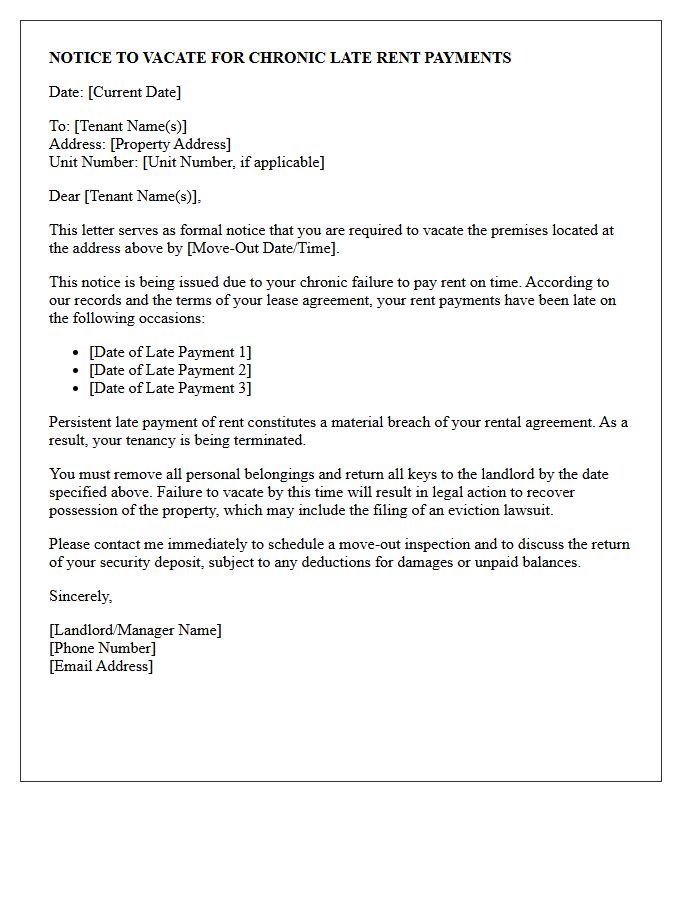
A Notice to Vacate for chronic late payments is a formal legal document issued by a landlord to terminate a tenancy. Unlike a standard "pay or quit" notice, this letter addresses a repeated breach of contract regarding timing. It serves as official evidence that the tenant has failed to meet payment deadlines consistently, justifying an eviction filing. Landlords must ensure the notice complies with local housing laws and specifies the termination date to remain legally valid. Proper documentation of all past due instances is essential for a successful court resolution.
Repeated Late Rent Eviction Notice Letter
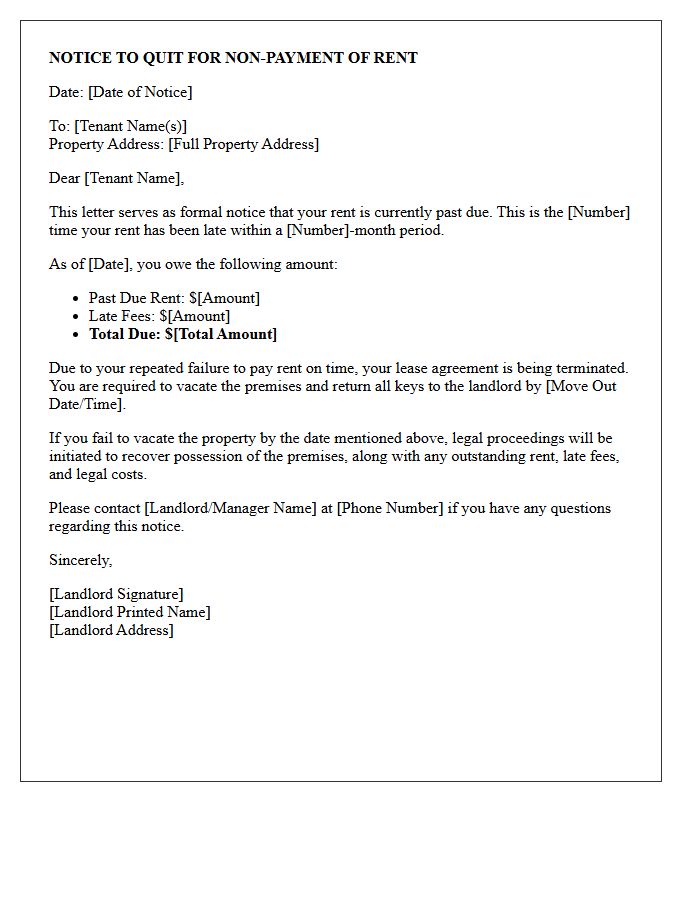
A Repeated Late Rent Eviction Notice is a formal legal document issued to tenants who habitually fail to pay on time. Unlike a standard notice to pay or quit, this letter addresses chronic delinquency as a lease violation. Even if the balance is eventually settled, landlords may use this record to initiate lease termination based on non-compliance. It serves as essential evidence in court to prove a pattern of behavior. Tenants must understand that consistent untimeliness can lead to permanent removal, regardless of current payment status, depending on local jurisdiction laws.
Lease Termination Letter for Habitual Late Payment
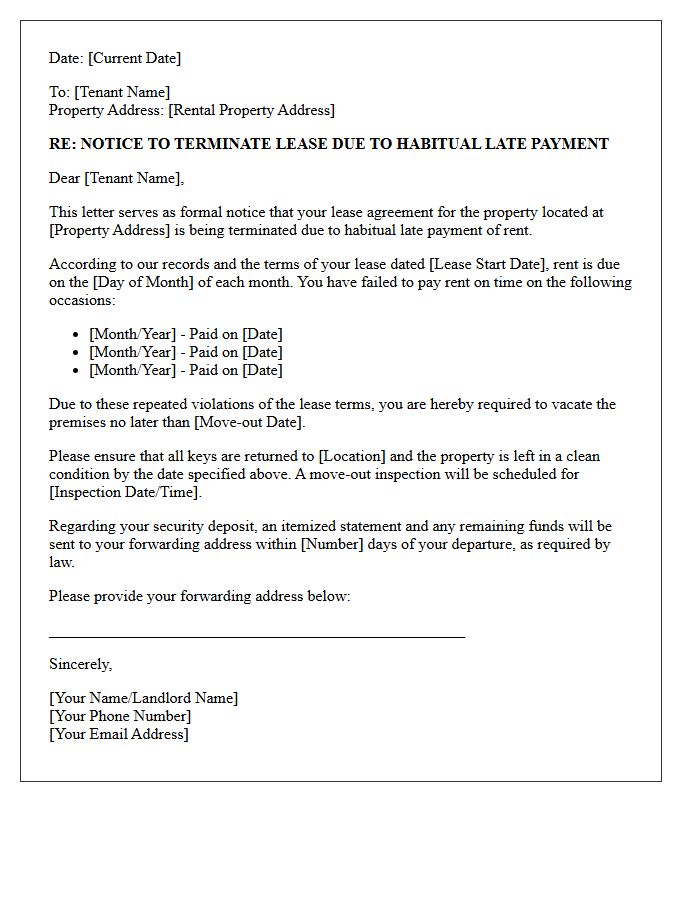
A lease termination letter for habitual late payment is a formal legal notice issued by a landlord to end a rental agreement due to chronic delinquency. This document must clearly state the specific dates of missed or late payments to establish a pattern of breach. Landlords must strictly follow local eviction laws and provide the required notice period. To ensure legal validity, the letter should be delivered via certified mail, serving as essential evidence if court proceedings become necessary to regain possession of the property.
Final Notice to Vacate Letter Due to Tardy Rent
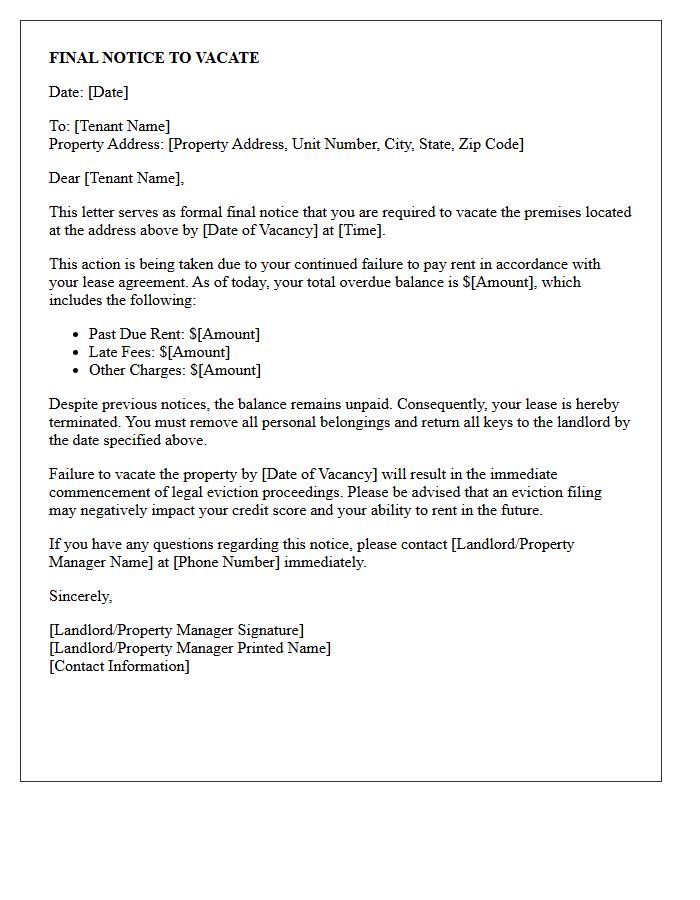
A final notice to vacate is a formal legal document issued when a tenant fails to pay rent on time. It serves as a mandatory eviction warning, informing the occupant that their lease is being terminated due to non-payment. This letter must include the exact overdue balance, the specific move-out date, and instructions for resolving the debt. It is a critical prerequisite for landlords before filing a formal lawsuit in court. Timely communication and legal compliance are essential to protect the rights of both parties during this process.
Property Management Letter for Eviction Due to Late Rent
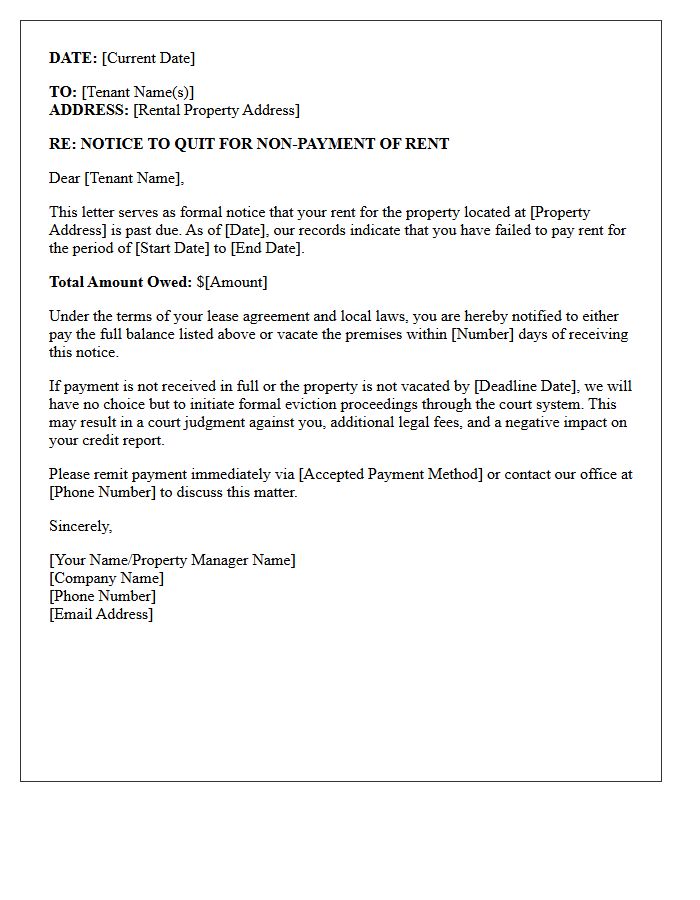
A property management letter for eviction due to late rent is a formal legal notice served when a tenant fails to pay on time. It acts as an official demand for payment within a specific timeframe, typically three to five days, before court action begins. This document must clearly state the total overdue balance, applicable late fees, and the deadline to avoid lease termination. Accurate documentation and adherence to local landlord-tenant laws are essential to ensure the notice is legally enforceable during the eviction process.
Notice to Quit Letter for Repeated Delinquent Rent
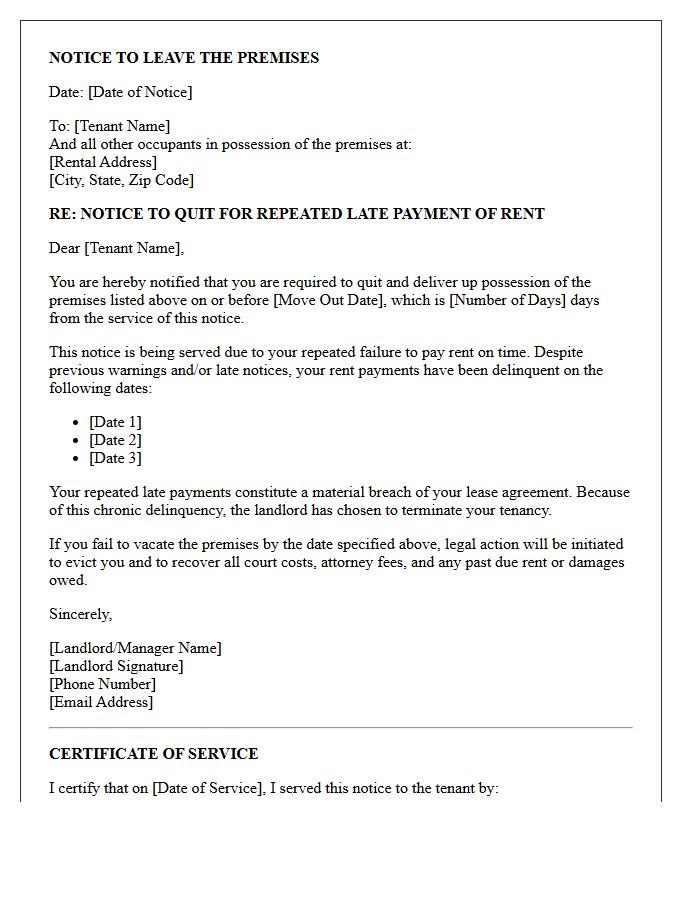
A Notice to Quit for repeated delinquent rent is a formal legal document issued by landlords when a tenant habitually fails to pay rent on time. Unlike a standard late notice, this letter specifically addresses a chronic pattern of late payments, often serving as a final warning or a prerequisite for eviction proceedings. Depending on local statutes, it may offer a final "cure" period or act as a non-curable notice to vacate. Providing clear evidence of past payment dates is essential for maintaining strict compliance with state-specific landlord-tenant laws.
Habitual Late Rent Lease Cancellation Letter
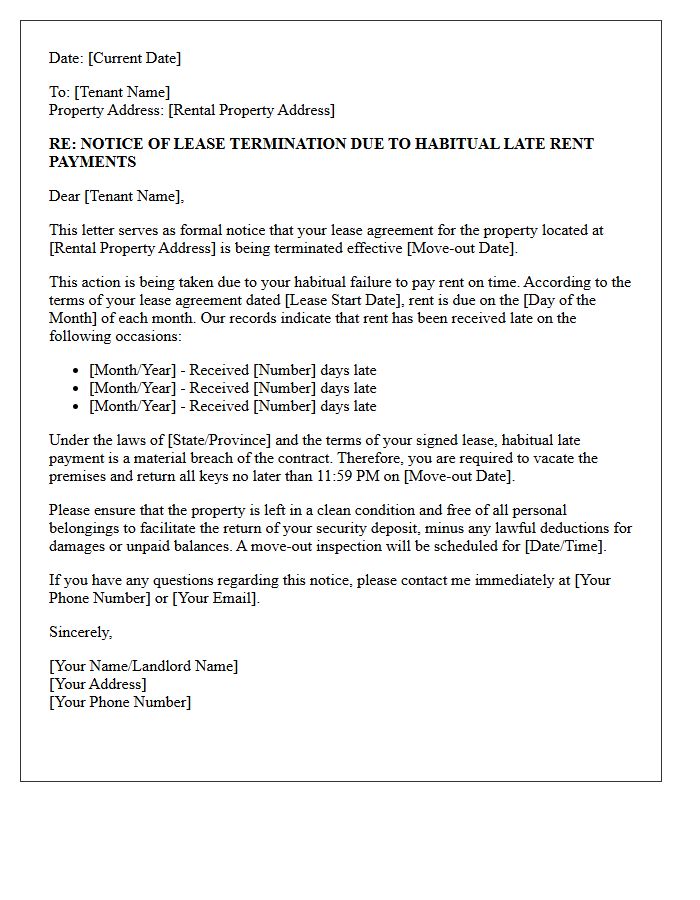
A Habitual Late Rent Lease Cancellation Letter is a formal legal notice issued by a landlord to terminate a tenancy due to chronic payment delays. This document serves as final proof that the tenant has repeatedly violated the lease agreement terms despite prior warnings. It is essential to ensure the letter clearly cites specific dates of late payments and complies with local eviction laws. Sending this notice via certified mail establishes a paper trail, which is crucial if the case proceeds to a formal unlawful detainer action in court.
Notice of Eviction Letter for Continuous Late Payments
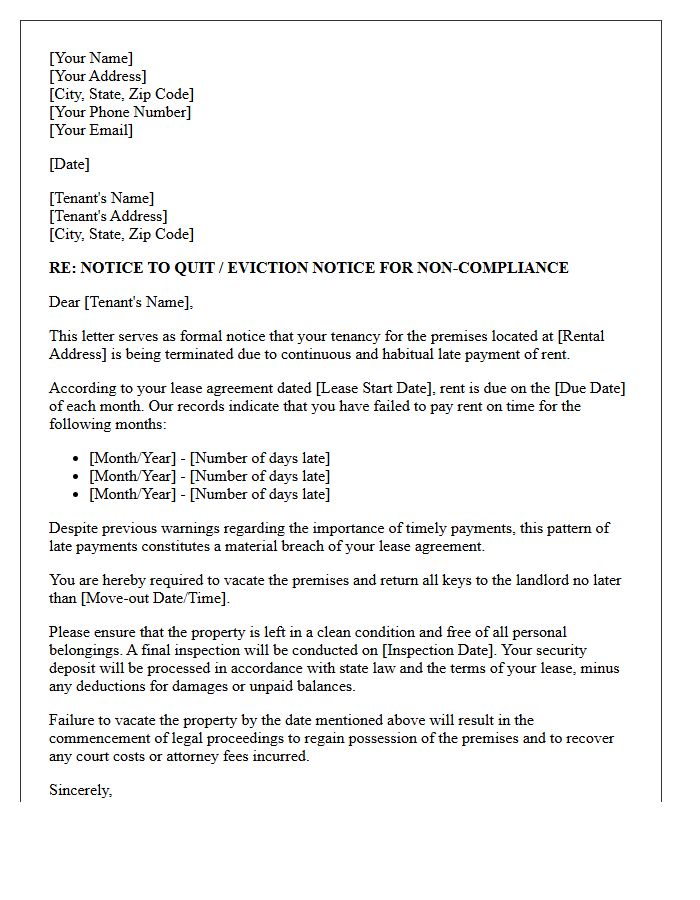
A Notice of Eviction for continuous late payments is a formal legal document issued by a landlord when a tenant repeatedly fails to pay rent on time. This notice serves as an official warning that the lease agreement is being terminated due to chronic delinquency. It typically outlines the specific dates of missed or late payments and provides a mandatory notice period for the tenant to vacate the premises. Understanding local housing laws is essential, as specific timelines and delivery methods are required to make the eviction legally binding.
Tenant Dismissal Letter for Recurring Rent Delinquency
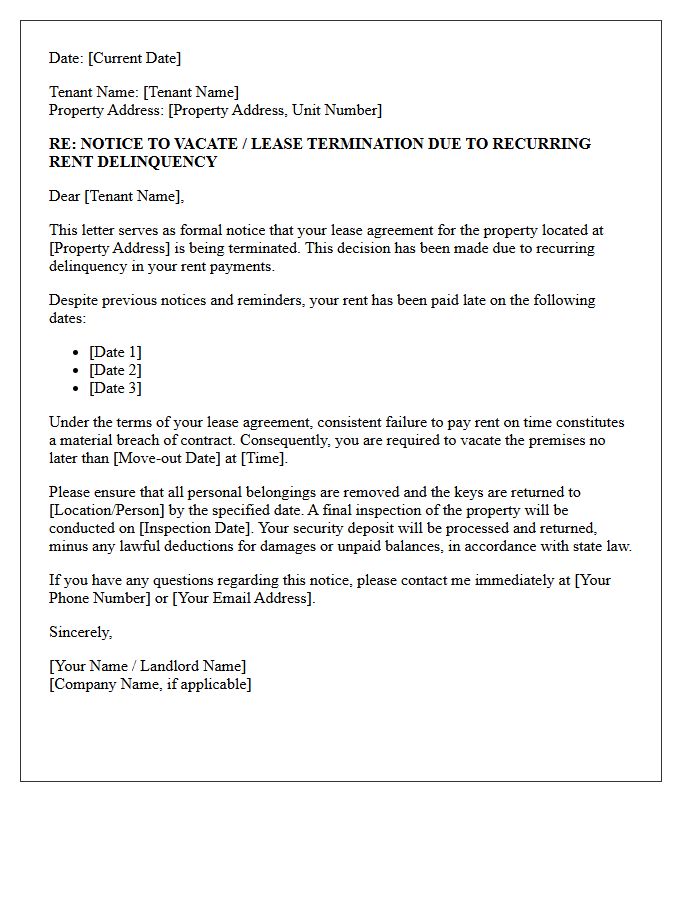
A tenant dismissal letter for recurring rent delinquency is a formal notice to quit issued when a lease agreement is breached. This legal document must clearly outline the chronic late payments and specify the exact amount of outstanding debt. It serves as essential evidence for future eviction proceedings. To ensure compliance, landlords should include the date, a deadline for vacating the premises, and any applicable state-mandated cure periods. Proper delivery methods are vital to confirm the tenant received the termination notice officially.
End of Tenancy Letter for Chronic Rent Default
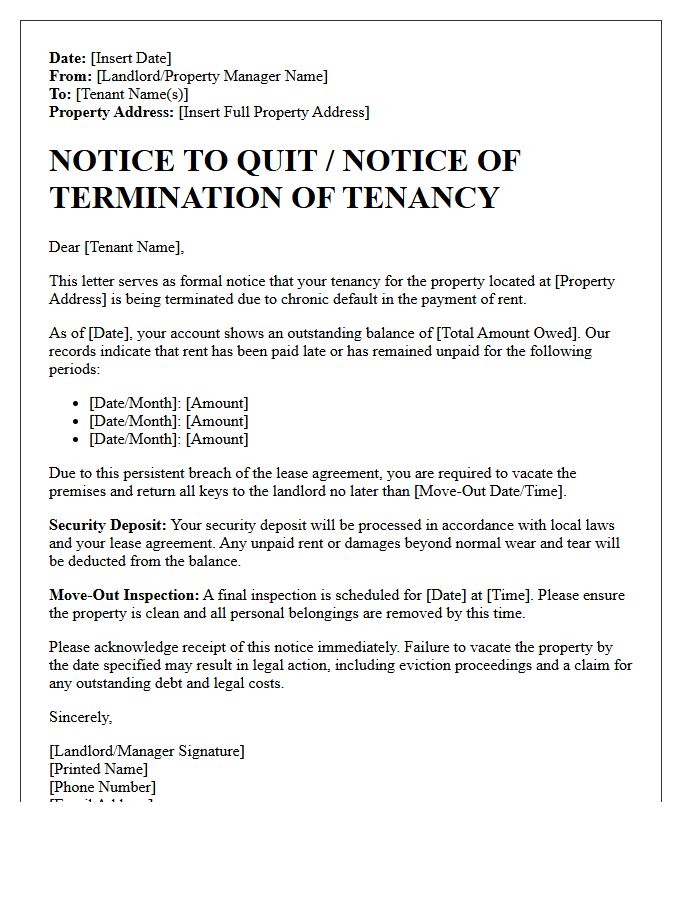
An End of Tenancy Letter for chronic rent default serves as a formal notice to terminate a rental agreement due to persistent non-payment. This legal document must clearly outline the total arrears owed and specify the breach of contract terms. To ensure validity, landlords should reference specific housing acts and provide a clear move-out date. Proper delivery of this notice is the essential first step in the eviction process, protecting the property owner's rights while establishing a timeline for legal possession and debt recovery.
Demand to Vacate Letter for Repeatedly Late Rent
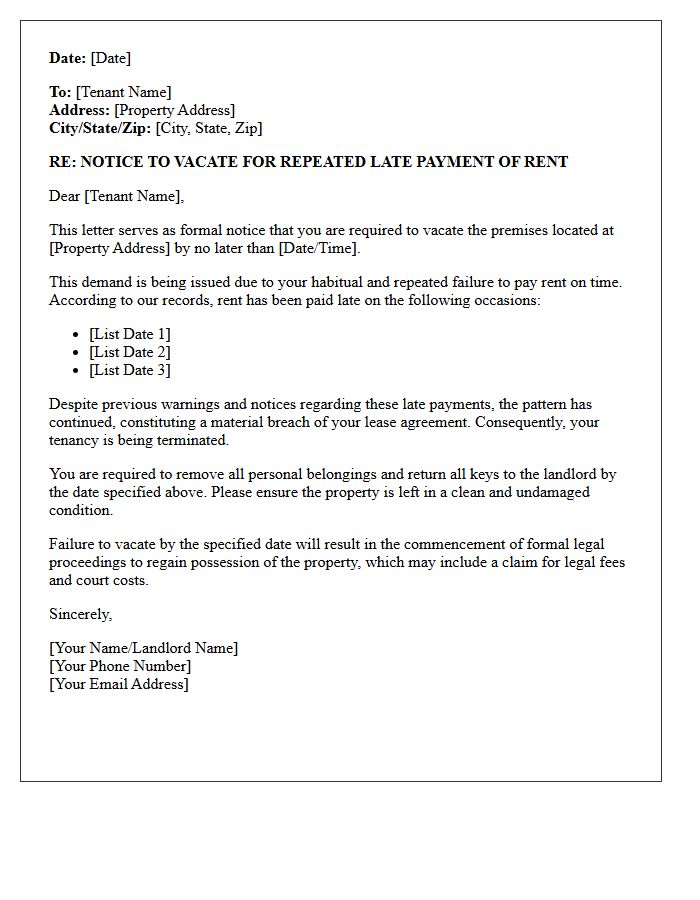
A Demand to Vacate Letter is a formal legal notice issued when a tenant consistently fails to pay rent on time. This document serves as a final warning, notifying the occupant that their lease agreement is being terminated due to chronic delinquency. It outlines the specific dates of late payments and sets a mandatory deadline for moving out to avoid formal eviction proceedings. Properly serving this notice is a critical first step in protecting property rights and ensuring a legal possession of the premises through the judicial system.
Lease Forfeiture Letter for Ongoing Late Rent Issues
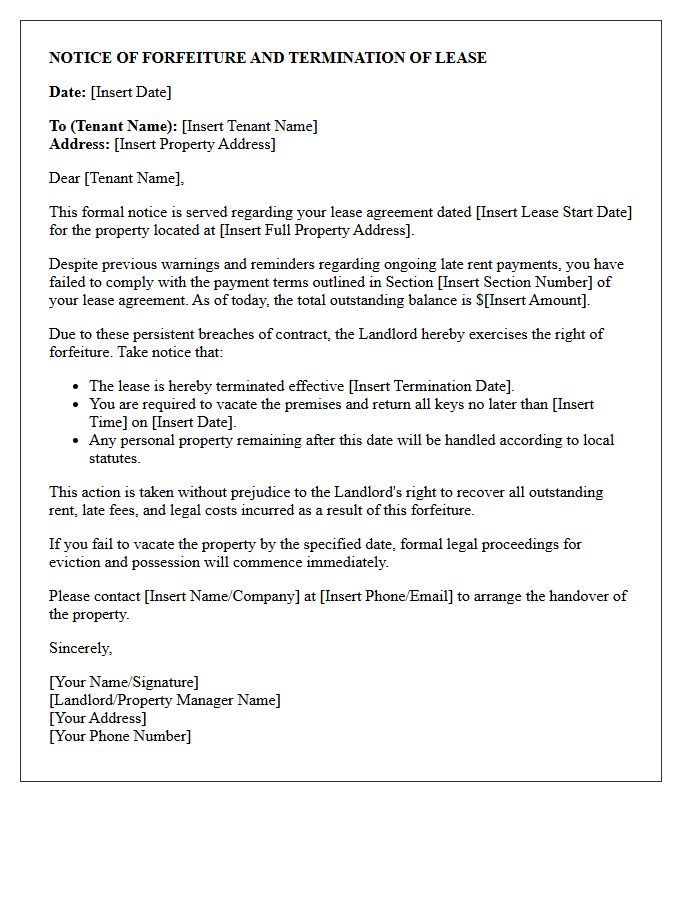
A Lease Forfeiture Letter serves as a formal notice to a commercial tenant regarding persistent payment failures. Under the Law of Property Act, landlords can initiate forfeiture to terminate a lease and recover possession of the premises. This critical document must clearly specify the breach, demand remedial action within a reasonable timeframe, and state the intent to re-enter. Precise wording is essential to avoid waiver of right, which could legally prevent a landlord from reclaiming the property if they accidentally acknowledge the lease's continuation after the breach occurs.
Property Manager Notice to Vacate Letter for Late Rent
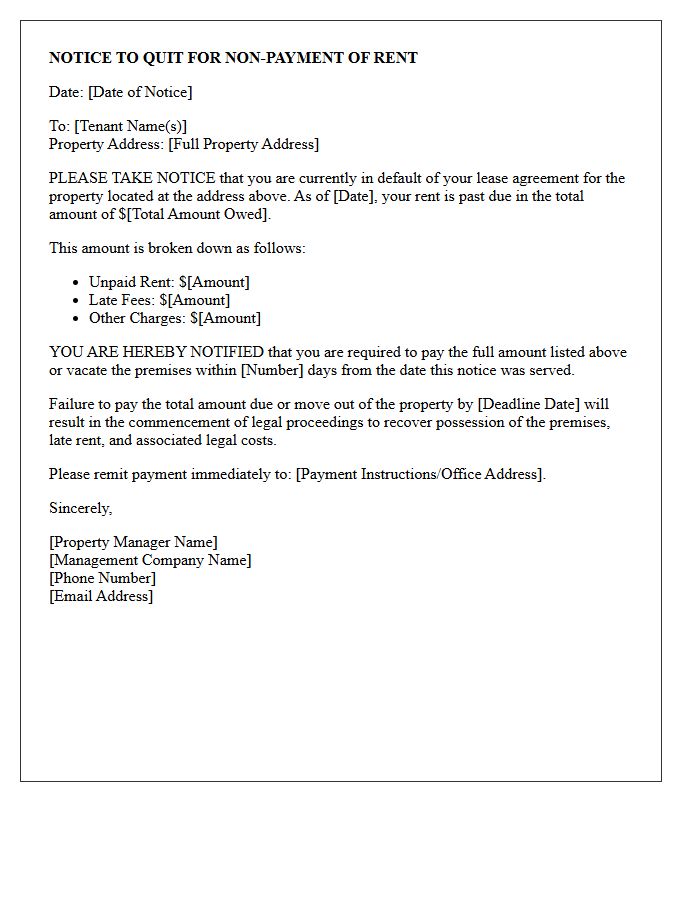
A property manager issues a Notice to Vacate for late rent as a formal legal step to regain possession of a unit. This document serves as a termination notice, informing the tenant they must pay the outstanding balance or leave by a specific deadline. It is a mandatory precursor to the eviction process. To ensure validity, the letter must clearly state the total amount owed, the deadline for compliance, and the consequences of non-payment. Adhering to local landlord-tenant laws is essential to maintain the legal right to pursue further judicial action.
Termination of Tenancy Letter for Frequent Rent Delays
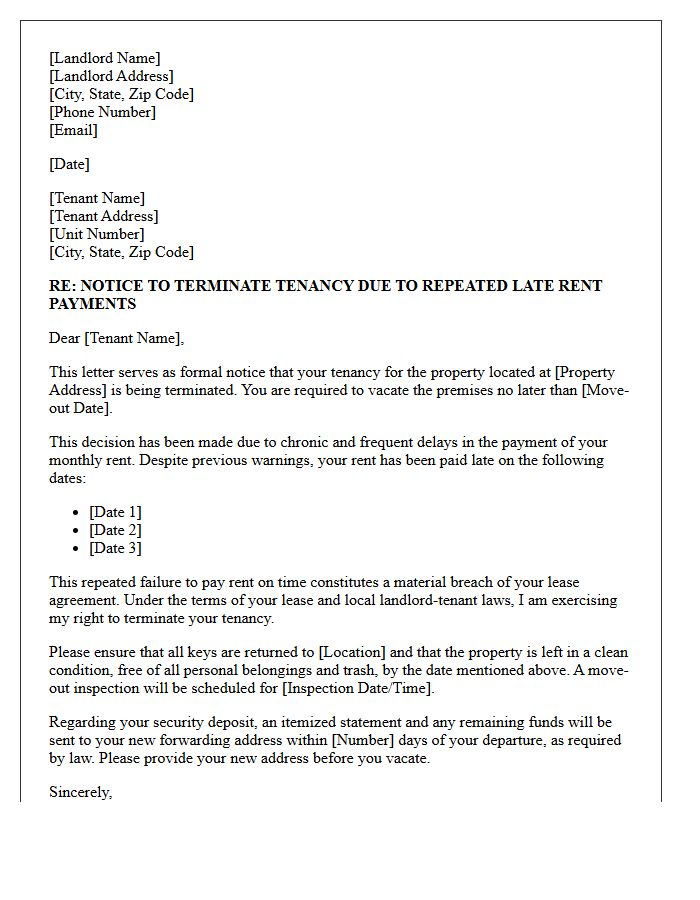
A Termination of Tenancy Letter serves as a formal legal notice to end a lease due to persistent payment failures. Landlords must clearly document every instance of frequent rent delays to prove a chronic breach of contract. The letter must specify the move-out date and the legal grounds for eviction according to local housing laws. Providing accurate records of late fees and missed deadlines is essential for legal protection. Ensure the notice is delivered via certified mail to maintain a verifiable paper trail for potential court proceedings regarding lease non-compliance.
Final Demand to Surrender Premises Letter for Late Rent
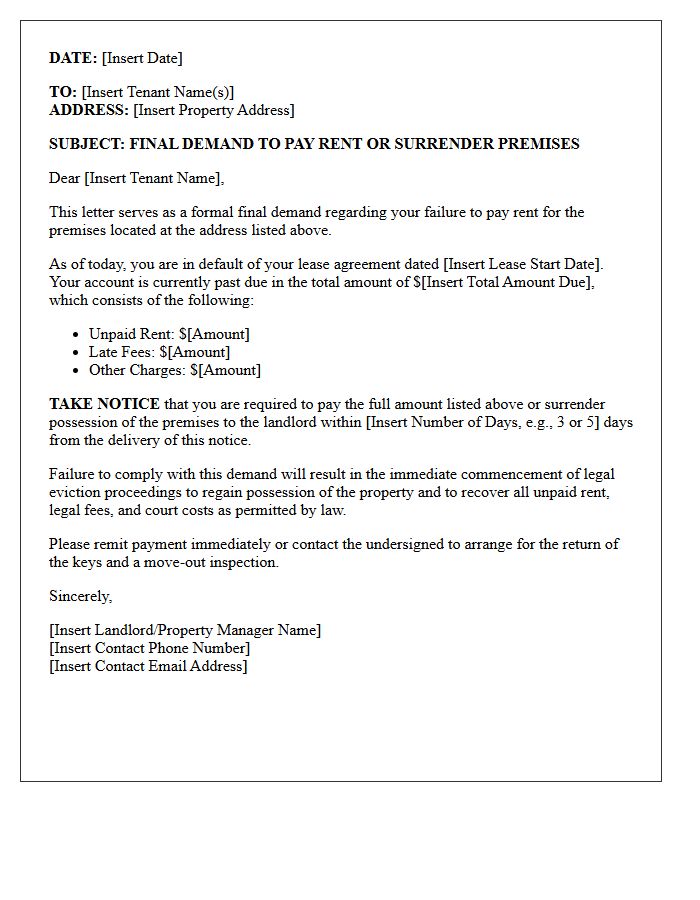
A Final Demand to Surrender Premises is a formal legal notice issued to tenants who have failed to pay rent. This letter serves as a last warning before an eviction lawsuit is filed in court. It must clearly state the total overdue balance, the specific deadline to vacate, and the consequences of non-compliance. Ensuring the document follows local landlord-tenant laws is essential for it to be legally binding. Providing this final notice is a critical step in regaining possession of the property while documenting the breach of the lease agreement.
What is a Notice to Vacate for repeated late rent payments?
A Notice to Vacate for repeated late rent payments is a formal legal document issued by a landlord to a tenant who has consistently failed to pay rent on time. It serves as an official notification that the lease agreement is being terminated due to chronic delinquency, requiring the tenant to move out by a specific date.
Can a landlord evict a tenant for consistently paying rent late?
Yes, most lease agreements contain a "habitual late payment" clause that allows landlords to terminate a tenancy if rent is not paid by the due date on multiple occasions. Even if the tenant eventually pays the balance, the pattern of late payments constitutes a breach of contract and provides legal grounds for eviction.
How many late payments justify a Notice to Vacate?
The number of late payments required to trigger a Notice to Vacate depends on local state laws and the specific terms of the lease agreement. Generally, three or more late payments within a 12-month period are considered "habitual" and are sufficient grounds for a landlord to refuse lease renewal or initiate an eviction filing.
Does a Notice to Vacate for late rent require a "Cure" period?
In many jurisdictions, a Notice to Vacate for repeated late payments is "unconditional," meaning the tenant does not have the option to fix (cure) the issue to stay. Unlike a standard Pay or Quit notice, which allows a tenant to pay the arrears, a habitual late payment notice focuses on the breach of the payment schedule rather than the debt itself.
What should a tenant do after receiving a Notice to Vacate for late payments?
A tenant should immediately review their lease and state laws to verify the validity of the notice. They must either vacate the property by the deadline specified or attempt to negotiate a "Cash for Keys" agreement with the landlord. If the tenant remains in the unit past the date, the landlord can file a formal eviction lawsuit in court.

Comments