
Managing liability requires a formal Aggressive Pet Behavior Warning Letter to notify owners of safety concerns. This document ensures clear communication regarding incidents, outlines necessary corrective actions, and documents policy violations to protect the community and staff. Properly addressing these behaviors helps mitigate risks and maintains a secure environment for everyone. Below are some ready to use templates.
Image cover: Professional Notice Templates for Addressing Aggressive Pet Behavior
Letter Samples List
- First Warning Letter for Aggressive Pet Behavior
- Second Notice Letter Regarding Aggressive Pet Conduct
- Final Warning Letter for Unsafe Animal Behavior
- Lease Violation Letter Due to Aggressive Pet
- Demand Letter to Immediately Remove Aggressive Pet
- Incident Report Warning Letter for Pet Aggression
- Property Management Letter for Off-Leash Aggressive Pet
- Breach of Pet Addendum Letter for Aggressive Action
- Notice Letter of Pet Aggression Toward Community Residents
- Official Warning Letter for Unprovoked Pet Aggression
- Notice of Eviction Letter Stemming From Aggressive Pet
- Compliance Warning Letter Regarding Dangerous Pet Behavior
First Warning Letter for Aggressive Pet Behavior
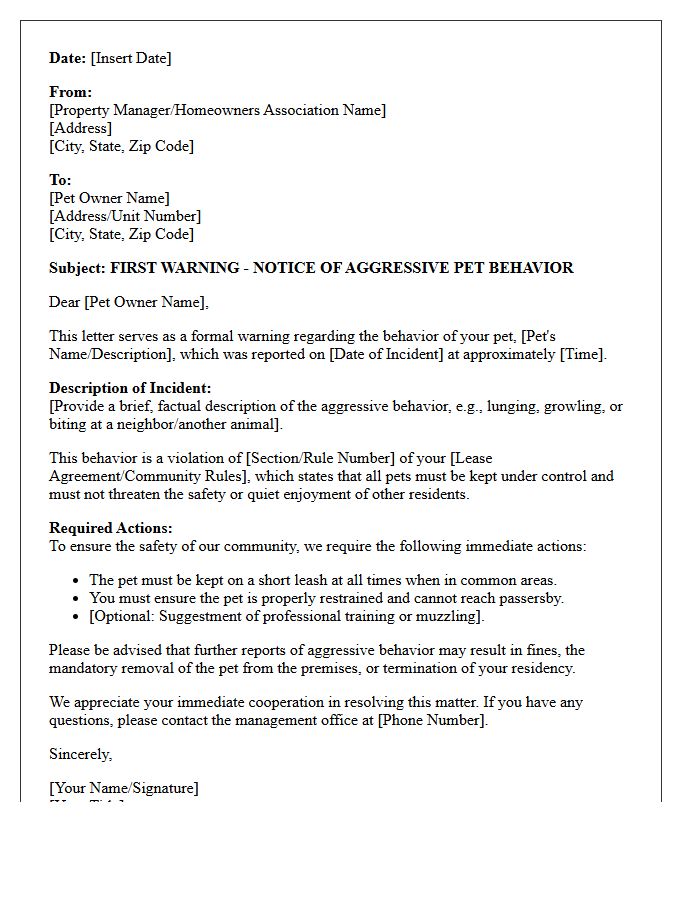
A first warning letter for aggressive pet behavior serves as a formal notice to address safety concerns within a community. It typically outlines specific incidents, such as lunging or growling, and identifies policy violations regarding responsible ownership. Recipients should immediately implement behavioral training or professional intervention to prevent escalation. Ignoring this document can lead to fines, mandatory muzzling, or even pet eviction. Timely corrective action is the most important step to ensure a secure environment for all residents and their animals while maintaining legal compliance with lease or HOA agreements.
Second Notice Letter Regarding Aggressive Pet Conduct
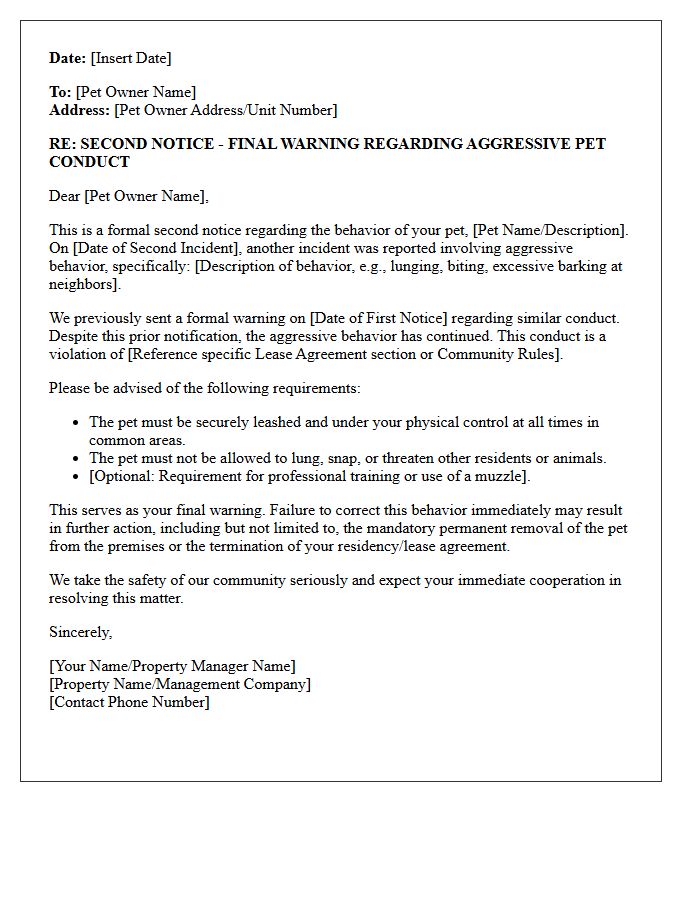
A Second Notice Letter serves as a formal final warning regarding repeated aggressive pet conduct. This document outlines specific incidents, previous warnings, and required corrective actions to ensure community safety. It is a critical legal record that signals escalating consequences, such as potential fines, lease termination, or animal removal. Recipients must immediately address the behavioral issues and provide proof of mitigation to prevent further legal action or eviction. Prompt compliance is essential to resolve safety concerns and maintain your residency status effectively.
Final Warning Letter for Unsafe Animal Behavior
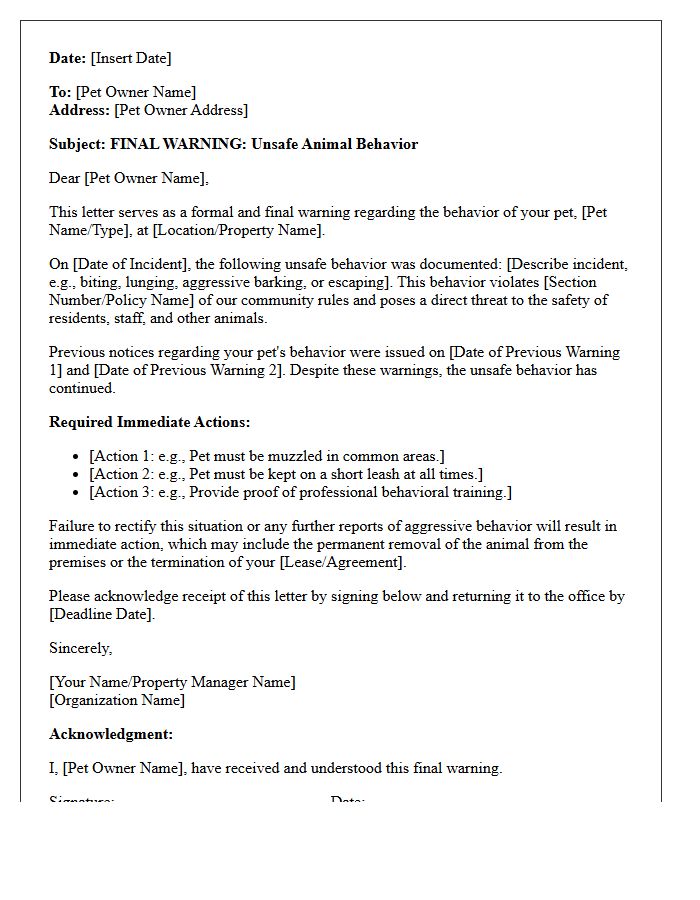
A final warning letter for unsafe animal behavior serves as a formal notice that a pet's actions have reached a critical liability threshold. It explicitly documents repeated incidents, such as aggression or property damage, and outlines mandatory corrective measures. The most important term is legal accountability, as this document establishes a paper trail for potential eviction or animal removal. Owners must immediately implement safety protocols or professional training to prevent further escalation and ensure the safety of the community while adhering to local animal control regulations.
Lease Violation Letter Due to Aggressive Pet
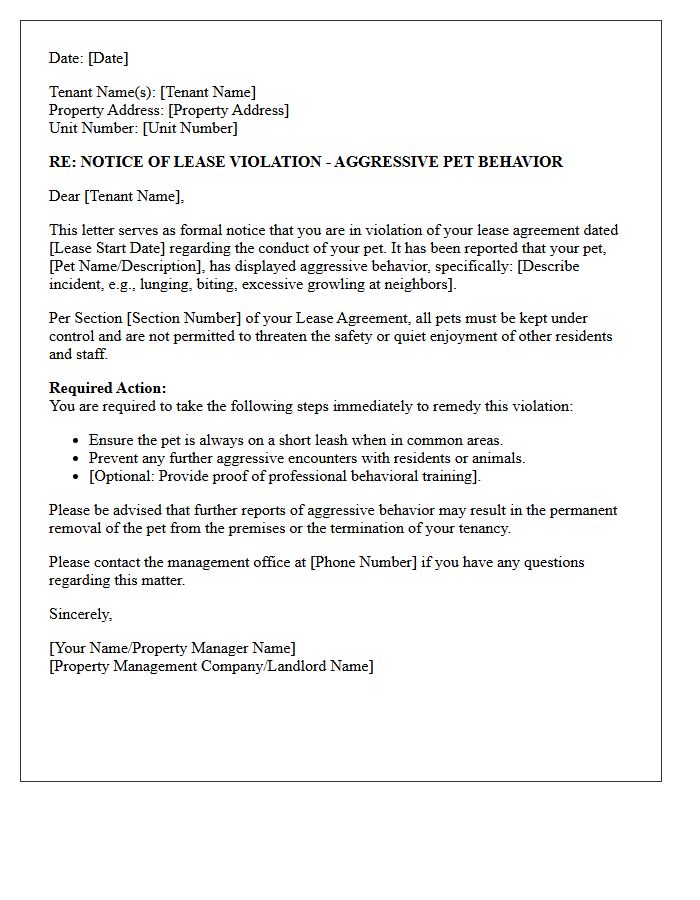
A lease violation letter for an aggressive pet is a formal legal notice informing a tenant that their animal's behavior breaches the rental agreement. The most important term is the documented incident, which typically involves biting, lunging, or excessive growling. Landlords use this highlighted term to demand immediate corrective action or pet removal to ensure community safety. Failure to comply can lead to eviction proceedings. It is essential to include specific dates, witness accounts, and a clear deadline for resolving the safety hazard to maintain a secure environment for all residents.
Demand Letter to Immediately Remove Aggressive Pet
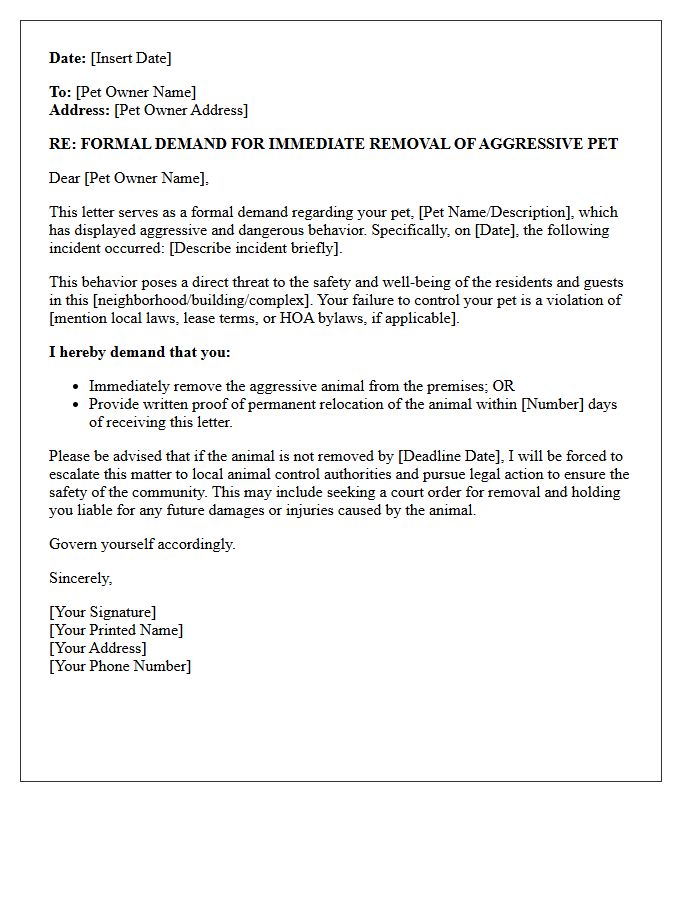
A formal demand letter for the removal of an aggressive pet serves as a critical legal step to address immediate safety concerns. This document must clearly outline specific incidents of vicious behavior or physical attacks that violate local ordinances or lease agreements. By establishing a written record of the danger, you create essential evidence for future litigation or eviction proceedings. The primary goal is to ensure public safety by compelling the owner to relocate the animal immediately to prevent further harm or potential liability for injuries sustained on the property.
Incident Report Warning Letter for Pet Aggression
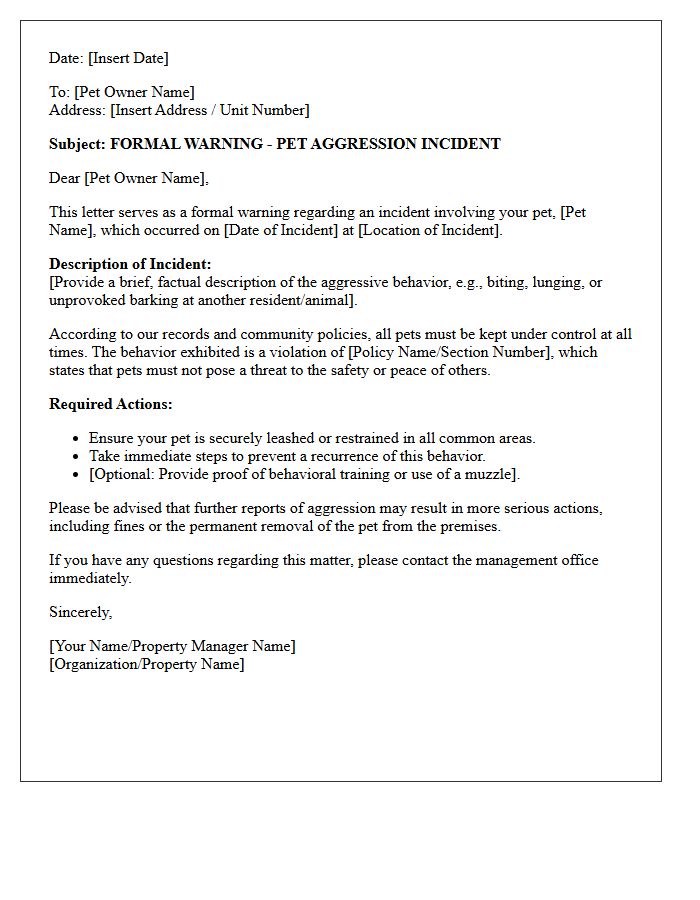
An Incident Report Warning Letter serves as a formal notification regarding pet aggression within a community or facility. It documents specific behaviors, such as biting or lunging, to ensure safety and legal compliance. This document outlines required corrective actions and potential consequences for the owner, including fines or pet removal. Clear documentation is essential for liability protection and maintaining a secure environment for others. Timely issuance of this letter helps mitigate risks and establishes a professional record of behavioral expectations and safety protocols.
Property Management Letter for Off-Leash Aggressive Pet
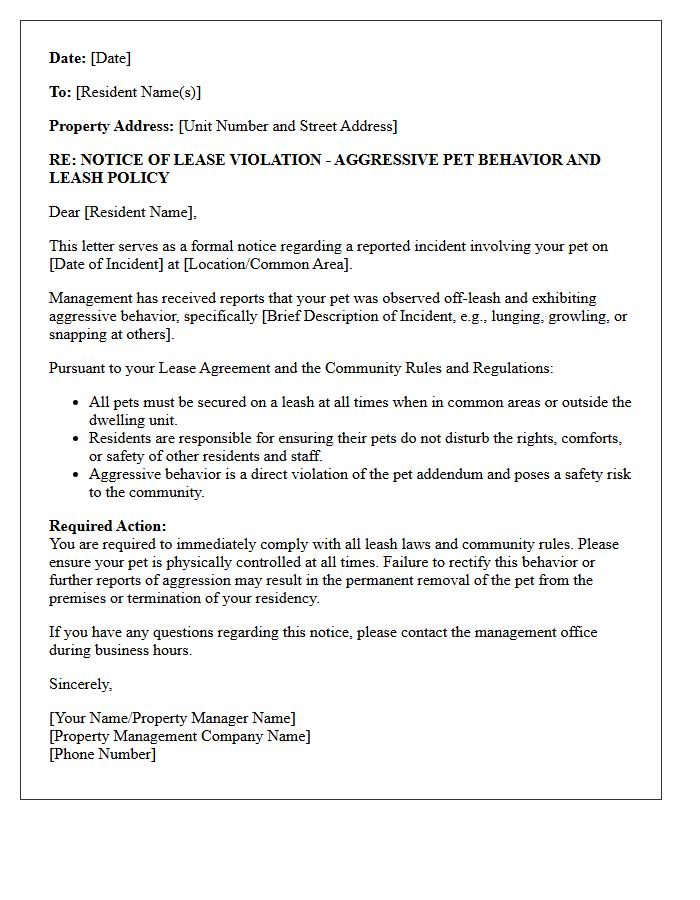
A property management letter addressing off-leash aggressive pets serves as a formal notice to enforce lease compliance and safety standards. It must clearly document the specific incident, citing violated pet policies and local leash laws. The notice acts as a legal warning, outlining required corrective actions and potential consequences like fines or lease termination. Prioritizing tenant safety and liability reduction is essential when managing dangerous animal behavior within a shared residential community to ensure a secure living environment for all residents.
Breach of Pet Addendum Letter for Aggressive Action
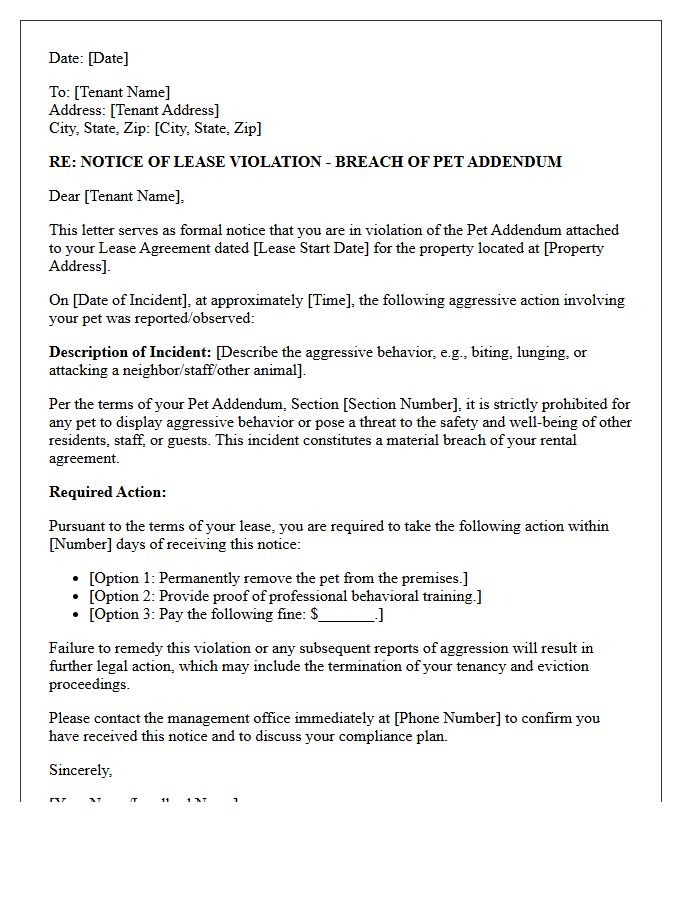
A Breach of Pet Addendum Letter is a formal legal notice issued when a tenant's animal exhibits aggressive behavior, violating lease safety terms. This document officially documents the incident, such as biting or lunging, and demands immediate corrective action or the permanent removal of the pet. Failure to comply typically leads to eviction proceedings. Property owners use this to mitigate liability and ensure resident safety. It serves as essential evidence if legal disputes arise, emphasizing that maintaining a safe environment is a non-negotiable contractual obligation for all pet owners.
Notice Letter of Pet Aggression Toward Community Residents
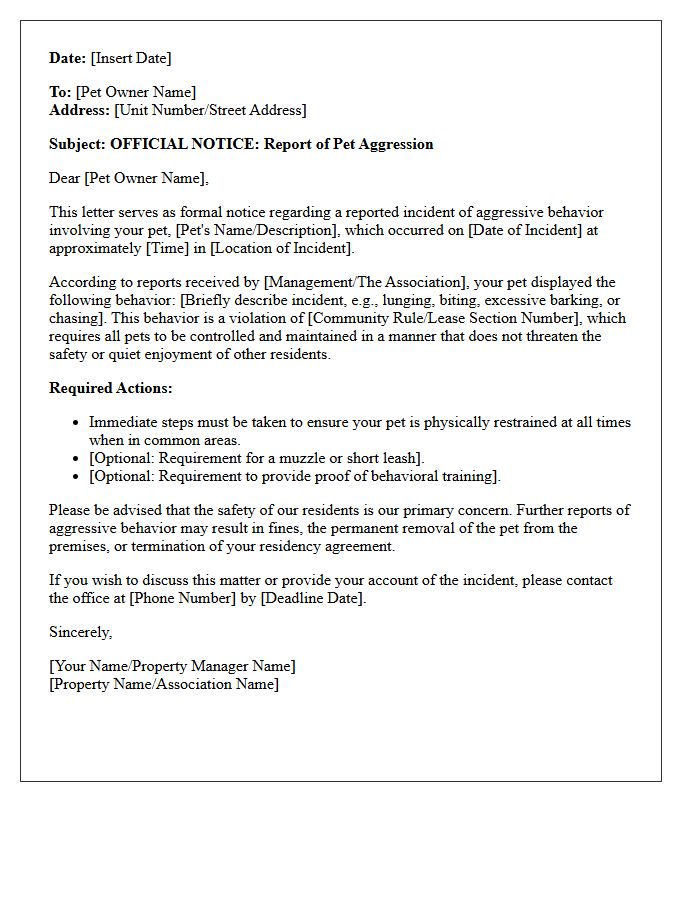
A Notice Letter of Pet Aggression is a formal warning issued to owners when an animal poses a safety risk to neighbors. This document serves as legal documentation of reported incidents, such as lunging, barking, or biting. It outlines specific compliance requirements, including mandatory leash rules, muzzle use, or behavioral training. Failure to address these concerns promptly can result in fines or eviction. Maintaining a safe living environment is the primary goal, ensuring all community residents feel secure while protecting the property from potential liability issues related to uncontrolled pets.
Official Warning Letter for Unprovoked Pet Aggression
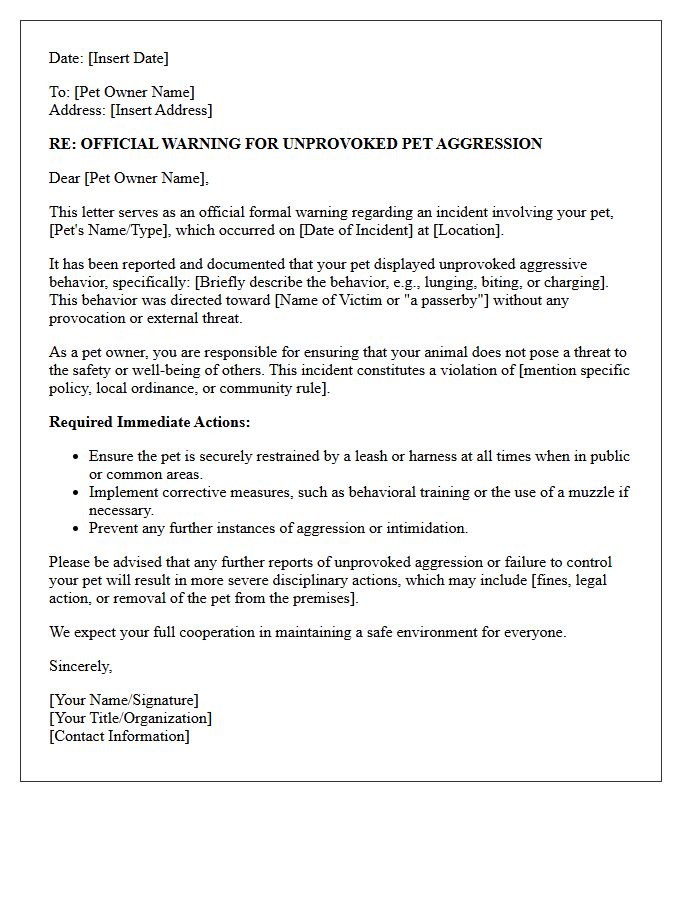
An Official Warning Letter serves as a formal legal notice following unprovoked pet aggression. This document establishes a written record of the incident, outlining specific safety violations and potential liabilities for the owner. It often mandates corrective actions, such as behavioral training or secure containment. Receiving this warning is a critical step in local animal control protocols; failure to comply can lead to fines, pet seizure, or legal prosecution. Promptly addressing the behavior is essential to ensure public safety and prevent further escalations or permanent legal consequences for the animal.
Notice of Eviction Letter Stemming From Aggressive Pet
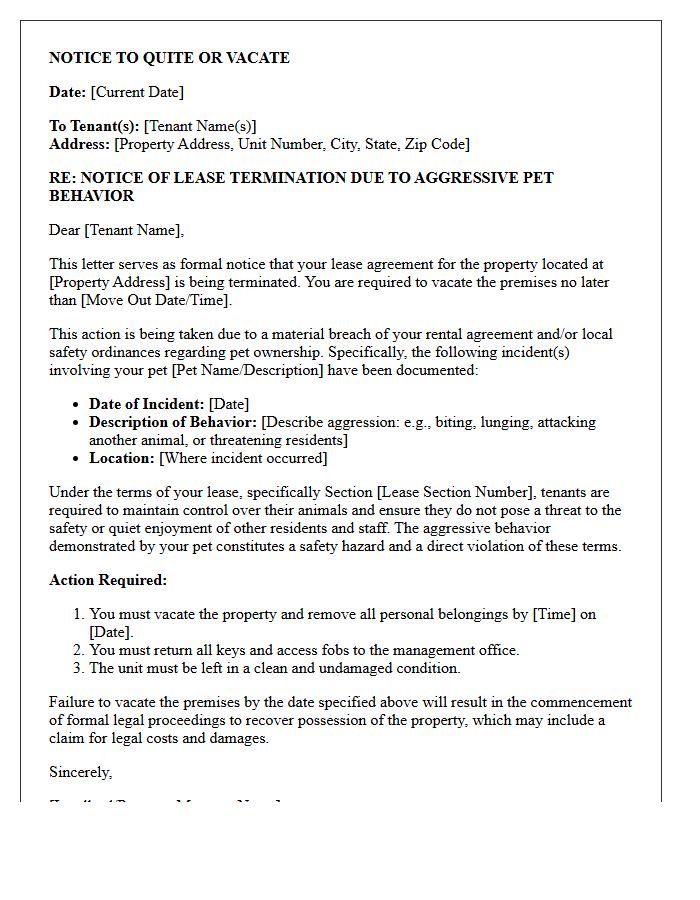
A notice of eviction due to an aggressive pet is a formal legal warning triggered by a violation of the lease's safety or nuisance clauses. Landlords typically issue this when an animal poses a direct threat to neighbors or staff. It is crucial to check your local tenant rights and the specific language in your rental agreement. Depending on state laws, you may have a short window to remedy the situation by removing the pet or providing professional behavioral certification to prevent further legal action or forced removal from the property.
Compliance Warning Letter Regarding Dangerous Pet Behavior
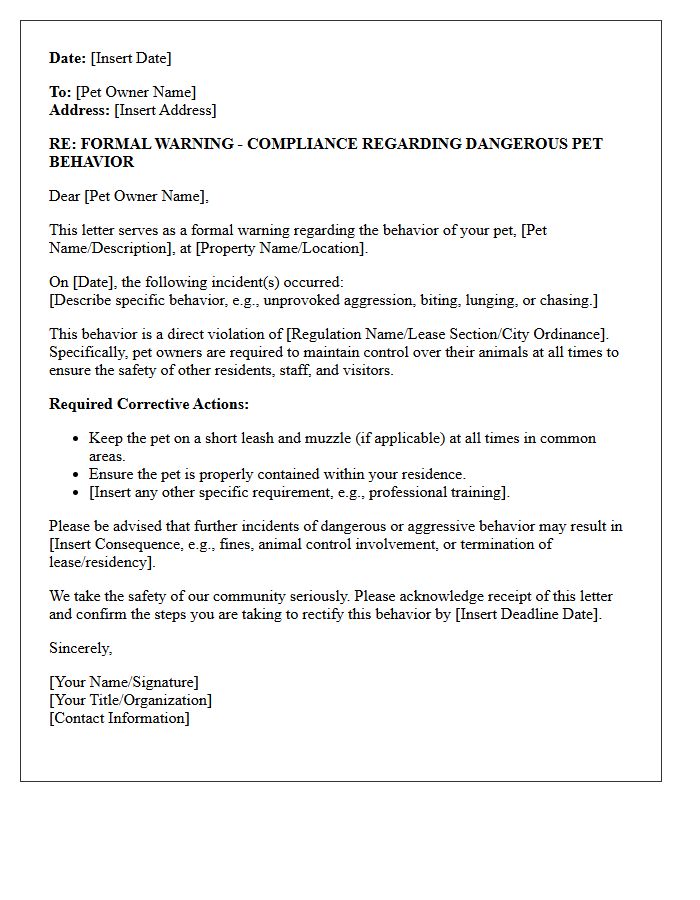
A compliance warning letter regarding dangerous pet behavior is a formal notice issued by landlords or homeowners' associations. It serves as a legal record documenting specific incidents where an animal posed a threat to residents or property safety. This document outlines required corrective actions, such as behavioral training or physical restraints, to prevent further issues. Ignoring this warning can lead to eviction or the permanent removal of the pet. To protect your rights, always provide a written response and maintain evidence of your compliance with local safety regulations.
What is an aggressive pet behavior warning letter?
An aggressive pet behavior warning letter is a formal written notice sent by a landlord, property manager, or homeowners association (HOA) to a pet owner. It documents specific incidents of animal aggression, outlines lease violations, and specifies the corrective actions required to avoid further penalties or pet removal.
When should a landlord issue a warning for pet aggression?
A warning should be issued immediately following a documented report of lunging, excessive growling, unprovoked barking, or any instance where the pet causes physical harm or a reasonable fear of safety to other residents, staff, or guests.
What key details should be included in a pet behavior notice?
The letter must include the date and description of the incident, the specific clause of the lease or pet agreement being violated, a deadline for behavioral improvement, and the potential consequences, such as fines, mandatory professional training, or eviction.
Can a tenant be evicted for a single incident of pet aggression?
Yes, depending on the severity of the incident and the terms of the lease agreement. While minor issues usually result in a warning, "one-bite" rules or severe physical attacks often provide legal grounds for immediate pet removal or lease termination to ensure community safety.
How can a pet owner respond to an aggressive behavior warning?
Pet owners should respond in writing by acknowledging the incident, providing proof of corrective measures such as enrollment in professional behavioral training, using muzzles in common areas, or improving containment methods to demonstrate compliance with property rules.


Comments