
Managing property requires clear communication when adjusting costs. A Notice of Rent Increase and Lease Amendment Letter is a formal document used by landlords to notify tenants of changes to monthly payments or contract terms. It ensures legal compliance while maintaining professional relationships. Understanding how to draft these notices correctly protects your investment. Below are some ready to use templates.
Image cover: Official Notice of Rent Increase and Lease Amendment: Templates and Professional Samples
Letter Samples List
- Standard Notice Of Rent Increase And Lease Amendment Letter
- Month-To-Month Tenancy Rent Increase And Lease Amendment Letter
- Annual Lease Renewal Rent Increase And Lease Amendment Letter
- Commercial Property Rent Increase And Lease Amendment Letter
- Residential Apartment Rent Increase And Lease Amendment Letter
- Utility Cost Adjustment Rent Increase And Lease Amendment Letter
- Property Upgrade Rent Increase And Lease Amendment Letter
- Market Rate Adjustment Rent Increase And Lease Amendment Letter
- Fixed-Term Expiration Rent Increase And Lease Amendment Letter
- Capital Improvement Rent Increase And Lease Amendment Letter
- Pet Policy Addition Rent Increase And Lease Amendment Letter
- Amenities Expansion Rent Increase And Lease Amendment Letter
Standard Notice Of Rent Increase And Lease Amendment Letter
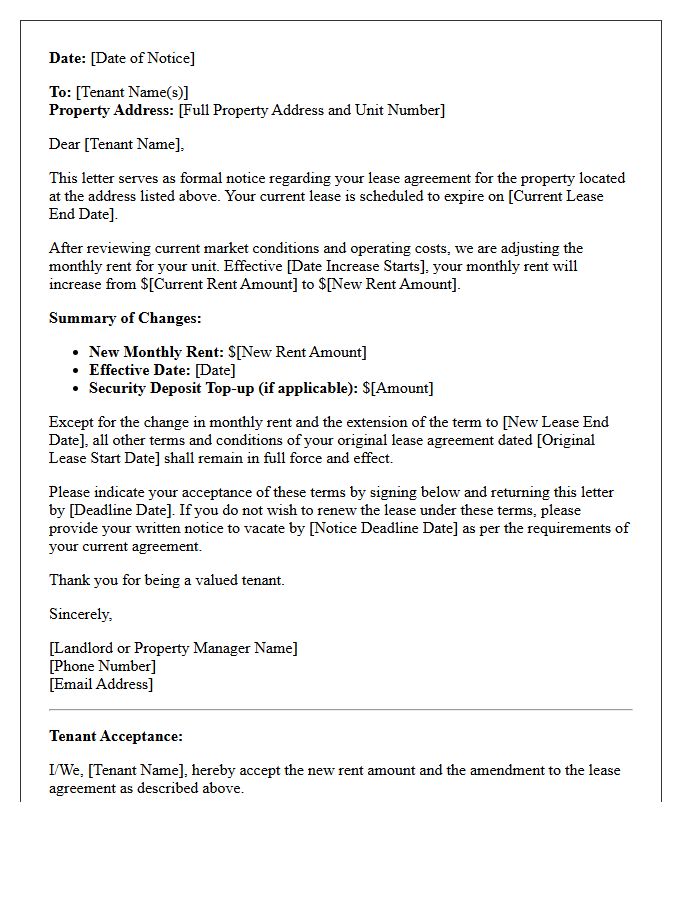
A Standard Notice of Rent Increase and Lease Amendment Letter is a formal legal document used by landlords to notify tenants of upcoming changes to their housing costs. This written notification must comply with local rent control laws and provide a specific notice period, typically 30 to 60 days. It clearly outlines the new monthly rate, the effective date, and any modified lease terms. Ensuring the letter is delivered properly protects both parties, maintaining legal compliance and transparency regarding financial obligations within the rental agreement.
Month-To-Month Tenancy Rent Increase And Lease Amendment Letter
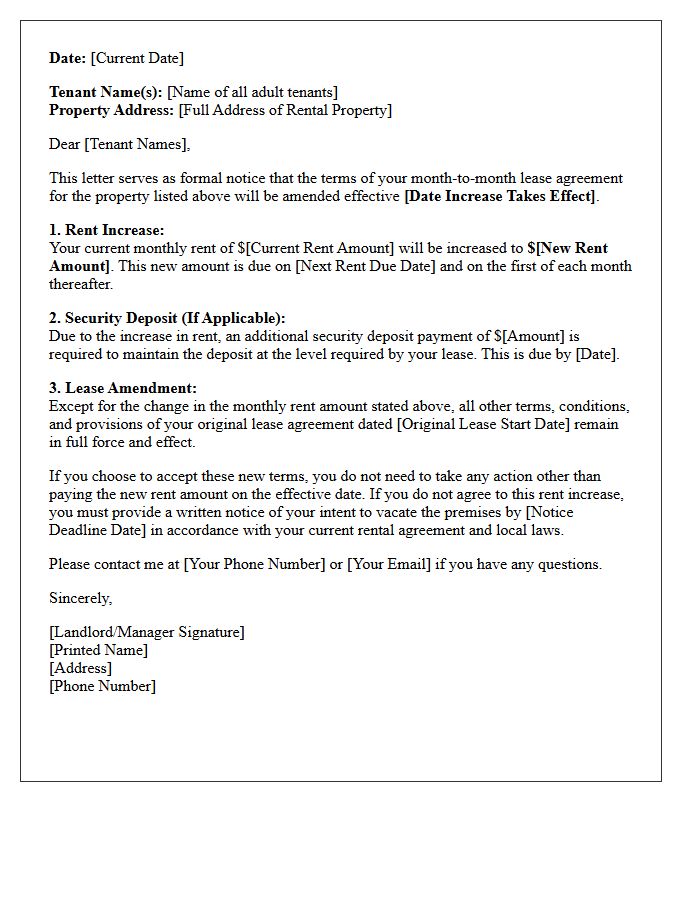
A month-to-month tenancy allows for flexibility, but landlords must provide a formal written notice before implementing a rent increase or changing terms. State laws typically require a 30-day or 60-day notification period. A lease amendment letter serves as legal documentation of these adjustments, ensuring both parties understand the new financial obligations. To maintain a valid agreement, the letter should clearly state the effective date, the updated monthly rate, and any modified clauses while complying with local rent control regulations to avoid potential legal disputes or tenant turnover.
Annual Lease Renewal Rent Increase And Lease Amendment Letter
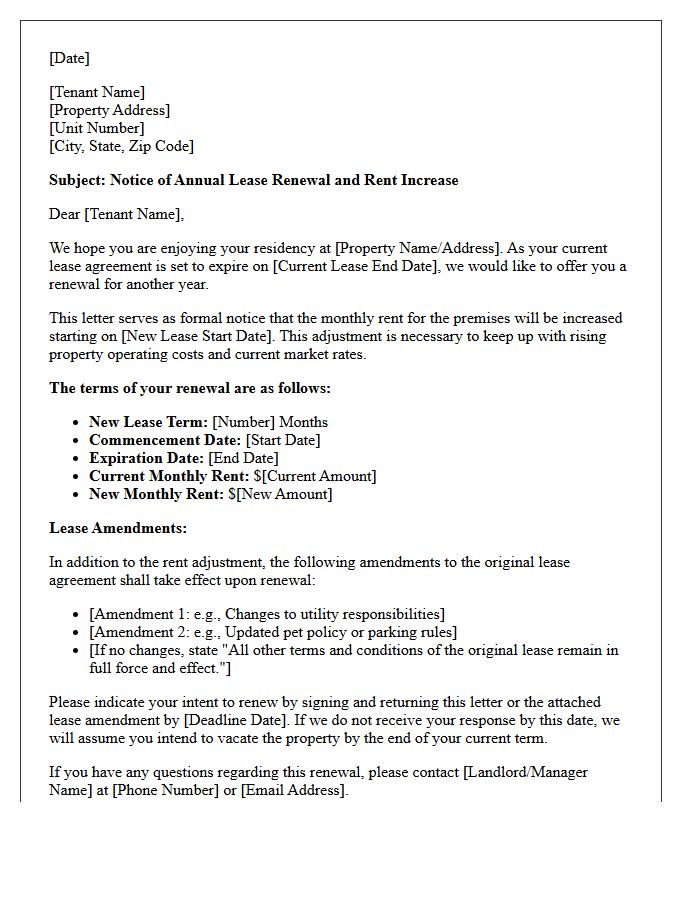
An Annual Lease Renewal Rent Increase And Lease Amendment Letter serves as a formal notice to extend a tenancy while modifying terms. It is essential to provide proper notice, typically 30 to 90 days, as required by local housing laws. The document must clearly state the new monthly rent amount, the effective start date, and any updated lease clauses. Both parties should sign the amendment to ensure legal compliance and mutual agreement, preventing future disputes while maintaining a stable landlord-tenant relationship through transparent communication.
Commercial Property Rent Increase And Lease Amendment Letter
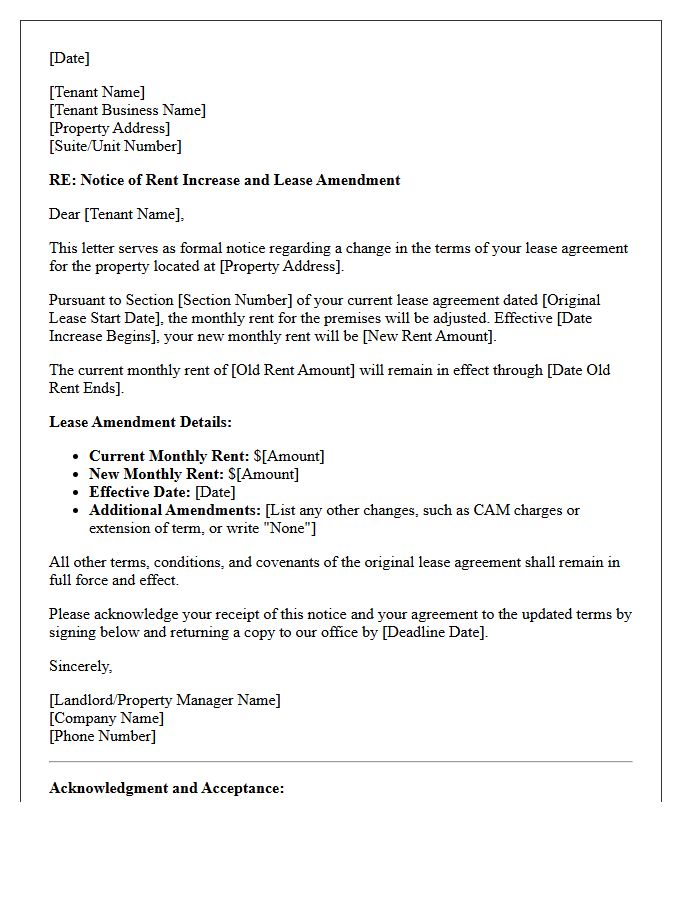
A Commercial Lease Amendment is a legal document used to formalize changes to an existing agreement, most commonly for a Rent Increase. It ensures that both landlord and tenant agree to new financial terms, such as adjusted base rent or escalated operating expenses, without rewriting the entire contract. Using a formal letter to document these changes provides legal protection and maintains clear communication. It is essential to specify the effective date and ensure all parties sign to maintain a valid, binding agreement that updates the original lease terms accurately.
Residential Apartment Rent Increase And Lease Amendment Letter
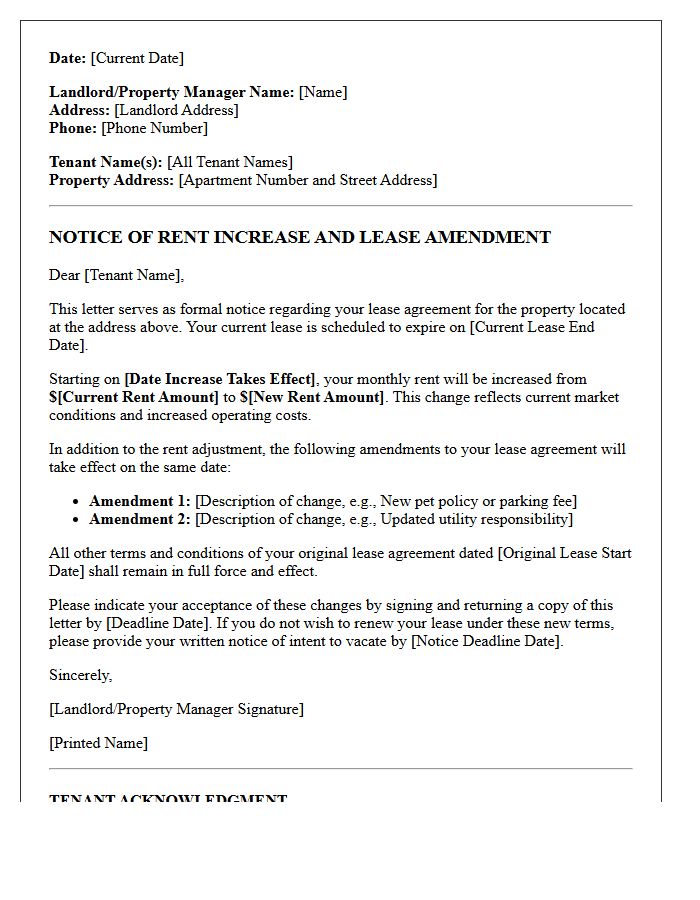
A Rent Increase Notice is a formal lease amendment used by landlords to adjust monthly payments. Legally, this letter must provide a specific notice period, typically 30 to 60 days before the current term expires. It should clearly state the new rent amount, the effective date, and any updated terms. Tenants must review their local rent control laws to ensure the hike complies with legal limits. Professional communication helps maintain a positive landlord-tenant relationship while documenting structural changes to the original rental agreement.
Utility Cost Adjustment Rent Increase And Lease Amendment Letter
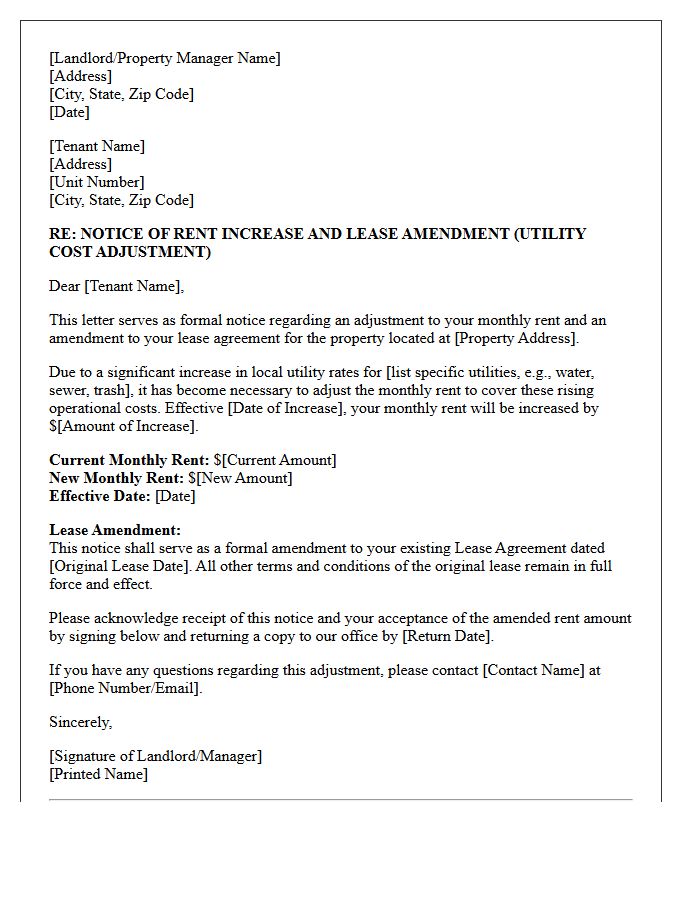
A Utility Cost Adjustment Rent Increase And Lease Amendment Letter is a formal notice sent by landlords to tenants when utility expenses exceed base projections. This document legally modifies the existing lease agreement to reflect updated monthly payments. It must clearly outline the specific utility calculations, the effective date of the change, and the revised total rent amount. Ensuring compliance with local rent control laws is essential to maintaining a valid lease amendment and protecting the rights of both parties during the adjustment process.
Property Upgrade Rent Increase And Lease Amendment Letter
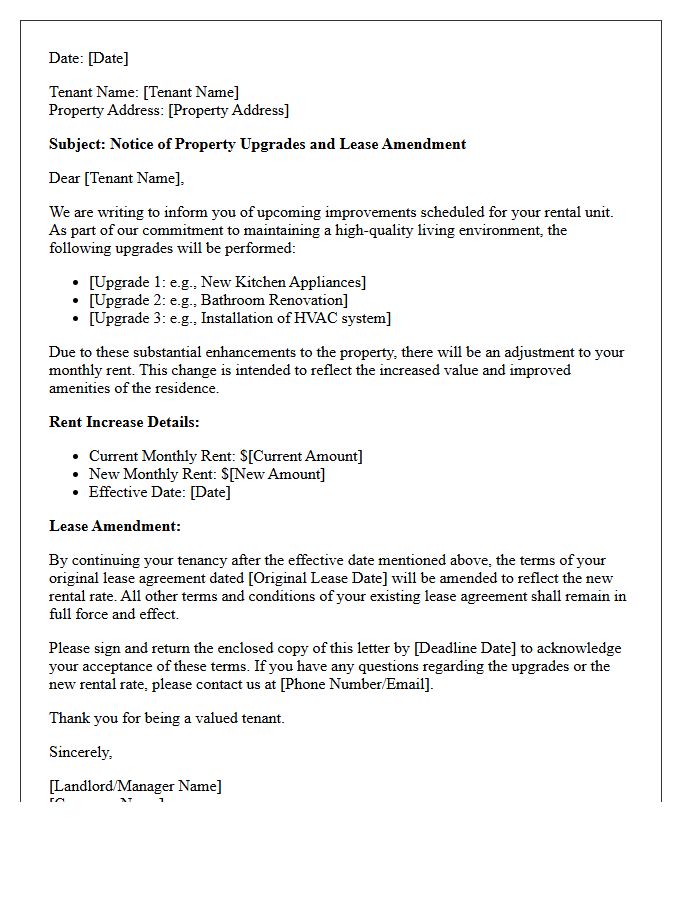
When implementing a property upgrade rent increase, landlords must issue a formal lease amendment letter to document changes legally. This notice should clearly detail the specific improvements made, the new monthly rate, and the effective date. Ensuring both parties sign the amendment protects against future disputes and confirms the tenant's agreement to the adjusted terms. Always verify local rent control laws and notice period requirements before sending the document to ensure full legal compliance and maintain a professional landlord-tenant relationship during the transition.
Market Rate Adjustment Rent Increase And Lease Amendment Letter
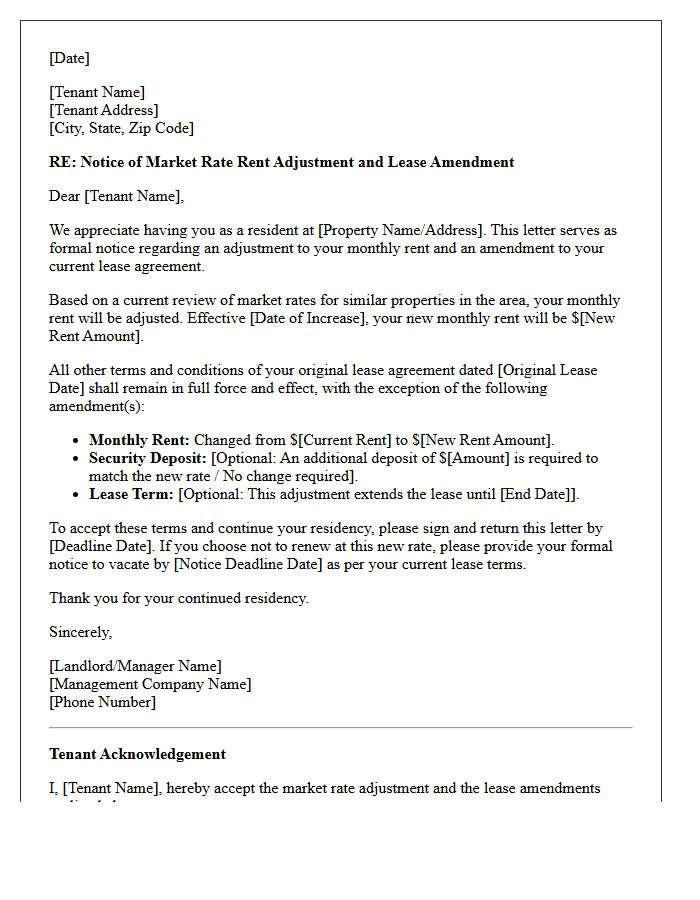
A Market Rate Adjustment aligns tenant payments with current economic trends. Landlords issue a Lease Amendment Letter to formally document these changes to the original contract. This legal notice specifies the new rent amount, the effective date, and any modified terms. Tenants should review the comparable market data provided to ensure the increase is justified. Timely communication and a signed written agreement are essential to maintain compliance and prevent future disputes regarding lease obligations and housing costs.
Fixed-Term Expiration Rent Increase And Lease Amendment Letter
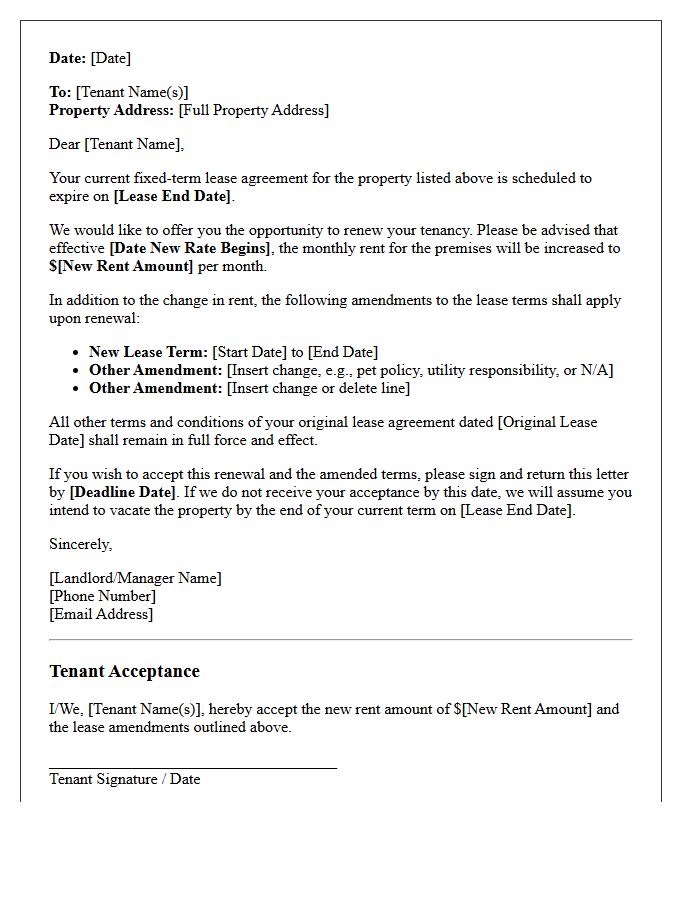
A Fixed-Term Expiration Rent Increase and Lease Amendment Letter notifies tenants that their current rental agreement is ending and proposes new terms for renewal. It serves as a formal legal notice detailing the adjusted rent amount and any updated lease conditions. Landlords must issue this document within specific notice periods mandated by local laws to ensure compliance. Tenants must typically sign and return the amendment to accept the new rate or provide notice of their intent to vacate, preventing an automatic conversion to a month-to-month tenancy at higher costs.
Capital Improvement Rent Increase And Lease Amendment Letter
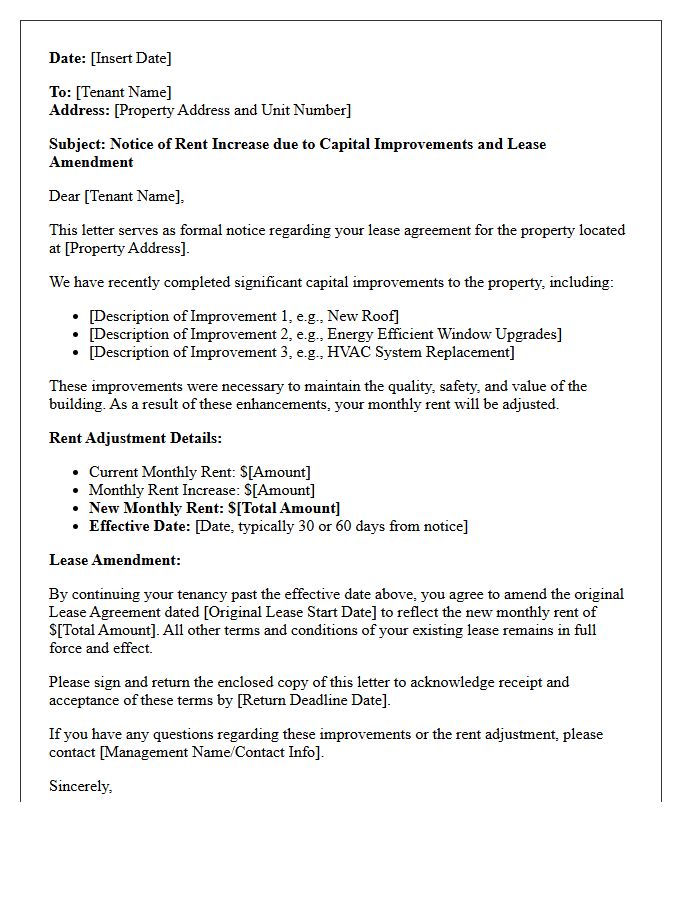
A Capital Improvement Rent Increase notice informs tenants of rent hikes following significant property upgrades. The most critical requirement is that these improvements must be non-ordinary repairs that provide long-term value or safety enhancements. Landlords must issue a formal Lease Amendment Letter to legally document the adjusted terms. Tenants should verify local rent control laws to ensure the increase adheres to legal caps and notice periods. Understanding these documents is essential for maintaining transparent communication and ensuring that all structural investments align with statutory housing regulations and contractual obligations.
Pet Policy Addition Rent Increase And Lease Amendment Letter
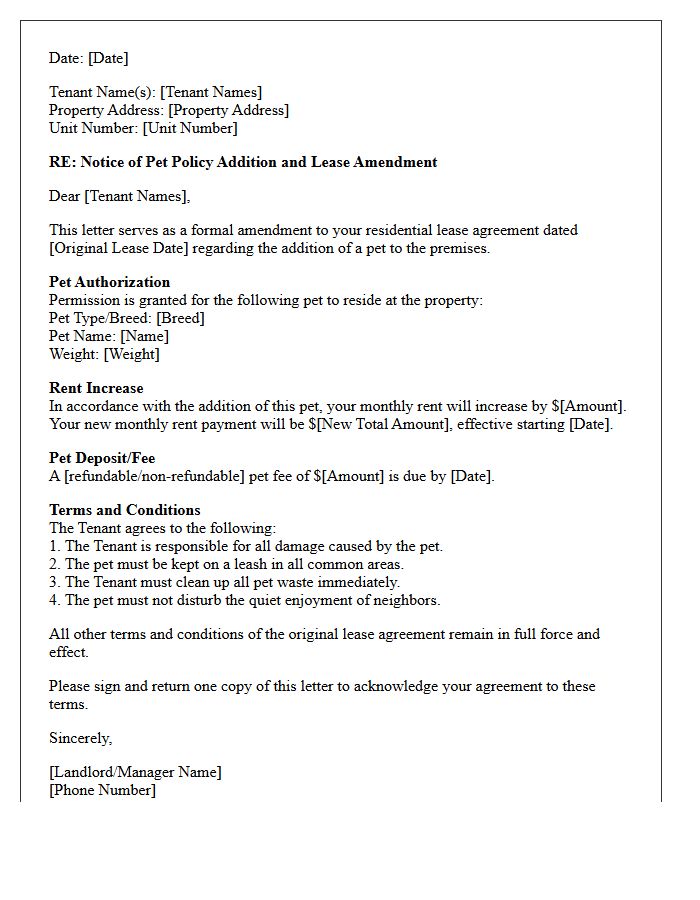
A Pet Policy Addition allows a landlord to formalize pet ownership rules through a lease amendment. This document typically outlines specific rent increases or pet fees required to cover potential wear and tear. It is crucial to ensure both parties sign the amendment to maintain legal compliance. Clear terms regarding pet size, breed, and waste management help prevent future disputes. Always verify local housing laws, as some jurisdictions limit additional pet rent amounts or prohibit certain restrictions for service animals or emotional support pets.
Amenities Expansion Rent Increase And Lease Amendment Letter
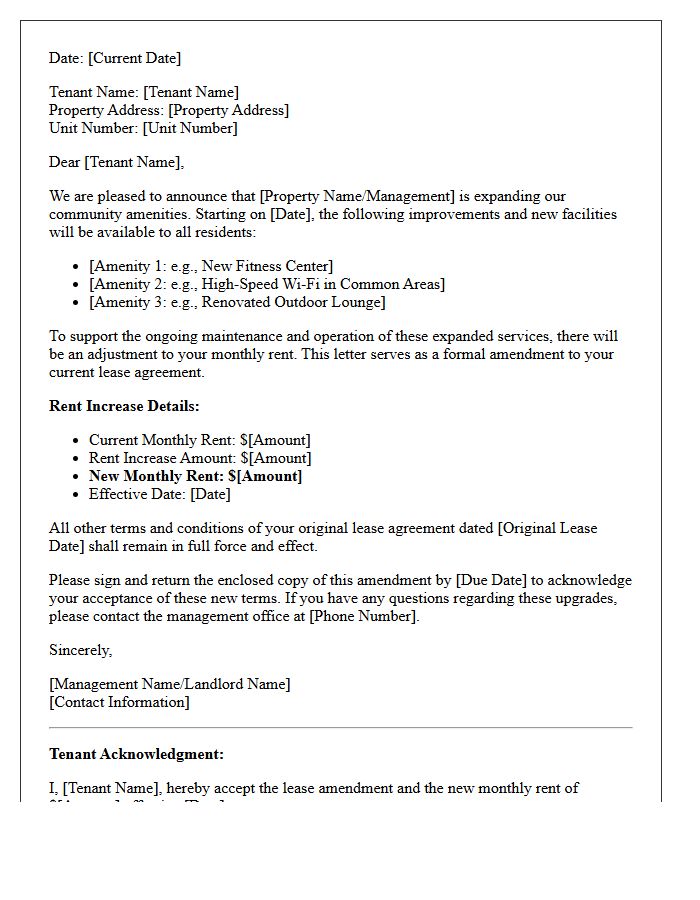
An Amenities Expansion Rent Increase occurs when a landlord adds new facilities, like a gym or pool, to justify higher costs. To formalize this, a Lease Amendment Letter is issued to legally modify the original agreement. Tenants must review the document to ensure the rent adjustment aligns with local housing laws and the value provided. Signing this amendment acknowledges the new terms and updated payment obligations. It is essential to verify that these improvements are permanent and that the written notice complies with the required statutory timeframe before the increase takes effect.
What is a Notice of Rent Increase and Lease Amendment Letter?
A Notice of Rent Increase and Lease Amendment Letter is a formal written document sent by a landlord to a tenant to communicate a change in monthly rent and any modifications to the existing terms of the rental agreement.
How much notice must a landlord provide before increasing the rent?
The required notice period varies by state and local jurisdiction, but it is typically 30 to 60 days before the current lease expires or the new rent amount takes effect.
Does a lease amendment letter require the tenant's signature?
Yes, for a lease amendment to be legally binding, both the landlord and the tenant should sign and date the document to confirm mutual agreement to the new rent price and modified lease terms.
What information should be included in a rent increase notice?
The letter should include the property address, the current rent amount, the new rent amount, the effective date of the increase, the reason for the change (optional), and instructions on how the tenant can accept or decline the new terms.
Can a tenant negotiate a rent increase after receiving a lease amendment letter?
Yes, tenants can attempt to negotiate the proposed increase. If both parties agree on a different amount, the landlord should issue a revised Lease Amendment Letter reflecting the negotiated terms for signature.

Comments