
Drafting a formal Release of Guarantor From Lease Agreement Letter is essential to legally terminate a co-signer's financial obligations. This document provides written proof that the landlord has absolved the guarantor from future rent liabilities or damages. Whether parties are negotiating a move-out or a lease renewal, clear communication is vital. To simplify this process, below are some ready to use template.

Image cover: Formal Guide to Lease Guarantor Release Letters: Professional Templates and Samples
Letter Samples List
- Standard Release Of Guarantor From Lease Agreement Letter
- Mutual Consent Release Of Guarantor From Lease Agreement Letter
- End Of Term Release Of Guarantor From Lease Agreement Letter
- Tenant Financial Qualification Release Of Guarantor Letter
- Good Payment History Release Of Guarantor From Lease Letter
- Commercial Property Release Of Guarantor From Lease Agreement Letter
- Residential Lease Renewal Release Of Guarantor Letter
- Early Lease Termination Release Of Guarantor Agreement Letter
- Change Of Tenant Release Of Guarantor From Lease Letter
- Landlord Approved Release Of Guarantor From Lease Letter
- Property Ownership Transfer Release Of Guarantor Letter
- Lease Reassignment Release Of Guarantor Agreement Letter
Standard Release Of Guarantor From Lease Agreement Letter
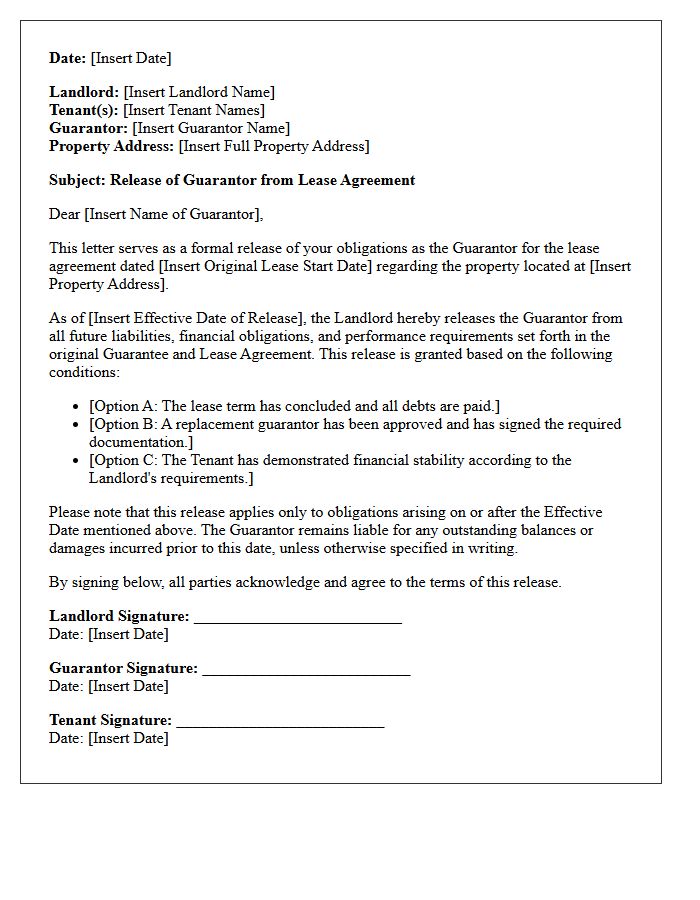
A Standard Release of Guarantor is a legal document that formally terminates an individual's financial responsibility for a tenant's obligations. This letter is essential when a lease agreement is modified, or when the tenant demonstrates sufficient creditworthiness to stand alone. Once signed by the landlord, the guarantor is no longer liable for unpaid rent or property damages. It provides legal protection and ensures that the guarantor's credit remains unaffected by future lease violations. Both parties should retain a signed copy to confirm the formal dissolution of the guarantee.
Mutual Consent Release Of Guarantor From Lease Agreement Letter
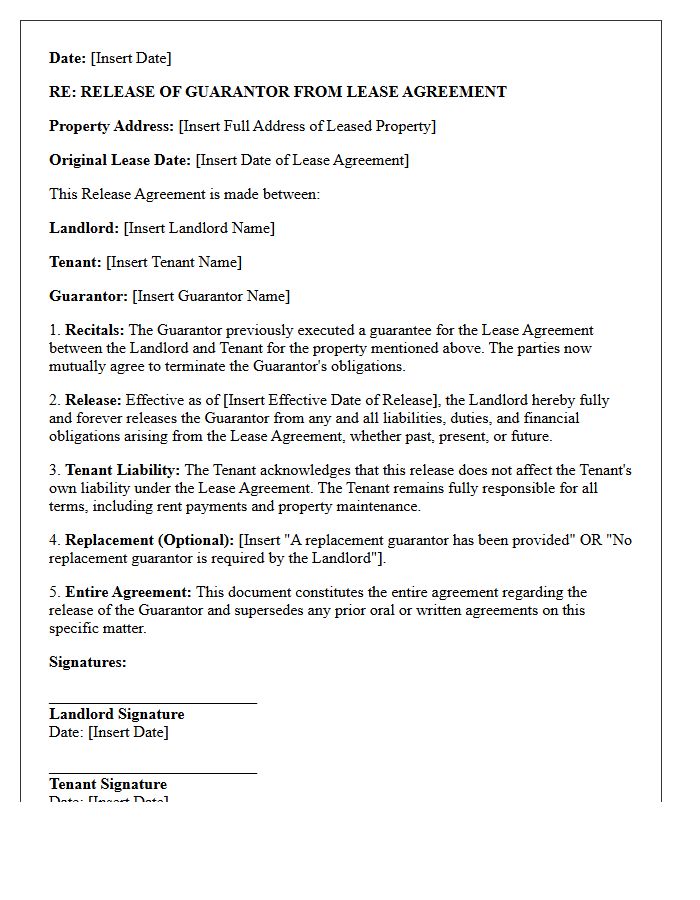
A Mutual Consent Release of Guarantor is a legal document that officially terminates a person's financial responsibility for a tenant's lease. This tripartite agreement must be signed by the landlord, the tenant, and the guarantor to be legally binding. It is commonly used when a tenant's financial situation improves or a replacement guarantor is provided. Once executed, the guarantor is fully discharged from all future liabilities, rent payments, and property damages, ensuring their credit and assets are no longer at risk under the original lease terms.
End Of Term Release Of Guarantor From Lease Agreement Letter
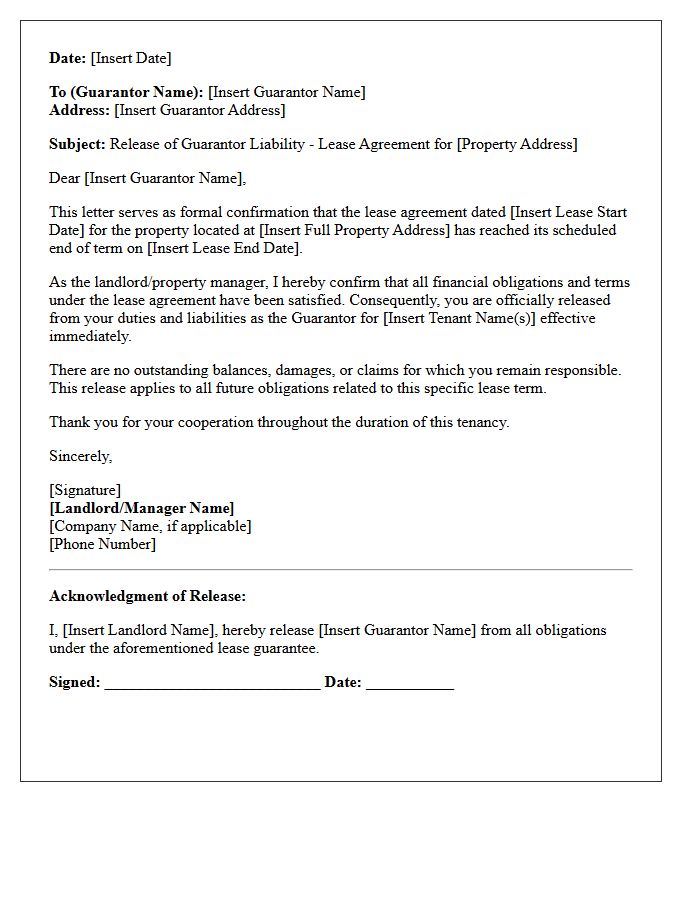
An End of Term Release of Guarantor letter is a vital legal document used to formally discharge an individual from their financial obligations once a lease expires. This letter confirms that the guarantor is no longer liable for rent or damages occurring after the move-out date. It is essential for protecting your credit score and financial future. Ensure the document explicitly states the termination date and includes signatures from both the landlord and the tenant to provide conclusive proof of release from all contractual liabilities.
Tenant Financial Qualification Release Of Guarantor Letter
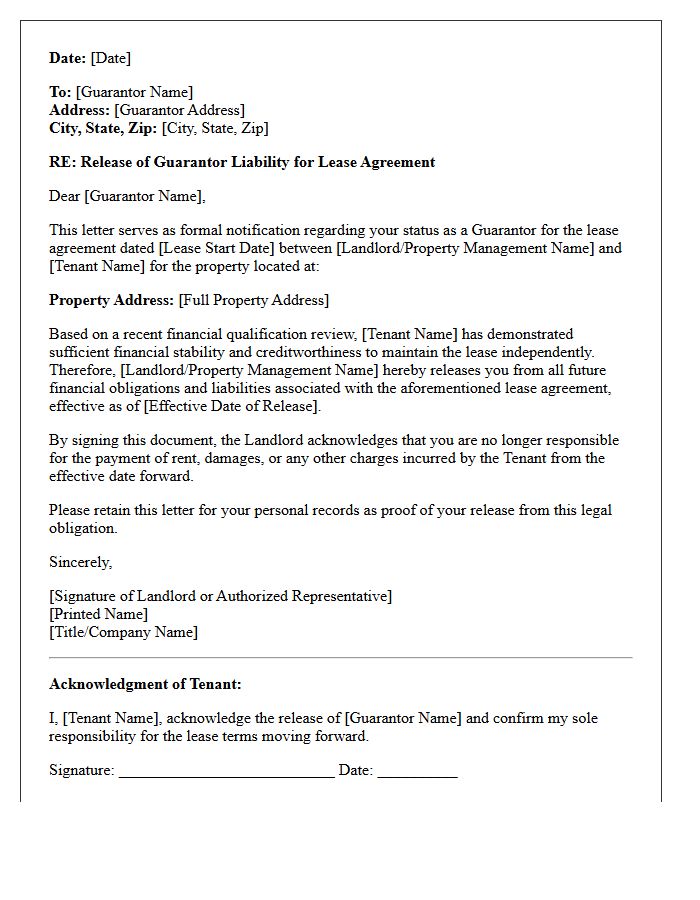
A Release of Guarantor Letter is a formal legal document that terminates a co-signer's financial liability under a lease agreement. This typically occurs once the tenant demonstrates independent financial stability or fulfills specific contract conditions. Landlords must provide written consent to verify the guarantor is no longer responsible for unpaid rent or damages. Obtaining this release is essential for financial qualification updates, ensuring the guarantor's credit profile is cleared of potential rental debt obligations upon the successful transition of the primary tenant's status.
Good Payment History Release Of Guarantor From Lease Letter
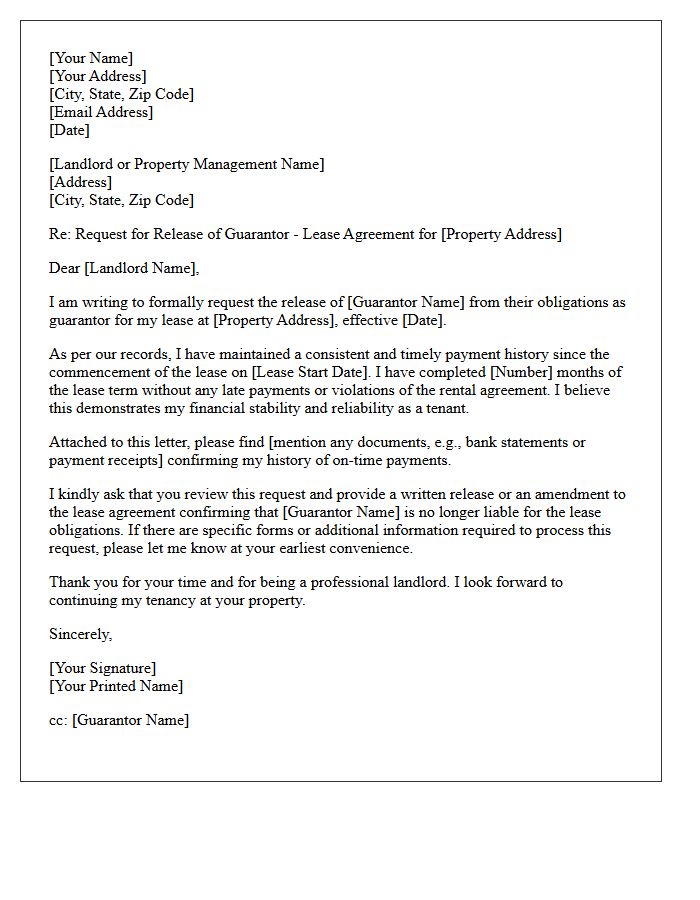
A good payment history release of guarantor from lease letter is a formal request to terminate a co-signer's legal liability. To succeed, tenants must demonstrate consistent, on-time rent payments and proven financial stability. This document serves as a formal amendment to the original rental agreement, officially releasing the guarantor from future debt obligations. Landlords typically grant this release once the primary tenant proves they are a low-risk occupant who no longer requires external financial backing to fulfill their lease commitments.
Commercial Property Release Of Guarantor From Lease Agreement Letter
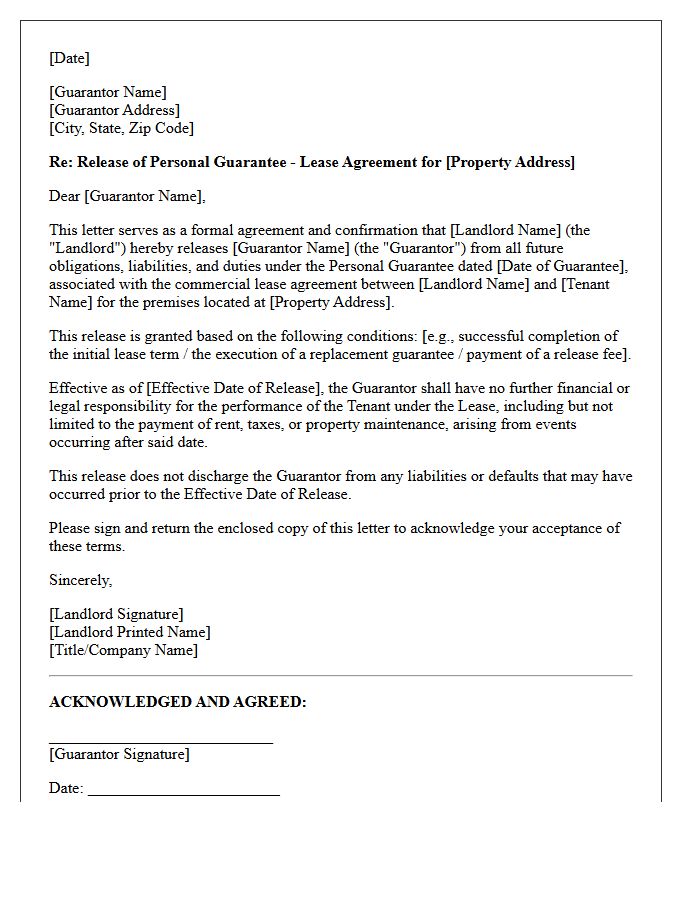
A Commercial Property Release of Guarantor is a legal document used to formally discharge an individual from their financial obligations under a lease. This letter is essential when a business undergoes a transfer of ownership or meets specific financial performance milestones. It ensures the guarantor is no longer personally liable for future rent payments or property damages. To be legally binding, the landlord's written consent is required. Both parties should sign the document to confirm the termination of liability and update the original lease terms officially.
Residential Lease Renewal Release Of Guarantor Letter
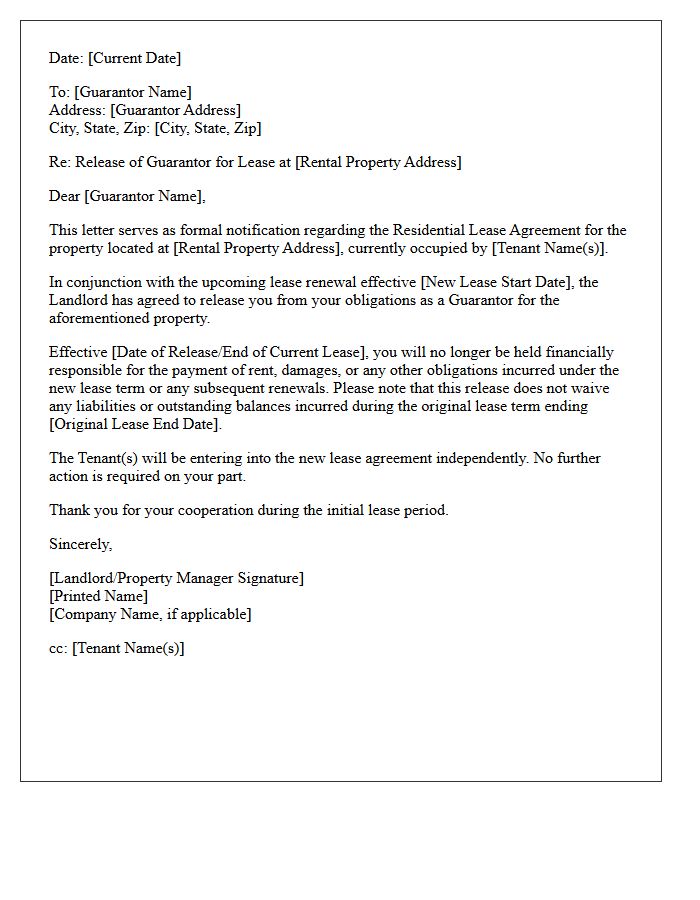
A residential lease renewal release of guarantor letter is a legal document that terminates a co-signer's financial liability when a tenant renews their rental agreement. It is essential to ensure the guarantor is officially discharged from future obligations, such as unpaid rent or property damages, incurred after the original lease term ends. Without this formal release, a guarantor may remain legally responsible if the contract automatically extends. Both parties should sign this written notice to confirm that the tenant now meets the landlord's income requirements independently, ensuring legal clarity for all involved.
Early Lease Termination Release Of Guarantor Agreement Letter
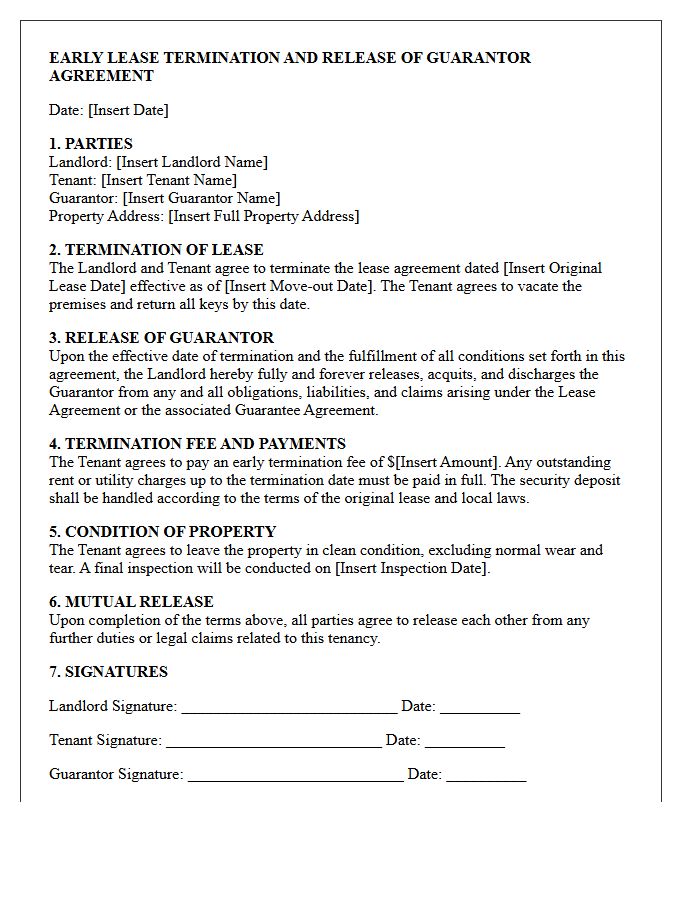
An Early Lease Termination Release of Guarantor Agreement Letter is a vital legal document that formally discharges a co-signer from future financial liabilities. This agreement ensures the guarantor is no longer responsible for rent or damages after a tenant vacates prematurely. It must clearly state the termination date, specify the release of all obligations, and be signed by the landlord to be enforceable. Securing this written release is essential to protect the guarantor's credit score and financial standing from potential future claims by the property owner.
Change Of Tenant Release Of Guarantor From Lease Letter
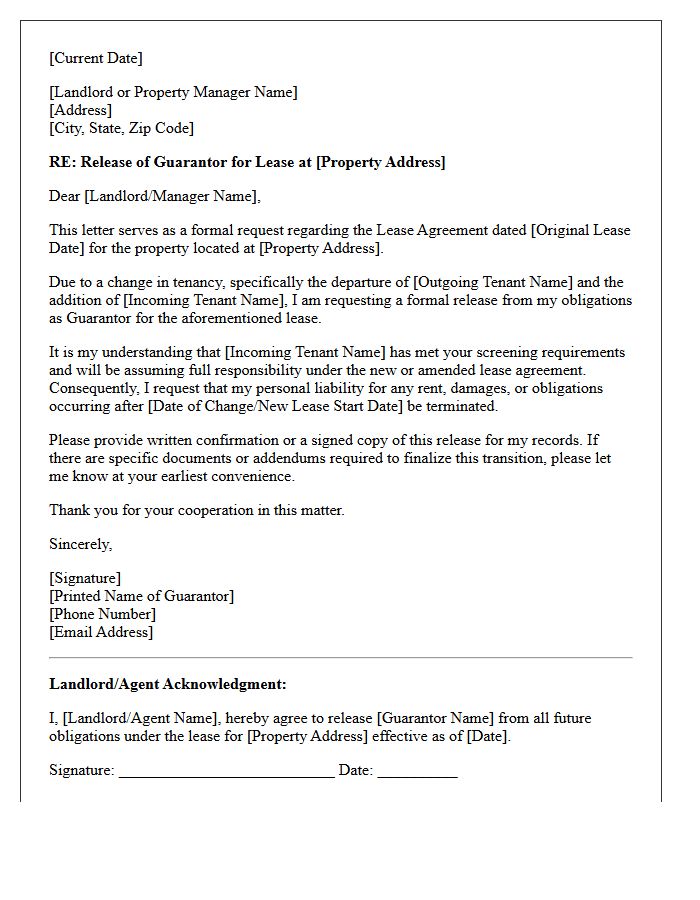
A Change of Tenant Release of Guarantor letter is a vital legal document that formally discharges a co-signer from their financial obligations when a lease is reassigned. This written agreement ensures the original guarantor is no longer liable for rent or damages incurred by new occupants. It must be signed by the landlord to be legally binding. Obtaining this release is essential to protect your credit score and prevent unexpected future claims after a tenancy transfer has been completed successfully.
Landlord Approved Release Of Guarantor From Lease Letter
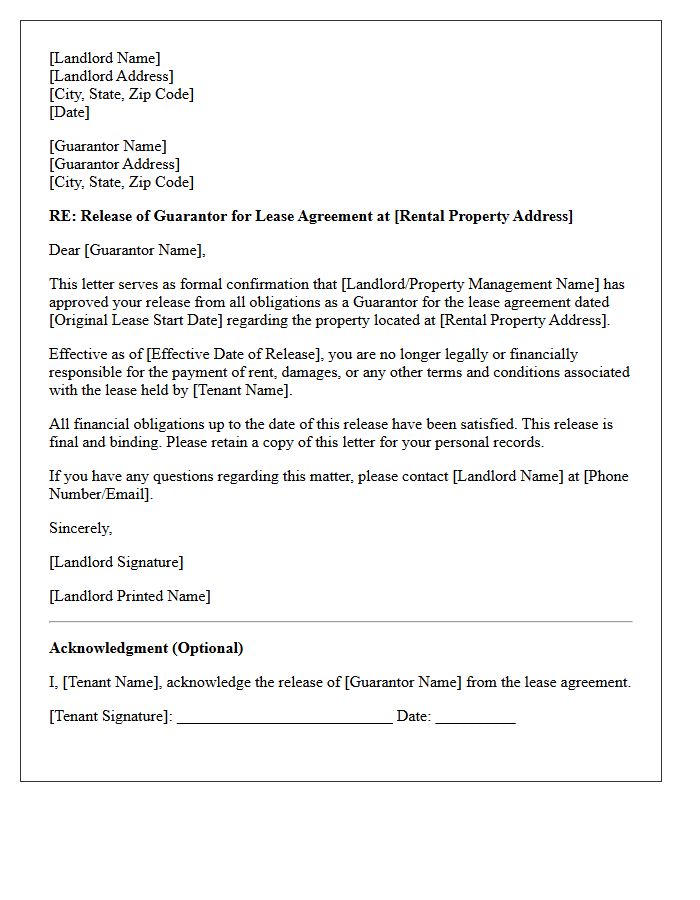
A Landlord Approved Release Of Guarantor From Lease Letter is a critical document that legally discharges a co-signer from their financial obligations under a rental agreement. This formal consent ensures the individual is no longer liable for unpaid rent or property damages. It is essential to ensure the release date is clearly specified and that all parties sign the document. Obtaining this written confirmation protects the former guarantor from future legal claims, providing legal certainty that their commitment to the lease has officially terminated.
Property Ownership Transfer Release Of Guarantor Letter
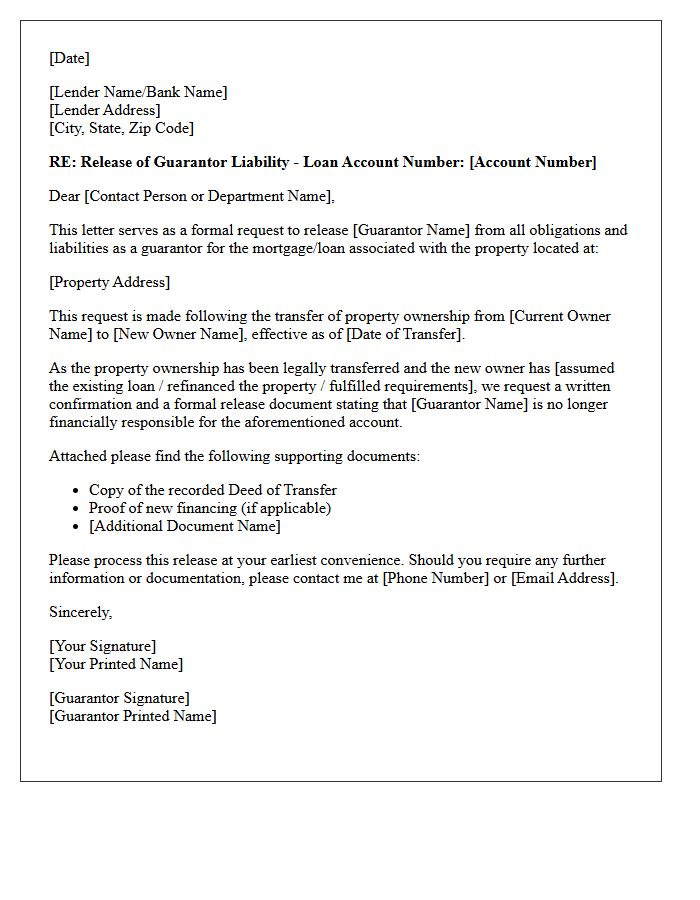
A Property Ownership Transfer Release of Guarantor Letter is a formal legal document that terminates a third party's financial liability during a title change. When a property is sold or transferred, the original guarantor must be officially released from their contractual obligations by the lender. Without this signed release, the individual remains legally responsible for outstanding debts or mortgage defaults. Ensuring this document is processed correctly is vital for protecting the guarantor's credit score and future borrowing capacity after the ownership transition is finalized.
Lease Reassignment Release Of Guarantor Agreement Letter
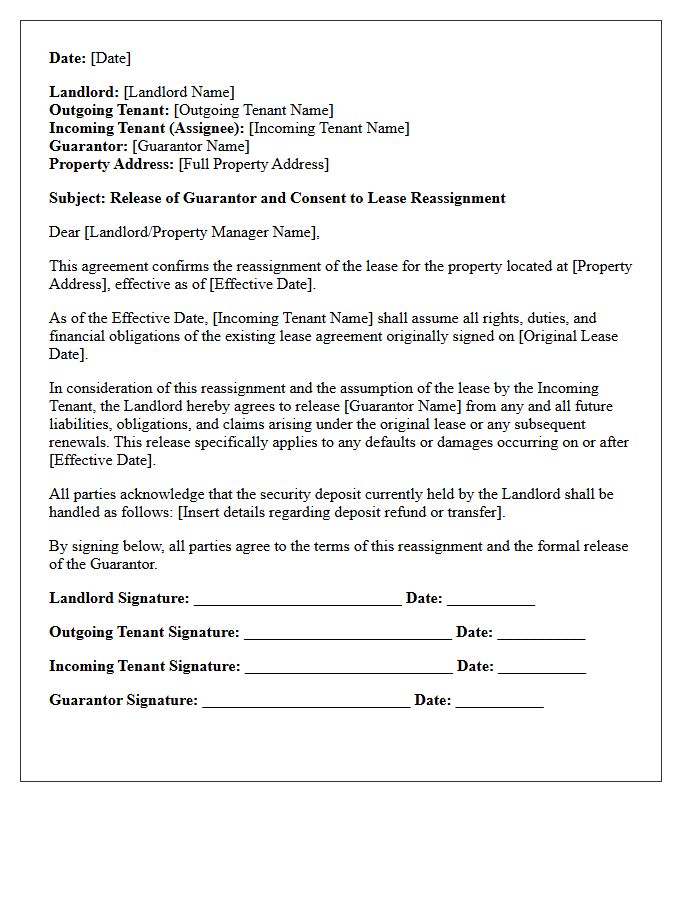
A Lease Reassignment Release of Guarantor is a critical legal document that terminates a co-signer's financial liability when a lease transfer occurs. It ensures that once a new tenant assumes the rental obligations, the original guarantor is no longer responsible for future rent payments or property damages. Without this formal written release, the initial guarantor may remain legally bound even after moving out. Both parties must sign this agreement to provide absolute indemnity and clear the previous guarantor from any remaining contractual debts or potential legal claims.
What is a Release of Guarantor from Lease Agreement Letter?
A Release of Guarantor from Lease Agreement Letter is a formal legal document issued by a landlord or property manager that officially discharges a co-signer from their financial obligations and liabilities under a specific rental contract.
When should I use a Release of Guarantor form?
This form should be used when a tenant has met specific criteria to stand alone on the lease, such as showing improved credit or income, or when a new guarantor is being substituted for the original one during the lease term.
Does a Release of Guarantor letter need to be notarized?
While not always legally required, having the Release of Guarantor letter notarized is highly recommended to verify the identities of all signing parties and to prevent future disputes regarding the authenticity of the discharge.
What information must be included in a Guarantor Release Letter?
The letter should include the names of the landlord, tenant, and guarantor, the property address, the original lease start date, the effective date of the release, and a clear statement that the guarantor is no longer liable for future rent or damages.
Can a landlord refuse to release a guarantor?
Yes, a landlord can refuse to release a guarantor unless the original lease agreement contained a specific "guarantor release clause" with conditions that the tenant has successfully met. Otherwise, any release is at the sole discretion of the landlord.


Comments