
Landlords often need to adjust rental rates when local governments increase property valuations. A Property Tax Assessment Rent Increase Letter serves as a formal notification to tenants, explaining how rising tax burdens necessitate a price adjustment. This ensures transparency and helps maintain property profitability while staying compliant with local regulations. Below are some ready to use template options to simplify your communication.

Image cover: Professional Property Tax Pass-Through Notice Templates and Samples
Letter Samples List
- Standard Property Tax Assessment Rent Increase Letter
- Commercial Property Tax Assessment Rent Increase Letter
- Residential Property Tax Assessment Rent Increase Letter
- Annual Property Tax Assessment Rent Increase Letter
- Mid-Lease Property Tax Assessment Rent Increase Letter
- Pass-Through Property Tax Assessment Rent Increase Letter
- Official Property Tax Assessment Rent Increase Letter
- Pro-Rata Property Tax Assessment Rent Increase Letter
- Retail Property Tax Assessment Rent Increase Letter
- Multi-Family Property Tax Assessment Rent Increase Letter
- Industrial Property Tax Assessment Rent Increase Letter
- Escalation Clause Property Tax Assessment Rent Increase Letter
Standard Property Tax Assessment Rent Increase Letter
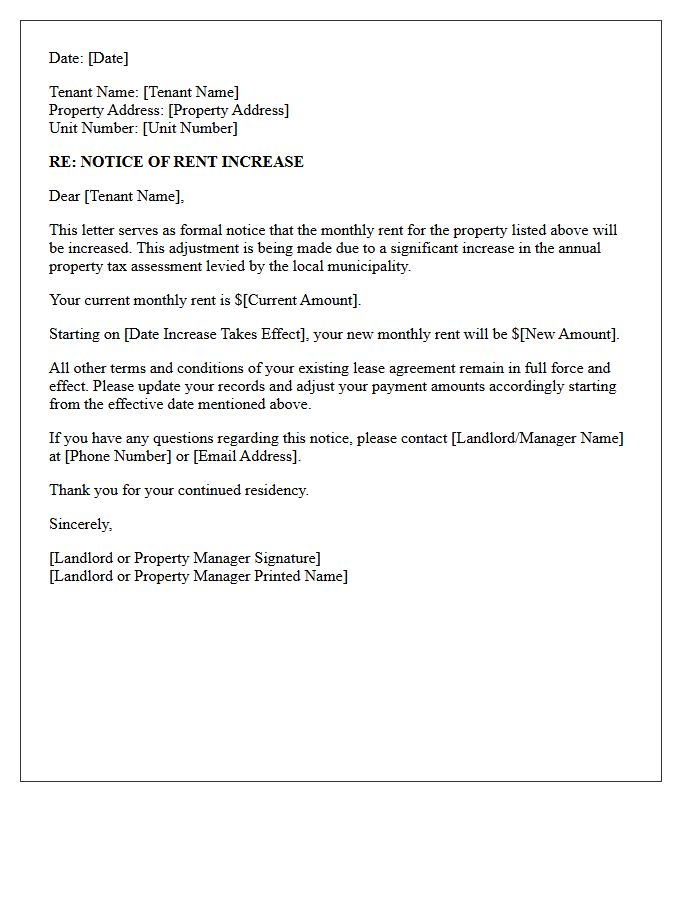
A standard property tax assessment rent increase letter notifies tenants that their monthly rent is rising due to an escalation in local government levies. The Tax Pass-Through clause in many commercial and residential leases allows landlords to recover these additional costs. It is essential to verify that the increase matches the actual percentage change in the property tax bill. Tenants should review their lease terms to ensure the calculation methodology is accurate and complies with local rent control regulations before the new payment cycle begins.
Commercial Property Tax Assessment Rent Increase Letter
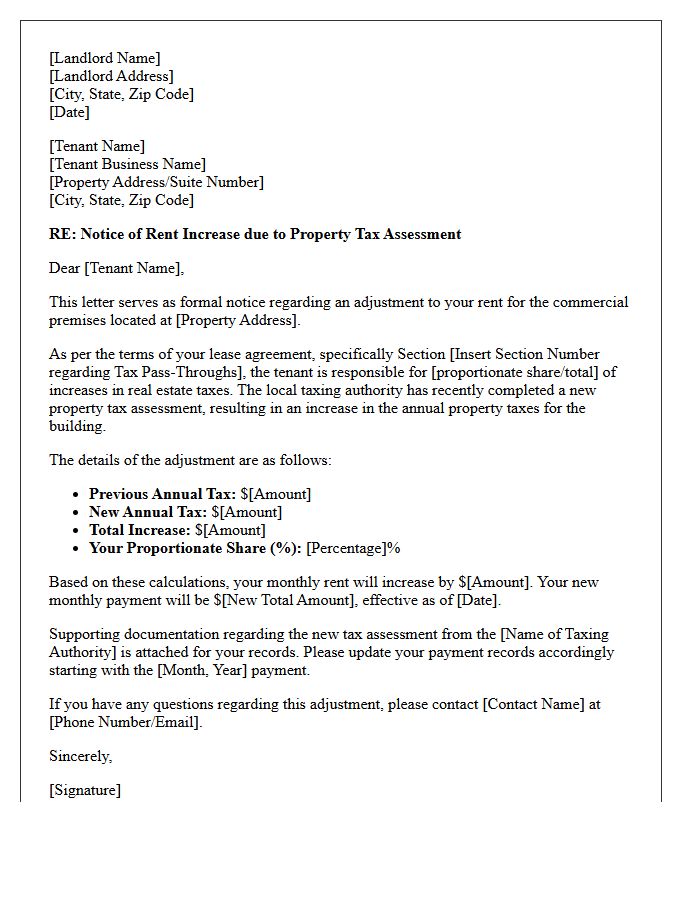
A Commercial Property Tax Assessment Rent Increase Letter notifies tenants that their operating expenses have risen due to a new government valuation. Most commercial leases contain a triple net (NNN) or tax escalation clause, allowing landlords to pass these costs directly to the occupant. Tenants should verify the assessment's accuracy and confirm the pro-rata share calculation matches their square footage. Reviewing the lease terms ensures the reimbursement request is legally valid, as these increases directly impact monthly overhead and long-term business budgeting.
Residential Property Tax Assessment Rent Increase Letter
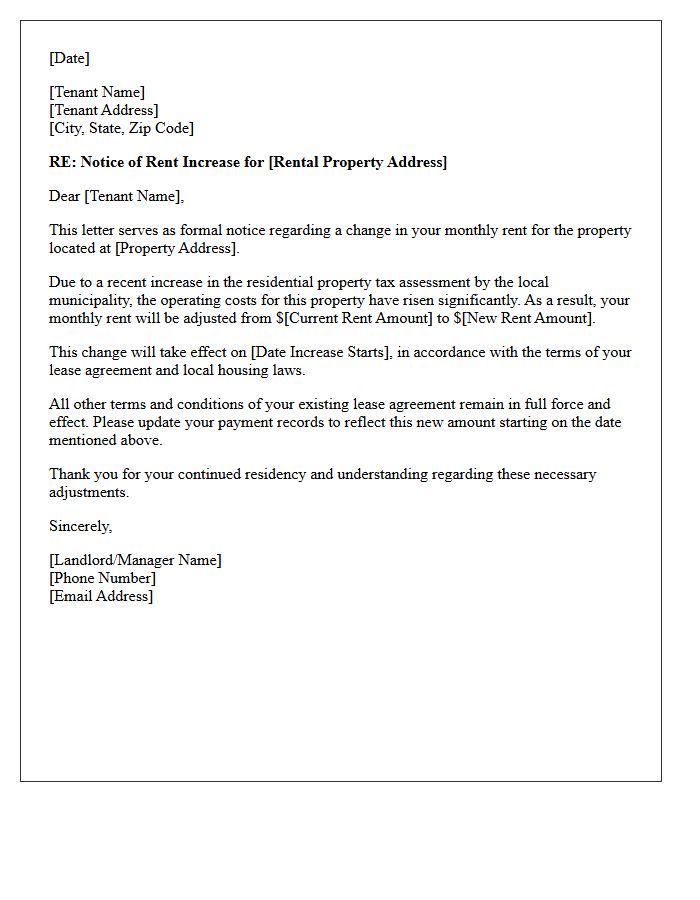
A residential property tax assessment rent increase letter notifies tenants that their monthly rent is rising due to higher property taxes. Landlords typically issue this notice when local government reassessments increase their overhead costs. It is essential to verify that the written notice complies with local rent control laws and provides the required 30 to 60-day warning period. Tenants should review their original lease agreement to ensure the landlord has the legal right to pass through these specific tax adjustments before the current term expires.
Annual Property Tax Assessment Rent Increase Letter
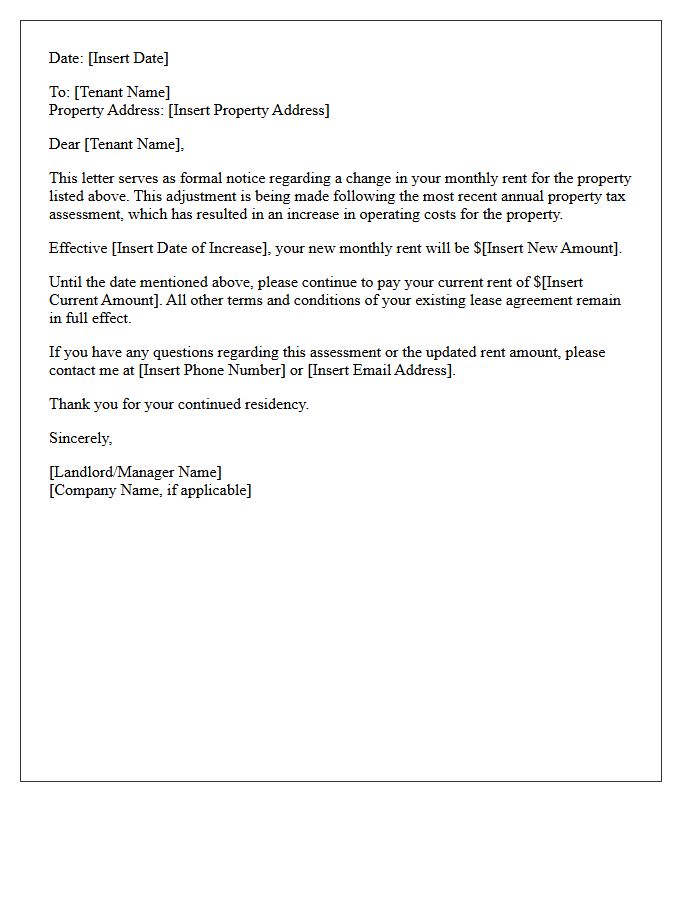
An Annual Property Tax Assessment Rent Increase Letter notifies tenants of a rent hike driven by rising municipal taxes. Landlords often use pass-through provisions in lease agreements to offset these operational costs. It is vital to verify that the increase complies with local rent control laws and matches the official tax assessment. The letter must provide a clear notice period, typically thirty days, before the new rate takes effect. Understanding these adjustments ensures transparency and legal compliance for both parties regarding property maintenance and fiscal responsibilities.
Mid-Lease Property Tax Assessment Rent Increase Letter
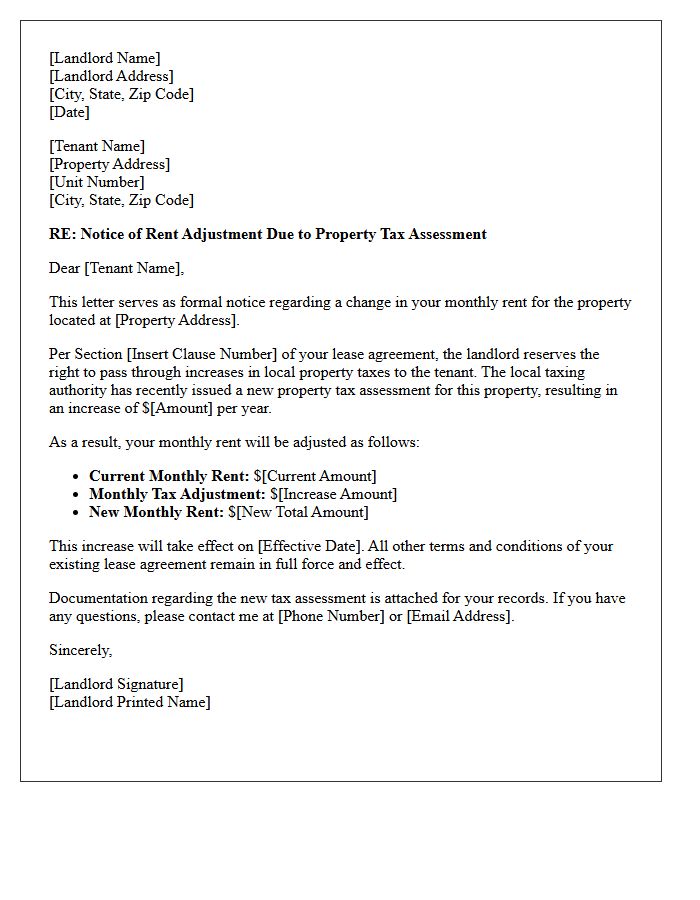
A Mid-Lease Property Tax Assessment Rent Increase Letter notifies tenants of a rent adjustment due to rising property taxes. Most commercial and some residential leases include tax escalation clauses, allowing landlords to pass through these government-imposed costs mid-term. It is essential to verify that your lease explicitly permits supplemental billing or adjustments before payment. The letter should clearly detail the prior assessment, the new tax amount, and the calculated pro-rata share. Always review the effective date to ensure compliance with local tenant notice requirements and lease terms.
Pass-Through Property Tax Assessment Rent Increase Letter
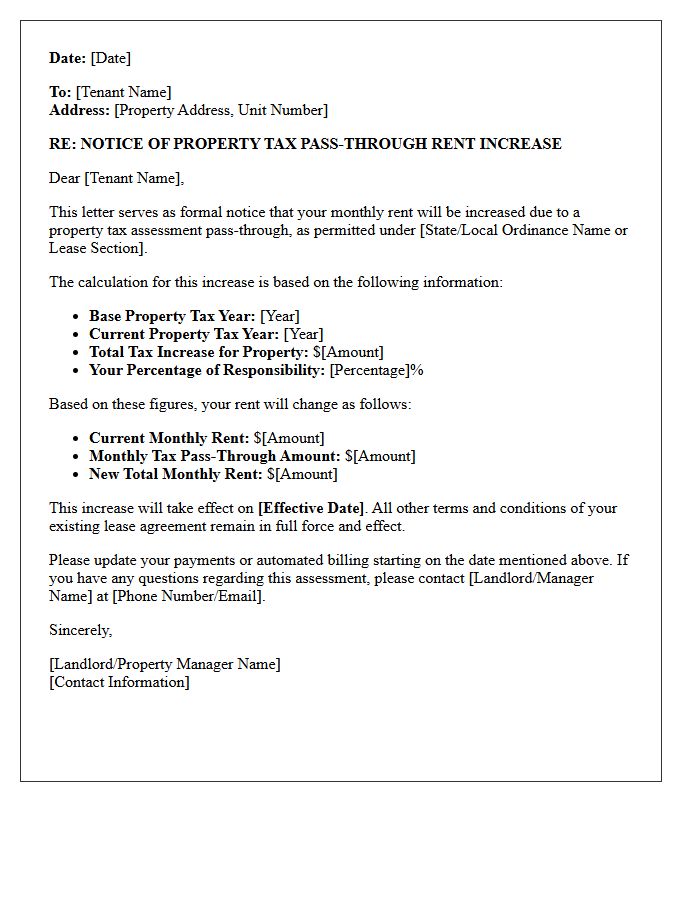
A Pass-Through Property Tax Assessment Rent Increase Letter notifies tenants of a rent surcharge allowed by local rent control boards. This legal notice explains that a portion of the landlord's increased property tax bill is being passed directly to the renter. It must detail the specific calculation, the monthly increment, and the effective date. Tenants should verify that the assessment increase is legally eligible for pass-through under municipal codes to ensure the charge is valid and properly documented according to local housing regulations.
Official Property Tax Assessment Rent Increase Letter
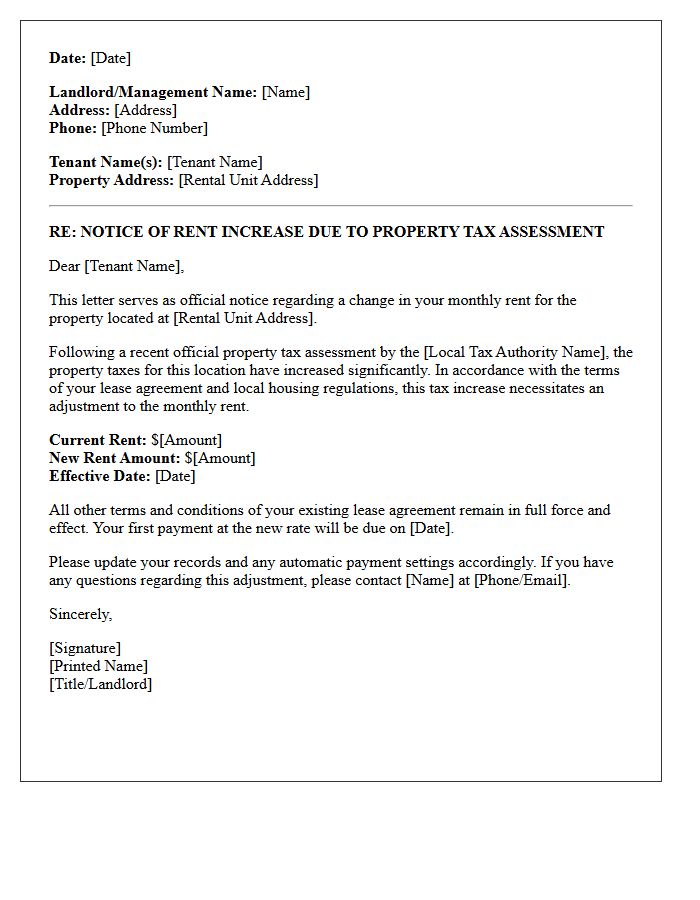
An official property tax assessment rent increase letter notifies tenants of a rent hike driven by rising property tax valuations. Landlords must provide proper written notice, typically 30 to 60 days in advance, depending on local regulations. It is essential to verify that the increase complies with rent control laws and lease terms. Tenants should check the assessment's accuracy and ensure the effective date aligns with legal requirements. Understanding these documents helps residents budget effectively and confirm that the adjustment is a justified response to municipal tax changes.
Pro-Rata Property Tax Assessment Rent Increase Letter
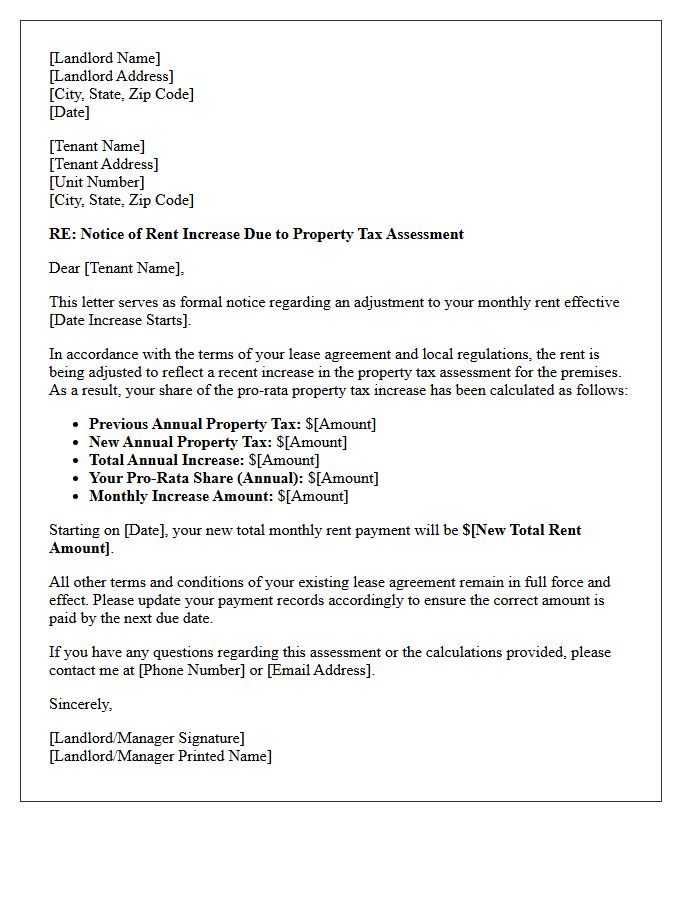
A Pro-Rata Property Tax Assessment Rent Increase Letter notifies tenants of a rent adjustment based on rising local property taxes. Landlords use this to pass through a proportional share of tax increases to residents as permitted by specific lease clauses or local rent control regulations. It is essential to verify that the calculation matches your percentage of building occupancy and that the written notice complies with legal timeframes. Reviewing your original lease agreement ensures the tax pass-through is valid, accurately calculated, and applied only to the current assessment period.
Retail Property Tax Assessment Rent Increase Letter
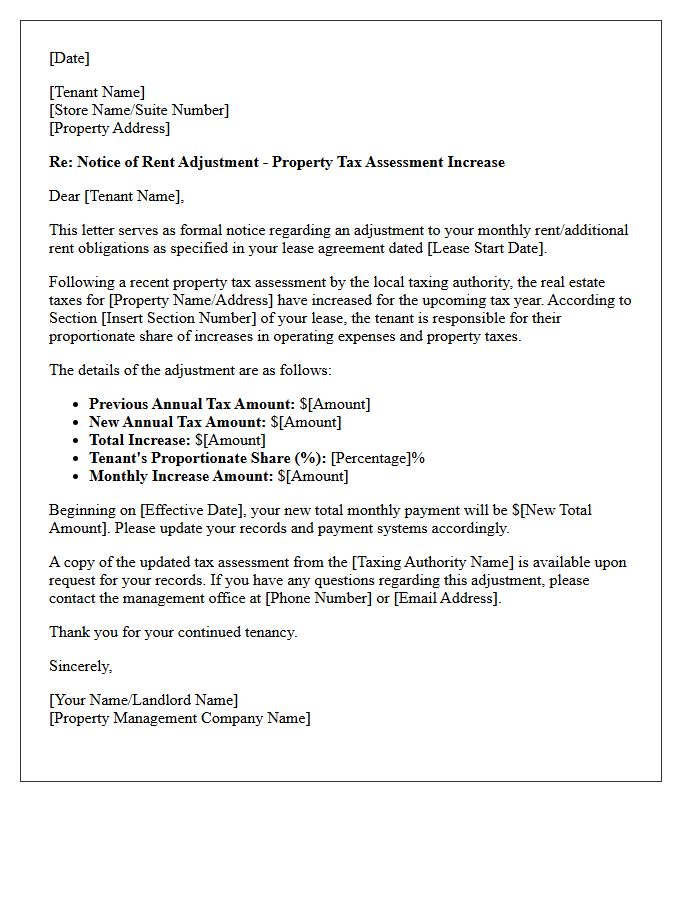
A retail property tax assessment rent increase letter notifies tenants of a higher triple net (NNN) charge due to updated municipal valuations. It is crucial to verify that the operating expenses clause in your lease allows for this passthrough. Landlords must provide a detailed breakdown of the assessment notice and proof of the tax bill. Tenants should check for pro-rata share accuracy and investigate if an appeal is being filed, as a successful challenge could lower the future tax liability and overall occupancy costs.
Multi-Family Property Tax Assessment Rent Increase Letter
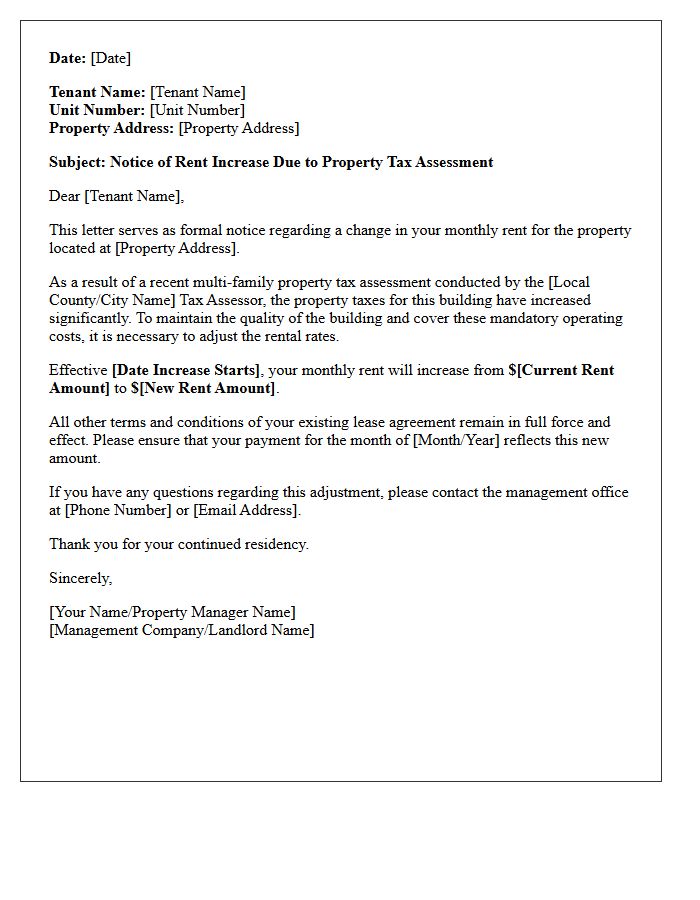
A Multi-Family Property Tax Assessment Rent Increase Letter notifies tenants of a rent hike due to rising property taxes. Landlords use this to offset increased overhead and maintain operating income. The letter must clearly state the new monthly amount, the effective date, and the specific tax justification. Many jurisdictions require a minimum notice period, typically 30 to 60 days, before the change takes effect. Ensuring the document complies with local rent control laws and lease terms is essential for legal validity and transparent communication with residents.
Industrial Property Tax Assessment Rent Increase Letter
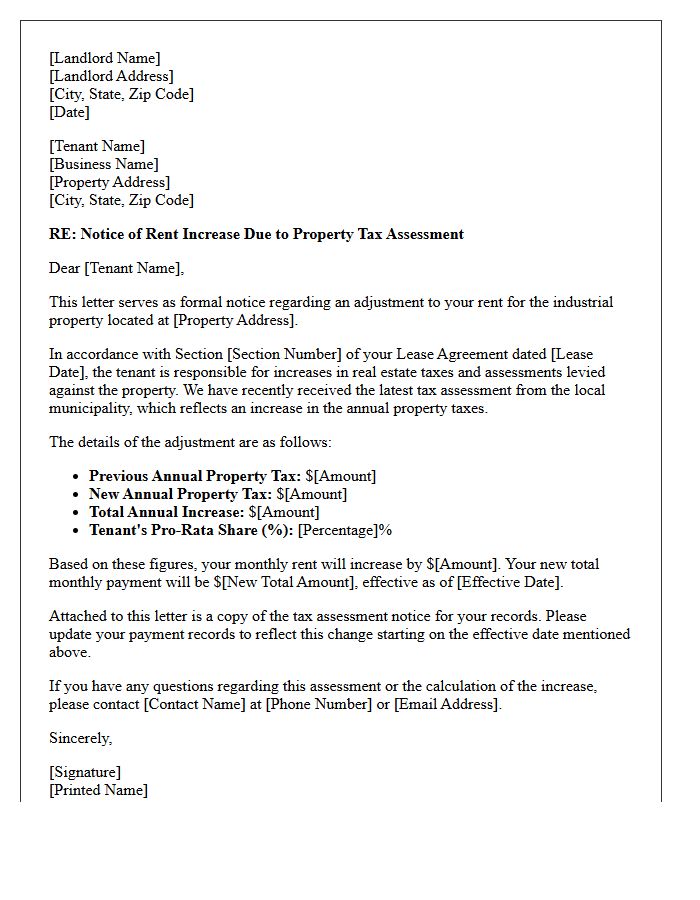
An Industrial Property Tax Assessment Rent Increase Letter notifies tenants that their triple net (NNN) lease obligations have changed due to new government valuations. Landlords use this formal notice to pass through increased operating expenses directly to the occupant. It is essential to verify the assessment's accuracy and review your lease agreement to ensure the prorated calculations align with your occupied square footage. Timely communication regarding these tax adjustments helps maintain transparent cash flow management for both parties during the fiscal year.
Escalation Clause Property Tax Assessment Rent Increase Letter
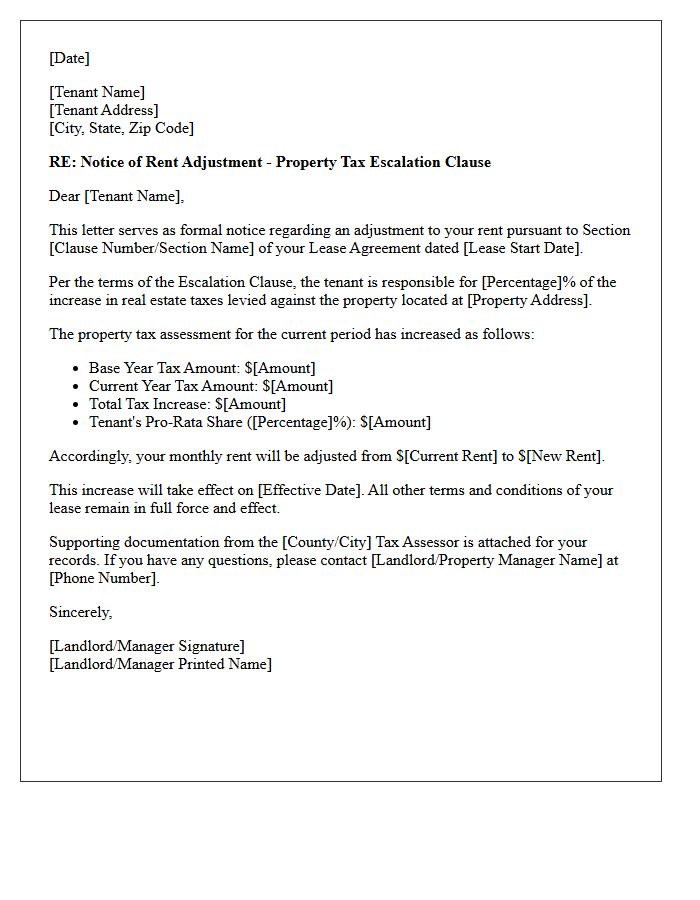
An escalation clause in a commercial lease allows landlords to pass increased operating costs directly to tenants. When a property tax assessment rises, this provision triggers a formal rent increase letter to adjust the monthly payment. It is vital for tenants to verify that these adjustments are based on actual tax bill changes rather than estimates. Understanding this clause ensures budgetary predictability and protects against unexpected financial liabilities during the lease term.
Does a property tax assessment increase justify a rent increase?
Yes, most jurisdictions allow landlords to pass on increased operating costs, including property tax hikes, to tenants. However, the increase must comply with local rent control laws and the terms specified in the existing lease agreement.
How much notice must a landlord provide for a rent increase due to property taxes?
In most regions, landlords are required to provide a written notice at least 30 to 60 days before the rent increase takes effect. Always check your local landlord-tenant act to ensure the notice period meets statutory requirements.
What information should be included in a Property Tax Assessment Rent Increase Letter?
The letter should include the current rent amount, the new rent amount, the effective date of the increase, and a brief explanation citing the higher property tax assessment as the primary reason for the adjustment.
Can a tenant dispute a rent increase based on property tax assessments?
Tenants can dispute an increase if it exceeds local rent stabilization caps or if the landlord failed to provide proper legal notice. If the property is under rent control, the landlord may need to file a petition with a local housing board before passing on tax costs.
Are rent increases for property taxes legal during a fixed-term lease?
Generally, a landlord cannot increase the rent during a fixed-term lease unless a specific clause in the contract allows for tax pass-throughs. Most rent increases occur at the time of lease renewal or when a lease transitions to a month-to-month agreement.

Comments