
Landlords must provide a Notice of Security Deposit Bank Account Location to inform tenants where their funds are being held. This legal disclosure ensures transparency regarding the financial institution's name and address, maintaining compliance with state rental laws and protecting tenant rights. Understanding these requirements helps avoid legal disputes. To simplify your process, below are some ready to use templates.
Image cover: Landlord's Guide: Security Deposit Bank Disclosure Templates and Notices
Letter Samples List
- Notice of Security Deposit Bank Account Location Letter
- Security Deposit Escrow Account Notification Letter
- Letter of Notice for Security Deposit Bank Location
- Tenant Notice of Security Deposit Placement Letter
- Property Management Security Deposit Bank Notice Letter
- Letter Regarding Security Deposit Bank Account Location
- Notification Letter of Security Deposit Depository Institution
- Initial Notice of Security Deposit Bank Account Letter
- Letter of Security Deposit Escrow Location Notice
- Annual Notice of Security Deposit Bank Location Letter
- Security Deposit Bank Account Disclosure Letter
- Change of Bank Account for Security Deposit Notice Letter
Notice of Security Deposit Bank Account Location Letter
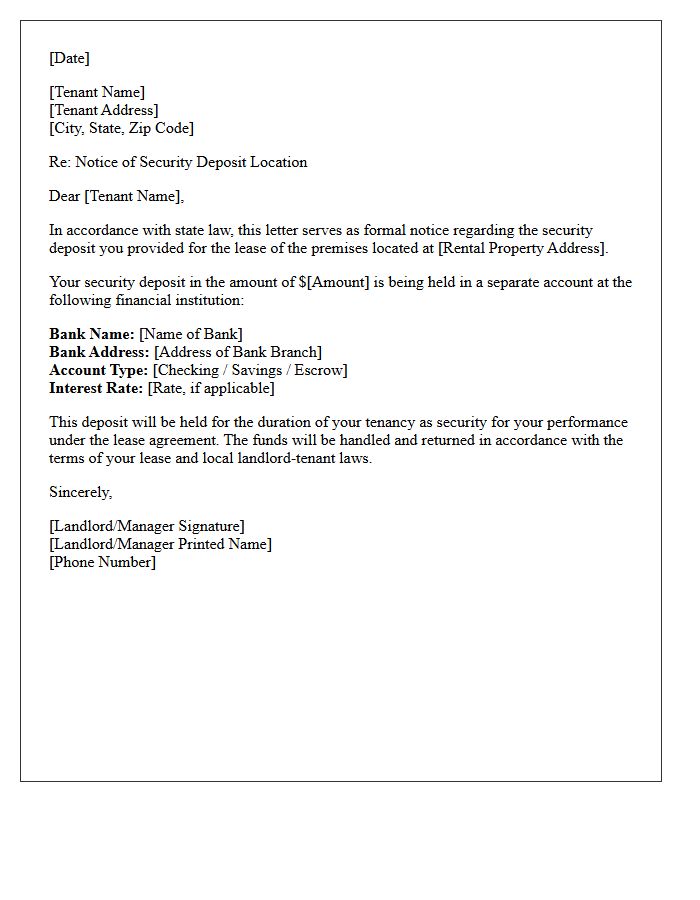
A Notice of Security Deposit Bank Account Location Letter is a mandatory legal document landlords must provide to tenants. This letter officially discloses the financial institution and physical address where the tenant's security deposit is held. Providing this written notification is crucial for transparency and compliance with state security deposit laws. Failure to issue this notice within a specific timeframe can sometimes entitle the tenant to the immediate return of their full deposit. It ensures the funds are protected in a separate account, safeguarding the tenant's money throughout the lease term.
Security Deposit Escrow Account Notification Letter
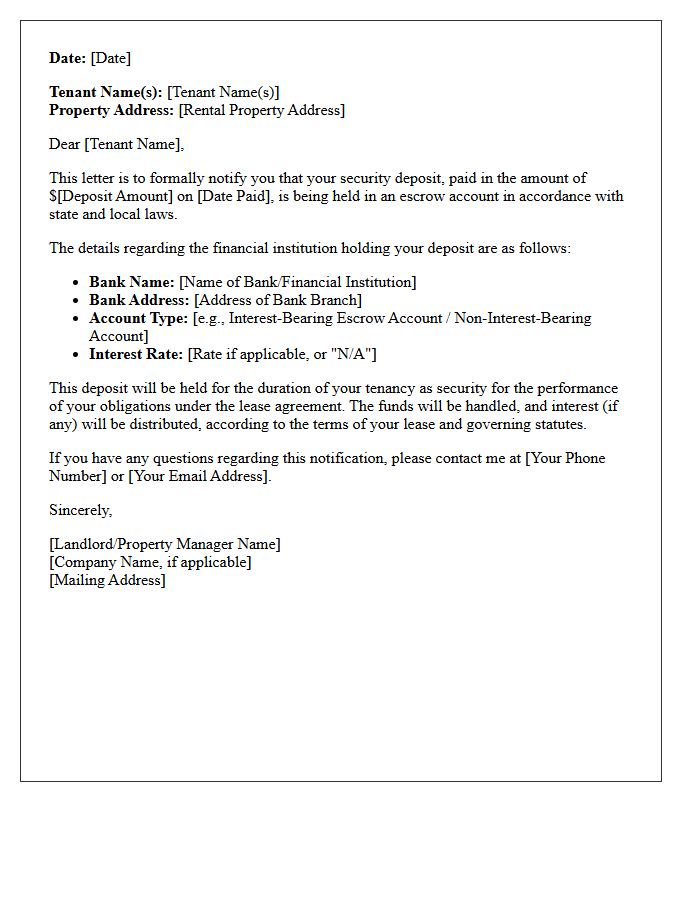
A Security Deposit Escrow Account Notification Letter is a mandatory legal document landlords must send to tenants after receiving a deposit. It officially confirms that the funds are held in a regulated financial institution, separate from the landlord's personal assets. Key details must include the bank's name, address, and the specific account number. Providing this written notice within a state-mandated timeframe-typically 30 days-is crucial for legal compliance. Failure to issue this notification may grant tenants the right to demand the immediate return of their full security deposit.
Letter of Notice for Security Deposit Bank Location
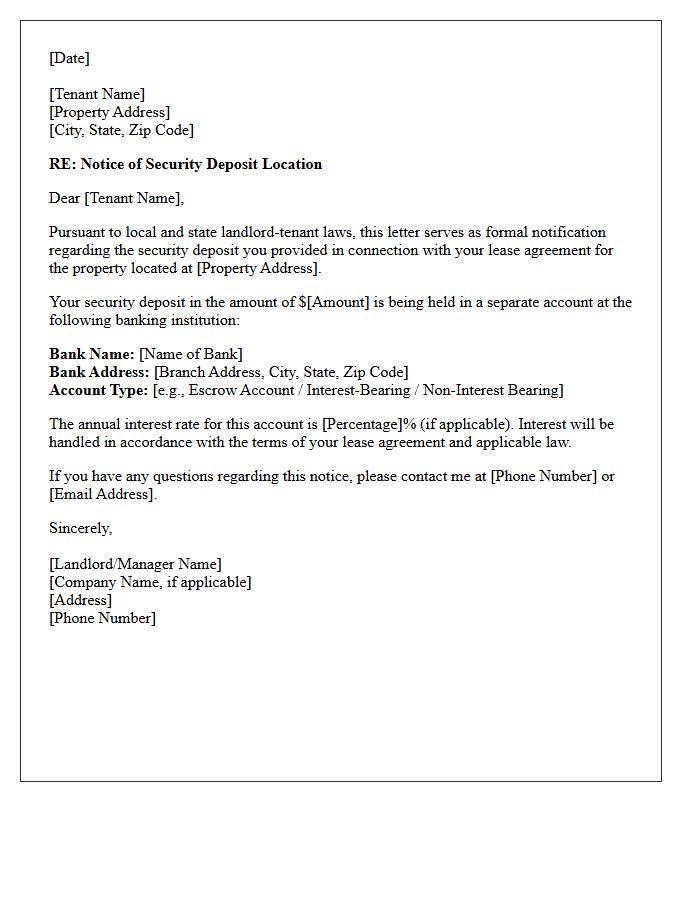
Under many rental laws, a landlord must provide a written Letter of Notice informing the tenant of the specific bank location where their security deposit is held. This document must include the financial institution's name and address to ensure transparency and fund protection. Failure to disclose this depository information within the legal timeframe-often thirty days-may grant the tenant a right to the immediate return of their money. Always verify local statutes to ensure the notice meets all compliance requirements for protecting your security deposit.
Tenant Notice of Security Deposit Placement Letter
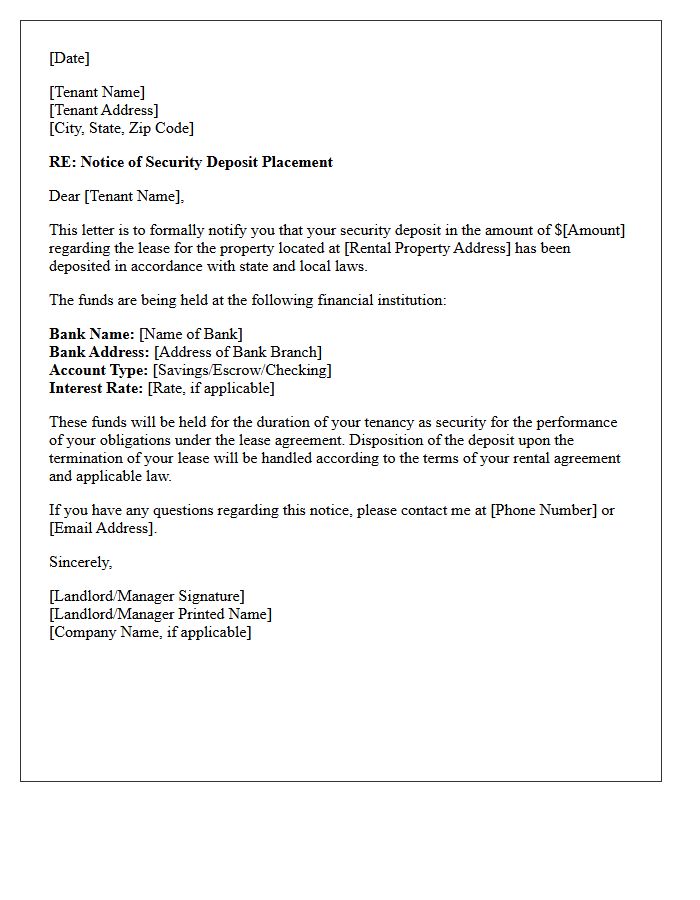
A Tenant Notice of Security Deposit Placement Letter is a mandatory legal document informing renters where their funds are held. Landlords must disclose the financial institution name and address within a specific timeframe, typically 30 days. This notice ensures transparency and protects the security deposit from being commingled with personal assets. Failure to provide this written notification can result in penalties or the forfeiture of the right to withhold funds for damages. It serves as essential proof that the landlord is complying with state-specific escrow account regulations.
Property Management Security Deposit Bank Notice Letter
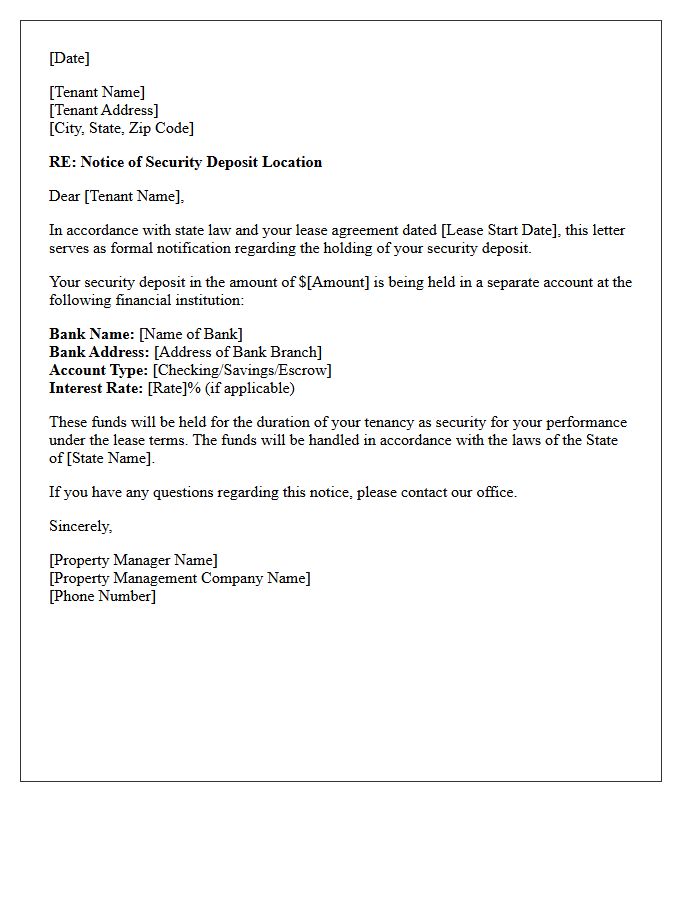
A property management security deposit bank notice letter is a legal requirement in many jurisdictions to inform tenants where their funds are held. This disclosure must include the financial institution's name and address. Landlords or managers must provide this written notice within a specific timeframe, typically 30 days, after receiving the payment. Maintaining transparent records ensures compliance with escrow account regulations and protects both parties. Failure to issue this document can result in penalties or the forfeiture of the right to retain any portion of the deposit for future damages.
Letter Regarding Security Deposit Bank Account Location
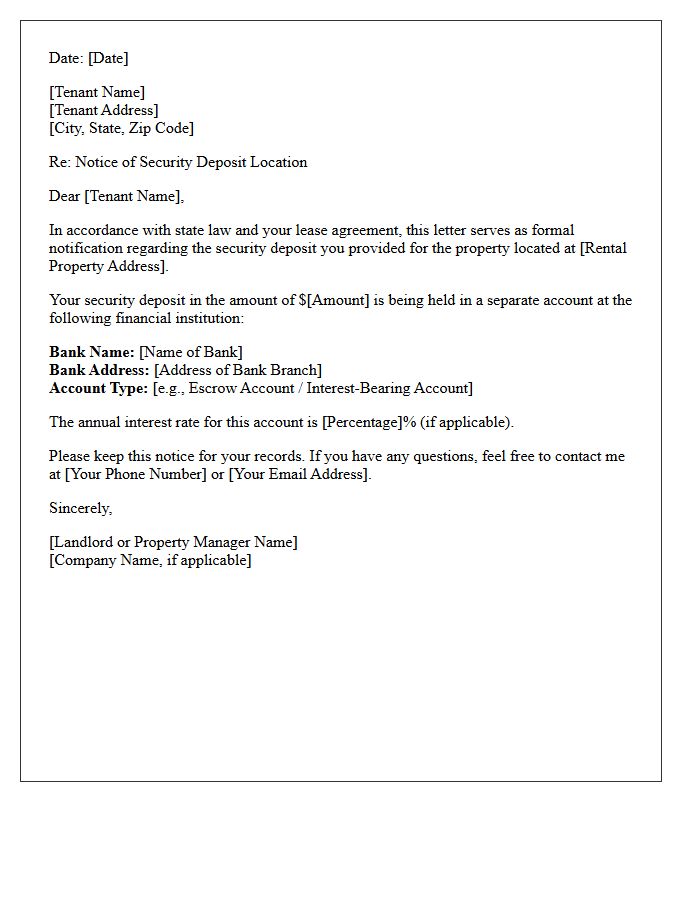
Landlords in many jurisdictions are legally required to provide a formal Letter Regarding Security Deposit Bank Account Location to their tenants. This mandatory notice must include the bank's name, its physical address, and the specific account number where the funds are held. Failure to disclose this information within the required timeframe, usually thirty days, may result in legal penalties or the forfeiture of the right to withhold the deposit. Ensuring transparency regarding escrow accounts protects both parties and ensures compliance with local rental housing regulations.
Notification Letter of Security Deposit Depository Institution
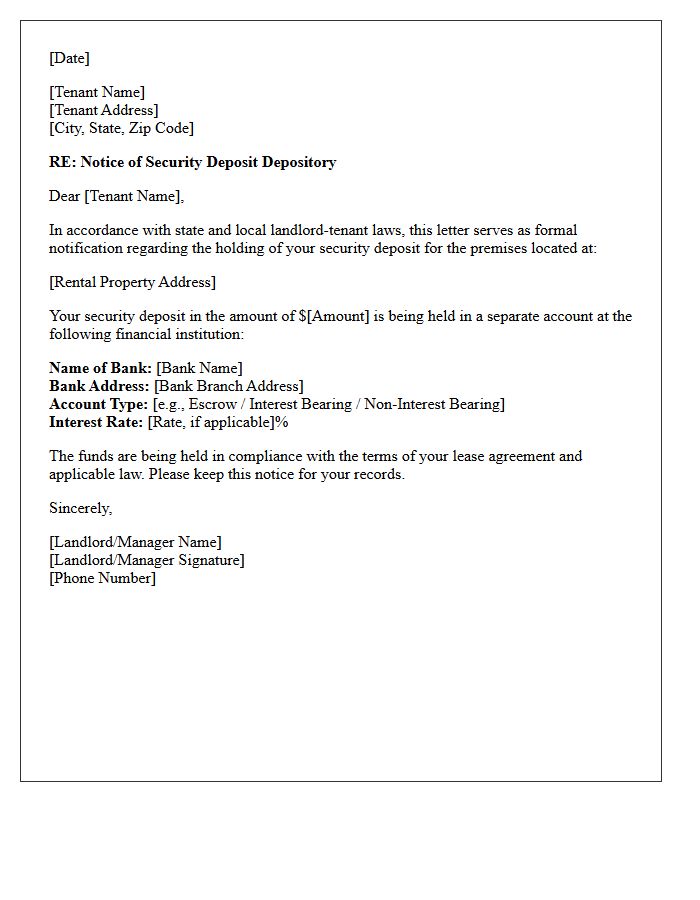
A Notification Letter of Security Deposit Depository Institution is a mandatory legal document landlords must provide to tenants. This notice formally identifies the financial institution where the tenant's security deposit is held. In many jurisdictions, state law requires this disclosure within 30 days of receiving the funds. It must include the bank's name, address, and the specific account details. Providing this transparency ensures the protection of funds and helps prevent commingling with the landlord's personal assets, maintaining legal compliance and tenant trust throughout the lease term.
Initial Notice of Security Deposit Bank Account Letter
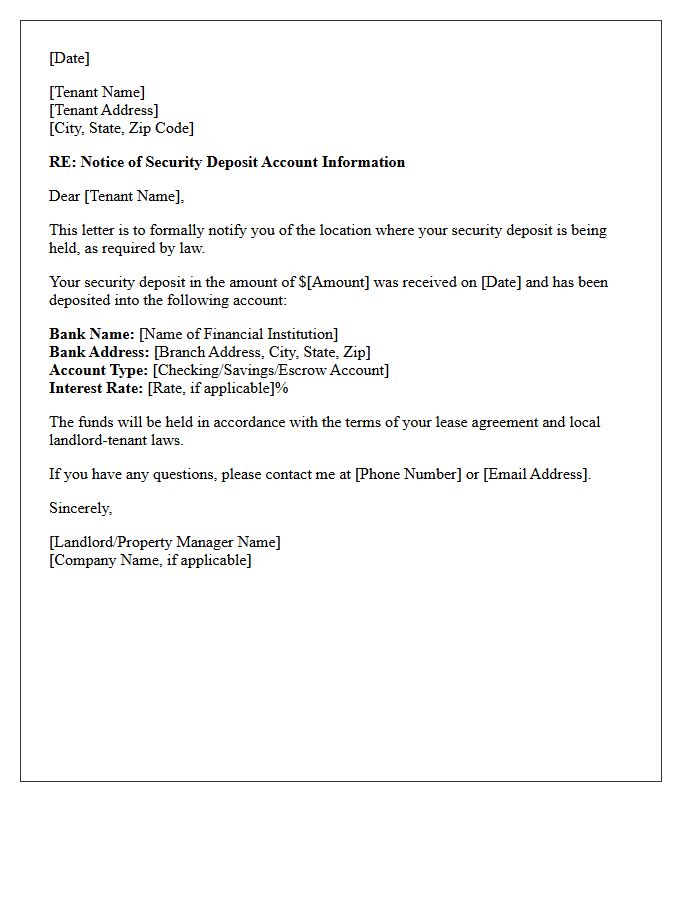
An Initial Notice of Security Deposit Bank Account Letter is a mandatory document used by landlords to inform tenants where their funds are held. To comply with local laws, this letter must disclose the financial institution name and the physical address of the bank. It serves as legal proof of deposit protection, ensuring transparency regarding interest-bearing or non-interest accounts. Providing this written notice within the required timeframe-often 30 days-is essential to maintain the landlord's right to withhold funds for future damages or unpaid rent at lease termination.
Letter of Security Deposit Escrow Location Notice
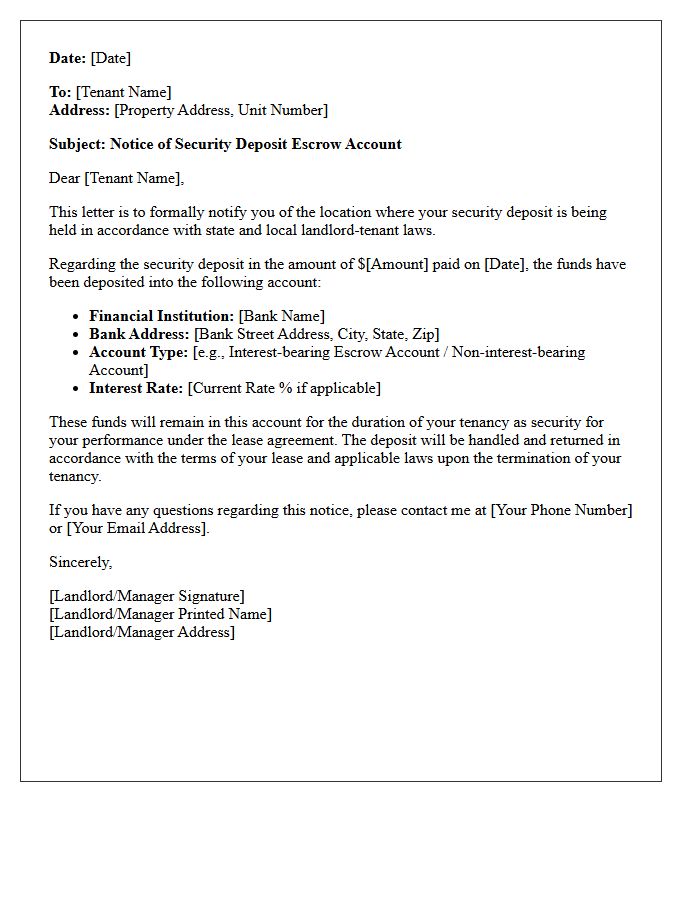
A Letter of Security Deposit Escrow Location Notice is a mandatory document informing tenants where their funds are held. Landlords must disclose the financial institution name and address within a specific timeframe, typically 30 days. This notice ensures transparency and protects the tenant's money from being commingled with personal assets. Failure to provide this written notification can result in legal penalties or the required forfeiture of the deposit back to the tenant. It serves as essential proof that the landlord is complying with state security deposit escrow account regulations.
Annual Notice of Security Deposit Bank Location Letter
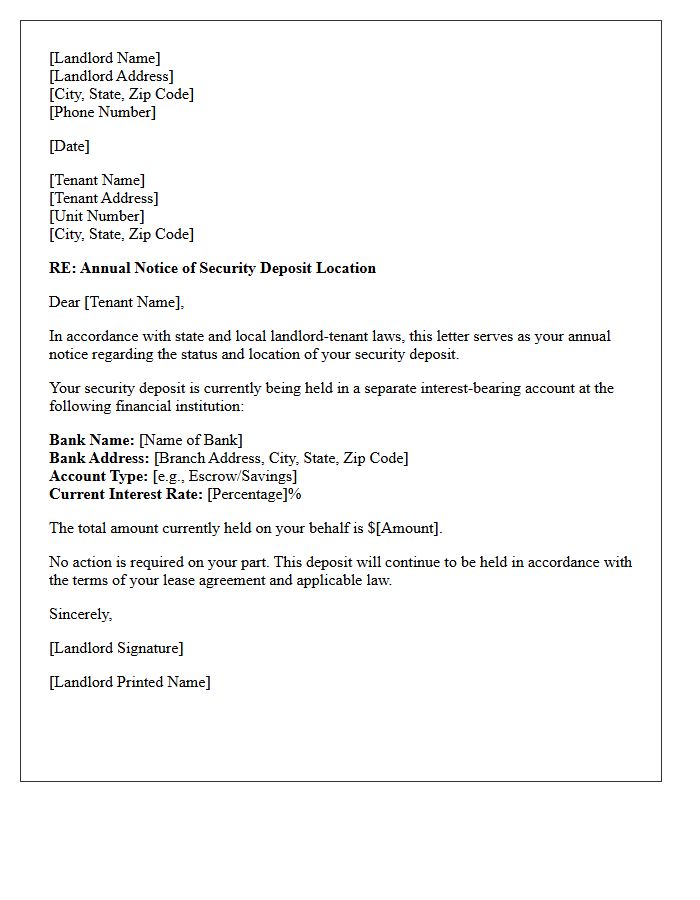
Landlords must provide an Annual Notice of Security Deposit Bank Location to tenants to ensure transparency regarding held funds. This legal document identifies the specific financial institution and the account's interest rate where the deposit is secured. Failure to deliver this notice annually can sometimes entitle tenants to receive their full deposit back immediately or apply it toward rent. It is a critical compliance step for maintaining legal protection and confirming that tenant money remains in a regulated, interest-bearing escrow account separate from the landlord's personal finances.
Security Deposit Bank Account Disclosure Letter
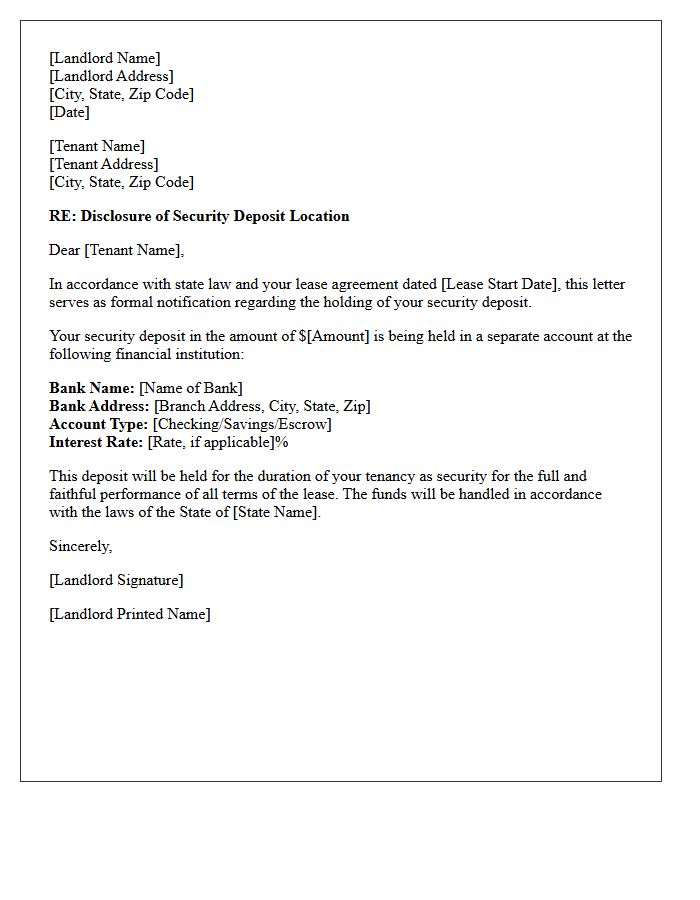
A Security Deposit Bank Account Disclosure Letter is a formal notice landlords must provide to tenants. This document identifies the financial institution and the specific account details where the security deposit is held. It ensures transparency and legal compliance with state rental laws, protecting the tenant's funds from being commingled with personal assets. Providing this written disclosure within a set timeframe is a critical legal requirement that safeguards the tenant's right to know exactly where their money is being stored throughout the duration of the lease agreement.
Change of Bank Account for Security Deposit Notice Letter
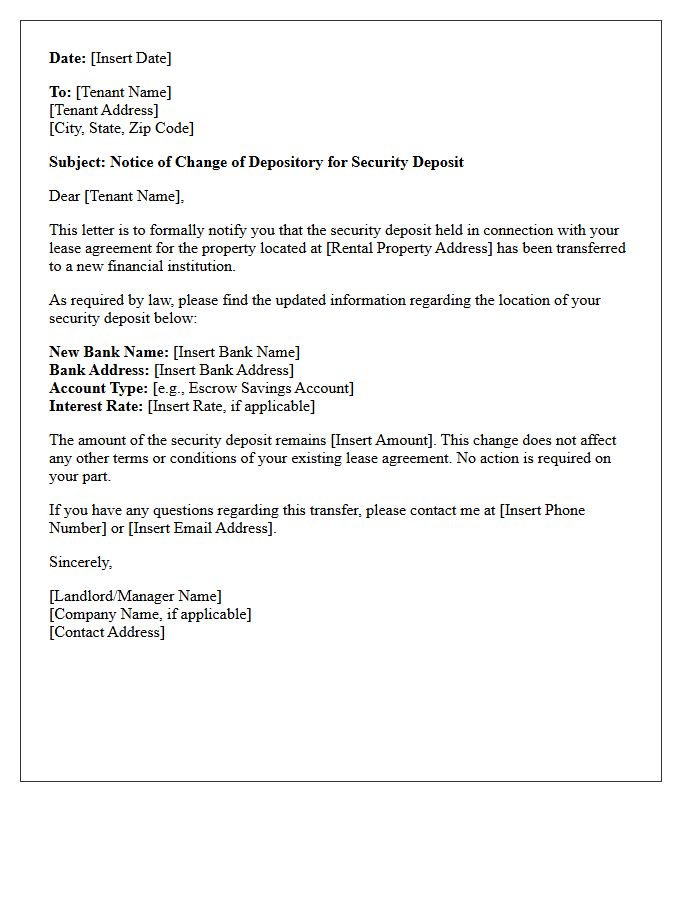
A Change of Bank Account for Security Deposit Notice Letter is a formal document used to inform tenants of new escrow account details. To ensure compliance with landlord-tenant laws, the notice must include the new bank's name, address, and the specific account number. Providing this written update maintains transparency and protects the legal validity of the security deposit holding. Landlords should issue this letter promptly whenever financial institutions or account locations change to prevent future disputes over escrow fund management and interest accrual.
What is a Notice of Security Deposit Bank Account Location?
A Notice of Security Deposit Bank Account Location is a formal written document provided by a landlord to a tenant disclosing the name and address of the financial institution where the tenant's security deposit is being held in escrow.
Is a landlord required to provide the bank account location for a security deposit?
In many jurisdictions, state law requires landlords to notify tenants in writing of the specific bank name, branch address, and account details where the security deposit is held within 30 days of receiving the funds.
Does the security deposit have to be held in an interest-bearing account?
Whether a security deposit must earn interest depends on local state statutes and the number of units owned by the landlord. If interest is earned, the notice should specify the interest rate and how the interest will be paid to the tenant.
What information must be included in the bank account disclosure notice?
The notice must typically include the landlord's name, the name of the banking institution, the full street address of the bank branch, the account type, and the amount of the deposit currently held.
What happens if a landlord fails to provide the security deposit location notice?
Failure to provide a timely Notice of Security Deposit Bank Account Location may result in legal penalties, including the requirement for the landlord to return the full deposit immediately or being barred from making claims against the deposit for damages.

Comments