
Receiving a Notification of Compromised Debit Card requires immediate action to protect your finances. Security breaches can expose your sensitive banking details to unauthorized transactions and identity theft. This guide explains how to respond swiftly, secure your account, and prevent future fraud. To simplify your communication with financial institutions, below are some ready to use template.
Image cover: Essential Notification Templates for a Compromised Debit Card
Letter Samples List
- Urgent Letter Regarding Your Compromised Debit Card
- Debit Card Security Breach Notification Letter
- Letter of Notification for a Compromised Debit Card
- Fraud Alert and Debit Card Compromise Letter
- Official Bank Letter Regarding Debit Card Security Compromise
- Letter of Compromised Debit Card Replacement
- Notice of Debit Card Compromise Letter
- Account Security Letter for Compromised Debit Card
- Precautionary Debit Card Block and Compromise Letter
- Letter Notifying Customer of Potential Debit Card Compromise
- Confidential Letter Regarding Debit Card Compromise Incident
- Action Required Letter for Compromised Debit Card
Urgent Letter Regarding Your Compromised Debit Card
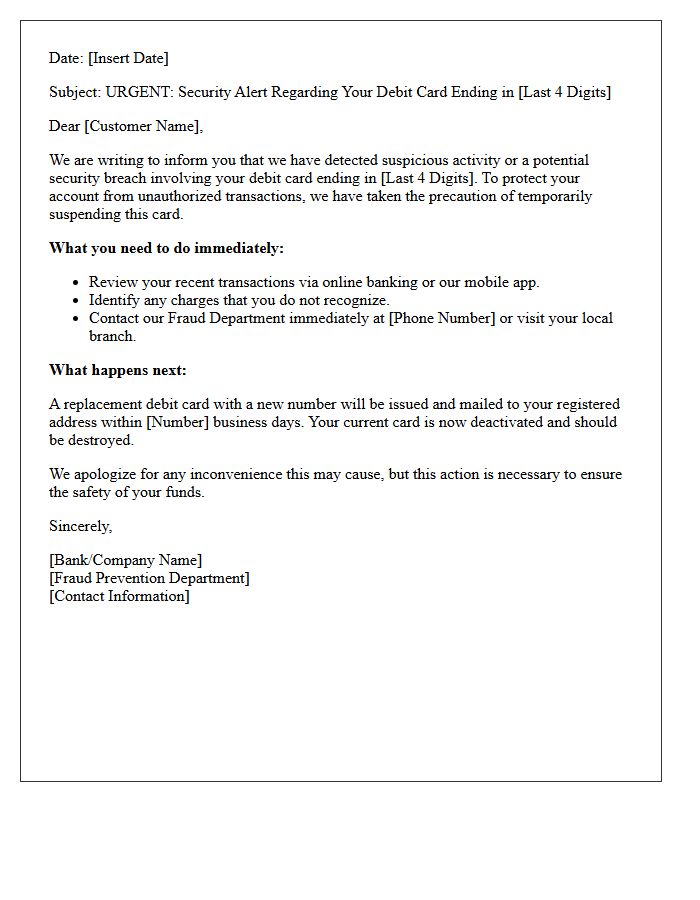
An urgent letter regarding your compromised debit card requires immediate attention to prevent unauthorized transactions. Financial institutions issue these alerts when they detect suspicious activity or a potential data breach. You must verify the sender's identity before sharing personal information to avoid phishing scams. Contact your bank directly using the official number on the back of your card to freeze your account and request a secure replacement. Timely action is essential to protect your balance and maintain your financial security against fraudulent access.
Debit Card Security Breach Notification Letter
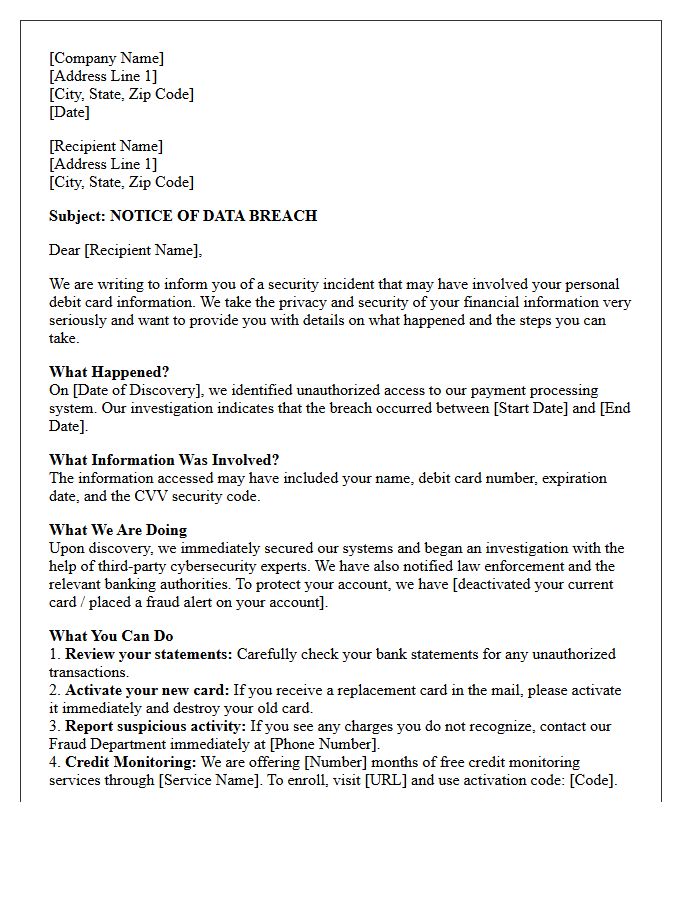
A Debit Card Security Breach Notification Letter is a critical document sent by financial institutions to inform you that your personal financial data may be compromised. It typically outlines which information was accessed, such as card numbers or names, and provides steps for identity protection. Always verify the letter's authenticity to avoid phishing scams. Upon receipt, you should immediately review your bank statements for unauthorized charges and consider freezing your credit or requesting a new card to prevent potential fraudulent transactions and secure your funds.
Letter of Notification for a Compromised Debit Card
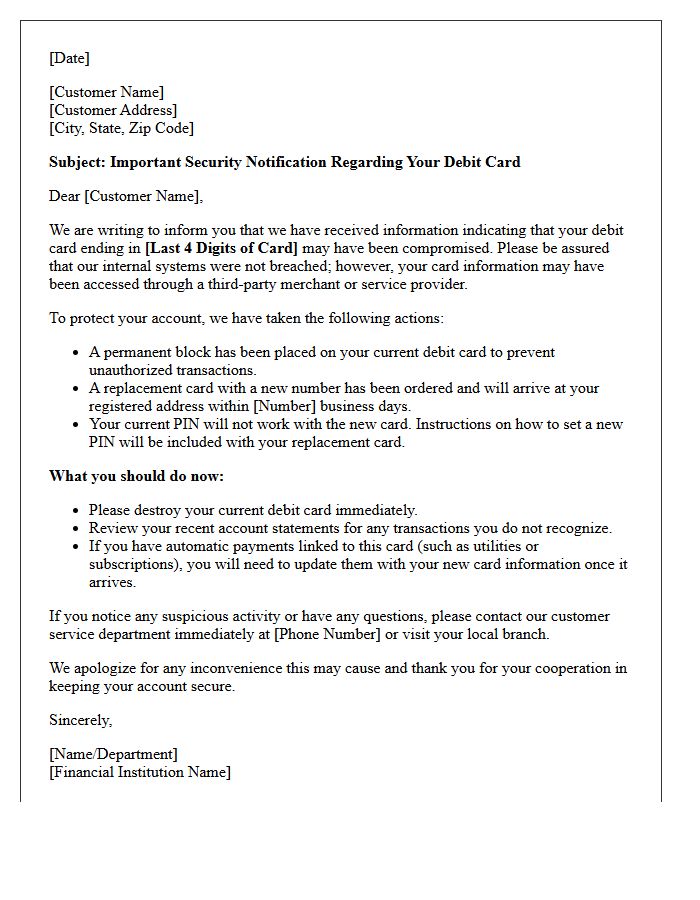
Receiving a Letter of Notification for a compromised debit card indicates that your financial data may have been exposed during a security breach. This formal notice confirms that your card information was potentially accessed by unauthorized parties. To prevent fraudulent transactions, your bank will often deactivate the current card and issue a replacement. It is essential to review your account statements immediately for suspicious activity and update any automatic payments linked to the old card number to ensure uninterrupted service and maintain financial security.
Fraud Alert and Debit Card Compromise Letter
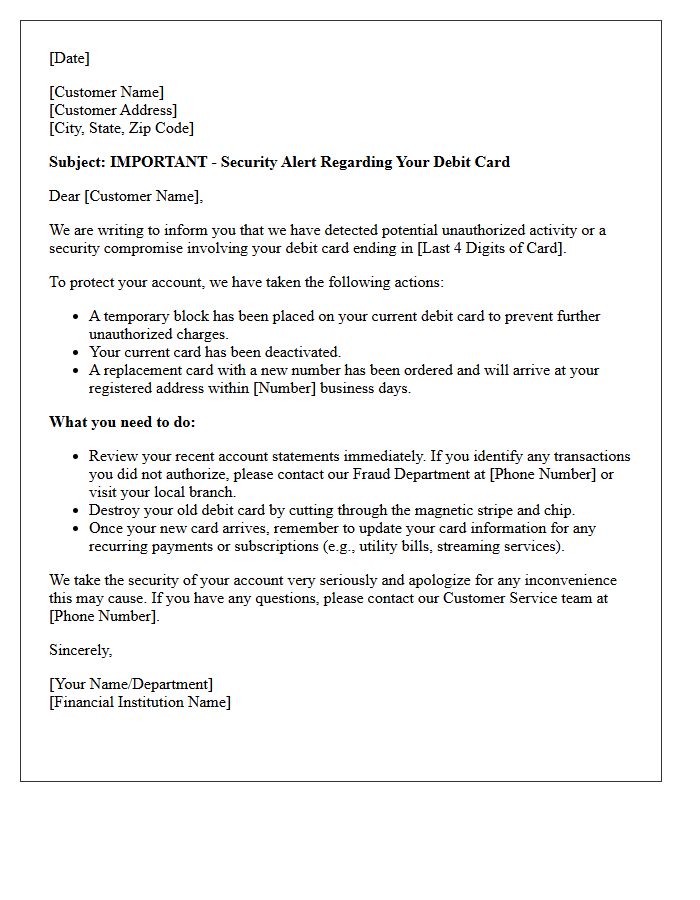
A Fraud Alert is a critical security notification sent when your financial institution detects suspicious activity. Receiving a Debit Card Compromise Letter means your card details may have been exposed through a merchant data breach. To protect your funds, you must immediately verify the transactions and follow the instructions to deactivate your current card. Promptly replacing your card and updating your PIN are essential steps to prevent unauthorized access. Always ensure your bank has your current contact information to receive these urgent alerts without delay.
Official Bank Letter Regarding Debit Card Security Compromise
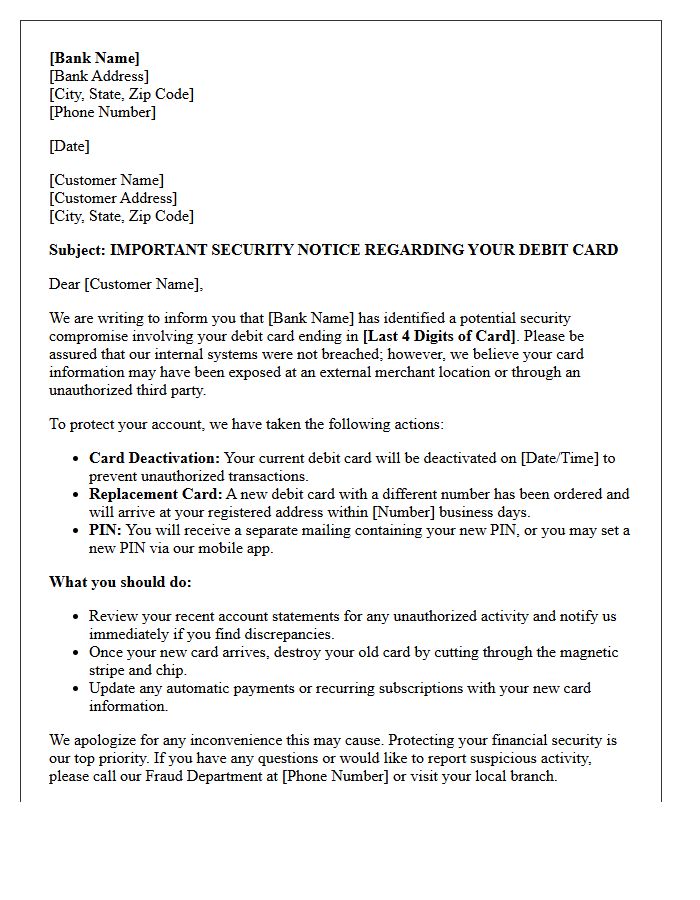
An official bank letter regarding a debit card security compromise is a critical notice informing you of unauthorized access to your financial data. To ensure fraud prevention, the bank will typically deactivate your existing card and issue a replacement. Always verify the letter's authenticity by checking for your specific account details and contacting the bank through their official website or app. Never share your PIN or CVV. Promptly reviewing your recent transactions for suspicious activity is essential to protecting your balance and maintaining your long-term financial security.
Letter of Compromised Debit Card Replacement
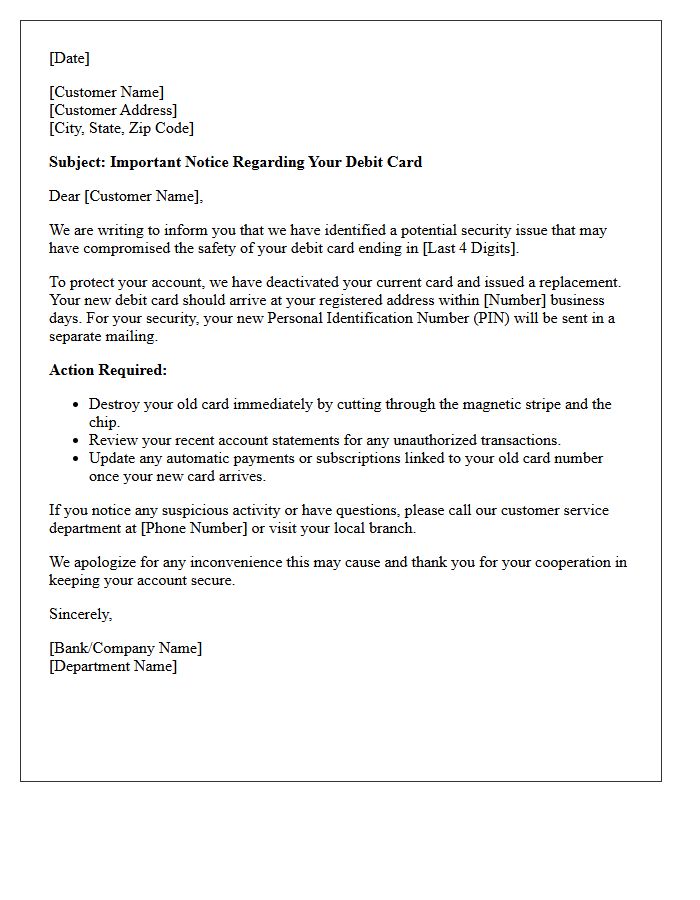
Receiving a Letter of Compromised Debit Card Replacement means your financial data may have been exposed during a third-party security breach. To protect your funds, the bank is proactively issuing a new card with a unique card number and CVV. You must activate the new card immediately and update any automatic payments or recurring subscriptions. Most importantly, ensure you destroy your old card to prevent identity theft or unauthorized transactions. This replacement is a preventative measure to maintain your account's security and integrity.
Notice of Debit Card Compromise Letter
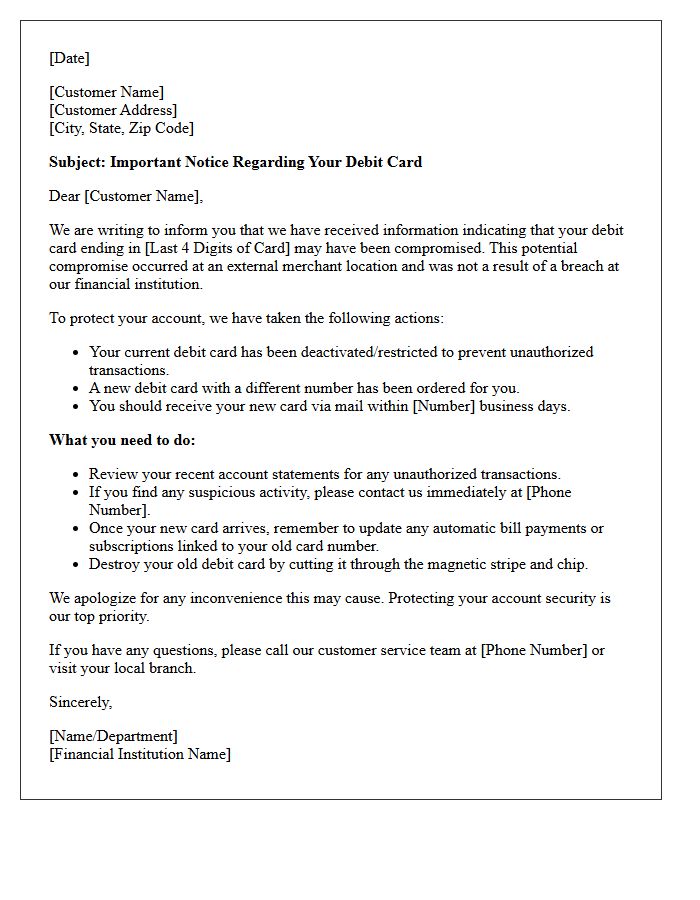
A Notice of Debit Card Compromise Letter is a formal alert from your financial institution indicating that your card information may have been exposed due to a security breach. Receiving this notification means you should immediately monitor your account for unauthorized transactions. Typically, the bank will automatically deactivate your current card and issue a replacement to prevent identity theft. It is essential to update any automatic payments linked to the old card number to ensure continuous service and maintain your financial security.
Account Security Letter for Compromised Debit Card
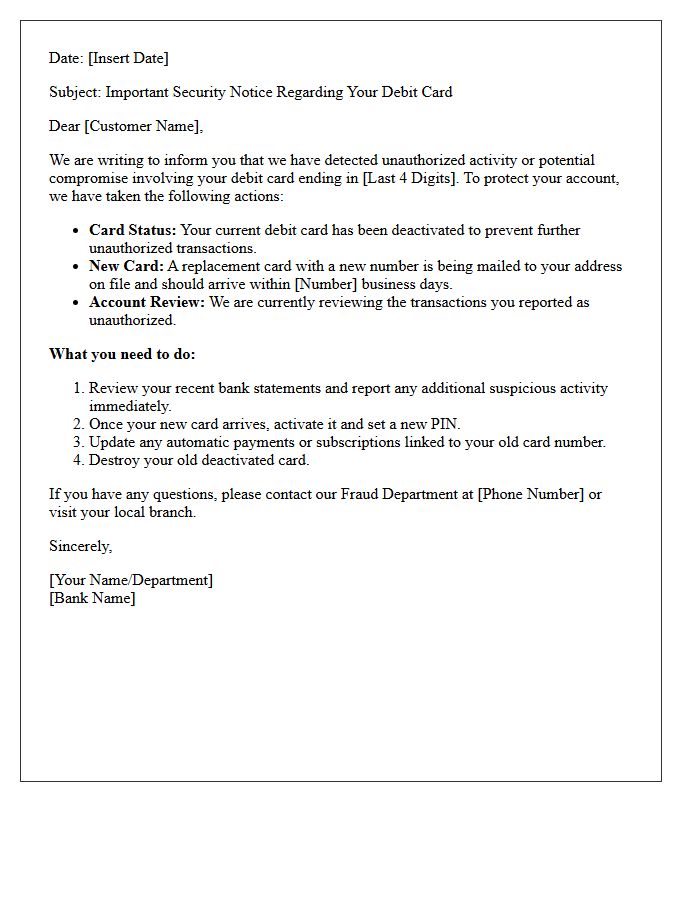
An Account Security Letter is a formal notice sent by your bank when a compromised debit card is detected. This document confirms that your card information was potentially exposed to unauthorized parties, often due to a data breach. To prevent fraud, the bank will typically deactivate your current card and issue a replacement. It is essential to review your transaction history for suspicious activity and update your payment information for all recurring bills to ensure uninterrupted service. Always verify the letter's authenticity through your bank's official mobile app or website.
Precautionary Debit Card Block and Compromise Letter
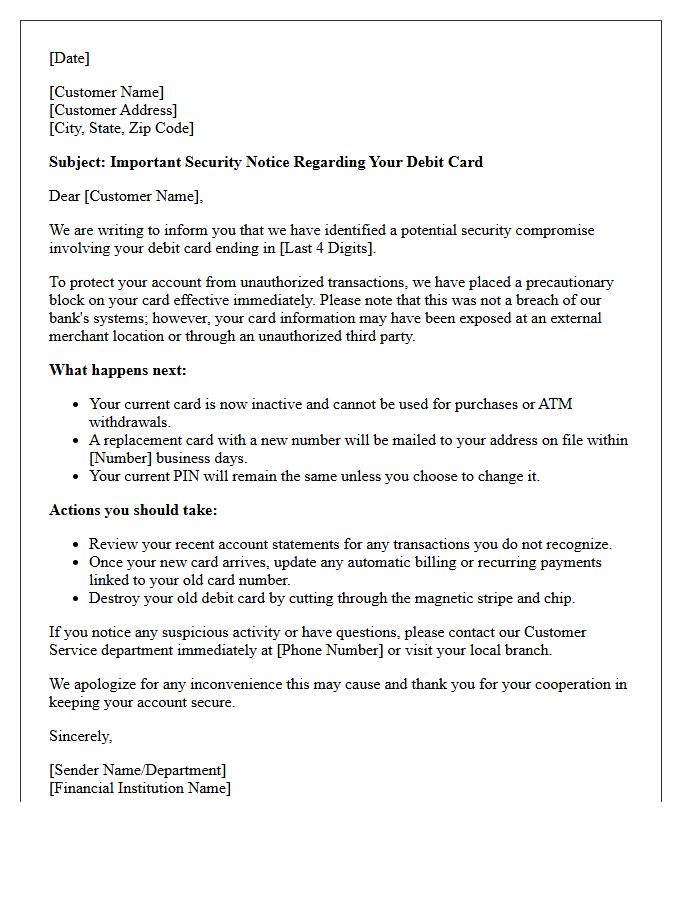
A Precautionary Debit Card Block is a security measure banks use when they suspect your card data has been compromised at a merchant location or through a data breach. You will receive a Compromise Letter notifying you that your current card is being deactivated to prevent unauthorized transactions. This is a proactive step to protect your funds, even if no fraud has occurred yet. Always follow the instructions in the letter to activate your replacement card and update any linked automatic payments to maintain uninterrupted access to your account.
Letter Notifying Customer of Potential Debit Card Compromise
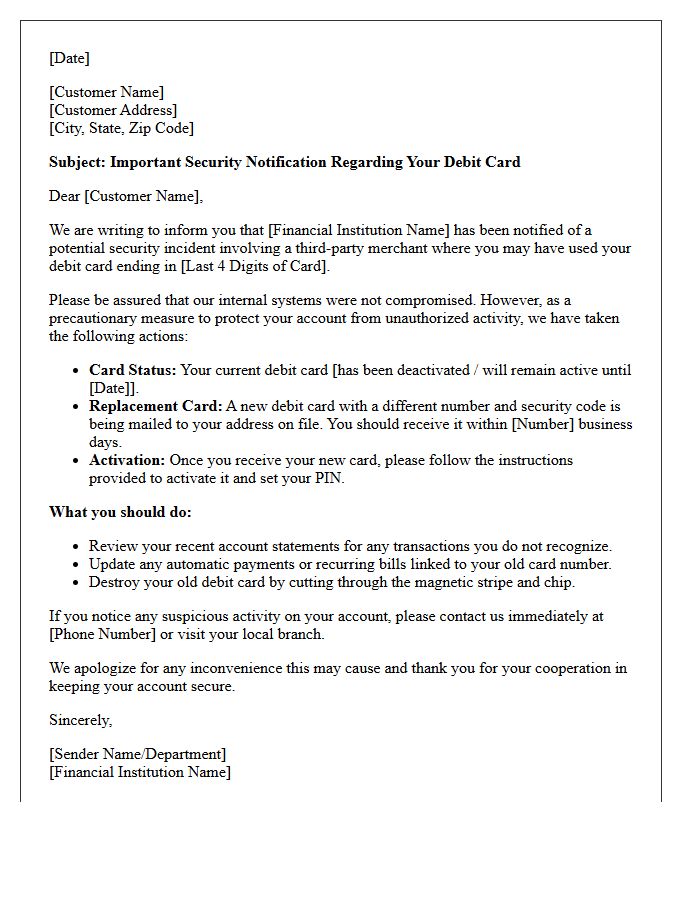
A security notice informs you that your debit card information may have been exposed due to a data breach. To prevent unauthorized transactions, your current card will be deactivated and a replacement issued. It is essential to monitor your account statements for suspicious activity and update any automatic payments linked to the old card number. Taking immediate action protects your funds and maintains your financial security against potential identity theft or fraudulent charges.
Confidential Letter Regarding Debit Card Compromise Incident
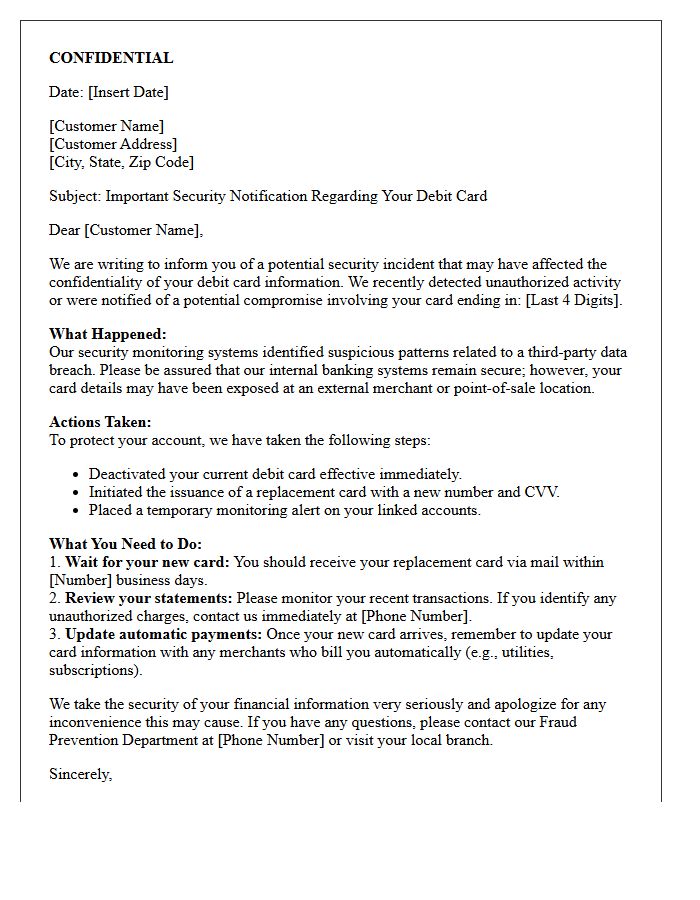
A debit card compromise incident occurs when unauthorized parties gain access to your banking information, potentially leading to fraudulent transactions. Receiving a confidential letter confirms your data may be at risk. It is crucial to deactivate your card immediately and request a replacement to prevent financial loss. Closely monitor your account statements for suspicious activity and update all automated payments linked to the old card. Acting quickly minimizes your liability and ensures your personal funds remain secure following a security breach at a merchant or processor.
Action Required Letter for Compromised Debit Card
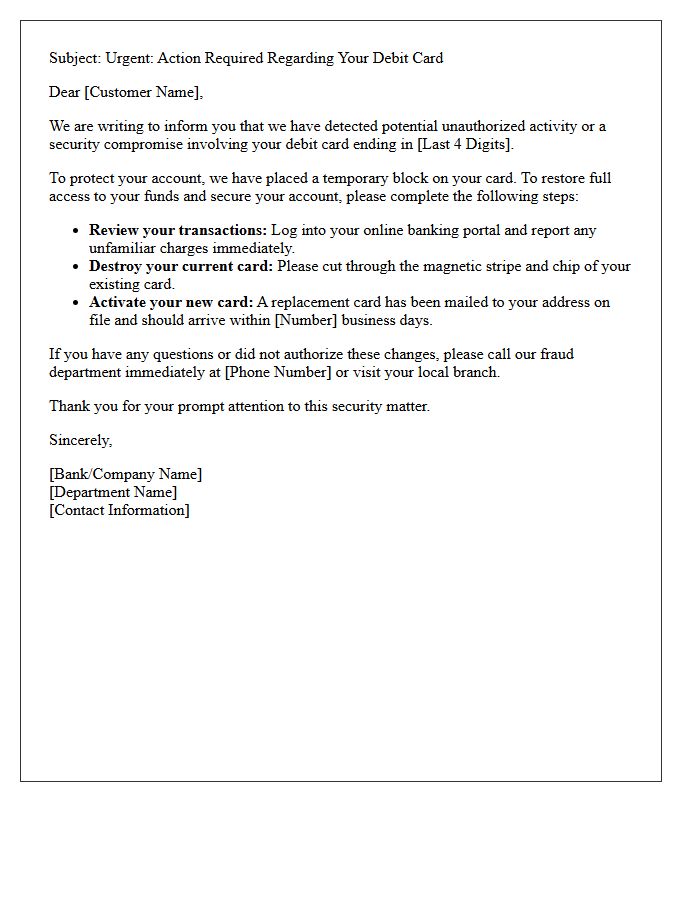
Receiving an Action Required Letter for a compromised debit card indicates that your financial information is at risk due to a data breach. You must take immediate action by contacting your bank through their official website or phone number to verify the notification. To protect your funds, you will likely need to deactivate your current card and request a replacement. Always monitor your transaction history for unauthorized charges and update any automatic payment settings once your new card arrives to ensure uninterrupted service and financial security.
What should I do if I receive a notification that my debit card is compromised?
Immediately sign in to your mobile banking app or online portal to lock your card and prevent new unauthorized charges. Review your recent transaction history for any suspicious activity and contact your bank's fraud department directly using the number on the back of your card to initiate a formal dispute.
Is my money safe after a debit card compromise notification?
Your funds are protected under federal law and bank policies, provided you report the compromise promptly. Once reported, the bank typically issues a provisional credit for unauthorized transactions while they conduct an investigation to recover your funds.
How do I get a replacement debit card after a security breach?
After reporting the compromise, your bank will permanently deactivate the old card and mail a new one with a different 16-digit number and CVV code. Most replacement cards arrive within 5 to 7 business days, though many banks offer expedited shipping or digital cards for immediate use in mobile wallets.
Do I need to update my automatic payments if my card is compromised?
Yes. Since your compromised card will be canceled and replaced with a new card number, you must update your payment information for all recurring bills, subscriptions, and saved merchant profiles to avoid service interruptions or late fees.
How did my debit card information get compromised?
Debit card data is commonly stolen through point-of-sale skimmers, unsecured Wi-Fi networks, large-scale merchant data breaches, or phishing scams. Receiving a notification means your card details were identified in a suspicious environment, even if unauthorized charges have not appeared yet.

Comments