
A Notice of Lease Termination for Material Breach is a formal legal document used when a tenant or landlord violates a fundamental clause of the rental agreement. This notice officially ends the tenancy due to significant non-compliance, protecting your legal rights and property interests. Understanding the proper legal procedures is essential for a valid eviction. Below are some ready to use templates.
Image cover: Formal Lease Termination Notice: Material Breach Templates and Samples
Letter Samples List
- Letter of Lease Termination for Persistent Nonpayment of Rent
- Notice of Lease Termination Letter for Unauthorized Subletting of Property
- Material Breach Lease Termination Letter for Severe Property Damage
- Letter of Lease Termination for Conducting Illegal Activities on Premises
- Notice of Lease Termination Letter for Repeated Noise Violations and Nuisance
- Lease Termination Letter for Keeping Unauthorized Pets on Property
- Material Breach Lease Termination Letter for Refusal of Landlord Access
- Letter of Lease Termination for Operating an Unauthorized Commercial Business
- Notice of Lease Termination Letter for Significant Health and Safety Hazards
- Lease Termination Letter for Making Unauthorized Structural Alterations
- Letter of Lease Termination for Exceeding Maximum Occupancy Limits
- Material Breach Lease Termination Letter for Failure to Maintain Required Utilities
- Notice of Lease Termination Letter for Repeated Violations of Community Rules
Letter of Lease Termination for Persistent Nonpayment of Rent
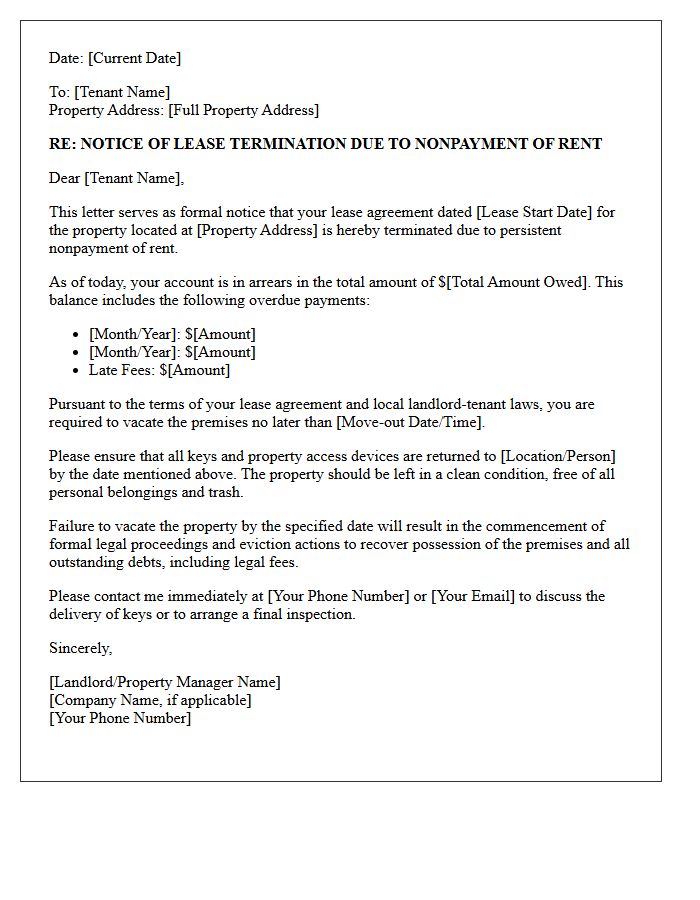
A letter of lease termination for persistent nonpayment of rent is a formal legal notice used to evict a tenant who repeatedly fails to pay rent on time. It is crucial to clearly state the lease violations, total arrears, and the specific date by which the premises must be vacated. Landlords must ensure the notice complies with local housing laws and includes a "notice to quit." Proper documentation of these communications is essential for successful unlawful detainer legal proceedings if the tenant refuses to leave voluntarily.
Notice of Lease Termination Letter for Unauthorized Subletting of Property
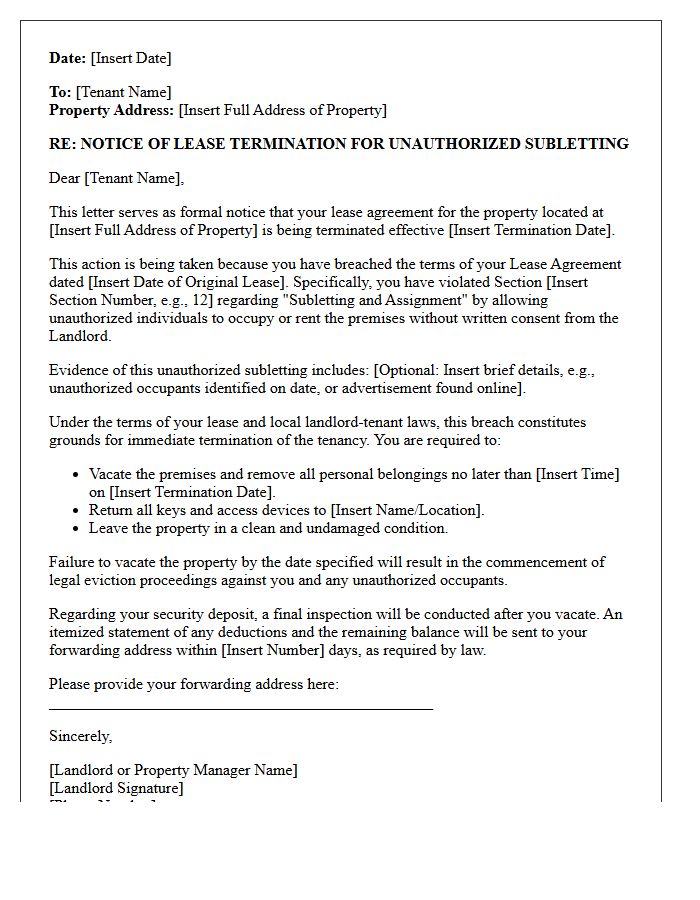
A Notice of Lease Termination for unauthorized subletting is a formal legal document issued when a tenant rents out a property without prior written consent. This violation of the rental agreement allows landlords to terminate the lease immediately. The notice must clearly cite the specific lease violation, provide a deadline to vacate, and outline potential legal action. Landlords should ensure the letter is delivered via certified mail to maintain a verifiable paper trail for potential eviction proceedings. Adhering to local housing laws is essential to ensure the document is legally enforceable.
Material Breach Lease Termination Letter for Severe Property Damage
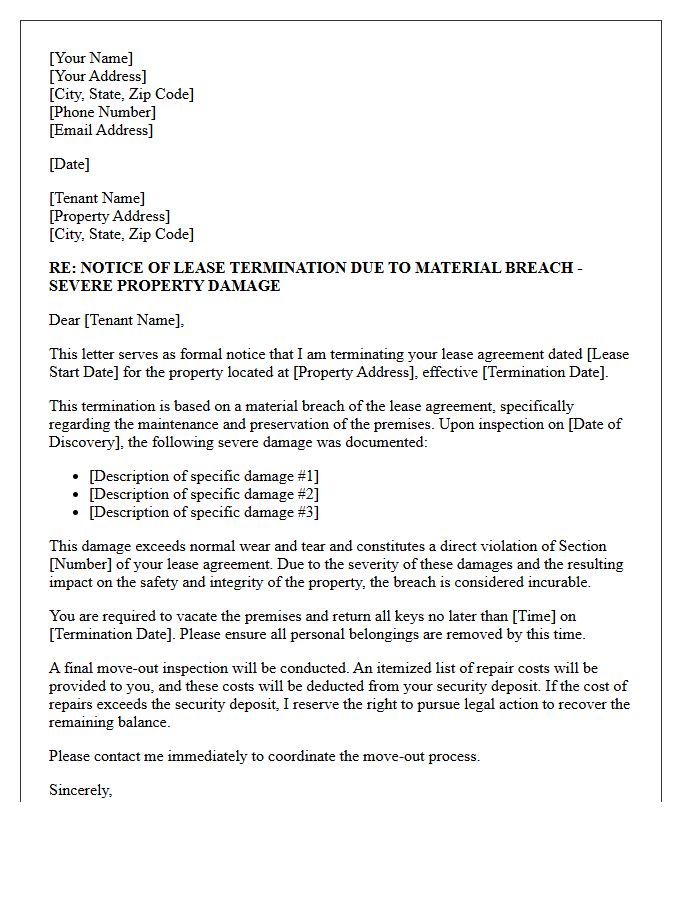
A Material Breach Lease Termination Letter is a formal legal notice issued when a tenant causes severe property damage that violates core rental agreements. This document serves as an immediate notification that the lease is being forfeited due to the gravity of the destruction. It must clearly detail the specific damage, reference the violated lease clauses, and state the mandatory vacate date. Providing documented evidence, such as photographic proof, is essential to justify the termination and protect the landlord's rights during potential legal proceedings or security deposit disputes.
Letter of Lease Termination for Conducting Illegal Activities on Premises
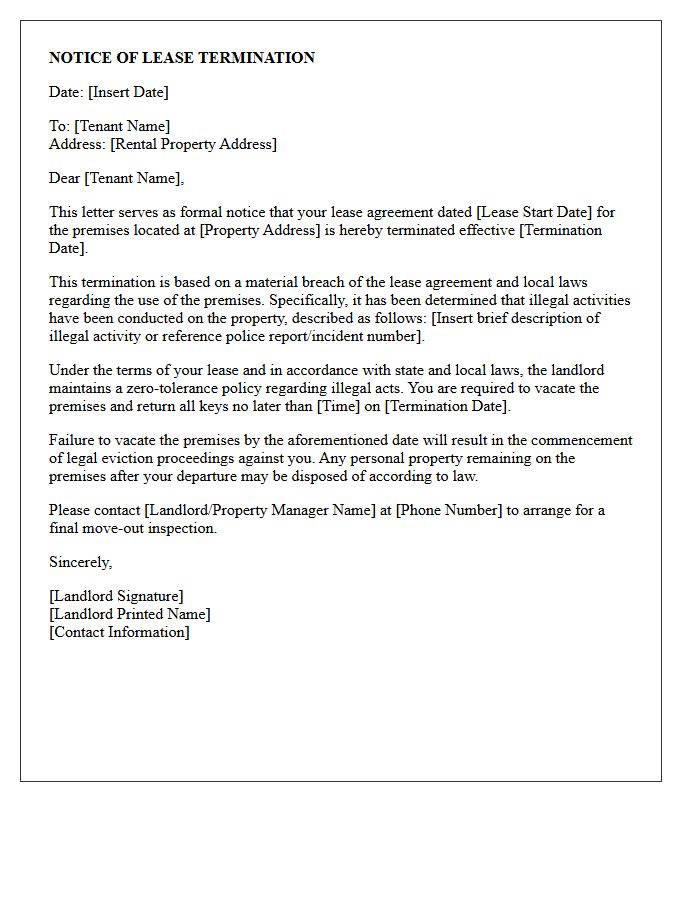
A Letter of Lease Termination is a formal legal notice issued when a tenant violates rental agreements by conducting illegal activities on the premises. This document serves as an immediate notification of a material breach of contract. It typically outlines the specific unlawful conduct, references the violated lease clauses, and provides a strict deadline for eviction. Landlords use this to protect their property and limit liability. Understanding local landlord-tenant laws is essential, as some jurisdictions allow for expedited removal when criminal behavior poses a direct threat to safety or property integrity.
Notice of Lease Termination Letter for Repeated Noise Violations and Nuisance
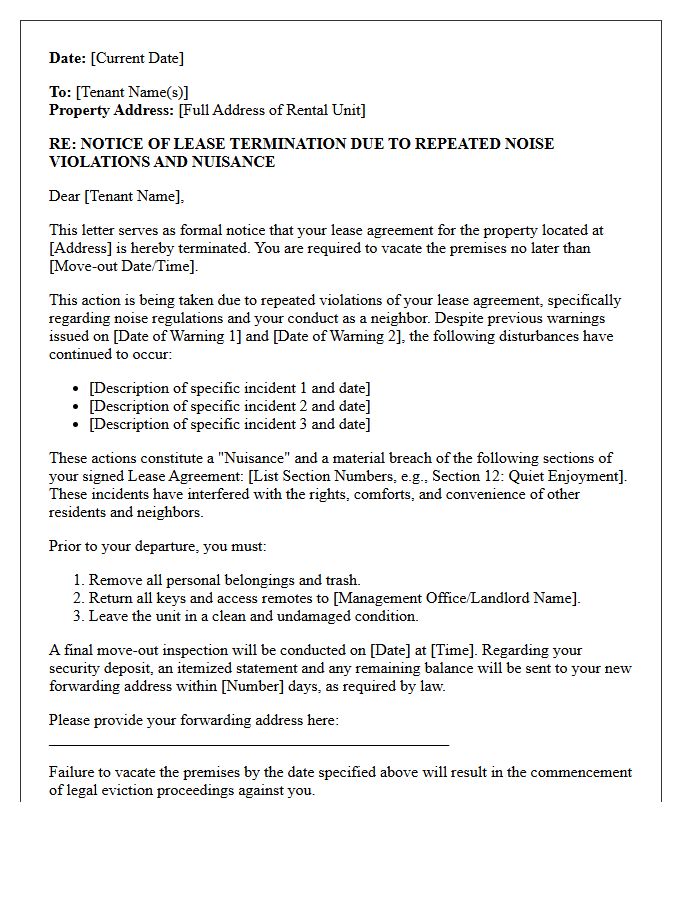
A Notice of Lease Termination serves as a formal legal document ending a rental agreement due to documented repeated noise violations and persistent nuisance. It is essential to clearly cite specific lease clauses breached and include a detailed log of dates and times for each disturbance. Providing written evidence ensures the landlord's right to regain possession of the property while complying with local housing laws. This notice acts as the final step before pursuing a formal eviction process if the tenant fails to vacate the premises by the specified deadline.
Lease Termination Letter for Keeping Unauthorized Pets on Property
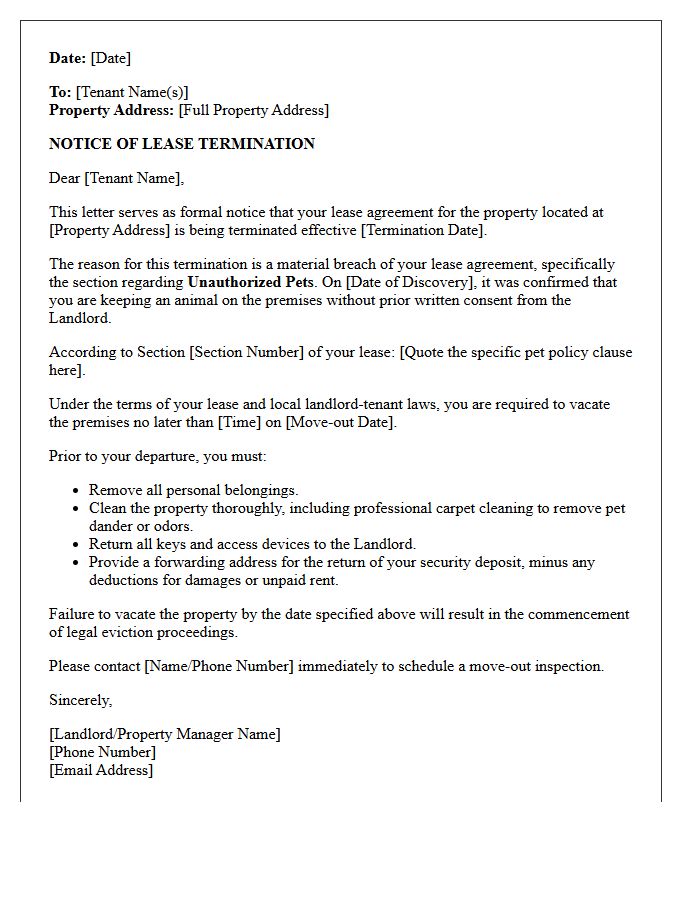
A lease termination letter for keeping unauthorized pets is a formal legal notice informing a tenant of a lease violation. This document specifies that the resident has breached the rental agreement by housing an unapproved animal. It typically includes a notice to quit or a cure period, granting the tenant a set number of days to remove the pet or vacate the premises. Providing clear evidence and referencing specific contract clauses is essential to ensure the eviction process remains legally valid and enforceable under local housing laws.
Material Breach Lease Termination Letter for Refusal of Landlord Access
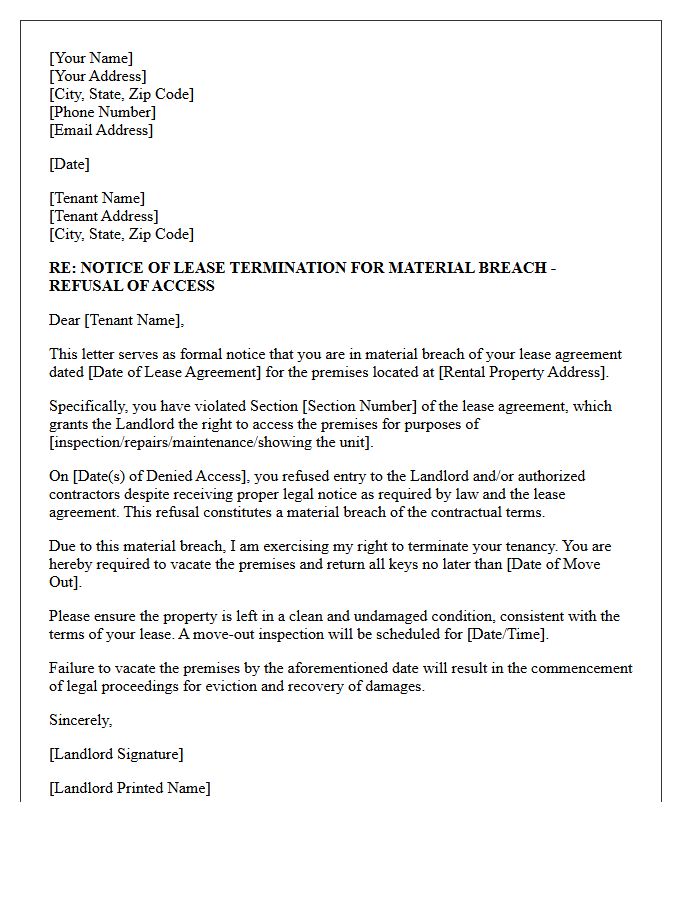
A Material Breach Lease Termination Letter is a formal legal notice issued when a tenant denies a landlord lawful entry to the property. Most rental agreements mandate reasonable access for repairs, inspections, or emergencies after providing proper notice. Persistent refusal constitutes a significant contractual violation, justification for ending the tenancy. This document must clearly state the specific dates of denial, the breached lease clauses, and the required move-out date. Providing this written warning is a critical step in documenting the non-compliance before initiating formal eviction proceedings in court.
Letter of Lease Termination for Operating an Unauthorized Commercial Business
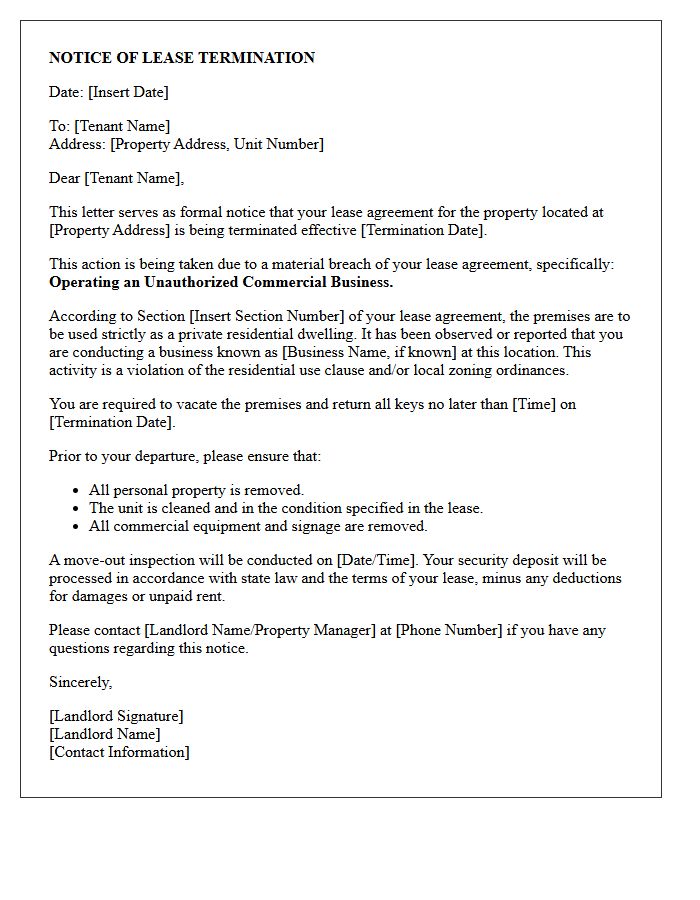
A Letter of Lease Termination for operating an unauthorized commercial business is a formal legal notice issued when a tenant violates zoning laws or residential rental agreements. Landlords use this document to address the breach of contract caused by running a business without prior consent. It typically outlines the specific lease clauses violated and provides a deadline to vacate the premises. Failure to cease activities or move out can lead to formal eviction proceedings. Ensuring clear documentation of the unauthorized business activity is essential for protecting the property owner's legal rights and insurance compliance.
Notice of Lease Termination Letter for Significant Health and Safety Hazards
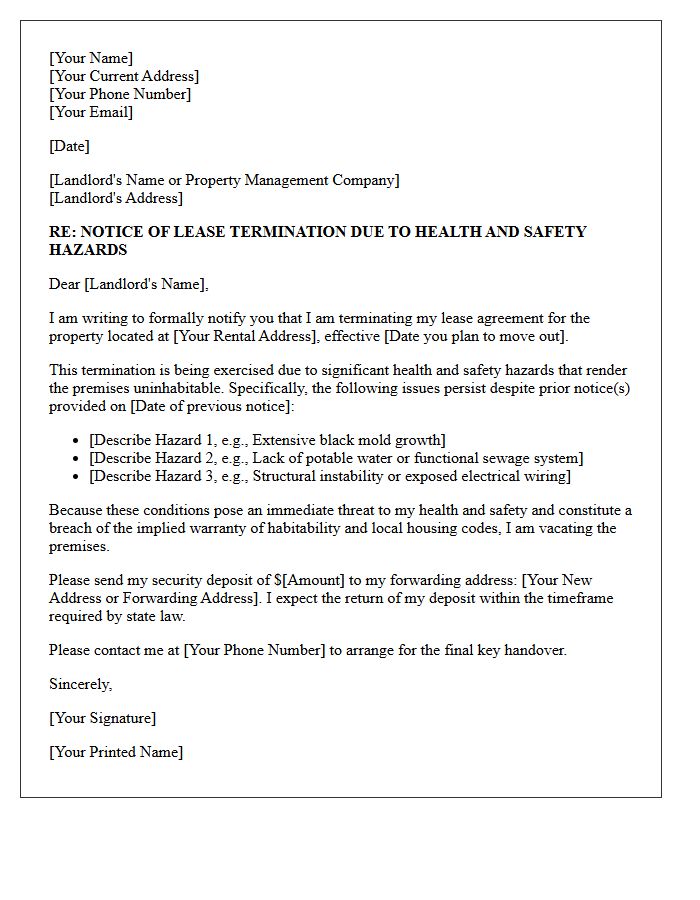
A Notice of Lease Termination due to significant health and safety hazards is a legal document used to end a rental agreement immediately when a property becomes uninhabitable. This notice must clearly detail specific violations, such as mold, structural failure, or lack of water, which pose an immediate danger to occupants. Providing documented evidence and referencing local housing codes is essential to justify an early exit without penalty. Tenants should send this via certified mail to ensure a legal record of the landlord's failure to maintain a safe environment.
Lease Termination Letter for Making Unauthorized Structural Alterations
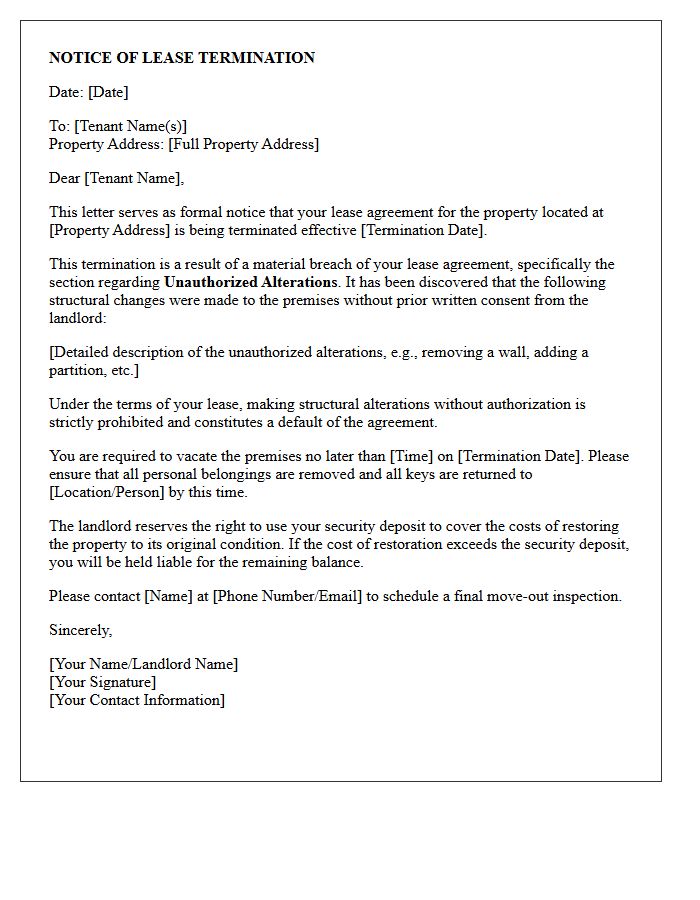
A lease termination letter for unauthorized structural alterations serves as a formal notice that a tenant has breached their rental agreement by modifying the property without written consent. Most contracts strictly prohibit permanent changes like removing walls or altering plumbing. Landlords use this document to initiate the eviction process or demand immediate restoration to the original state. It is crucial to document the specific lease violations and provide a deadline for compliance. Clear communication helps protect property value and ensures legal adherence to tenant-landlord laws regarding structural integrity and safety standards.
Letter of Lease Termination for Exceeding Maximum Occupancy Limits
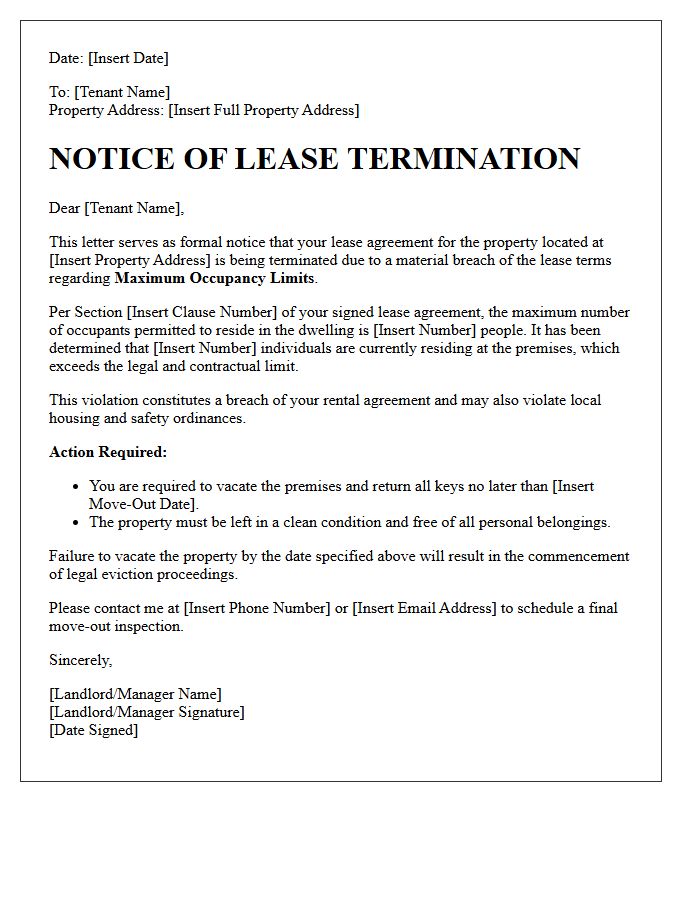
A Letter of Lease Termination for exceeding maximum occupancy limits is a formal legal notice issued when a tenant violates the occupancy clause. This document informs the resident that having more occupants than permitted constitutes a material breach of the contract. It typically provides a specific notice period to vacate the premises or remedy the situation. Clearly citing the lease terms and local safety codes is essential to justify the action. Ensuring the notice is delivered according to state laws is the most important step for a valid eviction process.
Material Breach Lease Termination Letter for Failure to Maintain Required Utilities
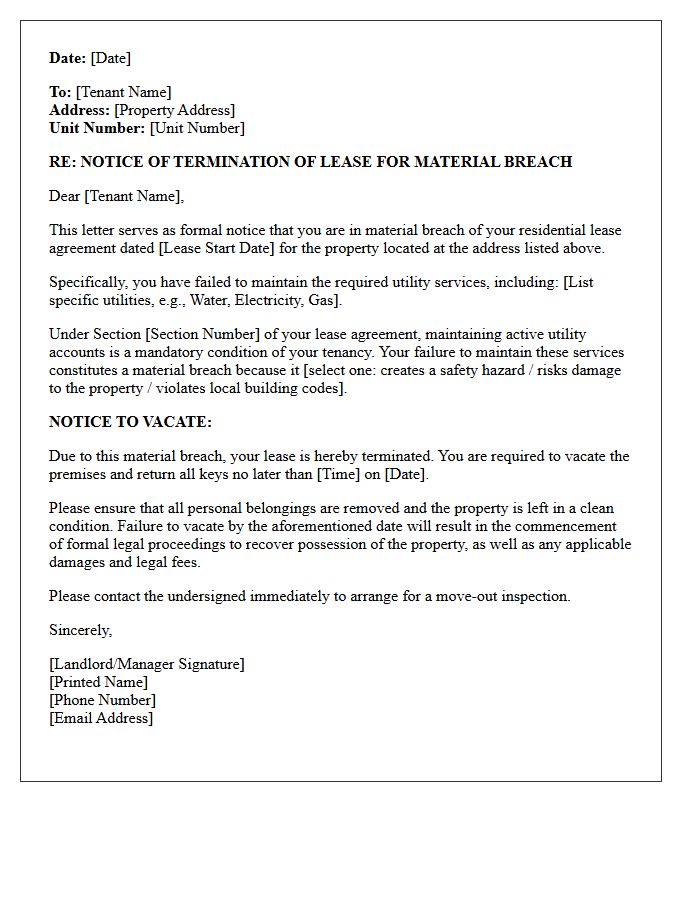
A Material Breach Lease Termination Letter is a formal legal notice issued when a tenant fails to maintain essential utility services. Since utilities like water and electricity are vital for habitability and safety, this failure constitutes a significant contract violation. The letter must clearly specify the breached clause, provide a notice to cure period if required by state law, and state the definitive move-out date. Properly documenting this breach is crucial for landlords to protect their property from damage and initiate a lawful eviction process if the tenant fails to comply.
Notice of Lease Termination Letter for Repeated Violations of Community Rules
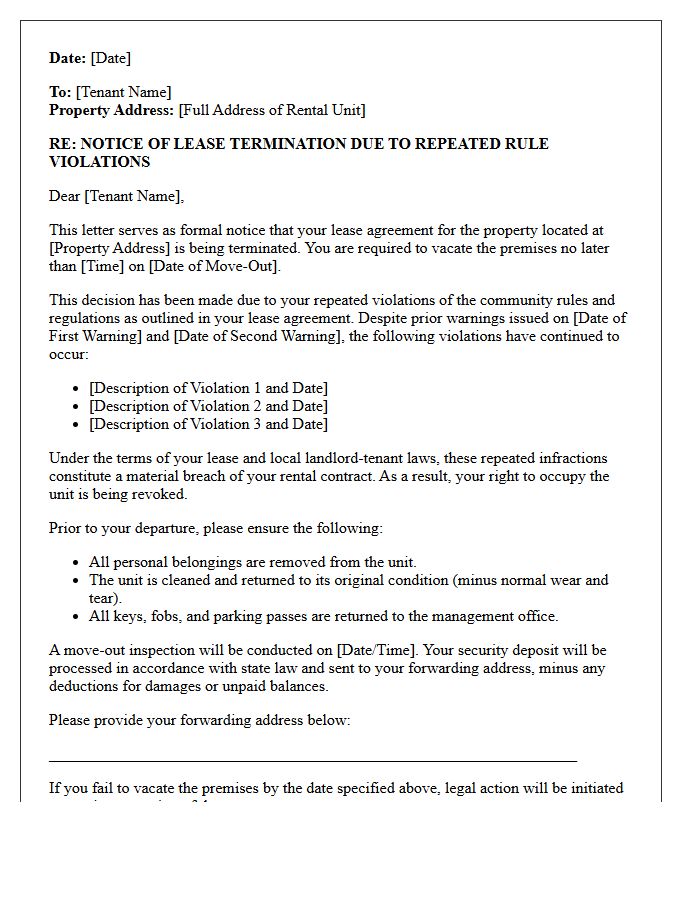
A Notice of Lease Termination Letter is a formal legal document issued when a tenant consistently ignores community rules despite previous warnings. This notice officially informs the tenant that their rental agreement is being cancelled due to repeated violations, such as noise complaints, unauthorized guests, or property damage. It serves as eviction evidence by documenting specific dates and incidents of non-compliance. Landlords must ensure the letter adheres to local housing laws and specifies the mandatory move-out date to maintain a safe and orderly living environment for all residents.
What is a Notice of Lease Termination for Material Breach of Contract?
A Notice of Lease Termination for Material Breach is a formal legal document issued by a landlord to a tenant stating that the lease agreement is being cancelled due to a significant violation of contract terms. Unlike minor infractions, a material breach involves a fundamental failure to perform an obligation that undermines the entire purpose of the lease.
What constitutes a material breach of a lease agreement?
Common examples of a material breach include non-payment of rent, engaging in illegal activities on the premises, unauthorized subletting, causing significant structural damage to the property, or violating specific restrictive covenants that were essential to the agreement. The breach must be substantial enough to justify ending the contractual relationship prematurely.
What information must be included in a termination notice for a breach?
The notice should clearly state the specific clause of the lease agreement that was violated, a detailed description of the breaching event, the date the breach occurred, and the required move-out date. It should also specify whether the breach is "curable" (fixable) or "incurable" (requiring immediate forfeiture of the premises) depending on local landlord-tenant laws.
How much notice must a landlord provide for a material breach termination?
Notice periods vary significantly by jurisdiction and the type of breach. For non-payment of rent, many states require a 3 to 14-day "pay or quit" notice. For other material breaches, a 10 to 30-day notice is common. However, for severe breaches involving safety or criminal activity, some laws allow for immediate termination without an opportunity to cure the breach.
Can a tenant contest a Notice of Lease Termination for Material Breach?
Yes, a tenant can contest the notice if they believe the breach did not occur, if the landlord waived their right to terminate by accepting rent after the breach, or if the landlord failed to follow proper legal procedures. If the tenant does not vacate or cure the breach, the landlord must usually file a formal eviction lawsuit (unlawful detainer) rather than forcibly removing the tenant.

Comments