
Persistent disruptions can jeopardize the stability of a rental community. This article outlines the legal process for issuing a Notice of Lease Termination for Repeated Nuisance Complaints when a tenant fails to correct ongoing behavioral issues. Understand your rights as a landlord to maintain a peaceful environment and ensure proper documentation. To help you get started, below are some ready to use templates.
Image cover: Formal Notice of Lease Termination for Persistent Nuisance and Noise Violations: Templates and Guides
Letter Samples List
- Notice of Lease Termination Letter for Repeated Nuisance Complaints
- Lease Agreement Termination Letter Due to Property Nuisance
- Final Eviction Letter for Continuous Noise Nuisance
- Property Management Letter for Nuisance Lease Termination
- Notice to Quit Letter for Repeated Tenant Nuisance
- Lease Cancellation Letter for Unresolved Nuisance Violations
- Tenant Eviction Letter for Documented Nuisance Complaints
- Formal Termination Letter for Repeated Nuisance Infractions
- Unconditional Quit Letter for Severe Property Nuisance
- End of Tenancy Letter for Habitual Nuisance Violations
- Thirty-Day Notice Letter for Nuisance Lease Termination
- Notice of Eviction Letter Due to Multiple Nuisance Complaints
- Residential Lease Termination Letter for Ongoing Nuisance
Notice of Lease Termination Letter for Repeated Nuisance Complaints
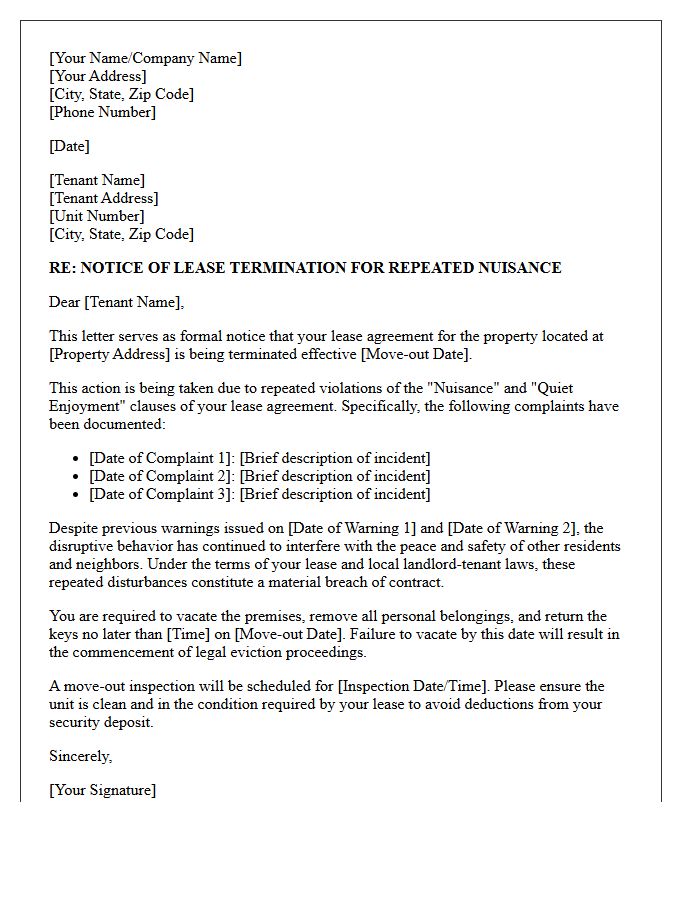
A Notice of Lease Termination Letter is a formal legal document issued when a tenant persists in disruptive behavior despite prior warnings. This notice serves as a final step to regain possession of a property due to documented repeated nuisance complaints, such as excessive noise or harassment. It must clearly outline specific lease violations, dates of incidents, and the required move-out deadline. Ensuring accuracy in this letter is vital for legal compliance and successful eviction proceedings if the tenant refuses to vacate the premises voluntarily.
Lease Agreement Termination Letter Due to Property Nuisance
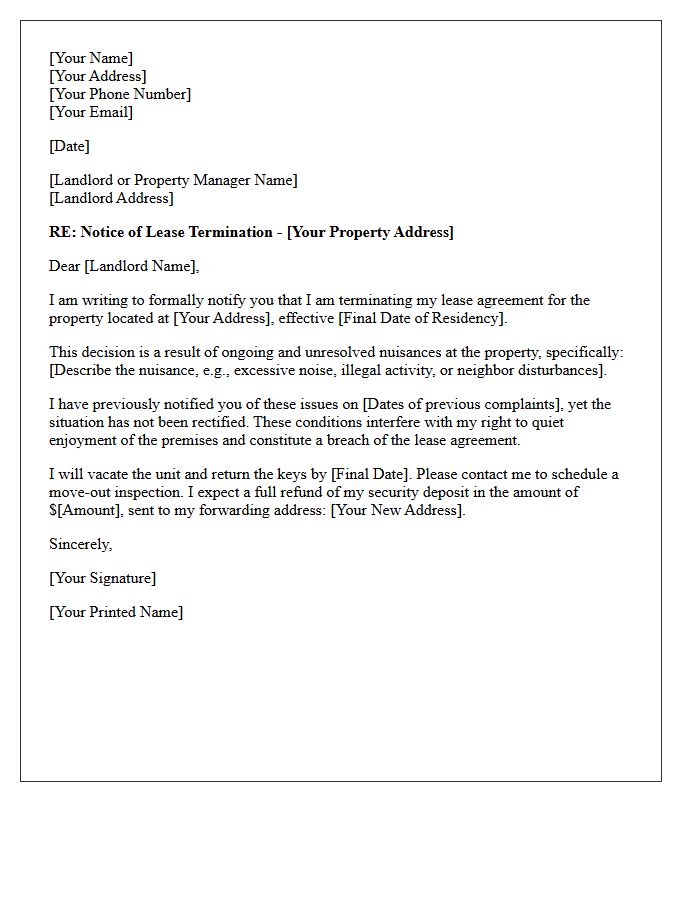
A lease agreement termination letter due to property nuisance is a formal notice used to end a rental contract when a neighbor's behavior or environmental disturbances severely impact liveability. This legal document must clearly outline the specific nuisance violations, such as excessive noise, illegal activities, or safety hazards, that breach the right to quiet enjoyment. To ensure validity, include detailed evidence, dates of incidents, and references to local housing laws. Providing this written notice protects your legal rights and serves as critical documentation for justifiable lease rescission without financial penalty.
Final Eviction Letter for Continuous Noise Nuisance
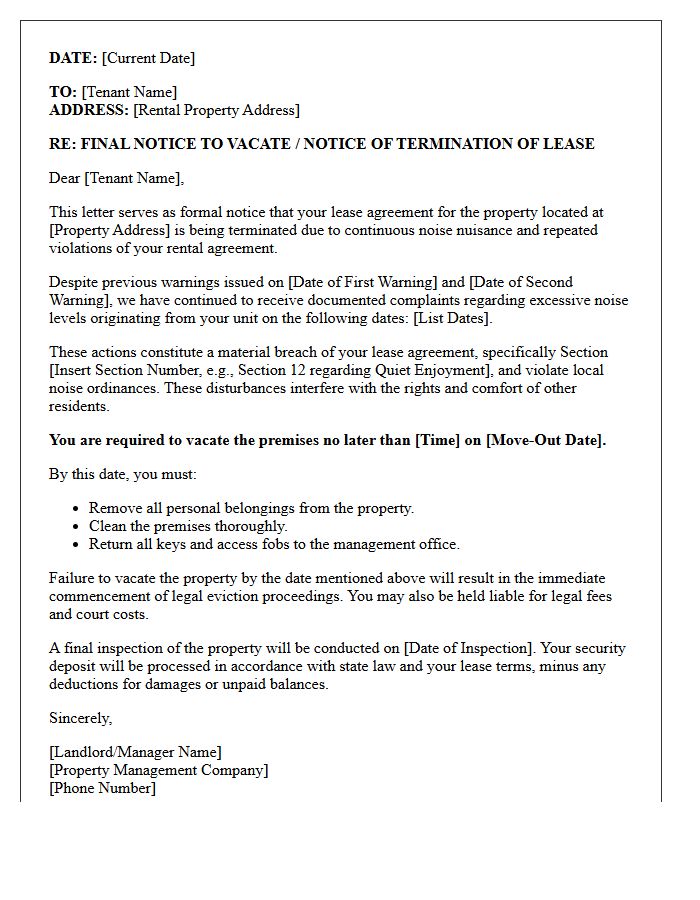
A Final Eviction Letter serves as the definitive legal notice terminating a tenancy due to persistent continuous noise nuisance. This formal document outlines specific dates and times of documented disturbances that violate the lease agreement. It informs the tenant that prior warnings were ignored and provides a mandatory vacate date. To be legally enforceable, the notice must comply with local housing laws and serve as essential evidence for court proceedings. It is the critical final step before pursuing a formal unlawful detainer action to regain possession of the property.
Property Management Letter for Nuisance Lease Termination
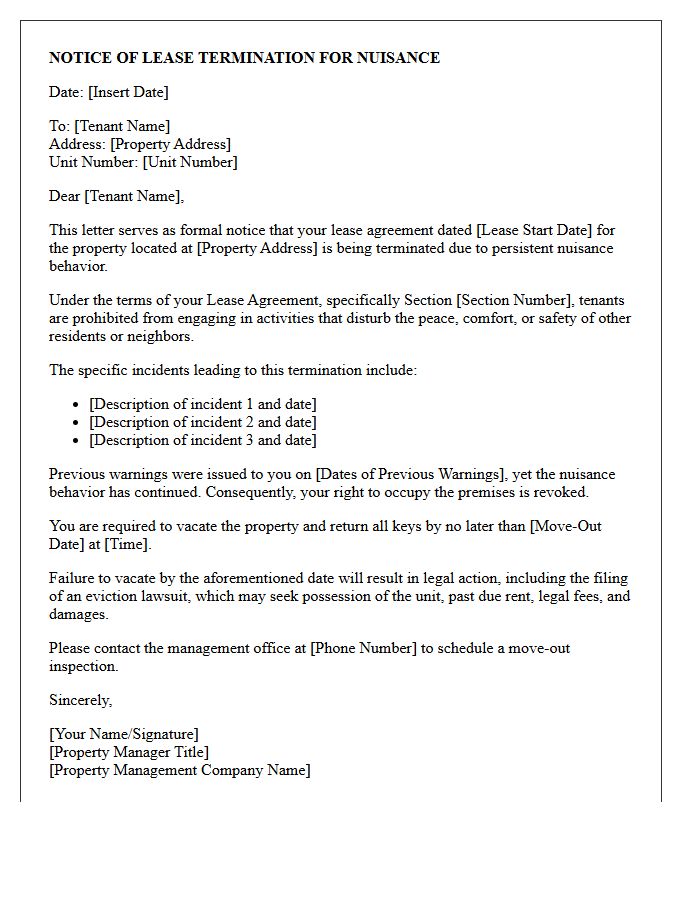
A property management letter for nuisance lease termination serves as a formal legal notice to residents who chronically disrupt the quiet enjoyment of others. This document must clearly outline specific incidents, dates, and violations of the rental agreement to withstand legal scrutiny. Providing a detailed notice to quit allows landlords to regain control of the premises when behavioral remedies fail. Accurate documentation of noise complaints, illegal activities, or safety hazards is essential for a successful eviction process. Ensuring the letter complies with local jurisdictional laws protects the owner's rights during the termination phase.
Notice to Quit Letter for Repeated Tenant Nuisance
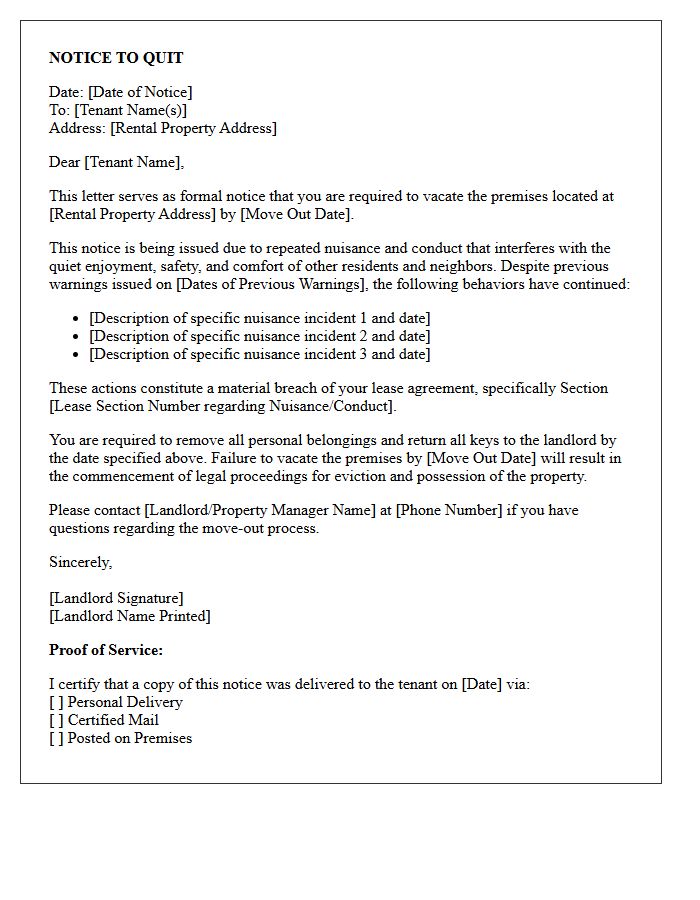
A Notice to Quit for repeated nuisance is a formal legal document issued by landlords when a tenant consistently disrupts the quiet enjoyment of neighbors or violates lease terms through offensive behavior. Unlike standard warnings, this notice addresses recurring issues like excessive noise, property damage, or harassment. It serves as a critical legal prerequisite for filing an eviction lawsuit. Landlords must meticulously document every incident, including dates and witness statements, to prove the pattern of behavior. Clear communication in this letter is essential to establish the grounds for termination of tenancy in court.
Lease Cancellation Letter for Unresolved Nuisance Violations
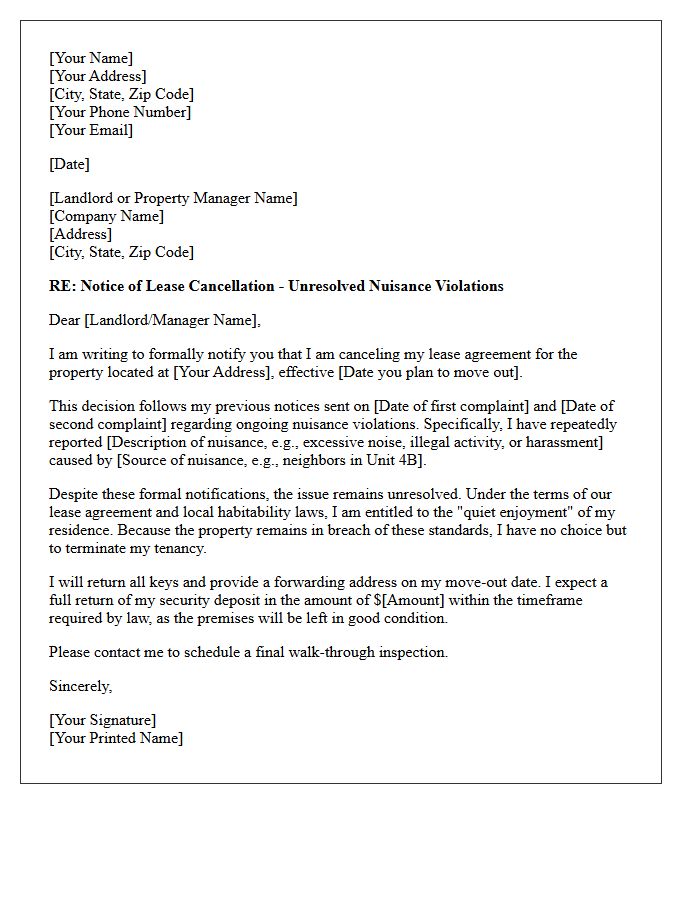
A Lease Cancellation Letter for unresolved nuisance violations is a formal legal notice used by landlords to terminate a rental agreement when a tenant fails to correct ongoing behavioral issues. This document must clearly detail the specific lease violations, such as excessive noise or illegal activities, and reference previous warnings provided. It serves as essential evidence for potential eviction proceedings, proving that the landlord attempted to resolve the unresolved nuisance before ending the tenancy. Ensuring precise dates and compliance with local housing laws is critical for protecting the property owner's legal rights.
Tenant Eviction Letter for Documented Nuisance Complaints
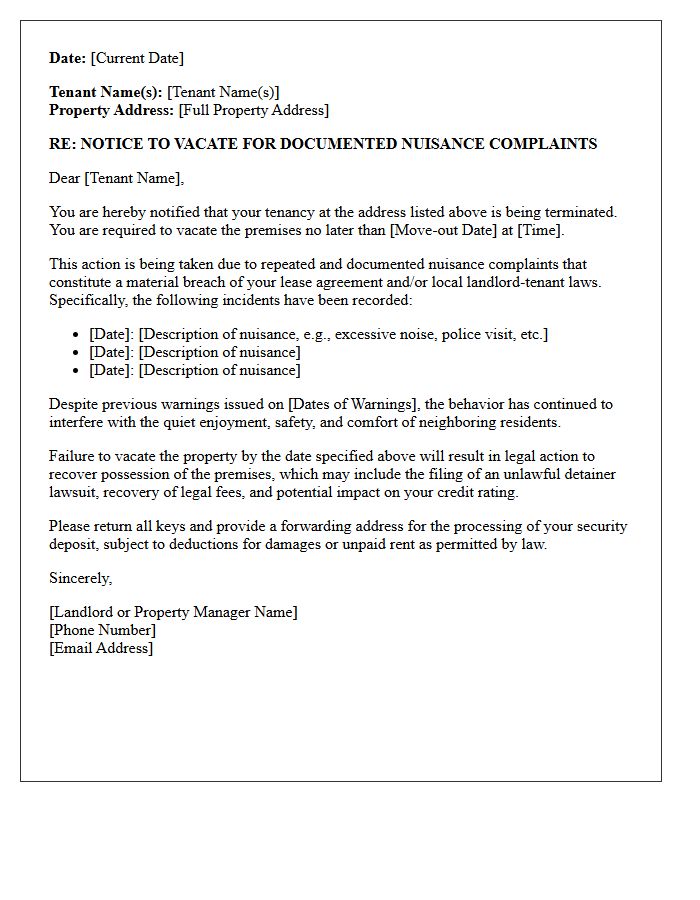
A tenant eviction letter for documented nuisance complaints serves as a formal legal notice to terminate a lease due to behavioral violations. It must clearly outline specific incidents, dates, and evidence of disturbances that interfere with others' quiet enjoyment. To ensure legal validity, landlords should include references to the lease agreement clauses being breached. Providing a clear deadline for vacating the premises is essential. Proper documentation of warnings and complaints strengthens the case if judicial action becomes necessary to regain possession of the property effectively.
Formal Termination Letter for Repeated Nuisance Infractions
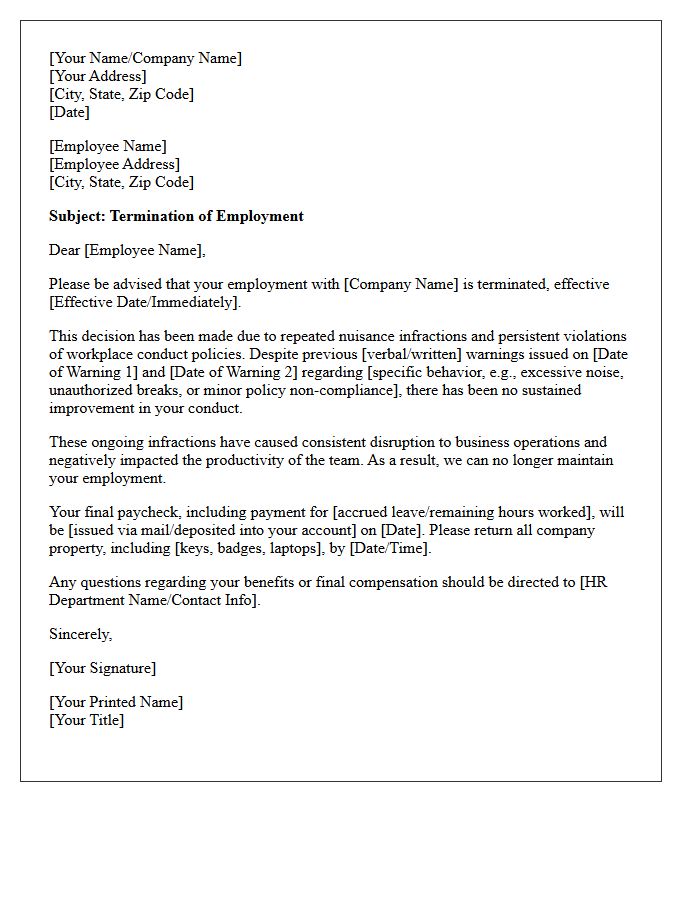
A formal termination letter serves as legal documentation to end a lease or employment due to repeated nuisance infractions. It must clearly detail specific dates, times, and descriptions of each violation to establish a verifiable history of non-compliance. Prior written warnings should be referenced to prove that the individual was given opportunities to correct their behavior. Including a definitive move-out date or termination deadline ensures clarity and protects the issuer during potential legal disputes or eviction proceedings. Professionalism and factual accuracy are essential for maintaining enforcement rights.
Unconditional Quit Letter for Severe Property Nuisance
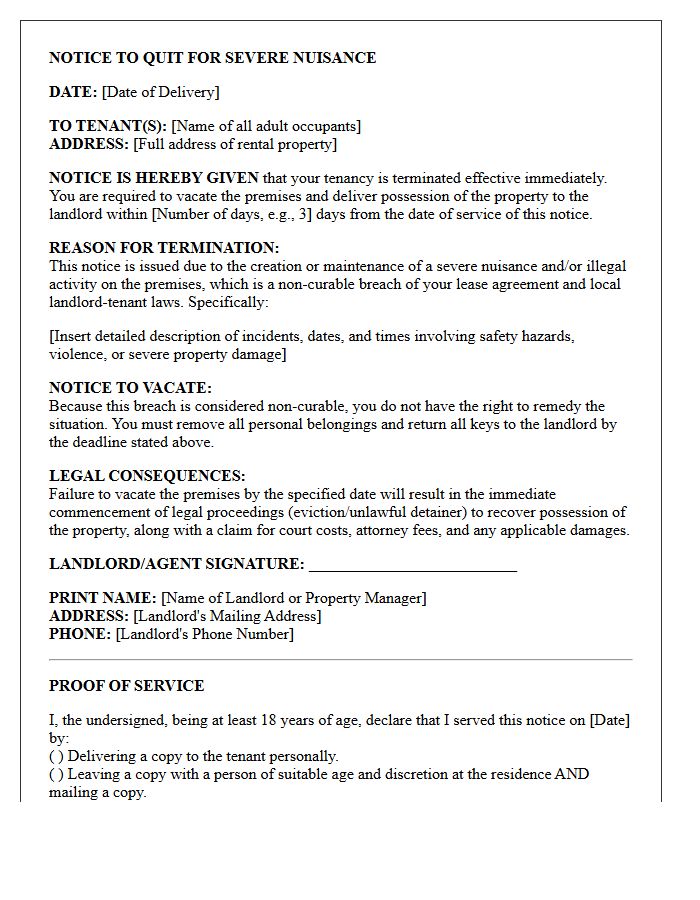
An unconditional quit letter is a legal notice used to terminate a tenancy immediately without the option to correct the behavior. When a tenant causes a severe property nuisance, such as illegal drug activity, extreme violence, or significant physical destruction, the landlord issues this notice to protect the premises and neighbors. Unlike standard notices, it bypasses the "cure" period, requiring the occupant to vacate within a specific timeframe-often three to five days-before a formal eviction lawsuit begins. Clear evidence of the egregious violation is essential for legal compliance.
End of Tenancy Letter for Habitual Nuisance Violations
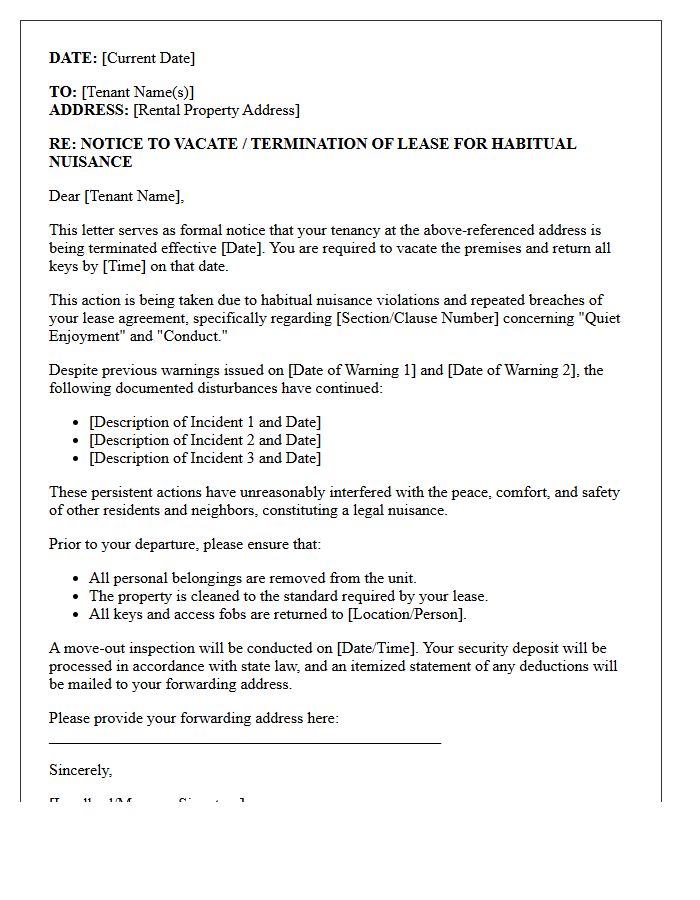
An End of Tenancy Letter for habitual nuisance violations serves as a formal notice to terminate a lease due to persistent disruptive behavior. This document must clearly outline specific incidents, such as excessive noise or property damage, that breach the rental agreement. Landlords should include dates of previous warnings to demonstrate a pattern of habitual nuisance. Providing clear evidence and adhering to local legal notice periods ensures the eviction process remains valid. It is the final step in protecting the peaceful enjoyment of the premises for other residents and the property owner.
Thirty-Day Notice Letter for Nuisance Lease Termination
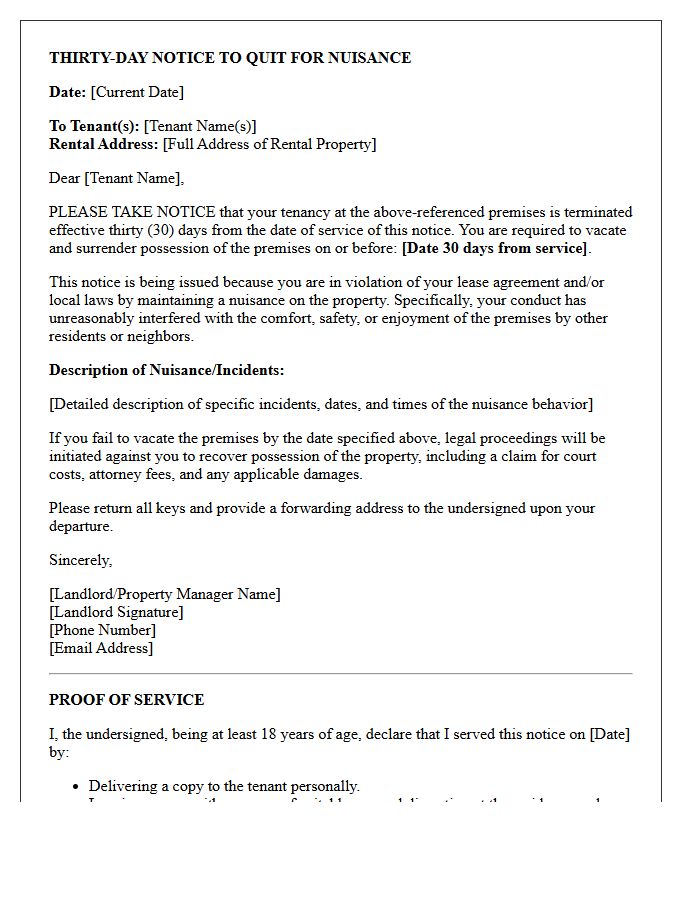
A Thirty-Day Notice Letter for Nuisance Lease Termination is a formal legal document used by landlords to address recurring lease violations that interfere with others' safety or enjoyment. To ensure legal validity, the notice must clearly specify the prohibited behaviors, such as excessive noise, illegal activities, or property damage. If the tenant fails to vacate or resolve the nuisance within thirty days, the landlord can initiate formal eviction proceedings. Proper service of this notice is essential for maintaining a habitable environment and protecting the rights of neighboring residents under local housing laws.
Notice of Eviction Letter Due to Multiple Nuisance Complaints
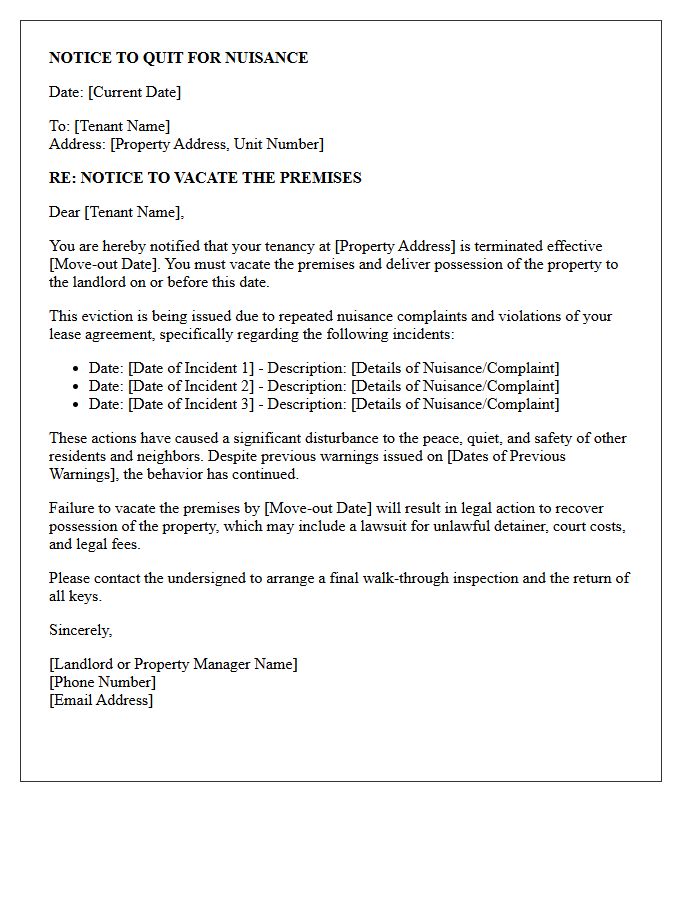
A Notice of Eviction due to multiple nuisance complaints is a legal document informing a tenant that their lease is being terminated. This specific notice arises when repeated behaviors, such as excessive noise, illegal activity, or property damage, interfere with the quiet enjoyment of others. Landlords must typically provide documented evidence of previous warnings and specific incidents. It is crucial to understand that this letter serves as a formal demand to vacate the premises by a set date, often serving as the mandatory preliminary step before a court-ordered removal process begins.
Residential Lease Termination Letter for Ongoing Nuisance
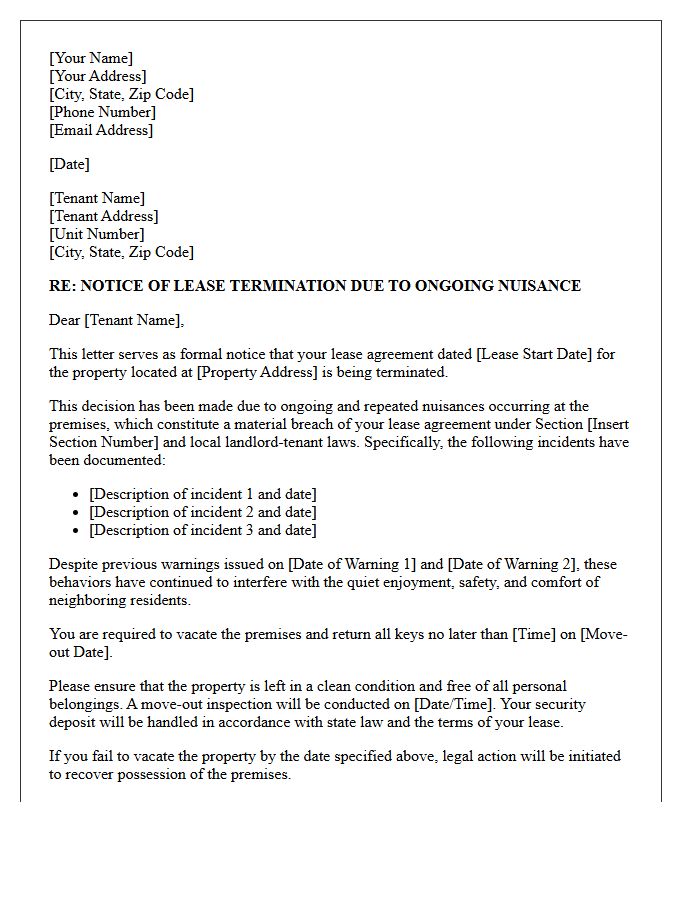
A residential lease termination letter for an ongoing nuisance is a formal legal notice issued when a tenant's persistent behavior severely disrupts the quiet enjoyment of neighbors. This document must clearly detail specific incidents, dates, and violations of the lease agreement. To ensure legal validity, the landlord must provide proper notice periods as required by local housing laws. Providing documented evidence of the recurring disturbance is essential to justify an eviction and protect the property owner from potential legal disputes regarding the termination of the tenancy.
What is a Notice of Lease Termination for Repeated Nuisance Complaints?
This is a formal legal document issued by a landlord to a tenant stating that their lease is being terminated due to persistent behaviors that disturb the peace, safety, or quiet enjoyment of other residents despite prior warnings.
What behaviors are considered a "nuisance" in a rental property?
Common examples include excessive noise during quiet hours, aggressive behavior toward neighbors, illegal activities on the premises, improper disposal of hazardous waste, and persistent violations of community rules that impact others' quality of life.
How many complaints are required before a landlord can terminate a lease for nuisance?
While laws vary by jurisdiction, landlords typically must document a pattern of behavior. This usually involves providing the tenant with at least one "Cure or Quit" notice, allowing them to fix the behavior before proceeding with a formal termination for repeated violations.
Can a tenant dispute a lease termination based on nuisance complaints?
Yes, a tenant can dispute the termination by providing evidence that the complaints are unfounded, retaliatory, or that the disturbances did not violate the specific terms of the lease agreement or local ordinances.
Does a notice of termination mean the tenant must move out immediately?
No, the notice specifies a move-out date (often 3 to 30 days depending on local law). If the tenant remains after the deadline, the landlord must file a formal eviction lawsuit in court to legally regain possession of the property.

Comments