
A Notice of Judgment of Eviction is a formal legal document issued by a court confirming a landlord's right to regain possession of their property. It marks the final step in the legal process after a judge rules against a tenant. Understanding this order is crucial for legal compliance during the removal process. To assist you, below are some ready to use templates.

Image cover: Official Notice of Judgment of Eviction: Templates and Legal Samples
Letter Samples List
- Standard Notice of Judgment of Eviction Letter
- Final Notice of Judgment of Eviction Letter
- Notice of Default Judgment of Eviction Letter
- Immediate Vacate Notice of Judgment of Eviction Letter
- Post-Court Notice of Judgment of Eviction Letter
- Residential Notice of Judgment of Eviction Letter
- Commercial Notice of Judgment of Eviction Letter
- Notice of Judgment of Eviction and Writ of Possession Letter
- Notice of Judgment of Eviction Unlawful Detainer Letter
- Sheriff Execution Notice of Judgment of Eviction Letter
- Notice of Judgment of Eviction Move-Out Instructions Letter
- Past Due Balance and Notice of Judgment of Eviction Letter
- Property Abandonment Notice of Judgment of Eviction Letter
- Notice of Judgment of Eviction Appeal Period Expiration Letter
Standard Notice of Judgment of Eviction Letter
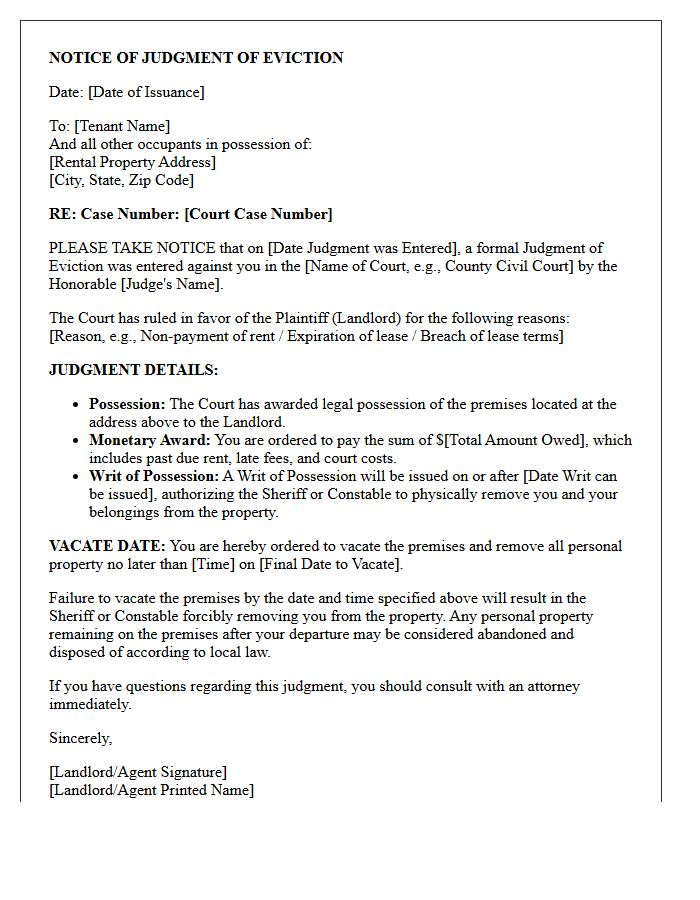
A Standard Notice of Judgment of Eviction is a formal legal document confirming that a court has granted the landlord possession of the property. The Judgment of Eviction represents the final court order following a hearing, meaning the tenant must vacate by a specific date. It is critical to understand the deadline for departure mentioned in the letter to avoid forced removal by a marshal or sheriff. This notice marks the end of the legal process, and failure to comply usually results in a Writ of Restitution to regain physical control of the premises.
Final Notice of Judgment of Eviction Letter
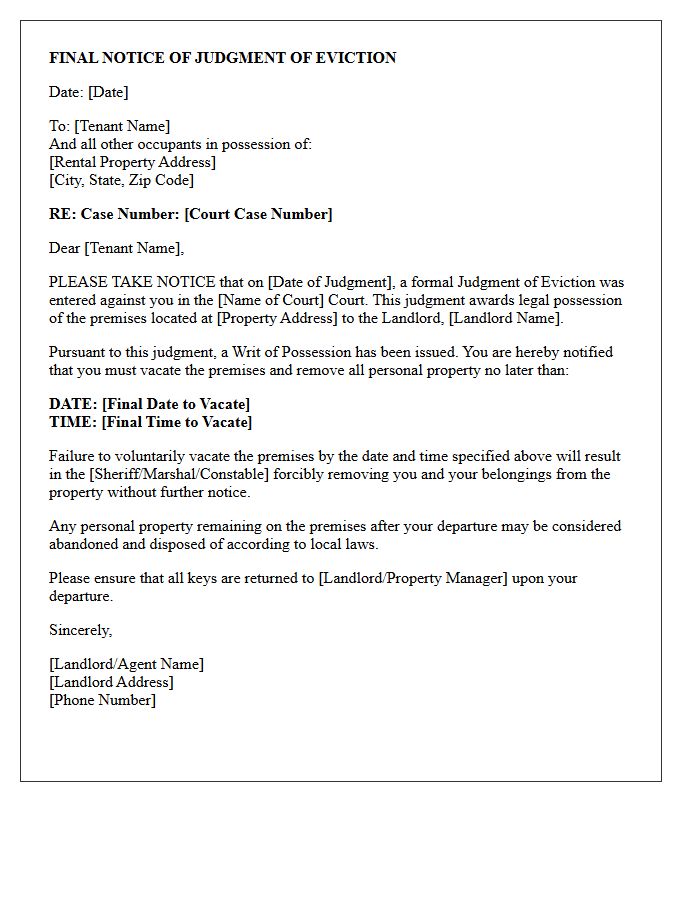
A Final Notice of Judgment of Eviction is a critical legal document signaling that a court has officially granted the landlord possession of the property. This highlighted warning means the tenant must vacate immediately to avoid forcible removal by a sheriff or marshal. Once issued, the legal process is nearly complete, and failure to move out will lead to a physical lockout. It is the last stage before the execution of a warrant, making it essential to seek legal counsel or emergency housing assistance immediately to prevent homelessness.
Notice of Default Judgment of Eviction Letter
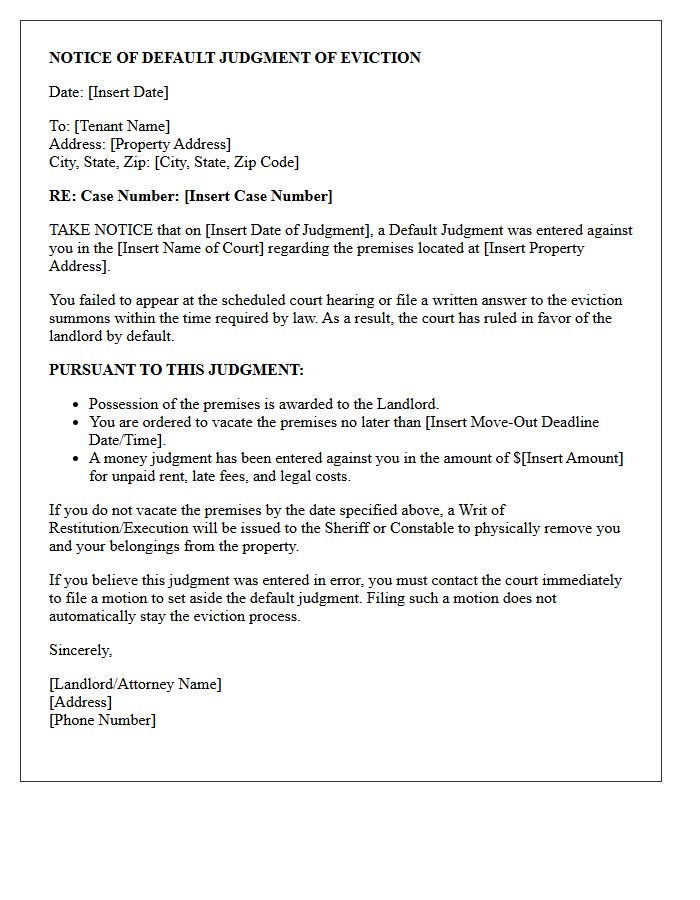
A Notice of Default Judgment of Eviction is a critical legal document informing a tenant that they lost their case because they failed to respond or appear in court. This final warning signifies that a judge has granted the landlord legal possession of the property. Once issued, the legal process moves toward physical removal by law enforcement. It is vital to seek immediate legal counsel or file a motion to vacate the judgment if a valid defense exists, as the timeframe to stop the displacement is extremely limited.
Immediate Vacate Notice of Judgment of Eviction Letter
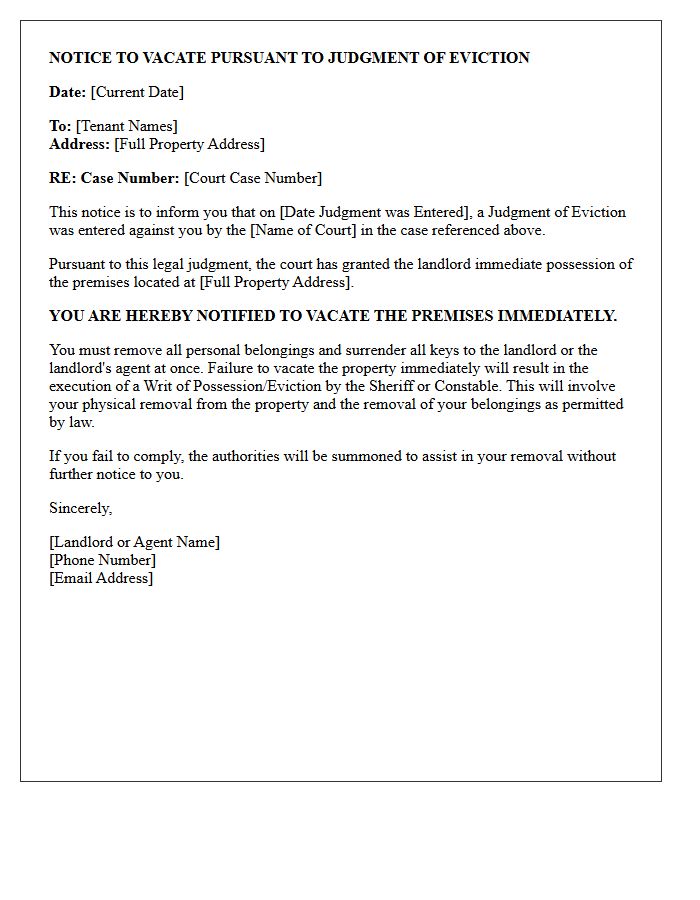
An Immediate Vacate Notice of Judgment of Eviction is a legal document issued after a court grants a landlord possession of a property. It signifies that the legal right to occupy the premises has terminated. Tenants must move out by the specified date to avoid forcible removal by a sheriff or marshal. This notice serves as the final step in the eviction process, often following a judgment for possession. Understanding the deadline is critical, as failure to comply results in a lockout and the potential loss of personal belongings.
Post-Court Notice of Judgment of Eviction Letter
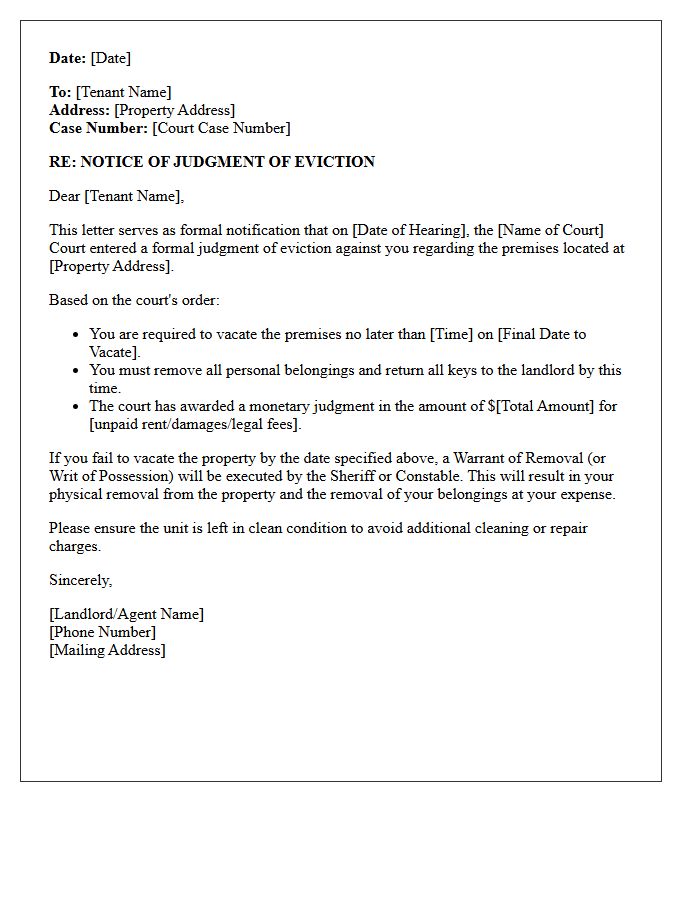
A Post-Court Notice of Judgment of Eviction is a legal document confirming that a judge has granted the landlord possession of the property. This letter signifies the final legal step before physical removal. It specifies the deadline by which the tenant must voluntarily vacate the premises. If the occupant remains past this date, a sheriff or constable will execute a warrant of eviction to forcibly remove belongings. It is critical to seek legal counsel immediately to explore a stay of execution or emergency relief to delay the process.
Residential Notice of Judgment of Eviction Letter
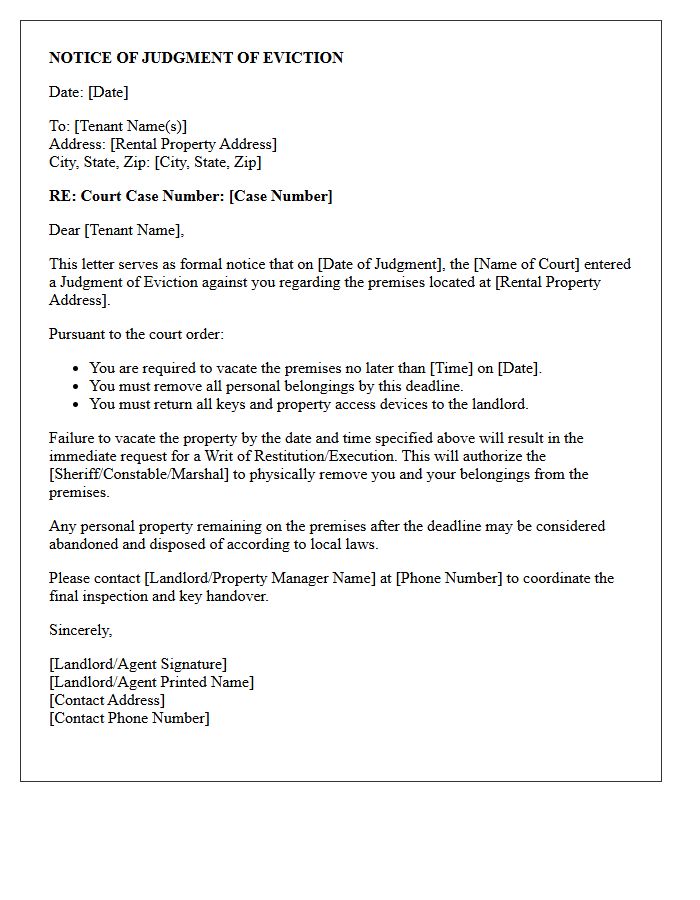
A Residential Notice of Judgment of Eviction is a formal legal document issued after a court rules in favor of a landlord. This notice serves as the final legal warning, informing the tenant that they must vacate the premises by a specific date. If the occupant remains past this deadline, a Warrant of Eviction can be executed by law enforcement to physically remove them. It is crucial to act immediately upon receipt, as this letter signifies the conclusion of the litigation process and the imminent loss of possession of the property.
Commercial Notice of Judgment of Eviction Letter
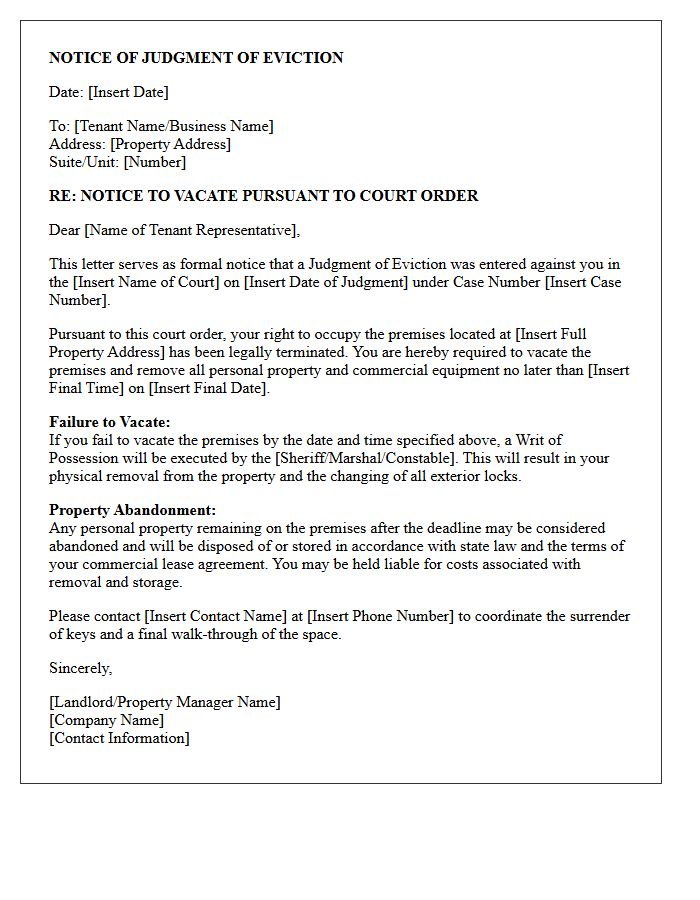
A Commercial Notice of Judgment of Eviction is a legal mandate issued by a court after a landlord wins an eviction lawsuit. This document officially terminates the leasehold interest and grants the landlord legal possession of the premises. It typically precedes a warrant of removal, providing a final deadline for the business to vacate. Failing to comply results in a forcible lockout by authorities. Recipients should immediately seek legal counsel to explore a stay of execution or negotiate move-out terms to protect remaining business assets and equipment.
Notice of Judgment of Eviction and Writ of Possession Letter
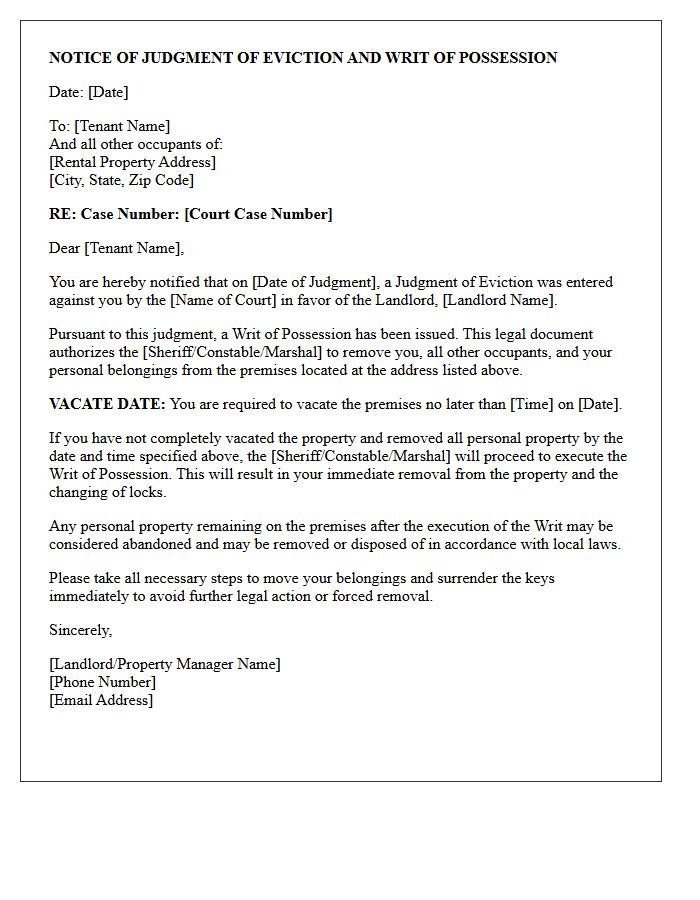
A Notice of Judgment of Eviction and Writ of Possession is the final legal order requiring a tenant to vacate. The Writ of Possession grants the sheriff authority to physically remove occupants and return the property to the landlord. Receiving this letter means the court has ruled against the tenant, establishing a firm deadline for moving out. Failure to leave voluntarily by the specified date results in a forced lockout and the potential removal of personal belongings. Acting immediately is essential to avoid sudden displacement and permanent loss of property access.
Notice of Judgment of Eviction Unlawful Detainer Letter
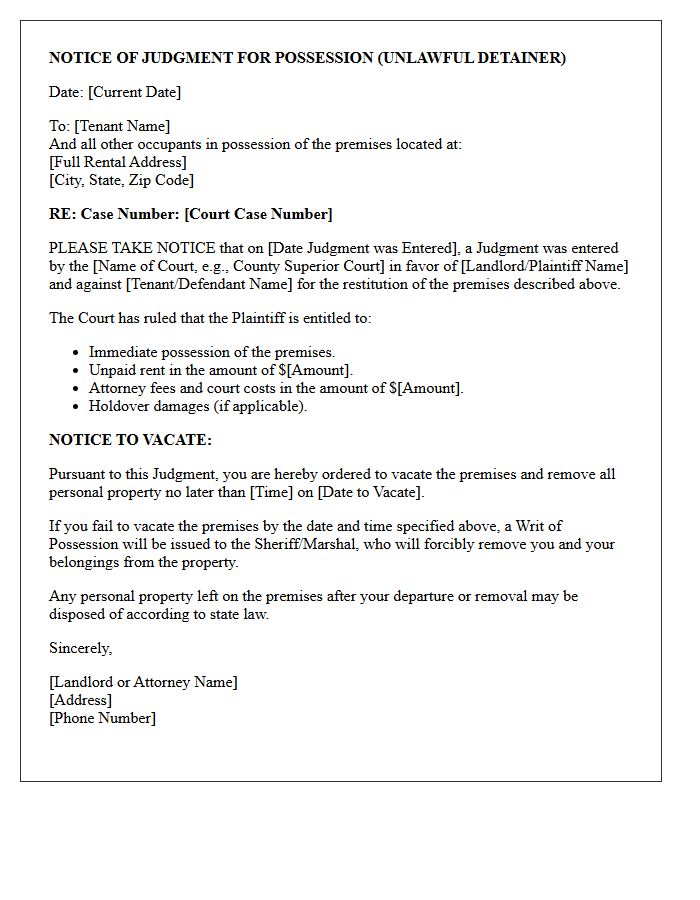
A Notice of Judgment of Eviction in an Unlawful Detainer lawsuit is a formal court order finalizing a landlord's legal right to regain possession of a property. This legal document signifies that the court has ruled against the tenant, typically due to unpaid rent or lease violations. Once issued, a Writ of Possession usually follows, authorizing a sheriff to physically remove occupants. It is critical to act immediately upon receipt, as this notice represents the final stage before forcible removal and permanent legal record of the eviction.
Sheriff Execution Notice of Judgment of Eviction Letter
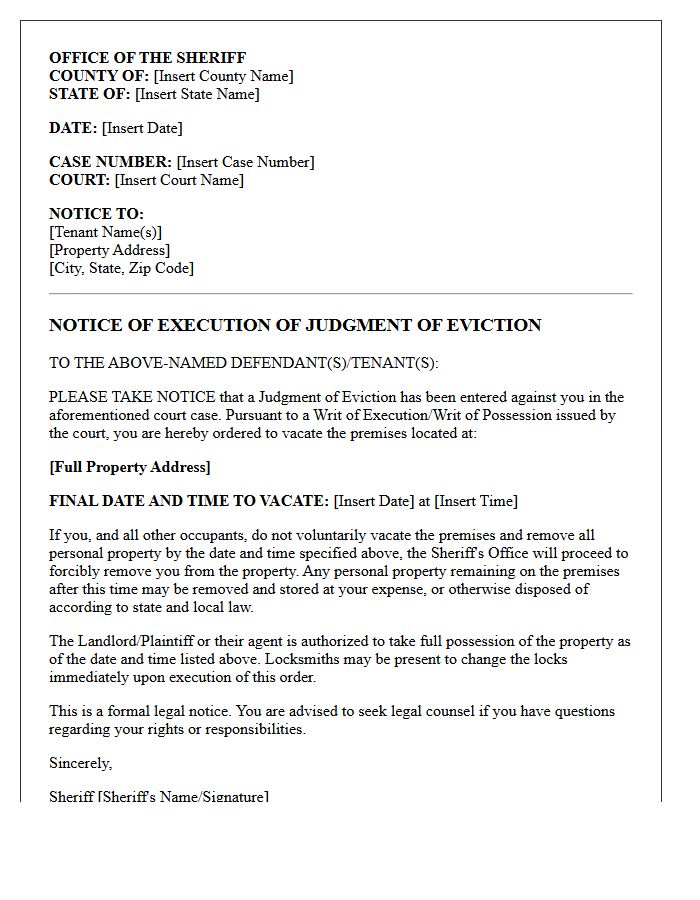
A Sheriff Execution Notice of Judgment of Eviction is the final legal step in the removal process. After a landlord wins a court case, the sheriff delivers this formal notice, which provides a specific date and time by which the tenant must vacate. If the occupant remains past this deadline, the sheriff has the legal authority to forcibly remove individuals and their belongings from the property. It is crucial to act immediately upon receipt, as this document signifies that the eviction is imminent and legally enforceable.
Notice of Judgment of Eviction Move-Out Instructions Letter
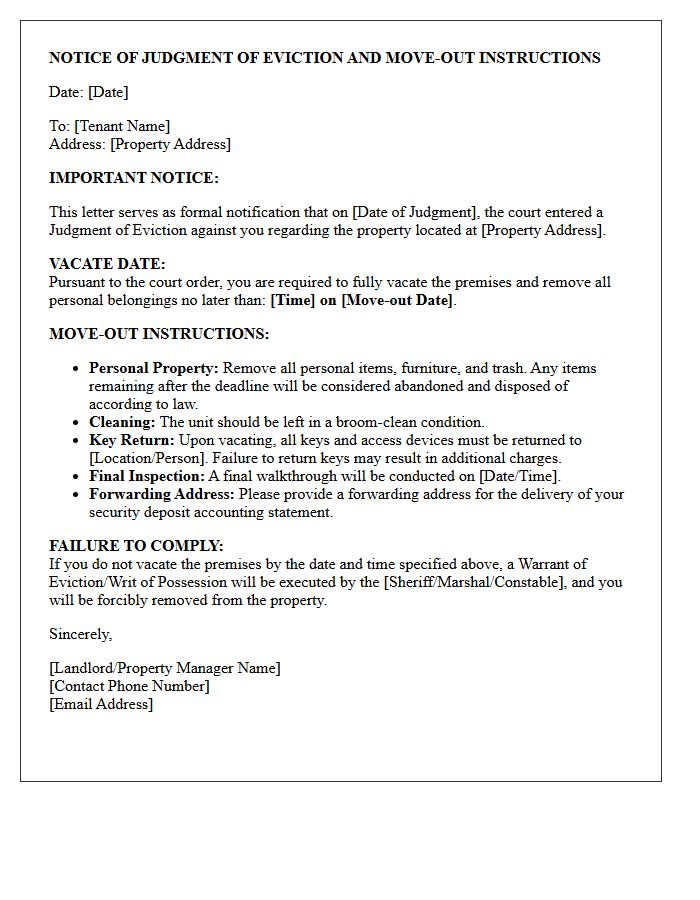
A Notice of Judgment of Eviction is a legal mandate requiring a tenant to vacate the premises by a specific deadline. This letter outlines critical move-out instructions, including the exact date and time possession must be surrendered to avoid forcible removal by law enforcement. It details requirements for removing personal property and the process for key return. Failure to comply with these instructions can lead to the immediate loss of belongings and additional legal fees. Understanding these compliance steps is essential for a peaceful transition and protecting your legal rights.
Past Due Balance and Notice of Judgment of Eviction Letter
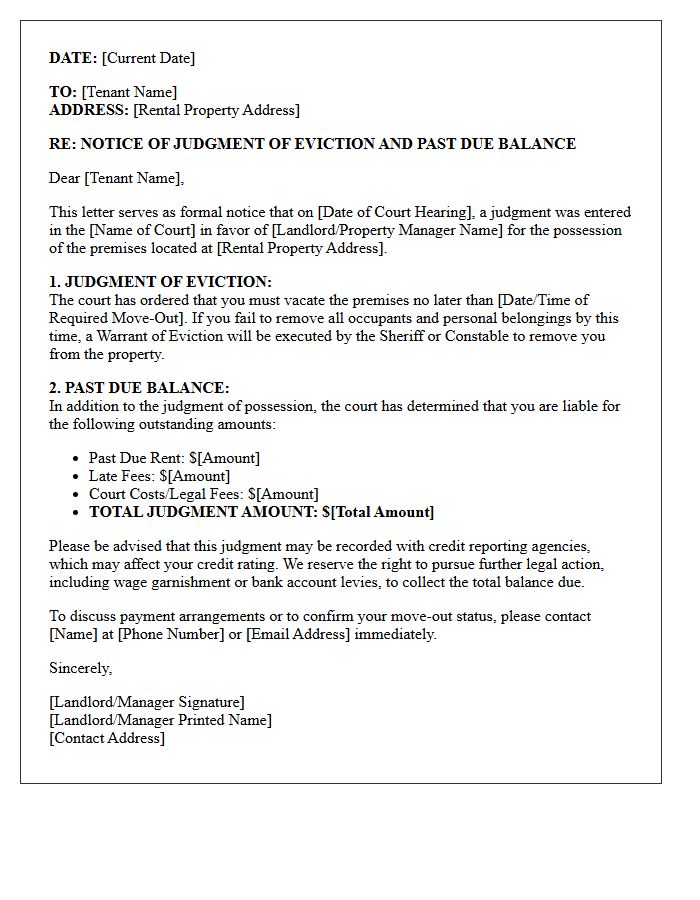
A Past Due Balance represents unpaid rent or fees owed to a landlord. Receiving a Notice of Judgment of Eviction is a critical legal warning indicating that a court has officially ruled in favor of the property owner. This letter signifies that the legal right to occupy the premises has ended due to non-payment or lease violations. To prevent physical removal by law enforcement, tenants must immediately pay the outstanding debt or vacate the property. Seeking urgent legal counsel is essential to understand potential stays of execution or payment plans to avoid homelessness.
Property Abandonment Notice of Judgment of Eviction Letter
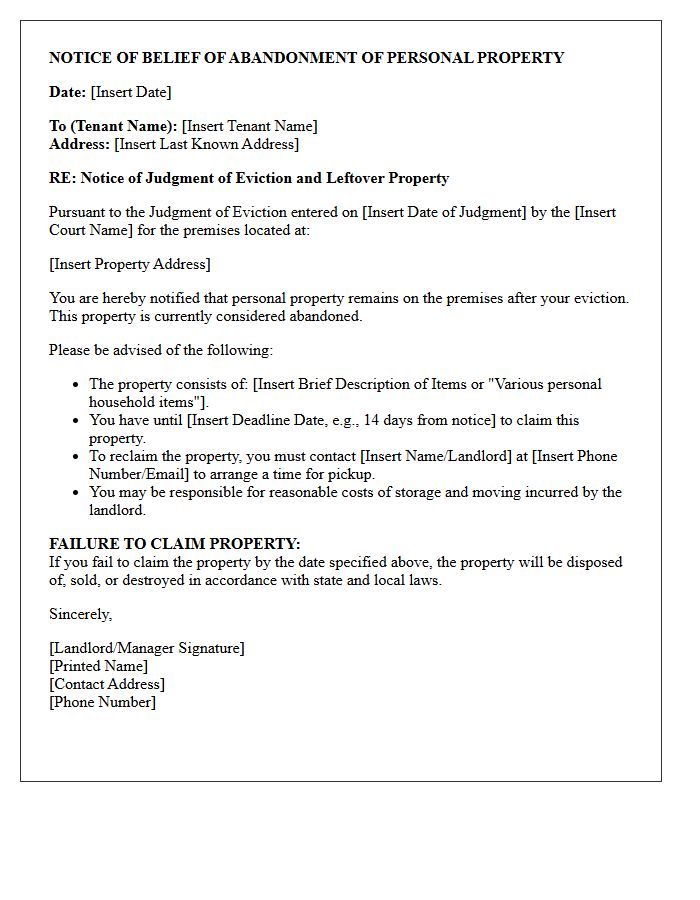
A Property Abandonment Notice following a Judgment of Eviction is a critical legal document informing former tenants their belongings remain on-site. Landlords must issue this letter to specify a strict deadline for property retrieval before items are legally disposed of or sold. Compliance with local statutes is essential to avoid liability. This notice protects property owners by documenting the legal transition of possession, ensuring that any remaining personal effects are handled according to state-mandated abandonment procedures to finalize the eviction process effectively.
Notice of Judgment of Eviction Appeal Period Expiration Letter
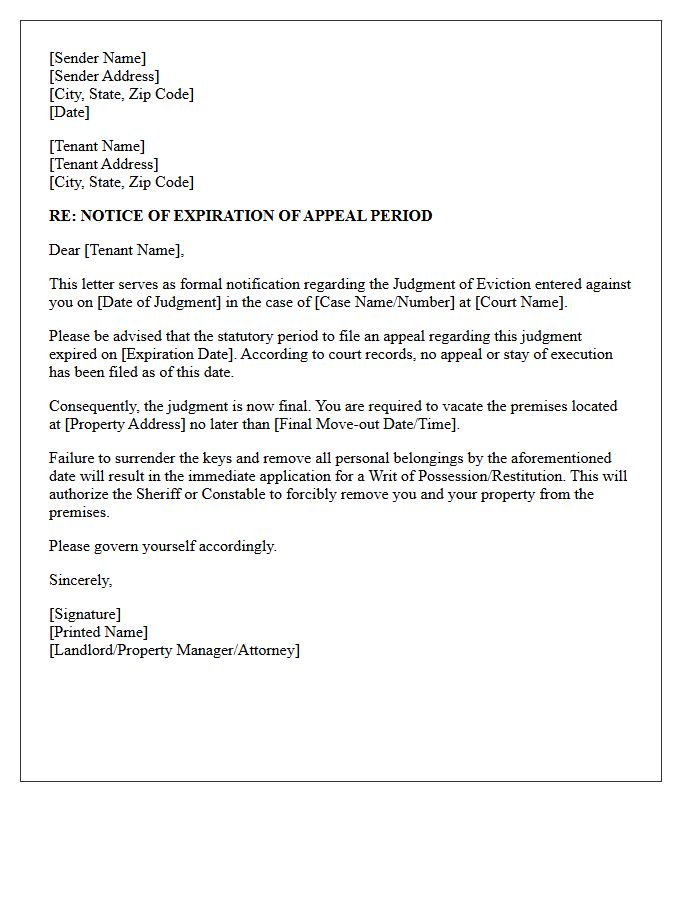
A Notice of Judgment of Eviction Appeal Period Expiration Letter serves as formal confirmation that the legal timeframe for a tenant to challenge a court ruling has ended. This document signifies that the eviction judgment is now final and legally binding. Once this appeal period expires, the landlord gains the right to request a warrant of removal or writ of possession. It is a critical milestone in the legal process, indicating that the tenant no longer has a judicial pathway to stay the execution of the eviction order.
What is a Notice of Judgment of Eviction?
A Notice of Judgment of Eviction is a formal legal document issued by a court confirming that a judge has ruled in favor of the landlord, granting them legal possession of the rental property and the right to remove the tenant.
How long do I have to move out after receiving a Notice of Judgment of Eviction?
The timeline varies by jurisdiction, but typically a tenant has between 24 hours and 10 days to vacate the premises voluntarily before a sheriff or marshal performs a physical lockout.
Can a Notice of Judgment of Eviction be appealed or stopped?
Yes, tenants can sometimes stop an eviction by filing an Order to Show Cause or an appeal. This legal action may request a stay of execution based on procedural errors, payment of back rent, or other legal defenses.
What is the difference between an Eviction Notice and a Judgment of Eviction?
An eviction notice (such as a 3-day notice) is a demand sent by a landlord to start the process; a Judgment of Eviction is a final court order signed by a judge that legally terminates the tenancy and authorizes removal.
Does a Notice of Judgment of Eviction appear on my credit report?
While the eviction itself may not appear directly on a credit report, the public record of the court judgment and any unpaid money judgments for back rent will significantly lower your credit score and appear on specialized tenant screening reports.


Comments